
Akamai Technologies (AKAM)
Runs a global edge platform for cloud security, content delivery, and distributed computing.
Something off on this page? Send us feedback.
Akamai runs a web of servers spread close to internet users around the world, and rents three things out on it: defence for websites and apps, the plumbing that carries video and downloads, and now raw computing power for artificial intelligence. Security earns most of the money; the delivery business it was founded on is shrinking. The computing build-out is where the spending, and the borrowed money, now go.
Item facts: FY2025 · year ended Dec 31, 2025, from filings, earnings calls and company pages.
Judgment weights, not filed revenue
The band summarizes business focus and direction. ~ marks estimates.
8 in detail · 10 more below
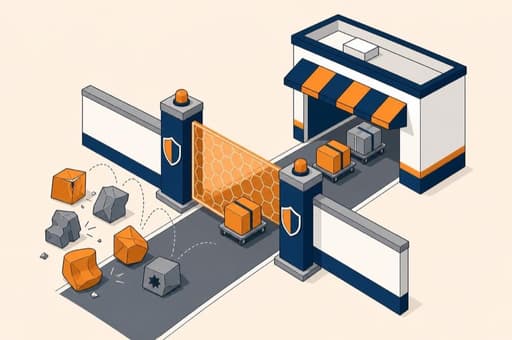
App & API Protector
The shield most Akamai customers buy first: it filters attacks and automated abuse before they reach a site. The biggest product inside security, and one of three management credits for that line's 10% growth last year.
Competes with Application Services / WAF (Cloudflare) · Distributed Cloud WAAP (F5) · AWS WAF (Amazon)
In plain English
Every large website gets hammered all day by people and programs trying to break in, copy its data, or flood it with traffic pretending to be customers. Akamai's servers already sit between that traffic and the customer's site, so they check each request on the way through and drop the bad ones — a bouncer who is already standing at every door.
Customers sign multi-year contracts and pay for the traffic that flows through. One renewal was worth $45 million over three years and moved about a hundred applications off a big cloud provider's own security. Because the servers are there anyway for the delivery business, each extra customer costs little to serve.

Prolexic
Flood defence: when an attacker aims enormous junk traffic at a company's network, Prolexic absorbs and cleans it. Akamai discloses no revenue for it — roughly a twentieth of sales — and has barely mentioned it on recent calls.
Competes with Magic Transit (Cloudflare) · DDoS protection appliances (Radware) · Arbor DDoS protection (NETSCOUT)
In plain English
Picture thousands of hijacked machines all dialling one phone number at once, so no real caller can get through. That is a denial-of-service attack, and this is the service that catches the flood.
A customer routes its incoming internet traffic through Akamai's cleaning centres, which throw away the junk and pass real visitors on. The fee is a standing one, paid whether or not an attack ever comes — insurance for anyone who cannot afford to go dark. It sells both on its own and alongside the main website shield. An old, quiet line: still there, rarely talked about.
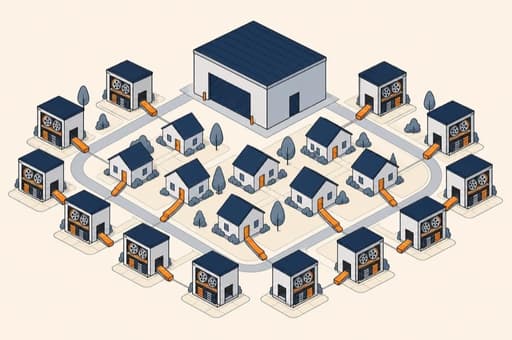
Delivery
The original business: keeping copies of video, game downloads and web pages on servers near the viewer so they load fast. $1.257 billion last year, down 5%, and guided to keep sliding as the price per gigabyte falls.
Competes with CloudFront (Amazon) · Cloudflare CDN (Cloudflare) · Deliver@Edge (Fastly)
In plain English
Streaming a film from a machine on the other side of the planet is like ordering milk from a farm three states away — it works, but slowly. So Akamai keeps copies of the film, the game patch, the software update on servers a short hop from whoever wants them.
Streaming services, broadcasters, game publishers and software makers pay by how much data they pull down. The catch is that the price per gigabyte keeps falling faster than traffic grows, so the line shrinks a few percent a year. Its job now is to keep the network full — the same servers run the security business.

Other cloud applications
A shelf of older tools that speed up and watch over websites and video workflows, roughly $394 million last year. From early 2026 Akamai stopped reporting it separately and folded it in with delivery, guided down together.
Competes with Workers (Cloudflare) · Infrastructure monitoring (Datadog) · Managed application services (Amazon)
In plain English
Not one product but a collection, left over from the older tools that used to be grouped with Akamai's cloud business: software that makes web pages and apps load faster, pieces that help broadcasters move video around, monitoring that lets a customer see what is happening across a live stream as it happens, and managed-computing contracts signed years ago that simply keep renewing.
Customers pay subscriptions much as they do for delivery. Akamai no longer gives this a line of its own — since early 2026 it and delivery are reported as one number, shrinking in the mid single digits. The unglamorous half of the half that pays for everything else.
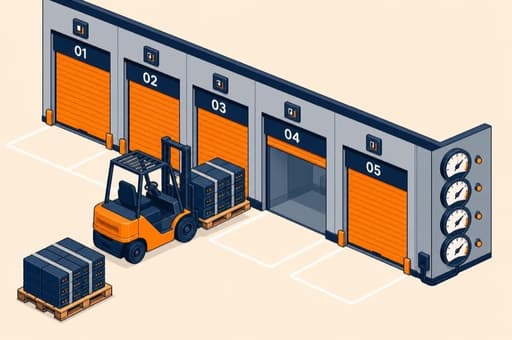
Cloud Infrastructure Services (Akamai Cloud)
Akamai's own rentable computers, storage and AI chips, grown from its 2022 Linode purchase. $314 million last year, up 36%, guided to grow at least half again this year — with more than $2.8 billion of multi-year commitments signed in 2026.
Competes with EC2 compute instances (Amazon) · GPU cloud (CoreWeave) · Developer cloud (DigitalOcean)
In plain English
Renting out computers by the hour, the same thing Amazon and Microsoft do, but from Akamai's spread-out network of sites rather than a handful of giant ones. It bought Linode, a cloud company popular with software developers, in 2022 and has been bolting it onto that network since.
AI and software companies, game firms and businesses moving off the big clouds pay for what they use. The awkward part is the order of events: Akamai buys the chips and rents the datacenter space first, then waits for usage to ramp. That is why equipment spending is set to run near forty cents of every revenue dollar this year.
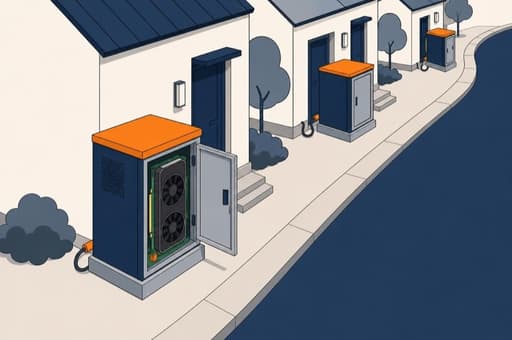
Akamai Inference Cloud
AI chips placed in sites close to users, so a model answers from nearby instead of from one distant datacenter. Launched October 2025 with Monks and Harmonic as first customers; rivals offering the same thing multiplied through 2025.
Competes with Workers AI (Cloudflare) · Everywhere Inference (Gcore) · CoreWeave inference (CoreWeave)
In plain English
Ask an AI assistant a question and the answer is worked out on a machine somewhere; if that machine is far away, the reply comes back late. The pitch here is to put the AI chips close to whoever is asking — a neighbourhood kitchen rather than one central one, so the food arrives hot.
Akamai runs NVIDIA's Blackwell graphics chips in those locations and charges for the computing time. Monks and Harmonic, a video-technology firm it already partners with, were the first named customers. The bet is that being nearby is worth paying extra for, and it is a crowded bet: the number of providers offering it grew several-fold during 2025.
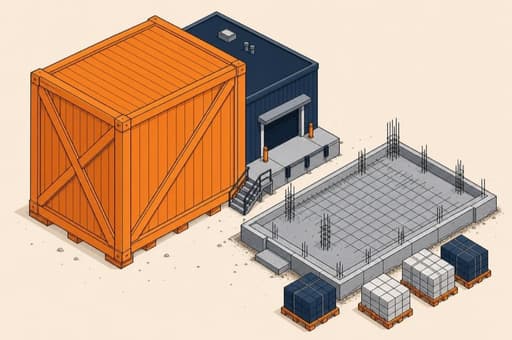
$1.8B frontier-model cloud commitment
The largest customer deal in Akamai's history: an unnamed U.S. builder of frontier AI models committed $1.8 billion over seven years. Revenue starts late this year at about $20–25 million a quarter; the gear for it costs roughly $800 million first.
Competes with GPU capacity contracts (Amazon) · GPU capacity contracts (CoreWeave) · GPU capacity contracts (Nebius)
In plain English
One customer, one contract, seven years. A company that builds the big AI models everyone is talking about needed somewhere to run them, and agreed to pay Akamai $1.8 billion over that stretch — the biggest deal Akamai has ever signed. Akamai has not said who; press reports point to Anthropic, and the company has not confirmed it.
The terms work like a phone contract with a minimum monthly bill: the money is owed whether or not every hour gets used. Akamai still has to buy the machines first, so cash goes out long before it comes back. Against a line that made $314 million last year, that is a lot riding on one signature.
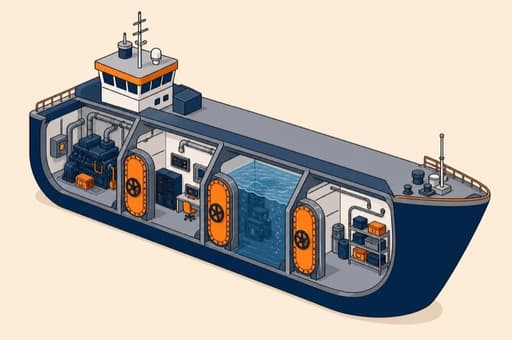
Akamai Guardicore Segmentation + API Security
The fast-growing security pair Akamai does disclose: software that walls a company's servers off from each other, plus tools guarding the doorways apps use to talk to other apps. $293 million last year, up 43%.
Competes with Illumio Core (Illumio) · Prisma Cloud (Palo Alto Networks) · Salt Security platform (Salt Security)
In plain English
Two newer security ideas sold as one number. The first walls off every machine inside a company's network behind its own locked door, so an intruder who gets into one cannot wander through the rest — watertight compartments in a ship's hull.
The second watches the doorways software uses to talk to other software: finding the ones nobody wrote down, and spotting the ones behaving oddly. Regulated companies, banks especially, buy both — one North American bank signed a four-year, $40 million deal for the walling-off half. The doorway half more than doubled last year and left 2025 above a hundred-million-dollar annual pace.


 App & API ProtectorThe shield most Akamai customers buy first: it filters attacks and automated abuse before they reach a site. The biggest product inside security, and one of three management credits for that line's 10% growth last year.
The shield most Akamai customers buy first: it filters attacks and automated abuse before they reach a site. The biggest product inside security, and one of three management credits for that line's 10% growth last year.
In plain English
Every large website gets hammered all day by people and programs trying to break in, copy its data, or flood it with traffic pretending to be customers. Akamai's servers already sit between that traffic and the customer's site, so they check each request on the way through and drop the bad ones — a bouncer who is already standing at every door.
Customers sign multi-year contracts and pay for the traffic that flows through. One renewal was worth $45 million over three years and moved about a hundred applications off a big cloud provider's own security. Because the servers are there anyway for the delivery business, each extra customer costs little to serve.
Competes with Application Services / WAF (Cloudflare) · Distributed Cloud WAAP (F5) · AWS WAF (Amazon)
 ProlexicFlood defence: when an attacker aims enormous junk traffic at a company's network, Prolexic absorbs and cleans it. Akamai discloses no revenue for it — roughly a twentieth of sales — and has barely mentioned it on recent calls.
Flood defence: when an attacker aims enormous junk traffic at a company's network, Prolexic absorbs and cleans it. Akamai discloses no revenue for it — roughly a twentieth of sales — and has barely mentioned it on recent calls.
In plain English
Picture thousands of hijacked machines all dialling one phone number at once, so no real caller can get through. That is a denial-of-service attack, and this is the service that catches the flood.
A customer routes its incoming internet traffic through Akamai's cleaning centres, which throw away the junk and pass real visitors on. The fee is a standing one, paid whether or not an attack ever comes — insurance for anyone who cannot afford to go dark. It sells both on its own and alongside the main website shield. An old, quiet line: still there, rarely talked about.
Competes with Magic Transit (Cloudflare) · DDoS protection appliances (Radware) · Arbor DDoS protection (NETSCOUT)
 DeliveryThe original business: keeping copies of video, game downloads and web pages on servers near the viewer so they load fast. $1.257 billion last year, down 5%, and guided to keep sliding as the price per gigabyte falls.
The original business: keeping copies of video, game downloads and web pages on servers near the viewer so they load fast. $1.257 billion last year, down 5%, and guided to keep sliding as the price per gigabyte falls.
In plain English
Streaming a film from a machine on the other side of the planet is like ordering milk from a farm three states away — it works, but slowly. So Akamai keeps copies of the film, the game patch, the software update on servers a short hop from whoever wants them.
Streaming services, broadcasters, game publishers and software makers pay by how much data they pull down. The catch is that the price per gigabyte keeps falling faster than traffic grows, so the line shrinks a few percent a year. Its job now is to keep the network full — the same servers run the security business.
Competes with CloudFront (Amazon) · Cloudflare CDN (Cloudflare) · Deliver@Edge (Fastly)
 Other cloud applicationsA shelf of older tools that speed up and watch over websites and video workflows, roughly $394 million last year. From early 2026 Akamai stopped reporting it separately and folded it in with delivery, guided down together.
A shelf of older tools that speed up and watch over websites and video workflows, roughly $394 million last year. From early 2026 Akamai stopped reporting it separately and folded it in with delivery, guided down together.
In plain English
Not one product but a collection, left over from the older tools that used to be grouped with Akamai's cloud business: software that makes web pages and apps load faster, pieces that help broadcasters move video around, monitoring that lets a customer see what is happening across a live stream as it happens, and managed-computing contracts signed years ago that simply keep renewing.
Customers pay subscriptions much as they do for delivery. Akamai no longer gives this a line of its own — since early 2026 it and delivery are reported as one number, shrinking in the mid single digits. The unglamorous half of the half that pays for everything else.
Competes with Workers (Cloudflare) · Infrastructure monitoring (Datadog) · Managed application services (Amazon)
 Cloud Infrastructure Services (Akamai Cloud)Akamai's own rentable computers, storage and AI chips, grown from its 2022 Linode purchase. $314 million last year, up 36%, guided to grow at least half again this year — with more than $2.8 billion of multi-year commitments signed in 2026.
Akamai's own rentable computers, storage and AI chips, grown from its 2022 Linode purchase. $314 million last year, up 36%, guided to grow at least half again this year — with more than $2.8 billion of multi-year commitments signed in 2026.
In plain English
Renting out computers by the hour, the same thing Amazon and Microsoft do, but from Akamai's spread-out network of sites rather than a handful of giant ones. It bought Linode, a cloud company popular with software developers, in 2022 and has been bolting it onto that network since.
AI and software companies, game firms and businesses moving off the big clouds pay for what they use. The awkward part is the order of events: Akamai buys the chips and rents the datacenter space first, then waits for usage to ramp. That is why equipment spending is set to run near forty cents of every revenue dollar this year.
Competes with EC2 compute instances (Amazon) · GPU cloud (CoreWeave) · Developer cloud (DigitalOcean)
 Akamai Inference CloudAI chips placed in sites close to users, so a model answers from nearby instead of from one distant datacenter. Launched October 2025 with Monks and Harmonic as first customers; rivals offering the same thing multiplied through 2025.
AI chips placed in sites close to users, so a model answers from nearby instead of from one distant datacenter. Launched October 2025 with Monks and Harmonic as first customers; rivals offering the same thing multiplied through 2025.
In plain English
Ask an AI assistant a question and the answer is worked out on a machine somewhere; if that machine is far away, the reply comes back late. The pitch here is to put the AI chips close to whoever is asking — a neighbourhood kitchen rather than one central one, so the food arrives hot.
Akamai runs NVIDIA's Blackwell graphics chips in those locations and charges for the computing time. Monks and Harmonic, a video-technology firm it already partners with, were the first named customers. The bet is that being nearby is worth paying extra for, and it is a crowded bet: the number of providers offering it grew several-fold during 2025.
Competes with Workers AI (Cloudflare) · Everywhere Inference (Gcore) · CoreWeave inference (CoreWeave)
 $1.8B frontier-model cloud commitmentThe largest customer deal in Akamai's history: an unnamed U.S. builder of frontier AI models committed $1.8 billion over seven years. Revenue starts late this year at about $20–25 million a quarter; the gear for it costs roughly $800 million first.
The largest customer deal in Akamai's history: an unnamed U.S. builder of frontier AI models committed $1.8 billion over seven years. Revenue starts late this year at about $20–25 million a quarter; the gear for it costs roughly $800 million first.
In plain English
One customer, one contract, seven years. A company that builds the big AI models everyone is talking about needed somewhere to run them, and agreed to pay Akamai $1.8 billion over that stretch — the biggest deal Akamai has ever signed. Akamai has not said who; press reports point to Anthropic, and the company has not confirmed it.
The terms work like a phone contract with a minimum monthly bill: the money is owed whether or not every hour gets used. Akamai still has to buy the machines first, so cash goes out long before it comes back. Against a line that made $314 million last year, that is a lot riding on one signature.
Competes with GPU capacity contracts (Amazon) · GPU capacity contracts (CoreWeave) · GPU capacity contracts (Nebius)
 Akamai Guardicore Segmentation + API SecurityThe fast-growing security pair Akamai does disclose: software that walls a company's servers off from each other, plus tools guarding the doorways apps use to talk to other apps. $293 million last year, up 43%.
The fast-growing security pair Akamai does disclose: software that walls a company's servers off from each other, plus tools guarding the doorways apps use to talk to other apps. $293 million last year, up 43%.
In plain English
Two newer security ideas sold as one number. The first walls off every machine inside a company's network behind its own locked door, so an intruder who gets into one cannot wander through the rest — watertight compartments in a ship's hull.
The second watches the doorways software uses to talk to other software: finding the ones nobody wrote down, and spotting the ones behaving oddly. Regulated companies, banks especially, buy both — one North American bank signed a four-year, $40 million deal for the walling-off half. The doorway half more than doubled last year and left 2025 above a hundred-million-dollar annual pace.
Competes with Illumio Core (Illumio) · Prisma Cloud (Palo Alto Networks) · Salt Security platform (Salt Security)
Named in filings, launches and programs
- Akamai Workforce ProtectorProductA locked-down work browser that controls what staff feed into AI tools; bought as LayerX for about $205 million, closed July 2026.
- Robotics cloud commitment (>$600M, 4 years)Customer program · RampingAnnounced August 2026, counterparty unnamed. No meaningful revenue this year — it ramps through 2027.
- AI inference cloud commitment (~$200M, 4 years)Customer program · RampingDisclosed February 2026, mostly for the inference service; revenue begins in the last quarter of 2026.
- CrowdStrike winCustomer programThe security firm switched to Akamai for its own website protection and content delivery, announced August 2026; value undisclosed.
- Enterprise Application Access / Secure Internet AccessProduct lineChecks each employee before letting them reach an internal app, and filters where company devices go on the web. Rarely mentioned on calls.
- Edge DNS, DNS Posture Management and Brand GuardianProduct lineKeeps the address book that points visitors at a website working under attack, and hunts for sites impersonating a customer's brand.
- Akamai TrafficPeakProductLive monitoring built for very large audiences; ITV picked it for World Cup streaming in September 2026.
- Akamai Cloud platform servicesProduct lineThe rest of the cloud menu: video-transcoding hardware, managed container clusters, object and block storage, managed databases and small run-on-demand functions.
- Edgio customer contractsCustomer programDelivery contracts bought from a failing rival in December 2024 — a few hundred accounts, one of which converted into a $16 million commitment.
- Professional services and licence revenueServiceSetup and consulting work, plus lumpy software licence fees — $18 million of licence revenue in the last quarter of 2025, up from $12 million.
Akamai Workforce ProtectorProduct
A locked-down work browser that controls what staff feed into AI tools; bought as LayerX for about $205 million, closed July 2026.
Robotics cloud commitment (>$600M, 4 years)Customer program · Ramping
Announced August 2026, counterparty unnamed. No meaningful revenue this year — it ramps through 2027.
AI inference cloud commitment (~$200M, 4 years)Customer program · Ramping
Disclosed February 2026, mostly for the inference service; revenue begins in the last quarter of 2026.
CrowdStrike winCustomer program
The security firm switched to Akamai for its own website protection and content delivery, announced August 2026; value undisclosed.
Enterprise Application Access / Secure Internet AccessProduct line
Checks each employee before letting them reach an internal app, and filters where company devices go on the web. Rarely mentioned on calls.
Edge DNS, DNS Posture Management and Brand GuardianProduct line
Keeps the address book that points visitors at a website working under attack, and hunts for sites impersonating a customer's brand.
Akamai TrafficPeakProduct
Live monitoring built for very large audiences; ITV picked it for World Cup streaming in September 2026.
Akamai Cloud platform servicesProduct line
The rest of the cloud menu: video-transcoding hardware, managed container clusters, object and block storage, managed databases and small run-on-demand functions.
Edgio customer contractsCustomer program
Delivery contracts bought from a failing rival in December 2024 — a few hundred accounts, one of which converted into a $16 million commitment.
Professional services and licence revenueService
Setup and consulting work, plus lumpy software licence fees — $18 million of licence revenue in the last quarter of 2025, up from $12 million.