
Amgen (AMGN)
Develops and manufactures medicines and biosimilars across general medicine, rare disease, inflammation, and oncology.
Something off on this page? Send us feedback.
Amgen is a collection of medicines rather than one product family. Its older bone and inflammation blockbusters still pay much of the bill, but cheaper copies and price pressure are shrinking that base. Faster-growing heart, asthma, bone-building and cancer medicines are taking over, while a monthly obesity candidate is the biggest bet on what comes next. The handoff depends on access through insurers and distributors and on new launches arriving before the old medicines fade.
Item facts: FY2025 · year ended Dec 31, 2025, from filings, earnings calls and company pages.
Judgment weights, not filed revenue
The band summarizes business focus and direction. ~ marks estimates.
9 in detail · 16 more below
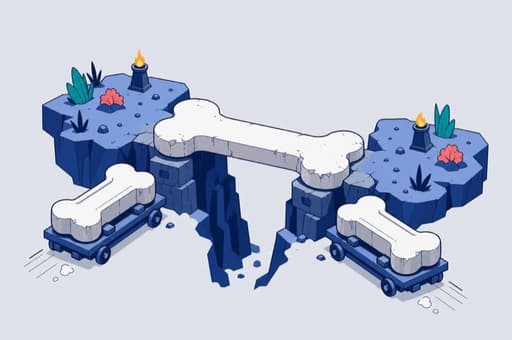
Prolia and XGEVA
Two brands built on the same bone-protecting medicine made $6.5 billion in FY2025. Cheaper copies are now taking hold, so the question is how quickly this once-dominant franchise shrinks.
Competes with Jubbonti/Wyost (Sandoz) · Stoboclo/Osenvelt (Celltrion)
In plain English
Think of these as two uses for the same protective coating on bone. Prolia helps people at high risk of osteoporosis fractures; XGEVA helps keep cancer from badly damaging the skeleton and treats certain bone tumors.
Clinics buy and inject the medicine, wholesalers move it, and insurers decide how much of the cost they will cover. Repeat injections made this Amgen's largest medicine family. Its key patents have expired, however, and biosimilars—lower-cost versions of the same biological medicine—are already pulling patients and sales away.
ENBREL and Otezla
This mature inflammation pair still brought in $4.5 billion in FY2025. Its job is to keep producing cash while lower prices and newer psoriasis and arthritis treatments steadily squeeze it.
Competes with Humira copies and Rinvoq (AbbVie) · Skyrizi and Tremfya (AbbVie / Johnson & Johnson) · Sotyktu (Bristol Myers Squibb)
In plain English
These are long-haul medicines for immune systems that attack the body's own joints or skin. ENBREL is an injection used across rheumatoid arthritis, psoriasis and related illnesses; Otezla is a pill used for psoriasis, psoriatic arthritis and painful mouth ulcers caused by Behçet's disease.
Patients often stay on treatment, which creates repeat prescriptions. Specialty pharmacies and wholesalers deliver the drugs, while insurers and their prescription managers decide access and discounts. That dependable refill engine is aging: ENBREL has suffered sharp price declines, Otezla faces heavy competition, and government-negotiated prices add pressure.
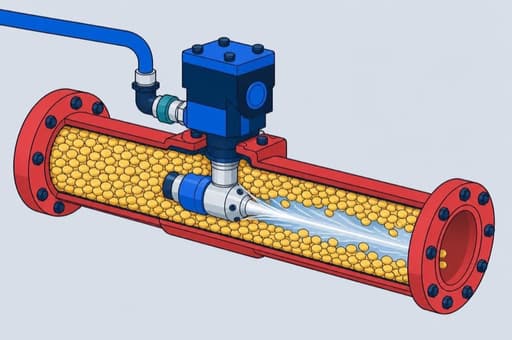
Repatha
This cholesterol-lowering injection supplied $3.0 billion in FY2025. A broader prevention label and growing use by family doctors are opening a larger market; watch whether new prescriptions keep accelerating.
Competes with Leqvio (Novartis) · Praluent (Regeneron / Sanofi)
In plain English
Picture cholesterol as debris moving through the body's pipes. Repatha helps the liver clear more of the harmful kind when standard treatment has not reduced a person's risk enough. Patients inject it at home after a doctor prescribes it.
Amgen is paid each time pharmacies and wholesalers supply a dose, usually after an insurer approves coverage. The medicine started mainly with heart specialists, but family doctors now account for much of its growth. Wider use depends on treatment guidelines, simple approval rules, patients staying on schedule and reliable injector supply.
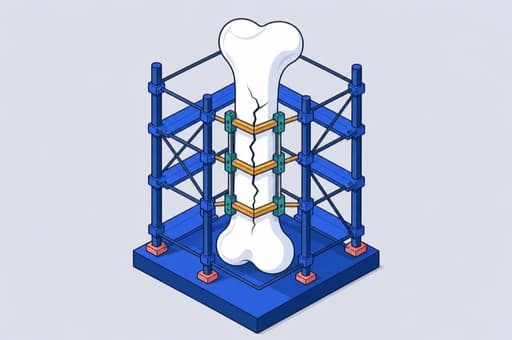
EVENITY
A year-long bone-building treatment for women at very high fracture risk. Second-quarter 2026 sales rose 38% year over year; watch whether doctors keep choosing it before follow-on bone-preserving medicines.
Competes with Forteo and teriparatide copies (Eli Lilly / multiple manufacturers) · Tymlos (Radius Health) · Teribone (Asahi Kasei)
In plain English
Most osteoporosis drugs try to slow bone loss. EVENITY also helps build bone, so doctors use it for postmenopausal women whose fracture risk is especially high, then switch them to a medicine that preserves the gain. The course lasts a year.
Specialists identify eligible women and arrange the injections; insurers must agree that the risk justifies the cost. Amgen manufactures the medicine, shares worldwide development and selling economics with UCB, and relies on Astellas to sell it in Japan. More diagnoses and a place early in the treatment sequence turn into sales.
TEZSPIRE
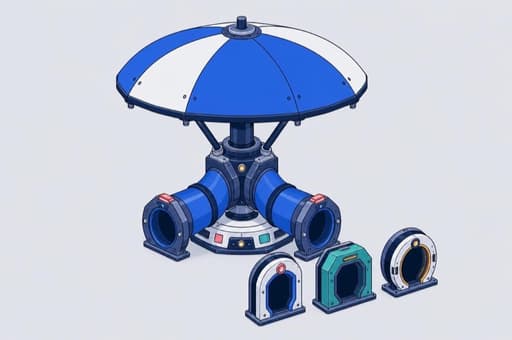
TEZSPIRE blocks an early trigger behind severe asthma and now nasal polyps. Second-quarter 2026 sales grew 42%; watch whether the newer use and promising swallowing-disease study can widen demand beyond asthma.
Competes with Dupixent (Regeneron / Sanofi) · Fasenra (AstraZeneca) · Nucala (GSK)
In plain English
Instead of chasing one kind of airway inflammation, TEZSPIRE turns down a signal near the top of the chain that sets several kinds in motion. Doctors prescribe the injection for severe asthma and, more recently, nasal growths that block breathing.
Specialists find patients whose usual medicines are not enough, insurers set the steps needed for approval, and continued injections create repeat sales. Amgen supplies the drug and records mainly its United States business, while AstraZeneca leads selling elsewhere and shares the development and commercial economics. New approved uses can feed the same partnership.
BLINCYTO, IMDELLTRA and the BiTE platform
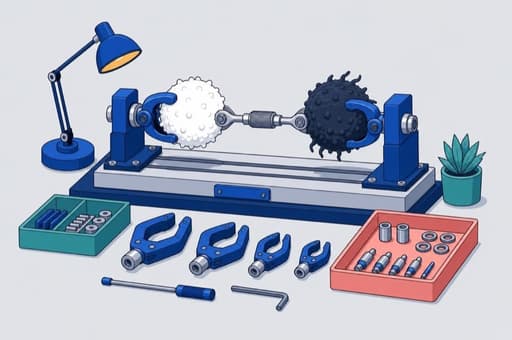
BLINCYTO and IMDELLTRA made $2.2 billion in FY2025 by redirecting the body's defenders toward blood and lung cancers. The platform grows if Amgen can repeat that targeting trick across more tumors.
Competes with Besponsa (Pfizer) · Zepzelca (Jazz Pharmaceuticals) · Topotecan generics (Multiple manufacturers)
In plain English
A BiTE medicine acts like a double-ended clasp. One end grabs a cancer cell and the other grabs a T cell—one of the body's defenders—bringing them close enough for the defender to attack. BLINCYTO does this in a form of leukemia; IMDELLTRA does it in small-cell lung cancer after earlier treatment.
Cancer centers buy and infuse the drugs for eligible patients. Revenue rises with each treatment course, but hospitals must be able to manage side effects and insurers must cover the label. Amgen also uses the same clasp design as a workshop for future cancer medicines.
TEPEZZA
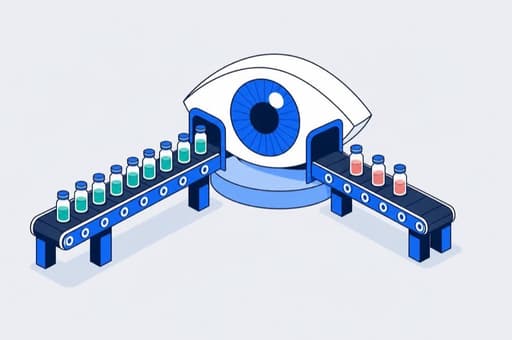
An infusion for thyroid eye disease that contributed $1.9 billion in FY2025. European expansion and a successful under-the-skin version help, but a newly launched rival offers fewer clinic visits.
Competes with Lumvoa (Viridian Therapeutics) · Elegrobart (Viridian Therapeutics) · Rituxan (Roche / Biogen)
In plain English
Thyroid eye disease can make tissue behind the eyes swell, pushing them forward and causing pain or double vision. TEPEZZA is given through a vein and blocks a signal involved in that swelling. It reaches a small group of patients, but each treatment course is valuable.
Eye and thyroid specialists must recognize the disease, refer the patient to an infusion center and win insurer approval. Amgen is paid as those centers administer the course. Growth can come from more diagnoses, Europe and an easier injection under the skin; the immediate threat is a rival built around fewer infusions.
UPLIZNA
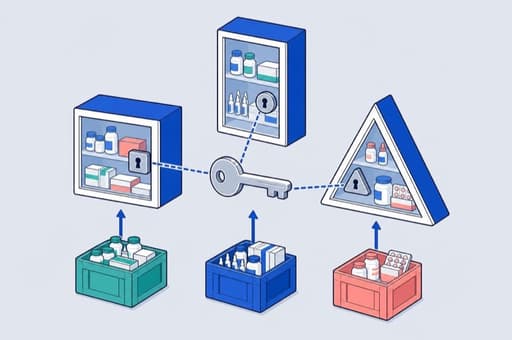
One infused immune medicine now serves three rare diseases after two recent approvals. Second-quarter 2026 sales rose 90%; watch how quickly specialist centers find and start newly eligible patients.
Competes with Enspryng (Roche) · Soliris and Ultomiris (AstraZeneca / Alexion) · Vyvgart Hytrulo and Rystiggo (argenx / UCB)
In plain English
Rare immune diseases often involve the same kind of troublemaker: B cells that help produce harmful attacks on the body. UPLIZNA removes B cells carrying a particular marker and is approved for conditions affecting the nerves, muscles and several organs. One medicine can therefore unlock several small patient groups.
Specialist infusion centers diagnose the illness, confirm that a patient fits the approved use, secure coverage and give recurring doses. Each new use creates another doorway into the same manufacturing and selling system. The opportunity is broad for a rare-disease drug, but finding correctly diagnosed patients remains the bottleneck.
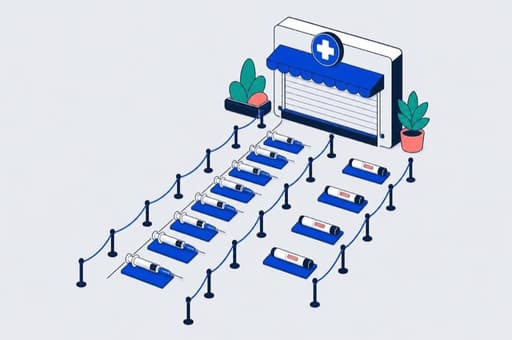
MariTide
Amgen's monthly obesity candidate is its largest disclosed medicine without sales. Nine late-stage studies are under way; results must prove weight loss, tolerability and a lasting convenience edge.
Competes with Zepbound (Eli Lilly) · Wegovy (Novo Nordisk) · VK2735 (Viking Therapeutics) · Retatrutide (Eli Lilly)
In plain English
Here the bet is fewer shots. MariTide is an experimental obesity medicine designed for monthly starting doses and possibly only a handful of maintenance doses each year, rather than the weekly routine of today's leading drugs. It changes two hunger-related signals in the body.
For now, MariTide consumes research and factory spending and earns nothing. Amgen must complete large human studies, show that benefits outweigh side effects, win approval, manufacture at scale and persuade insurers to pay. Only then can prescriptions turn the scientific idea into revenue; established drugs already set a high bar.


 Prolia and XGEVATwo brands built on the same bone-protecting medicine made $6.5 billion in FY2025. Cheaper copies are now taking hold, so the question is how quickly this once-dominant franchise shrinks.
Two brands built on the same bone-protecting medicine made $6.5 billion in FY2025. Cheaper copies are now taking hold, so the question is how quickly this once-dominant franchise shrinks.
In plain English
Think of these as two uses for the same protective coating on bone. Prolia helps people at high risk of osteoporosis fractures; XGEVA helps keep cancer from badly damaging the skeleton and treats certain bone tumors.
Clinics buy and inject the medicine, wholesalers move it, and insurers decide how much of the cost they will cover. Repeat injections made this Amgen's largest medicine family. Its key patents have expired, however, and biosimilars—lower-cost versions of the same biological medicine—are already pulling patients and sales away.
Competes with Jubbonti/Wyost (Sandoz) · Stoboclo/Osenvelt (Celltrion)
 ENBREL and OtezlaThis mature inflammation pair still brought in $4.5 billion in FY2025. Its job is to keep producing cash while lower prices and newer psoriasis and arthritis treatments steadily squeeze it.
This mature inflammation pair still brought in $4.5 billion in FY2025. Its job is to keep producing cash while lower prices and newer psoriasis and arthritis treatments steadily squeeze it.
In plain English
These are long-haul medicines for immune systems that attack the body's own joints or skin. ENBREL is an injection used across rheumatoid arthritis, psoriasis and related illnesses; Otezla is a pill used for psoriasis, psoriatic arthritis and painful mouth ulcers caused by Behçet's disease.
Patients often stay on treatment, which creates repeat prescriptions. Specialty pharmacies and wholesalers deliver the drugs, while insurers and their prescription managers decide access and discounts. That dependable refill engine is aging: ENBREL has suffered sharp price declines, Otezla faces heavy competition, and government-negotiated prices add pressure.
Competes with Humira copies and Rinvoq (AbbVie) · Skyrizi and Tremfya (AbbVie / Johnson & Johnson) · Sotyktu (Bristol Myers Squibb)
 RepathaThis cholesterol-lowering injection supplied $3.0 billion in FY2025. A broader prevention label and growing use by family doctors are opening a larger market; watch whether new prescriptions keep accelerating.
This cholesterol-lowering injection supplied $3.0 billion in FY2025. A broader prevention label and growing use by family doctors are opening a larger market; watch whether new prescriptions keep accelerating.
In plain English
Picture cholesterol as debris moving through the body's pipes. Repatha helps the liver clear more of the harmful kind when standard treatment has not reduced a person's risk enough. Patients inject it at home after a doctor prescribes it.
Amgen is paid each time pharmacies and wholesalers supply a dose, usually after an insurer approves coverage. The medicine started mainly with heart specialists, but family doctors now account for much of its growth. Wider use depends on treatment guidelines, simple approval rules, patients staying on schedule and reliable injector supply.
Competes with Leqvio (Novartis) · Praluent (Regeneron / Sanofi)
 EVENITYA year-long bone-building treatment for women at very high fracture risk. Second-quarter 2026 sales rose 38% year over year; watch whether doctors keep choosing it before follow-on bone-preserving medicines.
A year-long bone-building treatment for women at very high fracture risk. Second-quarter 2026 sales rose 38% year over year; watch whether doctors keep choosing it before follow-on bone-preserving medicines.
In plain English
Most osteoporosis drugs try to slow bone loss. EVENITY also helps build bone, so doctors use it for postmenopausal women whose fracture risk is especially high, then switch them to a medicine that preserves the gain. The course lasts a year.
Specialists identify eligible women and arrange the injections; insurers must agree that the risk justifies the cost. Amgen manufactures the medicine, shares worldwide development and selling economics with UCB, and relies on Astellas to sell it in Japan. More diagnoses and a place early in the treatment sequence turn into sales.
Competes with Forteo and teriparatide copies (Eli Lilly / multiple manufacturers) · Tymlos (Radius Health) · Teribone (Asahi Kasei)
 TEZSPIRETEZSPIRE blocks an early trigger behind severe asthma and now nasal polyps. Second-quarter 2026 sales grew 42%; watch whether the newer use and promising swallowing-disease study can widen demand beyond asthma.
TEZSPIRE blocks an early trigger behind severe asthma and now nasal polyps. Second-quarter 2026 sales grew 42%; watch whether the newer use and promising swallowing-disease study can widen demand beyond asthma.
In plain English
Instead of chasing one kind of airway inflammation, TEZSPIRE turns down a signal near the top of the chain that sets several kinds in motion. Doctors prescribe the injection for severe asthma and, more recently, nasal growths that block breathing.
Specialists find patients whose usual medicines are not enough, insurers set the steps needed for approval, and continued injections create repeat sales. Amgen supplies the drug and records mainly its United States business, while AstraZeneca leads selling elsewhere and shares the development and commercial economics. New approved uses can feed the same partnership.
Competes with Dupixent (Regeneron / Sanofi) · Fasenra (AstraZeneca) · Nucala (GSK)
 BLINCYTO, IMDELLTRA and the BiTE platformBLINCYTO and IMDELLTRA made $2.2 billion in FY2025 by redirecting the body's defenders toward blood and lung cancers. The platform grows if Amgen can repeat that targeting trick across more tumors.
BLINCYTO and IMDELLTRA made $2.2 billion in FY2025 by redirecting the body's defenders toward blood and lung cancers. The platform grows if Amgen can repeat that targeting trick across more tumors.
In plain English
A BiTE medicine acts like a double-ended clasp. One end grabs a cancer cell and the other grabs a T cell—one of the body's defenders—bringing them close enough for the defender to attack. BLINCYTO does this in a form of leukemia; IMDELLTRA does it in small-cell lung cancer after earlier treatment.
Cancer centers buy and infuse the drugs for eligible patients. Revenue rises with each treatment course, but hospitals must be able to manage side effects and insurers must cover the label. Amgen also uses the same clasp design as a workshop for future cancer medicines.
Competes with Besponsa (Pfizer) · Zepzelca (Jazz Pharmaceuticals) · Topotecan generics (Multiple manufacturers)
 TEPEZZAAn infusion for thyroid eye disease that contributed $1.9 billion in FY2025. European expansion and a successful under-the-skin version help, but a newly launched rival offers fewer clinic visits.
An infusion for thyroid eye disease that contributed $1.9 billion in FY2025. European expansion and a successful under-the-skin version help, but a newly launched rival offers fewer clinic visits.
In plain English
Thyroid eye disease can make tissue behind the eyes swell, pushing them forward and causing pain or double vision. TEPEZZA is given through a vein and blocks a signal involved in that swelling. It reaches a small group of patients, but each treatment course is valuable.
Eye and thyroid specialists must recognize the disease, refer the patient to an infusion center and win insurer approval. Amgen is paid as those centers administer the course. Growth can come from more diagnoses, Europe and an easier injection under the skin; the immediate threat is a rival built around fewer infusions.
Competes with Lumvoa (Viridian Therapeutics) · Elegrobart (Viridian Therapeutics) · Rituxan (Roche / Biogen)
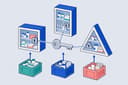 UPLIZNAOne infused immune medicine now serves three rare diseases after two recent approvals. Second-quarter 2026 sales rose 90%; watch how quickly specialist centers find and start newly eligible patients.
One infused immune medicine now serves three rare diseases after two recent approvals. Second-quarter 2026 sales rose 90%; watch how quickly specialist centers find and start newly eligible patients.
In plain English
Rare immune diseases often involve the same kind of troublemaker: B cells that help produce harmful attacks on the body. UPLIZNA removes B cells carrying a particular marker and is approved for conditions affecting the nerves, muscles and several organs. One medicine can therefore unlock several small patient groups.
Specialist infusion centers diagnose the illness, confirm that a patient fits the approved use, secure coverage and give recurring doses. Each new use creates another doorway into the same manufacturing and selling system. The opportunity is broad for a rare-disease drug, but finding correctly diagnosed patients remains the bottleneck.
Competes with Enspryng (Roche) · Soliris and Ultomiris (AstraZeneca / Alexion) · Vyvgart Hytrulo and Rystiggo (argenx / UCB)
 MariTideAmgen's monthly obesity candidate is its largest disclosed medicine without sales. Nine late-stage studies are under way; results must prove weight loss, tolerability and a lasting convenience edge.
Amgen's monthly obesity candidate is its largest disclosed medicine without sales. Nine late-stage studies are under way; results must prove weight loss, tolerability and a lasting convenience edge.
In plain English
Here the bet is fewer shots. MariTide is an experimental obesity medicine designed for monthly starting doses and possibly only a handful of maintenance doses each year, rather than the weekly routine of today's leading drugs. It changes two hunger-related signals in the body.
For now, MariTide consumes research and factory spending and earns nothing. Amgen must complete large human studies, show that benefits outweigh side effects, win approval, manufacture at scale and persuade insurers to pay. Only then can prescriptions turn the scientific idea into revenue; established drugs already set a high bar.
Competes with Zepbound (Eli Lilly) · Wegovy (Novo Nordisk) · VK2735 (Viking Therapeutics) · Retatrutide (Eli Lilly)
Named in filings, launches and programs
- NplateProductImmune blood-disorder medicine that generated $1.5 billion in FY2025 and remains part of the established blood franchise.
- KYPROLISProductBlood-cancer medicine with $1.4 billion in FY2025 sales, adding another substantial leg to the cancer portfolio.
- AranespProductEstablished medicine that stimulates red-blood-cell production and supplied $1.4 billion of FY2025 sales.
- KRYSTEXXAProductHorizon-acquired infusion for uncontrolled gout; FY2025 sales reached $1.3 billion, with supply dependent on one outside source.
- VectibixProductTargeted medicine for selected advanced colorectal cancers, contributing $1.2 billion in FY2025.
- Biosimilars portfolioProduct line · RampingLower-cost versions of established biological drugs; the named products together exceeded $2.3 billion in FY2025 sales.
- TAVNEOSProductBlood-vessel inflammation medicine facing proposed U.S. withdrawal and a UK suspension for new patients over doubts about its key study.
- LUMAKRAS/LUMYKRASProductLung-cancer medicine for tumors with a particular gene change; FY2025 sales were $363 million.
- RAVICTI, PROCYSBI and other ultra-rare productsProduct lineHorizon-acquired medicines for rare metabolic diseases; the two named products generated $598 million in FY2025.
- Aimovig, Neulasta, Parsabiv and other established productsProduct lineMigraine, infection-support, dialysis and other older medicines form a broad tail that still helps fund newer launches.
- Other revenuesServiceRoyalties, milestone payments, partner income and shared profits supplied 4.4% of FY2025 revenue.
- AmgenNowCustomer programCash-pay channel selling Repatha directly for $239 a month and Aimovig or AMJEVITA for $299 a month.
- Olpasiran, xaluritamig and dazodalibepProduct · Pre-revenueLate-stage heart, cancer and immune-disease candidates that broaden the pipeline beyond MariTide but do not yet produce sales.
- Dark Blue Therapeutics and DBT-3757Brand · Pre-revenueEarly cancer program added through a January 2026 acquisition worth up to $840 million; it remains well before sales.
- BeOne China collaborationCustomer programBeOne sells XGEVA, BLINCYTO and KYPROLIS in China under shared economics; Amgen supplied it $266 million of product in FY2025.
- McKesson, Cencora and Cardinal HealthEcosystemThese three wholesalers handled 77% of FY2025 gross sales, making medicine distribution unusually concentrated even though patient demand is diffuse.
NplateProduct
Immune blood-disorder medicine that generated $1.5 billion in FY2025 and remains part of the established blood franchise.
KYPROLISProduct
Blood-cancer medicine with $1.4 billion in FY2025 sales, adding another substantial leg to the cancer portfolio.
AranespProduct
Established medicine that stimulates red-blood-cell production and supplied $1.4 billion of FY2025 sales.
KRYSTEXXAProduct
Horizon-acquired infusion for uncontrolled gout; FY2025 sales reached $1.3 billion, with supply dependent on one outside source.
VectibixProduct
Targeted medicine for selected advanced colorectal cancers, contributing $1.2 billion in FY2025.
Biosimilars portfolioProduct line · Ramping
Lower-cost versions of established biological drugs; the named products together exceeded $2.3 billion in FY2025 sales.
TAVNEOSProduct
Blood-vessel inflammation medicine facing proposed U.S. withdrawal and a UK suspension for new patients over doubts about its key study.
LUMAKRAS/LUMYKRASProduct
Lung-cancer medicine for tumors with a particular gene change; FY2025 sales were $363 million.
RAVICTI, PROCYSBI and other ultra-rare productsProduct line
Horizon-acquired medicines for rare metabolic diseases; the two named products generated $598 million in FY2025.
Aimovig, Neulasta, Parsabiv and other established productsProduct line
Migraine, infection-support, dialysis and other older medicines form a broad tail that still helps fund newer launches.
Other revenuesService
Royalties, milestone payments, partner income and shared profits supplied 4.4% of FY2025 revenue.
AmgenNowCustomer program
Cash-pay channel selling Repatha directly for $239 a month and Aimovig or AMJEVITA for $299 a month.
Olpasiran, xaluritamig and dazodalibepProduct · Pre-revenue
Late-stage heart, cancer and immune-disease candidates that broaden the pipeline beyond MariTide but do not yet produce sales.
Dark Blue Therapeutics and DBT-3757Brand · Pre-revenue
Early cancer program added through a January 2026 acquisition worth up to $840 million; it remains well before sales.
BeOne China collaborationCustomer program
BeOne sells XGEVA, BLINCYTO and KYPROLIS in China under shared economics; Amgen supplied it $266 million of product in FY2025.
McKesson, Cencora and Cardinal HealthEcosystem
These three wholesalers handled 77% of FY2025 gross sales, making medicine distribution unusually concentrated even though patient demand is diffuse.