
Atmos Energy (ATO)
Delivers regulated natural gas and operates Texas pipeline and storage infrastructure.
Something off on this page? Send us feedback.
Atmos Energy pipes natural gas to homes and businesses across eight states, and regulators let it earn an agreed return on every dollar of pipe it puts in the ground. Most of the revenue arrives through those meters; much of the profit comes from the Texas pipeline that feeds them. It spends more than it earns on purpose, funding the gap with borrowed money and new shares.
Item facts: 9M FY2026 · nine months ended June 30, 2026, from filings, earnings calls and company pages.
Judgment weights, not filed revenue
The band summarizes business focus and direction. ~ marks estimates.
7 in detail · 9 more below
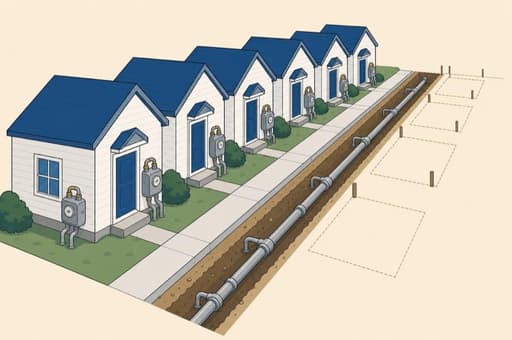
Mid-Tex Division
The Dallas–Fort Worth gas utility and the biggest thing Atmos owns: about 1.8 million meters, more than half the company's total, though mild winters mean each one uses less gas than the system average. Roughly 39,000 of last year's new customers were in Texas.
Competes with Texas Gas Service gas distribution (ONE Gas) · Entex gas distribution (CenterPoint Energy) · Electric heat pumps (Home electric heating)
In plain English
Picture the pipe under a Dallas street that runs up into a water heater. Atmos owns that pipe. It makes nothing on the gas itself — whatever the gas costs is passed straight through onto the bill.
What it earns on is the pipe. Texas regulators count up what Atmos has invested here, about eight billion dollars, and set rates designed to pay that back plus an agreed profit rate, currently a shade under ten percent. So growth is a headcount story: each block of new houses means more meters, more pipe, and a bigger number for the regulator to pay a return on.
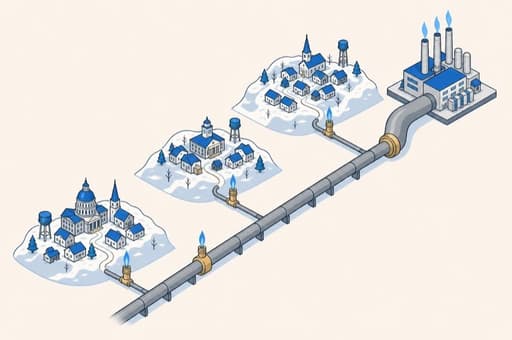
Kentucky/Mid-States Division
Kentucky, Tennessee and Virginia — roughly 364,000 meters in colder country, so each one burns more gas than a Texas meter. New industrial accounts, not new households, are the growth. Watch the slower pace at which two of the three states pay for new pipe.
Competes with Columbia Gas of Kentucky (NiSource) · Municipal gas service (Memphis Light, Gas and Water) · Municipal gas service (Knoxville Utilities Board)
In plain English
Three states, one operation. Atmos delivers gas to about 364,000 homes and businesses in Kentucky, Tennessee and Virginia, where winters bite harder than in Texas, so the same meter moves more gas and the bill behind it runs above the company average.
The money works as it does everywhere else: each state's commission decides what rates cover the pipe Atmos has laid. The catch is timing. Texas now lets Atmos start earning on new pipe within about six months; Kentucky and Virginia have no such fast lane, so cash sits in the ground longer before it earns anything.
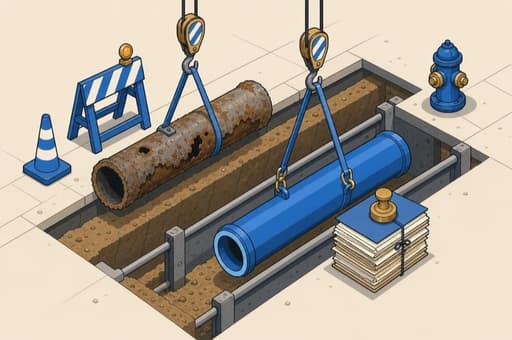
Louisiana Division
About 360,000 meters across 270 Louisiana communities. It barely grows, so earnings follow money spent replacing old pipe rather than new customers; the state's rate formula added $30.3 million of operating income in a recent round.
Competes with Home electric heating (Entergy Louisiana) · Gulf South gas distribution (CenterPoint Energy)
In plain English
A Gulf Coast gas utility that mostly stays the same size. Atmos runs the pipes into homes and shops in 270 Louisiana communities, and there is no rush of newcomers waiting to be connected.
So the business here is maintenance turned into earnings. Atmos replaces aging pipe, and Louisiana's regulators keep a standing formula that lifts rates to cover it without a fresh fight every time. The state also lets the company park the cost of eligible work, with interest, until the next rate proceeding — so the spending still earns while it waits its turn on the bill.
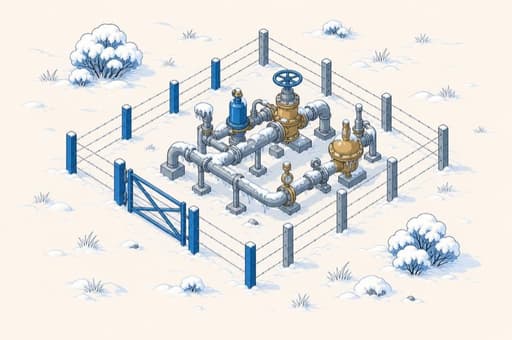
Colorado-Kansas Division
About 271,000 meters in the coldest ground Atmos serves, so each burns the most gas. Kansas allows a prompt surcharge for replacement work; Colorado has no such rider and carries the most policy pressure to move homes onto electricity.
Competes with Kansas Gas Service (ONE Gas) · Electric heat pumps (Home electric heating)
In plain English
Cold country. Around 271,000 homes and businesses in Colorado and Kansas buy gas from Atmos, and because these are the harshest winters in its territory, each customer burns more of it than anyone else on the system — which also makes a warm year the thing that dents revenue here.
Kansas lets Atmos add a surcharge for safety and replacement work fairly promptly. Colorado makes it wait for a full rate case, and Colorado is also where the push to get households off gas and onto electricity has the most momentum. Same pipe, two very different regulators.
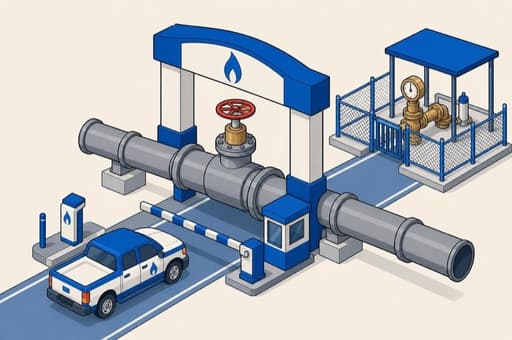
Atmos Pipeline–Texas
Roughly 5,700 miles of pipe and five underground storage fields crossing Texas, with Atmos's own Dallas–Fort Worth utility as the anchor customer. Texas allows an 11.45% return here, the best the company gets. Last year the pipeline side made nearly four of every ten dollars of profit.
Competes with HPL System (Energy Transfer) · Kinder Morgan Texas Pipeline (Kinder Morgan) · Hugh Brinson pipeline (Energy Transfer)
In plain English
Before gas can reach a Dallas stove it has to cross Texas, and Atmos owns the road it travels: roughly 5,700 miles of large pipe plus five underground caverns that hold gas back for a cold snap. Most of the traffic is Atmos's own distribution business paying Atmos's pipeline business.
That sounds circular, and it is, but the money is real, because Texas regulators set the toll and allow a richer return on this pipe than on anything else Atmos owns. One quirk keeps it hidden: money moved from one company pocket to another never counts as revenue, so the pipeline looks slight on the sales line while carrying a heavy share of the earnings.
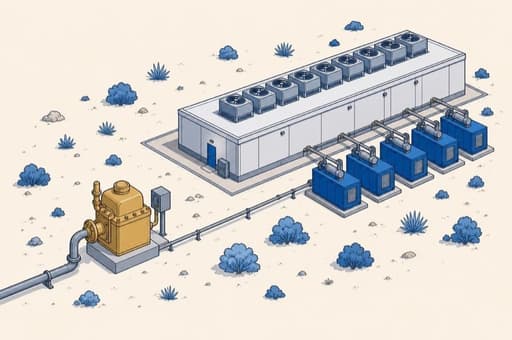
Large-load gas service
Data centers and standby generators are too big and too lumpy for standard rates, so Atmos writes bespoke contracts. One is signed: about 30 billion cubic feet a year to a site near Abilene. Management counts nothing else until contracts exist.
Competes with Grid power connection (ERCOT) · HPL System (Energy Transfer)
In plain English
Some data centers skip the power grid and burn gas on site to make their own electricity. Those loads are huge and swing hour to hour, which does not fit a standard price list, so Atmos negotiates one-off deals instead: the customer may pay to strengthen the pipe, and service can be cut back when the system is stretched.
One such deal exists so far. The Texas pipeline agreed to carry roughly 30 billion cubic feet a year to a site near Abilene, though the buyer has not been named. Three-quarters of what that earns is credited back onto ordinary customers' bills, leaving shareholders the last quarter.
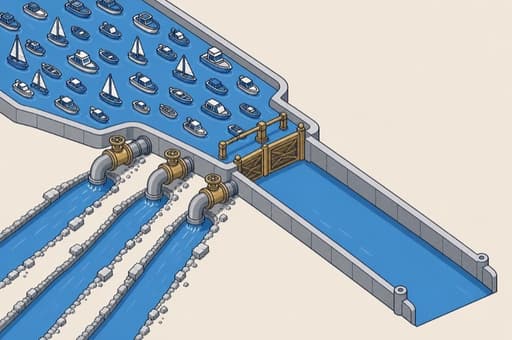
Through-system gas sales
Atmos's Texas pipeline buys gas cheap in West Texas, moves it on spare capacity and sells it where prices are higher. The gap averaged $4.66 over nine months against $1.77 a year earlier — and has narrowed sharply since June as new pipelines opened.
Competes with Gulf Coast Express expansion (Kinder Morgan) · Blackcomb pipeline (WhiteWater) · Hugh Brinson pipeline (Energy Transfer)
In plain English
The one part of Atmos that trades. West Texas oil wells bring up gas as a by-product, and when there is not enough pipe to carry it away it sells for almost nothing — this spring sellers were briefly paying people to take it. Atmos's pipeline has spare room, so it buys there and sells at the busy end of the line.
It is a good trade until the queue clears. Three new pipelines out of West Texas opened between late May and July, and the gap Atmos had been harvesting narrowed. Three of every four dollars above a set benchmark goes back onto households' bills, so Atmos keeps the last quarter of it.


 Mid-Tex DivisionThe Dallas–Fort Worth gas utility and the biggest thing Atmos owns: about 1.8 million meters, more than half the company's total, though mild winters mean each one uses less gas than the system average. Roughly 39,000 of last year's new customers were in Texas.
The Dallas–Fort Worth gas utility and the biggest thing Atmos owns: about 1.8 million meters, more than half the company's total, though mild winters mean each one uses less gas than the system average. Roughly 39,000 of last year's new customers were in Texas.
In plain English
Picture the pipe under a Dallas street that runs up into a water heater. Atmos owns that pipe. It makes nothing on the gas itself — whatever the gas costs is passed straight through onto the bill.
What it earns on is the pipe. Texas regulators count up what Atmos has invested here, about eight billion dollars, and set rates designed to pay that back plus an agreed profit rate, currently a shade under ten percent. So growth is a headcount story: each block of new houses means more meters, more pipe, and a bigger number for the regulator to pay a return on.
Competes with Texas Gas Service gas distribution (ONE Gas) · Entex gas distribution (CenterPoint Energy) · Electric heat pumps (Home electric heating)
 Kentucky/Mid-States DivisionKentucky, Tennessee and Virginia — roughly 364,000 meters in colder country, so each one burns more gas than a Texas meter. New industrial accounts, not new households, are the growth. Watch the slower pace at which two of the three states pay for new pipe.
Kentucky, Tennessee and Virginia — roughly 364,000 meters in colder country, so each one burns more gas than a Texas meter. New industrial accounts, not new households, are the growth. Watch the slower pace at which two of the three states pay for new pipe.
In plain English
Three states, one operation. Atmos delivers gas to about 364,000 homes and businesses in Kentucky, Tennessee and Virginia, where winters bite harder than in Texas, so the same meter moves more gas and the bill behind it runs above the company average.
The money works as it does everywhere else: each state's commission decides what rates cover the pipe Atmos has laid. The catch is timing. Texas now lets Atmos start earning on new pipe within about six months; Kentucky and Virginia have no such fast lane, so cash sits in the ground longer before it earns anything.
Competes with Columbia Gas of Kentucky (NiSource) · Municipal gas service (Memphis Light, Gas and Water) · Municipal gas service (Knoxville Utilities Board)
 Louisiana DivisionAbout 360,000 meters across 270 Louisiana communities. It barely grows, so earnings follow money spent replacing old pipe rather than new customers; the state's rate formula added $30.3 million of operating income in a recent round.
About 360,000 meters across 270 Louisiana communities. It barely grows, so earnings follow money spent replacing old pipe rather than new customers; the state's rate formula added $30.3 million of operating income in a recent round.
In plain English
A Gulf Coast gas utility that mostly stays the same size. Atmos runs the pipes into homes and shops in 270 Louisiana communities, and there is no rush of newcomers waiting to be connected.
So the business here is maintenance turned into earnings. Atmos replaces aging pipe, and Louisiana's regulators keep a standing formula that lifts rates to cover it without a fresh fight every time. The state also lets the company park the cost of eligible work, with interest, until the next rate proceeding — so the spending still earns while it waits its turn on the bill.
Competes with Home electric heating (Entergy Louisiana) · Gulf South gas distribution (CenterPoint Energy)
 Colorado-Kansas DivisionAbout 271,000 meters in the coldest ground Atmos serves, so each burns the most gas. Kansas allows a prompt surcharge for replacement work; Colorado has no such rider and carries the most policy pressure to move homes onto electricity.
About 271,000 meters in the coldest ground Atmos serves, so each burns the most gas. Kansas allows a prompt surcharge for replacement work; Colorado has no such rider and carries the most policy pressure to move homes onto electricity.
In plain English
Cold country. Around 271,000 homes and businesses in Colorado and Kansas buy gas from Atmos, and because these are the harshest winters in its territory, each customer burns more of it than anyone else on the system — which also makes a warm year the thing that dents revenue here.
Kansas lets Atmos add a surcharge for safety and replacement work fairly promptly. Colorado makes it wait for a full rate case, and Colorado is also where the push to get households off gas and onto electricity has the most momentum. Same pipe, two very different regulators.
Competes with Kansas Gas Service (ONE Gas) · Electric heat pumps (Home electric heating)
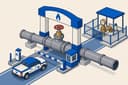 Atmos Pipeline–TexasRoughly 5,700 miles of pipe and five underground storage fields crossing Texas, with Atmos's own Dallas–Fort Worth utility as the anchor customer. Texas allows an 11.45% return here, the best the company gets. Last year the pipeline side made nearly four of every ten dollars of profit.
Roughly 5,700 miles of pipe and five underground storage fields crossing Texas, with Atmos's own Dallas–Fort Worth utility as the anchor customer. Texas allows an 11.45% return here, the best the company gets. Last year the pipeline side made nearly four of every ten dollars of profit.
In plain English
Before gas can reach a Dallas stove it has to cross Texas, and Atmos owns the road it travels: roughly 5,700 miles of large pipe plus five underground caverns that hold gas back for a cold snap. Most of the traffic is Atmos's own distribution business paying Atmos's pipeline business.
That sounds circular, and it is, but the money is real, because Texas regulators set the toll and allow a richer return on this pipe than on anything else Atmos owns. One quirk keeps it hidden: money moved from one company pocket to another never counts as revenue, so the pipeline looks slight on the sales line while carrying a heavy share of the earnings.
Competes with HPL System (Energy Transfer) · Kinder Morgan Texas Pipeline (Kinder Morgan) · Hugh Brinson pipeline (Energy Transfer)
 Large-load gas serviceData centers and standby generators are too big and too lumpy for standard rates, so Atmos writes bespoke contracts. One is signed: about 30 billion cubic feet a year to a site near Abilene. Management counts nothing else until contracts exist.
Data centers and standby generators are too big and too lumpy for standard rates, so Atmos writes bespoke contracts. One is signed: about 30 billion cubic feet a year to a site near Abilene. Management counts nothing else until contracts exist.
In plain English
Some data centers skip the power grid and burn gas on site to make their own electricity. Those loads are huge and swing hour to hour, which does not fit a standard price list, so Atmos negotiates one-off deals instead: the customer may pay to strengthen the pipe, and service can be cut back when the system is stretched.
One such deal exists so far. The Texas pipeline agreed to carry roughly 30 billion cubic feet a year to a site near Abilene, though the buyer has not been named. Three-quarters of what that earns is credited back onto ordinary customers' bills, leaving shareholders the last quarter.
Competes with Grid power connection (ERCOT) · HPL System (Energy Transfer)
 Through-system gas salesAtmos's Texas pipeline buys gas cheap in West Texas, moves it on spare capacity and sells it where prices are higher. The gap averaged $4.66 over nine months against $1.77 a year earlier — and has narrowed sharply since June as new pipelines opened.
Atmos's Texas pipeline buys gas cheap in West Texas, moves it on spare capacity and sells it where prices are higher. The gap averaged $4.66 over nine months against $1.77 a year earlier — and has narrowed sharply since June as new pipelines opened.
In plain English
The one part of Atmos that trades. West Texas oil wells bring up gas as a by-product, and when there is not enough pipe to carry it away it sells for almost nothing — this spring sellers were briefly paying people to take it. Atmos's pipeline has spare room, so it buys there and sells at the busy end of the line.
It is a good trade until the queue clears. Three new pipelines out of West Texas opened between late May and July, and the gap Atmos had been harvesting narrowed. Three of every four dollars above a set benchmark goes back onto households' bills, so Atmos keeps the last quarter of it.
Competes with Gulf Coast Express expansion (Kinder Morgan) · Blackcomb pipeline (WhiteWater) · Hugh Brinson pipeline (Energy Transfer)
Named in filings, launches and programs
- West Texas DivisionSegmentAmarillo, Lubbock and Midland: about 316,000 meters in 80 communities, charging for new pipe through Texas's fast-track rate mechanisms.
- Mississippi DivisionSegmentAbout 250,000 meters in 110 communities; a March 2026 filing asks for $37.8 million more a year on a $1.3 billion investment base.
- Bethel and Tri-City storageServiceUnderground caverns holding gas back for Dallas–Fort Worth cold snaps; 29-mile connection projects are due in service by the end of 2026.
- Line S2 / Carthage compressorService · AnnouncedA compressor station built to push more gas through the pipeline's 36-inch S2 line, in either direction.
- Northwest Metroplex loopService · AnnouncedThe last 15 miles of a 92-mile loop of 36-inch pipe on the Texas system, due in service by the end of 2026.
- Rider REV sharing tariffEcosystemThe rule splitting the pipeline's trading gains: three-quarters of anything above roughly $107 million a year goes back onto customers' bills.
- Texas six-month recovery ruleEcosystemA Texas rule finalised in May 2026 lets Atmos start earning on almost all new pipe within six months — worth $155–165 million before tax this year.
- Forward share-sale programServiceAtmos pre-sells shares at agreed prices to help fund the build-out; about $937 million was still undrawn at the end of June 2026.
- Atmos Energy Kansas Securitization IBrandA financing arm set up to recover extraordinary gas costs in Kansas; it runs no operations of its own.
West Texas DivisionSegment
Amarillo, Lubbock and Midland: about 316,000 meters in 80 communities, charging for new pipe through Texas's fast-track rate mechanisms.
Mississippi DivisionSegment
About 250,000 meters in 110 communities; a March 2026 filing asks for $37.8 million more a year on a $1.3 billion investment base.
Bethel and Tri-City storageService
Underground caverns holding gas back for Dallas–Fort Worth cold snaps; 29-mile connection projects are due in service by the end of 2026.
Line S2 / Carthage compressorService · Announced
A compressor station built to push more gas through the pipeline's 36-inch S2 line, in either direction.
Northwest Metroplex loopService · Announced
The last 15 miles of a 92-mile loop of 36-inch pipe on the Texas system, due in service by the end of 2026.
Rider REV sharing tariffEcosystem
The rule splitting the pipeline's trading gains: three-quarters of anything above roughly $107 million a year goes back onto customers' bills.
Texas six-month recovery ruleEcosystem
A Texas rule finalised in May 2026 lets Atmos start earning on almost all new pipe within six months — worth $155–165 million before tax this year.
Forward share-sale programService
Atmos pre-sells shares at agreed prices to help fund the build-out; about $937 million was still undrawn at the end of June 2026.
Atmos Energy Kansas Securitization IBrand
A financing arm set up to recover extraordinary gas costs in Kansas; it runs no operations of its own.