
Alibaba Group (ADR) (BABA)
Connects commerce marketplaces, logistics, cloud infrastructure and Qwen AI across China and international markets.
Something off on this page? Send us feedback.
Alibaba runs Taobao and Tmall, the Chinese shopping apps where merchants pay to be seen, and that business still earns the profit. It is pouring the cash into bets: renting computing power and AI models through Alibaba Cloud, designing its own AI chips, and delivering meals and groceries in under an hour. The shopping fees are slipping while the bets burn more cash than the group brings in.
Item facts: FY2026 · year ended Mar 31, 2026, from filings, earnings calls and company pages.
Judgment weights, not filed revenue
The band summarizes business focus and direction. ~ marks estimates.
7 in detail · 18 more below
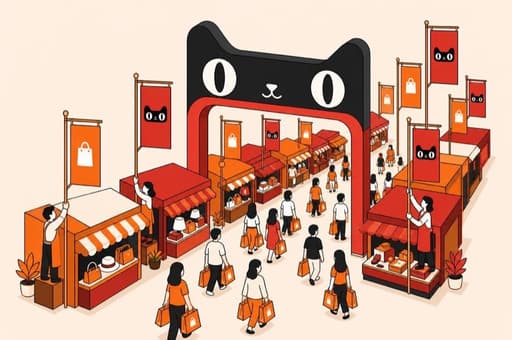
Taobao and Tmall
Alibaba's profit engine: China shopping earned RMB 107.5B in profit last year on RMB 343.9B of merchant ad and commission fees. Those fees fell 7% in the June 2026 quarter, with Pinduoduo — first by 2025 sales — and Douyin chasing the same shoppers.
Competes with Pinduoduo (PDD Holdings) · Douyin e-commerce (ByteDance) · JD.com shopping app (JD.com)
In plain English
Think of a vast online market street. Taobao is the bustling end, full of independent shops and factory sellers; Tmall is the polished end where brands run their official stores. Alibaba mostly owns the street, not the goods on its shelves.
So the shopkeepers pay. They buy ads that lift their products up the search results — largely through an automated tool that spreads their budget across the whole site — and hand over a cut of each sale. Alibaba also sells some goods itself, like groceries through Tmall Supermarket, at thin margins. Big spenders can also pay for an 88VIP membership.
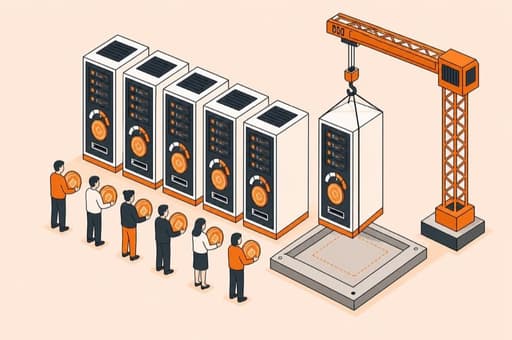
Alibaba Cloud
Rents computing power and AI models to businesses; sales to outside customers grew 45% in the June 2026 quarter, with AI products about a third of them. Watch the build-out bill: data-centre spending ran well above the cash the whole group brought in last year.
Competes with Huawei Cloud (Huawei) · Tencent Cloud (Tencent) · Volcano Engine (ByteDance)
In plain English
Most companies would rather not own a room full of computers, so they rent them — the way you might take a taxi instead of buying a car. Alibaba Cloud is the taxi fleet: computing power, storage and databases in data centres across about thirty regions, billed by how much each customer uses.
Customers range from SAP and the bank ICBC to Bosch. The fast-growing part is AI: businesses pay to run AI models, charged by the chunk of text a model reads or writes. Demand has outrun supply, so Alibaba has raised those prices. The catch: every new data centre is paid for up front, and an AI server takes about three years to earn back its cost.
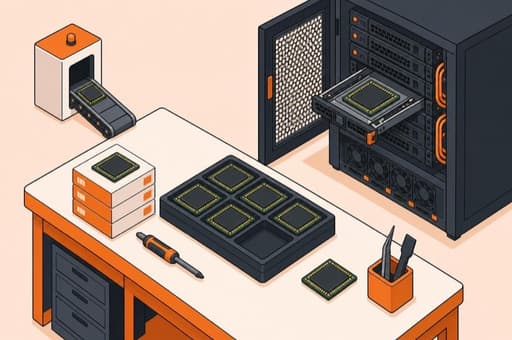
T-Head (Zhenwu AI chips)
Alibaba's own AI chips: sales at roughly RMB 10B a year and more than 650 customers so far. The bigger Zhenwu V900 is due in volume in early 2027; home-grown rivals Huawei's Ascend and Cambricon are expected to supply more of China's AI servers.
Competes with Ascend AI chips (Huawei) · AI server chips (Cambricon) · GPUs (Nvidia)
In plain English
Every AI data centre is packed with chips that do the actual computing. T-Head is Alibaba's in-house chip unit, and Zhenwu is its line of AI chips, built so Alibaba does not have to buy every one from outside suppliers.
Most are not sold outright. They sit in Alibaba's data centres and customers rent their power through Alibaba Cloud — Moonshot AI runs its Kimi model on them, and China Telecom opened a data centre with ten thousand of them. Every home-made chip that replaces a bought one makes the cloud cheaper to run. The limit is manufacturing: Chinese chip factories can only make so many.
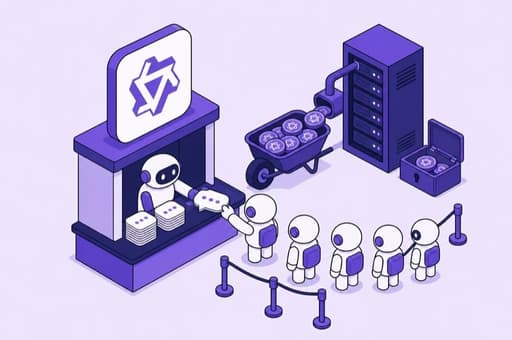
Qwen (AI Labs and Applications)
Alibaba's AI models and chatbot app brought in RMB 3.3B but lost RMB 13.9B in the June 2026 quarter. ByteDance's Doubao has more than twice the app's monthly users, and U.S. agencies accuse Alibaba of training on American models' answers.
Competes with Doubao (ByteDance) · DeepSeek models and app (DeepSeek) · Kimi (Moonshot AI)
In plain English
Qwen is Alibaba's family of AI models — the software brains behind a chatbot — plus the Qwen app that puts one on your phone. Alibaba publishes many of the models for anyone to download and run on their own computers, and they have been downloaded billions of times.
Businesses that would rather not run Qwen themselves pay to use it through Alibaba Cloud, and most of what that cloud earns from renting out AI models comes from Alibaba's own. The app is expensive to keep answering questions; since May 2026 it also lets people shop Taobao and Tmall from inside the chat.

Taobao Instant Commerce, Ele.me & Freshippo
Under-an-hour delivery, bought with discounts: sales rose 47% to RMB 78.5B last year, and its losses are the main drag on China shopping profit. With Freshippo folded in, it was about a fifth of June 2026 quarter revenue. Meituan still handles more daily orders.
Competes with Meituan food delivery and instant retail (Meituan) · JD instant delivery (JD.com)
In plain English
Order a coffee, a bag of groceries or a phone charger and have it at your door within the hour. Alibaba does this through Taobao Instant Commerce, launched in April 2025 on the riders of Ele.me, its food-delivery app, with Freshippo warehouses and thousands of brands' own shops acting as the shelves.
Each order brings in only a few yuan, while Alibaba pays riders and hands out discounts to win customers from Meituan. That is why it loses money today. The payoff so far is more people opening the Taobao app; management targets profit by fiscal 2029.
AliExpress, Trendyol & Lazada
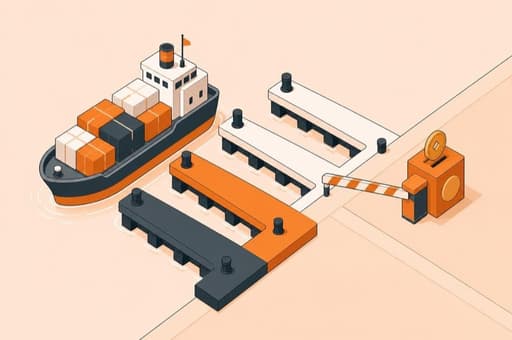
Alibaba's shopping sites outside China: RMB 117.7B of sales last year, and the loss shrank from RMB 15.1B to RMB 2.1B. Sales slipped 1% in the June 2026 quarter under tariffs, and Temu wins about three times AliExpress's share of cross-border buyers.
Competes with Temu (PDD Holdings) · Shein (Shein) · Amazon marketplace (Amazon)
In plain English
Three shopping sites outside China, each built differently. AliExpress ships goods from Chinese sellers to buyers in other countries, and increasingly keeps stock in warehouses in thirty-plus countries so parcels arrive sooner. Trendyol and Lazada are local marketplaces, where sellers and shoppers are in the same country.
After a heavy loss the year before, the business nearly broke even last year, and AliExpress turned a profit in the June 2026 quarter. Its weak spot is border rules: tariffs, and a new flat duty on cheap parcels entering the European Union since July 2026.
Alibaba.com and 1688
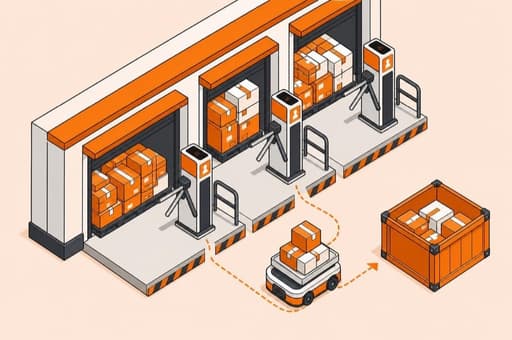
Where businesses find factories: RMB 52.8B of revenue last year, split almost evenly between cross-border and domestic trade, growing 8–11%. Watch Accio Work, the AI sourcing helper merchants have started paying for.
Competes with Global Sources marketplace and trade shows (Global Sources) · Made-in-China.com supplier directory (Made-in-China.com) · DHgate (DHgate) · Amazon Business (Amazon)
In plain English
Before a shop can sell a product, someone has to find the factory that makes it. Alibaba.com is a directory for cross-border trade — buyers in one country finding suppliers in another — with tens of millions of registered buyers and about two hundred thousand checked suppliers. 1688 does the same for trade inside China.
The suppliers pay: memberships to be listed, and extras to stand out to buyers. The newest extra is Accio Work, an AI helper that does sourcing legwork for merchants; tens of thousands paid for it soon after launch.


 Taobao and TmallAlibaba's profit engine: China shopping earned RMB 107.5B in profit last year on RMB 343.9B of merchant ad and commission fees. Those fees fell 7% in the June 2026 quarter, with Pinduoduo — first by 2025 sales — and Douyin chasing the same shoppers.
Alibaba's profit engine: China shopping earned RMB 107.5B in profit last year on RMB 343.9B of merchant ad and commission fees. Those fees fell 7% in the June 2026 quarter, with Pinduoduo — first by 2025 sales — and Douyin chasing the same shoppers.
In plain English
Think of a vast online market street. Taobao is the bustling end, full of independent shops and factory sellers; Tmall is the polished end where brands run their official stores. Alibaba mostly owns the street, not the goods on its shelves.
So the shopkeepers pay. They buy ads that lift their products up the search results — largely through an automated tool that spreads their budget across the whole site — and hand over a cut of each sale. Alibaba also sells some goods itself, like groceries through Tmall Supermarket, at thin margins. Big spenders can also pay for an 88VIP membership.
Competes with Pinduoduo (PDD Holdings) · Douyin e-commerce (ByteDance) · JD.com shopping app (JD.com)
 Alibaba CloudRents computing power and AI models to businesses; sales to outside customers grew 45% in the June 2026 quarter, with AI products about a third of them. Watch the build-out bill: data-centre spending ran well above the cash the whole group brought in last year.
Rents computing power and AI models to businesses; sales to outside customers grew 45% in the June 2026 quarter, with AI products about a third of them. Watch the build-out bill: data-centre spending ran well above the cash the whole group brought in last year.
In plain English
Most companies would rather not own a room full of computers, so they rent them — the way you might take a taxi instead of buying a car. Alibaba Cloud is the taxi fleet: computing power, storage and databases in data centres across about thirty regions, billed by how much each customer uses.
Customers range from SAP and the bank ICBC to Bosch. The fast-growing part is AI: businesses pay to run AI models, charged by the chunk of text a model reads or writes. Demand has outrun supply, so Alibaba has raised those prices. The catch: every new data centre is paid for up front, and an AI server takes about three years to earn back its cost.
Competes with Huawei Cloud (Huawei) · Tencent Cloud (Tencent) · Volcano Engine (ByteDance)
 T-Head (Zhenwu AI chips)Alibaba's own AI chips: sales at roughly RMB 10B a year and more than 650 customers so far. The bigger Zhenwu V900 is due in volume in early 2027; home-grown rivals Huawei's Ascend and Cambricon are expected to supply more of China's AI servers.
Alibaba's own AI chips: sales at roughly RMB 10B a year and more than 650 customers so far. The bigger Zhenwu V900 is due in volume in early 2027; home-grown rivals Huawei's Ascend and Cambricon are expected to supply more of China's AI servers.
In plain English
Every AI data centre is packed with chips that do the actual computing. T-Head is Alibaba's in-house chip unit, and Zhenwu is its line of AI chips, built so Alibaba does not have to buy every one from outside suppliers.
Most are not sold outright. They sit in Alibaba's data centres and customers rent their power through Alibaba Cloud — Moonshot AI runs its Kimi model on them, and China Telecom opened a data centre with ten thousand of them. Every home-made chip that replaces a bought one makes the cloud cheaper to run. The limit is manufacturing: Chinese chip factories can only make so many.
Competes with Ascend AI chips (Huawei) · AI server chips (Cambricon) · GPUs (Nvidia)
 Qwen (AI Labs and Applications)Alibaba's AI models and chatbot app brought in RMB 3.3B but lost RMB 13.9B in the June 2026 quarter. ByteDance's Doubao has more than twice the app's monthly users, and U.S. agencies accuse Alibaba of training on American models' answers.
Alibaba's AI models and chatbot app brought in RMB 3.3B but lost RMB 13.9B in the June 2026 quarter. ByteDance's Doubao has more than twice the app's monthly users, and U.S. agencies accuse Alibaba of training on American models' answers.
In plain English
Qwen is Alibaba's family of AI models — the software brains behind a chatbot — plus the Qwen app that puts one on your phone. Alibaba publishes many of the models for anyone to download and run on their own computers, and they have been downloaded billions of times.
Businesses that would rather not run Qwen themselves pay to use it through Alibaba Cloud, and most of what that cloud earns from renting out AI models comes from Alibaba's own. The app is expensive to keep answering questions; since May 2026 it also lets people shop Taobao and Tmall from inside the chat.
Competes with Doubao (ByteDance) · DeepSeek models and app (DeepSeek) · Kimi (Moonshot AI)
 Taobao Instant Commerce, Ele.me & FreshippoUnder-an-hour delivery, bought with discounts: sales rose 47% to RMB 78.5B last year, and its losses are the main drag on China shopping profit. With Freshippo folded in, it was about a fifth of June 2026 quarter revenue. Meituan still handles more daily orders.
Under-an-hour delivery, bought with discounts: sales rose 47% to RMB 78.5B last year, and its losses are the main drag on China shopping profit. With Freshippo folded in, it was about a fifth of June 2026 quarter revenue. Meituan still handles more daily orders.
In plain English
Order a coffee, a bag of groceries or a phone charger and have it at your door within the hour. Alibaba does this through Taobao Instant Commerce, launched in April 2025 on the riders of Ele.me, its food-delivery app, with Freshippo warehouses and thousands of brands' own shops acting as the shelves.
Each order brings in only a few yuan, while Alibaba pays riders and hands out discounts to win customers from Meituan. That is why it loses money today. The payoff so far is more people opening the Taobao app; management targets profit by fiscal 2029.
Competes with Meituan food delivery and instant retail (Meituan) · JD instant delivery (JD.com)
 AliExpress, Trendyol & LazadaAlibaba's shopping sites outside China: RMB 117.7B of sales last year, and the loss shrank from RMB 15.1B to RMB 2.1B. Sales slipped 1% in the June 2026 quarter under tariffs, and Temu wins about three times AliExpress's share of cross-border buyers.
Alibaba's shopping sites outside China: RMB 117.7B of sales last year, and the loss shrank from RMB 15.1B to RMB 2.1B. Sales slipped 1% in the June 2026 quarter under tariffs, and Temu wins about three times AliExpress's share of cross-border buyers.
In plain English
Three shopping sites outside China, each built differently. AliExpress ships goods from Chinese sellers to buyers in other countries, and increasingly keeps stock in warehouses in thirty-plus countries so parcels arrive sooner. Trendyol and Lazada are local marketplaces, where sellers and shoppers are in the same country.
After a heavy loss the year before, the business nearly broke even last year, and AliExpress turned a profit in the June 2026 quarter. Its weak spot is border rules: tariffs, and a new flat duty on cheap parcels entering the European Union since July 2026.
Competes with Temu (PDD Holdings) · Shein (Shein) · Amazon marketplace (Amazon)
 Alibaba.com and 1688Where businesses find factories: RMB 52.8B of revenue last year, split almost evenly between cross-border and domestic trade, growing 8–11%. Watch Accio Work, the AI sourcing helper merchants have started paying for.
Where businesses find factories: RMB 52.8B of revenue last year, split almost evenly between cross-border and domestic trade, growing 8–11%. Watch Accio Work, the AI sourcing helper merchants have started paying for.
In plain English
Before a shop can sell a product, someone has to find the factory that makes it. Alibaba.com is a directory for cross-border trade — buyers in one country finding suppliers in another — with tens of millions of registered buyers and about two hundred thousand checked suppliers. 1688 does the same for trade inside China.
The suppliers pay: memberships to be listed, and extras to stand out to buyers. The newest extra is Accio Work, an AI helper that does sourcing legwork for merchants; tens of thousands paid for it soon after launch.
Competes with Global Sources marketplace and trade shows (Global Sources) · Made-in-China.com supplier directory (Made-in-China.com) · DHgate (DHgate) · Amazon Business (Amazon)
Named in filings, launches and programs
- Model Studio (Bailian)Platform · RampingAlibaba Cloud's counter for renting AI models by the chunk of text; running above RMB 16B a year by August 2026, targeting RMB 30B by year-end.
- QwenWorkProduct · RampingQwen-powered AI agents — software that carries out tasks, not just answers questions — sold to companies; launched by August 2026.
- WukongPlatform · RampingAn AI agent platform launched in March 2026 under Alibaba Token Hub, an AI unit formed that month.
- 88VIPCustomer programPaid membership for Taobao and Tmall's high spenders, with more than sixty million members.
- QuanzhantuiProductThe automated ad tool that spreads a merchant's budget across the whole site; it raised how much of each sale ends up as Alibaba's fees.
- Tmall SupermarketServiceGroceries Alibaba buys and sells itself, now being merged into its under-an-hour delivery service.
- FliggyPlatformTravel booking app, folded into the China shopping group in 2025.
- Accio WorkProduct · RampingThe AI sourcing helper on Alibaba.com, with over ten million monthly users; more than fifty thousand merchants paid for it soon after launch.
- CainiaoBrandAlibaba's logistics arm; its commerce-facing units moved into the e-commerce group in mid-2026.
- AmapPlatformMaps and local-services app used daily by a few hundred million people.
- Alibaba HealthBrandOnline pharmacy, reported alongside Alibaba's smaller businesses.
- Youku (Hujing Digital Media & Entertainment)BrandVideo streaming and entertainment; profitable for three quarters running by September 2025.
- Lingxi GamesBrandAlibaba's games studio, reported alongside the smaller businesses.
- DingTalkProductWorkplace chat and office app, given AI helpers in August 2025.
- Ant GroupBrandOperator of Alipay, a payment partner for Taobao and Tmall; Alibaba owns a third and counts its share of Ant's profit, not Ant's sales.
- SAP partnershipCustomer programSince August 2025, Alibaba Cloud has been SAP's global cloud partner.
- China Telecom Shaoguan data centreCustomer programBuilt with China Telecom and opened April 2026, running ten thousand Zhenwu chips.
- Moonshot AI (Kimi K3)Customer programA rival AI lab that is also a customer: it serves its Kimi K3 model through Alibaba Cloud on Zhenwu chips.
Model Studio (Bailian)Platform · Ramping
Alibaba Cloud's counter for renting AI models by the chunk of text; running above RMB 16B a year by August 2026, targeting RMB 30B by year-end.
QwenWorkProduct · Ramping
Qwen-powered AI agents — software that carries out tasks, not just answers questions — sold to companies; launched by August 2026.
WukongPlatform · Ramping
An AI agent platform launched in March 2026 under Alibaba Token Hub, an AI unit formed that month.
88VIPCustomer program
Paid membership for Taobao and Tmall's high spenders, with more than sixty million members.
QuanzhantuiProduct
The automated ad tool that spreads a merchant's budget across the whole site; it raised how much of each sale ends up as Alibaba's fees.
Tmall SupermarketService
Groceries Alibaba buys and sells itself, now being merged into its under-an-hour delivery service.
FliggyPlatform
Travel booking app, folded into the China shopping group in 2025.
Accio WorkProduct · Ramping
The AI sourcing helper on Alibaba.com, with over ten million monthly users; more than fifty thousand merchants paid for it soon after launch.
CainiaoBrand
Alibaba's logistics arm; its commerce-facing units moved into the e-commerce group in mid-2026.
AmapPlatform
Maps and local-services app used daily by a few hundred million people.
Alibaba HealthBrand
Online pharmacy, reported alongside Alibaba's smaller businesses.
Youku (Hujing Digital Media & Entertainment)Brand
Video streaming and entertainment; profitable for three quarters running by September 2025.
Lingxi GamesBrand
Alibaba's games studio, reported alongside the smaller businesses.
DingTalkProduct
Workplace chat and office app, given AI helpers in August 2025.
Ant GroupBrand
Operator of Alipay, a payment partner for Taobao and Tmall; Alibaba owns a third and counts its share of Ant's profit, not Ant's sales.
SAP partnershipCustomer program
Since August 2025, Alibaba Cloud has been SAP's global cloud partner.
China Telecom Shaoguan data centreCustomer program
Built with China Telecom and opened April 2026, running ten thousand Zhenwu chips.
Moonshot AI (Kimi K3)Customer program
A rival AI lab that is also a customer: it serves its Kimi K3 model through Alibaba Cloud on Zhenwu chips.