
Biogen (BIIB)
Develops neurological medicines spanning MS, rare disease, Alzheimer’s, and complement-mediated conditions.
Something off on this page? Send us feedback.
Biogen makes prescription medicines for diseases of the brain and nerves — multiple sclerosis above all. That older business is shrinking as cheap copies arrive, so the company has been buying and licensing its way into rare disease, Alzheimer's, and now eye, kidney and immune conditions. Money from an old partnership with Roche quietly covers a fifth of the bills. Whether the new medicines grow faster than the old ones fade is the whole story.
Item facts: FY2025 · year ended Dec 31, 2025, from filings, earnings calls and company pages.
Judgment weights, not filed revenue
The band summarizes business focus and direction. ~ marks estimates.
7 in detail · 10 more below
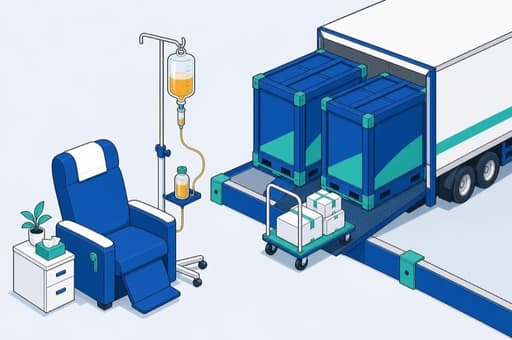
TYSABRI
Biogen's biggest single medicine, for multiple sclerosis, at 16.8% of revenue. Sandoz put a near-identical copy on US shelves in November 2025; sales have held up so far, and whether they keep holding is the thing to watch.
Competes with TYRUKO (Sandoz) · OCREVUS (Roche) · KESIMPTA (Novartis)
In plain English
A medicine for multiple sclerosis — a disease in which the body's own defences damage the nerves — given either as a drip at a clinic or as a shot under the skin.
Health plans pay for it as one of the stronger options, and it has been Biogen's largest single seller for years. The vials don't go straight to clinics: Biogen sells them to a few enormous drug distributors, and just two of those accounted for more than four in every ten dollars of product sales in early 2026. The patents protecting it have expired, and Sandoz now sells a near-identical copy in the United States.
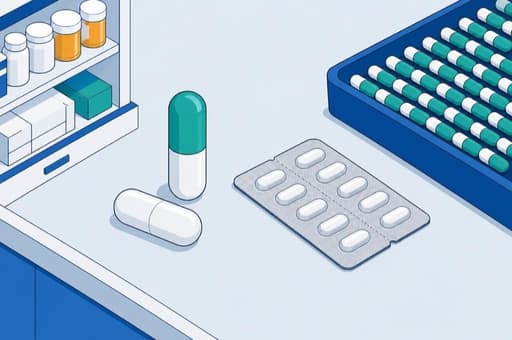
Fumarate (TECFIDERA and VUMERITY)
Two multiple sclerosis pills from the same chemical family: TECFIDERA, now widely copied, and VUMERITY, the easier-on-the-stomach follow-on that overtook it during 2025. Together 14.4% of revenue, and the line stepped down hard once European generics landed.
Competes with Generic dimethyl fumarate (Multiple generic makers) · Genericised Gilenya (Novartis) · OCREVUS (Roche)
In plain English
Pills, swallowed at home, for the same nerve disease TYSABRI treats — no clinic, no drip. TECFIDERA was the original. VUMERITY is a reworked version designed to upset the stomach less, and it is the one Biogen still promotes.
Once a drug's patent lapses, any manufacturer can sell the same molecule at a fraction of the brand price, and pharmacies swap it in. That happened to TECFIDERA in the United States and then across Europe, which is why the combined line dropped through 2025 and has sat flat since. VUMERITY's own protection is what keeps the franchise off generic pricing.
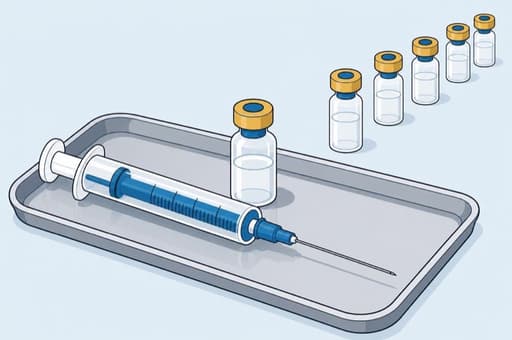
SPINRAZA
A spinal injection for spinal muscular atrophy, a rare inherited muscle-wasting disease. 15.6% of revenue. Sales bottomed out at the end of 2025 and recovered through 2026 as patients moved to a higher dose; a convenient oral rival keeps pulling at it.
Competes with EVRYSDI (Roche) · ZOLGENSMA (Novartis) · salanersen (Biogen)
In plain English
Spinal muscular atrophy is a rare inherited disease in which the muscles slowly waste away. This medicine holds that off rather than curing it, so it has to be given over and over — injected into the fluid around the spine, at a specialist centre.
That repetition is the business: every patient who stays on it keeps paying, year after year. Biogen licensed the drug from Ionis, a smaller biotech, and owes it a share of every sale. A stronger dose approved first in Japan, then Europe, then the US costs the same to stay on, with one extra charge while a patient switches — which is what nudged sales back up in 2026.
SKYCLARYS
The only approved treatment for Friedreich's ataxia, an inherited illness that takes away balance and coordination. 5.3% of revenue and growing fast off a small base — the constraint is finding and reaching patients rather than beating a rival.
Competes with Nomlabofusp (Larimar Therapeutics) · Vatiquinone (PTC Therapeutics)
In plain English
Perhaps a couple of thousand people are on this drug worldwide. Friedreich's ataxia — an inherited illness that gradually takes away balance and coordination — had nothing approved to treat it until this medicine arrived, only help with the symptoms.
Biogen didn't invent it; it bought the company that did, Reata. The money then comes market by market: get the drug cleared in another country, get a health system there to agree to pay, then find the few people who actually have the disease. It had reached 36 countries by mid-2026. In the US, required Medicare discounts hold down what Biogen keeps per patient.
Anti-CD20 therapeutic programs
Biogen's financial stake in four antibody drugs that Roche's Genentech sells, OCREVUS the largest. 18.8% of revenue with no sales force behind it, and it grew 10% in the spring 2026 quarter. Biogen cannot defend it if OCREVUS loses patients.
Competes with KESIMPTA (Novartis) · BRIUMVI (TG Therapeutics) · Rituximab biosimilars (Sandoz)
In plain English
Out of an old partnership with Genentech — Roche's biotech arm — Biogen kept a financial stake in a family of antibody drugs instead of the job of selling them. Genentech makes them, promotes them and books the sales; Biogen receives a slice, a set cut of OCREVUS sales plus a share of the American profits on three sister drugs.
It is the closest thing a drug company has to rent. There is no sales force to pay and no factory shift attached, so nearly the whole amount drops through. What Biogen cannot do is defend it: if newer multiple sclerosis drugs take patients from OCREVUS, the cheque simply shrinks.
SYFOVRE and EMPAVELI
Bought with Apellis in May 2026 for about $5.6 billion: an injection into the eye for a retina-damaging disease, and a sister medicine for rare conditions including two kidney diseases. They added $128M in a first partial quarter and are a reason 2026 guidance went up.
Competes with IZERVAY (Astellas) · FABHALTA (Novartis) · SOLIRIS and ULTOMIRIS (AstraZeneca)
In plain English
Two medicines built on the same molecule, one injected into the eye and one given into the body. The eye one, SYFOVRE, slows a disease that eats away at the retina; EMPAVELI treats a small set of rare disorders, and in 2025 US regulators cleared it for two kidney diseases in patients as young as twelve.
Biogen built neither. It paid about $5.6 billion for Apellis, the biotech that owned them, with an extra payment promised if SYFOVRE sells well enough. These are new doors to knock on — eye specialists and kidney doctors, not the brain and nerve doctors Biogen has always called on.
LEQEMBI
The Alzheimer's drug Biogen co-owns with Eisai, which does the selling. Biogen books only its half — $177.7M in 2025, 1.8% of revenue — and sales are climbing fast: $184M worldwide in the spring 2026 quarter alone.
Competes with KISUNLA (Eli Lilly) · Generic memantine and cholinesterase inhibitors (Generic makers)
In plain English
The most-discussed drug on Biogen's earnings calls, and the smallest line on this map. It goes after the protein build-up in the brain that drives Alzheimer's, rather than the symptoms. Eisai, Biogen's partner on it, does the selling worldwide while Biogen makes batches of it; the two split the economics down the middle, so only half ever reaches Biogen's revenue.
The bottleneck isn't interest in the drug — it's plumbing. The medicine goes in by drip at an infusion centre, and there are roughly thirteen thousand US brain specialists against something like half a million new diagnoses a year. A self-injection version for starting treatment was approved in July 2026 to widen the front of that queue.


 TYSABRIBiogen's biggest single medicine, for multiple sclerosis, at 16.8% of revenue. Sandoz put a near-identical copy on US shelves in November 2025; sales have held up so far, and whether they keep holding is the thing to watch.
Biogen's biggest single medicine, for multiple sclerosis, at 16.8% of revenue. Sandoz put a near-identical copy on US shelves in November 2025; sales have held up so far, and whether they keep holding is the thing to watch.
In plain English
A medicine for multiple sclerosis — a disease in which the body's own defences damage the nerves — given either as a drip at a clinic or as a shot under the skin.
Health plans pay for it as one of the stronger options, and it has been Biogen's largest single seller for years. The vials don't go straight to clinics: Biogen sells them to a few enormous drug distributors, and just two of those accounted for more than four in every ten dollars of product sales in early 2026. The patents protecting it have expired, and Sandoz now sells a near-identical copy in the United States.
Competes with TYRUKO (Sandoz) · OCREVUS (Roche) · KESIMPTA (Novartis)
 Fumarate (TECFIDERA and VUMERITY)Two multiple sclerosis pills from the same chemical family: TECFIDERA, now widely copied, and VUMERITY, the easier-on-the-stomach follow-on that overtook it during 2025. Together 14.4% of revenue, and the line stepped down hard once European generics landed.
Two multiple sclerosis pills from the same chemical family: TECFIDERA, now widely copied, and VUMERITY, the easier-on-the-stomach follow-on that overtook it during 2025. Together 14.4% of revenue, and the line stepped down hard once European generics landed.
In plain English
Pills, swallowed at home, for the same nerve disease TYSABRI treats — no clinic, no drip. TECFIDERA was the original. VUMERITY is a reworked version designed to upset the stomach less, and it is the one Biogen still promotes.
Once a drug's patent lapses, any manufacturer can sell the same molecule at a fraction of the brand price, and pharmacies swap it in. That happened to TECFIDERA in the United States and then across Europe, which is why the combined line dropped through 2025 and has sat flat since. VUMERITY's own protection is what keeps the franchise off generic pricing.
Competes with Generic dimethyl fumarate (Multiple generic makers) · Genericised Gilenya (Novartis) · OCREVUS (Roche)
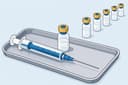 SPINRAZAA spinal injection for spinal muscular atrophy, a rare inherited muscle-wasting disease. 15.6% of revenue. Sales bottomed out at the end of 2025 and recovered through 2026 as patients moved to a higher dose; a convenient oral rival keeps pulling at it.
A spinal injection for spinal muscular atrophy, a rare inherited muscle-wasting disease. 15.6% of revenue. Sales bottomed out at the end of 2025 and recovered through 2026 as patients moved to a higher dose; a convenient oral rival keeps pulling at it.
In plain English
Spinal muscular atrophy is a rare inherited disease in which the muscles slowly waste away. This medicine holds that off rather than curing it, so it has to be given over and over — injected into the fluid around the spine, at a specialist centre.
That repetition is the business: every patient who stays on it keeps paying, year after year. Biogen licensed the drug from Ionis, a smaller biotech, and owes it a share of every sale. A stronger dose approved first in Japan, then Europe, then the US costs the same to stay on, with one extra charge while a patient switches — which is what nudged sales back up in 2026.
Competes with EVRYSDI (Roche) · ZOLGENSMA (Novartis) · salanersen (Biogen)
 SKYCLARYSThe only approved treatment for Friedreich's ataxia, an inherited illness that takes away balance and coordination. 5.3% of revenue and growing fast off a small base — the constraint is finding and reaching patients rather than beating a rival.
The only approved treatment for Friedreich's ataxia, an inherited illness that takes away balance and coordination. 5.3% of revenue and growing fast off a small base — the constraint is finding and reaching patients rather than beating a rival.
In plain English
Perhaps a couple of thousand people are on this drug worldwide. Friedreich's ataxia — an inherited illness that gradually takes away balance and coordination — had nothing approved to treat it until this medicine arrived, only help with the symptoms.
Biogen didn't invent it; it bought the company that did, Reata. The money then comes market by market: get the drug cleared in another country, get a health system there to agree to pay, then find the few people who actually have the disease. It had reached 36 countries by mid-2026. In the US, required Medicare discounts hold down what Biogen keeps per patient.
Competes with Nomlabofusp (Larimar Therapeutics) · Vatiquinone (PTC Therapeutics)
 Anti-CD20 therapeutic programsBiogen's financial stake in four antibody drugs that Roche's Genentech sells, OCREVUS the largest. 18.8% of revenue with no sales force behind it, and it grew 10% in the spring 2026 quarter. Biogen cannot defend it if OCREVUS loses patients.
Biogen's financial stake in four antibody drugs that Roche's Genentech sells, OCREVUS the largest. 18.8% of revenue with no sales force behind it, and it grew 10% in the spring 2026 quarter. Biogen cannot defend it if OCREVUS loses patients.
In plain English
Out of an old partnership with Genentech — Roche's biotech arm — Biogen kept a financial stake in a family of antibody drugs instead of the job of selling them. Genentech makes them, promotes them and books the sales; Biogen receives a slice, a set cut of OCREVUS sales plus a share of the American profits on three sister drugs.
It is the closest thing a drug company has to rent. There is no sales force to pay and no factory shift attached, so nearly the whole amount drops through. What Biogen cannot do is defend it: if newer multiple sclerosis drugs take patients from OCREVUS, the cheque simply shrinks.
Competes with KESIMPTA (Novartis) · BRIUMVI (TG Therapeutics) · Rituximab biosimilars (Sandoz)
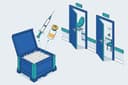 SYFOVRE and EMPAVELIBought with Apellis in May 2026 for about $5.6 billion: an injection into the eye for a retina-damaging disease, and a sister medicine for rare conditions including two kidney diseases. They added $128M in a first partial quarter and are a reason 2026 guidance went up.
Bought with Apellis in May 2026 for about $5.6 billion: an injection into the eye for a retina-damaging disease, and a sister medicine for rare conditions including two kidney diseases. They added $128M in a first partial quarter and are a reason 2026 guidance went up.
In plain English
Two medicines built on the same molecule, one injected into the eye and one given into the body. The eye one, SYFOVRE, slows a disease that eats away at the retina; EMPAVELI treats a small set of rare disorders, and in 2025 US regulators cleared it for two kidney diseases in patients as young as twelve.
Biogen built neither. It paid about $5.6 billion for Apellis, the biotech that owned them, with an extra payment promised if SYFOVRE sells well enough. These are new doors to knock on — eye specialists and kidney doctors, not the brain and nerve doctors Biogen has always called on.
Competes with IZERVAY (Astellas) · FABHALTA (Novartis) · SOLIRIS and ULTOMIRIS (AstraZeneca)
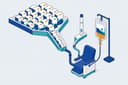 LEQEMBIThe Alzheimer's drug Biogen co-owns with Eisai, which does the selling. Biogen books only its half — $177.7M in 2025, 1.8% of revenue — and sales are climbing fast: $184M worldwide in the spring 2026 quarter alone.
The Alzheimer's drug Biogen co-owns with Eisai, which does the selling. Biogen books only its half — $177.7M in 2025, 1.8% of revenue — and sales are climbing fast: $184M worldwide in the spring 2026 quarter alone.
In plain English
The most-discussed drug on Biogen's earnings calls, and the smallest line on this map. It goes after the protein build-up in the brain that drives Alzheimer's, rather than the symptoms. Eisai, Biogen's partner on it, does the selling worldwide while Biogen makes batches of it; the two split the economics down the middle, so only half ever reaches Biogen's revenue.
The bottleneck isn't interest in the drug — it's plumbing. The medicine goes in by drip at an infusion centre, and there are roughly thirteen thousand US brain specialists against something like half a million new diagnoses a year. A self-injection version for starting treatment was approved in July 2026 to widen the front of that queue.
Competes with KISUNLA (Eli Lilly) · Generic memantine and cholinesterase inhibitors (Generic makers)
Named in filings, launches and programs
- Contract manufacturing, royalty and other revenueServiceMaking medicine batches for other companies, Eisai among them — $732.9M in 2025, guided to roughly $600M in 2026, at thinner margins than Biogen's own drugs.
- ZURZUVAEProductA two-week course of pills for depression after childbirth; $195.1M in 2025, nearly triple the year before. US profits are split evenly with Supernus.
- QALSODYProduct · RampingFor a genetic form of ALS, licensed from Ionis. Small but growing fast — $86.9M in 2025 against $32.4M the year before.
- Apellis PharmaceuticalsBrandThe biotech behind SYFOVRE and EMPAVELI, wholly owned since May 2026; Reuters reported programme cuts within weeks of the deal closing.
- salanersenProduct · Pre-revenueBiogen's own once-a-year successor to SPINRAZA; the first patient in its final-stage trial was dosed in spring 2026.
- litifilimabProduct · Pre-revenueAn antibody for lupus, where the immune system attacks the body's own tissue. Late-stage results promised for late 2026; Royalty Pharma funds part of the work.
- felzartamabProduct · Pre-revenueAn antibody acquired with HI-Bio, in late-stage testing across three conditions; its first readout was pulled forward to early 2027, and Biogen bought China rights for $100M.
- zorevunersenProduct · Pre-revenueA medicine for Dravet syndrome; Biogen paid Stoke $165M in 2025 for the rights outside the US, Canada and Mexico.
- diranersen (BIIB080)Product · Pre-revenueDeveloped with Ionis to target a brain protein called tau; its mid-stage trial missed its main goal in May 2026 and the shares dropped that day.
- RayTheraBrand · Pre-revenueAn immunology company Biogen bought in August 2026 for up to $1B — early research, nothing on the market yet.
Contract manufacturing, royalty and other revenueService
Making medicine batches for other companies, Eisai among them — $732.9M in 2025, guided to roughly $600M in 2026, at thinner margins than Biogen's own drugs.
ZURZUVAEProduct
A two-week course of pills for depression after childbirth; $195.1M in 2025, nearly triple the year before. US profits are split evenly with Supernus.
QALSODYProduct · Ramping
For a genetic form of ALS, licensed from Ionis. Small but growing fast — $86.9M in 2025 against $32.4M the year before.
Apellis PharmaceuticalsBrand
The biotech behind SYFOVRE and EMPAVELI, wholly owned since May 2026; Reuters reported programme cuts within weeks of the deal closing.
salanersenProduct · Pre-revenue
Biogen's own once-a-year successor to SPINRAZA; the first patient in its final-stage trial was dosed in spring 2026.
litifilimabProduct · Pre-revenue
An antibody for lupus, where the immune system attacks the body's own tissue. Late-stage results promised for late 2026; Royalty Pharma funds part of the work.
felzartamabProduct · Pre-revenue
An antibody acquired with HI-Bio, in late-stage testing across three conditions; its first readout was pulled forward to early 2027, and Biogen bought China rights for $100M.
zorevunersenProduct · Pre-revenue
A medicine for Dravet syndrome; Biogen paid Stoke $165M in 2025 for the rights outside the US, Canada and Mexico.
diranersen (BIIB080)Product · Pre-revenue
Developed with Ionis to target a brain protein called tau; its mid-stage trial missed its main goal in May 2026 and the shares dropped that day.
RayTheraBrand · Pre-revenue
An immunology company Biogen bought in August 2026 for up to $1B — early research, nothing on the market yet.