
Capricor Therapeutics (CAPR)
Develops deramiocel for Duchenne muscular dystrophy and StealthX exosome therapies.
Something off on this page? Send us feedback.
Capricor is a one-drug company with no sales yet: it grows a treatment from donor-heart cells for Duchenne, a rare muscle disease, and is waiting for the FDA to say yes. All its past income came from one distribution partner it is now trying to cut loose. So the story is a single approval, a small plant that must grow, and possibly launching the drug on its own.
Item facts: FY2025 + H1 2026 filings, from filings, earnings calls and company pages.
Judgment weights, not filed revenue
The band summarizes business focus and direction. ~ marks estimates.
6 in detail · 8 more below
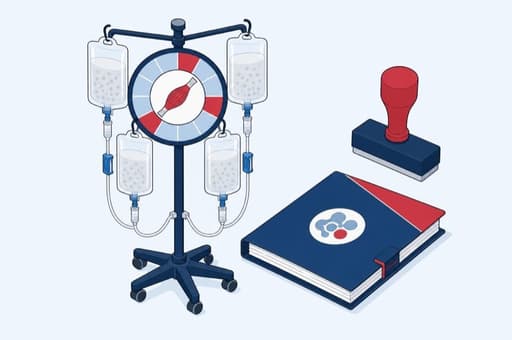
Deramiocel (CAP-1002) for Duchenne muscular dystrophy
The whole company: a donor-cell infusion given four times a year. The FDA said no in July 2025, then took it back for review; the November 22, 2026 decision rides on arm-function results after an expert panel voted 3–9 against the heart claim.
Competes with Ifetroban (Cumberland Pharmaceuticals) · Duvyzat (givinostat) (Italfarmaco) · Elevidys gene therapy (Sarepta)
In plain English
It starts with a donated heart that cannot be used for a transplant. Capricor grows cells from that tissue in its own plant, freezes them, and drips them into a patient's vein once every three months. The patients have Duchenne, a rare disease in which muscles weaken over time.
If the FDA says yes, money comes per dose — four a year for each patient, for as long as treatment continues — so every new patient works more like a subscription than a one-off sale. The price has not been made public. A trial of 106 patients hit its main goal on arm and hand function, but the FDA's outside experts doubted the heart results.
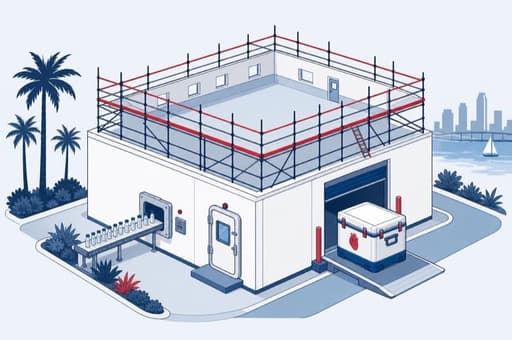
San Diego manufacturing plant and expansion
Capricor's own plant passed its FDA inspection in 2025 and can supply roughly 200–250 patients a year. An expansion aimed at about ten times that needs its own FDA sign-off, expected in 2027 — until then, supply limits sales.
Competes with Ryoncil cell therapy (Mesoblast) · Elevidys one-time dose (Sarepta) · SGT-003 gene therapy (Solid Biosciences) · RGX-202 gene therapy (Regenxbio)
In plain English
A small bakery with one oven. Every dose of deramiocel is made here, in sealed super-clean rooms, from donor hearts supplied by organ-donation groups. Today those rooms can turn out about a thousand doses a year — enough for a couple of hundred patients on four doses each.
At first that limit matters more than demand: management once counted several thousand U.S. patients as eligible. A second floor with roughly six more clean rooms is meant to lift output tenfold, but it needs FDA approval, targeted for 2027. Doses cannot even be stockpiled early, because each must be labeled before it is frozen, and the label waits on approval.

U.S. Commercialization and Distribution Agreement (Nippon Shinyaku / NS Pharma)
NS Pharma paid all of Capricor's 2022–24 revenue — about $50M — for sole U.S. selling rights. It promised $80M on approval, but Capricor sued in May 2026 to undo the deal and expects no more payments.
Competes with Viltepso sales team (NS Pharma) · In-house DMD franchise (Sarepta)
In plain English
Think of it as hiring an established shop to sell your product. In 2022 Capricor gave NS Pharma, Nippon Shinyaku's U.S. business, the sole right to sell deramiocel in America; NS already had about 125 people selling its own Duchenne drug. NS paid $30M upfront plus two $10M step payments, and on paper owes $80M on approval, up to $605M more as sales grow, and Capricor 30–50% of every sales dollar.
The fight is about price. What NS pays Capricor would set the average price that insurers' repayments to clinics are based on, and Capricor's chief executive says clinics would fall hundreds of thousands of dollars short per dose. Undoing the deal could mean handing back about $50M; the dispute now goes to private arbitration.

Japan Distribution Agreement (Nippon Shinyaku)
Nippon Shinyaku holds Japan rights and paid $12.0M upfront in 2023, with up to ~$89M more in step payments. It only matters after U.S. approval — and this partner is Capricor's opponent in the U.S. dispute.
Competes with Elevidys in Japan (Chugai / Sarepta) · Viltepso (Nippon Shinyaku)
In plain English
Same partner, different country. In 2023 Nippon Shinyaku bought the sole right to sell deramiocel in Japan: $12.0M upfront, which Capricor holds but will not count as sales until the drug gets there, up to about $89M in step payments, and a "meaningful double-digit share" of sales.
Nothing moves until the U.S. approves the drug first. Talks with regulators in Japan and Europe began only in 2026, and the San Diego plant was designed to supply those markets too. The awkward part: this is the same company Capricor is fighting over the American rights.
Deramiocel for Becker muscular dystrophy
The first planned second use for the same infusion, in roughly 5,000 U.S. patients with a slower cousin of Duchenne. Still at the lab stage; FDA talks wait until after the Duchenne decision, and trial starts wait on earlier steps.
Competes with Sevasemten (Edgewise Therapeutics) · Givinostat for Becker (Italfarmaco)
In plain English
Becker is Duchenne in slow motion, as Capricor's chief executive describes it: the same underlying problem, moving more gently, with the heart muscle giving out as the main cause of death. That makes it the natural next patient group for the same infusion, made in the same plant.
There is no trial and no price yet. Capricor has held off FDA talks because a sellable FDA reward for treating rare children's diseases, which it hopes to win with Duchenne, requires a children-only label. Rivals are further along: Edgewise Therapeutics expects key results for its pill by the end of 2026.
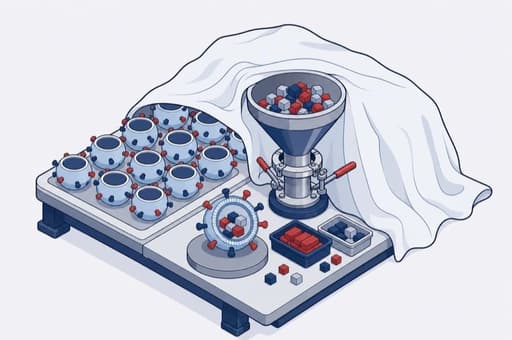
StealthX exosome platform
Lab-made bubbles designed to carry medicines into muscle. In March 2026 Capricor aimed for a first human trial application in 2027; by August all work outside deramiocel was on hold, waiting on the Duchenne decision.
Competes with ExoEdit exosomes (Evox Therapeutics) · DYNE-251 (Dyne Therapeutics) · AOC 1044 (del-zota) (Avidity Biosciences)
In plain English
Cells release tiny bubbles called exosomes. StealthX grows those bubbles from a standard lab-grown human cell line, engineers them to seek out muscle, and loads them with different kinds of medicine — molecules that switch off faulty genes, proteins, or ordinary small drugs.
Because one bubble design can carry many cargoes, the same platform could in principle lead to several medicines. None exists yet, and none earns money. Capricor put the work on hold in August 2026, so what happens next depends on how much cash is left after the Duchenne decision. Evox Therapeutics, a company built on the same kind of bubbles, aims for its first human tests in 2027.


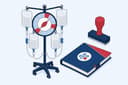 Deramiocel (CAP-1002) for Duchenne muscular dystrophyThe whole company: a donor-cell infusion given four times a year. The FDA said no in July 2025, then took it back for review; the November 22, 2026 decision rides on arm-function results after an expert panel voted 3–9 against the heart claim.
The whole company: a donor-cell infusion given four times a year. The FDA said no in July 2025, then took it back for review; the November 22, 2026 decision rides on arm-function results after an expert panel voted 3–9 against the heart claim.
In plain English
It starts with a donated heart that cannot be used for a transplant. Capricor grows cells from that tissue in its own plant, freezes them, and drips them into a patient's vein once every three months. The patients have Duchenne, a rare disease in which muscles weaken over time.
If the FDA says yes, money comes per dose — four a year for each patient, for as long as treatment continues — so every new patient works more like a subscription than a one-off sale. The price has not been made public. A trial of 106 patients hit its main goal on arm and hand function, but the FDA's outside experts doubted the heart results.
Competes with Ifetroban (Cumberland Pharmaceuticals) · Duvyzat (givinostat) (Italfarmaco) · Elevidys gene therapy (Sarepta)
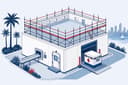 San Diego manufacturing plant and expansionCapricor's own plant passed its FDA inspection in 2025 and can supply roughly 200–250 patients a year. An expansion aimed at about ten times that needs its own FDA sign-off, expected in 2027 — until then, supply limits sales.
Capricor's own plant passed its FDA inspection in 2025 and can supply roughly 200–250 patients a year. An expansion aimed at about ten times that needs its own FDA sign-off, expected in 2027 — until then, supply limits sales.
In plain English
A small bakery with one oven. Every dose of deramiocel is made here, in sealed super-clean rooms, from donor hearts supplied by organ-donation groups. Today those rooms can turn out about a thousand doses a year — enough for a couple of hundred patients on four doses each.
At first that limit matters more than demand: management once counted several thousand U.S. patients as eligible. A second floor with roughly six more clean rooms is meant to lift output tenfold, but it needs FDA approval, targeted for 2027. Doses cannot even be stockpiled early, because each must be labeled before it is frozen, and the label waits on approval.
Competes with Ryoncil cell therapy (Mesoblast) · Elevidys one-time dose (Sarepta) · SGT-003 gene therapy (Solid Biosciences) · RGX-202 gene therapy (Regenxbio)
 U.S. Commercialization and Distribution Agreement (Nippon Shinyaku / NS Pharma)NS Pharma paid all of Capricor's 2022–24 revenue — about $50M — for sole U.S. selling rights. It promised $80M on approval, but Capricor sued in May 2026 to undo the deal and expects no more payments.
NS Pharma paid all of Capricor's 2022–24 revenue — about $50M — for sole U.S. selling rights. It promised $80M on approval, but Capricor sued in May 2026 to undo the deal and expects no more payments.
In plain English
Think of it as hiring an established shop to sell your product. In 2022 Capricor gave NS Pharma, Nippon Shinyaku's U.S. business, the sole right to sell deramiocel in America; NS already had about 125 people selling its own Duchenne drug. NS paid $30M upfront plus two $10M step payments, and on paper owes $80M on approval, up to $605M more as sales grow, and Capricor 30–50% of every sales dollar.
The fight is about price. What NS pays Capricor would set the average price that insurers' repayments to clinics are based on, and Capricor's chief executive says clinics would fall hundreds of thousands of dollars short per dose. Undoing the deal could mean handing back about $50M; the dispute now goes to private arbitration.
Competes with Viltepso sales team (NS Pharma) · In-house DMD franchise (Sarepta)
 Japan Distribution Agreement (Nippon Shinyaku)Nippon Shinyaku holds Japan rights and paid $12.0M upfront in 2023, with up to ~$89M more in step payments. It only matters after U.S. approval — and this partner is Capricor's opponent in the U.S. dispute.
Nippon Shinyaku holds Japan rights and paid $12.0M upfront in 2023, with up to ~$89M more in step payments. It only matters after U.S. approval — and this partner is Capricor's opponent in the U.S. dispute.
In plain English
Same partner, different country. In 2023 Nippon Shinyaku bought the sole right to sell deramiocel in Japan: $12.0M upfront, which Capricor holds but will not count as sales until the drug gets there, up to about $89M in step payments, and a "meaningful double-digit share" of sales.
Nothing moves until the U.S. approves the drug first. Talks with regulators in Japan and Europe began only in 2026, and the San Diego plant was designed to supply those markets too. The awkward part: this is the same company Capricor is fighting over the American rights.
Competes with Elevidys in Japan (Chugai / Sarepta) · Viltepso (Nippon Shinyaku)
 Deramiocel for Becker muscular dystrophyThe first planned second use for the same infusion, in roughly 5,000 U.S. patients with a slower cousin of Duchenne. Still at the lab stage; FDA talks wait until after the Duchenne decision, and trial starts wait on earlier steps.
The first planned second use for the same infusion, in roughly 5,000 U.S. patients with a slower cousin of Duchenne. Still at the lab stage; FDA talks wait until after the Duchenne decision, and trial starts wait on earlier steps.
In plain English
Becker is Duchenne in slow motion, as Capricor's chief executive describes it: the same underlying problem, moving more gently, with the heart muscle giving out as the main cause of death. That makes it the natural next patient group for the same infusion, made in the same plant.
There is no trial and no price yet. Capricor has held off FDA talks because a sellable FDA reward for treating rare children's diseases, which it hopes to win with Duchenne, requires a children-only label. Rivals are further along: Edgewise Therapeutics expects key results for its pill by the end of 2026.
Competes with Sevasemten (Edgewise Therapeutics) · Givinostat for Becker (Italfarmaco)
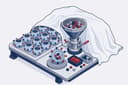 StealthX exosome platformLab-made bubbles designed to carry medicines into muscle. In March 2026 Capricor aimed for a first human trial application in 2027; by August all work outside deramiocel was on hold, waiting on the Duchenne decision.
Lab-made bubbles designed to carry medicines into muscle. In March 2026 Capricor aimed for a first human trial application in 2027; by August all work outside deramiocel was on hold, waiting on the Duchenne decision.
In plain English
Cells release tiny bubbles called exosomes. StealthX grows those bubbles from a standard lab-grown human cell line, engineers them to seek out muscle, and loads them with different kinds of medicine — molecules that switch off faulty genes, proteins, or ordinary small drugs.
Because one bubble design can carry many cargoes, the same platform could in principle lead to several medicines. None exists yet, and none earns money. Capricor put the work on hold in August 2026, so what happens next depends on how much cash is left after the Duchenne decision. Evox Therapeutics, a company built on the same kind of bubbles, aims for its first human tests in 2027.
Competes with ExoEdit exosomes (Evox Therapeutics) · DYNE-251 (Dyne Therapeutics) · AOC 1044 (del-zota) (Avidity Biosciences)
Named in filings, launches and programs
- Rare Pediatric Disease Priority Review VoucherProduct · Pre-revenueA sellable FDA fast-review coupon granted only if deramiocel is approved; recent sales of such coupons fetched $180M–$205M.
- HOPE-2 / HOPE-3 open-label extensionsProductOver 80 trial patients still receiving deramiocel, some for more than five years — the first group to be treated after an approval.
- Deramiocel for younger DMD patientsProduct · AnnouncedThe first planned widening of the Duchenne use to younger children; the youngest treated so far are eight years old.
- In-house launch teamService · AnnouncedA new sales chief, an insurance-access lead and an outside delivery firm — the plan to sell deramiocel without NS, now readying at a slower pace.
- 9625 Towne Centre Drive leasePlatform · AnnouncedA roughly 171,000-square-foot lease signed July 2026; either side can walk away if deramiocel is not approved by December 31, 2026.
- European term sheet (Nippon Shinyaku)Customer program · AnnouncedA 2024 outline for Nippon Shinyaku to take Europe — $20M upfront and up to $715M in step payments proposed; its fate after April 2026 is undisclosed.
- CDC-ExosomesProduct · Pre-revenueBubbles drawn from the same donor-heart cells, aimed at Duchenne; still at the lab stage.
- Cedars-Sinai and Johns Hopkins licensesEcosystemThe hospital and university inventions behind the technology; Capricor owes low single-digit royalties, with Johns Hopkins step payments capped at $1.85M.
Rare Pediatric Disease Priority Review VoucherProduct · Pre-revenue
A sellable FDA fast-review coupon granted only if deramiocel is approved; recent sales of such coupons fetched $180M–$205M.
HOPE-2 / HOPE-3 open-label extensionsProduct
Over 80 trial patients still receiving deramiocel, some for more than five years — the first group to be treated after an approval.
Deramiocel for younger DMD patientsProduct · Announced
The first planned widening of the Duchenne use to younger children; the youngest treated so far are eight years old.
In-house launch teamService · Announced
A new sales chief, an insurance-access lead and an outside delivery firm — the plan to sell deramiocel without NS, now readying at a slower pace.
9625 Towne Centre Drive leasePlatform · Announced
A roughly 171,000-square-foot lease signed July 2026; either side can walk away if deramiocel is not approved by December 31, 2026.
European term sheet (Nippon Shinyaku)Customer program · Announced
A 2024 outline for Nippon Shinyaku to take Europe — $20M upfront and up to $715M in step payments proposed; its fate after April 2026 is undisclosed.
CDC-ExosomesProduct · Pre-revenue
Bubbles drawn from the same donor-heart cells, aimed at Duchenne; still at the lab stage.
Cedars-Sinai and Johns Hopkins licensesEcosystem
The hospital and university inventions behind the technology; Capricor owes low single-digit royalties, with Johns Hopkins step payments capped at $1.85M.