
CMS Energy (CMS)
Parent of Consumers Energy, serving Michigan electricity and natural gas customers.
Something off on this page? Send us feedback.
CMS Energy is the parent of Consumers Energy, the utility that sells electricity and natural gas across Michigan's Lower Peninsula. Almost all of its money comes from that one business, where state regulators set the prices and allow a profit on whatever the company builds. It is now selling its out-of-state clean-energy projects to put nearly everything back inside the utility, and the next leg of growth depends on how much building regulators approve.
Item facts: FY2025 · year ended Dec 31, 2025, from filings, earnings calls and company pages.
Judgment weights, not filed revenue
The band summarizes business focus and direction. ~ marks estimates.
7 in detail · 9 more below
Electric utility (Consumers Energy)
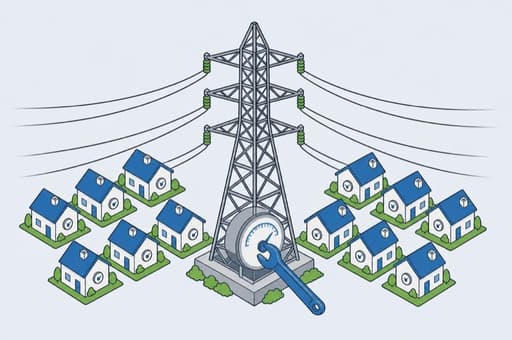
Power for about 1.9 million Michigan homes and businesses, and the engine of the entire company: $5.6 billion of 2025 revenue, a $24 billion five-year building plan, and a 9.9% profit regulators currently allow on what gets built. Watch what they permit at each annual price review.
Competes with DTE Electric (DTE Energy) · Indiana Michigan Power (AEP) · Power bought on the regional market (Merchant power producers)
In plain English
Flip a switch anywhere in Michigan's Lower Peninsula and the power almost certainly came from here — plants, poles and wires owned by Consumers Energy, serving about 1.9 million homes and businesses that have no other company to call.
That last part is the whole business model. Because customers cannot shop around, a state commission sets the price instead, roughly once a year: Consumers gets back what it spends on fuel, plus an agreed profit on everything it owns and builds. Earning more means owning more, which is why the company spends far more than it collects and borrows the difference.
Large-load power deals (Rate GPD)
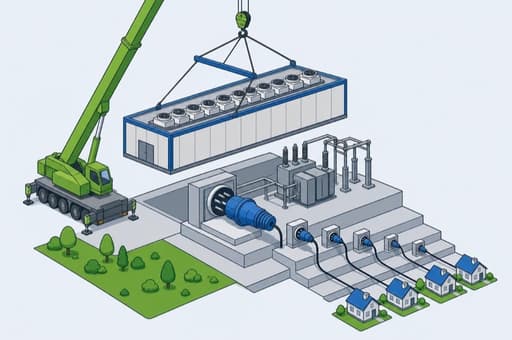
The rulebook, approved in November 2025, for signing customers of 100 megawatts and up — data centers, factories — without the other customers paying for them. Every gigawatt that lands adds $2–5 billion of building, none of it in the five-year plan.
Competes with Data-center power agreements (DTE Energy) · Large-load tariffs (AEP) · Generators built on the site itself (Data-center developers)
In plain English
One new customer can want as much electricity as a small city. Michigan regulators approved a rulebook in late 2025 for exactly those customers — anyone asking for 100 megawatts or more — making them commit to a minimum bill and phase their demand in over as long as five years, so the 1.9 million ordinary customers are not left carrying the cost.
Consumers has one agreement for up to a gigawatt with a customer it will not name, and a line of vetted would-be customers it now describes as well past nine gigawatts. Its Michigan rival DTE has signed more so far.
Renewable Energy Plan
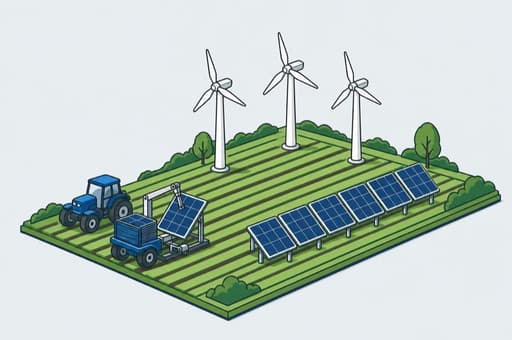
Michigan law orders half the state's power to come from renewables by 2030, and this twenty-year plan clears 13 gigawatts of wind and solar in advance. Whether Consumers owns the farms or buys the power decides how much it earns from them.
Competes with CleanVision renewable program (DTE Energy) · Wind and solar sold under contract (Independent developers) · Gas and battery options in the same plan (Consumers Energy)
In plain English
Michigan passed a law in 2023 ordering that half the state's electricity come from wind and solar by 2030. This plan is Consumers' answer: a twenty-year list of projects the commission signs off on ahead of time, so the farms can be built without fighting over each one.
Two ways to make money from it. Build and own the farms, and earn the profit regulators allow on anything it owns. Or sign a contract for power somebody else built, and still collect roughly nine percent on it — a Michigan provision management says no other state offers. Federal tax credits change that maths, and the company has flagged them as a live risk.
2026 Energy Supply Plan
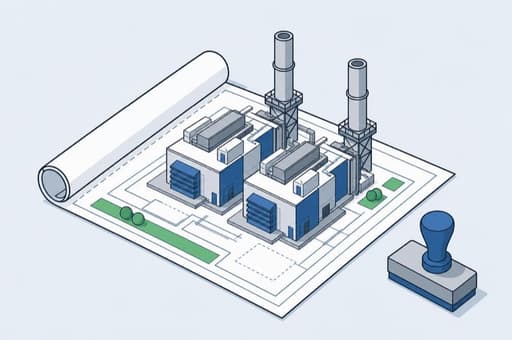
The twenty-year blueprint filed in September 2026: over 19 gigawatts of clean energy plus two gas plants in Bay and Genesee counties, 1.4 gigawatts together, due in 2031. Approval takes about a year, and clean-energy groups are already objecting.
Competes with New gas plants and batteries (DTE Energy) · Capacity bought from the regional market (Merchant power producers) · All-clean alternative portfolios (Environmental Law & Policy Center)
In plain English
Every so often Michigan makes its utilities set out in public how they intend to keep the lights on for the next twenty years — and then everyone argues about it. Consumers filed its version on September 3, 2026.
Inside: more than 19 gigawatts of clean energy, and two gas-burning plants at existing industrial sites in Bay and Genesee counties, 1.4 gigawatts together, meant to run from 2031 for the hours when the sun is down and the batteries are empty. Nothing is earned until the commission says yes. The ask also grew mid-year — the March version described over 13 gigawatts.
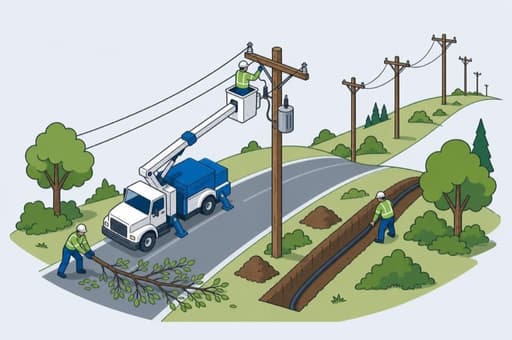
Electric Reliability Roadmap
Replacing poles, burying some lines and clearing trees along almost 100,000 miles of wire. Doing it before a storm turns repair costs into investment regulators pay a return on — but a March 2026 ice storm still cost about a nickel a share.
Competes with Grid hardening plan (DTE Energy) · Fixing outages after they happen (Traditional repair crews)
In plain English
Wind brings a tree down on a wire and a few thousand people lose power. This is the five-year answer to that: swapping out old poles, putting some lines underground, and cutting back trees along almost 100,000 miles of wire.
There is a money reason to do it this way. Fixing a line after a storm is a cost that eats earnings; rebuilding it beforehand is an investment the company earns a return on for decades. Consumers has asked regulators for a way to smooth storm bills and not got one, so a rough March — one knocked about a nickel a share off early-2026 results — still lands hard.
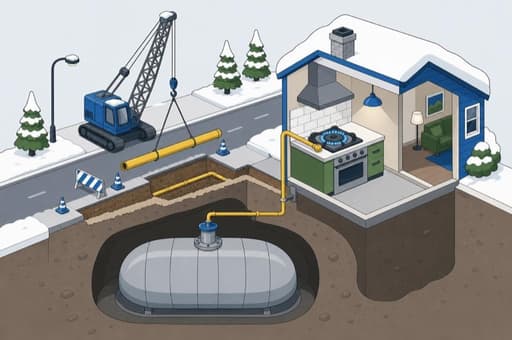
Gas utility (Consumers Energy)
Heat for about 1.8 million Michigan households — $2.5 billion of 2025 revenue on 396 billion cubic feet delivered. Slow, weather-driven and mostly about replacing old pipe; the pending rate case asks for $232 million more.
Competes with DTE Gas (DTE Energy) · Gas service to Michigan homes (SEMCO Energy Gas) · Selling the gas under Customer Choice (Alternative gas suppliers)
In plain English
Pipes under the street, and a bill that spikes every January. Consumers buys gas in summer when it is cheap, pushes it into storage fields under Michigan, and pulls it back out when the temperature drops — the same instinct as filling a pantry before winter.
Customers pay for two separate things: the gas itself, which the company passes along at what it paid, and the delivery, which is where it earns. Some households buy the gas from another supplier; Consumers still owns the pipe and still gets paid to move it. Growth here is dull and steady — old pipe replaced with new, mile after mile.
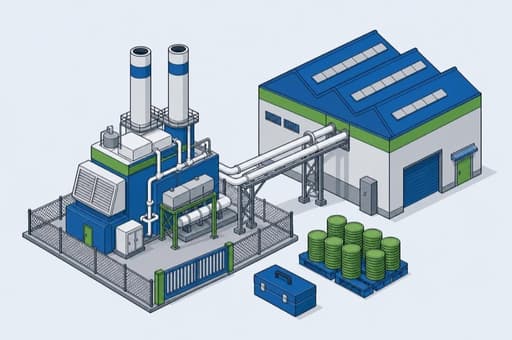
Dearborn Industrial Generation
The Dearborn gas plant CMS is keeping while it sells its out-of-state clean-energy projects. Its job is to throw off cash without needing new money; with two small peaking plants it should earn about $70 million before tax a year after 2027.
Competes with Capacity sold into the regional market (Merchant power producers) · Covert Generating Station (Consumers Energy) · DTE Vantage industrial energy (DTE Energy)
In plain English
A plant in Dearborn that burns natural gas to make electricity and puts the leftover heat to work next to industrial customers instead of wasting it. When the board decided in July 2026 to sell the clean-energy projects CMS owns outside Michigan, this one was kept.
The reason is cash. It already exists, needs little new money, and gets paid twice — once for the power it actually produces, and once simply for promising to be available on the worst day of the year, a price that has been climbing as coal plants close. A planned shutdown for maintenance is enough to move a year's earnings.


 Electric utility (Consumers Energy)Power for about 1.9 million Michigan homes and businesses, and the engine of the entire company: $5.6 billion of 2025 revenue, a $24 billion five-year building plan, and a 9.9% profit regulators currently allow on what gets built. Watch what they permit at each annual price review.
Power for about 1.9 million Michigan homes and businesses, and the engine of the entire company: $5.6 billion of 2025 revenue, a $24 billion five-year building plan, and a 9.9% profit regulators currently allow on what gets built. Watch what they permit at each annual price review.
In plain English
Flip a switch anywhere in Michigan's Lower Peninsula and the power almost certainly came from here — plants, poles and wires owned by Consumers Energy, serving about 1.9 million homes and businesses that have no other company to call.
That last part is the whole business model. Because customers cannot shop around, a state commission sets the price instead, roughly once a year: Consumers gets back what it spends on fuel, plus an agreed profit on everything it owns and builds. Earning more means owning more, which is why the company spends far more than it collects and borrows the difference.
Competes with DTE Electric (DTE Energy) · Indiana Michigan Power (AEP) · Power bought on the regional market (Merchant power producers)
 Large-load power deals (Rate GPD)The rulebook, approved in November 2025, for signing customers of 100 megawatts and up — data centers, factories — without the other customers paying for them. Every gigawatt that lands adds $2–5 billion of building, none of it in the five-year plan.
The rulebook, approved in November 2025, for signing customers of 100 megawatts and up — data centers, factories — without the other customers paying for them. Every gigawatt that lands adds $2–5 billion of building, none of it in the five-year plan.
In plain English
One new customer can want as much electricity as a small city. Michigan regulators approved a rulebook in late 2025 for exactly those customers — anyone asking for 100 megawatts or more — making them commit to a minimum bill and phase their demand in over as long as five years, so the 1.9 million ordinary customers are not left carrying the cost.
Consumers has one agreement for up to a gigawatt with a customer it will not name, and a line of vetted would-be customers it now describes as well past nine gigawatts. Its Michigan rival DTE has signed more so far.
Competes with Data-center power agreements (DTE Energy) · Large-load tariffs (AEP) · Generators built on the site itself (Data-center developers)
 Renewable Energy PlanMichigan law orders half the state's power to come from renewables by 2030, and this twenty-year plan clears 13 gigawatts of wind and solar in advance. Whether Consumers owns the farms or buys the power decides how much it earns from them.
Michigan law orders half the state's power to come from renewables by 2030, and this twenty-year plan clears 13 gigawatts of wind and solar in advance. Whether Consumers owns the farms or buys the power decides how much it earns from them.
In plain English
Michigan passed a law in 2023 ordering that half the state's electricity come from wind and solar by 2030. This plan is Consumers' answer: a twenty-year list of projects the commission signs off on ahead of time, so the farms can be built without fighting over each one.
Two ways to make money from it. Build and own the farms, and earn the profit regulators allow on anything it owns. Or sign a contract for power somebody else built, and still collect roughly nine percent on it — a Michigan provision management says no other state offers. Federal tax credits change that maths, and the company has flagged them as a live risk.
Competes with CleanVision renewable program (DTE Energy) · Wind and solar sold under contract (Independent developers) · Gas and battery options in the same plan (Consumers Energy)
 2026 Energy Supply PlanThe twenty-year blueprint filed in September 2026: over 19 gigawatts of clean energy plus two gas plants in Bay and Genesee counties, 1.4 gigawatts together, due in 2031. Approval takes about a year, and clean-energy groups are already objecting.
The twenty-year blueprint filed in September 2026: over 19 gigawatts of clean energy plus two gas plants in Bay and Genesee counties, 1.4 gigawatts together, due in 2031. Approval takes about a year, and clean-energy groups are already objecting.
In plain English
Every so often Michigan makes its utilities set out in public how they intend to keep the lights on for the next twenty years — and then everyone argues about it. Consumers filed its version on September 3, 2026.
Inside: more than 19 gigawatts of clean energy, and two gas-burning plants at existing industrial sites in Bay and Genesee counties, 1.4 gigawatts together, meant to run from 2031 for the hours when the sun is down and the batteries are empty. Nothing is earned until the commission says yes. The ask also grew mid-year — the March version described over 13 gigawatts.
Competes with New gas plants and batteries (DTE Energy) · Capacity bought from the regional market (Merchant power producers) · All-clean alternative portfolios (Environmental Law & Policy Center)
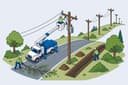 Electric Reliability RoadmapReplacing poles, burying some lines and clearing trees along almost 100,000 miles of wire. Doing it before a storm turns repair costs into investment regulators pay a return on — but a March 2026 ice storm still cost about a nickel a share.
Replacing poles, burying some lines and clearing trees along almost 100,000 miles of wire. Doing it before a storm turns repair costs into investment regulators pay a return on — but a March 2026 ice storm still cost about a nickel a share.
In plain English
Wind brings a tree down on a wire and a few thousand people lose power. This is the five-year answer to that: swapping out old poles, putting some lines underground, and cutting back trees along almost 100,000 miles of wire.
There is a money reason to do it this way. Fixing a line after a storm is a cost that eats earnings; rebuilding it beforehand is an investment the company earns a return on for decades. Consumers has asked regulators for a way to smooth storm bills and not got one, so a rough March — one knocked about a nickel a share off early-2026 results — still lands hard.
Competes with Grid hardening plan (DTE Energy) · Fixing outages after they happen (Traditional repair crews)
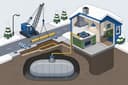 Gas utility (Consumers Energy)Heat for about 1.8 million Michigan households — $2.5 billion of 2025 revenue on 396 billion cubic feet delivered. Slow, weather-driven and mostly about replacing old pipe; the pending rate case asks for $232 million more.
Heat for about 1.8 million Michigan households — $2.5 billion of 2025 revenue on 396 billion cubic feet delivered. Slow, weather-driven and mostly about replacing old pipe; the pending rate case asks for $232 million more.
In plain English
Pipes under the street, and a bill that spikes every January. Consumers buys gas in summer when it is cheap, pushes it into storage fields under Michigan, and pulls it back out when the temperature drops — the same instinct as filling a pantry before winter.
Customers pay for two separate things: the gas itself, which the company passes along at what it paid, and the delivery, which is where it earns. Some households buy the gas from another supplier; Consumers still owns the pipe and still gets paid to move it. Growth here is dull and steady — old pipe replaced with new, mile after mile.
Competes with DTE Gas (DTE Energy) · Gas service to Michigan homes (SEMCO Energy Gas) · Selling the gas under Customer Choice (Alternative gas suppliers)
 Dearborn Industrial GenerationThe Dearborn gas plant CMS is keeping while it sells its out-of-state clean-energy projects. Its job is to throw off cash without needing new money; with two small peaking plants it should earn about $70 million before tax a year after 2027.
The Dearborn gas plant CMS is keeping while it sells its out-of-state clean-energy projects. Its job is to throw off cash without needing new money; with two small peaking plants it should earn about $70 million before tax a year after 2027.
In plain English
A plant in Dearborn that burns natural gas to make electricity and puts the leftover heat to work next to industrial customers instead of wasting it. When the board decided in July 2026 to sell the clean-energy projects CMS owns outside Michigan, this one was kept.
The reason is cash. It already exists, needs little new money, and gets paid twice — once for the power it actually produces, and once simply for promising to be available on the worst day of the year, a price that has been climbing as coal plants close. A planned shutdown for maintenance is enough to move a year's earnings.
Competes with Capacity sold into the regional market (Merchant power producers) · Covert Generating Station (Consumers Energy) · DTE Vantage industrial energy (DTE Energy)
Named in filings, launches and programs
- Financial Compensation MechanismPlatformA 2023 Michigan law lets Consumers earn about 9% on power it contracts for rather than owns; guided to nearly $50 million of incentives by 2030.
- Energy Waste Reduction programServiceEarns roughly $65 million a year in incentives for helping customers use less energy, which saved them about $1.2 billion in 2025. Management calls it mature.
- The CE WayServiceThe in-house cost-cutting system: $100 million saved in 2025 and $450 million over five years, which is how rate increases stay smaller.
- Consumers Energy gas storage fieldsEcosystemUnderground Michigan fields filled with gas in summer and drawn down in winter — the core lever for keeping heating bills down.
- Covert Generating StationProductA 1.2-gigawatt gas plant bought and moved into the utility, part of how Consumers covered the power it needed after the last supply plan.
- Michigan Potash and Salt CompanyCustomer programA signed customer big enough to need its own power contract, bringing 130 jobs and over $1.3 billion of investment to Michigan.
- Switch data center expansionCustomer programA 230-megawatt expansion at an existing Michigan data center, targeted to reach full load in 2026.
- Kalamazoo and Livingston peakersProductTwo small gas plants kept outside the utility, run for the hours when demand spikes.
- Four Michigan commercial solar projectsProductAbout half a gigawatt of Michigan solar retained when the out-of-state clean-energy projects were put up for sale.
Financial Compensation MechanismPlatform
A 2023 Michigan law lets Consumers earn about 9% on power it contracts for rather than owns; guided to nearly $50 million of incentives by 2030.
Energy Waste Reduction programService
Earns roughly $65 million a year in incentives for helping customers use less energy, which saved them about $1.2 billion in 2025. Management calls it mature.
The CE WayService
The in-house cost-cutting system: $100 million saved in 2025 and $450 million over five years, which is how rate increases stay smaller.
Consumers Energy gas storage fieldsEcosystem
Underground Michigan fields filled with gas in summer and drawn down in winter — the core lever for keeping heating bills down.
Covert Generating StationProduct
A 1.2-gigawatt gas plant bought and moved into the utility, part of how Consumers covered the power it needed after the last supply plan.
Michigan Potash and Salt CompanyCustomer program
A signed customer big enough to need its own power contract, bringing 130 jobs and over $1.3 billion of investment to Michigan.
Switch data center expansionCustomer program
A 230-megawatt expansion at an existing Michigan data center, targeted to reach full load in 2026.
Kalamazoo and Livingston peakersProduct
Two small gas plants kept outside the utility, run for the hours when demand spikes.
Four Michigan commercial solar projectsProduct
About half a gigawatt of Michigan solar retained when the out-of-state clean-energy projects were put up for sale.