
CenterPoint Energy (CNP)
Delivers regulated electricity around Houston and Indiana, plus natural gas across four states.
Something off on this page? Send us feedback.
CenterPoint Energy owns the last mile: the wires that carry electricity around Houston and the pipes that carry natural gas in Texas, Minnesota and Indiana. Mostly it does not sell the energy itself — it charges for carrying it, at prices regulators set. Its Ohio gas business is being sold and the money pointed at Texas, where data centers and new factories want far more power than the Houston grid carries today.
Item facts: FY2025 · year ended Dec 31, 2025, from filings, earnings calls and company pages.
Judgment weights, not filed revenue
The band summarizes business focus and direction. ~ marks estimates.
6 in detail · 11 more below
CenterPoint Energy Houston Electric
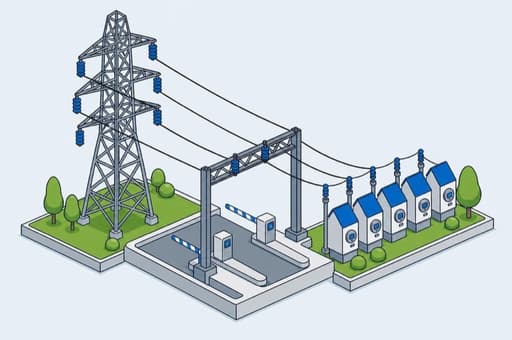
Poles, wires and substations delivering power to about 2.8 million homes and businesses on the Texas Gulf Coast — roughly 46% of revenue, and where most of the ~$66.7 billion CenterPoint means to spend through 2035 will go. It never sells the electricity itself, only the delivery.
Competes with Oncor's delivery wires (Oncor Electric Delivery) · AEP Texas delivery wires (AEP)
In plain English
Think of the postal system: someone else writes the letter, but a carrier still has to walk it to your door. Houston Electric is the carrier for electricity, and it owns no power plants — only the towers, poles, wires and substations between the generator and the meter.
About 67 retail electricity companies sign up the households and businesses; they pay Houston Electric for the delivery, and it lands inside the customer's bill. Two of them, the NRG and Vistra families of brands, together accounted for more than half of what those sellers owed the company at the end of 2024. What the delivery costs is set by Texas regulators, not haggled over.
ERCOT Batch Zero large-load program
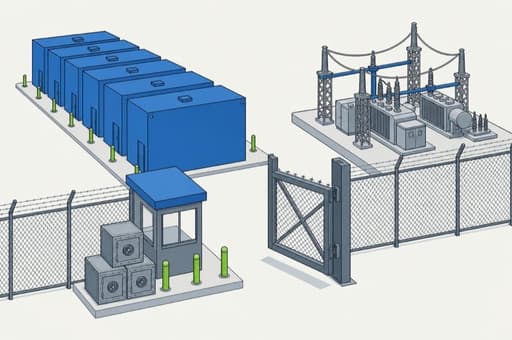
A queue of giant new electricity users waiting to plug into the Houston grid — across Texas, nearly all such requests come from data centers. CenterPoint submitted over 17 gigawatts and expects about 14 to qualify, which would lift the region's peak demand by more than 65%.
Competes with Large-customer connection queue (Oncor Electric Delivery) · NIPSCO GenCo data-center utility (NiSource) · Data-center supply agreements (Duke Energy)
In plain English
A handful of would-be customers want to draw as much electricity as whole cities — data centers, the warehouse-size buildings packed with computers, make up nearly all of the requests stacked up across Texas. The state's grid operator sorts them into one batch and rations who gets connected, with the allocation settled in April 2027.
CenterPoint's pitch is that it can hook much of this load onto lines it has already built — about 10 gigawatts of room is sitting there. Nobody pays a delivery charge until the wires are switched on: roughly 3 gigawatts in 2027, about 9 by 2028, the whole 14 by 2031. So far the customers have posted about $900 million of cash and security, and none of them is named.
Systemwide Resiliency Plan
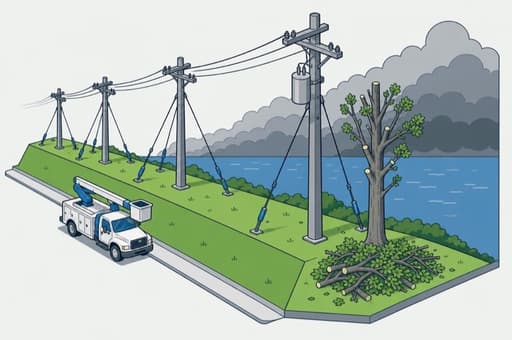
Storm-hardening the Houston grid after Hurricane Beryl: sturdier structures, more than two dozen projects, and tree trimming every three years instead of five. Regulators approved about $2.7 billion for 2026-2028 after the company asked for $5.75 billion — that gap is the affordability limit.
Competes with System resiliency plan (Oncor Electric Delivery) · Texas resiliency filings (AEP)
In plain English
Hurricane Beryl is why this exists. CenterPoint has been replacing Houston's grid hardware with sturdier versions — 22,114 structures in the first rounds — and now trims trees along the lines every three years instead of every five.
The money part is odd if you have not seen it before. None of this work is sold to anybody. It is added to the pile of assets regulators let the utility earn a return on, and customers pay it back through their delivery charge — roughly $1.40 more per month each year on a typical home bill. That only happens if regulators agree, and here they cut the original request by more than half.

Texas Gas
Nearly two million Texas homes and businesses, most around Houston, get their natural gas through CenterPoint's pipes — about 16% of revenue. The gas itself is passed on at cost, so what earns money is replacing pipe, not the price of gas.
Competes with Mid-Tex gas distribution (Atmos Energy) · Texas city gas franchises (ONE Gas) · Electric heat in new homes (CenterPoint's own Houston Electric)
In plain English
The unglamorous half of a Houston utility bill. Under the streets sit the mains and service lines that bring natural gas to nearly two million meters, most of them in and around Houston, and almost all of them homes.
The bill splits in two. The gas itself is billed at what CenterPoint paid for it — no markup — while a separate delivery charge covers the pipes and the crews. Only the second part earns anything, which is why a cold winter can swell revenue without doing much for profit. Texas lets the company lift that delivery charge once a year to pay for pipe replacement; the latest increase, $62 million, started in June 2026.
Minnesota Gas
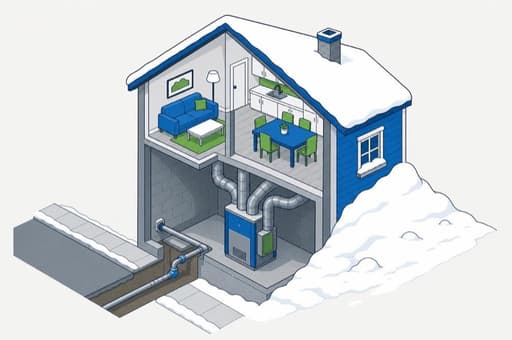
Gas heat for about 939,000 Minnesota homes and businesses, roughly $1.2 billion of revenue — about 13% of the company. Customer numbers barely move, so the year turns on winter weather and on the rate request due by the end of 2026.
Competes with Minnesota gas utility (Xcel Energy) · Minnesota Energy Resources gas (WEC Energy Group)
In plain English
Minnesota winters do the selling here. Close to a million households and businesses in Minneapolis-St. Paul and more than 260 other communities heat with gas carried on CenterPoint's pipes — the largest gas distribution business in the state.
New customers are not the story: the count rose less than one percent last year. What moves the numbers is how much the company is allowed to charge, which is why a fresh request goes to state regulators by the end of 2026, and how cold the winter turns. It also has to fight for money inside the company — close to a billion dollars of planned spending was shifted toward Texas when the Ohio business was sold.
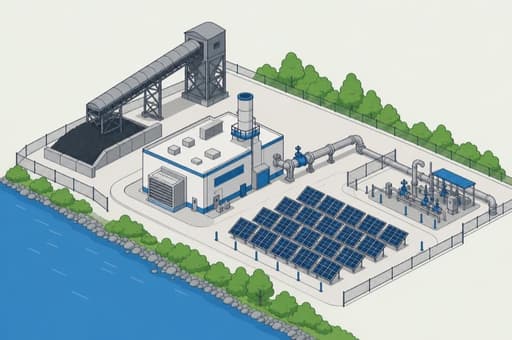
CenterPoint Energy Indiana
Gas for about 669,000 Indiana customers, plus the only power plants CenterPoint still owns — over 1,200 megawatts serving roughly 150,000 electric customers in the southwest of the state. Together about 14% of revenue, with coal on the way out.
Competes with NIPSCO gas distribution (NiSource) · Indiana electric utility (Duke Energy) · Generation and grid build (AES Indiana)
In plain English
Two businesses sharing one state. One is the old Vectren gas system — about 669,000 homes and businesses, adding roughly one percent a year. The other, in southwestern Indiana, is the only part of CenterPoint that still owns power plants: it makes the electricity as well as delivering it, for around 150,000 customers.
That plant fleet is mid-swap. Coal units retired, gas turbines and a solar farm took their place, another coal unit converts to gas by 2027, and regulators cleared a contract to buy wind power from Illinois. Indiana's gas business and Minnesota's together are under a fifth of what the company earns — so what makes Indiana interesting is a prospective customer that would be the biggest power user it serves in the state.


 CenterPoint Energy Houston ElectricPoles, wires and substations delivering power to about 2.8 million homes and businesses on the Texas Gulf Coast — roughly 46% of revenue, and where most of the ~$66.7 billion CenterPoint means to spend through 2035 will go. It never sells the electricity itself, only the delivery.
Poles, wires and substations delivering power to about 2.8 million homes and businesses on the Texas Gulf Coast — roughly 46% of revenue, and where most of the ~$66.7 billion CenterPoint means to spend through 2035 will go. It never sells the electricity itself, only the delivery.
In plain English
Think of the postal system: someone else writes the letter, but a carrier still has to walk it to your door. Houston Electric is the carrier for electricity, and it owns no power plants — only the towers, poles, wires and substations between the generator and the meter.
About 67 retail electricity companies sign up the households and businesses; they pay Houston Electric for the delivery, and it lands inside the customer's bill. Two of them, the NRG and Vistra families of brands, together accounted for more than half of what those sellers owed the company at the end of 2024. What the delivery costs is set by Texas regulators, not haggled over.
Competes with Oncor's delivery wires (Oncor Electric Delivery) · AEP Texas delivery wires (AEP)
 ERCOT Batch Zero large-load programA queue of giant new electricity users waiting to plug into the Houston grid — across Texas, nearly all such requests come from data centers. CenterPoint submitted over 17 gigawatts and expects about 14 to qualify, which would lift the region's peak demand by more than 65%.
A queue of giant new electricity users waiting to plug into the Houston grid — across Texas, nearly all such requests come from data centers. CenterPoint submitted over 17 gigawatts and expects about 14 to qualify, which would lift the region's peak demand by more than 65%.
In plain English
A handful of would-be customers want to draw as much electricity as whole cities — data centers, the warehouse-size buildings packed with computers, make up nearly all of the requests stacked up across Texas. The state's grid operator sorts them into one batch and rations who gets connected, with the allocation settled in April 2027.
CenterPoint's pitch is that it can hook much of this load onto lines it has already built — about 10 gigawatts of room is sitting there. Nobody pays a delivery charge until the wires are switched on: roughly 3 gigawatts in 2027, about 9 by 2028, the whole 14 by 2031. So far the customers have posted about $900 million of cash and security, and none of them is named.
Competes with Large-customer connection queue (Oncor Electric Delivery) · NIPSCO GenCo data-center utility (NiSource) · Data-center supply agreements (Duke Energy)
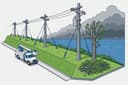 Systemwide Resiliency PlanStorm-hardening the Houston grid after Hurricane Beryl: sturdier structures, more than two dozen projects, and tree trimming every three years instead of five. Regulators approved about $2.7 billion for 2026-2028 after the company asked for $5.75 billion — that gap is the affordability limit.
Storm-hardening the Houston grid after Hurricane Beryl: sturdier structures, more than two dozen projects, and tree trimming every three years instead of five. Regulators approved about $2.7 billion for 2026-2028 after the company asked for $5.75 billion — that gap is the affordability limit.
In plain English
Hurricane Beryl is why this exists. CenterPoint has been replacing Houston's grid hardware with sturdier versions — 22,114 structures in the first rounds — and now trims trees along the lines every three years instead of every five.
The money part is odd if you have not seen it before. None of this work is sold to anybody. It is added to the pile of assets regulators let the utility earn a return on, and customers pay it back through their delivery charge — roughly $1.40 more per month each year on a typical home bill. That only happens if regulators agree, and here they cut the original request by more than half.
Competes with System resiliency plan (Oncor Electric Delivery) · Texas resiliency filings (AEP)
 Texas GasNearly two million Texas homes and businesses, most around Houston, get their natural gas through CenterPoint's pipes — about 16% of revenue. The gas itself is passed on at cost, so what earns money is replacing pipe, not the price of gas.
Nearly two million Texas homes and businesses, most around Houston, get their natural gas through CenterPoint's pipes — about 16% of revenue. The gas itself is passed on at cost, so what earns money is replacing pipe, not the price of gas.
In plain English
The unglamorous half of a Houston utility bill. Under the streets sit the mains and service lines that bring natural gas to nearly two million meters, most of them in and around Houston, and almost all of them homes.
The bill splits in two. The gas itself is billed at what CenterPoint paid for it — no markup — while a separate delivery charge covers the pipes and the crews. Only the second part earns anything, which is why a cold winter can swell revenue without doing much for profit. Texas lets the company lift that delivery charge once a year to pay for pipe replacement; the latest increase, $62 million, started in June 2026.
Competes with Mid-Tex gas distribution (Atmos Energy) · Texas city gas franchises (ONE Gas) · Electric heat in new homes (CenterPoint's own Houston Electric)
 Minnesota GasGas heat for about 939,000 Minnesota homes and businesses, roughly $1.2 billion of revenue — about 13% of the company. Customer numbers barely move, so the year turns on winter weather and on the rate request due by the end of 2026.
Gas heat for about 939,000 Minnesota homes and businesses, roughly $1.2 billion of revenue — about 13% of the company. Customer numbers barely move, so the year turns on winter weather and on the rate request due by the end of 2026.
In plain English
Minnesota winters do the selling here. Close to a million households and businesses in Minneapolis-St. Paul and more than 260 other communities heat with gas carried on CenterPoint's pipes — the largest gas distribution business in the state.
New customers are not the story: the count rose less than one percent last year. What moves the numbers is how much the company is allowed to charge, which is why a fresh request goes to state regulators by the end of 2026, and how cold the winter turns. It also has to fight for money inside the company — close to a billion dollars of planned spending was shifted toward Texas when the Ohio business was sold.
Competes with Minnesota gas utility (Xcel Energy) · Minnesota Energy Resources gas (WEC Energy Group)
 CenterPoint Energy IndianaGas for about 669,000 Indiana customers, plus the only power plants CenterPoint still owns — over 1,200 megawatts serving roughly 150,000 electric customers in the southwest of the state. Together about 14% of revenue, with coal on the way out.
Gas for about 669,000 Indiana customers, plus the only power plants CenterPoint still owns — over 1,200 megawatts serving roughly 150,000 electric customers in the southwest of the state. Together about 14% of revenue, with coal on the way out.
In plain English
Two businesses sharing one state. One is the old Vectren gas system — about 669,000 homes and businesses, adding roughly one percent a year. The other, in southwestern Indiana, is the only part of CenterPoint that still owns power plants: it makes the electricity as well as delivering it, for around 150,000 customers.
That plant fleet is mid-swap. Coal units retired, gas turbines and a solar farm took their place, another coal unit converts to gas by 2027, and regulators cleared a contract to buy wind power from Illinois. Indiana's gas business and Minnesota's together are under a fifth of what the company earns — so what makes Indiana interesting is a prospective customer that would be the biggest power user it serves in the state.
Competes with NIPSCO gas distribution (NiSource) · Indiana electric utility (Duke Energy) · Generation and grid build (AES Indiana)
Named in filings, launches and programs
- Intelis gas smart metersPlatform · RampingGas meters that send readings in by themselves: more than 890,000 fitted since 2019, with about 4 million more planned by 2033.
- Downtown Houston substation relocationsEcosystem · AnnouncedTwo substations being moved for downtown Houston's revitalization and the city's plan to bury an interstate; about $400 million added to the plan in July 2026.
- Southeast Texas transmission projectsEcosystem · AnnouncedThree power-line projects including Hillje-Blu Lacy, still in early planning; a commissioned study claims over $18 billion a year of local economic impact.
- Houston import capacity studyEcosystem · AnnouncedAn updated plan promised for late 2026 for rebuilding how much power can be brought into Houston from outside — not yet funded in the ten-year plan.
- Indiana large-load opportunityCustomer program · AnnouncedAn unnamed prospective customer that would be the biggest single power user CenterPoint serves in Indiana; the spending sits outside the base plan.
- Texas high-pressure gas systemEcosystem · AnnouncedA higher-pressure gas distribution system in Texas that management has flagged as an opportunity, with no money set aside for it in the plan yet.
- Posey SolarProductA 191-megawatt Indiana solar farm bought for about $357 million, running since May 2025 and inside customer rates from June 2025.
- A.B. Brown combustion turbinesProduct460 megawatts of gas-fired turbines costing about $323 million, built to replace retired Indiana coal units.
- F.B. Culley 3Product · AnnouncedA 270-megawatt Indiana coal unit being rebuilt to burn natural gas by 2027.
- Illinois wind contractService · Announced147 megawatts of wind power bought under a long-term contract rather than owned; cleared by Indiana regulators.
- Minnesota innovation planProductEighteen pilots and seven research projects, about $106 million over five years, approved by Minnesota's regulator in July 2024.
Intelis gas smart metersPlatform · Ramping
Gas meters that send readings in by themselves: more than 890,000 fitted since 2019, with about 4 million more planned by 2033.
Downtown Houston substation relocationsEcosystem · Announced
Two substations being moved for downtown Houston's revitalization and the city's plan to bury an interstate; about $400 million added to the plan in July 2026.
Southeast Texas transmission projectsEcosystem · Announced
Three power-line projects including Hillje-Blu Lacy, still in early planning; a commissioned study claims over $18 billion a year of local economic impact.
Houston import capacity studyEcosystem · Announced
An updated plan promised for late 2026 for rebuilding how much power can be brought into Houston from outside — not yet funded in the ten-year plan.
Indiana large-load opportunityCustomer program · Announced
An unnamed prospective customer that would be the biggest single power user CenterPoint serves in Indiana; the spending sits outside the base plan.
Texas high-pressure gas systemEcosystem · Announced
A higher-pressure gas distribution system in Texas that management has flagged as an opportunity, with no money set aside for it in the plan yet.
Posey SolarProduct
A 191-megawatt Indiana solar farm bought for about $357 million, running since May 2025 and inside customer rates from June 2025.
A.B. Brown combustion turbinesProduct
460 megawatts of gas-fired turbines costing about $323 million, built to replace retired Indiana coal units.
F.B. Culley 3Product · Announced
A 270-megawatt Indiana coal unit being rebuilt to burn natural gas by 2027.
Illinois wind contractService · Announced
147 megawatts of wind power bought under a long-term contract rather than owned; cleared by Indiana regulators.
Minnesota innovation planProduct
Eighteen pilots and seven research projects, about $106 million over five years, approved by Minnesota's regulator in July 2024.