
Coherent (COHR)
Builds optical networking products, industrial lasers, and engineered photonic materials.
Something off on this page? Send us feedback.
Coherent makes the parts that turn data into light: the plug-in modules and laser chips that carry information between the computers inside an AI data center, and between data centers themselves. It also still sells lasers that cut and mark things on factory floors. The factory side is steady and cyclical; the data-center side is where the growth is, and the company is pouring money into new plants to keep up with it.
Item facts: FY2026 · year ended June 30, 2026, from filings, earnings calls and company pages.
Judgment weights, not filed revenue
The band summarizes business focus and direction. ~ marks estimates.
8 in detail · 10 more below

Datacenter Optical Transceivers (800G and 1.6T)
The plug-in modules that turn data into light between AI chips and switches — the biggest line, up 41% in FY2026 and 66% in the June quarter, with orders now placed into 2028. Two customers, neither of them named, each bought more than a tenth of all revenue.
Competes with Datacom transceivers (Zhongji Innolight) · Datacom transceivers (Eoptolink) · Cloud & networking transceivers (Lumentum)
In plain English
Picture a glass fibre ending at a switch: something has to turn the ones and zeros into flashes of light, and turn them back again at the far end. That something is a transceiver, a module that slides into the front of the equipment like a cartridge.
AI data centers need them in enormous numbers, because the chips doing the AI work have to keep passing data to each other. Cloud operators and the firms that build switches are the buyers. The price of a module drops year after year by industry habit, so the profit has to come from cost — which is why Coherent makes the laser chips inside them itself rather than buying them in.
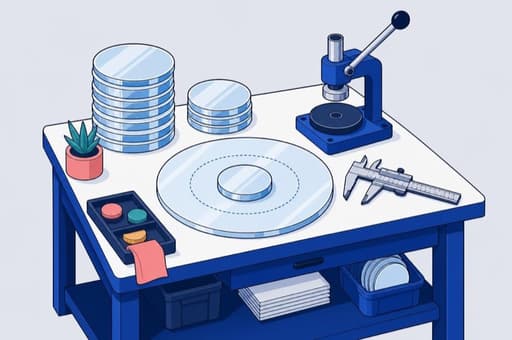
6-inch Indium Phosphide Platform
The in-house crystal plants that grow Coherent's laser chips. Nobody is invoiced for them, but they set how much of everything else can ship: management called this output the thing capping data-center sales, and capacity is on track to double, with more than another doubling promised by the end of 2027.
Competes with In-house laser chip capacity (Lumentum) · Indium phosphide discs sold on the open market (AXT) · Indium phosphide discs sold on the open market (Sumitomo Electric)
In plain English
Every laser inside every module starts life as a round crystal disc — indium phosphide, the material Coherent grows and then cuts its tiny light-making chips out of. It runs those plants itself rather than buying the chips in.
The change under way is the size of the disc. Going from three inches across to six roughly quadruples the usable area, so far more chips come off a single run, and the bigger discs are already producing a better share of good ones. This part never sends anyone a bill; it shows up as how many modules Coherent can ship, and what each one costs. The plants sit in Texas and Sweden, with Zurich joining in 2027.
NVIDIA Strategic Partnership
NVIDIA bought newly issued shares and signed a multiyear order worth billions for advanced lasers and optical networking parts, running through the end of the decade. Deliveries are expected to start in 2027, and neither side is tied down: NVIDIA may buy elsewhere, Coherent may sell elsewhere.
Competes with External laser sources for chip-side optics (Lumentum) · Built-in optical connections (Ayar Labs) · Built-in optical connections (Lightmatter)
In plain English
The customer who also became a shareholder. In March 2026 NVIDIA paid two billion dollars for a new block of Coherent shares and, on the same day, signed a supply agreement worth billions more for advanced lasers and optical networking products.
It matters twice over. The cash landed in a year when building new plants cost far more than the business itself brought in, and the agreement gives those plants committed work to fill once they are running. Nothing has shipped under it yet. It is also not exclusive in either direction, so it is a promise of demand rather than a lock on it.
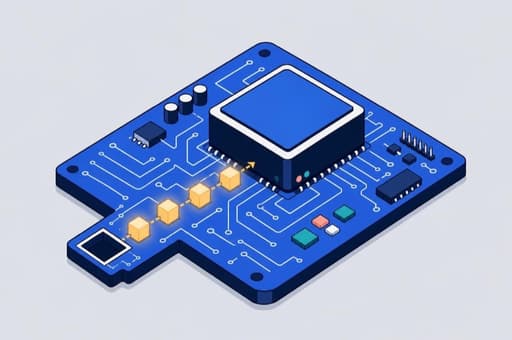
Coherent PhotonLink
Coherent's kit for putting the light-making parts right next to the switch chip instead of in a module out front. It goes on show in September 2026 with first sales expected in the December quarter — and if it wins, it eats into Coherent's own biggest line.
Competes with Bailly and Tomahawk-Davisson chip-side optical switches (Broadcom) · Optical connections built into the chip (Celestial AI)
In plain English
Today the light-making parts sit in modules plugged into the front panel of a switch. The industry is working on moving them inward, onto the same package as the switch chip itself. PhotonLink is Coherent's kit for that: the whole chain from making the light through shaping it, sending it, catching it and turning it back into data.
Awkwardly, this is the thing that could displace the plug-in modules that are Coherent's biggest business. Its answer is to sell the light either way — a chip-side design still needs a laser feeding it from outside the package, and that laser is what Coherent makes.
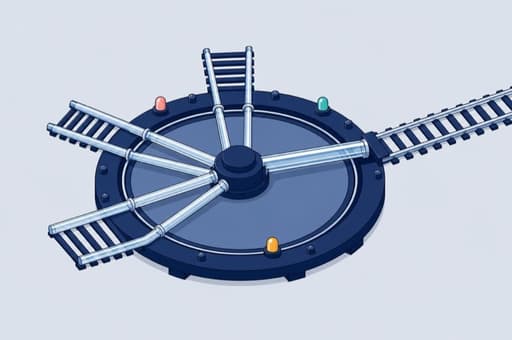
Optical Circuit Switch (320×320)
A switch that redirects beams of light between fibres without ever converting them to electricity, cutting switching power to roughly a tenth. Still a sliver of sales; most of the volume in use runs through Google's own in-house program, and management expects significant growth through fiscal 2027.
Competes with Polatis optical circuit switches (Lumentum) · Tilting-mirror optical switches (Calient) · Tilting-mirror optical switches (Accelink)
In plain English
Think of a railway yard where points are thrown to send a train down a different track. An optical circuit switch does that for beams of light — a signal arriving on one fibre is steered into whichever outgoing fibre is wanted, and it stays light the whole way through.
Coherent aims the beams with liquid crystal, the same substance that darkens pixels in a screen, rather than the tilting micro-mirrors most rivals use, so nothing inside has to move. The trick came out of its old telephone-network gear. Buyers are the operators of very large data centers, who use it to rewire the paths between racks of AI chips.
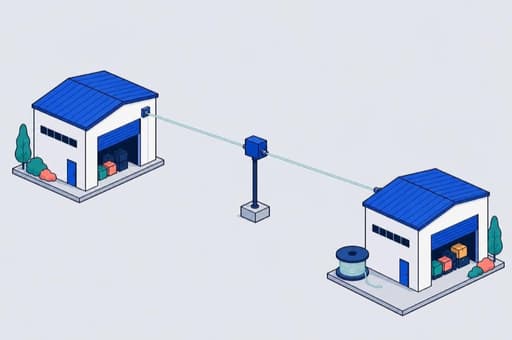
Communications and Data Center Interconnect
Everything that carries light between buildings rather than inside one: long-distance modules, pump lasers, amplifiers and line cards. Up roughly 54% in FY2026, driven by data-center-to-data-center links rather than the old telephone-network work, which keeps shrinking.
Competes with WaveLogic long-distance optics (Ciena) · Acacia long-distance pluggable modules (Cisco) · Chips for long-distance optical links (Marvell)
In plain English
The long-distance half. When an AI cluster outgrows one building, operators spread it across several sites and then have to push signals much further than a rack-to-rack hop — which calls for stronger lasers, amplifiers to lift the signal on the way, and modules built for the journey.
Coherent sells this as loose parts, as sub-assemblies, and now and then as a finished system, to cloud operators, phone carriers and the equipment makers who serve them. The old telephone-transport business lives in here too, and it is fading: across eight earnings calls the word "telecom" has all but vanished from management's vocabulary while "datacenter" keeps coming up.
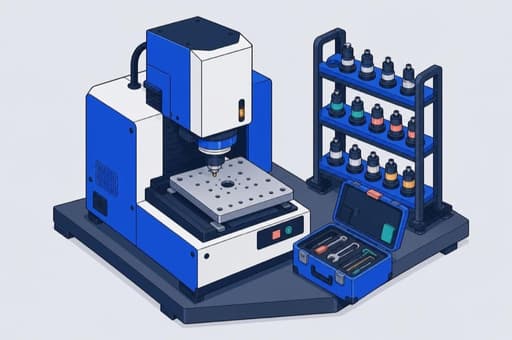
Industrial Lasers and Services
Lasers that cut, mark and machine parts on factory floors, plus the consumables and servicing that follow them. Roughly flat in FY2026 — the cyclical half of the company, where service is growing faster than the machines and no single customer looms large.
Competes with Industrial fibre lasers (IPG Photonics) · TruMicro and TruDiode lasers (TRUMPF) · Ultraviolet laser sources (Gigaphoton)
In plain English
Lasers doing ordinary factory work. These are machines bolted into production lines, marking, trimming and machining parts to fine tolerances, sold under names like LAMBDA SX, VYPER and Paladin. This is the older half of the company.
A machine sells once; after that the buyer keeps coming back for replacement parts and service contracts, year after year, and that trailing stream both grows faster than machine sales and earns better margins. Demand rises and falls with factory investment, the cost of borrowing and tariffs — which is why this side went sideways in the same year the data-center side surged.
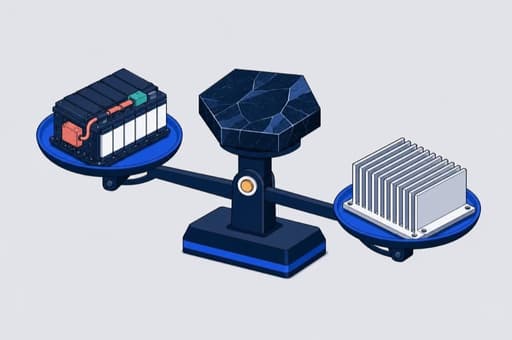
Silicon Carbide Semiconductor Business
A part-owned subsidiary growing silicon carbide discs for power chips. DENSO and Mitsubishi Electric paid a billion dollars for a quarter of it in 2023 and buy its output; electric-car demand dropped, so the newer pitch is carrying heat away from AI processors.
Competes with Silicon carbide discs sold on the open market (Wolfspeed) · In-house silicon carbide capacity (ROHM) · In-house silicon carbide capacity (STMicroelectronics)
In plain English
Silicon carbide is a hard crystal that stands up to heat and high voltage, which is why it goes into the power electronics inside electric cars. Coherent grows it into discs and sells them to chipmakers.
This piece is legally its own company. Two automotive-electronics groups, DENSO and Mitsubishi Electric, put in five hundred million dollars apiece for an eighth each, and signed long-term deals to buy what it makes; Coherent kept three-quarters and runs it. Then electric-vehicle demand fell and steadied at a lower level. The newer use is spreading heat away from AI processors — samples went out in 2026, sales are expected from late 2027.


 Datacenter Optical Transceivers (800G and 1.6T)The plug-in modules that turn data into light between AI chips and switches — the biggest line, up 41% in FY2026 and 66% in the June quarter, with orders now placed into 2028. Two customers, neither of them named, each bought more than a tenth of all revenue.
The plug-in modules that turn data into light between AI chips and switches — the biggest line, up 41% in FY2026 and 66% in the June quarter, with orders now placed into 2028. Two customers, neither of them named, each bought more than a tenth of all revenue.
In plain English
Picture a glass fibre ending at a switch: something has to turn the ones and zeros into flashes of light, and turn them back again at the far end. That something is a transceiver, a module that slides into the front of the equipment like a cartridge.
AI data centers need them in enormous numbers, because the chips doing the AI work have to keep passing data to each other. Cloud operators and the firms that build switches are the buyers. The price of a module drops year after year by industry habit, so the profit has to come from cost — which is why Coherent makes the laser chips inside them itself rather than buying them in.
Competes with Datacom transceivers (Zhongji Innolight) · Datacom transceivers (Eoptolink) · Cloud & networking transceivers (Lumentum)
 6-inch Indium Phosphide PlatformThe in-house crystal plants that grow Coherent's laser chips. Nobody is invoiced for them, but they set how much of everything else can ship: management called this output the thing capping data-center sales, and capacity is on track to double, with more than another doubling promised by the end of 2027.
The in-house crystal plants that grow Coherent's laser chips. Nobody is invoiced for them, but they set how much of everything else can ship: management called this output the thing capping data-center sales, and capacity is on track to double, with more than another doubling promised by the end of 2027.
In plain English
Every laser inside every module starts life as a round crystal disc — indium phosphide, the material Coherent grows and then cuts its tiny light-making chips out of. It runs those plants itself rather than buying the chips in.
The change under way is the size of the disc. Going from three inches across to six roughly quadruples the usable area, so far more chips come off a single run, and the bigger discs are already producing a better share of good ones. This part never sends anyone a bill; it shows up as how many modules Coherent can ship, and what each one costs. The plants sit in Texas and Sweden, with Zurich joining in 2027.
Competes with In-house laser chip capacity (Lumentum) · Indium phosphide discs sold on the open market (AXT) · Indium phosphide discs sold on the open market (Sumitomo Electric)
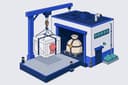 NVIDIA Strategic PartnershipNVIDIA bought newly issued shares and signed a multiyear order worth billions for advanced lasers and optical networking parts, running through the end of the decade. Deliveries are expected to start in 2027, and neither side is tied down: NVIDIA may buy elsewhere, Coherent may sell elsewhere.
NVIDIA bought newly issued shares and signed a multiyear order worth billions for advanced lasers and optical networking parts, running through the end of the decade. Deliveries are expected to start in 2027, and neither side is tied down: NVIDIA may buy elsewhere, Coherent may sell elsewhere.
In plain English
The customer who also became a shareholder. In March 2026 NVIDIA paid two billion dollars for a new block of Coherent shares and, on the same day, signed a supply agreement worth billions more for advanced lasers and optical networking products.
It matters twice over. The cash landed in a year when building new plants cost far more than the business itself brought in, and the agreement gives those plants committed work to fill once they are running. Nothing has shipped under it yet. It is also not exclusive in either direction, so it is a promise of demand rather than a lock on it.
Competes with External laser sources for chip-side optics (Lumentum) · Built-in optical connections (Ayar Labs) · Built-in optical connections (Lightmatter)
 Coherent PhotonLinkCoherent's kit for putting the light-making parts right next to the switch chip instead of in a module out front. It goes on show in September 2026 with first sales expected in the December quarter — and if it wins, it eats into Coherent's own biggest line.
Coherent's kit for putting the light-making parts right next to the switch chip instead of in a module out front. It goes on show in September 2026 with first sales expected in the December quarter — and if it wins, it eats into Coherent's own biggest line.
In plain English
Today the light-making parts sit in modules plugged into the front panel of a switch. The industry is working on moving them inward, onto the same package as the switch chip itself. PhotonLink is Coherent's kit for that: the whole chain from making the light through shaping it, sending it, catching it and turning it back into data.
Awkwardly, this is the thing that could displace the plug-in modules that are Coherent's biggest business. Its answer is to sell the light either way — a chip-side design still needs a laser feeding it from outside the package, and that laser is what Coherent makes.
Competes with Bailly and Tomahawk-Davisson chip-side optical switches (Broadcom) · Optical connections built into the chip (Celestial AI)
 Optical Circuit Switch (320×320)A switch that redirects beams of light between fibres without ever converting them to electricity, cutting switching power to roughly a tenth. Still a sliver of sales; most of the volume in use runs through Google's own in-house program, and management expects significant growth through fiscal 2027.
A switch that redirects beams of light between fibres without ever converting them to electricity, cutting switching power to roughly a tenth. Still a sliver of sales; most of the volume in use runs through Google's own in-house program, and management expects significant growth through fiscal 2027.
In plain English
Think of a railway yard where points are thrown to send a train down a different track. An optical circuit switch does that for beams of light — a signal arriving on one fibre is steered into whichever outgoing fibre is wanted, and it stays light the whole way through.
Coherent aims the beams with liquid crystal, the same substance that darkens pixels in a screen, rather than the tilting micro-mirrors most rivals use, so nothing inside has to move. The trick came out of its old telephone-network gear. Buyers are the operators of very large data centers, who use it to rewire the paths between racks of AI chips.
Competes with Polatis optical circuit switches (Lumentum) · Tilting-mirror optical switches (Calient) · Tilting-mirror optical switches (Accelink)
 Communications and Data Center InterconnectEverything that carries light between buildings rather than inside one: long-distance modules, pump lasers, amplifiers and line cards. Up roughly 54% in FY2026, driven by data-center-to-data-center links rather than the old telephone-network work, which keeps shrinking.
Everything that carries light between buildings rather than inside one: long-distance modules, pump lasers, amplifiers and line cards. Up roughly 54% in FY2026, driven by data-center-to-data-center links rather than the old telephone-network work, which keeps shrinking.
In plain English
The long-distance half. When an AI cluster outgrows one building, operators spread it across several sites and then have to push signals much further than a rack-to-rack hop — which calls for stronger lasers, amplifiers to lift the signal on the way, and modules built for the journey.
Coherent sells this as loose parts, as sub-assemblies, and now and then as a finished system, to cloud operators, phone carriers and the equipment makers who serve them. The old telephone-transport business lives in here too, and it is fading: across eight earnings calls the word "telecom" has all but vanished from management's vocabulary while "datacenter" keeps coming up.
Competes with WaveLogic long-distance optics (Ciena) · Acacia long-distance pluggable modules (Cisco) · Chips for long-distance optical links (Marvell)
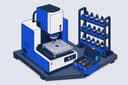 Industrial Lasers and ServicesLasers that cut, mark and machine parts on factory floors, plus the consumables and servicing that follow them. Roughly flat in FY2026 — the cyclical half of the company, where service is growing faster than the machines and no single customer looms large.
Lasers that cut, mark and machine parts on factory floors, plus the consumables and servicing that follow them. Roughly flat in FY2026 — the cyclical half of the company, where service is growing faster than the machines and no single customer looms large.
In plain English
Lasers doing ordinary factory work. These are machines bolted into production lines, marking, trimming and machining parts to fine tolerances, sold under names like LAMBDA SX, VYPER and Paladin. This is the older half of the company.
A machine sells once; after that the buyer keeps coming back for replacement parts and service contracts, year after year, and that trailing stream both grows faster than machine sales and earns better margins. Demand rises and falls with factory investment, the cost of borrowing and tariffs — which is why this side went sideways in the same year the data-center side surged.
Competes with Industrial fibre lasers (IPG Photonics) · TruMicro and TruDiode lasers (TRUMPF) · Ultraviolet laser sources (Gigaphoton)
 Silicon Carbide Semiconductor BusinessA part-owned subsidiary growing silicon carbide discs for power chips. DENSO and Mitsubishi Electric paid a billion dollars for a quarter of it in 2023 and buy its output; electric-car demand dropped, so the newer pitch is carrying heat away from AI processors.
A part-owned subsidiary growing silicon carbide discs for power chips. DENSO and Mitsubishi Electric paid a billion dollars for a quarter of it in 2023 and buy its output; electric-car demand dropped, so the newer pitch is carrying heat away from AI processors.
In plain English
Silicon carbide is a hard crystal that stands up to heat and high voltage, which is why it goes into the power electronics inside electric cars. Coherent grows it into discs and sells them to chipmakers.
This piece is legally its own company. Two automotive-electronics groups, DENSO and Mitsubishi Electric, put in five hundred million dollars apiece for an eighth each, and signed long-term deals to buy what it makes; Coherent kept three-quarters and runs it. Then electric-vehicle demand fell and steadied at a lower level. The newer use is spreading heat away from AI processors — samples went out in 2026, sales are expected from late 2027.
Competes with Silicon carbide discs sold on the open market (Wolfspeed) · In-house silicon carbide capacity (ROHM) · In-house silicon carbide capacity (STMicroelectronics)
Named in filings, launches and programs
- Semiconductor and display capital equipmentProduct lineLaser-based production tools sold to chip and display makers — roughly 6% of sales, and the bright spot inside the industrial half as orders picked up.
- Precision optics and engineered materialsProduct lineLenses, filters and other made-to-order optical components inside the industrial half — roughly 4% of sales.
- Short-reach light sources (VCSELs and gallium arsenide devices)Product lineLight sources for short hops inside a data center and for 3D sensing; that capacity is expanding alongside the indium phosphide plants.
- Legacy telecom transportProduct lineThe old phone-network gear, still sitting inside the communications line and still shrinking as data-center links take its place.
- Excimer laser annealing for Gen 8 OLED fabsProduct lineUltraviolet laser systems that treat the glass used in large OLED screens; shown off at the Photonics West trade show in 2026.
- Multi-rail systemsProduct line · Pre-revenueNetworking gear that links AI clusters across several data centers. Samples are out; sales guided for the first half of 2027, addressable demand put above $2B by 2030.
- Thermal management materials for AI processorsProduct · Pre-revenueMaterials for pulling heat off AI processors. Samples have been delivered; revenue is guided for the second half of 2027.
- 300mm silicon carbide heat spreadersProduct · Pre-revenueExtra-large silicon carbide discs for spreading heat under AI chips; customer sampling began in August 2026, with up to 25% better heat spreading claimed.
- Thermoelectric generatorsProduct · Pre-revenueDevices that turn waste heat back into electricity; flagged as a growth vector at Photonics West 2026, with no sales yet.
- Fusion, quantum and micro-LED equipmentProduct · Pre-revenueLonger-term industrial bets: equipment aimed at fusion energy, quantum computing and micro-LED displays, with no dates attached.
Semiconductor and display capital equipmentProduct line
Laser-based production tools sold to chip and display makers — roughly 6% of sales, and the bright spot inside the industrial half as orders picked up.
Precision optics and engineered materialsProduct line
Lenses, filters and other made-to-order optical components inside the industrial half — roughly 4% of sales.
Short-reach light sources (VCSELs and gallium arsenide devices)Product line
Light sources for short hops inside a data center and for 3D sensing; that capacity is expanding alongside the indium phosphide plants.
Legacy telecom transportProduct line
The old phone-network gear, still sitting inside the communications line and still shrinking as data-center links take its place.
Excimer laser annealing for Gen 8 OLED fabsProduct line
Ultraviolet laser systems that treat the glass used in large OLED screens; shown off at the Photonics West trade show in 2026.
Multi-rail systemsProduct line · Pre-revenue
Networking gear that links AI clusters across several data centers. Samples are out; sales guided for the first half of 2027, addressable demand put above $2B by 2030.
Thermal management materials for AI processorsProduct · Pre-revenue
Materials for pulling heat off AI processors. Samples have been delivered; revenue is guided for the second half of 2027.
300mm silicon carbide heat spreadersProduct · Pre-revenue
Extra-large silicon carbide discs for spreading heat under AI chips; customer sampling began in August 2026, with up to 25% better heat spreading claimed.
Thermoelectric generatorsProduct · Pre-revenue
Devices that turn waste heat back into electricity; flagged as a growth vector at Photonics West 2026, with no sales yet.
Fusion, quantum and micro-LED equipmentProduct · Pre-revenue
Longer-term industrial bets: equipment aimed at fusion energy, quantum computing and micro-LED displays, with no dates attached.