
Carpenter Technology (CRS)
Supplies qualification-intensive specialty alloys for aerospace, defense, medical, energy, and industrial applications.
Something off on this page? Send us feedback.
Carpenter Technology melts and shapes metal for parts that must not fail — the spinning insides of jet engines, replacement hips, power-plant turbines. Aerospace and defense now supply most of what it sells, and that side keeps growing while the medical side has shrunk. How much it can melt sets the limit on what it can sell, so its next chapter is a furnace expansion in Alabama built to raise that limit.
Item facts: FY2026 · year ended June 30, 2026, from filings, earnings calls and company pages.
Judgment weights, not filed revenue
The band summarizes business focus and direction. ~ marks estimates.
8 in detail · 8 more below
Aerospace and Defense markets
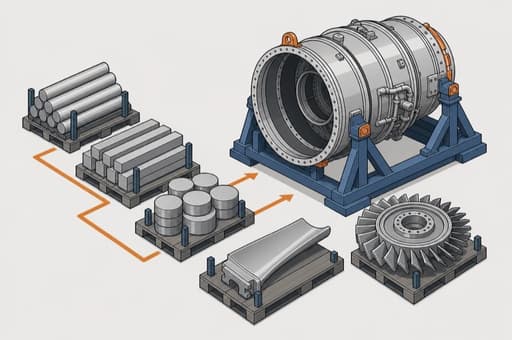
Superalloy and titanium bar, billet and wire for engine parts, airframes, fasteners and defense platforms — $2.04B of FY2026 sales against $1.77B a year earlier. Engine sales were up 44% year over year in the March quarter.
Competes with High Performance Materials & Components (ATI Inc.) · High-temperature alloys (Haynes International (Acerinox)) · European aerospace alloy supply (Aubert & Duval)
In plain English
Think of the hottest, most-stressed parts inside a jet engine — the spinning discs and blades sitting right behind the flame. Ordinary steel would soften there. Carpenter melts nickel and cobalt recipes that keep their strength in that heat, then forges and rolls them into bars, billets and wire.
Engine makers, and the shops that forge parts and bolts for them, buy by the pound. They cannot switch suppliers casually: every alloy has to be re-approved for the specific part it goes into, and that takes years. The approval barrier is why work once won tends to stay won — and why demand here tracks how fast Boeing and Airbus are building.
Aerospace long-term agreements
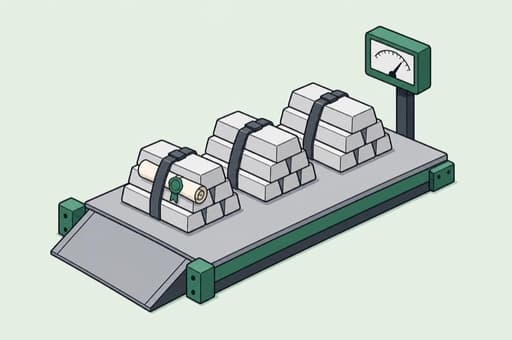
Multi-year price-and-volume deals with engine, structural and fastener customers cover roughly 40% of company sales and 60–65% of aerospace. Recent renewals were signed at higher prices, though one-off orders still price higher than contracts do.
Competes with Multi-year aerospace supply agreements (ATI Inc.) · In-house supply to Airbus and Safran (Aubert & Duval)
In plain English
A long-term agreement is a promise running both ways: the customer commits to buying a set amount of a named alloy for several years, and Carpenter commits to making it at an agreed price. Like a restaurant's standing order with a farm — nobody haggles every month.
The price has two pieces. One piece simply passes the cost of nickel and cobalt on to the buyer; in FY2026 roughly $597M of the $3.12B of sales was that pass-through, and Carpenter earns little on it. The piece that matters is the base price, and scarce furnace time is what has let Carpenter push it up at renewal.
Dynamet titanium
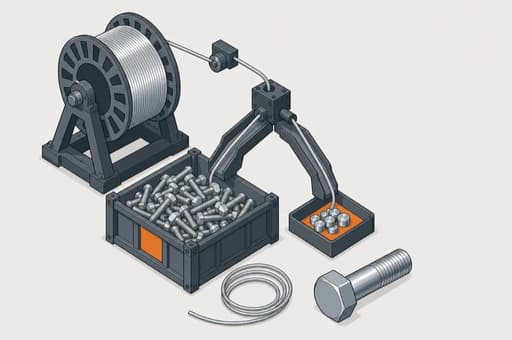
The titanium arm: bar, strip and fine wire for aircraft fasteners and for implants, roughly 7% of sales and the biggest earner inside Carpenter's smaller division. Its medical customers' destocking drove the FY2026 medical slide.
Competes with TIMET titanium (Precision Castparts) · ATI titanium (ATI Inc.) · Titanium products (IperionX)
In plain English
Titanium is light and does not rust, which makes it the metal of choice for the bolts holding an aircraft together and for the parts surgeons leave inside people. Dynamet draws it down into bar, strip and hair-thin wire.
Two very different sets of buyers, one product line: aircraft-part makers and medical device companies together account for nearly all of its sales. The medical half reaches customers through middlemen who hold metal in stock, and when those middlemen spent FY2026 running their shelves down, Dynamet's medical orders fell with them. It was also the business that improved most in the June quarter.
Carpenter Additive
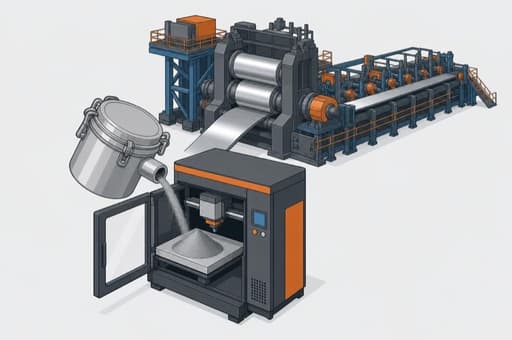
Metal powders for 3D printing, plus the job of managing that powder for customers. Only about 1-2% of sales, but growing on aerospace and defense orders, and named the main lift to the smaller division's margin in one recent quarter.
Competes with AP&C metal powders (Colibrium Additive (GE Aerospace)) · Additive metal powders (6K Additive)
In plain English
Some parts are now printed rather than cut out of a solid bar: a machine spreads a thin layer of metal powder, melts the shape it needs, then spreads the next layer on top.
Carpenter makes that powder by blowing molten alloy apart with jets of gas, sells it under the PowderRange name, and also manages the powder for customers over its working life. The buyers are the same aircraft and defense programmes that take the mill's bars, which is why this line grew through FY2026 while the company's medical business fell. It is small next to the bar business, but it is the part being built up.
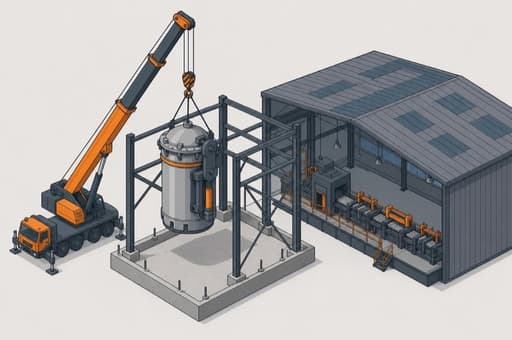
Athens melt expansion
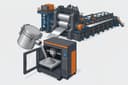
A roughly $400M furnace expansion in Alabama, on schedule for first metal at the start of FY2028. Management expects about $150M of extra yearly operating profit from it by 2030, and leans on it for a $1.2–1.3B FY2029 profit target.
Competes with Universal Stainless US bar capacity (Aperam S.A.) · Haynes International alloy capacity (Acerinox) · European alloy capacity (Aubert & Duval)
In plain English
The plant works like a kitchen with too few ovens: the equipment further down the line could finish more metal than the furnaces can melt. So Carpenter is adding melting capacity at a site it already owns in Athens, Alabama, instead of building a mill from scratch.
Nothing is sold from it yet. Foundations went in during 2025, equipment installation was under way by mid-2026, and it is being paid for out of cash the existing business throws off. Because the furnaces are the pinch point, extra melt turns fairly directly into extra sales — provided the order flow that makes furnace time scarce today is still there when it starts up.
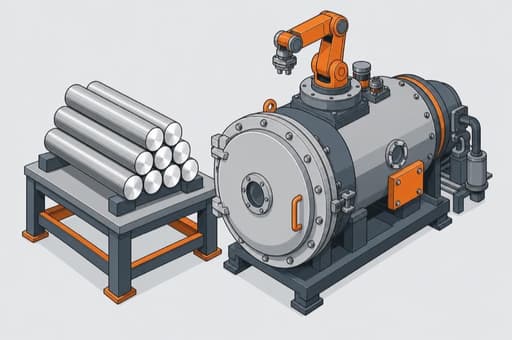
Industrial and Consumer markets
Stainless, tool steel and specialty bar for chipmaking equipment, machinery and consumer uses — $401.8M in FY2026. The June quarter at $117.4M ran well above the $92.9M that opened the year, on semiconductor demand.
Competes with Specialty rolled and long products (ATI Inc.) · Universal Stainless specialty bar (Aperam S.A.) · Advanced materials (Materion Corporation)
In plain English
The machines that make computer chips are full of critical parts, and what those parts are cut from matters. Carpenter sells the stainless and tool-steel bar they start life as, along with metal for industrial machinery and consumer goods.
Equipment makers and the plants that run them order when new chip factories are being built, so this line moves with construction and equipment spending rather than with how many phones get sold. It is also the line that competes hardest with aerospace for time in Carpenter's furnaces: when the jet-engine order book is heavy, there is simply less room for it.
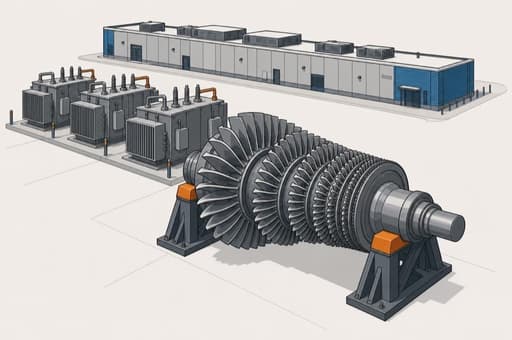
Energy markets
Alloys for the gas turbines that make electricity, and for oil and gas — $230.6M in FY2026 against $200.3M. Quarters are lumpy because this metal shares the aerospace production route; the pull is datacentre power demand.
Competes with Gas-turbine alloys (Haynes International (Acerinox)) · High Performance Materials (ATI Inc.) · Universal Stainless specialty bar (Aperam S.A.)
In plain English
Power stations that burn natural gas spin very large turbines, and the hot parts inside them face much the same problem as a jet engine: severe heat under constant stress. Carpenter sells the nickel alloys those parts are machined from, plus metal for oil and gas work.
Three companies dominate the building of these big turbines — GE Vernova, Siemens Energy and Mitsubishi Heavy Industries — and all three are sitting on years of orders as datacentres push up electricity demand. That makes the demand visible well in advance. What makes any single quarter lumpy is scheduling: this metal runs the same path through the mill as aerospace metal, so it ships when slots open.
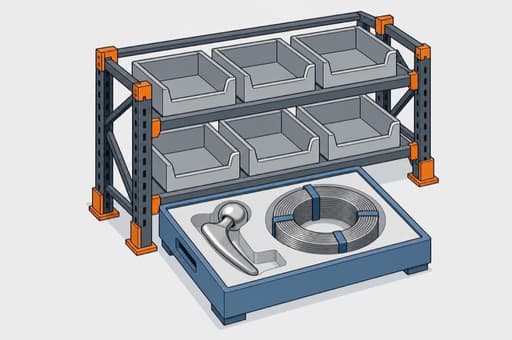
Medical market
Cobalt-chrome, stainless and titanium bar and wire for implants, heart devices and dental work — $278.4M in FY2026 against $351.2M the year before. The June quarter was the first to tick back up.
Competes with ATI Specialty Alloys and Components (ATI Inc.) · Medical fine wire (Fort Wayne Metals) · Medical strip and wire (Ulbrich Stainless Steels)
In plain English
Hip and knee replacements, heart devices, dental work: metal that goes into a body has to sit there for years without corroding or cracking. Carpenter supplies the cobalt-chrome, stainless and titanium bar and wire that device makers machine into those parts, and it has said this work earns margins like its aerospace work.
The unglamorous detail is how it gets there. Most of this metal passes through middlemen who hold stock, and through FY2026 those middlemen drew their inventories down rather than reordering — so Carpenter's medical sales fell about a fifth even as operations went on as before. Management has called the pattern hard to read. It once described medical as roughly 15% of the business; it is now about 9%.


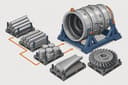 Aerospace and Defense marketsSuperalloy and titanium bar, billet and wire for engine parts, airframes, fasteners and defense platforms — $2.04B of FY2026 sales against $1.77B a year earlier. Engine sales were up 44% year over year in the March quarter.
Superalloy and titanium bar, billet and wire for engine parts, airframes, fasteners and defense platforms — $2.04B of FY2026 sales against $1.77B a year earlier. Engine sales were up 44% year over year in the March quarter.
In plain English
Think of the hottest, most-stressed parts inside a jet engine — the spinning discs and blades sitting right behind the flame. Ordinary steel would soften there. Carpenter melts nickel and cobalt recipes that keep their strength in that heat, then forges and rolls them into bars, billets and wire.
Engine makers, and the shops that forge parts and bolts for them, buy by the pound. They cannot switch suppliers casually: every alloy has to be re-approved for the specific part it goes into, and that takes years. The approval barrier is why work once won tends to stay won — and why demand here tracks how fast Boeing and Airbus are building.
Competes with High Performance Materials & Components (ATI Inc.) · High-temperature alloys (Haynes International (Acerinox)) · European aerospace alloy supply (Aubert & Duval)
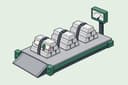 Aerospace long-term agreementsMulti-year price-and-volume deals with engine, structural and fastener customers cover roughly 40% of company sales and 60–65% of aerospace. Recent renewals were signed at higher prices, though one-off orders still price higher than contracts do.
Multi-year price-and-volume deals with engine, structural and fastener customers cover roughly 40% of company sales and 60–65% of aerospace. Recent renewals were signed at higher prices, though one-off orders still price higher than contracts do.
In plain English
A long-term agreement is a promise running both ways: the customer commits to buying a set amount of a named alloy for several years, and Carpenter commits to making it at an agreed price. Like a restaurant's standing order with a farm — nobody haggles every month.
The price has two pieces. One piece simply passes the cost of nickel and cobalt on to the buyer; in FY2026 roughly $597M of the $3.12B of sales was that pass-through, and Carpenter earns little on it. The piece that matters is the base price, and scarce furnace time is what has let Carpenter push it up at renewal.
Competes with Multi-year aerospace supply agreements (ATI Inc.) · In-house supply to Airbus and Safran (Aubert & Duval)
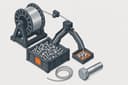 Dynamet titaniumThe titanium arm: bar, strip and fine wire for aircraft fasteners and for implants, roughly 7% of sales and the biggest earner inside Carpenter's smaller division. Its medical customers' destocking drove the FY2026 medical slide.
The titanium arm: bar, strip and fine wire for aircraft fasteners and for implants, roughly 7% of sales and the biggest earner inside Carpenter's smaller division. Its medical customers' destocking drove the FY2026 medical slide.
In plain English
Titanium is light and does not rust, which makes it the metal of choice for the bolts holding an aircraft together and for the parts surgeons leave inside people. Dynamet draws it down into bar, strip and hair-thin wire.
Two very different sets of buyers, one product line: aircraft-part makers and medical device companies together account for nearly all of its sales. The medical half reaches customers through middlemen who hold metal in stock, and when those middlemen spent FY2026 running their shelves down, Dynamet's medical orders fell with them. It was also the business that improved most in the June quarter.
Competes with TIMET titanium (Precision Castparts) · ATI titanium (ATI Inc.) · Titanium products (IperionX)
 Carpenter AdditiveMetal powders for 3D printing, plus the job of managing that powder for customers. Only about 1-2% of sales, but growing on aerospace and defense orders, and named the main lift to the smaller division's margin in one recent quarter.
Metal powders for 3D printing, plus the job of managing that powder for customers. Only about 1-2% of sales, but growing on aerospace and defense orders, and named the main lift to the smaller division's margin in one recent quarter.
In plain English
Some parts are now printed rather than cut out of a solid bar: a machine spreads a thin layer of metal powder, melts the shape it needs, then spreads the next layer on top.
Carpenter makes that powder by blowing molten alloy apart with jets of gas, sells it under the PowderRange name, and also manages the powder for customers over its working life. The buyers are the same aircraft and defense programmes that take the mill's bars, which is why this line grew through FY2026 while the company's medical business fell. It is small next to the bar business, but it is the part being built up.
Competes with AP&C metal powders (Colibrium Additive (GE Aerospace)) · Additive metal powders (6K Additive)
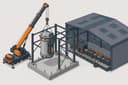 Athens melt expansionA roughly $400M furnace expansion in Alabama, on schedule for first metal at the start of FY2028. Management expects about $150M of extra yearly operating profit from it by 2030, and leans on it for a $1.2–1.3B FY2029 profit target.
A roughly $400M furnace expansion in Alabama, on schedule for first metal at the start of FY2028. Management expects about $150M of extra yearly operating profit from it by 2030, and leans on it for a $1.2–1.3B FY2029 profit target.
In plain English
The plant works like a kitchen with too few ovens: the equipment further down the line could finish more metal than the furnaces can melt. So Carpenter is adding melting capacity at a site it already owns in Athens, Alabama, instead of building a mill from scratch.
Nothing is sold from it yet. Foundations went in during 2025, equipment installation was under way by mid-2026, and it is being paid for out of cash the existing business throws off. Because the furnaces are the pinch point, extra melt turns fairly directly into extra sales — provided the order flow that makes furnace time scarce today is still there when it starts up.
Competes with Universal Stainless US bar capacity (Aperam S.A.) · Haynes International alloy capacity (Acerinox) · European alloy capacity (Aubert & Duval)
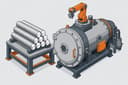 Industrial and Consumer marketsStainless, tool steel and specialty bar for chipmaking equipment, machinery and consumer uses — $401.8M in FY2026. The June quarter at $117.4M ran well above the $92.9M that opened the year, on semiconductor demand.
Stainless, tool steel and specialty bar for chipmaking equipment, machinery and consumer uses — $401.8M in FY2026. The June quarter at $117.4M ran well above the $92.9M that opened the year, on semiconductor demand.
In plain English
The machines that make computer chips are full of critical parts, and what those parts are cut from matters. Carpenter sells the stainless and tool-steel bar they start life as, along with metal for industrial machinery and consumer goods.
Equipment makers and the plants that run them order when new chip factories are being built, so this line moves with construction and equipment spending rather than with how many phones get sold. It is also the line that competes hardest with aerospace for time in Carpenter's furnaces: when the jet-engine order book is heavy, there is simply less room for it.
Competes with Specialty rolled and long products (ATI Inc.) · Universal Stainless specialty bar (Aperam S.A.) · Advanced materials (Materion Corporation)
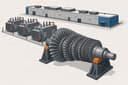 Energy marketsAlloys for the gas turbines that make electricity, and for oil and gas — $230.6M in FY2026 against $200.3M. Quarters are lumpy because this metal shares the aerospace production route; the pull is datacentre power demand.
Alloys for the gas turbines that make electricity, and for oil and gas — $230.6M in FY2026 against $200.3M. Quarters are lumpy because this metal shares the aerospace production route; the pull is datacentre power demand.
In plain English
Power stations that burn natural gas spin very large turbines, and the hot parts inside them face much the same problem as a jet engine: severe heat under constant stress. Carpenter sells the nickel alloys those parts are machined from, plus metal for oil and gas work.
Three companies dominate the building of these big turbines — GE Vernova, Siemens Energy and Mitsubishi Heavy Industries — and all three are sitting on years of orders as datacentres push up electricity demand. That makes the demand visible well in advance. What makes any single quarter lumpy is scheduling: this metal runs the same path through the mill as aerospace metal, so it ships when slots open.
Competes with Gas-turbine alloys (Haynes International (Acerinox)) · High Performance Materials (ATI Inc.) · Universal Stainless specialty bar (Aperam S.A.)
 Medical marketCobalt-chrome, stainless and titanium bar and wire for implants, heart devices and dental work — $278.4M in FY2026 against $351.2M the year before. The June quarter was the first to tick back up.
Cobalt-chrome, stainless and titanium bar and wire for implants, heart devices and dental work — $278.4M in FY2026 against $351.2M the year before. The June quarter was the first to tick back up.
In plain English
Hip and knee replacements, heart devices, dental work: metal that goes into a body has to sit there for years without corroding or cracking. Carpenter supplies the cobalt-chrome, stainless and titanium bar and wire that device makers machine into those parts, and it has said this work earns margins like its aerospace work.
The unglamorous detail is how it gets there. Most of this metal passes through middlemen who hold stock, and through FY2026 those middlemen drew their inventories down rather than reordering — so Carpenter's medical sales fell about a fifth even as operations went on as before. Management has called the pattern hard to read. It once described medical as roughly 15% of the business; it is now about 9%.
Competes with ATI Specialty Alloys and Components (ATI Inc.) · Medical fine wire (Fort Wayne Metals) · Medical strip and wire (Ulbrich Stainless Steels)
Named in filings, launches and programs
- Specialty Alloys OperationsSegmentThe main mills, principally in Reading and Latrobe, Pennsylvania — $2.83B of FY2026 sales and about 96% of the operating profit the two divisions report.
- Performance Engineered ProductsSegmentThe smaller division — titanium, printing powders and two resale arms — $383.0M of sales on $30.1M of operating profit; management calls it not material to Carpenter overall.
- Transportation marketSegmentAlloys sold towards vehicles — $100.4M in FY2026, down from $113.3M, and with medical one of only two end markets to shrink.
- Distribution marketSegmentMetal sold to warehouses that resell it rather than to the end user — $77.8M in FY2026, down from $84.2M.
- Latrobe and Mexico distribution businessesServiceCarpenter's own stock-and-resell arms in Pennsylvania and Mexico; they sit in the smaller division and compete with independent metal distributors.
- PowderRangeProduct lineCarpenter Additive's branded powder family, running from a common stainless grade up to GRX-810, a heat-resistant alloy developed by NASA.
- Powder lifecycle managementServiceLooking after customers' metal powder across its working life — the service line sold alongside the powder itself.
- Emerging Technology Center, AthensProduct · Pre-revenueThe 3D-printing development site in Athens, Alabama, sharing ground with the new melting capacity going up there.
Specialty Alloys OperationsSegment
The main mills, principally in Reading and Latrobe, Pennsylvania — $2.83B of FY2026 sales and about 96% of the operating profit the two divisions report.
Performance Engineered ProductsSegment
The smaller division — titanium, printing powders and two resale arms — $383.0M of sales on $30.1M of operating profit; management calls it not material to Carpenter overall.
Transportation marketSegment
Alloys sold towards vehicles — $100.4M in FY2026, down from $113.3M, and with medical one of only two end markets to shrink.
Distribution marketSegment
Metal sold to warehouses that resell it rather than to the end user — $77.8M in FY2026, down from $84.2M.
Latrobe and Mexico distribution businessesService
Carpenter's own stock-and-resell arms in Pennsylvania and Mexico; they sit in the smaller division and compete with independent metal distributors.
PowderRangeProduct line
Carpenter Additive's branded powder family, running from a common stainless grade up to GRX-810, a heat-resistant alloy developed by NASA.
Powder lifecycle managementService
Looking after customers' metal powder across its working life — the service line sold alongside the powder itself.
Emerging Technology Center, AthensProduct · Pre-revenue
The 3D-printing development site in Athens, Alabama, sharing ground with the new melting capacity going up there.