
CoreWeave (CRWV)
Provides Nvidia-centered cloud infrastructure and software for building and running AI models.
Something off on this page? Send us feedback.
CoreWeave rents purpose-built AI computers. It signs multi-year contracts with AI labs, hyperscalers and large enterprises, then borrows heavily to build the data centers and buy the chips that fill them. Revenue arrives only after power is switched on, so the business is really a race to energize contracted megawatts — while a thin software layer grows on top.
Item facts: FY2025 + H1 2026 filings, from filings, earnings calls and company pages.
Judgment weights, not filed revenue
The band summarizes business focus and direction. ~ marks estimates.
9 in detail · 19 more below
GPU Compute
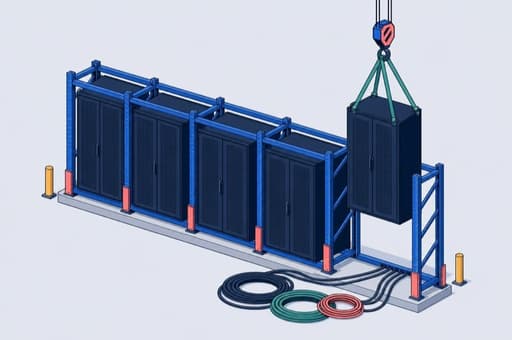
Racks of NVIDIA chips rented as dedicated clusters under contracts that typically run about five years. It is nearly all the revenue, and it only grows when another data center is powered up and handed over.
Competes with Nebius AI Cloud (Nebius Group) · Lambda Cloud clusters (Lambda) · Crusoe Cloud (Crusoe Energy)
In plain English
Training and running modern AI needs thousands of specialized chips wired together as one machine. Almost nobody wants to build that themselves, so CoreWeave builds it and rents it out — closer to leasing a fully staffed factory than to renting a spare server.
A customer signs up for a fixed slice of that machine for several years and pays whether or not it uses every hour. CoreWeave buys the chips first, with borrowed money, then earns the rent back over the life of the contract. The catch is the order of events: the spending comes years before the revenue does.
Microsoft master agreements
Microsoft rents clusters here and resells the capacity to its own cloud customers. Named as the top customer at about two-thirds of last year's revenue; the largest unnamed customer this year sits near forty percent — a share deliberately shrinking as others sign on.
Competes with Azure self-built AI data centers (Microsoft) · Nebius AI Cloud capacity (Nebius Group) · Lambda reserved clusters (Lambda)
In plain English
Microsoft does not hand these machines to shoppers; it buys wholesale capacity and serves it onward to businesses using its own cloud. Think of a bakery that sells most of its bread to one supermarket chain rather than over the counter.
That made CoreWeave dependent on a single buyer's building plans and renewal appetite. Other large customers have since been signed hard enough that the top customer's slice of the order book fell from most of it to around a third within a year. The dollars kept rising; the share did not.

OpenAI capacity agreements
Three stacked contracts running to 2031, worth up to about twenty-two billion dollars in total. Roughly a quarter of first-half revenue. Management says the financing to deliver every existing OpenAI commitment is already raised.
Competes with Stargate capacity (Oracle) · Azure capacity (Microsoft) · Crusoe Cloud (Crusoe Energy)
In plain English
OpenAI needs more computing power than it can build, so it reserves years of capacity from suppliers like CoreWeave — the way an airline orders planes long before passengers book seats.
The deal was signed in pieces: an initial agreement in early 2025, an expansion months later, and a further tranche running to 2031. Each piece obliges CoreWeave to install chips and power on a schedule, financed with debt raised against the contract itself. The revenue holds while OpenAI keeps paying, which makes the customer's own funding the thing to watch.
Meta AI infrastructure agreements
About thirty-five billion dollars of committed capacity running to 2032, most of it aimed at inference — answering user requests rather than training new models. Only about a tenth of revenue today; nearly all of it lands from 2027.
Competes with Self-built AI data centers (Meta) · OCI Supercluster (Oracle) · Azure AI infrastructure (Microsoft)
In plain English
Meta already builds enormous data centers of its own, so buying capacity here is about speed: getting machines running sooner than its own construction schedule allows.
What it is buying matters more than the size. Inference is the everyday work of answering requests from people using an app, which runs continuously rather than in bursts, the way a power station serves a city instead of a one-off construction job. That makes the revenue steadier than training contracts — but almost none of it has arrived yet, and it depends on power being delivered on schedule for years.
Data Center & Power Platform
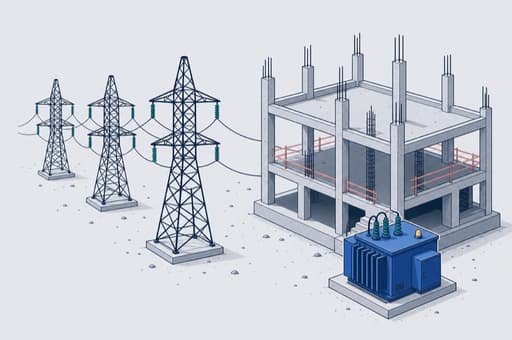
Megawatts are the real constraint: revenue only exists where power is live. Active capacity went from a few hundred megawatts to one and a half gigawatts in a year, against four point two gigawatts already contracted.
Competes with Data center portfolio (Core Scientific) · AI data center capacity (Applied Digital) · AI data center capacity (IREN)
In plain English
Every rented cluster sits in a building with electricity, cooling and network running to it. CoreWeave leases most of those buildings today and has started building its own, including sites in Pennsylvania and New Jersey.
Contracted power is capacity that is signed for but not yet switched on — a restaurant that has taken bookings but has not finished the dining room. Turning contracted megawatts into live ones is what converts the order book into revenue, and it depends on landlords, builders and grid connections. One developer's delay was enough to move a quarter's results.
CoreWeave AI Object Storage
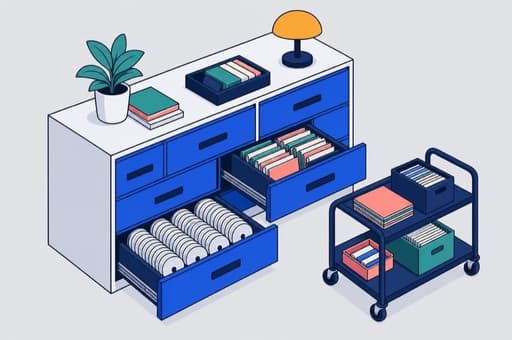
Where the training data and checkpoints live, sold next to the chips that read them. It sits inside the four hundred million dollar annual run-rate of everything that is not GPU rental, alongside networking and CPU compute.
Competes with Amazon S3 (AWS) · Cloud Storage (Google) · VAST Data platform (VAST Data)
In plain English
AI training chews through enormous piles of files, and moving those files across the internet each time is slow and expensive. Keeping them in the same building as the chips is like storing ingredients in the kitchen instead of a warehouse across town.
CoreWeave sells that storage by the amount kept and moved, running both its own system and third-party ones from vendors such as VAST and WEKA. It is small money next to compute, but it is stickier: once a customer's data sits here, moving the work elsewhere gets harder.

CoreWeave Managed Inference
Launched this year: customers send requests to open-source models and pay per unit of text processed, with no cluster to manage. Booked orders went from almost nothing to over a hundred million dollars annually within months.
Competes with Together Inference (Together AI) · Fireworks inference platform (Fireworks AI) · Bedrock (AWS)
In plain English
Renting a cluster suits a company with its own engineers. Everyone else just wants answers from a model. Managed inference sells the answers: a customer sends text in, gets text back, and pays by volume — metered like water rather than leased like a building.
It runs on chips CoreWeave already owns, so each request earned this way is worth more than the same silicon rented raw. Management says growth is limited only by spare capacity, and is targeting a quarter of a billion dollars of booked orders by year end.
Weights & Biases
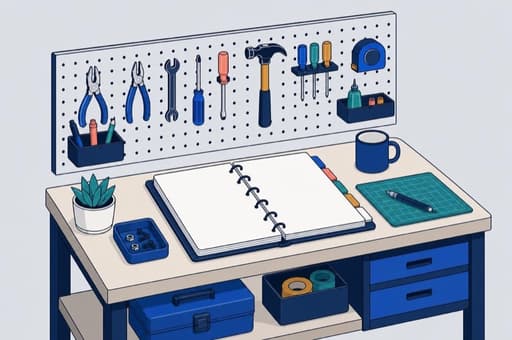
Bought for about a billion dollars in 2025: the tools AI teams use to track experiments and watch models behave. Small revenue, roughly a thousand four hundred customer accounts, and mainly a way into the compute sale.
Competes with MLflow (Databricks) · Opik (Comet ML) · LangSmith (LangChain)
In plain English
Building an AI model means running the same job hundreds of times with small changes and needing to know which run worked. Weights & Biases is the lab notebook for that — it records every attempt and what came of it.
CoreWeave bought it to sit where engineers start their day. The subscription money is minor; the value is that a team whose entire history of experiments lives here is unlikely to move its computing bill somewhere else. Two smaller purchases, OpenPipe and Marimo, extend the same developer surface.

CoreWeave Omni
CoreWeave's software and operations running inside somebody else's data center, on somebody else's chips. The first contract was signed this summer and scales in 2027; this year's guidance assumes nothing from it.
Competes with DGX Cloud (NVIDIA) · Azure Local (Microsoft) · AWS Outposts (AWS)
In plain English
Governments and large firms increasingly own data centers but have no way to run an AI cloud inside them. Omni sends in CoreWeave's stack and staff to operate the place, while the customer keeps the building and the hardware.
That inverts the usual economics: CoreWeave earns a fee without borrowing billions to buy the chips first. It is the only line here that could grow without heavy capital spending behind it. One deal exists so far, with no disclosed value, and NVIDIA is still validating the underlying software for its own reference designs.


 GPU ComputeRacks of NVIDIA chips rented as dedicated clusters under contracts that typically run about five years. It is nearly all the revenue, and it only grows when another data center is powered up and handed over.
Racks of NVIDIA chips rented as dedicated clusters under contracts that typically run about five years. It is nearly all the revenue, and it only grows when another data center is powered up and handed over.
In plain English
Training and running modern AI needs thousands of specialized chips wired together as one machine. Almost nobody wants to build that themselves, so CoreWeave builds it and rents it out — closer to leasing a fully staffed factory than to renting a spare server.
A customer signs up for a fixed slice of that machine for several years and pays whether or not it uses every hour. CoreWeave buys the chips first, with borrowed money, then earns the rent back over the life of the contract. The catch is the order of events: the spending comes years before the revenue does.
Competes with Nebius AI Cloud (Nebius Group) · Lambda Cloud clusters (Lambda) · Crusoe Cloud (Crusoe Energy)
 Microsoft master agreementsMicrosoft rents clusters here and resells the capacity to its own cloud customers. Named as the top customer at about two-thirds of last year's revenue; the largest unnamed customer this year sits near forty percent — a share deliberately shrinking as others sign on.
Microsoft rents clusters here and resells the capacity to its own cloud customers. Named as the top customer at about two-thirds of last year's revenue; the largest unnamed customer this year sits near forty percent — a share deliberately shrinking as others sign on.
In plain English
Microsoft does not hand these machines to shoppers; it buys wholesale capacity and serves it onward to businesses using its own cloud. Think of a bakery that sells most of its bread to one supermarket chain rather than over the counter.
That made CoreWeave dependent on a single buyer's building plans and renewal appetite. Other large customers have since been signed hard enough that the top customer's slice of the order book fell from most of it to around a third within a year. The dollars kept rising; the share did not.
Competes with Azure self-built AI data centers (Microsoft) · Nebius AI Cloud capacity (Nebius Group) · Lambda reserved clusters (Lambda)
 OpenAI capacity agreementsThree stacked contracts running to 2031, worth up to about twenty-two billion dollars in total. Roughly a quarter of first-half revenue. Management says the financing to deliver every existing OpenAI commitment is already raised.
Three stacked contracts running to 2031, worth up to about twenty-two billion dollars in total. Roughly a quarter of first-half revenue. Management says the financing to deliver every existing OpenAI commitment is already raised.
In plain English
OpenAI needs more computing power than it can build, so it reserves years of capacity from suppliers like CoreWeave — the way an airline orders planes long before passengers book seats.
The deal was signed in pieces: an initial agreement in early 2025, an expansion months later, and a further tranche running to 2031. Each piece obliges CoreWeave to install chips and power on a schedule, financed with debt raised against the contract itself. The revenue holds while OpenAI keeps paying, which makes the customer's own funding the thing to watch.
Competes with Stargate capacity (Oracle) · Azure capacity (Microsoft) · Crusoe Cloud (Crusoe Energy)
 Meta AI infrastructure agreementsAbout thirty-five billion dollars of committed capacity running to 2032, most of it aimed at inference — answering user requests rather than training new models. Only about a tenth of revenue today; nearly all of it lands from 2027.
About thirty-five billion dollars of committed capacity running to 2032, most of it aimed at inference — answering user requests rather than training new models. Only about a tenth of revenue today; nearly all of it lands from 2027.
In plain English
Meta already builds enormous data centers of its own, so buying capacity here is about speed: getting machines running sooner than its own construction schedule allows.
What it is buying matters more than the size. Inference is the everyday work of answering requests from people using an app, which runs continuously rather than in bursts, the way a power station serves a city instead of a one-off construction job. That makes the revenue steadier than training contracts — but almost none of it has arrived yet, and it depends on power being delivered on schedule for years.
Competes with Self-built AI data centers (Meta) · OCI Supercluster (Oracle) · Azure AI infrastructure (Microsoft)
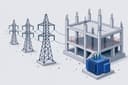 Data Center & Power PlatformMegawatts are the real constraint: revenue only exists where power is live. Active capacity went from a few hundred megawatts to one and a half gigawatts in a year, against four point two gigawatts already contracted.
Megawatts are the real constraint: revenue only exists where power is live. Active capacity went from a few hundred megawatts to one and a half gigawatts in a year, against four point two gigawatts already contracted.
In plain English
Every rented cluster sits in a building with electricity, cooling and network running to it. CoreWeave leases most of those buildings today and has started building its own, including sites in Pennsylvania and New Jersey.
Contracted power is capacity that is signed for but not yet switched on — a restaurant that has taken bookings but has not finished the dining room. Turning contracted megawatts into live ones is what converts the order book into revenue, and it depends on landlords, builders and grid connections. One developer's delay was enough to move a quarter's results.
Competes with Data center portfolio (Core Scientific) · AI data center capacity (Applied Digital) · AI data center capacity (IREN)
 CoreWeave AI Object StorageWhere the training data and checkpoints live, sold next to the chips that read them. It sits inside the four hundred million dollar annual run-rate of everything that is not GPU rental, alongside networking and CPU compute.
Where the training data and checkpoints live, sold next to the chips that read them. It sits inside the four hundred million dollar annual run-rate of everything that is not GPU rental, alongside networking and CPU compute.
In plain English
AI training chews through enormous piles of files, and moving those files across the internet each time is slow and expensive. Keeping them in the same building as the chips is like storing ingredients in the kitchen instead of a warehouse across town.
CoreWeave sells that storage by the amount kept and moved, running both its own system and third-party ones from vendors such as VAST and WEKA. It is small money next to compute, but it is stickier: once a customer's data sits here, moving the work elsewhere gets harder.
Competes with Amazon S3 (AWS) · Cloud Storage (Google) · VAST Data platform (VAST Data)
 CoreWeave Managed InferenceLaunched this year: customers send requests to open-source models and pay per unit of text processed, with no cluster to manage. Booked orders went from almost nothing to over a hundred million dollars annually within months.
Launched this year: customers send requests to open-source models and pay per unit of text processed, with no cluster to manage. Booked orders went from almost nothing to over a hundred million dollars annually within months.
In plain English
Renting a cluster suits a company with its own engineers. Everyone else just wants answers from a model. Managed inference sells the answers: a customer sends text in, gets text back, and pays by volume — metered like water rather than leased like a building.
It runs on chips CoreWeave already owns, so each request earned this way is worth more than the same silicon rented raw. Management says growth is limited only by spare capacity, and is targeting a quarter of a billion dollars of booked orders by year end.
Competes with Together Inference (Together AI) · Fireworks inference platform (Fireworks AI) · Bedrock (AWS)
 Weights & BiasesBought for about a billion dollars in 2025: the tools AI teams use to track experiments and watch models behave. Small revenue, roughly a thousand four hundred customer accounts, and mainly a way into the compute sale.
Bought for about a billion dollars in 2025: the tools AI teams use to track experiments and watch models behave. Small revenue, roughly a thousand four hundred customer accounts, and mainly a way into the compute sale.
In plain English
Building an AI model means running the same job hundreds of times with small changes and needing to know which run worked. Weights & Biases is the lab notebook for that — it records every attempt and what came of it.
CoreWeave bought it to sit where engineers start their day. The subscription money is minor; the value is that a team whose entire history of experiments lives here is unlikely to move its computing bill somewhere else. Two smaller purchases, OpenPipe and Marimo, extend the same developer surface.
Competes with MLflow (Databricks) · Opik (Comet ML) · LangSmith (LangChain)
 CoreWeave OmniCoreWeave's software and operations running inside somebody else's data center, on somebody else's chips. The first contract was signed this summer and scales in 2027; this year's guidance assumes nothing from it.
CoreWeave's software and operations running inside somebody else's data center, on somebody else's chips. The first contract was signed this summer and scales in 2027; this year's guidance assumes nothing from it.
In plain English
Governments and large firms increasingly own data centers but have no way to run an AI cloud inside them. Omni sends in CoreWeave's stack and staff to operate the place, while the customer keeps the building and the hardware.
That inverts the usual economics: CoreWeave earns a fee without borrowing billions to buy the chips first. It is the only line here that could grow without heavy capital spending behind it. One deal exists so far, with no disclosed value, and NVIDIA is still validating the underlying software for its own reference designs.
Competes with DGX Cloud (NVIDIA) · Azure Local (Microsoft) · AWS Outposts (AWS)
Named in filings, launches and programs
- Mission ControlPlatformThe layer that keeps clusters healthy: lifecycle, reliability and monitoring. NVIDIA is working to fold it into its own reference designs.
- SUNK (Slurm on Kubernetes)PlatformScheduling software that lets big AI labs queue jobs the way supercomputer centres do; the other piece NVIDIA is validating.
- CoreWeave Kubernetes ServiceProductThe control panel customers use to run workloads on rented clusters, built for AI jobs rather than ordinary web applications.
- Anthropic agreementCustomer program · RampingMulti-year deal announced April 2026 to help build and serve Claude; terms undisclosed, with compute coming online later in the year.
- NVIDIA contractCustomer programThe chip supplier is also a customer and the second-largest shareholder, buying capacity while selling the hardware that fills it.
- Financial-services verticalCustomer program · RampingTrading firms and banks — Jane Street, Hudson River Trading and Morgan Stanley among them — approaching ten billion dollars of order book.
- Physical AI verticalCustomer program · RampingRobotics and spatial-computing customers such as Caterpillar; past one billion dollars of order book and running on the newest chips.
- Public-sector & defense channelCustomer program · AnnouncedEarly collaborations with Leidos and a DARPA biological research environment; announced work rather than meaningful revenue so far.
- CPU ComputeProduct lineOrdinary processors rented alongside the GPUs, part of the non-GPU run-rate management wants to grow.
- Networking ServicesServiceDedicated private links between sites, used by at least one large AI lab to stitch inference across several clouds.
- Bare Metal ServersProductMachines handed over with no virtualization layer, for customers who want the hardware raw and manage everything themselves.
- ConductorProductAn acquired rendering service for visual effects work; usage grew sharply in 2025 but it has gone unmentioned for four quarters.
- OpenPipeProductAcquired in 2025, it trains AI agents by reinforcement — learning from outcomes — and is now sold alongside Weights & Biases.
- MarimoProductAn open-source notebook for writing and running AI code, acquired late 2025 to keep developers inside CoreWeave's tools.
- MonolithServiceA hands-on engineering team that builds AI applications with industrial customers such as Nissan and ZF.
- CoreWeave ARIAProduct · AnnouncedA research assistant launched mid-2026 that reads the results of model evaluation runs; barely mentioned since.
- International expansionEcosystem · AnnouncedOver a gigawatt contracted outside the United States, including a first Asian site in Indonesia and Swedish capacity through Conapto.
- Core Scientific leasesEcosystemCoreWeave rents roughly 590 megawatts from Core Scientific; the plan to buy the company outright was abandoned in late 2025.
- Rescale and MasterClass dealsCustomer programSmaller 2026 partnerships routing engineering simulation and applied-AI agent workloads onto the fleet.
Mission ControlPlatform
The layer that keeps clusters healthy: lifecycle, reliability and monitoring. NVIDIA is working to fold it into its own reference designs.
SUNK (Slurm on Kubernetes)Platform
Scheduling software that lets big AI labs queue jobs the way supercomputer centres do; the other piece NVIDIA is validating.
CoreWeave Kubernetes ServiceProduct
The control panel customers use to run workloads on rented clusters, built for AI jobs rather than ordinary web applications.
Anthropic agreementCustomer program · Ramping
Multi-year deal announced April 2026 to help build and serve Claude; terms undisclosed, with compute coming online later in the year.
NVIDIA contractCustomer program
The chip supplier is also a customer and the second-largest shareholder, buying capacity while selling the hardware that fills it.
Financial-services verticalCustomer program · Ramping
Trading firms and banks — Jane Street, Hudson River Trading and Morgan Stanley among them — approaching ten billion dollars of order book.
Physical AI verticalCustomer program · Ramping
Robotics and spatial-computing customers such as Caterpillar; past one billion dollars of order book and running on the newest chips.
Public-sector & defense channelCustomer program · Announced
Early collaborations with Leidos and a DARPA biological research environment; announced work rather than meaningful revenue so far.
CPU ComputeProduct line
Ordinary processors rented alongside the GPUs, part of the non-GPU run-rate management wants to grow.
Networking ServicesService
Dedicated private links between sites, used by at least one large AI lab to stitch inference across several clouds.
Bare Metal ServersProduct
Machines handed over with no virtualization layer, for customers who want the hardware raw and manage everything themselves.
ConductorProduct
An acquired rendering service for visual effects work; usage grew sharply in 2025 but it has gone unmentioned for four quarters.
OpenPipeProduct
Acquired in 2025, it trains AI agents by reinforcement — learning from outcomes — and is now sold alongside Weights & Biases.
MarimoProduct
An open-source notebook for writing and running AI code, acquired late 2025 to keep developers inside CoreWeave's tools.
MonolithService
A hands-on engineering team that builds AI applications with industrial customers such as Nissan and ZF.
CoreWeave ARIAProduct · Announced
A research assistant launched mid-2026 that reads the results of model evaluation runs; barely mentioned since.
International expansionEcosystem · Announced
Over a gigawatt contracted outside the United States, including a first Asian site in Indonesia and Swedish capacity through Conapto.
Core Scientific leasesEcosystem
CoreWeave rents roughly 590 megawatts from Core Scientific; the plan to buy the company outright was abandoned in late 2025.
Rescale and MasterClass dealsCustomer program
Smaller 2026 partnerships routing engineering simulation and applied-AI agent workloads onto the fleet.