
CSX (CSX)
Hauls merchandise, containers, and coal across eastern rail routes, plus chemicals by truck.
Something off on this page? Send us feedback.
CSX is an eastern North American freight railroad whose core still comes from hauling chemicals, food, vehicles and other heavy goods. It is trying to become more container-driven, while coal remains meaningful and a small chemical-trucking arm recovers from a disappointing acquisition. The whole business depends on keeping a vast fixed rail network busy and reliable enough that each added load pays.
Item facts: FY2025 · year ended Dec 31, 2025, from filings, earnings calls and company pages.
Judgment weights, not filed revenue
The band summarizes business focus and direction. ~ marks estimates.
9 in detail · 13 more below
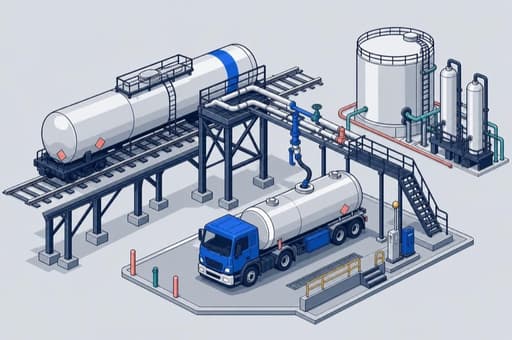
Chemicals
CSX's largest single market carries chemicals, plastics and waste. Revenue grew 10% in Q2 FY2026; watch factory output and whether transfer yards can keep attracting customers that lack their own rail connection.
Competes with Chemicals (Norfolk Southern) · Petroleum and chemicals (CN)
In plain English
This is the railroad's biggest single market. Producers load liquids into tank-shaped railcars and dry materials into covered cars, then CSX pulls them between plants, ports and customers. Waste shipments ride the same network.
The shipper pays for each move, with the price shaped by distance, cargo, equipment and service. TRANSFLO adds more than forty transfer yards where bulk material can switch between rail and truck, so a factory does not need tracks at its door. Customers stay when rail is the practical way to move heavy loads safely; plant access, special-car availability and safety rules can stop the flow.
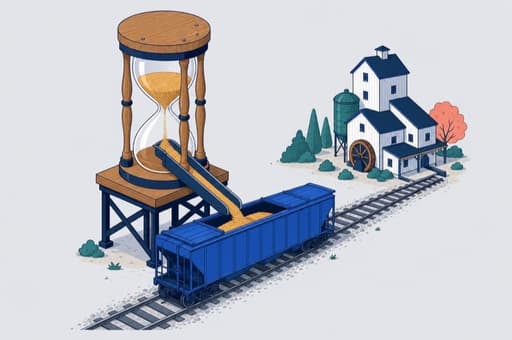
Agricultural and Food Products
Grain, feed ingredients, ethanol, oils and food make this a large, mixed line. Q2 FY2026 revenue rose 6%; harvests and exports cause swings, while everyday food demand gives it a steadier base.
Competes with Agriculture, Forest and Consumer Products · grain and food (Norfolk Southern) · Grain and fertilizers (CN)
In plain English
Harvest does not wait for the nearest buyer. CSX carries grain and other farm goods from fields and storage elevators to feed mills, fuel plants, food makers and ports; finished food also moves toward consumers.
Think of the railroad as a moving pantry with very large shelves. Farms, processors and exporters pay for each trip because a train can shift dense loads over long distances. Rural short railroads gather freight beyond CSX's own tracks, while ports open the path to overseas buyers. The business rises and falls with harvest size, trade rules and port flow, but people keep eating through the cycle.
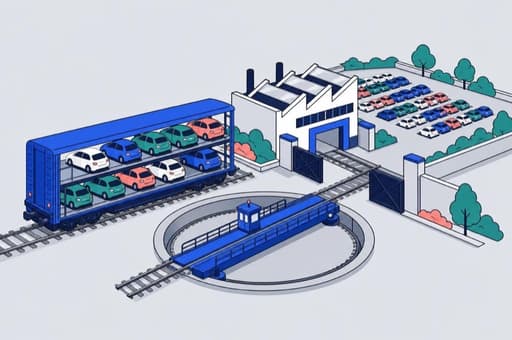
Automotive
Finished vehicles and parts move between factories, ports and distribution lots. Q2 FY2026 revenue grew 4% even as the number of loads slipped; watch factory schedules and the supply of specialized railcars.
Competes with Automotive (Norfolk Southern) · Automotive (CN)
In plain English
Finished cars are awkward cargo: valuable, bulky and needed in batches. CSX loads vehicles into enclosed railcars and carries them from assembly plants and ports to distribution sites; parts travel the other way to keep factories running.
Automakers, importers and distributors pay per shipment. TDSI handles the handoff around the train—moving, storing, preparing and repairing vehicles at car-distribution and port sites—so CSX can sell more than the middle rail journey. The line works when factories run predictably and the right railcars are available. A plant pause or port delay quickly leaves equipment waiting.
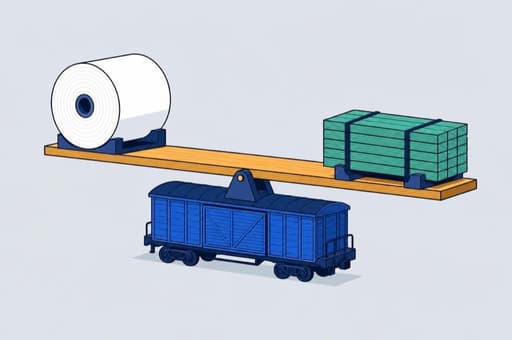
Forest Products
Pulp, paper, packaging, lumber and building materials tie this line to both daily consumption and construction. First-half FY2026 revenue fell 1%; watch housing demand, mill output and railcar availability.
Competes with Agriculture, Forest and Consumer Products · forest products (Norfolk Southern) · Forest products (CN)
In plain English
Paper rolls and lumber bundles begin in mills far from many of their buyers. CSX carries them to box makers, publishers, distributors and builders, combining a slow-changing paper trade with packaging and housing-sensitive wood.
The mill or receiver pays for the trip, usually because these goods are heavy and take up space. Smaller railroads, warehouses and transfer sites act like extension cords, joining mills or customers that do not sit directly on CSX track. The line earns more when mills run steadily and cars turn quickly; weak building demand or a closed mill removes loads from the network.
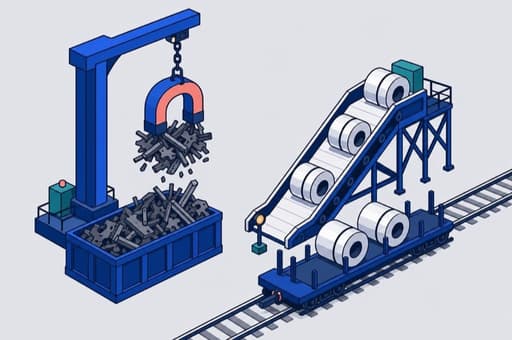
Metals and Equipment
Steel, other metals, scrap and heavy machines move among mills, recyclers and work sites. Q2 FY2026 revenue jumped 14%; watch whether industrial and infrastructure activity can sustain that faster growth.
Competes with Metals and Construction · mill and scrap freight (Norfolk Southern) · Metals and minerals · industrial metals (CN)
In plain English
Steel coils, scrap piles and heavy machines are exactly the loads roads dislike: dense, cumbersome and often headed to places built around rail. CSX connects mills, recycling yards, factories and large projects.
Customers pay to move each load, and short railroads or transfer operators bridge the gaps when a mill or work site is off CSX's own track. It resembles a circulating workshop: scrap travels back toward a mill, fresh metal heads to a fabricator and finished equipment goes to a project. Orders depend on steel use, factory output and construction timing, while special railcars set the practical limit.
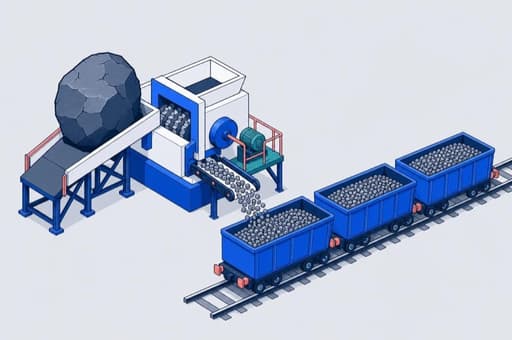
Minerals
Stone, cement, lime and salt feed roads, buildings and factories. Q2 FY2026 revenue rose 11%; the line depends on construction schedules, weather and fast loading and unloading at both ends.
Competes with Metals and Construction · aggregates freight (Norfolk Southern) · Metals and minerals · construction minerals (CN)
In plain English
A truck can carry rocks; a train can carry a moving hill. Quarries and plants pour stone, cement, lime and salt into railcars for long, dense trips to concrete makers, road projects and factories.
The quarry, plant or buyer pays for each movement because weight makes rail useful over distance. Large loaders fill a whole train quickly, while smaller railroads and transfer yards reach sites away from CSX tracks. The money comes from repetition: cars must load, travel and empty without sitting. Rain, frozen unloading points or a delayed building project can break that rhythm.
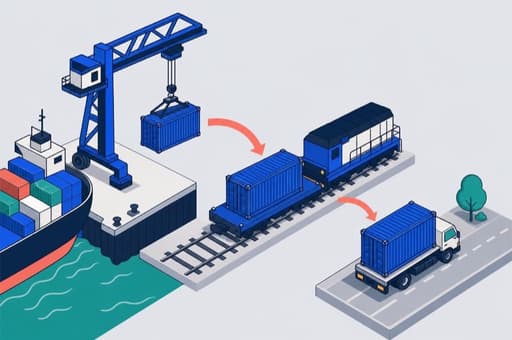
Intermodal
Standard shipping containers switch between ship, train and truck without being unpacked. Q2 FY2026 revenue rose 26%, the fastest major line; watch whether new routes turn that burst into durable volume.
Competes with Intermodal (Norfolk Southern) · Intermodal (CN)
In plain English
A shipping container is a sealed box that can cross an ocean, ride a train and finish on a truck without anyone unloading it in between. CSX carries those boxes between ports and inland transfer terminals, while trucks handle the first and last few miles.
Importers, exporters and domestic shippers pay per box moved. The train wins when it can replace a long highway trip without losing too much time at ports, terminals or partner railroads. New links through Baltimore and toward Mexico are bringing more traffic, but the recent growth started from a much smaller revenue base than the broad freight-car business.
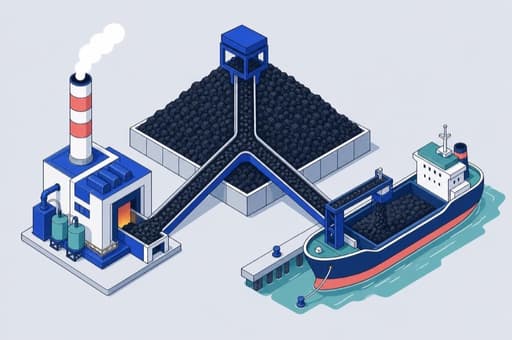
Coal
Coal remains a large line at $1.90 billion of FY2025 revenue, split among power, industry, steelmaking and overseas buyers. Watch coal prices, mine output and ports; long export trips make the mix matter.
Competes with Coal (Norfolk Southern) · Coal (CN)
In plain English
Black rock still fills a meaningful share of CSX trains. Mines load open cars bound for power plants and industrial users, while other trains head to ports where coal leaves for overseas power stations or steelmakers.
The mine, buyer or trading party pays for the rail trip. Longer export routes can bring more money per load, but they also expose CSX to world coal prices and port flow. Domestic demand depends on when power plants choose coal and how much steel industry needs. That makes this less predictable than everyday goods: a price move, mine slowdown or blocked terminal can change both volume and earnings.
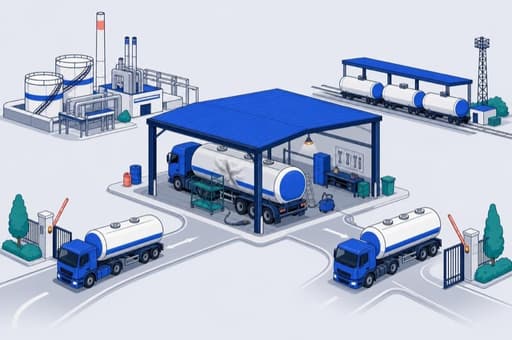
Trucking
Quality Carriers hauls liquid chemicals by road and connects rail loads to their endpoints. FY2025 revenue fell 10%, and the purchase proved disappointing; watch whether tighter truck supply and renewed growth leave more money after each trip.
Competes with Chemical Hauling (Heniff Transportation Systems) · Bulk Transportation (Trimac)
In plain English
Here CSX leaves the rails. Quality Carriers uses road tankers to carry liquid chemicals between plants and customers, including the short end trips before or after a longer rail move.
Chemical producers and receivers pay for each load, choosing the service when they need door-to-door reach or when rail alone cannot finish the route. Drivers, fuel, insurance, maintenance and safety rules determine what remains after the trip is paid. The acquisition has not lived up to what CSX originally expected, but the trucks still widen its chemical network and can complement—or replace—the train depending on the lane.


 ChemicalsCSX's largest single market carries chemicals, plastics and waste. Revenue grew 10% in Q2 FY2026; watch factory output and whether transfer yards can keep attracting customers that lack their own rail connection.
CSX's largest single market carries chemicals, plastics and waste. Revenue grew 10% in Q2 FY2026; watch factory output and whether transfer yards can keep attracting customers that lack their own rail connection.
In plain English
This is the railroad's biggest single market. Producers load liquids into tank-shaped railcars and dry materials into covered cars, then CSX pulls them between plants, ports and customers. Waste shipments ride the same network.
The shipper pays for each move, with the price shaped by distance, cargo, equipment and service. TRANSFLO adds more than forty transfer yards where bulk material can switch between rail and truck, so a factory does not need tracks at its door. Customers stay when rail is the practical way to move heavy loads safely; plant access, special-car availability and safety rules can stop the flow.
Competes with Chemicals (Norfolk Southern) · Petroleum and chemicals (CN)
 Agricultural and Food ProductsGrain, feed ingredients, ethanol, oils and food make this a large, mixed line. Q2 FY2026 revenue rose 6%; harvests and exports cause swings, while everyday food demand gives it a steadier base.
Grain, feed ingredients, ethanol, oils and food make this a large, mixed line. Q2 FY2026 revenue rose 6%; harvests and exports cause swings, while everyday food demand gives it a steadier base.
In plain English
Harvest does not wait for the nearest buyer. CSX carries grain and other farm goods from fields and storage elevators to feed mills, fuel plants, food makers and ports; finished food also moves toward consumers.
Think of the railroad as a moving pantry with very large shelves. Farms, processors and exporters pay for each trip because a train can shift dense loads over long distances. Rural short railroads gather freight beyond CSX's own tracks, while ports open the path to overseas buyers. The business rises and falls with harvest size, trade rules and port flow, but people keep eating through the cycle.
Competes with Agriculture, Forest and Consumer Products · grain and food (Norfolk Southern) · Grain and fertilizers (CN)
 AutomotiveFinished vehicles and parts move between factories, ports and distribution lots. Q2 FY2026 revenue grew 4% even as the number of loads slipped; watch factory schedules and the supply of specialized railcars.
Finished vehicles and parts move between factories, ports and distribution lots. Q2 FY2026 revenue grew 4% even as the number of loads slipped; watch factory schedules and the supply of specialized railcars.
In plain English
Finished cars are awkward cargo: valuable, bulky and needed in batches. CSX loads vehicles into enclosed railcars and carries them from assembly plants and ports to distribution sites; parts travel the other way to keep factories running.
Automakers, importers and distributors pay per shipment. TDSI handles the handoff around the train—moving, storing, preparing and repairing vehicles at car-distribution and port sites—so CSX can sell more than the middle rail journey. The line works when factories run predictably and the right railcars are available. A plant pause or port delay quickly leaves equipment waiting.
Competes with Automotive (Norfolk Southern) · Automotive (CN)
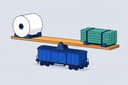 Forest ProductsPulp, paper, packaging, lumber and building materials tie this line to both daily consumption and construction. First-half FY2026 revenue fell 1%; watch housing demand, mill output and railcar availability.
Pulp, paper, packaging, lumber and building materials tie this line to both daily consumption and construction. First-half FY2026 revenue fell 1%; watch housing demand, mill output and railcar availability.
In plain English
Paper rolls and lumber bundles begin in mills far from many of their buyers. CSX carries them to box makers, publishers, distributors and builders, combining a slow-changing paper trade with packaging and housing-sensitive wood.
The mill or receiver pays for the trip, usually because these goods are heavy and take up space. Smaller railroads, warehouses and transfer sites act like extension cords, joining mills or customers that do not sit directly on CSX track. The line earns more when mills run steadily and cars turn quickly; weak building demand or a closed mill removes loads from the network.
Competes with Agriculture, Forest and Consumer Products · forest products (Norfolk Southern) · Forest products (CN)
 Metals and EquipmentSteel, other metals, scrap and heavy machines move among mills, recyclers and work sites. Q2 FY2026 revenue jumped 14%; watch whether industrial and infrastructure activity can sustain that faster growth.
Steel, other metals, scrap and heavy machines move among mills, recyclers and work sites. Q2 FY2026 revenue jumped 14%; watch whether industrial and infrastructure activity can sustain that faster growth.
In plain English
Steel coils, scrap piles and heavy machines are exactly the loads roads dislike: dense, cumbersome and often headed to places built around rail. CSX connects mills, recycling yards, factories and large projects.
Customers pay to move each load, and short railroads or transfer operators bridge the gaps when a mill or work site is off CSX's own track. It resembles a circulating workshop: scrap travels back toward a mill, fresh metal heads to a fabricator and finished equipment goes to a project. Orders depend on steel use, factory output and construction timing, while special railcars set the practical limit.
Competes with Metals and Construction · mill and scrap freight (Norfolk Southern) · Metals and minerals · industrial metals (CN)
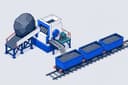 MineralsStone, cement, lime and salt feed roads, buildings and factories. Q2 FY2026 revenue rose 11%; the line depends on construction schedules, weather and fast loading and unloading at both ends.
Stone, cement, lime and salt feed roads, buildings and factories. Q2 FY2026 revenue rose 11%; the line depends on construction schedules, weather and fast loading and unloading at both ends.
In plain English
A truck can carry rocks; a train can carry a moving hill. Quarries and plants pour stone, cement, lime and salt into railcars for long, dense trips to concrete makers, road projects and factories.
The quarry, plant or buyer pays for each movement because weight makes rail useful over distance. Large loaders fill a whole train quickly, while smaller railroads and transfer yards reach sites away from CSX tracks. The money comes from repetition: cars must load, travel and empty without sitting. Rain, frozen unloading points or a delayed building project can break that rhythm.
Competes with Metals and Construction · aggregates freight (Norfolk Southern) · Metals and minerals · construction minerals (CN)
 IntermodalStandard shipping containers switch between ship, train and truck without being unpacked. Q2 FY2026 revenue rose 26%, the fastest major line; watch whether new routes turn that burst into durable volume.
Standard shipping containers switch between ship, train and truck without being unpacked. Q2 FY2026 revenue rose 26%, the fastest major line; watch whether new routes turn that burst into durable volume.
In plain English
A shipping container is a sealed box that can cross an ocean, ride a train and finish on a truck without anyone unloading it in between. CSX carries those boxes between ports and inland transfer terminals, while trucks handle the first and last few miles.
Importers, exporters and domestic shippers pay per box moved. The train wins when it can replace a long highway trip without losing too much time at ports, terminals or partner railroads. New links through Baltimore and toward Mexico are bringing more traffic, but the recent growth started from a much smaller revenue base than the broad freight-car business.
Competes with Intermodal (Norfolk Southern) · Intermodal (CN)
 CoalCoal remains a large line at $1.90 billion of FY2025 revenue, split among power, industry, steelmaking and overseas buyers. Watch coal prices, mine output and ports; long export trips make the mix matter.
Coal remains a large line at $1.90 billion of FY2025 revenue, split among power, industry, steelmaking and overseas buyers. Watch coal prices, mine output and ports; long export trips make the mix matter.
In plain English
Black rock still fills a meaningful share of CSX trains. Mines load open cars bound for power plants and industrial users, while other trains head to ports where coal leaves for overseas power stations or steelmakers.
The mine, buyer or trading party pays for the rail trip. Longer export routes can bring more money per load, but they also expose CSX to world coal prices and port flow. Domestic demand depends on when power plants choose coal and how much steel industry needs. That makes this less predictable than everyday goods: a price move, mine slowdown or blocked terminal can change both volume and earnings.
Competes with Coal (Norfolk Southern) · Coal (CN)
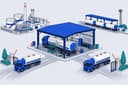 TruckingQuality Carriers hauls liquid chemicals by road and connects rail loads to their endpoints. FY2025 revenue fell 10%, and the purchase proved disappointing; watch whether tighter truck supply and renewed growth leave more money after each trip.
Quality Carriers hauls liquid chemicals by road and connects rail loads to their endpoints. FY2025 revenue fell 10%, and the purchase proved disappointing; watch whether tighter truck supply and renewed growth leave more money after each trip.
In plain English
Here CSX leaves the rails. Quality Carriers uses road tankers to carry liquid chemicals between plants and customers, including the short end trips before or after a longer rail move.
Chemical producers and receivers pay for each load, choosing the service when they need door-to-door reach or when rail alone cannot finish the route. Drivers, fuel, insurance, maintenance and safety rules determine what remains after the trip is paid. The acquisition has not lived up to what CSX originally expected, but the trucks still widen its chemical network and can complement—or replace—the train depending on the lane.
Competes with Chemical Hauling (Heniff Transportation Systems) · Bulk Transportation (Trimac)
Named in filings, launches and programs
- FertilizersProduct linePhosphate, potash and other crop inputs supplied 3.7% of FY2025 revenue inside the freight-car business.
- Other RevenueServiceLocal railroads CSX owns, plus fees for storage, equipment use and short local moves, supplied 3.8% of FY2025 revenue.
- Southeast Mexico Express (SMX)Customer program · RampingA dedicated CSX–CPKC container train toward Mexico; Schneider participates, but its volume, revenue and costs are undisclosed.
- Howard Street Tunnel / I-95 CorridorEcosystemThe reopened Baltimore route supports trains carrying containers two-high; related bridge work was expected to complete the clearance.
- CSX–BNSF Coast-to-Coast Intermodal ServicesCustomer program · AnnouncedPlanned container routes link Southern California and Phoenix with eastern cities, plus eastern ports with Kansas City; expected revenue and costs remain undisclosed.
- CSX–CN Nashville Intermodal ServiceCustomer program · AnnouncedA planned all-rail container route would connect Canada's west coast with Nashville through Memphis.
- TRANSFLO Terminal Services, Inc.BrandMore than forty transfer yards move over three hundred product types between railcars and trucks for sites without direct rail access.
- Total Distribution Services, Inc. (TDSI)BrandMoves, stores, prepares and repairs vehicles at contracted car-distribution and port facilities around the rail journey.
- CSX Intermodal Terminals, Inc.BrandOwns and runs the terminals where shipping containers switch between trains and trucks; its money appears inside Intermodal.
- ShipCSXPlatformCustomer website for schedules, railcar orders, shipping instructions, tracking, invoices and claims; it supports the service rather than charging a disclosed fee.
- CSX Select SitesEcosystemPre-checks potential rail-served factory and warehouse sites, making them easier to choose and seeding future freight.
- Wabtec Fleet UpgradeEcosystem · RampingA $670 million program adds one hundred locomotives, modernizes fifty more and supplies digital services, with deliveries staged from 2026.
- Blue Ridge SubdivisionEcosystemThe storm-damaged merchandise route reopened after $520 million of rebuilding across FY2024 and FY2025, before insurance recoveries.
FertilizersProduct line
Phosphate, potash and other crop inputs supplied 3.7% of FY2025 revenue inside the freight-car business.
Other RevenueService
Local railroads CSX owns, plus fees for storage, equipment use and short local moves, supplied 3.8% of FY2025 revenue.
Southeast Mexico Express (SMX)Customer program · Ramping
A dedicated CSX–CPKC container train toward Mexico; Schneider participates, but its volume, revenue and costs are undisclosed.
Howard Street Tunnel / I-95 CorridorEcosystem
The reopened Baltimore route supports trains carrying containers two-high; related bridge work was expected to complete the clearance.
CSX–BNSF Coast-to-Coast Intermodal ServicesCustomer program · Announced
Planned container routes link Southern California and Phoenix with eastern cities, plus eastern ports with Kansas City; expected revenue and costs remain undisclosed.
CSX–CN Nashville Intermodal ServiceCustomer program · Announced
A planned all-rail container route would connect Canada's west coast with Nashville through Memphis.
TRANSFLO Terminal Services, Inc.Brand
More than forty transfer yards move over three hundred product types between railcars and trucks for sites without direct rail access.
Total Distribution Services, Inc. (TDSI)Brand
Moves, stores, prepares and repairs vehicles at contracted car-distribution and port facilities around the rail journey.
CSX Intermodal Terminals, Inc.Brand
Owns and runs the terminals where shipping containers switch between trains and trucks; its money appears inside Intermodal.
ShipCSXPlatform
Customer website for schedules, railcar orders, shipping instructions, tracking, invoices and claims; it supports the service rather than charging a disclosed fee.
CSX Select SitesEcosystem
Pre-checks potential rail-served factory and warehouse sites, making them easier to choose and seeding future freight.
Wabtec Fleet UpgradeEcosystem · Ramping
A $670 million program adds one hundred locomotives, modernizes fifty more and supplies digital services, with deliveries staged from 2026.
Blue Ridge SubdivisionEcosystem
The storm-damaged merchandise route reopened after $520 million of rebuilding across FY2024 and FY2025, before insurance recoveries.