
Dell Technologies (DELL)
Builds AI servers, storage systems, networking, and PCs for organizations and consumers.
Something off on this page? Send us feedback.
Dell sells the physical machines behind office work, home computing and data centers, then keeps many of them running. Business computers are still the biggest base, but enormous orders for artificial-intelligence systems are rapidly remaking the company around data-center hardware that earns less per sales dollar.
Item facts: FY2026 · year ended Jan 30, 2026, from filings, earnings calls and company pages.
Judgment weights, not filed revenue
The band summarizes business focus and direction. ~ marks estimates.
7 in detail · 15 more below
Commercial Client Offerings — Dell Pro
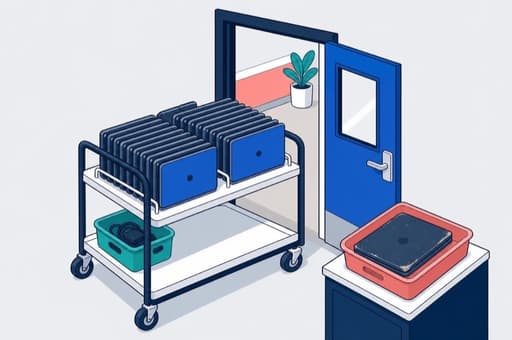
Computers and accessories for employers brought in $44.06 billion in FY2026. This is Dell's largest business; replacement cycles help, while tight memory supply and cautious technology budgets can delay purchases.
Competes with ThinkPad (Lenovo) · EliteBook (HP Inc.)
In plain English
Picture the laptops and desktop computers issued across an office, school or government agency. Dell sells those machines in large batches, usually configured for the buyer and often bundled with help setting them up and keeping them working.
Organizations pay when they hire people, replace aging equipment or need newer security and performance. Dell reaches them through its own sales teams, distributors and resellers. That makes this a large repeat business, but not an automatic subscription: buyers can stretch replacement schedules when budgets tighten or parts become expensive.
Consumer Client Offerings
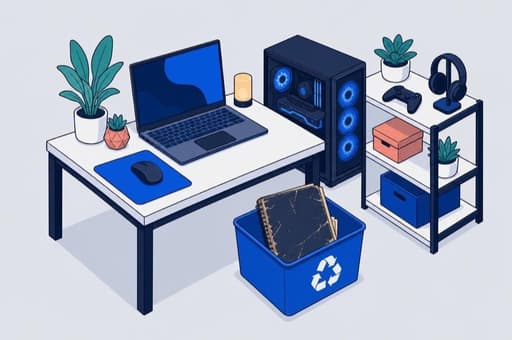
Home, student and gaming computers made $6.92 billion in FY2026 after shrinking for the year. Sales returned to growth in Q2 FY2027, but higher parts prices can make shoppers postpone an upgrade.
Competes with OmniBook and OMEN (HP Inc.) · Yoga and Legion (Lenovo)
In plain English
This is the Dell most people meet at home: everyday notebooks, premium XPS machines, Alienware gaming computers and the accessories around them. A family, student or gamer buys one from Dell's website or a retailer, usually when an old machine feels too slow or breaks.
Unlike a company replacing thousands of employee laptops, each shopper makes a personal budget decision. Dell earns at the checkout, with product mix helping or hurting the amount made per sale. The line recently recovered from a decline, but pricier memory can lift the sticker price while shrinking the number of buyers.
AI-Optimized Servers — Dell AI Factory
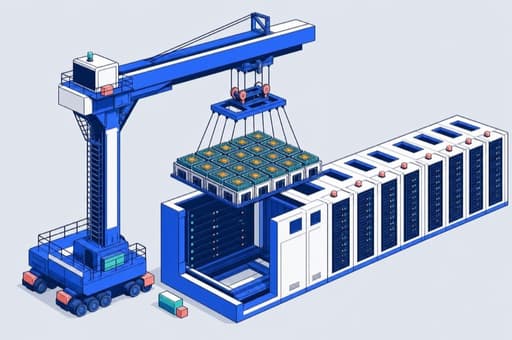
Dell's fastest-growing line had $95 billion of orders waiting by September 2026. Sales more than doubled from an already multibillion-dollar base; delivery depends on scarce chips and other parts, while these systems earn less per sales dollar than services and storage.
Competes with AI SuperCluster (Supermicro) · Private Cloud AI (HPE)
In plain English
An artificial-intelligence server is a cabinet packed with special chips, memory, cooling and connections so a customer can teach or run an AI system. Dell assembles those parts into individual servers or whole rows of ready-to-install cabinets, then adds storage, software and setup help.
Companies that rent out AI computing and large organizations pay after equipment ships and the buyer confirms it works. One customer Dell has not named bought 12% of all Dell sales in FY2026, nearly all in the wider infrastructure business. xAI, CoreWeave and IREN are separately named large buyers, but Dell has not said which, if any, was that customer.
Traditional Servers and Networking — PowerEdge
General-purpose servers and networking made $19.51 billion in FY2026 and grew modestly. A large pool of aging machines supports replacements, but customers can consolidate many old boxes into far fewer new ones.
Competes with ProLiant Compute (HPE) · ThinkSystem (Lenovo)
In plain English
Most business computing is not an AI project. Companies still need ordinary servers to run databases, internal applications and private computing rooms, plus networking gear to connect everything. Dell sells the boxes through its own teams, distributors and specialists who configure and install them.
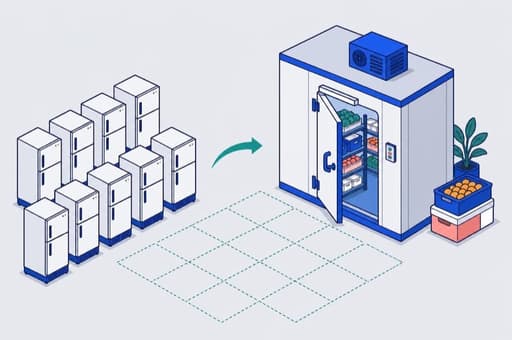
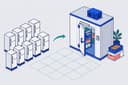
The opportunity resembles replacing a row of old refrigerators with one efficient cold room: Dell says many installed systems are old, while a newer machine can do the job of roughly a dozen older ones. Customers save space and power, but Dell may ship fewer physical boxes for the same amount of computing.
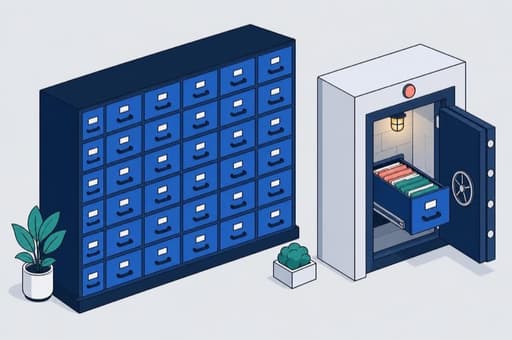
Storage
Systems that hold and protect data made $16.63 billion in FY2026 and barely grew. Growth accelerated in Q2 FY2027; watch whether AI data needs sustain that rebound after an uneven start to the year.
Competes with AFF and AFX (NetApp) · FlashArray and FlashBlade (Everpure)
In plain English
Every organization needs somewhere dependable to keep its files, application data and backup copies. Dell sells cabinets of drives and the software that organizes them, from everyday storage to high-end systems and protected copies used after a failure or attack.
Customers pay as their data grows, old equipment needs replacing or recovery plans improve. Specialists help design the setup and move information across. Storage matters beyond its sales because it makes more per sales dollar than the booming AI systems, so stronger storage demand can soften the profit pressure created by the shift toward giant server orders.
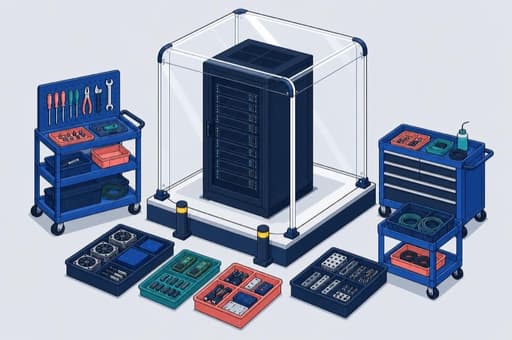
Dell Technologies Services
Support, repairs, setup and day-to-day help produce nearly half of Dell's profit before company overhead. Sales were flat in Q2 FY2027 while products surged, so its job is to preserve the cash cushion around the hardware boom.
Competes with HPE Tech Care (HPE) · Premier Support (Lenovo)
In plain English
The unglamorous part that keeps the machines useful. Dell technicians and certified partners install equipment, fix failures, advise on changes and sometimes run systems for the customer. Buyers keep paying because a broken employee laptop or server can stop real work, and one familiar support desk is easier than finding help during every emergency.
Some contracts run over time and others pay for a specific job. The service line spans both computers and data-center equipment, so it is already included within those product businesses rather than added on top. Its unusually healthy profit helps offset the lower profit earned on each dollar of AI-system sales.
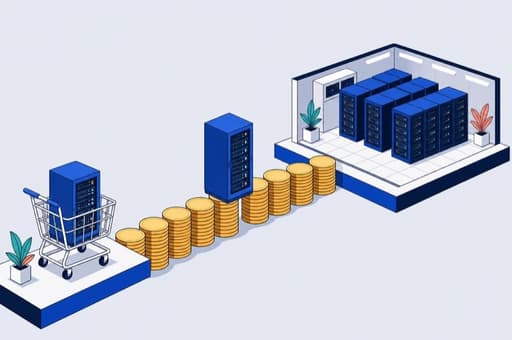
Dell Financial Services — Dell Payment Solutions
Loans, leases and pay-as-you-use arrangements turn expensive technology into scheduled payments, helping Dell close larger equipment deals. Financing expanded sharply in FY2026; watch credit losses, funding costs and the future value of returned equipment.
Competes with HPE Financial Services (HPE) · TruScale (Lenovo)
In plain English
A roomful of servers can cost more than a buyer wants to pay at once. Dell Financial Services spreads that bill across one to five years through loans, leases and arrangements where payment follows use, including financing for some third-party technology.
Dell earns interest and fees while helping its sales team move more equipment; outside investors can also fund parts of the lending. The trade is simple: easier buying today creates money Dell must collect tomorrow. Its return depends on customers paying, Dell funding the loans cheaply and leased equipment still having value when it comes back.


 Commercial Client Offerings — Dell ProComputers and accessories for employers brought in $44.06 billion in FY2026. This is Dell's largest business; replacement cycles help, while tight memory supply and cautious technology budgets can delay purchases.
Computers and accessories for employers brought in $44.06 billion in FY2026. This is Dell's largest business; replacement cycles help, while tight memory supply and cautious technology budgets can delay purchases.
In plain English
Picture the laptops and desktop computers issued across an office, school or government agency. Dell sells those machines in large batches, usually configured for the buyer and often bundled with help setting them up and keeping them working.
Organizations pay when they hire people, replace aging equipment or need newer security and performance. Dell reaches them through its own sales teams, distributors and resellers. That makes this a large repeat business, but not an automatic subscription: buyers can stretch replacement schedules when budgets tighten or parts become expensive.
Competes with ThinkPad (Lenovo) · EliteBook (HP Inc.)
 Consumer Client OfferingsHome, student and gaming computers made $6.92 billion in FY2026 after shrinking for the year. Sales returned to growth in Q2 FY2027, but higher parts prices can make shoppers postpone an upgrade.
Home, student and gaming computers made $6.92 billion in FY2026 after shrinking for the year. Sales returned to growth in Q2 FY2027, but higher parts prices can make shoppers postpone an upgrade.
In plain English
This is the Dell most people meet at home: everyday notebooks, premium XPS machines, Alienware gaming computers and the accessories around them. A family, student or gamer buys one from Dell's website or a retailer, usually when an old machine feels too slow or breaks.
Unlike a company replacing thousands of employee laptops, each shopper makes a personal budget decision. Dell earns at the checkout, with product mix helping or hurting the amount made per sale. The line recently recovered from a decline, but pricier memory can lift the sticker price while shrinking the number of buyers.
Competes with OmniBook and OMEN (HP Inc.) · Yoga and Legion (Lenovo)
 AI-Optimized Servers — Dell AI FactoryDell's fastest-growing line had $95 billion of orders waiting by September 2026. Sales more than doubled from an already multibillion-dollar base; delivery depends on scarce chips and other parts, while these systems earn less per sales dollar than services and storage.
Dell's fastest-growing line had $95 billion of orders waiting by September 2026. Sales more than doubled from an already multibillion-dollar base; delivery depends on scarce chips and other parts, while these systems earn less per sales dollar than services and storage.
In plain English
An artificial-intelligence server is a cabinet packed with special chips, memory, cooling and connections so a customer can teach or run an AI system. Dell assembles those parts into individual servers or whole rows of ready-to-install cabinets, then adds storage, software and setup help.
Companies that rent out AI computing and large organizations pay after equipment ships and the buyer confirms it works. One customer Dell has not named bought 12% of all Dell sales in FY2026, nearly all in the wider infrastructure business. xAI, CoreWeave and IREN are separately named large buyers, but Dell has not said which, if any, was that customer.
Competes with AI SuperCluster (Supermicro) · Private Cloud AI (HPE)
 Traditional Servers and Networking — PowerEdgeGeneral-purpose servers and networking made $19.51 billion in FY2026 and grew modestly. A large pool of aging machines supports replacements, but customers can consolidate many old boxes into far fewer new ones.
General-purpose servers and networking made $19.51 billion in FY2026 and grew modestly. A large pool of aging machines supports replacements, but customers can consolidate many old boxes into far fewer new ones.
In plain English
Most business computing is not an AI project. Companies still need ordinary servers to run databases, internal applications and private computing rooms, plus networking gear to connect everything. Dell sells the boxes through its own teams, distributors and specialists who configure and install them.
The opportunity resembles replacing a row of old refrigerators with one efficient cold room: Dell says many installed systems are old, while a newer machine can do the job of roughly a dozen older ones. Customers save space and power, but Dell may ship fewer physical boxes for the same amount of computing.
Competes with ProLiant Compute (HPE) · ThinkSystem (Lenovo)
 StorageSystems that hold and protect data made $16.63 billion in FY2026 and barely grew. Growth accelerated in Q2 FY2027; watch whether AI data needs sustain that rebound after an uneven start to the year.
Systems that hold and protect data made $16.63 billion in FY2026 and barely grew. Growth accelerated in Q2 FY2027; watch whether AI data needs sustain that rebound after an uneven start to the year.
In plain English
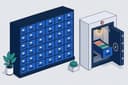
Every organization needs somewhere dependable to keep its files, application data and backup copies. Dell sells cabinets of drives and the software that organizes them, from everyday storage to high-end systems and protected copies used after a failure or attack.
Customers pay as their data grows, old equipment needs replacing or recovery plans improve. Specialists help design the setup and move information across. Storage matters beyond its sales because it makes more per sales dollar than the booming AI systems, so stronger storage demand can soften the profit pressure created by the shift toward giant server orders.
Competes with AFF and AFX (NetApp) · FlashArray and FlashBlade (Everpure)
 Dell Technologies ServicesSupport, repairs, setup and day-to-day help produce nearly half of Dell's profit before company overhead. Sales were flat in Q2 FY2027 while products surged, so its job is to preserve the cash cushion around the hardware boom.
Support, repairs, setup and day-to-day help produce nearly half of Dell's profit before company overhead. Sales were flat in Q2 FY2027 while products surged, so its job is to preserve the cash cushion around the hardware boom.
In plain English
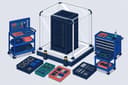
The unglamorous part that keeps the machines useful. Dell technicians and certified partners install equipment, fix failures, advise on changes and sometimes run systems for the customer. Buyers keep paying because a broken employee laptop or server can stop real work, and one familiar support desk is easier than finding help during every emergency.
Some contracts run over time and others pay for a specific job. The service line spans both computers and data-center equipment, so it is already included within those product businesses rather than added on top. Its unusually healthy profit helps offset the lower profit earned on each dollar of AI-system sales.
Competes with HPE Tech Care (HPE) · Premier Support (Lenovo)
 Dell Financial Services — Dell Payment SolutionsLoans, leases and pay-as-you-use arrangements turn expensive technology into scheduled payments, helping Dell close larger equipment deals. Financing expanded sharply in FY2026; watch credit losses, funding costs and the future value of returned equipment.
Loans, leases and pay-as-you-use arrangements turn expensive technology into scheduled payments, helping Dell close larger equipment deals. Financing expanded sharply in FY2026; watch credit losses, funding costs and the future value of returned equipment.
In plain English
A roomful of servers can cost more than a buyer wants to pay at once. Dell Financial Services spreads that bill across one to five years through loans, leases and arrangements where payment follows use, including financing for some third-party technology.
Dell earns interest and fees while helping its sales team move more equipment; outside investors can also fund parts of the lending. The trade is simple: easier buying today creates money Dell must collect tomorrow. Its return depends on customers paying, Dell funding the loans cheaply and leased equipment still having value when it comes back.
Competes with HPE Financial Services (HPE) · TruScale (Lenovo)
Named in filings, launches and programs
- PowerEdge and PowerRackProduct lineServer and full-rack families spanning ordinary business computing and tightly integrated AI systems.
- PowerStoreProductMidrange storage built from fast memory chips; the PowerStore Elite update arrived in May 2026.
- PowerMaxProductHigh-end storage for data and applications a customer cannot afford to have stop.
- PowerFlexPlatformSoftware that pools storage across separate machines so customers can expand it in smaller steps.
- PowerScaleProduct lineStorage that grows across many boxes for large collections of files and data used by AI systems.
- ObjectScalePlatformSoftware and equipment for keeping huge collections of data as separate digital objects.
- PowerProtect Data DomainProduct lineBackup equipment designed to restore data after ordinary failures or a cyberattack.
- Dell Exascale StoragePlatform · AnnouncedA planned way to feed many files at once into very large AI and advanced-computing projects.
- Dell APEXEcosystemSubscription and pay-as-you-use packaging for infrastructure, computing services and personal computers.
- AlienwareBrandDell's gaming brand for powerful desktop computers, notebooks and accessories.
- XPS 13 and Dell 14SProduct linePremium and budget-friendly consumer notebooks, both still active in September 2026.
- xAI AI-infrastructure programCustomer programxAI, an artificial-intelligence company, helped drive Dell's early surge in unfilled AI-system orders.
- IREN–Microsoft GB300 programCustomer program · RampingA $5.8 billion Dell supply agreement helps IREN, an AI-computing provider, supply Microsoft.
- CoreWeave AI-cloud programCustomer program · RampingCoreWeave, a company that rents AI computing, receives successive generations of Dell systems; the newest shipments began in June 2026.
- Texas A&M secure AI platformCustomer program · AnnouncedA national-research AI system selected in July 2026; Dell did not disclose its value.
PowerEdge and PowerRackProduct line
Server and full-rack families spanning ordinary business computing and tightly integrated AI systems.
PowerStoreProduct
Midrange storage built from fast memory chips; the PowerStore Elite update arrived in May 2026.
PowerMaxProduct
High-end storage for data and applications a customer cannot afford to have stop.
PowerFlexPlatform
Software that pools storage across separate machines so customers can expand it in smaller steps.
PowerScaleProduct line
Storage that grows across many boxes for large collections of files and data used by AI systems.
ObjectScalePlatform
Software and equipment for keeping huge collections of data as separate digital objects.
PowerProtect Data DomainProduct line
Backup equipment designed to restore data after ordinary failures or a cyberattack.
Dell Exascale StoragePlatform · Announced
A planned way to feed many files at once into very large AI and advanced-computing projects.
Dell APEXEcosystem
Subscription and pay-as-you-use packaging for infrastructure, computing services and personal computers.
AlienwareBrand
Dell's gaming brand for powerful desktop computers, notebooks and accessories.
XPS 13 and Dell 14SProduct line
Premium and budget-friendly consumer notebooks, both still active in September 2026.
xAI AI-infrastructure programCustomer program
xAI, an artificial-intelligence company, helped drive Dell's early surge in unfilled AI-system orders.
IREN–Microsoft GB300 programCustomer program · Ramping
A $5.8 billion Dell supply agreement helps IREN, an AI-computing provider, supply Microsoft.
CoreWeave AI-cloud programCustomer program · Ramping
CoreWeave, a company that rents AI computing, receives successive generations of Dell systems; the newest shipments began in June 2026.
Texas A&M secure AI platformCustomer program · Announced
A national-research AI system selected in July 2026; Dell did not disclose its value.