
Danaher (DHR)
Supplies bioprocessing, life-science, and diagnostic tools with recurring consumables and service.
Something off on this page? Send us feedback.
Danaher is a collection of businesses that equip drug factories, research labs and hospital testing rooms. The machines open the door, but repeat purchases of cartridges, chemicals, filters and service now pay most of the bills. Drug-production demand is recovering, research equipment remains uneven, and the newly bought Masimo business pushes the portfolio further into bedside monitoring.
Item facts: FY2025 · year ended Dec 31, 2025, from filings, earnings calls and company pages.
Judgment weights, not filed revenue
The band summarizes business focus and direction. ~ marks estimates.
9 in detail · 10 more below
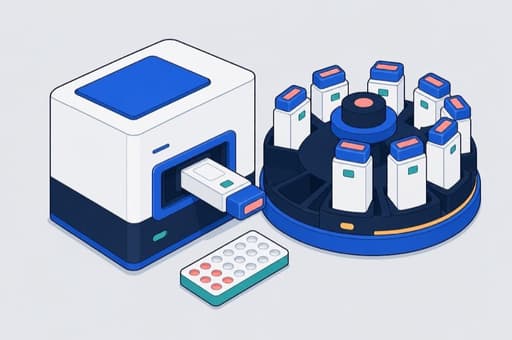
Cepheid molecular diagnostics
Closed-cartridge tests are Cepheid's engine. FY2026 respiratory sales are expected at $1.6–$1.7B after the outlook was cut, so growing tests for other diseases must offset a normalizing virus-testing market.
Competes with BIOFIRE FILMARRAY and TORCH (bioMérieux) · cobas liat system (Roche Diagnostics)
In plain English
A GeneXpert is a countertop machine that turns a sealed cartridge into an answer about what is making someone sick. The cartridge handles the fiddly laboratory steps itself, so hospitals, clinics and public-health programs can test nearer to the patient.
Danaher places the machines, then earns again whenever a site runs another Xpert cartridge. Respiratory illness brings seasonal surges, while tests for tuberculosis, sexual health, cancer and stomach infections broaden everyday use. More machines help, but how often each one is used matters just as much.
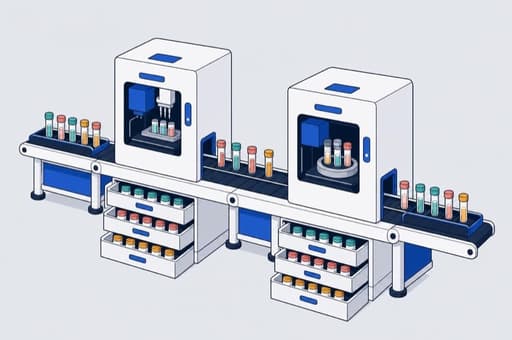
Beckman Coulter Diagnostics
Core hospital-lab machines and the chemicals they consume make this one of Danaher's largest businesses. Routine testing keeps demand steady; new test menus, machine uptime and pressure on Chinese prices decide the pace.
Competes with Alinity ci-series (Abbott) · cobas pro integrated solutions (Roche Diagnostics)
In plain English
Think of the busy central laboratory behind a hospital: racks of blood samples arrive all day, and Beckman machines sort them and measure signs of disease. Different systems handle routine chemistry, immune responses, blood-cell counts and the movement of samples around the room.
Hospitals and large testing laboratories pay for the machines, then keep buying the matching chemicals and service needed for every batch. Once a laboratory has trained people and arranged its work around a system, changing it is disruptive. That makes daily test volume more valuable than any single equipment sale.
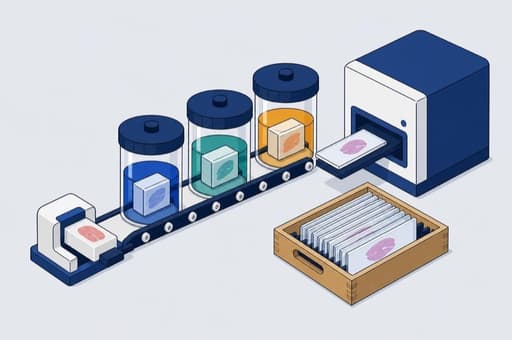
Leica Biosystems pathology diagnostics
Leica is a more-than-$1B annual business that prepares, stains and scans tissue so specialists can diagnose disease. Digital adoption and the pending StatLab supplies deal can deepen repeat purchases; laboratory adoption is the watchpoint.
Competes with VENTANA DP 600 slide scanner (Roche Diagnostics) · IntelliSite Pathology Solution (Philips)
In plain English
A biopsy starts as a tiny piece of tissue, not a neat picture on a screen. Leica's equipment turns it into thin, stained slides and then scans those slides so a specialist can inspect them closely, including from a computer.
Pathology laboratories buy processors, staining machines and scanners, then return for stains, other supplies, service and software. It works like a photo lab built for tissue: the equipment starts the relationship, while every new case creates another small stream of supply use. Connecting digital images to medicine-development work adds another route into laboratory routines.
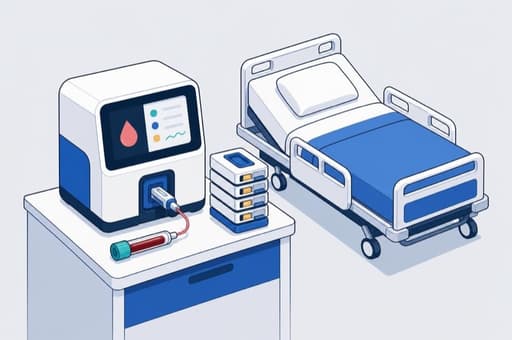
Radiometer acute care diagnostics
This more-than-$1B business gives intensive-care and emergency teams fast readings from blood. The recurring value sits in the cartridges and samplers used with each patient; reliability and hospital budgets protect or slow placements.
Competes with GEM Premier 5000 (Werfen) · RAPIDPoint 500e (Siemens Healthineers)
In plain English
When a very sick patient cannot wait for a distant laboratory, Radiometer's machines measure important properties of blood near the bedside. Hospitals use them in intensive care and emergency rooms, where speed and dependable readings matter.
The analyzer is only the starting point. Each patient test uses a sampler and replaceable cartridge, so a busy installed machine keeps pulling supplies long after the original purchase. Hospitals pay to keep that routine available and serviced. Patient volumes support use, while equipment purchases still depend on hospital budgets and confidence that the machine will stay running.
Masimo
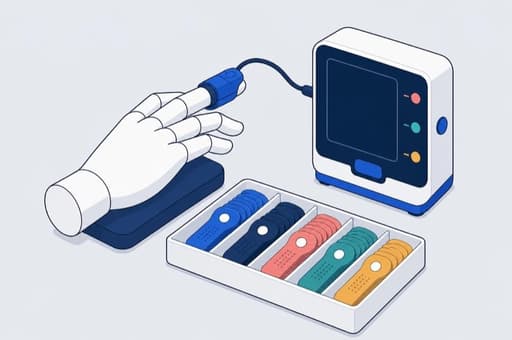
Masimo joined in June 2026 with $1.5B of standalone FY2025 sales. Its sensor refills fit Danaher's repeat-purchase model; integration, a large unresolved jury verdict and product-return inquiries are the immediate watchpoints.
Competes with Nellcor bedside monitors and OxiMax sensors (Medtronic) · IntelliVue patient monitors (Philips)
In plain English
Masimo brings the clip placed on a patient's finger and the monitors that turn light passing through the body into readings such as blood oxygen. Hospitals use its equipment at bedsides and can connect the sensing parts to other makers' systems.
Danaher paid for an existing base of hospital placements, then expects recurring sales of Masimo's own sensors and other supplies as patients are monitored. The fit is straightforward, but the handover is not finished: Danaher must combine operations while handling legal and government questions that arrived with the purchase.
Cytiva bioprocessing
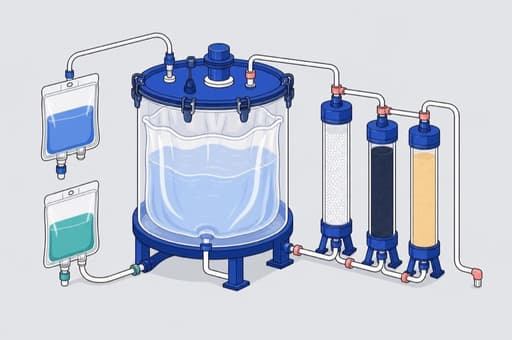
Cytiva equips factories that make medicines from living cells. Demand is recovering after customers used up excess inventory, but some purifying-material shipments slipped later; Danaher's companywide $5.2B of promised work covers only part of future sales.
Competes with BIOSTAT STR with Flexsafe bags (Sartorius) · DynaDrive and HyPerforma single-use bioreactors (Thermo Fisher Scientific)
In plain English
Picture a brewery built for medicines instead of beer. Cytiva supplies the vessels where living cells grow, the pipes and filters that keep the batch clean, and the materials that separate the wanted medicine from everything else.
Drugmakers and outside manufacturers buy the large systems, but production keeps pulling single-use bags, filters, cell food and purifying material. Those supplies must be proven safe inside an approved process, so swapping them is costly and slow. More medicine batches mean more replenishment; customers delaying inventory or factory schedules can move orders between years.
Life science instruments
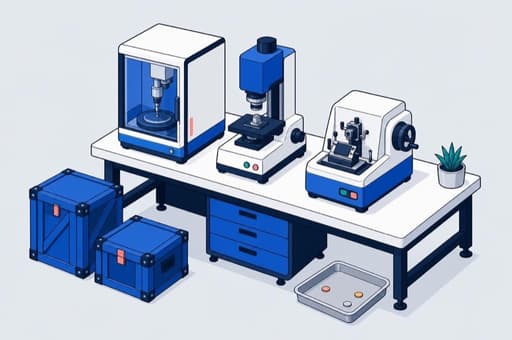
A mixed shelf of machines lets researchers weigh molecules, sort cells, automate samples and capture detailed images. Equipment demand was the weak spot in FY2025; research funding and replacement cycles decide when laboratories reopen their wallets.
Competes with Orbitrap Astral mass spectrometer (Thermo Fisher Scientific) · FACSymphony analyzers (BD Biosciences)
In plain English
Scientists need different senses for things too small to see or count by hand. Danaher's brands provide machines that identify molecules, separate types of cells, move samples automatically and produce detailed laboratory images. Software, upkeep and supplies follow many of those installations.
Unlike a cartridge used every day in a hospital, a major research machine can wait when a university, government laboratory or young drug company feels short of money. That made this the uneven part of the portfolio. Danaher gets paid when laboratories start or expand projects, replace older systems and keep existing equipment serviced.
Life science consumables
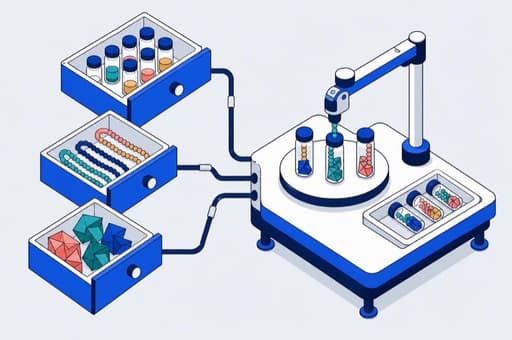
IDT, Aldevron and Abcam sell the small biological building blocks that experiments and new medicines consume. Aldevron and Abcam together made about $1B in FY2024; funding and progress through customer programs drive repeat orders.
Competes with Synthetic genes and oligo pools (Twist Bioscience) · Custom DNA oligos and GeneArt services (Thermo Fisher Scientific)
In plain English
The small ingredients can matter as much as the big machine. IDT makes short custom pieces of genetic material, Aldevron supplies DNA, RNA and proteins used to develop treatments, and Abcam supplies antibodies—proteins researchers use like highly selective labels.
Laboratories order these inputs for experiments and medicine programs, often returning as work moves from an idea toward production. Danaher earns from many relatively small batches rather than one giant installation. Orders rise when drug developers have funding and active projects; they pause when programs fail, budgets tighten or a customer must prove that a supplier's material meets production rules.
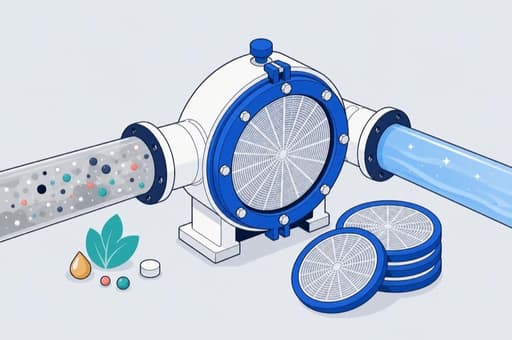
Pall filtration, separation and purification
Pall keeps unwanted particles out of chipmaking, aerospace, food and other production lines. Replacement filters create the repeat business; factory activity and tighter purity needs determine how quickly they are consumed.
Competes with Liquid-filtration and purification products (Entegris) · LifeTec process-filtration systems (Donaldson)
In plain English
The unglamorous part that can stop an entire factory: a filter. Pall makes membranes, filter housings and purification systems for manufacturers that cannot tolerate stray particles or contamination, from computer-chip plants to food and aerospace production.
Engineers choose a filter for a specific process and prove that it meets their purity needs. Once it is built into the line, the customer buys replacements as production uses them up—more like changing a furnace filter than buying a new machine each time. Sales follow factory output, especially in demanding processes, while slower production stretches the replacement clock.


 Cepheid molecular diagnosticsClosed-cartridge tests are Cepheid's engine. FY2026 respiratory sales are expected at $1.6–$1.7B after the outlook was cut, so growing tests for other diseases must offset a normalizing virus-testing market.
Closed-cartridge tests are Cepheid's engine. FY2026 respiratory sales are expected at $1.6–$1.7B after the outlook was cut, so growing tests for other diseases must offset a normalizing virus-testing market.
In plain English
A GeneXpert is a countertop machine that turns a sealed cartridge into an answer about what is making someone sick. The cartridge handles the fiddly laboratory steps itself, so hospitals, clinics and public-health programs can test nearer to the patient.
Danaher places the machines, then earns again whenever a site runs another Xpert cartridge. Respiratory illness brings seasonal surges, while tests for tuberculosis, sexual health, cancer and stomach infections broaden everyday use. More machines help, but how often each one is used matters just as much.
Competes with BIOFIRE FILMARRAY and TORCH (bioMérieux) · cobas liat system (Roche Diagnostics)
 Beckman Coulter DiagnosticsCore hospital-lab machines and the chemicals they consume make this one of Danaher's largest businesses. Routine testing keeps demand steady; new test menus, machine uptime and pressure on Chinese prices decide the pace.
Core hospital-lab machines and the chemicals they consume make this one of Danaher's largest businesses. Routine testing keeps demand steady; new test menus, machine uptime and pressure on Chinese prices decide the pace.
In plain English
Think of the busy central laboratory behind a hospital: racks of blood samples arrive all day, and Beckman machines sort them and measure signs of disease. Different systems handle routine chemistry, immune responses, blood-cell counts and the movement of samples around the room.
Hospitals and large testing laboratories pay for the machines, then keep buying the matching chemicals and service needed for every batch. Once a laboratory has trained people and arranged its work around a system, changing it is disruptive. That makes daily test volume more valuable than any single equipment sale.
Competes with Alinity ci-series (Abbott) · cobas pro integrated solutions (Roche Diagnostics)
 Leica Biosystems pathology diagnosticsLeica is a more-than-$1B annual business that prepares, stains and scans tissue so specialists can diagnose disease. Digital adoption and the pending StatLab supplies deal can deepen repeat purchases; laboratory adoption is the watchpoint.
Leica is a more-than-$1B annual business that prepares, stains and scans tissue so specialists can diagnose disease. Digital adoption and the pending StatLab supplies deal can deepen repeat purchases; laboratory adoption is the watchpoint.
In plain English
A biopsy starts as a tiny piece of tissue, not a neat picture on a screen. Leica's equipment turns it into thin, stained slides and then scans those slides so a specialist can inspect them closely, including from a computer.
Pathology laboratories buy processors, staining machines and scanners, then return for stains, other supplies, service and software. It works like a photo lab built for tissue: the equipment starts the relationship, while every new case creates another small stream of supply use. Connecting digital images to medicine-development work adds another route into laboratory routines.
Competes with VENTANA DP 600 slide scanner (Roche Diagnostics) · IntelliSite Pathology Solution (Philips)
 Radiometer acute care diagnosticsThis more-than-$1B business gives intensive-care and emergency teams fast readings from blood. The recurring value sits in the cartridges and samplers used with each patient; reliability and hospital budgets protect or slow placements.
This more-than-$1B business gives intensive-care and emergency teams fast readings from blood. The recurring value sits in the cartridges and samplers used with each patient; reliability and hospital budgets protect or slow placements.
In plain English
When a very sick patient cannot wait for a distant laboratory, Radiometer's machines measure important properties of blood near the bedside. Hospitals use them in intensive care and emergency rooms, where speed and dependable readings matter.
The analyzer is only the starting point. Each patient test uses a sampler and replaceable cartridge, so a busy installed machine keeps pulling supplies long after the original purchase. Hospitals pay to keep that routine available and serviced. Patient volumes support use, while equipment purchases still depend on hospital budgets and confidence that the machine will stay running.
Competes with GEM Premier 5000 (Werfen) · RAPIDPoint 500e (Siemens Healthineers)
 MasimoMasimo joined in June 2026 with $1.5B of standalone FY2025 sales. Its sensor refills fit Danaher's repeat-purchase model; integration, a large unresolved jury verdict and product-return inquiries are the immediate watchpoints.
Masimo joined in June 2026 with $1.5B of standalone FY2025 sales. Its sensor refills fit Danaher's repeat-purchase model; integration, a large unresolved jury verdict and product-return inquiries are the immediate watchpoints.
In plain English
Masimo brings the clip placed on a patient's finger and the monitors that turn light passing through the body into readings such as blood oxygen. Hospitals use its equipment at bedsides and can connect the sensing parts to other makers' systems.
Danaher paid for an existing base of hospital placements, then expects recurring sales of Masimo's own sensors and other supplies as patients are monitored. The fit is straightforward, but the handover is not finished: Danaher must combine operations while handling legal and government questions that arrived with the purchase.
Competes with Nellcor bedside monitors and OxiMax sensors (Medtronic) · IntelliVue patient monitors (Philips)
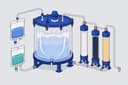 Cytiva bioprocessingCytiva equips factories that make medicines from living cells. Demand is recovering after customers used up excess inventory, but some purifying-material shipments slipped later; Danaher's companywide $5.2B of promised work covers only part of future sales.
Cytiva equips factories that make medicines from living cells. Demand is recovering after customers used up excess inventory, but some purifying-material shipments slipped later; Danaher's companywide $5.2B of promised work covers only part of future sales.
In plain English
Picture a brewery built for medicines instead of beer. Cytiva supplies the vessels where living cells grow, the pipes and filters that keep the batch clean, and the materials that separate the wanted medicine from everything else.
Drugmakers and outside manufacturers buy the large systems, but production keeps pulling single-use bags, filters, cell food and purifying material. Those supplies must be proven safe inside an approved process, so swapping them is costly and slow. More medicine batches mean more replenishment; customers delaying inventory or factory schedules can move orders between years.
Competes with BIOSTAT STR with Flexsafe bags (Sartorius) · DynaDrive and HyPerforma single-use bioreactors (Thermo Fisher Scientific)
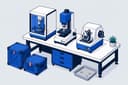 Life science instrumentsA mixed shelf of machines lets researchers weigh molecules, sort cells, automate samples and capture detailed images. Equipment demand was the weak spot in FY2025; research funding and replacement cycles decide when laboratories reopen their wallets.
A mixed shelf of machines lets researchers weigh molecules, sort cells, automate samples and capture detailed images. Equipment demand was the weak spot in FY2025; research funding and replacement cycles decide when laboratories reopen their wallets.
In plain English
Scientists need different senses for things too small to see or count by hand. Danaher's brands provide machines that identify molecules, separate types of cells, move samples automatically and produce detailed laboratory images. Software, upkeep and supplies follow many of those installations.
Unlike a cartridge used every day in a hospital, a major research machine can wait when a university, government laboratory or young drug company feels short of money. That made this the uneven part of the portfolio. Danaher gets paid when laboratories start or expand projects, replace older systems and keep existing equipment serviced.
Competes with Orbitrap Astral mass spectrometer (Thermo Fisher Scientific) · FACSymphony analyzers (BD Biosciences)
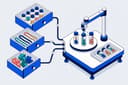 Life science consumablesIDT, Aldevron and Abcam sell the small biological building blocks that experiments and new medicines consume. Aldevron and Abcam together made about $1B in FY2024; funding and progress through customer programs drive repeat orders.
IDT, Aldevron and Abcam sell the small biological building blocks that experiments and new medicines consume. Aldevron and Abcam together made about $1B in FY2024; funding and progress through customer programs drive repeat orders.
In plain English
The small ingredients can matter as much as the big machine. IDT makes short custom pieces of genetic material, Aldevron supplies DNA, RNA and proteins used to develop treatments, and Abcam supplies antibodies—proteins researchers use like highly selective labels.
Laboratories order these inputs for experiments and medicine programs, often returning as work moves from an idea toward production. Danaher earns from many relatively small batches rather than one giant installation. Orders rise when drug developers have funding and active projects; they pause when programs fail, budgets tighten or a customer must prove that a supplier's material meets production rules.
Competes with Synthetic genes and oligo pools (Twist Bioscience) · Custom DNA oligos and GeneArt services (Thermo Fisher Scientific)
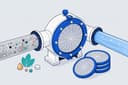 Pall filtration, separation and purificationPall keeps unwanted particles out of chipmaking, aerospace, food and other production lines. Replacement filters create the repeat business; factory activity and tighter purity needs determine how quickly they are consumed.
Pall keeps unwanted particles out of chipmaking, aerospace, food and other production lines. Replacement filters create the repeat business; factory activity and tighter purity needs determine how quickly they are consumed.
In plain English
The unglamorous part that can stop an entire factory: a filter. Pall makes membranes, filter housings and purification systems for manufacturers that cannot tolerate stray particles or contamination, from computer-chip plants to food and aerospace production.
Engineers choose a filter for a specific process and prove that it meets their purity needs. Once it is built into the line, the customer buys replacements as production uses them up—more like changing a furnace filter than buying a new machine each time. Sales follow factory output, especially in demanding processes, while slower production stretches the replacement clock.
Competes with Liquid-filtration and purification products (Entegris) · LifeTec process-filtration systems (Donaldson)
Named in filings, launches and programs
- Discovery and medical businessProduct lineBiotechnology instruments and supplies outside Cytiva, making up the small remainder of Danaher's biotechnology sales.
- HemoCueBrandNear-patient machines for measuring hemoglobin and other properties of whole blood.
- MammotomeBrandBreast-biopsy devices and the disposable supplies used with them.
- PhenomenexBrandColumns and sample-preparation supplies that help laboratories separate mixtures before analysis.
- GenedataPlatformSoftware that organizes and analyzes information created during medicine research.
- IDBSPlatformSoftware for managing information from laboratories and medicine-production work.
- StatLab Medical ProductsBrand · AnnouncedPending Leica purchase that would add tissue-preparation supplies with a heavily repeat-purchase sales mix.
- CRISPR Cures BeaconEcosystemA collaboration using Aldevron, IDT and Cytiva tools to move gene-editing treatments toward clinics.
- University of Pennsylvania LNP BeaconProduct · Pre-revenueResearch into fatty delivery particles that could carry cell-therapy instructions inside the body without viruses.
- AstraZeneca precision-medicine partnershipCustomer programLeica collaboration linking digital tissue images and computer analysis to the development of more precisely targeted medicines.
Discovery and medical businessProduct line
Biotechnology instruments and supplies outside Cytiva, making up the small remainder of Danaher's biotechnology sales.
HemoCueBrand
Near-patient machines for measuring hemoglobin and other properties of whole blood.
MammotomeBrand
Breast-biopsy devices and the disposable supplies used with them.
PhenomenexBrand
Columns and sample-preparation supplies that help laboratories separate mixtures before analysis.
GenedataPlatform
Software that organizes and analyzes information created during medicine research.
IDBSPlatform
Software for managing information from laboratories and medicine-production work.
StatLab Medical ProductsBrand · Announced
Pending Leica purchase that would add tissue-preparation supplies with a heavily repeat-purchase sales mix.
CRISPR Cures BeaconEcosystem
A collaboration using Aldevron, IDT and Cytiva tools to move gene-editing treatments toward clinics.
University of Pennsylvania LNP BeaconProduct · Pre-revenue
Research into fatty delivery particles that could carry cell-therapy instructions inside the body without viruses.
AstraZeneca precision-medicine partnershipCustomer program
Leica collaboration linking digital tissue images and computer analysis to the development of more precisely targeted medicines.