
Dexcom (DXCM)
Builds continuous glucose monitors for diabetes care and broader metabolic-health tracking.
Something off on this page? Send us feedback.
Dexcom makes a small sensor you wear on your arm that reads your blood sugar all day and sends it to your phone. You replace it every week or two, forever, and that refill is where nearly all the money comes from. What sets the pace is not advertising but insurance — the push now is to get sensors paid for on behalf of the much larger group whose diabetes is managed without insulin.
Item facts: FY2025 · year ended December 31, 2025, from filings, earnings calls and company pages.
Judgment weights, not filed revenue
The band summarizes business focus and direction. ~ marks estimates.
7 in detail · 9 more below
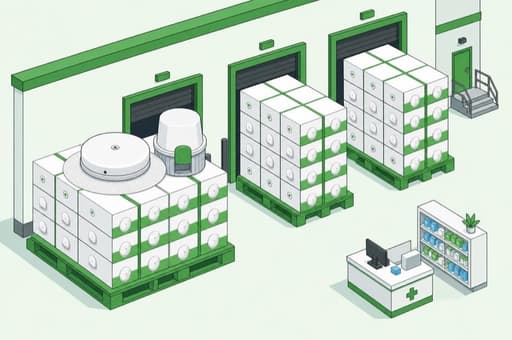
Dexcom G7 and G7 15 Day
The prescription flagship and about four-fifths of sales. The move to a sensor that lasts fifteen days instead of ten spreads the same build cost over more wear days. Watch how quickly the ten-day base finishes switching over.
Competes with FreeStyle Libre 3 / Libre 3 Plus (Abbott) · Simplera / Simplera Sync (Medtronic) · SIBIONICS GS3 (SiBionics)
In plain English
A small disposable disc worn on the arm that reads the sugar in the fluid just under the skin and sends the number to a phone, a handheld screen or an insulin pump. After ten days — fifteen on the newer version — you peel it off and stick on a new one. The business is not the gadget. It is the refill.
A doctor prescribes it, a health plan pays most of the bill, the patient reorders indefinitely. Nearly all of that money is billed through drug wholesalers and home-delivery medical-supply firms — roughly 85 cents of every company dollar in the quarter ended June 2026 — and Dexcom does not say which ones.
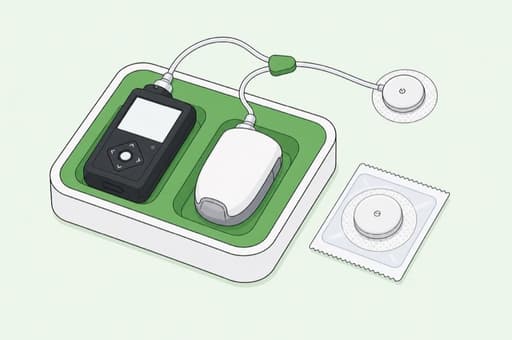
Connected insulin-pump partners
Insulin pumps from Insulet, Tandem and Beta Bionics dose straight from Dexcom's readings, and the pump will not run without a sensor. No line of its own — it shows up as the group that reorders most reliably.
Competes with Guardian 4 / Simplera Sync inside MiniMed 780G (Medtronic) · FreeStyle Libre pump integrations (Abbott)
In plain English
An insulin pump is a small machine worn on the body that drips insulin all day. To decide how much, it has to know the sugar level right now — so it reads it off the Dexcom sensor.
Dexcom earns nothing on the pump; the pump makers keep that. What it gets is the most dependable version of the refill, because someone whose pump stops working when the sensor runs out replaces the sensor almost without fail — management says that group wears one well over ninety percent of the time. Every pump model Dexcom gets designed into drags more sensors along behind it. Medtronic is the exception: its pumps run on its own sensors and leave Dexcom out.
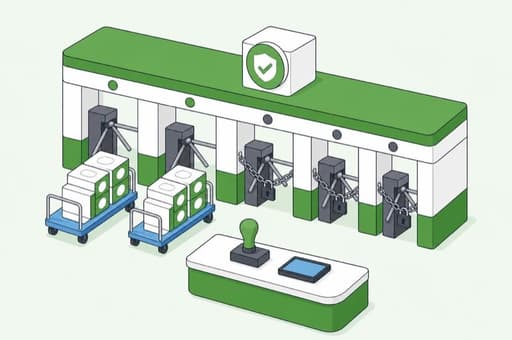
Payer coverage program (Road to 100)
Not a product — the effort to talk health plans and government programmes into paying for sensors for people with type 2 diabetes who take no insulin. Dexcom counts about 25 million American adults in that pool. Nothing moves until a payer says yes.
Competes with FreeStyle Libre formulary contracting (Abbott) · Bundled pump-plus-sensor contracting (Medtronic)
In plain English
Demand for these sensors is not created by advertising. It is created the day a health plan agrees to pay — before that, a doctor can recommend one all they like and very little happens.
So Dexcom runs a standing campaign at insurers, drug-benefit middlemen and government programmes, and the ammunition is study results: in a controlled trial, people wearing a sensor ended up with better blood-sugar control than a comparison group, and work with CVS Health found diabetes-related hospital stays dropped by roughly two-thirds over three years. The four biggest US drug-benefit managers now cover everyone with diabetes; the government's decision for people with type 2 diabetes who take no insulin is aimed at mid-2027. There is no order book here — coverage rulings are the nearest thing.
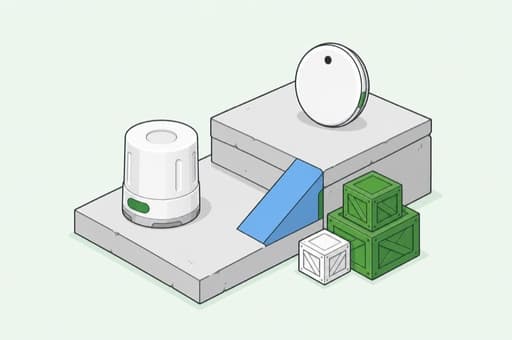
Dexcom ONE+
The simpler, cheaper sensor sold outside the US, aimed at getting onto a country's funded list first and moving patients up later. Roughly a tenth of sales. Overseas growth is still quick but cooling — about a fifth year on year in the June quarter, down from a quarter in the one before.
Competes with FreeStyle Libre 2 / Libre 3 (Abbott) · SIBIONICS GS1 / GS3 (SiBionics)
In plain English
Outside America the buyer is usually a country. National health systems and the public funds behind them decide which sensor they will pay for and for which patients, and cost weighs heavily — so Dexcom sells a stripped-back version: fewer extras, lower price, same refill habit.
Get onto a country's funded list with the plain one, get people wearing sensors, move some of them up to the flagship as coverage widens. France and Canada were the strongest markets in the quarter ended June 2026. Abbott sits on these funded lists already and is the one to dislodge, and shifting exchange rates are expected to shave a little off the second half.
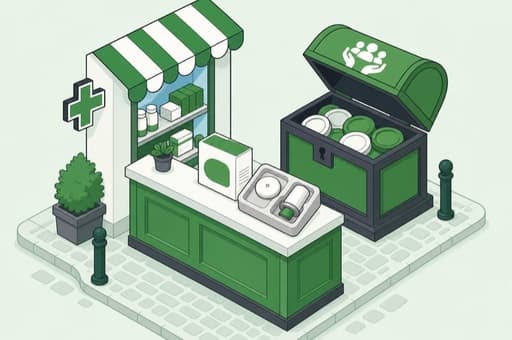
Dexcom Flex
A fifteen-day sensor built for people abroad who have type 2 diabetes and take no insulin, launched in Germany in spring 2026. No revenue line yet. How far it travels depends on which countries agree to fund that group.
Competes with FreeStyle Libre 2 (Abbott) · SIBIONICS GS3 (SiBionics)
In plain English
Newest in the family, and the narrowest: a sensor made for people whose type 2 diabetes is managed without insulin, in countries whose health funds will pay for that group. Germany went first, in spring 2026.
Why a separate product instead of the flagship? Those funds pay less per patient, and this one is built to be sold at that level while running on the same fifteen-day sensor platform — the same production lines, so the extra volume makes every sensor a little cheaper to build. Where the funding decision does not arrive, neither does Flex.
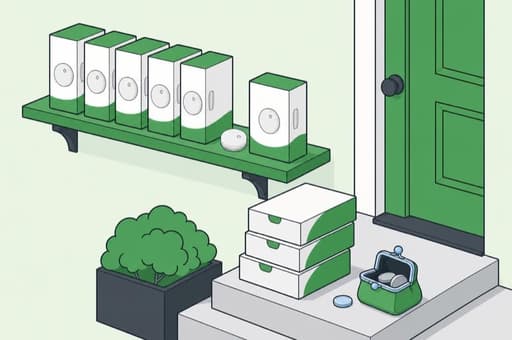
Stelo
The sensor anyone can buy without a prescription, aimed at people with type 2 diabetes not on insulin and at the plain curious. $130M in 2025. Nobody reimburses it, so the buyer has to keep choosing to pay.
Competes with Lingo (Abbott) · Libre Rio (Abbott)
In plain English
Order it from Amazon or its own website, open the box, put it on. No doctor, no insurance paperwork — which also means no insurer to pick up the bill once the novelty fades. About half the early buyers chose a repeating delivery rather than a single box.
It runs on the same fifteen-day sensor as the prescription products, so every unit sold helps fill the same factories, and Dexcom's hope is that some of these buyers become covered patients later. Two honest notes: regulators extended it to children as young as two in June 2026, and it has slipped well down management's talking points since launch.
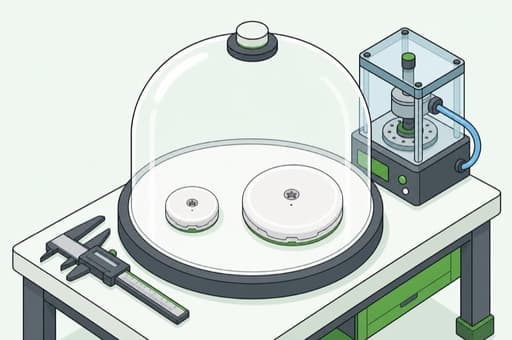
Dexcom G8
The sensor after this one: around half the size of today's, on technology Dexcom calls brand new, and able to measure something besides sugar. No launch date. Management says the timetable is intact, with large trials still ahead.
Competes with Next-generation two-in-one sensors (Abbott) · Simplera successors (Medtronic)
In plain English
Still in the lab. The next platform is meant to be smaller — roughly half the size of the current sensor — built on what the company describes as brand-new technology, with a big step up in accuracy and the ability to read a second substance in the body as well as glucose.
Why it matters: everything here is the same refill, so the way to make each wearer worth more is a sensor people prefer or one that does more jobs. Analysts keep measuring it against rivals' two-in-one sensors. Nothing ships until large clinical trials finish and regulators sign off, and no date has been given for either.


 Dexcom G7 and G7 15 DayThe prescription flagship and about four-fifths of sales. The move to a sensor that lasts fifteen days instead of ten spreads the same build cost over more wear days. Watch how quickly the ten-day base finishes switching over.
The prescription flagship and about four-fifths of sales. The move to a sensor that lasts fifteen days instead of ten spreads the same build cost over more wear days. Watch how quickly the ten-day base finishes switching over.
In plain English
A small disposable disc worn on the arm that reads the sugar in the fluid just under the skin and sends the number to a phone, a handheld screen or an insulin pump. After ten days — fifteen on the newer version — you peel it off and stick on a new one. The business is not the gadget. It is the refill.
A doctor prescribes it, a health plan pays most of the bill, the patient reorders indefinitely. Nearly all of that money is billed through drug wholesalers and home-delivery medical-supply firms — roughly 85 cents of every company dollar in the quarter ended June 2026 — and Dexcom does not say which ones.
Competes with FreeStyle Libre 3 / Libre 3 Plus (Abbott) · Simplera / Simplera Sync (Medtronic) · SIBIONICS GS3 (SiBionics)
 Connected insulin-pump partnersInsulin pumps from Insulet, Tandem and Beta Bionics dose straight from Dexcom's readings, and the pump will not run without a sensor. No line of its own — it shows up as the group that reorders most reliably.
Insulin pumps from Insulet, Tandem and Beta Bionics dose straight from Dexcom's readings, and the pump will not run without a sensor. No line of its own — it shows up as the group that reorders most reliably.
In plain English
An insulin pump is a small machine worn on the body that drips insulin all day. To decide how much, it has to know the sugar level right now — so it reads it off the Dexcom sensor.
Dexcom earns nothing on the pump; the pump makers keep that. What it gets is the most dependable version of the refill, because someone whose pump stops working when the sensor runs out replaces the sensor almost without fail — management says that group wears one well over ninety percent of the time. Every pump model Dexcom gets designed into drags more sensors along behind it. Medtronic is the exception: its pumps run on its own sensors and leave Dexcom out.
Competes with Guardian 4 / Simplera Sync inside MiniMed 780G (Medtronic) · FreeStyle Libre pump integrations (Abbott)
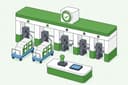 Payer coverage program (Road to 100)Not a product — the effort to talk health plans and government programmes into paying for sensors for people with type 2 diabetes who take no insulin. Dexcom counts about 25 million American adults in that pool. Nothing moves until a payer says yes.
Not a product — the effort to talk health plans and government programmes into paying for sensors for people with type 2 diabetes who take no insulin. Dexcom counts about 25 million American adults in that pool. Nothing moves until a payer says yes.
In plain English
Demand for these sensors is not created by advertising. It is created the day a health plan agrees to pay — before that, a doctor can recommend one all they like and very little happens.
So Dexcom runs a standing campaign at insurers, drug-benefit middlemen and government programmes, and the ammunition is study results: in a controlled trial, people wearing a sensor ended up with better blood-sugar control than a comparison group, and work with CVS Health found diabetes-related hospital stays dropped by roughly two-thirds over three years. The four biggest US drug-benefit managers now cover everyone with diabetes; the government's decision for people with type 2 diabetes who take no insulin is aimed at mid-2027. There is no order book here — coverage rulings are the nearest thing.
Competes with FreeStyle Libre formulary contracting (Abbott) · Bundled pump-plus-sensor contracting (Medtronic)
 Dexcom ONE+The simpler, cheaper sensor sold outside the US, aimed at getting onto a country's funded list first and moving patients up later. Roughly a tenth of sales. Overseas growth is still quick but cooling — about a fifth year on year in the June quarter, down from a quarter in the one before.
The simpler, cheaper sensor sold outside the US, aimed at getting onto a country's funded list first and moving patients up later. Roughly a tenth of sales. Overseas growth is still quick but cooling — about a fifth year on year in the June quarter, down from a quarter in the one before.
In plain English
Outside America the buyer is usually a country. National health systems and the public funds behind them decide which sensor they will pay for and for which patients, and cost weighs heavily — so Dexcom sells a stripped-back version: fewer extras, lower price, same refill habit.
Get onto a country's funded list with the plain one, get people wearing sensors, move some of them up to the flagship as coverage widens. France and Canada were the strongest markets in the quarter ended June 2026. Abbott sits on these funded lists already and is the one to dislodge, and shifting exchange rates are expected to shave a little off the second half.
Competes with FreeStyle Libre 2 / Libre 3 (Abbott) · SIBIONICS GS1 / GS3 (SiBionics)
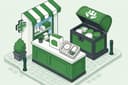 Dexcom FlexA fifteen-day sensor built for people abroad who have type 2 diabetes and take no insulin, launched in Germany in spring 2026. No revenue line yet. How far it travels depends on which countries agree to fund that group.
A fifteen-day sensor built for people abroad who have type 2 diabetes and take no insulin, launched in Germany in spring 2026. No revenue line yet. How far it travels depends on which countries agree to fund that group.
In plain English
Newest in the family, and the narrowest: a sensor made for people whose type 2 diabetes is managed without insulin, in countries whose health funds will pay for that group. Germany went first, in spring 2026.
Why a separate product instead of the flagship? Those funds pay less per patient, and this one is built to be sold at that level while running on the same fifteen-day sensor platform — the same production lines, so the extra volume makes every sensor a little cheaper to build. Where the funding decision does not arrive, neither does Flex.
Competes with FreeStyle Libre 2 (Abbott) · SIBIONICS GS3 (SiBionics)
 SteloThe sensor anyone can buy without a prescription, aimed at people with type 2 diabetes not on insulin and at the plain curious. $130M in 2025. Nobody reimburses it, so the buyer has to keep choosing to pay.
The sensor anyone can buy without a prescription, aimed at people with type 2 diabetes not on insulin and at the plain curious. $130M in 2025. Nobody reimburses it, so the buyer has to keep choosing to pay.
In plain English
Order it from Amazon or its own website, open the box, put it on. No doctor, no insurance paperwork — which also means no insurer to pick up the bill once the novelty fades. About half the early buyers chose a repeating delivery rather than a single box.
It runs on the same fifteen-day sensor as the prescription products, so every unit sold helps fill the same factories, and Dexcom's hope is that some of these buyers become covered patients later. Two honest notes: regulators extended it to children as young as two in June 2026, and it has slipped well down management's talking points since launch.
Competes with Lingo (Abbott) · Libre Rio (Abbott)
 Dexcom G8The sensor after this one: around half the size of today's, on technology Dexcom calls brand new, and able to measure something besides sugar. No launch date. Management says the timetable is intact, with large trials still ahead.
The sensor after this one: around half the size of today's, on technology Dexcom calls brand new, and able to measure something besides sugar. No launch date. Management says the timetable is intact, with large trials still ahead.
In plain English
Still in the lab. The next platform is meant to be smaller — roughly half the size of the current sensor — built on what the company describes as brand-new technology, with a big step up in accuracy and the ability to read a second substance in the body as well as glucose.
Why it matters: everything here is the same refill, so the way to make each wearer worth more is a sensor people prefer or one that does more jobs. Analysts keep measuring it against rivals' two-in-one sensors. Nothing ships until large clinical trials finish and regulators sign off, and no date has been given for either.
Competes with Next-generation two-in-one sensors (Abbott) · Simplera successors (Medtronic)
Named in filings, launches and programs
- Dexcom Smart BasalProduct · RampingCleared in November 2025: software that reads sensor data and logged doses, then suggests the next long-acting insulin dose. Sold only attached to the sensor.
- NutrisenseBrandBought in spring 2026 — a nutrition service built on sensor readings. Management sizes the added revenue in single-digit millions, mostly resold Stelo sensors.
- Dexcom ClarityPlatformReporting software that turns weeks of readings into something a patient and a doctor can sit down and go through together.
- Dexcom Share / Dexcom FollowServiceLets a parent or partner watch someone else's readings on their own phone — the feature that sells sensors to whole families.
- Dexcom AcademyServiceTraining for doctors and nurses on using sensors with patients; expanding into Italy, Poland, Turkey and Sweden during 2026.
- Oura integrationEcosystemSensor readings shown next to sleep and activity from the Oura smart ring; announced in early 2025 and running by spring 2026.
- Generative AI insights platformPlatformLaunched in 2024, it writes plain-language notes about a wearer's readings and now handles food logging inside Stelo.
- ReceiversProductThe optional handheld screen for people who would rather not read their sensor on a phone — a small slice of sales outside the sensor lines.
- FDA TEMPO pilotProduct · AnnouncedDexcom was named the first participant in the FDA's TEMPO pilot programme for digital health devices, in July 2026.
Dexcom Smart BasalProduct · Ramping
Cleared in November 2025: software that reads sensor data and logged doses, then suggests the next long-acting insulin dose. Sold only attached to the sensor.
NutrisenseBrand
Bought in spring 2026 — a nutrition service built on sensor readings. Management sizes the added revenue in single-digit millions, mostly resold Stelo sensors.
Dexcom ClarityPlatform
Reporting software that turns weeks of readings into something a patient and a doctor can sit down and go through together.
Dexcom Share / Dexcom FollowService
Lets a parent or partner watch someone else's readings on their own phone — the feature that sells sensors to whole families.
Dexcom AcademyService
Training for doctors and nurses on using sensors with patients; expanding into Italy, Poland, Turkey and Sweden during 2026.
Oura integrationEcosystem
Sensor readings shown next to sleep and activity from the Oura smart ring; announced in early 2025 and running by spring 2026.
Generative AI insights platformPlatform
Launched in 2024, it writes plain-language notes about a wearer's readings and now handles food logging inside Stelo.
ReceiversProduct
The optional handheld screen for people who would rather not read their sensor on a phone — a small slice of sales outside the sensor lines.
FDA TEMPO pilotProduct · Announced
Dexcom was named the first participant in the FDA's TEMPO pilot programme for digital health devices, in July 2026.