
Equifax (EFX)
Credit, workforce, and identity data for lending and employment decisions.
Something off on this page? Send us feedback.
Equifax keeps two enormous sets of records on American adults: paychecks, handed over by employers, and borrowing history, handed over by lenders. Banks, employers and benefit agencies pay each time they look someone up, and the same trade runs in Brazil, Britain and Australia. The payroll half grows faster. Now the company is pushing a cheap rival credit score against the one mortgage lenders have long paid for — trading revenue away for profit.
Item facts: FY2025 · year ended December 31, 2025, from filings, earnings calls and company pages.
Judgment weights, not filed revenue
The band summarizes business focus and direction. ~ marks estimates.
7 in detail · 15 more below
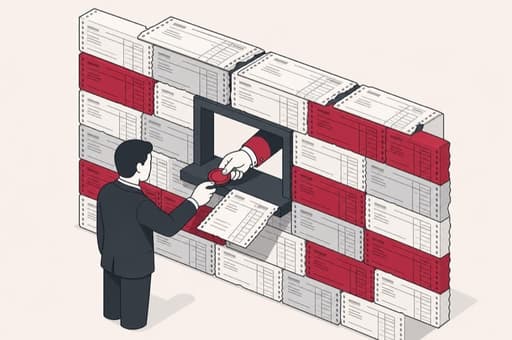
Verification Services (The Work Number)
Employers hand over payroll records free; lenders, screeners and benefit agencies pay per lookup. The file has passed 200 million records and keeps growing — coverage is the whole game, since a person who isn't in there earns nothing.
Competes with Experian Verify (Experian) · Truework income verification (Truework) · Plaid Income (Plaid)
In plain English
A list of who works where and what they earn — topped up automatically every payday by employers' payroll systems.
When a mortgage lender needs to confirm your income, or a state agency needs to check that you still qualify for benefits, they pay Equifax for one answer rather than chasing pay stubs and phone calls. Employers hand the data over free because Equifax runs their unemployment claims and hiring tax paperwork in return. Whether the file is looked up once or a million times costs about the same to keep, so each extra query drops most of its price straight through.
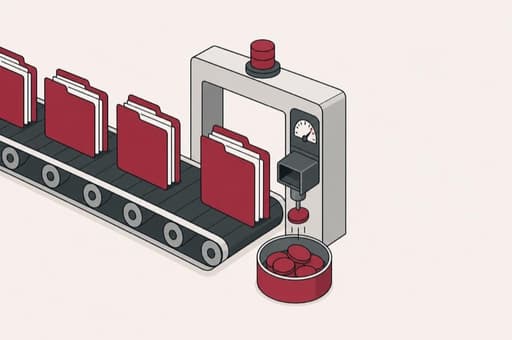
EWS Government
Government agencies pay to check income when deciding who qualifies for Medicaid, food aid and Social Security. Around $800 million a year, with roughly $300 million of contracts signed or renewed in four months — though revenue slipped against a big year-ago contract.
Competes with National Directory of New Hires (U.S. government) · State wage record systems (State agencies) · Experian Verify (Experian)
In plain English
Before a state hands out health coverage or food assistance, it has to know what the applicant actually earns. Rather than collect pay stubs, the caseworker's system asks Equifax and gets the payroll answer back.
Washington keeps widening this. A 2025 law tied federal food-aid money to how few mistakes a state makes and required health coverage to be re-checked more often, and every re-check is another paid query. Equifax puts the whole opportunity at around $5 billion, most of it sitting at state agencies that do not buy this data yet.
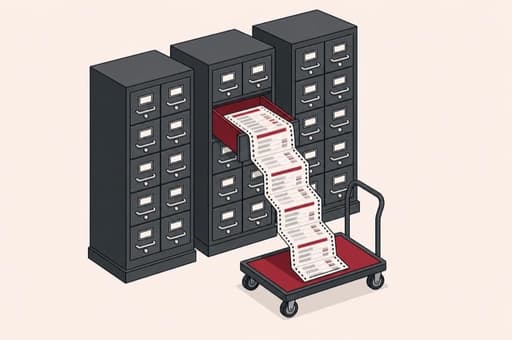
Online Information Solutions
The classic credit file, sold one pull at a time into mortgage, card, auto and phone-contract lending, plus identity and fraud checks. Revenue jumped 19% in the quarter to June 2026 — but strip out a score fee that goes straight to FICO and mortgage growth was mid-single-digit.
Competes with Consumer Information Services (Experian) · U.S. Markets (TransUnion) · FICO Scores (Fair Isaac)
In plain English
Your borrowing history is a long, dull list: what you owe, what you have paid late, who has checked up on you recently. Lenders and phone companies feed it to Equifax for nothing, because a file with holes in it is useless to every one of them.
Equifax sells it back one lookup at a time. A mortgage application pulls all three big bureaus at once, which is why housing matters so much here — about a fifth of the whole company's revenue rides on mortgage lending, and most of it arrives through middlemen who assemble those three-bureau reports for the lender.

VantageScore 4.0 for Mortgage
The three bureaus' own credit score, aimed at FICO's mortgage business and priced at a dollar, held there through 2027. Almost no revenue yet: a full switchover would cut roughly $270 million of sales while adding about $160 million of earnings.
Competes with FICO mortgage scores (Fair Isaac) · FICO 10T (Fair Isaac)
In plain English
Lenders want a three-digit number summing up how risky a borrower is. That number on a mortgage file has long come from FICO, and Equifax simply passed FICO's fee along to the lender, keeping none of it.
So the three bureaus sell a score of their own instead. They cut the price to $4.50, then to a single dollar, and promised to hold it there through 2027; the housing regulator switched it on for more than twenty lenders in April 2026. Most lenders still pull it free beside the FICO one, and about a hundred have dropped FICO altogether. If it wins, Equifax collects less money but keeps much more of it.

International — Latin America
Credit bureaus across Brazil, Chile and Argentina, built around Boa Vista, Brazil's second-largest bureau. Revenue grew 9% in the June quarter, and a $750 million deal for Mexico's Círculo de Crédito is expected to close by year-end.
Competes with Serasa Experian (Experian) · TransUnion International (TransUnion) · Buró de Crédito bureau files (Buró de Crédito)
In plain English
Lending in Brazil and Mexico works the way it does anywhere — the lender wants to know whether you pay people back — but far fewer people have any credit record at all. That gap is the opportunity.
Equifax buys local bureaus and moves them onto its own software. Boa Vista in Brazil came in 2023; Mexico's Círculo de Crédito, agreed in July 2026 for $750 million, brings roughly two billion borrowing records covering about eighty million checked identities. Once the plumbing underneath is Equifax's, the analytics tools it sells at home can be sold there too.

International — Asia Pacific
The Australia and New Zealand bureau — the fastest-growing piece of Equifax's business outside the United States, up 17% in the June quarter. Experian has combined the country's second- and third-place bureaus into a single larger rival.
Competes with illion bureau (Experian) · TransUnion International (TransUnion)
In plain English
Equifax's Australian and New Zealand arm keeps the local record of who borrows and who repays, and sells it to the lenders who need to know.
It is the quickest-growing part of the business outside the United States. It also just got a tougher neighbour: Experian bought a rival bureau called illion and joined the country's second- and third-largest players into one, so what Equifax is up against there is suddenly a good deal bigger.

Employer Services
HR paperwork done for employers: new-hire eligibility forms, unemployment claims, hiring tax credits. Grew 3% in the June quarter — modest, but this is the price Equifax pays for the free payroll feed behind The Work Number.
Competes with Experian Employer Services (Experian) · Compliance services (ADP) · Compliance modules (UKG)
In plain English
Office paperwork, handled for a fee. Every employer has to check that new hires are legally allowed to work, contest unemployment claims it thinks are wrong, and collect the hiring tax credits it is owed. Equifax takes those chores off their hands.
The clever part is that all of it runs off the same payroll file the employer already sends across. The employer gets its admin done; Equifax gets the income records it then sells over and over to lenders and benefit agencies. The two halves of that trade are nowhere near equal in value.


 Verification Services (The Work Number)Employers hand over payroll records free; lenders, screeners and benefit agencies pay per lookup. The file has passed 200 million records and keeps growing — coverage is the whole game, since a person who isn't in there earns nothing.
Employers hand over payroll records free; lenders, screeners and benefit agencies pay per lookup. The file has passed 200 million records and keeps growing — coverage is the whole game, since a person who isn't in there earns nothing.
In plain English
A list of who works where and what they earn — topped up automatically every payday by employers' payroll systems.
When a mortgage lender needs to confirm your income, or a state agency needs to check that you still qualify for benefits, they pay Equifax for one answer rather than chasing pay stubs and phone calls. Employers hand the data over free because Equifax runs their unemployment claims and hiring tax paperwork in return. Whether the file is looked up once or a million times costs about the same to keep, so each extra query drops most of its price straight through.
Competes with Experian Verify (Experian) · Truework income verification (Truework) · Plaid Income (Plaid)
 EWS GovernmentGovernment agencies pay to check income when deciding who qualifies for Medicaid, food aid and Social Security. Around $800 million a year, with roughly $300 million of contracts signed or renewed in four months — though revenue slipped against a big year-ago contract.
Government agencies pay to check income when deciding who qualifies for Medicaid, food aid and Social Security. Around $800 million a year, with roughly $300 million of contracts signed or renewed in four months — though revenue slipped against a big year-ago contract.
In plain English
Before a state hands out health coverage or food assistance, it has to know what the applicant actually earns. Rather than collect pay stubs, the caseworker's system asks Equifax and gets the payroll answer back.
Washington keeps widening this. A 2025 law tied federal food-aid money to how few mistakes a state makes and required health coverage to be re-checked more often, and every re-check is another paid query. Equifax puts the whole opportunity at around $5 billion, most of it sitting at state agencies that do not buy this data yet.
Competes with National Directory of New Hires (U.S. government) · State wage record systems (State agencies) · Experian Verify (Experian)
 Online Information SolutionsThe classic credit file, sold one pull at a time into mortgage, card, auto and phone-contract lending, plus identity and fraud checks. Revenue jumped 19% in the quarter to June 2026 — but strip out a score fee that goes straight to FICO and mortgage growth was mid-single-digit.
The classic credit file, sold one pull at a time into mortgage, card, auto and phone-contract lending, plus identity and fraud checks. Revenue jumped 19% in the quarter to June 2026 — but strip out a score fee that goes straight to FICO and mortgage growth was mid-single-digit.
In plain English
Your borrowing history is a long, dull list: what you owe, what you have paid late, who has checked up on you recently. Lenders and phone companies feed it to Equifax for nothing, because a file with holes in it is useless to every one of them.
Equifax sells it back one lookup at a time. A mortgage application pulls all three big bureaus at once, which is why housing matters so much here — about a fifth of the whole company's revenue rides on mortgage lending, and most of it arrives through middlemen who assemble those three-bureau reports for the lender.
Competes with Consumer Information Services (Experian) · U.S. Markets (TransUnion) · FICO Scores (Fair Isaac)
 VantageScore 4.0 for MortgageThe three bureaus' own credit score, aimed at FICO's mortgage business and priced at a dollar, held there through 2027. Almost no revenue yet: a full switchover would cut roughly $270 million of sales while adding about $160 million of earnings.
The three bureaus' own credit score, aimed at FICO's mortgage business and priced at a dollar, held there through 2027. Almost no revenue yet: a full switchover would cut roughly $270 million of sales while adding about $160 million of earnings.
In plain English
Lenders want a three-digit number summing up how risky a borrower is. That number on a mortgage file has long come from FICO, and Equifax simply passed FICO's fee along to the lender, keeping none of it.
So the three bureaus sell a score of their own instead. They cut the price to $4.50, then to a single dollar, and promised to hold it there through 2027; the housing regulator switched it on for more than twenty lenders in April 2026. Most lenders still pull it free beside the FICO one, and about a hundred have dropped FICO altogether. If it wins, Equifax collects less money but keeps much more of it.
Competes with FICO mortgage scores (Fair Isaac) · FICO 10T (Fair Isaac)
 International — Latin AmericaCredit bureaus across Brazil, Chile and Argentina, built around Boa Vista, Brazil's second-largest bureau. Revenue grew 9% in the June quarter, and a $750 million deal for Mexico's Círculo de Crédito is expected to close by year-end.
Credit bureaus across Brazil, Chile and Argentina, built around Boa Vista, Brazil's second-largest bureau. Revenue grew 9% in the June quarter, and a $750 million deal for Mexico's Círculo de Crédito is expected to close by year-end.
In plain English
Lending in Brazil and Mexico works the way it does anywhere — the lender wants to know whether you pay people back — but far fewer people have any credit record at all. That gap is the opportunity.
Equifax buys local bureaus and moves them onto its own software. Boa Vista in Brazil came in 2023; Mexico's Círculo de Crédito, agreed in July 2026 for $750 million, brings roughly two billion borrowing records covering about eighty million checked identities. Once the plumbing underneath is Equifax's, the analytics tools it sells at home can be sold there too.
Competes with Serasa Experian (Experian) · TransUnion International (TransUnion) · Buró de Crédito bureau files (Buró de Crédito)
 International — Asia PacificThe Australia and New Zealand bureau — the fastest-growing piece of Equifax's business outside the United States, up 17% in the June quarter. Experian has combined the country's second- and third-place bureaus into a single larger rival.
The Australia and New Zealand bureau — the fastest-growing piece of Equifax's business outside the United States, up 17% in the June quarter. Experian has combined the country's second- and third-place bureaus into a single larger rival.
In plain English
Equifax's Australian and New Zealand arm keeps the local record of who borrows and who repays, and sells it to the lenders who need to know.
It is the quickest-growing part of the business outside the United States. It also just got a tougher neighbour: Experian bought a rival bureau called illion and joined the country's second- and third-largest players into one, so what Equifax is up against there is suddenly a good deal bigger.
Competes with illion bureau (Experian) · TransUnion International (TransUnion)
 Employer ServicesHR paperwork done for employers: new-hire eligibility forms, unemployment claims, hiring tax credits. Grew 3% in the June quarter — modest, but this is the price Equifax pays for the free payroll feed behind The Work Number.
HR paperwork done for employers: new-hire eligibility forms, unemployment claims, hiring tax credits. Grew 3% in the June quarter — modest, but this is the price Equifax pays for the free payroll feed behind The Work Number.
In plain English
Office paperwork, handled for a fee. Every employer has to check that new hires are legally allowed to work, contest unemployment claims it thinks are wrong, and collect the hiring tax credits it is owed. Equifax takes those chores off their hands.
The clever part is that all of it runs off the same payroll file the employer already sends across. The employer gets its admin done; Equifax gets the income records it then sells over and over to lenders and benefit agencies. The two halves of that trade are nowhere near equal in value.
Competes with Experian Employer Services (Experian) · Compliance services (ADP) · Compliance modules (UKG)
Named in filings, launches and programs
- Equifax Cloud and EFX.AIPlatformThe shared data platform everything now runs on — about 90% of revenue moved across. Management targets $150 million of AI-driven cost savings by 2028.
- Talent SolutionsProduct lineEmployment screening built on the same payroll file; grew high single digits in the June quarter despite a weak white-collar hiring market.
- International — EuropeSegmentUK-centred consumer and commercial bureau plus debt management, $396.7 million in 2025; barely grew in the June quarter against British weakness.
- International — CanadaSegmentConsumer, commercial and direct-to-consumer credit files in Canada, $271.3 million in 2025 — named as a soft spot in the June quarter.
- Financial Marketing ServicesProduct lineData and marketing services sold through the U.S. bureau arm, $257.1 million in 2025 — the smallest of the four American business lines.
- The Work Number Report IndicatorProduct · RampingAn income flag bundled free with mortgage credit reports since October 2025, there to win share of the light credit checks lenders run on prospects.
- Boa Vista ServiçosBrandBrazil's second-largest bureau, bought in 2023 after a 2022 offer valuing it near $583 million; Equifax platforms are being deployed onto it.
- Círculo de CréditoBrand · AnnouncedMexican bureau signed in July 2026; serves financial, retail and telecom customers, and closing is expected in late 2026 subject to regulatory approval.
- Appriss InsightsProduct lineIncarceration and criminal-justice records, bought in 2021, feeding the employment-screening line.
- Kount 360 / Digital Identity TrustPlatformIdentity and fraud checking — one of four areas Equifax says it shops in for acquisitions.
- Equifax IgnitePlatformThe analytics and model-building workbench sold to customers; now being rolled out onto Boa Vista in Brazil.
- Decision Hub powered by InterConnectPlatformSoftware that makes the actual yes-or-no call on a credit application or a suspected fraud, in real time.
- Equifax Credit TrendsProductBenchmarking reports showing a lender how its new loans, balances and missed payments compare with the wider market.
- Consumer IncomeView+ProductEstimates a person's income without asking for documents; marketed as powered by Amplify AI.
- myEquifax / consumer directServiceThe consumer's own portal and credit monitoring — no longer reported on its own since the consumer segment was folded into the others.
Equifax Cloud and EFX.AIPlatform
The shared data platform everything now runs on — about 90% of revenue moved across. Management targets $150 million of AI-driven cost savings by 2028.
Talent SolutionsProduct line
Employment screening built on the same payroll file; grew high single digits in the June quarter despite a weak white-collar hiring market.
International — EuropeSegment
UK-centred consumer and commercial bureau plus debt management, $396.7 million in 2025; barely grew in the June quarter against British weakness.
International — CanadaSegment
Consumer, commercial and direct-to-consumer credit files in Canada, $271.3 million in 2025 — named as a soft spot in the June quarter.
Financial Marketing ServicesProduct line
Data and marketing services sold through the U.S. bureau arm, $257.1 million in 2025 — the smallest of the four American business lines.
The Work Number Report IndicatorProduct · Ramping
An income flag bundled free with mortgage credit reports since October 2025, there to win share of the light credit checks lenders run on prospects.
Boa Vista ServiçosBrand
Brazil's second-largest bureau, bought in 2023 after a 2022 offer valuing it near $583 million; Equifax platforms are being deployed onto it.
Círculo de CréditoBrand · Announced
Mexican bureau signed in July 2026; serves financial, retail and telecom customers, and closing is expected in late 2026 subject to regulatory approval.
Appriss InsightsProduct line
Incarceration and criminal-justice records, bought in 2021, feeding the employment-screening line.
Kount 360 / Digital Identity TrustPlatform
Identity and fraud checking — one of four areas Equifax says it shops in for acquisitions.
Equifax IgnitePlatform
The analytics and model-building workbench sold to customers; now being rolled out onto Boa Vista in Brazil.
Decision Hub powered by InterConnectPlatform
Software that makes the actual yes-or-no call on a credit application or a suspected fraud, in real time.
Equifax Credit TrendsProduct
Benchmarking reports showing a lender how its new loans, balances and missed payments compare with the wider market.
Consumer IncomeView+Product
Estimates a person's income without asking for documents; marketed as powered by Amplify AI.
myEquifax / consumer directService
The consumer's own portal and credit monitoring — no longer reported on its own since the consumer segment was folded into the others.