
EQT (EQT)
Produces Appalachian natural gas and moves it through owned gathering, transmission and storage networks.
Something off on this page? Send us feedback.
EQT pulls natural gas out of the Appalachian hills and, since buying the pipeline company its gas already flowed through, owns much of the plumbing too. Gas is a commodity nobody picks by brand: the market sets the price, and EQT's edge is being cheap. The next chapter is signing decade-long buyers — power plants feeding data centers, and gas shipped overseas — so less of the money rides on the weather.
Item facts: FY2025 · year ended Dec 31, 2025, from filings, earnings calls and company pages.
Judgment weights, not filed revenue
The band summarizes business focus and direction. ~ marks estimates.
7 in detail · 10 more below
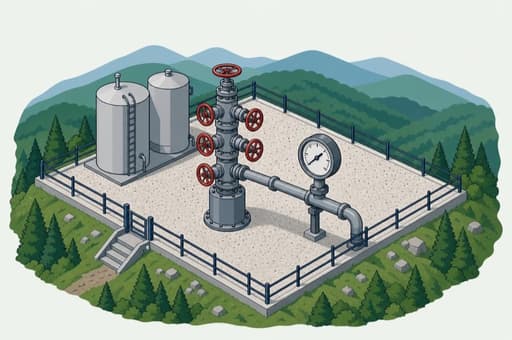
Appalachian Gas Production (Marcellus and Utica)
The wells. About 2.4 trillion cubic feet of gas sold in 2025 at $3.19 per thousand cubic feet — 85% of revenue, from a product whose price EQT does not set. From 2027, Duke Energy and Southern Company take gas on ten-year deals.
Competes with Haynesville and Appalachian dry gas (Expand Energy) · Appalachian gas and NGLs (Antero Resources) · Appalachian dry gas (Range Resources)
In plain English
A mile under Pennsylvania and West Virginia sits a layer of rock with natural gas locked inside it. EQT owns the drilling rights across roughly 2.3 million acres of it, mostly a formation called the Marcellus, and has enough proved gas booked to keep producing at today's rate for more than a decade.
Selling it is blunt work. Utilities, gas marketers and factories pay whatever the market rate is that day, because one producer's gas is identical to the next one's, and about half the volume has to travel out of the region to find its best buyer. EQT cannot charge a premium. The whole game is lifting a thousand cubic feet for less than the other guy spends.
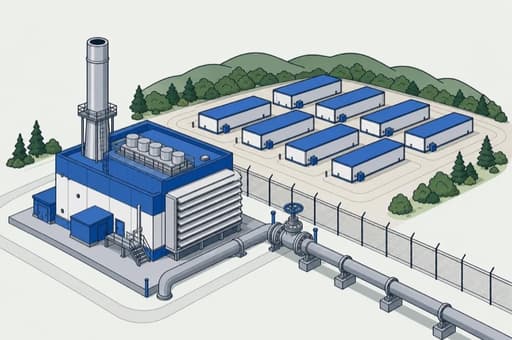
Power Plant and Data-Center Gas Supply
Four Appalachian power plants have lined EQT up as their gas supplier before they are finished being built — together close to a third of today's output, starting in 2027 and running into the next decade. EQT sells the gas; other people build the plants.
Competes with Long-term supply bids (Expand Energy) · Long-term supply bids (Antero Resources) · Pipeline capacity contracts (Williams)
In plain English
Data centers need electricity, and new power stations are going up in Pennsylvania and West Virginia to make it by burning gas. A plant like that burns gas every hour it runs, so it ties down a supplier for a decade or more, years before the first turbine turns.
EQT is the neighbour with the gas and the pipes already in the ground, so it takes those contracts — including, at the Homer City campus and its seven big turbines, an agreement in principle to be the only supplier. Nothing is earned yet. The money starts when somebody else's plant starts, and management has said flatly that these aren't EQT's projects.
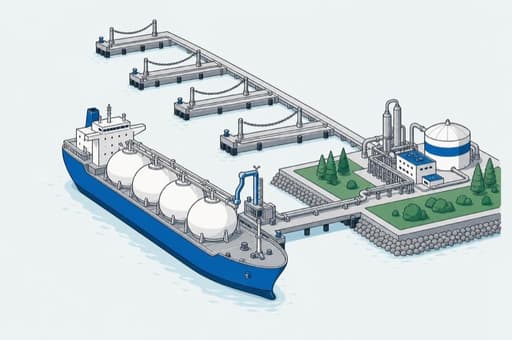
LNG Export Agreements
The right to ship gas overseas as a liquid: about 6 million tonnes a year once it all lands in 2030-31, roughly a tenth of current output, with a small first cargo in 2028. Management expects a glut in the years just before.
Competes with Portfolio LNG marketing (Shell) · Producer-linked LNG offtake (Expand Energy) · Producer-linked LNG offtake (Antero Resources)
In plain English
Chilled hard enough, natural gas turns into a liquid that takes up a fraction of the space — cold enough to pour into a ship and send across an ocean, which is the only way it reaches buyers on the far side of one.
EQT has booked space at three export projects from Sempra, NextDecade and Commonwealth LNG, paying a fixed fee on every cargo it lifts. What it keeps is the gap between the American price it pays for the gas and the price that cargo fetches abroad. A wide gap is a windfall and a thin one is a loss — and the plants still have to be funded and built.
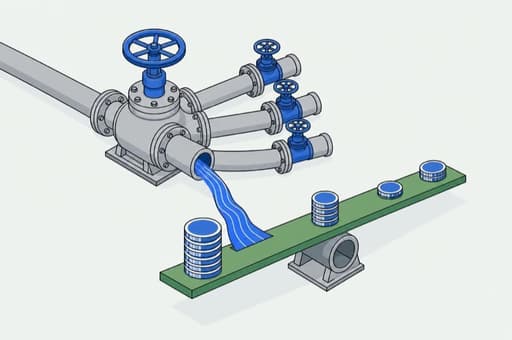
Gas Marketing and Hedging
The desk that decides where and when each day's gas is sold, and buys protection against a price crash. That protection added roughly $0.7B of revenue in 2025 and cost $193.6M in the first half of 2026 — one line, both signs.
Competes with Global gas and LNG trading (Shell) · Producer marketing desk (Expand Energy) · Producer marketing desk (Antero Resources)
In plain English
Two jobs, one desk. The first is timing and geography: the same gas is worth different amounts at different delivery points on different days, and steering it to the better one added over $200 million of spare cash in 2025. Owning the pipes helps — EQT can shut wells in when the local price sags and open them when it firms.
The second job is insurance. EQT can sign contracts that lock in tomorrow's price today, so a crash pays out and a rally costs. Lately it has mostly gone without that cover, arguing its low costs protect it instead — which makes strong quarters stronger and weak ones weaker.
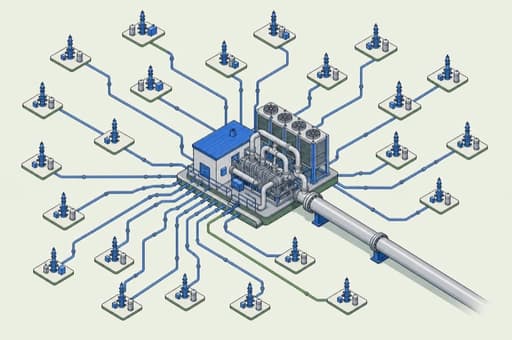
Gathering Systems
The small pipes running from each well pad to the big lines. Outside producers supply only about four cents of every revenue dollar, but EQT pays its own pipes too, so these systems earned $435M of operating profit in the first half of 2026.
Competes with Gathering and compression (Antero Midstream) · Appalachian gathering and processing (MPLX) · Northeast gathering and processing (Williams)
In plain English
The unglamorous middle. Gas leaving a well pad is at the wrong pressure and in the wrong place, so compressors squeeze it and narrow pipe walks it over to where the big interstate lines begin.
When the shipper is an outside producer it pays a fee per unit moved, often under contracts running more than a decade. But EQT mostly ships its own gas, so most of what this business bills is one EQT pocket paying another. The real prize is control: owning the pipe lets EQT stop wells when local prices sag and restart them when demand returns. Together, the two pipe businesses earn roughly a quarter of operating profit on well under a tenth of outside revenue.
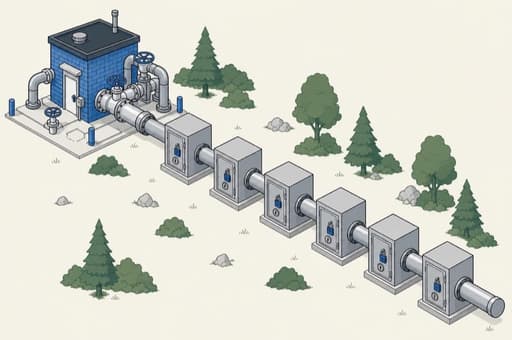
Transmission and Storage
Long-distance pipe under federal price rules, plus more than 40 billion cubic feet of stored gas, inherited with Equitrans. Shippers pay to reserve room whether they use it or not, which made $209M of operating profit in the first half of 2026.
Competes with Transco (Williams) · Texas Eastern (Enbridge) · Tennessee Gas Pipeline (Kinder Morgan)
In plain English
Rented space, essentially. Shippers sign up years ahead for room on a long-distance line and pay the reservation fee whether they move anything that month or not — like a storage unit you keep paying for while it sits empty.
Because that fee does not move with the gas price, this is the calmest income EQT owns, and a federal regulator sets what can be charged for it. It arrived with the Equitrans takeover, along with more than 40 billion cubic feet of gas held in storage that can be drawn down in a cold snap. Much of the room is booked by EQT itself; outsiders pay for the rest.
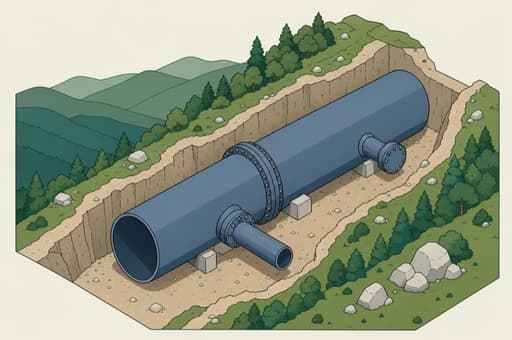
Mountain Valley Pipeline (Mainline, Boost, Southgate)
A 300-mile pipe from West Virginia into Virginia, running since 2024 and now about 53% EQT-owned. It hands back a share of its profits — $101.2M in the first half of 2026 against $66.0M a year earlier — and two extensions are being built.
Competes with Transco Southeast Supply Enhancement (Williams) · Borealis pipeline (Boardwalk Pipelines)
In plain English
The big trunk line. One 300-mile pipe, wide enough to stand up inside, carrying about two billion cubic feet a day out of West Virginia into southern Virginia, in service since 2024.
EQT owns roughly half of it rather than counting its sales, so what comes back is a slice of the pipe's profit. Two additions are underway: extra compressors to push more gas through the same steel, all of that new room already taken on twenty-year contracts with Southeastern utilities, and a branch reaching into the Carolinas anchored by Duke Energy. Blackstone, the investment firm that put money into EQT's pipeline arm, takes a cut alongside.


 Appalachian Gas Production (Marcellus and Utica)The wells. About 2.4 trillion cubic feet of gas sold in 2025 at $3.19 per thousand cubic feet — 85% of revenue, from a product whose price EQT does not set. From 2027, Duke Energy and Southern Company take gas on ten-year deals.
The wells. About 2.4 trillion cubic feet of gas sold in 2025 at $3.19 per thousand cubic feet — 85% of revenue, from a product whose price EQT does not set. From 2027, Duke Energy and Southern Company take gas on ten-year deals.
In plain English
A mile under Pennsylvania and West Virginia sits a layer of rock with natural gas locked inside it. EQT owns the drilling rights across roughly 2.3 million acres of it, mostly a formation called the Marcellus, and has enough proved gas booked to keep producing at today's rate for more than a decade.
Selling it is blunt work. Utilities, gas marketers and factories pay whatever the market rate is that day, because one producer's gas is identical to the next one's, and about half the volume has to travel out of the region to find its best buyer. EQT cannot charge a premium. The whole game is lifting a thousand cubic feet for less than the other guy spends.
Competes with Haynesville and Appalachian dry gas (Expand Energy) · Appalachian gas and NGLs (Antero Resources) · Appalachian dry gas (Range Resources)
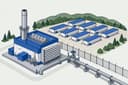 Power Plant and Data-Center Gas SupplyFour Appalachian power plants have lined EQT up as their gas supplier before they are finished being built — together close to a third of today's output, starting in 2027 and running into the next decade. EQT sells the gas; other people build the plants.
Four Appalachian power plants have lined EQT up as their gas supplier before they are finished being built — together close to a third of today's output, starting in 2027 and running into the next decade. EQT sells the gas; other people build the plants.
In plain English
Data centers need electricity, and new power stations are going up in Pennsylvania and West Virginia to make it by burning gas. A plant like that burns gas every hour it runs, so it ties down a supplier for a decade or more, years before the first turbine turns.
EQT is the neighbour with the gas and the pipes already in the ground, so it takes those contracts — including, at the Homer City campus and its seven big turbines, an agreement in principle to be the only supplier. Nothing is earned yet. The money starts when somebody else's plant starts, and management has said flatly that these aren't EQT's projects.
Competes with Long-term supply bids (Expand Energy) · Long-term supply bids (Antero Resources) · Pipeline capacity contracts (Williams)
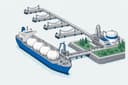 LNG Export AgreementsThe right to ship gas overseas as a liquid: about 6 million tonnes a year once it all lands in 2030-31, roughly a tenth of current output, with a small first cargo in 2028. Management expects a glut in the years just before.
The right to ship gas overseas as a liquid: about 6 million tonnes a year once it all lands in 2030-31, roughly a tenth of current output, with a small first cargo in 2028. Management expects a glut in the years just before.
In plain English
Chilled hard enough, natural gas turns into a liquid that takes up a fraction of the space — cold enough to pour into a ship and send across an ocean, which is the only way it reaches buyers on the far side of one.
EQT has booked space at three export projects from Sempra, NextDecade and Commonwealth LNG, paying a fixed fee on every cargo it lifts. What it keeps is the gap between the American price it pays for the gas and the price that cargo fetches abroad. A wide gap is a windfall and a thin one is a loss — and the plants still have to be funded and built.
Competes with Portfolio LNG marketing (Shell) · Producer-linked LNG offtake (Expand Energy) · Producer-linked LNG offtake (Antero Resources)
 Gas Marketing and HedgingThe desk that decides where and when each day's gas is sold, and buys protection against a price crash. That protection added roughly $0.7B of revenue in 2025 and cost $193.6M in the first half of 2026 — one line, both signs.
The desk that decides where and when each day's gas is sold, and buys protection against a price crash. That protection added roughly $0.7B of revenue in 2025 and cost $193.6M in the first half of 2026 — one line, both signs.
In plain English
Two jobs, one desk. The first is timing and geography: the same gas is worth different amounts at different delivery points on different days, and steering it to the better one added over $200 million of spare cash in 2025. Owning the pipes helps — EQT can shut wells in when the local price sags and open them when it firms.
The second job is insurance. EQT can sign contracts that lock in tomorrow's price today, so a crash pays out and a rally costs. Lately it has mostly gone without that cover, arguing its low costs protect it instead — which makes strong quarters stronger and weak ones weaker.
Competes with Global gas and LNG trading (Shell) · Producer marketing desk (Expand Energy) · Producer marketing desk (Antero Resources)
 Gathering SystemsThe small pipes running from each well pad to the big lines. Outside producers supply only about four cents of every revenue dollar, but EQT pays its own pipes too, so these systems earned $435M of operating profit in the first half of 2026.
The small pipes running from each well pad to the big lines. Outside producers supply only about four cents of every revenue dollar, but EQT pays its own pipes too, so these systems earned $435M of operating profit in the first half of 2026.
In plain English
The unglamorous middle. Gas leaving a well pad is at the wrong pressure and in the wrong place, so compressors squeeze it and narrow pipe walks it over to where the big interstate lines begin.
When the shipper is an outside producer it pays a fee per unit moved, often under contracts running more than a decade. But EQT mostly ships its own gas, so most of what this business bills is one EQT pocket paying another. The real prize is control: owning the pipe lets EQT stop wells when local prices sag and restart them when demand returns. Together, the two pipe businesses earn roughly a quarter of operating profit on well under a tenth of outside revenue.
Competes with Gathering and compression (Antero Midstream) · Appalachian gathering and processing (MPLX) · Northeast gathering and processing (Williams)
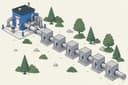 Transmission and StorageLong-distance pipe under federal price rules, plus more than 40 billion cubic feet of stored gas, inherited with Equitrans. Shippers pay to reserve room whether they use it or not, which made $209M of operating profit in the first half of 2026.
Long-distance pipe under federal price rules, plus more than 40 billion cubic feet of stored gas, inherited with Equitrans. Shippers pay to reserve room whether they use it or not, which made $209M of operating profit in the first half of 2026.
In plain English
Rented space, essentially. Shippers sign up years ahead for room on a long-distance line and pay the reservation fee whether they move anything that month or not — like a storage unit you keep paying for while it sits empty.
Because that fee does not move with the gas price, this is the calmest income EQT owns, and a federal regulator sets what can be charged for it. It arrived with the Equitrans takeover, along with more than 40 billion cubic feet of gas held in storage that can be drawn down in a cold snap. Much of the room is booked by EQT itself; outsiders pay for the rest.
Competes with Transco (Williams) · Texas Eastern (Enbridge) · Tennessee Gas Pipeline (Kinder Morgan)
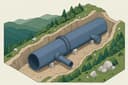 Mountain Valley Pipeline (Mainline, Boost, Southgate)A 300-mile pipe from West Virginia into Virginia, running since 2024 and now about 53% EQT-owned. It hands back a share of its profits — $101.2M in the first half of 2026 against $66.0M a year earlier — and two extensions are being built.
A 300-mile pipe from West Virginia into Virginia, running since 2024 and now about 53% EQT-owned. It hands back a share of its profits — $101.2M in the first half of 2026 against $66.0M a year earlier — and two extensions are being built.
In plain English
The big trunk line. One 300-mile pipe, wide enough to stand up inside, carrying about two billion cubic feet a day out of West Virginia into southern Virginia, in service since 2024.
EQT owns roughly half of it rather than counting its sales, so what comes back is a slice of the pipe's profit. Two additions are underway: extra compressors to push more gas through the same steel, all of that new room already taken on twenty-year contracts with Southeastern utilities, and a branch reaching into the Carolinas anchored by Duke Energy. Blackstone, the investment firm that put money into EQT's pipeline arm, takes a cut alongside.
Competes with Transco Southeast Supply Enhancement (Williams) · Borealis pipeline (Boardwalk Pipelines)
Named in filings, launches and programs
- Olympus Energy assetsBrandA $1.8 billion bolt-on closed in 2025 — wells plus pipes, about half a billion cubic feet a day, and a source of gas for Homer City.
- Compression programPlatformMore compressors pushing more gas through pipe that already exists — the reason the 2026 production target went up, and a saving promised when Equitrans was bought.
- Strategic leasing programServiceQuiet land buying: roughly 100,000 net acres leased since 2020, replacing about 60% of what drilling has used up.
- Water infrastructure networkPlatformThe water systems that serve drilling; 2026 spending connects the older ones into the Tug Hill network.
- Eureka MidstreamBrandA gathering subsidiary that borrows on its own credit line and carries gas for outside producers as well as EQT's.
- Hammerhead PipelineEcosystemA header line feeding gathered gas into the Mountain Valley Pipeline at Mobley; it sits inside the Blackstone-backed venture.
- Clarington Connector PipelineEcosystem · AnnouncedA planned line to carry up to 400 million cubic feet a day from Pennsylvania into Ohio, raised from an earlier 300.
- Blackstone midstream joint ventureBrandBlackstone's credit and insurance arm paid $3.5 billion in 2024 for a minority stake in EQT's pipeline assets, and takes a slice of their cash.
- BlackLine MidstreamBrandTwo New England propane terminals holding 46 million gallons, bought for $77 million in mid-2026.
- Gulf Coast salt storage studyService · AnnouncedManagement says it is looking at underground salt storage on the Gulf Coast to smooth out export swings — an interest, not a committed project.
Olympus Energy assetsBrand
A $1.8 billion bolt-on closed in 2025 — wells plus pipes, about half a billion cubic feet a day, and a source of gas for Homer City.
Compression programPlatform
More compressors pushing more gas through pipe that already exists — the reason the 2026 production target went up, and a saving promised when Equitrans was bought.
Strategic leasing programService
Quiet land buying: roughly 100,000 net acres leased since 2020, replacing about 60% of what drilling has used up.
Water infrastructure networkPlatform
The water systems that serve drilling; 2026 spending connects the older ones into the Tug Hill network.
Eureka MidstreamBrand
A gathering subsidiary that borrows on its own credit line and carries gas for outside producers as well as EQT's.
Hammerhead PipelineEcosystem
A header line feeding gathered gas into the Mountain Valley Pipeline at Mobley; it sits inside the Blackstone-backed venture.
Clarington Connector PipelineEcosystem · Announced
A planned line to carry up to 400 million cubic feet a day from Pennsylvania into Ohio, raised from an earlier 300.
Blackstone midstream joint ventureBrand
Blackstone's credit and insurance arm paid $3.5 billion in 2024 for a minority stake in EQT's pipeline assets, and takes a slice of their cash.
BlackLine MidstreamBrand
Two New England propane terminals holding 46 million gallons, bought for $77 million in mid-2026.
Gulf Coast salt storage studyService · Announced
Management says it is looking at underground salt storage on the Gulf Coast to smooth out export swings — an interest, not a committed project.