
Exelon (EXC)
Owner of regulated electric and gas delivery utilities across Illinois and the Mid-Atlantic.
Something off on this page? Send us feedback.
Exelon owns the poles, wires and pipes that carry electricity and gas the last stretch into homes and businesses — around Chicago, Philadelphia, Baltimore, Washington and southern New Jersey. It makes no power of its own; the plants left with the Constellation split. What it earns is what regulators allow on what it builds. Now data centres want to plug in, and the spending is shifting toward the big long-distance lines.
Item facts: FY2025 · year ended Dec 31, 2025, from filings, earnings calls and company pages.
Judgment weights, not filed revenue
The band summarizes business focus and direction. ~ marks estimates.
9 in detail · 10 more below
ComEd
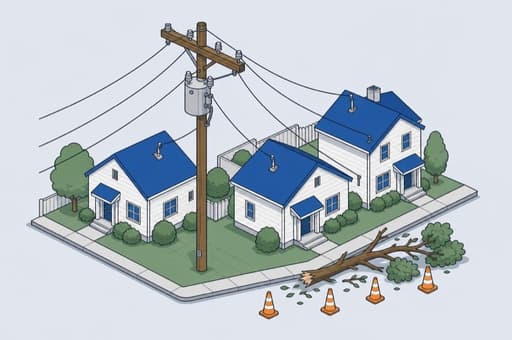
The biggest of the six utilities: about 4.2 million homes and businesses across northern Illinois, and the largest earner of the four segments. A $15.3 billion four-year grid plan sits with Illinois regulators, answer due December 2026.
Competes with Ameren Illinois delivery (Ameren) · On-site generation that skips the wires (data-centre developers) · Retail electricity supply contracts (alternative Illinois suppliers)
In plain English
Picture everything between the power plant and your light switch in and around Chicago — the poles, the wires, the substations. That is ComEd. It does not sell the electricity itself; a household can buy the power from whichever supplier it likes, and ComEd still gets paid to carry it to the meter.
Illinois sets the price of that carrying job years at a time through a grid plan rather than one case after another, so the earnings follow whatever regulators let ComEd build. Storms are the other half of the job: sixteen major weather events hit in the first half of 2026, and crews cost money.
Data-centre connection agreements (TSAs)
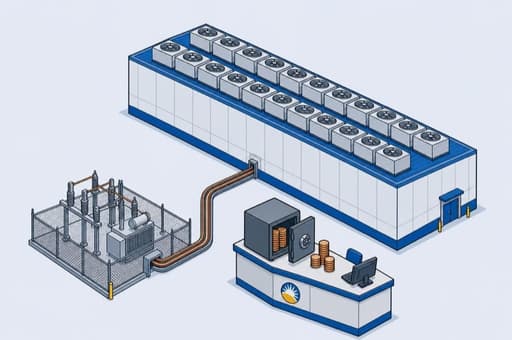
Developers must put money down before Exelon builds wires to their data centres: about 4 gigawatts of projects are signed, backed by roughly $1 billion of collateral. The request pile behind it is around 36 gigawatts, most of it still only under study.
Competes with Data-centre contract terms (Dominion Energy) · Georgia Power's large-load tariff (Southern Company) · Oncor large-load transmission service (Sempra)
In plain English
A data-centre developer wants to plug in. Building the wires takes years and costs a great deal, and if the project never opens, everyone else's bills cover the hole. So Exelon rewrote the deal: the developer puts down cash first — sometimes hundreds of millions — promises minimum payments, and owes a fee for walking away.
Federal regulators approved the first one in November 2025, for PECO and Amazon's data-centre arm in Falls Township, Pennsylvania. Signed deals now cover about four gigawatts, the units used for whole power plants, and nine of the eleven gigawatts Exelon calls likely sit in northern Illinois.

Competitive transmission bids
Exelon bids to build power lines outside its own territory, usually alongside the developer Invenergy. It put in about $1.9 billion of Illinois bids; the grid operator picked an Ameren-led group instead. Two Iowa bids should be decided late in 2026.
Competes with Illinois high-voltage line projects (Ameren) · GridLiance Heartland (NextEra Energy Transmission) · Republic Transmission (LS Power)
In plain English
Every so often the bodies that plan the shared high-voltage network put a new line out to tender, and any qualified company may bid to build and own it. Exelon enters those contests, usually paired with Invenergy, a power-project developer.
Win one and the line joins the pile of assets regulators let Exelon earn a return on, year after year. Lose and the only cost is the bid itself. The scoreboard so far is mixed: the Tri-County line was won this way, and in May 2026 the Midwest planner handed the two large Illinois lines to a consortium led by Ameren, a rival Exelon had bid against.
Pepco Holdings
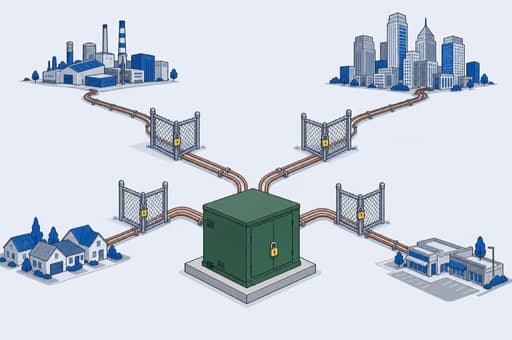
Three utilities under one roof — Pepco, Delmarva Power and Atlantic City Electric — about 2.1 million customers and $799 million of operating earnings in 2025. Four local regulators plus the federal one set its prices.
Competes with PSE&G electricity delivery (PSEG) · Large-load service in Virginia (Dominion Energy) · Retail power supply offers (Mid-Atlantic energy suppliers)
In plain English
Not a utility itself but the parent of three: Pepco, which lights Washington D.C. and parts of Maryland; Delmarva Power in Delaware and Maryland; and Atlantic City Electric in southern New Jersey. Between them they carry electricity, and some gas, to roughly two million homes and businesses.
The money works the same way in each — a regulator approves a price for delivery, the utility collects it — but here there are more doors to knock on than anywhere else in the company. Four commissions plus the federal one each run their own timetable, and through 2026 three separate price requests were moving at once.
Pittsgrove battery project
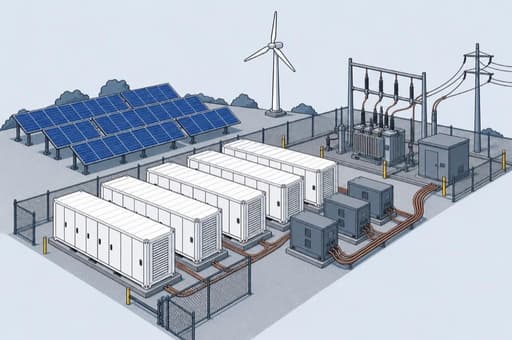
Atlantic City Electric wants to build a 500-megawatt battery on its own land in southern New Jersey — about $1 billion, and outside the four-year spending plan. New Jersey regulators are expected to rule in the first half of 2027.
Competes with Merchant battery projects (NextEra Energy Resources) · Battery development in PJM (Invenergy) · Home-battery power plants (Sunrun)
In plain English
A battery farm is what it sounds like: rows of large battery cabinets wired into the grid, filling up when there is more power about than people need and emptying when there isn't. The regional grid leaves roughly ten gigawatts of solar and wind output unused on a typical day for want of somewhere to put it.
The twist here is who keeps the proceeds. Whatever the battery earns in the power market goes back to customers; Exelon's return comes from owning the equipment, the same way it earns on a substation. That only works if New Jersey approves how the cost is collected — the filing went in during July 2026.
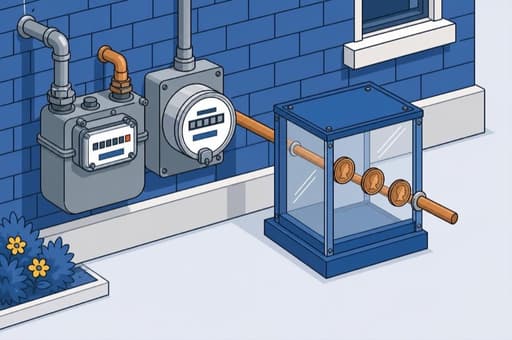
Baltimore Gas and Electric
Baltimore's electric and gas utility since the 1820s, roughly 2 million customers. Second of the four on revenue but fourth on earnings — $578 million in 2025 — because so much of what it bills is fuel passed straight through.
Competes with Potomac Edison electricity delivery (FirstEnergy) · Washington Gas (AltaGas) · Retail gas and power supply offers (Maryland energy suppliers)
In plain English
Second on the revenue list, fourth on the earnings list, and the gap is the whole lesson. When gas and power prices rise, BGE's bills rise and its profit doesn't: the energy itself is handed on at what it cost, and BGE earns only on the pipes and wires that deliver it.
It is also the one Exelon utility where the rules smooth out both electricity and gas usage, so a mild winter barely dents earnings. The live argument in Maryland is who pays for storms, and for roughly $1.1 billion of new line costs around a retiring plant that land mostly on Maryland customers.
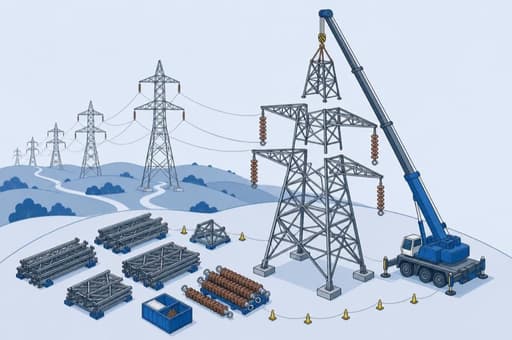
High-voltage transmission build-out
The growth engine: the long-distance lines between cities, whose asset base is guided to grow about 16% a year through 2029 inside a company-wide $41.7 billion four-year build plan. Maryland's consumer advocate is contesting who pays for it.
Competes with Transource line projects (AEP and Evergy) · NextEra Energy Transmission MidAtlantic (NextEra) · Transmission build programme (Dominion Energy)
In plain English
Two kinds of wire run through this company. The thin ones down your street belong to the local utility; the fat ones strung on steel towers, moving power between cities, are the transmission system — priced by federal regulators rather than state ones, and the part Exelon is pouring money into.
Shortage is the reason it can. The regional market that lines up tomorrow's power supply hit its price ceiling a third year running and still came up short, and planners answer partly by ordering new lines. Each award becomes an asset Exelon earns a return on. Maryland's consumer advocate argues the bills for that work are running high.
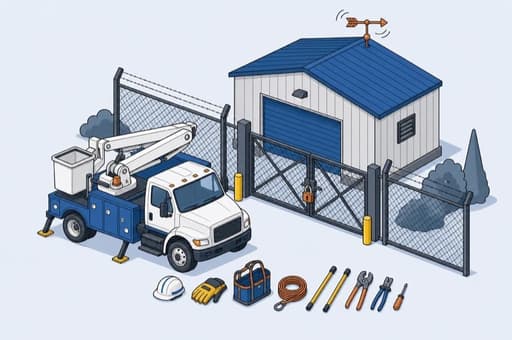
PECO
Smallest of the four on revenue, second largest on profit — $814 million of operating earnings in 2025, up from $556 million. The one utility whose earnings still move with the weather.
Competes with PPL Electric Utilities delivery (PPL) · City-owned gas delivery (Philadelphia Gas Works) · Retail electricity supply offers (Pennsylvania generation suppliers)
In plain English
Philadelphia's wires and gas mains, and the odd one out in the family. Everywhere else the rules top up or claw back delivery revenue so that a mild month doesn't reach profit. Here they don't, so weather lands on earnings directly — lately in Exelon's favour, worth a cent a share in each of 2026's first two quarters.
It is also where the arguing is loudest. In July 2026 about 1,600 union electricians walked out for three days, the first strike in PECO's history, and went back with a raise. PECO also carries the first of Exelon's data-centre connection deals, and more such projects are landing in Bucks County.
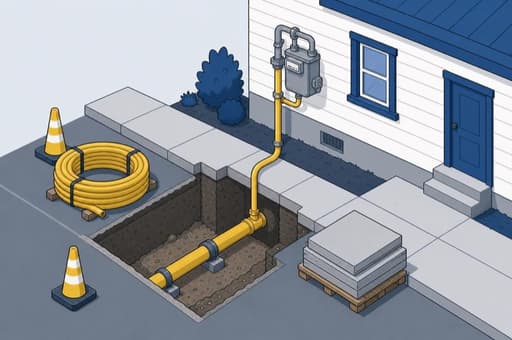
Natural gas delivery
Three of the utilities pipe gas as well as electricity — roughly 1.4 million customers in Maryland, Pennsylvania and Delaware. What the gas side earns on its own is never shown separately, and it is where the bill fight is sharpest.
Competes with Philadelphia's municipal gas mains (Philadelphia Gas Works) · Washington Gas franchise (AltaGas) · Retail natural gas offers (Mid-Atlantic gas suppliers)
In plain English
Underneath the same streets as the cables run the gas mains, and the same companies own them: Baltimore Gas and Electric, PECO and Delmarva Power all deliver gas alongside electricity. Around 1.4 million households and businesses use it for heat and cooking.
Billing works as it does for power — the gas itself is passed on at cost, the utility earns on the pipe — which makes spending on pipe the part that earns, and the part people object to. In September 2026 an advocacy group pinned a 67% rise in Pennsylvania's gas bills on pipeline spending by the state's biggest utilities, PECO among them.


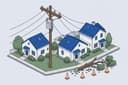 ComEdThe biggest of the six utilities: about 4.2 million homes and businesses across northern Illinois, and the largest earner of the four segments. A $15.3 billion four-year grid plan sits with Illinois regulators, answer due December 2026.
The biggest of the six utilities: about 4.2 million homes and businesses across northern Illinois, and the largest earner of the four segments. A $15.3 billion four-year grid plan sits with Illinois regulators, answer due December 2026.
In plain English
Picture everything between the power plant and your light switch in and around Chicago — the poles, the wires, the substations. That is ComEd. It does not sell the electricity itself; a household can buy the power from whichever supplier it likes, and ComEd still gets paid to carry it to the meter.
Illinois sets the price of that carrying job years at a time through a grid plan rather than one case after another, so the earnings follow whatever regulators let ComEd build. Storms are the other half of the job: sixteen major weather events hit in the first half of 2026, and crews cost money.
Competes with Ameren Illinois delivery (Ameren) · On-site generation that skips the wires (data-centre developers) · Retail electricity supply contracts (alternative Illinois suppliers)
 Data-centre connection agreements (TSAs)Developers must put money down before Exelon builds wires to their data centres: about 4 gigawatts of projects are signed, backed by roughly $1 billion of collateral. The request pile behind it is around 36 gigawatts, most of it still only under study.
Developers must put money down before Exelon builds wires to their data centres: about 4 gigawatts of projects are signed, backed by roughly $1 billion of collateral. The request pile behind it is around 36 gigawatts, most of it still only under study.
In plain English
A data-centre developer wants to plug in. Building the wires takes years and costs a great deal, and if the project never opens, everyone else's bills cover the hole. So Exelon rewrote the deal: the developer puts down cash first — sometimes hundreds of millions — promises minimum payments, and owes a fee for walking away.
Federal regulators approved the first one in November 2025, for PECO and Amazon's data-centre arm in Falls Township, Pennsylvania. Signed deals now cover about four gigawatts, the units used for whole power plants, and nine of the eleven gigawatts Exelon calls likely sit in northern Illinois.
Competes with Data-centre contract terms (Dominion Energy) · Georgia Power's large-load tariff (Southern Company) · Oncor large-load transmission service (Sempra)
 Competitive transmission bidsExelon bids to build power lines outside its own territory, usually alongside the developer Invenergy. It put in about $1.9 billion of Illinois bids; the grid operator picked an Ameren-led group instead. Two Iowa bids should be decided late in 2026.
Exelon bids to build power lines outside its own territory, usually alongside the developer Invenergy. It put in about $1.9 billion of Illinois bids; the grid operator picked an Ameren-led group instead. Two Iowa bids should be decided late in 2026.
In plain English
Every so often the bodies that plan the shared high-voltage network put a new line out to tender, and any qualified company may bid to build and own it. Exelon enters those contests, usually paired with Invenergy, a power-project developer.
Win one and the line joins the pile of assets regulators let Exelon earn a return on, year after year. Lose and the only cost is the bid itself. The scoreboard so far is mixed: the Tri-County line was won this way, and in May 2026 the Midwest planner handed the two large Illinois lines to a consortium led by Ameren, a rival Exelon had bid against.
Competes with Illinois high-voltage line projects (Ameren) · GridLiance Heartland (NextEra Energy Transmission) · Republic Transmission (LS Power)
 Pepco HoldingsThree utilities under one roof — Pepco, Delmarva Power and Atlantic City Electric — about 2.1 million customers and $799 million of operating earnings in 2025. Four local regulators plus the federal one set its prices.
Three utilities under one roof — Pepco, Delmarva Power and Atlantic City Electric — about 2.1 million customers and $799 million of operating earnings in 2025. Four local regulators plus the federal one set its prices.
In plain English
Not a utility itself but the parent of three: Pepco, which lights Washington D.C. and parts of Maryland; Delmarva Power in Delaware and Maryland; and Atlantic City Electric in southern New Jersey. Between them they carry electricity, and some gas, to roughly two million homes and businesses.
The money works the same way in each — a regulator approves a price for delivery, the utility collects it — but here there are more doors to knock on than anywhere else in the company. Four commissions plus the federal one each run their own timetable, and through 2026 three separate price requests were moving at once.
Competes with PSE&G electricity delivery (PSEG) · Large-load service in Virginia (Dominion Energy) · Retail power supply offers (Mid-Atlantic energy suppliers)
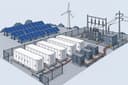 Pittsgrove battery projectAtlantic City Electric wants to build a 500-megawatt battery on its own land in southern New Jersey — about $1 billion, and outside the four-year spending plan. New Jersey regulators are expected to rule in the first half of 2027.
Atlantic City Electric wants to build a 500-megawatt battery on its own land in southern New Jersey — about $1 billion, and outside the four-year spending plan. New Jersey regulators are expected to rule in the first half of 2027.
In plain English
A battery farm is what it sounds like: rows of large battery cabinets wired into the grid, filling up when there is more power about than people need and emptying when there isn't. The regional grid leaves roughly ten gigawatts of solar and wind output unused on a typical day for want of somewhere to put it.
The twist here is who keeps the proceeds. Whatever the battery earns in the power market goes back to customers; Exelon's return comes from owning the equipment, the same way it earns on a substation. That only works if New Jersey approves how the cost is collected — the filing went in during July 2026.
Competes with Merchant battery projects (NextEra Energy Resources) · Battery development in PJM (Invenergy) · Home-battery power plants (Sunrun)
 Baltimore Gas and ElectricBaltimore's electric and gas utility since the 1820s, roughly 2 million customers. Second of the four on revenue but fourth on earnings — $578 million in 2025 — because so much of what it bills is fuel passed straight through.
Baltimore's electric and gas utility since the 1820s, roughly 2 million customers. Second of the four on revenue but fourth on earnings — $578 million in 2025 — because so much of what it bills is fuel passed straight through.
In plain English
Second on the revenue list, fourth on the earnings list, and the gap is the whole lesson. When gas and power prices rise, BGE's bills rise and its profit doesn't: the energy itself is handed on at what it cost, and BGE earns only on the pipes and wires that deliver it.
It is also the one Exelon utility where the rules smooth out both electricity and gas usage, so a mild winter barely dents earnings. The live argument in Maryland is who pays for storms, and for roughly $1.1 billion of new line costs around a retiring plant that land mostly on Maryland customers.
Competes with Potomac Edison electricity delivery (FirstEnergy) · Washington Gas (AltaGas) · Retail gas and power supply offers (Maryland energy suppliers)
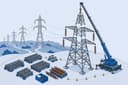 High-voltage transmission build-outThe growth engine: the long-distance lines between cities, whose asset base is guided to grow about 16% a year through 2029 inside a company-wide $41.7 billion four-year build plan. Maryland's consumer advocate is contesting who pays for it.
The growth engine: the long-distance lines between cities, whose asset base is guided to grow about 16% a year through 2029 inside a company-wide $41.7 billion four-year build plan. Maryland's consumer advocate is contesting who pays for it.
In plain English
Two kinds of wire run through this company. The thin ones down your street belong to the local utility; the fat ones strung on steel towers, moving power between cities, are the transmission system — priced by federal regulators rather than state ones, and the part Exelon is pouring money into.
Shortage is the reason it can. The regional market that lines up tomorrow's power supply hit its price ceiling a third year running and still came up short, and planners answer partly by ordering new lines. Each award becomes an asset Exelon earns a return on. Maryland's consumer advocate argues the bills for that work are running high.
Competes with Transource line projects (AEP and Evergy) · NextEra Energy Transmission MidAtlantic (NextEra) · Transmission build programme (Dominion Energy)
 PECOSmallest of the four on revenue, second largest on profit — $814 million of operating earnings in 2025, up from $556 million. The one utility whose earnings still move with the weather.
Smallest of the four on revenue, second largest on profit — $814 million of operating earnings in 2025, up from $556 million. The one utility whose earnings still move with the weather.
In plain English
Philadelphia's wires and gas mains, and the odd one out in the family. Everywhere else the rules top up or claw back delivery revenue so that a mild month doesn't reach profit. Here they don't, so weather lands on earnings directly — lately in Exelon's favour, worth a cent a share in each of 2026's first two quarters.
It is also where the arguing is loudest. In July 2026 about 1,600 union electricians walked out for three days, the first strike in PECO's history, and went back with a raise. PECO also carries the first of Exelon's data-centre connection deals, and more such projects are landing in Bucks County.
Competes with PPL Electric Utilities delivery (PPL) · City-owned gas delivery (Philadelphia Gas Works) · Retail electricity supply offers (Pennsylvania generation suppliers)
 Natural gas deliveryThree of the utilities pipe gas as well as electricity — roughly 1.4 million customers in Maryland, Pennsylvania and Delaware. What the gas side earns on its own is never shown separately, and it is where the bill fight is sharpest.
Three of the utilities pipe gas as well as electricity — roughly 1.4 million customers in Maryland, Pennsylvania and Delaware. What the gas side earns on its own is never shown separately, and it is where the bill fight is sharpest.
In plain English
Underneath the same streets as the cables run the gas mains, and the same companies own them: Baltimore Gas and Electric, PECO and Delmarva Power all deliver gas alongside electricity. Around 1.4 million households and businesses use it for heat and cooking.
Billing works as it does for power — the gas itself is passed on at cost, the utility earns on the pipe — which makes spending on pipe the part that earns, and the part people object to. In September 2026 an advocacy group pinned a 67% rise in Pennsylvania's gas bills on pipeline spending by the state's biggest utilities, PECO among them.
Competes with Philadelphia's municipal gas mains (Philadelphia Gas Works) · Washington Gas franchise (AltaGas) · Retail natural gas offers (Mid-Atlantic gas suppliers)
Named in filings, launches and programs
- PepcoBrandDelivery in Maryland and Washington D.C., more than 965,500 electric customers; about $3.4 billion of 2025 revenue inside the Pepco Holdings total.
- Delmarva PowerBrand561,500 electric and 140,000 gas customers in Delaware and Maryland; $1.97 billion of 2025 revenue, with a Delaware price case running.
- Atlantic City ElectricBrandMore than 572,000 southern New Jersey electric customers; $1.72 billion of 2025 revenue, and the utility behind the Pittsgrove battery filing.
- Corporate Segment and OtherSegment$424 million of revenue against a $568 million drag on adjusted earnings — mostly interest on the parent company's own borrowing.
- ComEd Scheduled Dispatch Virtual Power PlantCustomer program · AnnouncedIllinois regulators approved ComEd's first such programme in June 2026; from 2027 it draws on customer-owned batteries when the grid needs them.
- Brandon Shores Deactivation ProjectProduct · RampingAbout $1.6 billion of new lines ordered by the regional grid planner around a retiring plant, in service 2028; Maryland bears roughly two-thirds.
- Tri-County lineProduct · RampingWon in open bidding, in service 2028 to 2030 — management's example that Exelon can win work it was not simply handed.
- MISO Tranche 2.1 Iowa bids (MARS, EASL)Product · AnnouncedTwo Iowa line bids submitted with Invenergy; a decision is expected in the last quarter of 2026.
- Energy efficiency programmesServiceProgrammes that help customers use less, paid for through a separate charge on bills; Illinois expanded the budget in late 2025.
- Customer Relief FundCustomer program$60 million of bill help in 2025 plus a $10 million top-up in January 2026, as household energy costs climbed.
PepcoBrand
Delivery in Maryland and Washington D.C., more than 965,500 electric customers; about $3.4 billion of 2025 revenue inside the Pepco Holdings total.
Delmarva PowerBrand
561,500 electric and 140,000 gas customers in Delaware and Maryland; $1.97 billion of 2025 revenue, with a Delaware price case running.
Atlantic City ElectricBrand
More than 572,000 southern New Jersey electric customers; $1.72 billion of 2025 revenue, and the utility behind the Pittsgrove battery filing.
Corporate Segment and OtherSegment
$424 million of revenue against a $568 million drag on adjusted earnings — mostly interest on the parent company's own borrowing.
ComEd Scheduled Dispatch Virtual Power PlantCustomer program · Announced
Illinois regulators approved ComEd's first such programme in June 2026; from 2027 it draws on customer-owned batteries when the grid needs them.
Brandon Shores Deactivation ProjectProduct · Ramping
About $1.6 billion of new lines ordered by the regional grid planner around a retiring plant, in service 2028; Maryland bears roughly two-thirds.
Tri-County lineProduct · Ramping
Won in open bidding, in service 2028 to 2030 — management's example that Exelon can win work it was not simply handed.
MISO Tranche 2.1 Iowa bids (MARS, EASL)Product · Announced
Two Iowa line bids submitted with Invenergy; a decision is expected in the last quarter of 2026.
Energy efficiency programmesService
Programmes that help customers use less, paid for through a separate charge on bills; Illinois expanded the budget in late 2025.
Customer Relief FundCustomer program
$60 million of bill help in 2025 plus a $10 million top-up in January 2026, as household energy costs climbed.