
Extra Space Storage (EXR)
Owns and manages U.S. self-storage facilities, with tenant reinsurance and bridge lending.
Something off on this page? Send us feedback.
Extra Space Storage rents small locked rooms to people and businesses who own more things than they have space for. It owns roughly half the stores that carry its name and runs the rest for other owners, taking fees, insurance premiums and loan interest instead of rent. The owned stores still pay for almost everything; the growth now comes from putting other people's money into the buildings.
Item facts: FY2025 · year ended Dec 31, 2025, from filings, earnings calls and company pages.
Judgment weights, not filed revenue
The band summarizes business focus and direction. ~ marks estimates.
7 in detail · 9 more below
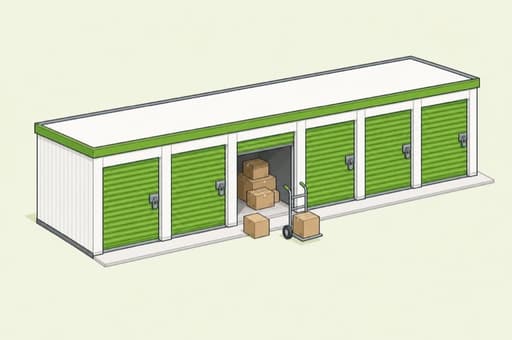
Wholly-Owned Storage Portfolio
The roughly 2,000 stores the company owns outright and the month-to-month rent they collect — $2,895.2M in 2025. Rent at the same stores barely moved last year, then picked up to +2.4% by the middle of 2026.
Competes with Owned and operated storage facilities (Public Storage) · Owned storage portfolio (CubeSmart) · Single-store storage facilities (Independent operators)
In plain English
A storage unit is a small locked room you rent by the month, the way you'd rent a parking space — no lease, walk away when you're done. The crowd is households between homes and small businesses with stock to stash.
The money arrives a few dollars at a time across about 2.9 million units, so no single renter is worth worrying about. The quiet mechanism: move-in prices and in-place prices are different things. You pay one price on the day you sign, and customers already in place get periodic increases — which is how total rent can rise in a year when prices offered to new customers sit flat.
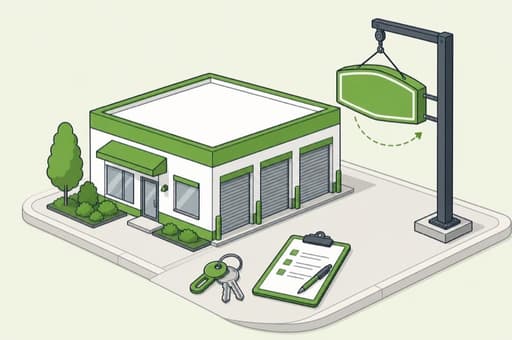
ManagementPlus
Fees for running close to 2,000 stores the company does not own — $129.5M in 2025, up 7.1%, at almost no added cost. Signings slowed sharply in the first half of 2026, blamed on a managed portfolio that changed hands.
Competes with Third-party property management (CubeSmart) · Third-party facility management (Public Storage) · Self-managed stores (Independent operators)
In plain English
Owners keep their building and hand over the running of it. The Extra Space name goes up on the sign, and the store plugs into the same pricing system, call centre and website that serve the company's own stores — much like an independent hotel taking a big chain's flag.
The owner pays a slice of the store's revenue as a fee. Because one system already runs thousands of stores, adding one more costs Extra Space very little, which is why a small revenue line carries weight beyond its size. The contracts can be cancelled at will, and these owners average fewer than two stores each.
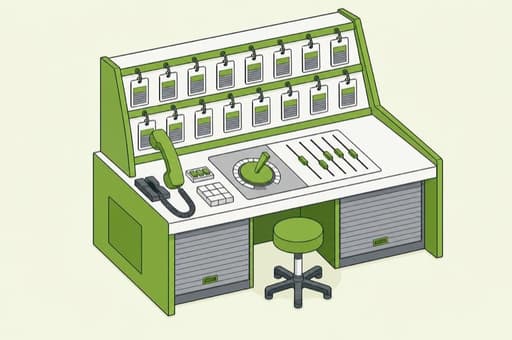
Digital Acquisition and Revenue-Management System
The in-house pricing, marketing and call-centre machinery behind all 4,400-plus stores, owned and managed alike. It has no price of its own, and management credits it for 2026's pickup in same-store revenue. Watch city rules on how prices get set.
Competes with In-house pricing and digital platform (Public Storage) · Management platform sold to owners (CubeSmart)
In plain English
Nobody buys this one by itself. It is the machinery that decides what a unit costs today, catches the person searching for storage at midnight, answers the phone, and — through an assistant called Boxy — handles questions about sizes, prices and availability at any hour.
It earns its keep inside the other lines: sharper pricing shows up as rent, and this same machinery is what independent owners are really paying for when they sign a management deal. The pricing works off store and market history rather than anything about the individual customer — a distinction that matters as cities write rules for pricing software. New York City began licensing storage operators in 2026, and Los Angeles County's limits on price moves came off near the middle of the year.

Customer Protection Plan
Renting a unit requires cover, and most customers simply buy the in-house plan: $352.9M in 2025, growing 6.0% in a year when store rents were flat. It sells at managed and partner stores too, so the customer pool is far wider than the owned portfolio.
Competes with Tenant reinsurance (Public Storage) · Tenant insurance programme (CubeSmart) · Renters and homeowners policies (Outside insurers)
In plain English
Sign for a unit and you have to show cover for whatever you put inside. Most people don't have any, so they tick the box for the store's own plan at a few dollars a month. An outside insurer writes the policy; a subsidiary of Extra Space takes on the risk of loss and keeps the premium.
Tiny money per customer, serious money together: in the April-to-June quarter of 2026, $93.1M of premiums came in against $17.3M of costs. It grows with the number of renters and how many of them say yes — not with the price of storage. Public Storage runs the identical arrangement, and its version of this line grew faster last year.
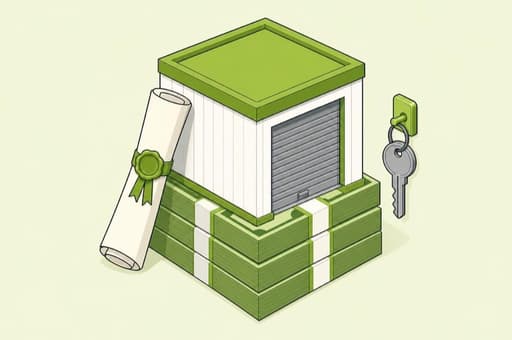
Bridge Loan Program
Short-term loans to storage owners who hand over the running of their store at the same time. The book sat near $1.5 billion through mid-2026 and threw off $38.8M of interest in the spring quarter. Management calls that size right rather than a target.
Competes with Short-term property loans (Regional banks) · Commercial property debt funds (Private debt funds) · Preferred equity and venture recapitalisations (Institutional investors)
In plain English
Some owners need cash but will not sell, so Extra Space lends it to them — a short loan against a working storage building, whatever its occupancy. Part of the bargain is that Extra Space starts running the store, which brings the insurance plan along with it.
Three ways to win, then: interest on the loan, fees on the store, and a first look when the owner does eventually sell. By late 2025 the company had bought 22% by dollar volume of the buildings it had lent against. The programme started in 2019 and is now being held flat rather than grown.
Partner-Owned Store Ventures
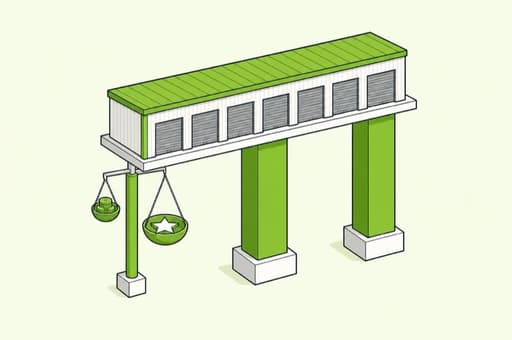
Stores held with outside investors who put up most of the cash while Extra Space runs them, charges fees and keeps a small share — $15.8M of profit share in the spring 2026 quarter. This is now the company's default way of buying.
Competes with Balance-sheet store acquisitions (Public Storage) · Balance-sheet store acquisitions (CubeSmart) · Direct storage buying (Private equity and debt funds)
In plain English
Buying with partners works like going in on a rental property with a wealthy friend: they front most of the money, you do all the work and get paid for doing it. Extra Space writes the minority cheque, institutional investors write the rest, and Extra Space operates the stores.
On top of its share of the profits it collects management fees, insurance premiums and a bonus when the venture performs. The arithmetic explains the preference: partner deals came with first-year returns around 10% and settled returns near 12%, against roughly 6.5% for a store bought on its own. Those bonuses are lumpy — $74M, $1.7M and $37M across 2024 and 2025.
Blue Vista / UBS National Self-Storage Platform
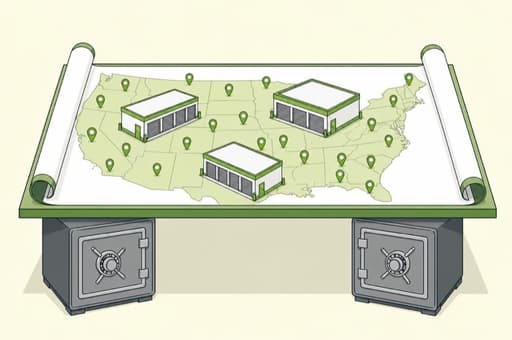
A venture announced in November 2025 with Blue Vista and the real-estate arm of UBS, carrying roughly $600M of buying power for a national portfolio: their capital, Extra Space's operations. No stake disclosed, and it has not come up on an earnings call since.
Competes with Direct store acquisitions (Public Storage) · Direct store acquisitions (CubeSmart) · Institutional storage buying vehicles (Other storage investors)
In plain English
Announced in late 2025: Blue Vista Capital Management, an investment manager, and UBS's real-estate investment business put up about $600 million of buying power to assemble storage stores across the country. Extra Space brings the operating machine — the name on the sign, the pricing system, the insurance plan.
This is the shape the company says it wants growth to take: someone else's money buys the real estate, and Extra Space earns fees, premiums and a minority share of the profits without spending much of its own cash. It is a template so far — the company has not said what it owns of it, or what has been bought.


 Wholly-Owned Storage PortfolioThe roughly 2,000 stores the company owns outright and the month-to-month rent they collect — $2,895.2M in 2025. Rent at the same stores barely moved last year, then picked up to +2.4% by the middle of 2026.
The roughly 2,000 stores the company owns outright and the month-to-month rent they collect — $2,895.2M in 2025. Rent at the same stores barely moved last year, then picked up to +2.4% by the middle of 2026.
In plain English
A storage unit is a small locked room you rent by the month, the way you'd rent a parking space — no lease, walk away when you're done. The crowd is households between homes and small businesses with stock to stash.
The money arrives a few dollars at a time across about 2.9 million units, so no single renter is worth worrying about. The quiet mechanism: move-in prices and in-place prices are different things. You pay one price on the day you sign, and customers already in place get periodic increases — which is how total rent can rise in a year when prices offered to new customers sit flat.
Competes with Owned and operated storage facilities (Public Storage) · Owned storage portfolio (CubeSmart) · Single-store storage facilities (Independent operators)
 ManagementPlusFees for running close to 2,000 stores the company does not own — $129.5M in 2025, up 7.1%, at almost no added cost. Signings slowed sharply in the first half of 2026, blamed on a managed portfolio that changed hands.
Fees for running close to 2,000 stores the company does not own — $129.5M in 2025, up 7.1%, at almost no added cost. Signings slowed sharply in the first half of 2026, blamed on a managed portfolio that changed hands.
In plain English
Owners keep their building and hand over the running of it. The Extra Space name goes up on the sign, and the store plugs into the same pricing system, call centre and website that serve the company's own stores — much like an independent hotel taking a big chain's flag.
The owner pays a slice of the store's revenue as a fee. Because one system already runs thousands of stores, adding one more costs Extra Space very little, which is why a small revenue line carries weight beyond its size. The contracts can be cancelled at will, and these owners average fewer than two stores each.
Competes with Third-party property management (CubeSmart) · Third-party facility management (Public Storage) · Self-managed stores (Independent operators)
 Digital Acquisition and Revenue-Management SystemThe in-house pricing, marketing and call-centre machinery behind all 4,400-plus stores, owned and managed alike. It has no price of its own, and management credits it for 2026's pickup in same-store revenue. Watch city rules on how prices get set.
The in-house pricing, marketing and call-centre machinery behind all 4,400-plus stores, owned and managed alike. It has no price of its own, and management credits it for 2026's pickup in same-store revenue. Watch city rules on how prices get set.
In plain English
Nobody buys this one by itself. It is the machinery that decides what a unit costs today, catches the person searching for storage at midnight, answers the phone, and — through an assistant called Boxy — handles questions about sizes, prices and availability at any hour.
It earns its keep inside the other lines: sharper pricing shows up as rent, and this same machinery is what independent owners are really paying for when they sign a management deal. The pricing works off store and market history rather than anything about the individual customer — a distinction that matters as cities write rules for pricing software. New York City began licensing storage operators in 2026, and Los Angeles County's limits on price moves came off near the middle of the year.
Competes with In-house pricing and digital platform (Public Storage) · Management platform sold to owners (CubeSmart)
 Customer Protection PlanRenting a unit requires cover, and most customers simply buy the in-house plan: $352.9M in 2025, growing 6.0% in a year when store rents were flat. It sells at managed and partner stores too, so the customer pool is far wider than the owned portfolio.
Renting a unit requires cover, and most customers simply buy the in-house plan: $352.9M in 2025, growing 6.0% in a year when store rents were flat. It sells at managed and partner stores too, so the customer pool is far wider than the owned portfolio.
In plain English
Sign for a unit and you have to show cover for whatever you put inside. Most people don't have any, so they tick the box for the store's own plan at a few dollars a month. An outside insurer writes the policy; a subsidiary of Extra Space takes on the risk of loss and keeps the premium.
Tiny money per customer, serious money together: in the April-to-June quarter of 2026, $93.1M of premiums came in against $17.3M of costs. It grows with the number of renters and how many of them say yes — not with the price of storage. Public Storage runs the identical arrangement, and its version of this line grew faster last year.
Competes with Tenant reinsurance (Public Storage) · Tenant insurance programme (CubeSmart) · Renters and homeowners policies (Outside insurers)
 Bridge Loan ProgramShort-term loans to storage owners who hand over the running of their store at the same time. The book sat near $1.5 billion through mid-2026 and threw off $38.8M of interest in the spring quarter. Management calls that size right rather than a target.
Short-term loans to storage owners who hand over the running of their store at the same time. The book sat near $1.5 billion through mid-2026 and threw off $38.8M of interest in the spring quarter. Management calls that size right rather than a target.
In plain English
Some owners need cash but will not sell, so Extra Space lends it to them — a short loan against a working storage building, whatever its occupancy. Part of the bargain is that Extra Space starts running the store, which brings the insurance plan along with it.
Three ways to win, then: interest on the loan, fees on the store, and a first look when the owner does eventually sell. By late 2025 the company had bought 22% by dollar volume of the buildings it had lent against. The programme started in 2019 and is now being held flat rather than grown.
Competes with Short-term property loans (Regional banks) · Commercial property debt funds (Private debt funds) · Preferred equity and venture recapitalisations (Institutional investors)
 Partner-Owned Store VenturesStores held with outside investors who put up most of the cash while Extra Space runs them, charges fees and keeps a small share — $15.8M of profit share in the spring 2026 quarter. This is now the company's default way of buying.
Stores held with outside investors who put up most of the cash while Extra Space runs them, charges fees and keeps a small share — $15.8M of profit share in the spring 2026 quarter. This is now the company's default way of buying.
In plain English
Buying with partners works like going in on a rental property with a wealthy friend: they front most of the money, you do all the work and get paid for doing it. Extra Space writes the minority cheque, institutional investors write the rest, and Extra Space operates the stores.
On top of its share of the profits it collects management fees, insurance premiums and a bonus when the venture performs. The arithmetic explains the preference: partner deals came with first-year returns around 10% and settled returns near 12%, against roughly 6.5% for a store bought on its own. Those bonuses are lumpy — $74M, $1.7M and $37M across 2024 and 2025.
Competes with Balance-sheet store acquisitions (Public Storage) · Balance-sheet store acquisitions (CubeSmart) · Direct storage buying (Private equity and debt funds)
 Blue Vista / UBS National Self-Storage PlatformA venture announced in November 2025 with Blue Vista and the real-estate arm of UBS, carrying roughly $600M of buying power for a national portfolio: their capital, Extra Space's operations. No stake disclosed, and it has not come up on an earnings call since.
A venture announced in November 2025 with Blue Vista and the real-estate arm of UBS, carrying roughly $600M of buying power for a national portfolio: their capital, Extra Space's operations. No stake disclosed, and it has not come up on an earnings call since.
In plain English
Announced in late 2025: Blue Vista Capital Management, an investment manager, and UBS's real-estate investment business put up about $600 million of buying power to assemble storage stores across the country. Extra Space brings the operating machine — the name on the sign, the pricing system, the insurance plan.
This is the shape the company says it wants growth to take: someone else's money buys the real estate, and Extra Space earns fees, premiums and a minority share of the profits without spending much of its own cash. It is a template so far — the company has not said what it owns of it, or what has been bought.
Competes with Direct store acquisitions (Public Storage) · Direct store acquisitions (CubeSmart) · Institutional storage buying vehicles (Other storage investors)
Named in filings, launches and programs
- Existing-customer rate increasesCustomer programThe programme that lifts rent for customers already in place; about 16% of those who get a notice are given relief and stay.
- Store acquisitionsService$483.6 million bought 41 consolidated stores in 2025; the 2026 plan is $300 million, mostly routed through partner ventures rather than owned outright.
- Partner buyoutsServiceWhen a capital partner wants out, Extra Space buys the stores: 27 properties for $326 million in the middle of 2025.
- Senior loan salesServiceExtra Space sells the safest slice of its bridge loans to other lenders and holds on to the riskier remainder itself.
- Remote storesProduct lineNine wholly-owned stores run without staff on site; management reported returns similar to conventionally built stores.
- BoxyProductThe company's assistant on the rental site, answering questions about unit sizes, prices and availability around the clock.
- Business Self StorageServiceThe version of the storage offering aimed at business customers rather than households.
- Development pipelineProduct · AnnouncedSmall and slow: three new builds approved at an 8.6% expected return as of late 2024, against a portfolio of thousands of stores.
- Unsecured notes and commercial paperServiceHow the build-out is funded: $550 million of 4.900% notes due 2032 priced in June 2026, with roughly $2 billion of credit line still available.
Existing-customer rate increasesCustomer program
The programme that lifts rent for customers already in place; about 16% of those who get a notice are given relief and stay.
Store acquisitionsService
$483.6 million bought 41 consolidated stores in 2025; the 2026 plan is $300 million, mostly routed through partner ventures rather than owned outright.
Partner buyoutsService
When a capital partner wants out, Extra Space buys the stores: 27 properties for $326 million in the middle of 2025.
Senior loan salesService
Extra Space sells the safest slice of its bridge loans to other lenders and holds on to the riskier remainder itself.
Remote storesProduct line
Nine wholly-owned stores run without staff on site; management reported returns similar to conventionally built stores.
BoxyProduct
The company's assistant on the rental site, answering questions about unit sizes, prices and availability around the clock.
Business Self StorageService
The version of the storage offering aimed at business customers rather than households.
Development pipelineProduct · Announced
Small and slow: three new builds approved at an 8.6% expected return as of late 2024, against a portfolio of thousands of stores.
Unsecured notes and commercial paperService
How the build-out is funded: $550 million of 4.900% notes due 2032 priced in June 2026, with roughly $2 billion of credit line still available.