
Flex (FLEX)
Designs, manufactures, and manages products, supply chains, and data-center infrastructure.
Something off on this page? Send us feedback.
Flex builds other companies' hardware — someone else's brand on the box, someone else's design, Flex's factories and workers. The oldest parts of that book, consumer gear and car electronics, are flat or shrinking by choice. The newest part — electrical gear and liquid cooling for AI data centers — is growing fast, and Flex plans to cut it loose next year as a separate listed company called Axiom.
Item facts: FY2026 · year ended March 31, 2026, from filings, earnings calls and company pages.
Judgment weights, not filed revenue
The band summarizes business focus and direction. ~ marks estimates.
8 in detail · 16 more below
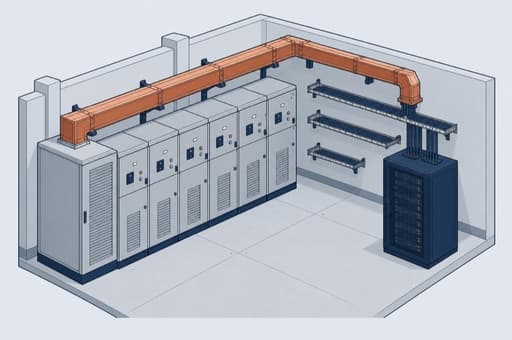
Power (grid to chip)
Switchgear, overhead busway and power shelves that carry current from the utility line all the way to the chip — roughly a seventh of sales, and the fastest-moving piece of Flex. Watch whether the new factory space fills as fast as it opens.
Competes with Data-center busway and switchgear (Schneider Electric) · Power distribution equipment (Eaton) · Data-center power systems (Vertiv)
In plain English
A big data center drinks electricity like a small town, and that current has to be stepped down, split up and steered safely from the utility line to the chip on the board. Flex makes the metal in between: switchgear cabinets, the overhead bars that run current down a row of machines, and the flat trays of power parts that slide into a server rack.
The companies filling those halls — and the utilities feeding them — buy this gear building by building, then buy again as each site grows. Flex has been adding factory space in South Carolina, Poland, Mexico and the UK to keep up.
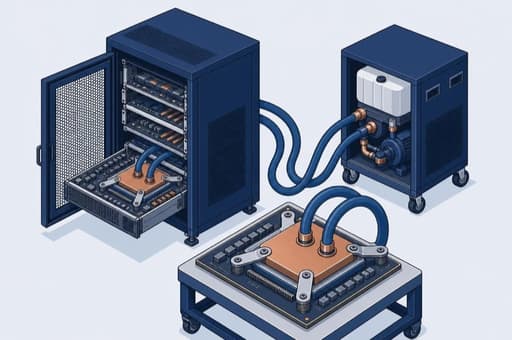
Cloud and Cooling
Bolting AI computers into finished racks and cooling them with liquid instead of air — about a tenth of sales, growing from a small base and more slowly than the power half. The cost of ramping it up weighed on margins last year.
Competes with Liquid cooling and thermal systems (Vertiv) · Motivair cold plates and cooling units (Schneider Electric) · Cold plates and cooling units (CoolIT Systems)
In plain English
The chips in an AI server now run hot enough that a fan cannot keep up, the way waving at a kettle will not cool it. So the heat is carried off by liquid running through flat plates pressed onto the chip, then out to a pumping cabinet at the end of the row.
Flex makes those plates and cabinets under the JetCool name, and does the heavier job above them too: taking racks of compute hardware, wiring, testing and shipping them ready to switch on. Customers pay per rack and per plate. Cerebras, whose AI machines Flex builds and checks as complete racks, is one of the named ones.
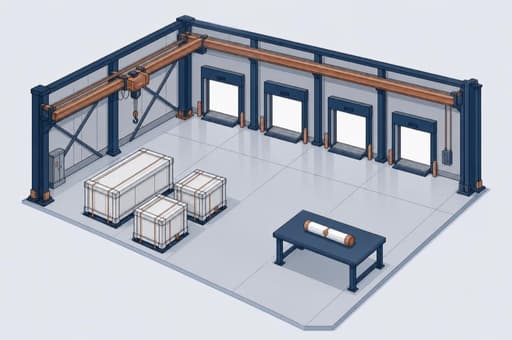
Hyperscaler Multiyear Programs
The multiyear awards behind the growth. Google is the only customer Flex has named; Amazon, NVIDIA and Cerebras work sits alongside it. No order book is published, so the tell is the guide — this business is told to grow 65–75% this year.
Competes with Hardware Platform Solutions (Celestica) · Intelligent Infrastructure (Jabil) · Data-center power and thermal content (Schneider Electric)
In plain English
Not a product — a stack of promises. A company planning to fill new computing halls picks its manufacturers years ahead and locks in who will build the power gear and the racks. Flex has disclosed one of those partners by name: Google, on a multiyear contract.
Because nothing is published about what is owed, the visible sign is money going out before it comes in. Flex plans to spend $1.5–1.6B on plant and equipment this year against $633M last year. Amazon has a separate arrangement letting it buy Flex shares at a set price as its purchases build up.
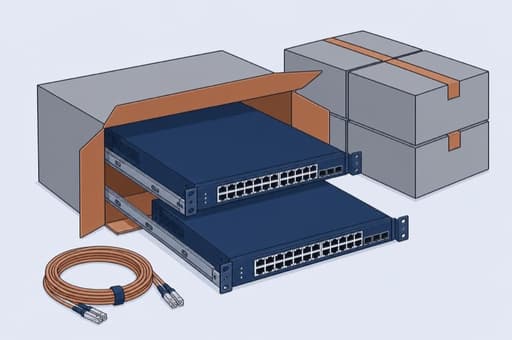
Communications
Networking boxes, enterprise hardware and satellite communications gear built under other companies' labels — roughly a fifth of sales and the growing half of Flex's older business. It now rises with AI data-center networks, not phone-company spending.
Competes with Connectivity & Cloud Solutions (Celestica) · Communications-infrastructure programs (Sanmina) · Communications hardware programs (Benchmark Electronics)
In plain English
Every rack of computers has to talk to every other rack, and that traffic runs through switches: metal boxes stuffed with ports and optical parts. The companies whose names are on those boxes mostly do not own factories. Flex does.
It takes the design, buys the components, builds at volume and ships, earning a thin slice on each unit. Increasingly the buyers are the data-center operators themselves, ordering network gear directly rather than through an equipment brand. That shift is why this part grew while the consumer work shrank — management called it exceptional growth in communications.
Industrial
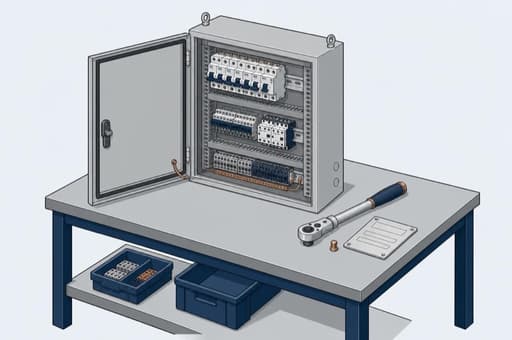
Automation, energy and grid hardware built to strict, long-life specifications — about a sixth of sales and the steadiest grower of the older book. No single customer is more than a tenth of Flex's sales; the ten biggest together are 45%.
Competes with Regulated Industries (Jabil) · Industrial programs (Plexus) · Advanced Technology Solutions (Celestica)
In plain English
Picture the machines that never appear in a shop window: control cabinets beside a factory line, the boxes hung on a power grid, the electronics inside heavy equipment. They are built in modest numbers, to exacting rules, and they stay in service for a decade or more.
Flex builds them for the companies that sell them. Money comes in slowly and then keeps coming: once a design is running to spec, customers rarely move it. The same grid and energy spending that feeds Flex's data-center work feeds this line too, which is why management points here first when explaining the segment's growth.
Automotive
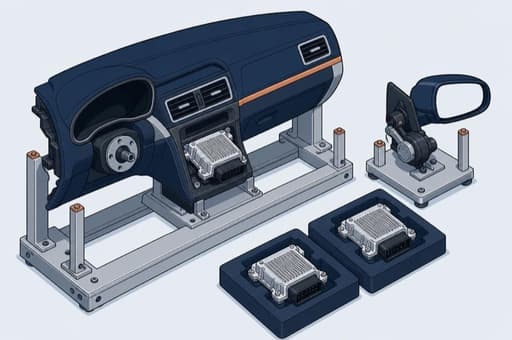
Computing and power-electronics modules for carmakers — the smallest of Flex's seven businesses, roughly seven cents of every sales dollar. Management expects it to steady rather than grow this year; its contribution is margin, not volume.
Competes with Automotive & Transportation (Jabil) · Automotive electronics assembly (Celestica) · Automotive electronics programs (Sanmina)
In plain English
Cars have turned into computers with wheels, and somebody has to build the boxes that do the thinking — driver-assistance computers, converters that step battery voltage down for the rest of the vehicle. Flex builds them for vehicle makers and their large suppliers.
Pay follows the platform. Win a slot on a vehicle programme and you build parts for years; lose it and the line goes quiet. Flex says it wins on the computing platforms themselves rather than betting on any one model — which matters, because model timing here is volatile. The unit earns its keep by lifting margins, not by getting bigger.
Lifestyle
Premium consumer, home and personal products made for other brands — still around a sixth of sales, and shrinking on purpose. Flex describes it as a deliberate step back from low-value work rather than a soft patch.
Competes with Connected Living & Digital Commerce (Jabil) · Consumer and commercial programs (Plexus) · Shorter-lifecycle consumer programs (Celestica)
In plain English
The part Flex is choosing to have less of. These are the branded everyday objects — home and personal products, premium consumer gear — assembled in huge volume for whoever's logo goes on the outside. It is the oldest kind of work in the company and the lowest paid: many units, very little earned on each.
So Flex has been letting the cheapest programmes go. Its workforce fell from about 172,000 three years before FY2026 to roughly 150,000, and the wider unit's profitability improved even as its sales slipped.
Health Solutions
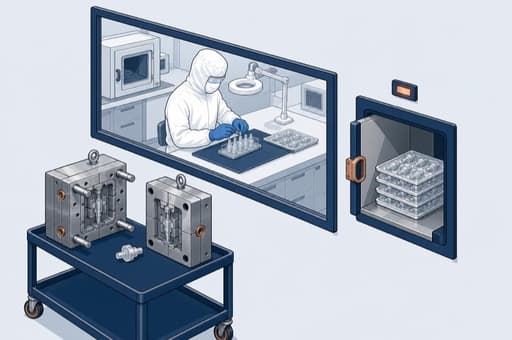
Making medical devices, drug-delivery products and medical equipment for the companies that design them — roughly an eighth of sales. Slow to win and slow to lose, because regulators must sign off on any change to how a product is made.
Competes with Healthcare manufacturing (Jabil) · Healthcare & Life Sciences (Plexus) · Medical-device programs (Benchmark Electronics)
In plain English
Somebody has to actually build the device a medical brand designs — the injector, the monitor, the machine in the clinic — and often that somebody is a contractor. Flex is one: clean-room factories, parts traceable back to their source, and its own design shops. It owns FARM, which designs medical devices and diagnostic equipment, plus two toolmakers that cut the ultra-precise moulds behind plastic medical parts.
Approval to build a medical product takes years, so the money arrives late and then stays a long time. The design work is the hook: help draw the device and you usually get to build it.


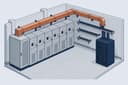 Power (grid to chip)Switchgear, overhead busway and power shelves that carry current from the utility line all the way to the chip — roughly a seventh of sales, and the fastest-moving piece of Flex. Watch whether the new factory space fills as fast as it opens.
Switchgear, overhead busway and power shelves that carry current from the utility line all the way to the chip — roughly a seventh of sales, and the fastest-moving piece of Flex. Watch whether the new factory space fills as fast as it opens.
In plain English
A big data center drinks electricity like a small town, and that current has to be stepped down, split up and steered safely from the utility line to the chip on the board. Flex makes the metal in between: switchgear cabinets, the overhead bars that run current down a row of machines, and the flat trays of power parts that slide into a server rack.
The companies filling those halls — and the utilities feeding them — buy this gear building by building, then buy again as each site grows. Flex has been adding factory space in South Carolina, Poland, Mexico and the UK to keep up.
Competes with Data-center busway and switchgear (Schneider Electric) · Power distribution equipment (Eaton) · Data-center power systems (Vertiv)
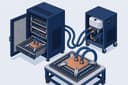 Cloud and CoolingBolting AI computers into finished racks and cooling them with liquid instead of air — about a tenth of sales, growing from a small base and more slowly than the power half. The cost of ramping it up weighed on margins last year.
Bolting AI computers into finished racks and cooling them with liquid instead of air — about a tenth of sales, growing from a small base and more slowly than the power half. The cost of ramping it up weighed on margins last year.
In plain English
The chips in an AI server now run hot enough that a fan cannot keep up, the way waving at a kettle will not cool it. So the heat is carried off by liquid running through flat plates pressed onto the chip, then out to a pumping cabinet at the end of the row.
Flex makes those plates and cabinets under the JetCool name, and does the heavier job above them too: taking racks of compute hardware, wiring, testing and shipping them ready to switch on. Customers pay per rack and per plate. Cerebras, whose AI machines Flex builds and checks as complete racks, is one of the named ones.
Competes with Liquid cooling and thermal systems (Vertiv) · Motivair cold plates and cooling units (Schneider Electric) · Cold plates and cooling units (CoolIT Systems)
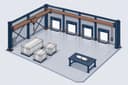 Hyperscaler Multiyear ProgramsThe multiyear awards behind the growth. Google is the only customer Flex has named; Amazon, NVIDIA and Cerebras work sits alongside it. No order book is published, so the tell is the guide — this business is told to grow 65–75% this year.
The multiyear awards behind the growth. Google is the only customer Flex has named; Amazon, NVIDIA and Cerebras work sits alongside it. No order book is published, so the tell is the guide — this business is told to grow 65–75% this year.
In plain English
Not a product — a stack of promises. A company planning to fill new computing halls picks its manufacturers years ahead and locks in who will build the power gear and the racks. Flex has disclosed one of those partners by name: Google, on a multiyear contract.
Because nothing is published about what is owed, the visible sign is money going out before it comes in. Flex plans to spend $1.5–1.6B on plant and equipment this year against $633M last year. Amazon has a separate arrangement letting it buy Flex shares at a set price as its purchases build up.
Competes with Hardware Platform Solutions (Celestica) · Intelligent Infrastructure (Jabil) · Data-center power and thermal content (Schneider Electric)
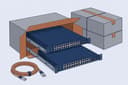 CommunicationsNetworking boxes, enterprise hardware and satellite communications gear built under other companies' labels — roughly a fifth of sales and the growing half of Flex's older business. It now rises with AI data-center networks, not phone-company spending.
Networking boxes, enterprise hardware and satellite communications gear built under other companies' labels — roughly a fifth of sales and the growing half of Flex's older business. It now rises with AI data-center networks, not phone-company spending.
In plain English
Every rack of computers has to talk to every other rack, and that traffic runs through switches: metal boxes stuffed with ports and optical parts. The companies whose names are on those boxes mostly do not own factories. Flex does.
It takes the design, buys the components, builds at volume and ships, earning a thin slice on each unit. Increasingly the buyers are the data-center operators themselves, ordering network gear directly rather than through an equipment brand. That shift is why this part grew while the consumer work shrank — management called it exceptional growth in communications.
Competes with Connectivity & Cloud Solutions (Celestica) · Communications-infrastructure programs (Sanmina) · Communications hardware programs (Benchmark Electronics)
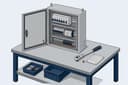 IndustrialAutomation, energy and grid hardware built to strict, long-life specifications — about a sixth of sales and the steadiest grower of the older book. No single customer is more than a tenth of Flex's sales; the ten biggest together are 45%.
Automation, energy and grid hardware built to strict, long-life specifications — about a sixth of sales and the steadiest grower of the older book. No single customer is more than a tenth of Flex's sales; the ten biggest together are 45%.
In plain English
Picture the machines that never appear in a shop window: control cabinets beside a factory line, the boxes hung on a power grid, the electronics inside heavy equipment. They are built in modest numbers, to exacting rules, and they stay in service for a decade or more.
Flex builds them for the companies that sell them. Money comes in slowly and then keeps coming: once a design is running to spec, customers rarely move it. The same grid and energy spending that feeds Flex's data-center work feeds this line too, which is why management points here first when explaining the segment's growth.
Competes with Regulated Industries (Jabil) · Industrial programs (Plexus) · Advanced Technology Solutions (Celestica)
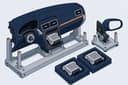 AutomotiveComputing and power-electronics modules for carmakers — the smallest of Flex's seven businesses, roughly seven cents of every sales dollar. Management expects it to steady rather than grow this year; its contribution is margin, not volume.
Computing and power-electronics modules for carmakers — the smallest of Flex's seven businesses, roughly seven cents of every sales dollar. Management expects it to steady rather than grow this year; its contribution is margin, not volume.
In plain English
Cars have turned into computers with wheels, and somebody has to build the boxes that do the thinking — driver-assistance computers, converters that step battery voltage down for the rest of the vehicle. Flex builds them for vehicle makers and their large suppliers.
Pay follows the platform. Win a slot on a vehicle programme and you build parts for years; lose it and the line goes quiet. Flex says it wins on the computing platforms themselves rather than betting on any one model — which matters, because model timing here is volatile. The unit earns its keep by lifting margins, not by getting bigger.
Competes with Automotive & Transportation (Jabil) · Automotive electronics assembly (Celestica) · Automotive electronics programs (Sanmina)
 LifestylePremium consumer, home and personal products made for other brands — still around a sixth of sales, and shrinking on purpose. Flex describes it as a deliberate step back from low-value work rather than a soft patch.
Premium consumer, home and personal products made for other brands — still around a sixth of sales, and shrinking on purpose. Flex describes it as a deliberate step back from low-value work rather than a soft patch.
In plain English
The part Flex is choosing to have less of. These are the branded everyday objects — home and personal products, premium consumer gear — assembled in huge volume for whoever's logo goes on the outside. It is the oldest kind of work in the company and the lowest paid: many units, very little earned on each.
So Flex has been letting the cheapest programmes go. Its workforce fell from about 172,000 three years before FY2026 to roughly 150,000, and the wider unit's profitability improved even as its sales slipped.
Competes with Connected Living & Digital Commerce (Jabil) · Consumer and commercial programs (Plexus) · Shorter-lifecycle consumer programs (Celestica)
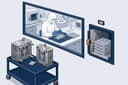 Health SolutionsMaking medical devices, drug-delivery products and medical equipment for the companies that design them — roughly an eighth of sales. Slow to win and slow to lose, because regulators must sign off on any change to how a product is made.
Making medical devices, drug-delivery products and medical equipment for the companies that design them — roughly an eighth of sales. Slow to win and slow to lose, because regulators must sign off on any change to how a product is made.
In plain English
Somebody has to actually build the device a medical brand designs — the injector, the monitor, the machine in the clinic — and often that somebody is a contractor. Flex is one: clean-room factories, parts traceable back to their source, and its own design shops. It owns FARM, which designs medical devices and diagnostic equipment, plus two toolmakers that cut the ultra-precise moulds behind plastic medical parts.
Approval to build a medical product takes years, so the money arrives late and then stays a long time. The design work is the hook: help draw the device and you usually get to build it.
Competes with Healthcare manufacturing (Jabil) · Healthcare & Life Sciences (Plexus) · Medical-device programs (Benchmark Electronics)
Named in filings, launches and programs
- Axiom Solutions InternationalBrand · AnnouncedThe name for the data-center power and cooling business once it is cut loose as its own Nasdaq-listed company, planned for early 2027.
- EPC PowerBrand · AnnouncedPower-conversion maker Flex agreed to buy for $4.4B in September 2026; about $800M of 2026 sales, landing in the data-center business before the separation.
- Anord MardixBrandFlex's critical-power name: switchgear, busway and power distribution built for data centers.
- Crown Technical SystemsBrandControl panels, medium-voltage switchgear and enclosures — the acquisition that added heavier electrical gear to Flex's data-center power range.
- Electrical Power Products (EP²)BrandUtility-grade control and protection equipment, sold into the same data-center and grid projects.
- JetCoolBrandThe liquid-cooling line: plates that sit on the chip, pumping cabinets, in-rack plumbing and quick-release couplings.
- Flex Power ModulesProduct lineBoard-mounted converters that step voltage down right beside the chip — the smallest end of the grid-to-chip range.
- CoreworksBrandFlex's own passive components, antennas and interconnect, supplied into its other factories.
- MCiBrandMakes side-view mirror actuators for carmakers — a small mechanical corner of the automotive book.
- FARMBrandDesign house for medical devices and diagnostics; its projects pull manufacturing work in behind them.
- IrumoldBrandUltra-precise multi-cavity moulds for medical and pharmaceutical parts, used inside Flex's own plants.
- Sønderborg VærktøjsfabrikBrandPrecision injection tooling and moulds, including for medical dosing equipment.
- 800 VDC Power RackProductLaunched March 2026 with NVIDIA for its Vera Rubin systems — a higher-voltage way of feeding a rack.
- GB300 NVL72 power shelfProductThe tray of power parts that slides into NVIDIA's GB300 rack, shown in August 2025.
- AI infrastructure platformPlatformIntroduced February 2026: power, cooling, computing and services sold as one modular package rather than separate pieces.
- Field servicesServiceInstallation, maintenance, training and upgrades for the power equipment Flex has already shipped.
Axiom Solutions InternationalBrand · Announced
The name for the data-center power and cooling business once it is cut loose as its own Nasdaq-listed company, planned for early 2027.
EPC PowerBrand · Announced
Power-conversion maker Flex agreed to buy for $4.4B in September 2026; about $800M of 2026 sales, landing in the data-center business before the separation.
Anord MardixBrand
Flex's critical-power name: switchgear, busway and power distribution built for data centers.
Crown Technical SystemsBrand
Control panels, medium-voltage switchgear and enclosures — the acquisition that added heavier electrical gear to Flex's data-center power range.
Electrical Power Products (EP²)Brand
Utility-grade control and protection equipment, sold into the same data-center and grid projects.
JetCoolBrand
The liquid-cooling line: plates that sit on the chip, pumping cabinets, in-rack plumbing and quick-release couplings.
Flex Power ModulesProduct line
Board-mounted converters that step voltage down right beside the chip — the smallest end of the grid-to-chip range.
CoreworksBrand
Flex's own passive components, antennas and interconnect, supplied into its other factories.
MCiBrand
Makes side-view mirror actuators for carmakers — a small mechanical corner of the automotive book.
FARMBrand
Design house for medical devices and diagnostics; its projects pull manufacturing work in behind them.
IrumoldBrand
Ultra-precise multi-cavity moulds for medical and pharmaceutical parts, used inside Flex's own plants.
Sønderborg VærktøjsfabrikBrand
Precision injection tooling and moulds, including for medical dosing equipment.
800 VDC Power RackProduct
Launched March 2026 with NVIDIA for its Vera Rubin systems — a higher-voltage way of feeding a rack.
GB300 NVL72 power shelfProduct
The tray of power parts that slides into NVIDIA's GB300 rack, shown in August 2025.
AI infrastructure platformPlatform
Introduced February 2026: power, cooling, computing and services sold as one modular package rather than separate pieces.
Field servicesService
Installation, maintenance, training and upgrades for the power equipment Flex has already shipped.