
First Solar (FSLR)
Builds cadmium-telluride thin-film solar modules for utility-scale power projects.
Something off on this page? Send us feedback.
First Solar makes one thing: dark thin-film solar panels built without silicon, sold mostly to American power developers years before they are delivered. Selling them barely turns a profit on its own — federal credits for building panels on American soil supply most of the earnings, so where a panel is made matters as much as who buys it. The order book has been shrinking for over a year.
Item facts: FY2025 · year ended Dec 31, 2025, from filings, earnings calls and company pages.
Judgment weights, not filed revenue
The band summarizes business focus and direction. ~ marks estimates.
8 in detail · 8 more below
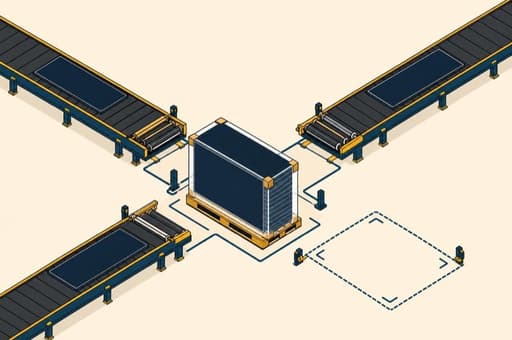
Series 7 panels
The main event: the big American-built panel, roughly sixty percent of last year's $5.22B of sales and the only one earning the federal manufacturing credit. Watch U.S. output, guided to 13.0–13.3 GW this year.
Competes with Cartersville modules (Qcells) · Ohio modules (Illuminate USA) · Rockdale cells and modules (T1 Energy)
In plain English
A solar panel is a sheet of glass that turns sunlight into electricity. First Solar's is made a different way from almost everyone else's: instead of slicing silicon wafers and wiring them together, it coats one large pane of glass with a thin layer of a compound called cadmium telluride. No silicon, no wafers, no silver.
The plants in Ohio, Alabama and Louisiana build these. They are the only ones earning the federal credit for making panels in the country, and the only ones meeting the strictest made-in-America clauses customers write into contracts — so when there is output to allocate, these plants are filled first.
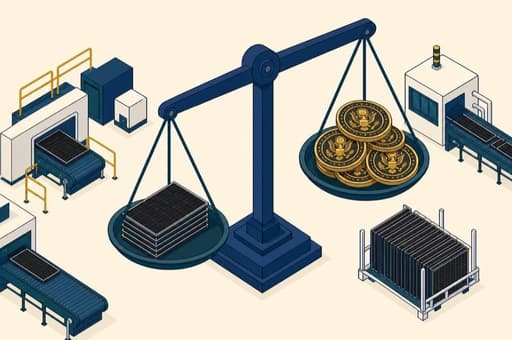
Section 45X manufacturing credits
Federal credits for panels built in the United States: $1.6B last year, guided at $2.1–2.19B this year, worth about sixteen cents on a watt that sells near thirty-one. Watch the credit rules, still not finalised.
Competes with Integrated ingot-to-module credits (Qcells) · Assembly-only credit claims (Illuminate USA)
In plain English
Think of it as a rebate Washington pays for every watt of panel made inside the country. It never shows up as a sale; it lands further down, cutting what the panels cost to build, which is where the profit appears.
The size of it is the point. Stripped of the credit, the panel business is guided to run on about a seven-cent margin per dollar of sales this year; with it, close to half. First Solar can turn the credits into cash two ways — selling them to other companies at a small discount, or claiming the money straight back from the government.
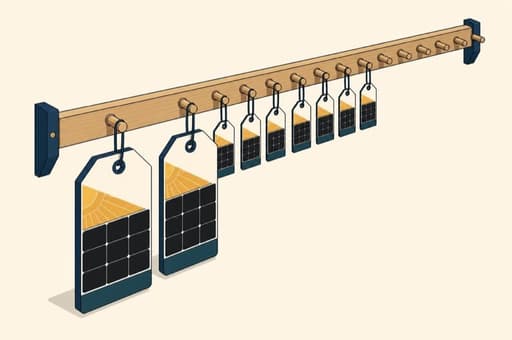
Contracted order book
Measured at mid-2026: 45.1 GW and $13.6B of contracts running to 2030, about forty-one of those gigawatts on made-in-America terms, down five quarters straight. Watch new bookings — recent U.S. deals price near $0.36 a watt.
Competes with Long-term U.S. supply deals (Qcells) · Import supply contracts (JinkoSolar) · Import supply contracts (Trina Solar)
In plain English
Every panel is spoken for long before it exists. Developers sign multi-year deals at a fixed price per watt with deliveries scheduled out to 2030, so the order book is really the company's forward calendar.
It has been shrinking for five quarters running — from about $20.5B at the end of 2024 to $13.6B — because new signings have been coming in below what the factories ship out, and buyers affiliated with BP walked away from roughly $1.9B of contracts, which First Solar is suing over. Two customers, Silicon Ranch and NextEra Energy, each took more than a tenth of last year's panel sales.
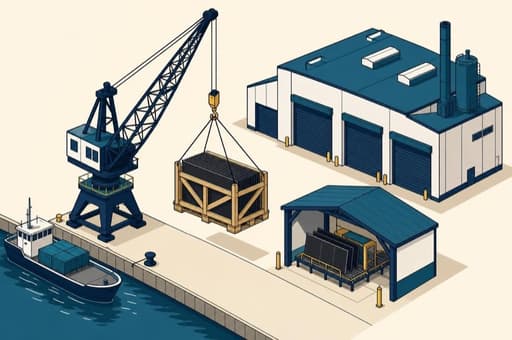
Series 6 Plus and the South Carolina line
The overseas fleet, roughly thirty percent of last year's sales and heading toward high single digits. Its plants now feed a U.S. finishing line; the leftover capacity sits idle at about $30M a quarter.
Competes with Imported silicon panels (JinkoSolar) · Imported silicon panels (Trina Solar) · Minnesota assembly line (Heliene)
In plain English
The older, slightly smaller panel, built in Malaysia and Vietnam. Import taxes made shipping the finished article into the United States uneconomic, so the work was cut in half: those plants now make semi-finished glass plates and send them to a new line in South Carolina, which does the last steps on American soil and picks up the freight, tariff and made-in-America benefits that come with finishing there.
Roughly a third of the overseas capacity has no job at all right now and sits idle, costing about $30M every quarter. Whether it restarts depends on how the new floor under imported panel prices plays out.
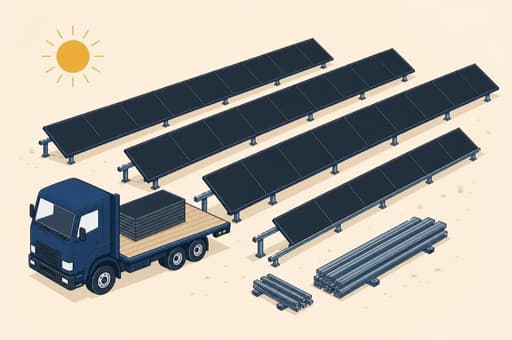
India operations
A 3.2 GW plant in Tamil Nadu selling into India's own market since mid-2025: $195.6M last year, but roughly $200M in the first quarter of this year alone. Watch whether local-content rules hold.
Competes with ALMM-listed panels (Waaree) · Mundra panels (Adani Solar) · ALMM-listed panels (Tata Power Solar)
In plain English
Same technology, a different customer. First Solar built a plant in Tamil Nadu, India, that makes panels start to finish. The output was meant for export to the United States; when U.S. taxes on Indian goods rose, it was turned around and sold to Indian buyers instead.
Indian buyers pay about a third less per watt than American ones. What makes it work anyway: Indian rules favour companies that manufacture locally, orders there convert within roughly a year rather than over several, and a busy factory spreads its fixed costs instead of carrying them as waste. The finance chief says the margin as a percentage is not much different.
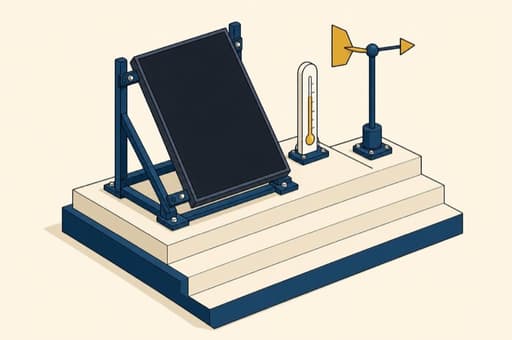
CuRe upgrade and price step-ups
A recipe change that raises the price on panels already under contract: about 23.2 GW of the order book carries clauses worth up to $600M, mostly landing 2027–2028. Watch the rollout across the factories.
Competes with TOPCon panels (JinkoSolar) · TOPCon panels (Qcells) · Perovskite-on-silicon tandem panels (Oxford PV)
In plain English
Panels fade a little every year and give up some output on hot days. CuRe changes the recipe of the coating to soften both, and to let the back of the panel use more of the light that bounces up off the ground. The launch is finished at the Perrysburg plant and it reaches the rest of the factories through the first half of 2028.
Here is the commercial half. Around 23.2 GW of signed contracts include clauses that lift the price if First Solar hits the technology milestones before delivery — up to $600M of extra money on panels already sold, most of it arriving in 2027 and 2028.
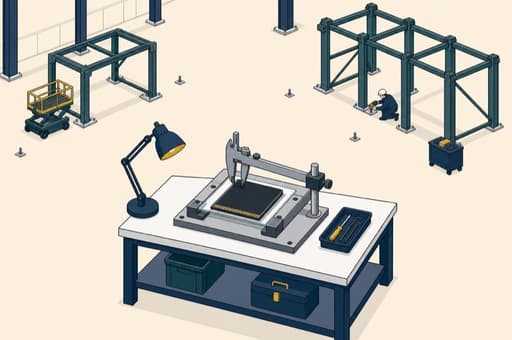
Perovskite panels in development
The silicon-free next generation, with nothing to sell yet: about $100M of this year's research budget and a full-size pilot line of up to 1 GW targeted to be ready in the first half of 2027.
Competes with Tandem panels (Oxford PV) · Tandem cells (Qcells) · Record tandem cells (LONGi)
In plain English
The bet on what comes after cadmium telluride. Perovskite is another light-absorbing material that can be coated onto glass, and most of the industry is trying to stack a perovskite layer on top of an ordinary silicon cell. First Solar is chasing the harder version, with no silicon anywhere, because sitting outside the silicon supply chain is what its whole position in Washington rests on.
Nothing is for sale. A development line in Ohio makes small test panels, a pilot line of up to a gigawatt is meant to be ready in the first half of 2027, and patents were licensed from Oxford PV, whose tandem panels are also the product to beat.
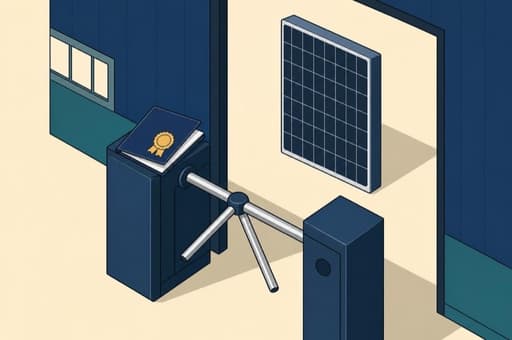
TOPCon patent licensing
Patents covering a silicon cell design First Solar does not build, licensed and litigated against the companies that do. One licensee signed so far, no earnings figure ever given, and rulings split across countries.
Competes with Patent enforcement program (Maxeon) · Patent invalidation campaign (JinkoSolar)
In plain English
The odd one out: patents on a technology the company does not make. Much of the industry builds its silicon cells to a design called TOPCon. First Solar holds patents it says cover how those cells are built, and it sends notice letters, files lawsuits and offers licences to the firms that build them — Talon PV took the first licence in early 2025.
Whether it turns into real money is unsettled. The U.S. patent office refused rivals' attempts to cancel the patents in January 2026; China's office cancelled one in May. In September the company dropped its case at the U.S. trade commission, pointing to the new import rules, and is pressing its court suits instead.


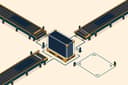 Series 7 panelsThe main event: the big American-built panel, roughly sixty percent of last year's $5.22B of sales and the only one earning the federal manufacturing credit. Watch U.S. output, guided to 13.0–13.3 GW this year.
The main event: the big American-built panel, roughly sixty percent of last year's $5.22B of sales and the only one earning the federal manufacturing credit. Watch U.S. output, guided to 13.0–13.3 GW this year.
In plain English
A solar panel is a sheet of glass that turns sunlight into electricity. First Solar's is made a different way from almost everyone else's: instead of slicing silicon wafers and wiring them together, it coats one large pane of glass with a thin layer of a compound called cadmium telluride. No silicon, no wafers, no silver.
The plants in Ohio, Alabama and Louisiana build these. They are the only ones earning the federal credit for making panels in the country, and the only ones meeting the strictest made-in-America clauses customers write into contracts — so when there is output to allocate, these plants are filled first.
Competes with Cartersville modules (Qcells) · Ohio modules (Illuminate USA) · Rockdale cells and modules (T1 Energy)
 Section 45X manufacturing creditsFederal credits for panels built in the United States: $1.6B last year, guided at $2.1–2.19B this year, worth about sixteen cents on a watt that sells near thirty-one. Watch the credit rules, still not finalised.
Federal credits for panels built in the United States: $1.6B last year, guided at $2.1–2.19B this year, worth about sixteen cents on a watt that sells near thirty-one. Watch the credit rules, still not finalised.
In plain English
Think of it as a rebate Washington pays for every watt of panel made inside the country. It never shows up as a sale; it lands further down, cutting what the panels cost to build, which is where the profit appears.
The size of it is the point. Stripped of the credit, the panel business is guided to run on about a seven-cent margin per dollar of sales this year; with it, close to half. First Solar can turn the credits into cash two ways — selling them to other companies at a small discount, or claiming the money straight back from the government.
Competes with Integrated ingot-to-module credits (Qcells) · Assembly-only credit claims (Illuminate USA)
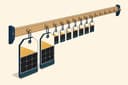 Contracted order bookMeasured at mid-2026: 45.1 GW and $13.6B of contracts running to 2030, about forty-one of those gigawatts on made-in-America terms, down five quarters straight. Watch new bookings — recent U.S. deals price near $0.36 a watt.
Measured at mid-2026: 45.1 GW and $13.6B of contracts running to 2030, about forty-one of those gigawatts on made-in-America terms, down five quarters straight. Watch new bookings — recent U.S. deals price near $0.36 a watt.
In plain English
Every panel is spoken for long before it exists. Developers sign multi-year deals at a fixed price per watt with deliveries scheduled out to 2030, so the order book is really the company's forward calendar.
It has been shrinking for five quarters running — from about $20.5B at the end of 2024 to $13.6B — because new signings have been coming in below what the factories ship out, and buyers affiliated with BP walked away from roughly $1.9B of contracts, which First Solar is suing over. Two customers, Silicon Ranch and NextEra Energy, each took more than a tenth of last year's panel sales.
Competes with Long-term U.S. supply deals (Qcells) · Import supply contracts (JinkoSolar) · Import supply contracts (Trina Solar)
 Series 6 Plus and the South Carolina lineThe overseas fleet, roughly thirty percent of last year's sales and heading toward high single digits. Its plants now feed a U.S. finishing line; the leftover capacity sits idle at about $30M a quarter.
The overseas fleet, roughly thirty percent of last year's sales and heading toward high single digits. Its plants now feed a U.S. finishing line; the leftover capacity sits idle at about $30M a quarter.
In plain English
The older, slightly smaller panel, built in Malaysia and Vietnam. Import taxes made shipping the finished article into the United States uneconomic, so the work was cut in half: those plants now make semi-finished glass plates and send them to a new line in South Carolina, which does the last steps on American soil and picks up the freight, tariff and made-in-America benefits that come with finishing there.
Roughly a third of the overseas capacity has no job at all right now and sits idle, costing about $30M every quarter. Whether it restarts depends on how the new floor under imported panel prices plays out.
Competes with Imported silicon panels (JinkoSolar) · Imported silicon panels (Trina Solar) · Minnesota assembly line (Heliene)
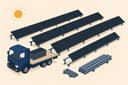 India operationsA 3.2 GW plant in Tamil Nadu selling into India's own market since mid-2025: $195.6M last year, but roughly $200M in the first quarter of this year alone. Watch whether local-content rules hold.
A 3.2 GW plant in Tamil Nadu selling into India's own market since mid-2025: $195.6M last year, but roughly $200M in the first quarter of this year alone. Watch whether local-content rules hold.
In plain English
Same technology, a different customer. First Solar built a plant in Tamil Nadu, India, that makes panels start to finish. The output was meant for export to the United States; when U.S. taxes on Indian goods rose, it was turned around and sold to Indian buyers instead.
Indian buyers pay about a third less per watt than American ones. What makes it work anyway: Indian rules favour companies that manufacture locally, orders there convert within roughly a year rather than over several, and a busy factory spreads its fixed costs instead of carrying them as waste. The finance chief says the margin as a percentage is not much different.
Competes with ALMM-listed panels (Waaree) · Mundra panels (Adani Solar) · ALMM-listed panels (Tata Power Solar)
 CuRe upgrade and price step-upsA recipe change that raises the price on panels already under contract: about 23.2 GW of the order book carries clauses worth up to $600M, mostly landing 2027–2028. Watch the rollout across the factories.
A recipe change that raises the price on panels already under contract: about 23.2 GW of the order book carries clauses worth up to $600M, mostly landing 2027–2028. Watch the rollout across the factories.
In plain English
Panels fade a little every year and give up some output on hot days. CuRe changes the recipe of the coating to soften both, and to let the back of the panel use more of the light that bounces up off the ground. The launch is finished at the Perrysburg plant and it reaches the rest of the factories through the first half of 2028.
Here is the commercial half. Around 23.2 GW of signed contracts include clauses that lift the price if First Solar hits the technology milestones before delivery — up to $600M of extra money on panels already sold, most of it arriving in 2027 and 2028.
Competes with TOPCon panels (JinkoSolar) · TOPCon panels (Qcells) · Perovskite-on-silicon tandem panels (Oxford PV)
 Perovskite panels in developmentThe silicon-free next generation, with nothing to sell yet: about $100M of this year's research budget and a full-size pilot line of up to 1 GW targeted to be ready in the first half of 2027.
The silicon-free next generation, with nothing to sell yet: about $100M of this year's research budget and a full-size pilot line of up to 1 GW targeted to be ready in the first half of 2027.
In plain English
The bet on what comes after cadmium telluride. Perovskite is another light-absorbing material that can be coated onto glass, and most of the industry is trying to stack a perovskite layer on top of an ordinary silicon cell. First Solar is chasing the harder version, with no silicon anywhere, because sitting outside the silicon supply chain is what its whole position in Washington rests on.
Nothing is for sale. A development line in Ohio makes small test panels, a pilot line of up to a gigawatt is meant to be ready in the first half of 2027, and patents were licensed from Oxford PV, whose tandem panels are also the product to beat.
Competes with Tandem panels (Oxford PV) · Tandem cells (Qcells) · Record tandem cells (LONGi)
 TOPCon patent licensingPatents covering a silicon cell design First Solar does not build, licensed and litigated against the companies that do. One licensee signed so far, no earnings figure ever given, and rulings split across countries.
Patents covering a silicon cell design First Solar does not build, licensed and litigated against the companies that do. One licensee signed so far, no earnings figure ever given, and rulings split across countries.
In plain English
The odd one out: patents on a technology the company does not make. Much of the industry builds its silicon cells to a design called TOPCon. First Solar holds patents it says cover how those cells are built, and it sends notice letters, files lawsuits and offers licences to the firms that build them — Talon PV took the first licence in early 2025.
Whether it turns into real money is unsettled. The U.S. patent office refused rivals' attempts to cancel the patents in January 2026; China's office cancelled one in May. In September the company dropped its case at the U.S. trade commission, pointing to the new import rules, and is pressing its court suits instead.
Competes with Patent enforcement program (Maxeon) · Patent invalidation campaign (JinkoSolar)
Named in filings, launches and programs
- Ohio and Alabama plantsProduct lineThe established U.S. lines, part of roughly 14 GW of American capacity; Ohio also hosts the small-format perovskite development line.
- Louisiana factory (Iberville Parish)Product line · RampingFifth U.S. plant, production started in 2025; its ramp-up costs weighed on last year's results.
- Steel River Energy CenterCustomer programCypress Creek's Arkansas project with Google, ground broken July 2026 — 1.6 GW of first phases using only First Solar panels.
- Terogen and Pattern Energy ordersCustomer programTwo recent orders, about 1.44 GW and over 1 GW, part of roughly 5 GW the chief executive named in July, half of it tied to Google.
- Credit sales and direct payCustomer programUp to $775M of 2025 credits sold to other companies at a small discount, plus a $118M cash refund received in January 2026.
- Talon PV licenceCustomer programFirst company to take a licence to First Solar's TOPCon patents, signed February 2025.
- Module recycling servicesServiceEnd-of-life panel recycling, with facilities in the United States, Germany and Malaysia.
- Series 7 warranty remediationServiceSettlements for a defect in some panels built before 2025; $50M was still set aside for it at the end of last year.
Ohio and Alabama plantsProduct line
The established U.S. lines, part of roughly 14 GW of American capacity; Ohio also hosts the small-format perovskite development line.
Louisiana factory (Iberville Parish)Product line · Ramping
Fifth U.S. plant, production started in 2025; its ramp-up costs weighed on last year's results.
Steel River Energy CenterCustomer program
Cypress Creek's Arkansas project with Google, ground broken July 2026 — 1.6 GW of first phases using only First Solar panels.
Terogen and Pattern Energy ordersCustomer program
Two recent orders, about 1.44 GW and over 1 GW, part of roughly 5 GW the chief executive named in July, half of it tied to Google.
Credit sales and direct payCustomer program
Up to $775M of 2025 credits sold to other companies at a small discount, plus a $118M cash refund received in January 2026.
Talon PV licenceCustomer program
First company to take a licence to First Solar's TOPCon patents, signed February 2025.
Module recycling servicesService
End-of-life panel recycling, with facilities in the United States, Germany and Malaysia.
Series 7 warranty remediationService
Settlements for a defect in some panels built before 2025; $50M was still set aside for it at the end of last year.