
Robinhood Markets (HOOD)
Retail financial platform spanning brokerage, crypto, derivatives, banking, and wealth management.
Something off on this page? Send us feedback.
Robinhood is a financial supermarket built around people who trade, borrow, save, and hold investments in one app. Trading still supplies most of the money, while interest on customer balances provides a steadier second engine. It is stretching into event bets, banking, managed portfolios, and its own crypto network, but its economics still depend heavily on customer activity and the firms that fill those trades.
Item facts: FY2025 · year ended Dec 31, 2025, from filings, earnings calls and company pages.
Judgment weights, not filed revenue
The band summarizes business focus and direction. ~ marks estimates.
9 in detail · 10 more below
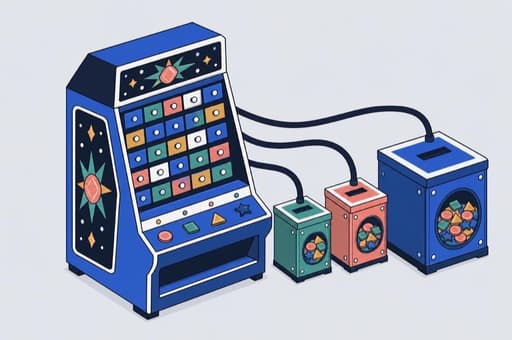
Robinhood Trading
Stocks, options, crypto, event bets and futures are Robinhood's biggest engine. Firms that fill customer orders supplied 55% of FY2025 revenue; Citadel Securities was 13% and Wintermute 6%.
Competes with Webull Options and Desktop (Webull) · Coinbase Advanced (Coinbase) · Kalshi event exchange (Kalshi)
In plain English
Every tap to buy or sell starts a small delivery job. Robinhood gathers orders for shares, price-linked contracts, crypto, future-dated trades, and yes-or-no event bets, then sends them to firms or exchanges that complete them.
The customer usually sees little or no stated trading charge. Robinhood instead collects a payment from the firm receiving the order, a fee tied to the trade, or a commission on each contract. More activity means more revenue; quiet markets mean less. That makes this the largest engine, but also the most changeable one.
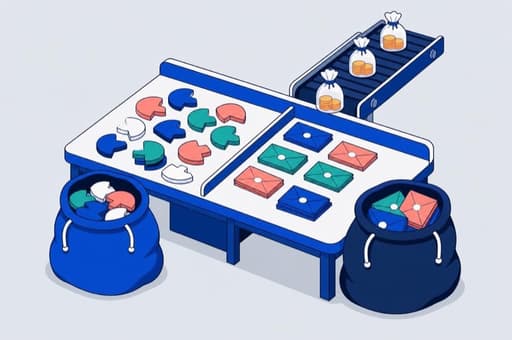
Investing and Options Trading
Self-directed stock and options trading generated $1.43 billion in FY2025, with options doing most of the work. Watch trading frequency and rules around payments from the firms that execute orders.
Competes with Webull Options and Desktop (Webull) · Trader Workstation (Interactive Brokers)
In plain English
Here is the familiar Robinhood screen: choose a company, a basket of investments, or an option—a contract whose value moves with an investment's price. Customers make their own decisions through the phone app, website, or Legend tools for active traders.
Robinhood says ordinary U.S. stock and option trades carry no stated commission. Instead, firms that stand ready to buy and sell pay Robinhood for the orders they receive; options pay by contract, while stock payments mostly depend on the gap between buying and selling prices. More contracts and dollars traded mean more income.
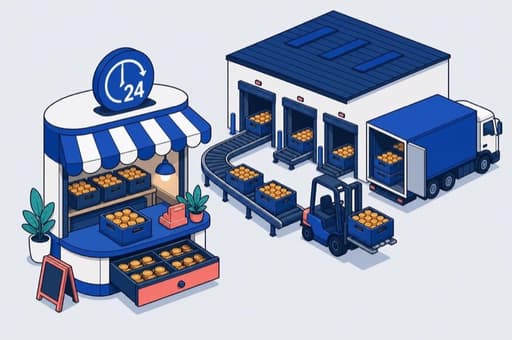
Robinhood Crypto
Crypto trading by individuals and large firms generated $901 million in FY2025; Q2 2026 revenue later fell by a quarter to $100 million. Volume and crypto prices can move this engine quickly in either direction.
Competes with Coinbase Advanced (Coinbase) · Kraken Pro (Kraken)
In plain English
Crypto is the round-the-clock counter inside Robinhood. Individuals use the app to buy and store digital currencies; large trading firms connect through Bitstamp, the exchange Robinhood bought in 2025, while WonderFi adds the Canadian Bitbuy and Coinsquare venues.
Robinhood earns a small slice of each amount traded or charges the customer a fee. Institutional trades are much larger but yield far less per dollar than retail trades, so volume alone can mislead. Outside firms help complete orders and safeguard assets, while licensing, security, market prices, and willingness to trade determine how much money this counter makes.
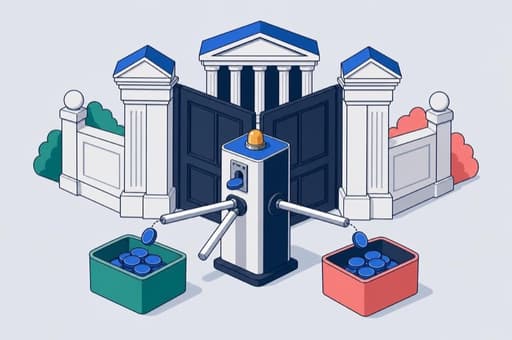
Prediction Markets
Yes-or-no contracts on real-world outcomes were only a small FY2025 contributor, then produced $156 million in Q2 2026. The watchpoint is whether federal oversight or state gambling cases decide where Robinhood can offer them.
Competes with Kalshi event exchange (Kalshi) · Polymarket U.S. prediction venue (Polymarket)
In plain English
Think of a ticket that pays if an election, sports result, or other event ends one way and pays nothing if it does not. Customers trade those yes-or-no tickets, and Robinhood earns a commission when each trade happens.
At first, outside exchange Kalshi handled the market. Rothera, Robinhood's venture with trading firm Susquehanna, began running its own federally licensed marketplace and trade-settlement operation in June 2026, letting Robinhood keep more of the machinery behind each trade. That also puts the product squarely in a live fight over whether federal trading rules or state gambling laws control it.
Robinhood Chain and Stock Tokens
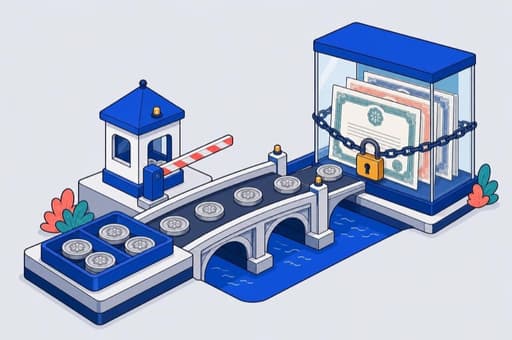
A cheaper transaction network built on Ethereum now carries stock-linked IOUs and other crypto activity. Robinhood gives about half of network transaction revenue to technology supplier Arbitrum, so the question is whether usage becomes meaningful income.
Competes with xStocks (Kraken and Backed) · Base (Coinbase)
In plain English
This is Robinhood trying to own the road, not just the storefront. Its Chain is a cheaper transaction network built on Ethereum, where outside builders can create services and users can trade through Robinhood Wallet.
Stock Tokens are IOUs whose value follows a public company's shares; they do not make the holder an owner of those shares. They are available outside the United States and can trade around the clock. Robinhood can collect network fees as activity passes through, but it shares roughly half with Arbitrum, the technology supplier, and revenue was still too small to separate.

Margin Investing, Cash Sweep, and Stock Lending
Customer cash, margin loans—money borrowed to invest—and lent shares generated about $1.45 billion in FY2025. Falling rates squeeze this engine, while bigger balances and borrowing expand it.
Competes with Margin Financing (Interactive Brokers) · Stock Yield Enhancement Program (Interactive Brokers) · Cash Features Program (Charles Schwab)
In plain English
The quiet engine sits behind the trading screen. Robinhood holds customer cash, lends some customers money against their investments, places cash with partner banks, and lends customer shares to other traders.
Each activity leaves a small difference between what Robinhood earns and what it pays out, much like a shop buying wholesale and selling retail. Those differences add up across large balances. Rates matter: a one-percentage-point move would change revenue over the following year by about $350 million in the same direction, excluding cash held through partner banks. The value of pledged investments, available funding, and rules on Robinhood's required financial cushion limit how far it can grow.
Robinhood Banking and Robinhood Gold Card
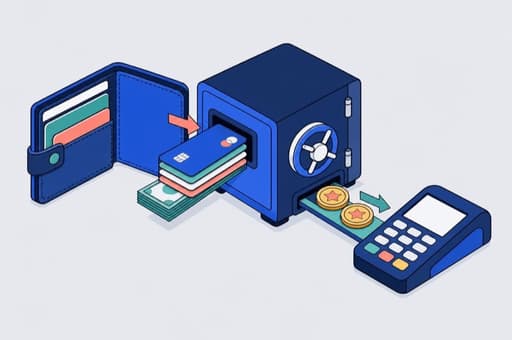
The Gold Card and new bank accounts were about 1–2% of FY2025 revenue, but the card had passed a $100 million yearly revenue pace by Q2 2026. Watch rewards, unpaid balances and partner-bank continuity.
Competes with SoFi Checking and Credit Cards (SoFi) · Cash Management and Rewards Visa (Fidelity)
In plain English
A Gold member can now keep a paycheck account and spend with a Robinhood credit card. Coastal Bank provides the checking and savings accounts; Visa carries card payments. Robinhood earns interest when cardholders keep unpaid balances and receives a slice of each purchase, then pays rewards and absorbs specified fraud and credit losses.
The simple loop is meant to deepen the relationship: membership brings deposits and spending, while banking gives customers more reasons to stay. It works only if interest and purchase fees outrun rewards, bad debts, fraud, and what the partner bank charges.
Robinhood Gold
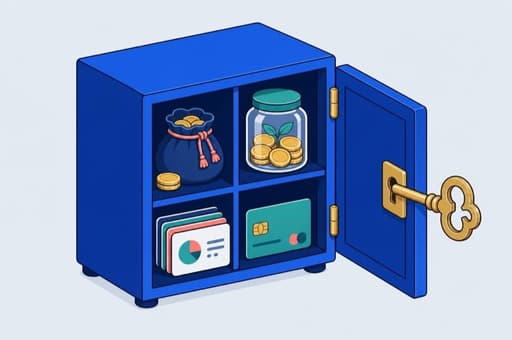
Membership fees generated $179 million in FY2025 as subscribers paid for better cash rates, a small interest-free investing loan, retirement-account matches and lower trading fees. Watch whether benefit costs grow faster than membership and the extra services members adopt.
Competes with Webull Premium (Webull) · Coinbase One Basic (Coinbase)
In plain English
Gold is the paid pass that turns Robinhood from a set of tools into a bundle. For $5 a month or $50 a year, members receive a higher return on cash, a small amount of interest-free money for investing, matches on retirement contributions, lower fees on some trades, more data, and access to newer products.
The monthly or annual fee is the direct income. The bigger purpose is to pull members toward the card, banking, managed portfolios, and other paid services, giving them more reasons to stay. The risk is simple: generous rewards and partner benefits can cost more than the membership brings in.

Robinhood Strategies
Managed portfolios held nearly $2 billion for more than 300,000 customers by Q2 2026, yet fees remained small. Growth depends on keeping that money in place and turning TradePMR's adviser network into durable service revenue.
Competes with Schwab Intelligent Portfolios (Charles Schwab) · Betterment Digital (Betterment)
In plain English
Some customers do not want to pick every investment themselves. Strategies builds a mix of stocks and funds that hold many investments at once, adjusts it over time, and can sell losing holdings to reduce taxes.
Customers pay one quarter of one percent of the money managed each year, capped at $250 for Gold members. That makes retained balances the fuel: more money staying in the portfolios means more fees. TradePMR, the adviser-support business Robinhood bought, adds custody—the recordkeeping and safekeeping of client assets—for independent advisers, but its fee contribution is not separated.


 Robinhood TradingStocks, options, crypto, event bets and futures are Robinhood's biggest engine. Firms that fill customer orders supplied 55% of FY2025 revenue; Citadel Securities was 13% and Wintermute 6%.
Stocks, options, crypto, event bets and futures are Robinhood's biggest engine. Firms that fill customer orders supplied 55% of FY2025 revenue; Citadel Securities was 13% and Wintermute 6%.
In plain English
Every tap to buy or sell starts a small delivery job. Robinhood gathers orders for shares, price-linked contracts, crypto, future-dated trades, and yes-or-no event bets, then sends them to firms or exchanges that complete them.
The customer usually sees little or no stated trading charge. Robinhood instead collects a payment from the firm receiving the order, a fee tied to the trade, or a commission on each contract. More activity means more revenue; quiet markets mean less. That makes this the largest engine, but also the most changeable one.
Competes with Webull Options and Desktop (Webull) · Coinbase Advanced (Coinbase) · Kalshi event exchange (Kalshi)
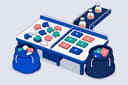 Investing and Options TradingSelf-directed stock and options trading generated $1.43 billion in FY2025, with options doing most of the work. Watch trading frequency and rules around payments from the firms that execute orders.
Self-directed stock and options trading generated $1.43 billion in FY2025, with options doing most of the work. Watch trading frequency and rules around payments from the firms that execute orders.
In plain English
Here is the familiar Robinhood screen: choose a company, a basket of investments, or an option—a contract whose value moves with an investment's price. Customers make their own decisions through the phone app, website, or Legend tools for active traders.
Robinhood says ordinary U.S. stock and option trades carry no stated commission. Instead, firms that stand ready to buy and sell pay Robinhood for the orders they receive; options pay by contract, while stock payments mostly depend on the gap between buying and selling prices. More contracts and dollars traded mean more income.
Competes with Webull Options and Desktop (Webull) · Trader Workstation (Interactive Brokers)
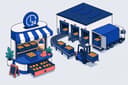 Robinhood CryptoCrypto trading by individuals and large firms generated $901 million in FY2025; Q2 2026 revenue later fell by a quarter to $100 million. Volume and crypto prices can move this engine quickly in either direction.
Crypto trading by individuals and large firms generated $901 million in FY2025; Q2 2026 revenue later fell by a quarter to $100 million. Volume and crypto prices can move this engine quickly in either direction.
In plain English
Crypto is the round-the-clock counter inside Robinhood. Individuals use the app to buy and store digital currencies; large trading firms connect through Bitstamp, the exchange Robinhood bought in 2025, while WonderFi adds the Canadian Bitbuy and Coinsquare venues.
Robinhood earns a small slice of each amount traded or charges the customer a fee. Institutional trades are much larger but yield far less per dollar than retail trades, so volume alone can mislead. Outside firms help complete orders and safeguard assets, while licensing, security, market prices, and willingness to trade determine how much money this counter makes.
Competes with Coinbase Advanced (Coinbase) · Kraken Pro (Kraken)
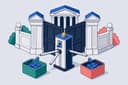 Prediction MarketsYes-or-no contracts on real-world outcomes were only a small FY2025 contributor, then produced $156 million in Q2 2026. The watchpoint is whether federal oversight or state gambling cases decide where Robinhood can offer them.
Yes-or-no contracts on real-world outcomes were only a small FY2025 contributor, then produced $156 million in Q2 2026. The watchpoint is whether federal oversight or state gambling cases decide where Robinhood can offer them.
In plain English
Think of a ticket that pays if an election, sports result, or other event ends one way and pays nothing if it does not. Customers trade those yes-or-no tickets, and Robinhood earns a commission when each trade happens.
At first, outside exchange Kalshi handled the market. Rothera, Robinhood's venture with trading firm Susquehanna, began running its own federally licensed marketplace and trade-settlement operation in June 2026, letting Robinhood keep more of the machinery behind each trade. That also puts the product squarely in a live fight over whether federal trading rules or state gambling laws control it.
Competes with Kalshi event exchange (Kalshi) · Polymarket U.S. prediction venue (Polymarket)
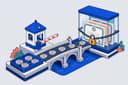 Robinhood Chain and Stock TokensA cheaper transaction network built on Ethereum now carries stock-linked IOUs and other crypto activity. Robinhood gives about half of network transaction revenue to technology supplier Arbitrum, so the question is whether usage becomes meaningful income.
A cheaper transaction network built on Ethereum now carries stock-linked IOUs and other crypto activity. Robinhood gives about half of network transaction revenue to technology supplier Arbitrum, so the question is whether usage becomes meaningful income.
In plain English
This is Robinhood trying to own the road, not just the storefront. Its Chain is a cheaper transaction network built on Ethereum, where outside builders can create services and users can trade through Robinhood Wallet.
Stock Tokens are IOUs whose value follows a public company's shares; they do not make the holder an owner of those shares. They are available outside the United States and can trade around the clock. Robinhood can collect network fees as activity passes through, but it shares roughly half with Arbitrum, the technology supplier, and revenue was still too small to separate.
Competes with xStocks (Kraken and Backed) · Base (Coinbase)
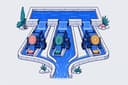 Margin Investing, Cash Sweep, and Stock LendingCustomer cash, margin loans—money borrowed to invest—and lent shares generated about $1.45 billion in FY2025. Falling rates squeeze this engine, while bigger balances and borrowing expand it.
Customer cash, margin loans—money borrowed to invest—and lent shares generated about $1.45 billion in FY2025. Falling rates squeeze this engine, while bigger balances and borrowing expand it.
In plain English
The quiet engine sits behind the trading screen. Robinhood holds customer cash, lends some customers money against their investments, places cash with partner banks, and lends customer shares to other traders.
Each activity leaves a small difference between what Robinhood earns and what it pays out, much like a shop buying wholesale and selling retail. Those differences add up across large balances. Rates matter: a one-percentage-point move would change revenue over the following year by about $350 million in the same direction, excluding cash held through partner banks. The value of pledged investments, available funding, and rules on Robinhood's required financial cushion limit how far it can grow.
Competes with Margin Financing (Interactive Brokers) · Stock Yield Enhancement Program (Interactive Brokers) · Cash Features Program (Charles Schwab)
 Robinhood Banking and Robinhood Gold CardThe Gold Card and new bank accounts were about 1–2% of FY2025 revenue, but the card had passed a $100 million yearly revenue pace by Q2 2026. Watch rewards, unpaid balances and partner-bank continuity.
The Gold Card and new bank accounts were about 1–2% of FY2025 revenue, but the card had passed a $100 million yearly revenue pace by Q2 2026. Watch rewards, unpaid balances and partner-bank continuity.
In plain English
A Gold member can now keep a paycheck account and spend with a Robinhood credit card. Coastal Bank provides the checking and savings accounts; Visa carries card payments. Robinhood earns interest when cardholders keep unpaid balances and receives a slice of each purchase, then pays rewards and absorbs specified fraud and credit losses.
The simple loop is meant to deepen the relationship: membership brings deposits and spending, while banking gives customers more reasons to stay. It works only if interest and purchase fees outrun rewards, bad debts, fraud, and what the partner bank charges.
Competes with SoFi Checking and Credit Cards (SoFi) · Cash Management and Rewards Visa (Fidelity)
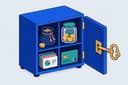 Robinhood GoldMembership fees generated $179 million in FY2025 as subscribers paid for better cash rates, a small interest-free investing loan, retirement-account matches and lower trading fees. Watch whether benefit costs grow faster than membership and the extra services members adopt.
Membership fees generated $179 million in FY2025 as subscribers paid for better cash rates, a small interest-free investing loan, retirement-account matches and lower trading fees. Watch whether benefit costs grow faster than membership and the extra services members adopt.
In plain English
Gold is the paid pass that turns Robinhood from a set of tools into a bundle. For $5 a month or $50 a year, members receive a higher return on cash, a small amount of interest-free money for investing, matches on retirement contributions, lower fees on some trades, more data, and access to newer products.
The monthly or annual fee is the direct income. The bigger purpose is to pull members toward the card, banking, managed portfolios, and other paid services, giving them more reasons to stay. The risk is simple: generous rewards and partner benefits can cost more than the membership brings in.
Competes with Webull Premium (Webull) · Coinbase One Basic (Coinbase)
 Robinhood StrategiesManaged portfolios held nearly $2 billion for more than 300,000 customers by Q2 2026, yet fees remained small. Growth depends on keeping that money in place and turning TradePMR's adviser network into durable service revenue.
Managed portfolios held nearly $2 billion for more than 300,000 customers by Q2 2026, yet fees remained small. Growth depends on keeping that money in place and turning TradePMR's adviser network into durable service revenue.
In plain English
Some customers do not want to pick every investment themselves. Strategies builds a mix of stocks and funds that hold many investments at once, adjusts it over time, and can sell losing holdings to reduce taxes.
Customers pay one quarter of one percent of the money managed each year, capped at $250 for Gold members. That makes retained balances the fuel: more money staying in the portfolios means more fees. TradePMR, the adviser-support business Robinhood bought, adds custody—the recordkeeping and safekeeping of client assets—for independent advisers, but its fee contribution is not separated.
Competes with Schwab Intelligent Portfolios (Charles Schwab) · Betterment Digital (Betterment)
Named in filings, launches and programs
- Trump AccountsCustomer program · RampingRobinhood and BNY run the Treasury program's interface and support for a small margin; it produced $25 million in Q2 2026.
- Robinhood RetirementServiceSelf-directed retirement accounts with Gold-linked matching held $34.5 billion of customer assets in Q2 2026.
- Robinhood CortexProduct · RampingComputer-generated company and portfolio summaries are rolling out, while trade-building and custom scanning tools were still unavailable in Q1 2026.
- Agentic TradingProduct · RampingAutomated trading launched for stocks and options in May 2026 and began expanding toward crypto.
- Robinhood SocialEcosystem · RampingAn investing-network test whose planned charts, profiles and discovery tools were still being built in April 2026.
- Robinhood Ventures Fund IIProduct lineA listed fund offering access to private-company investments; its public offering was priced in August 2026.
- Robinhood WalletProductA separate app where users hold crypto themselves and reach Chain, Stock Tokens and financial services built on public crypto networks.
- Robinhood EarnEcosystem · RampingA U.S. lending service for USDG, a crypto coin designed to stay near one dollar, with more than $200 million deposited by late July 2026.
- Say TechnologiesBrandShareholder voting and communication services generated $63 million, or 1.4% of FY2025 revenue.
- LegendPlatformDesktop tools for active traders passed a $100 million yearly revenue pace in Q2 2026.
Trump AccountsCustomer program · Ramping
Robinhood and BNY run the Treasury program's interface and support for a small margin; it produced $25 million in Q2 2026.
Robinhood RetirementService
Self-directed retirement accounts with Gold-linked matching held $34.5 billion of customer assets in Q2 2026.
Robinhood CortexProduct · Ramping
Computer-generated company and portfolio summaries are rolling out, while trade-building and custom scanning tools were still unavailable in Q1 2026.
Agentic TradingProduct · Ramping
Automated trading launched for stocks and options in May 2026 and began expanding toward crypto.
Robinhood SocialEcosystem · Ramping
An investing-network test whose planned charts, profiles and discovery tools were still being built in April 2026.
Robinhood Ventures Fund IIProduct line
A listed fund offering access to private-company investments; its public offering was priced in August 2026.
Robinhood WalletProduct
A separate app where users hold crypto themselves and reach Chain, Stock Tokens and financial services built on public crypto networks.
Robinhood EarnEcosystem · Ramping
A U.S. lending service for USDG, a crypto coin designed to stay near one dollar, with more than $200 million deposited by late July 2026.
Say TechnologiesBrand
Shareholder voting and communication services generated $63 million, or 1.4% of FY2025 revenue.
LegendPlatform
Desktop tools for active traders passed a $100 million yearly revenue pace in Q2 2026.