
International Paper (IP)
Makes corrugated packaging, containerboard, displays, and recycling solutions across North America and EMEA.
Something off on this page? Send us feedback.
International Paper turns wood fibre and used cardboard into the brown boxes that goods ship in. Its own mills feed its own box plants, so earnings hinge on box prices, keeping the machines full, and what fibre and energy cost. The company is now cutting itself in two — the North American half stays, the European half is being set up as its own listed company.
Item facts: FY2025 · year ended Dec 31, 2025, from filings, earnings calls and company pages.
Judgment weights, not filed revenue
The band summarizes business focus and direction. ~ marks estimates.
7 in detail · 12 more below
Corrugated Packaging — North America
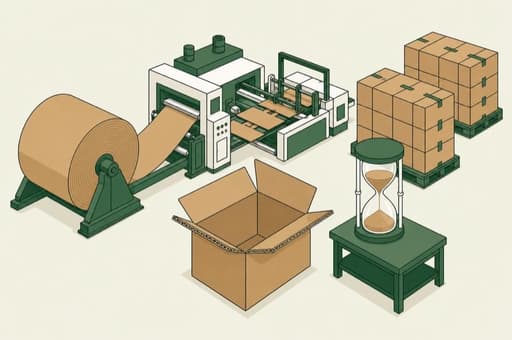
Shipping cases, retail trays and protective packs from 159 US plants — the biggest single thing IP sells. Daily box volumes grew 1.7% in the second quarter of 2026, while contract prices follow the published board index months behind.
Competes with Corrugated packaging (Smurfit Westrock) · Corrugated products (Packaging Corporation of America)
In plain English
Almost everything you buy sat in a brown corrugated box first. IP makes those — plain shipping cases, the trays that slide straight onto a supermarket shelf, padded packs that hold car parts steady, and the formats online sellers post things in.
Buyers are food, drink, household-goods and industrial companies. Much of the work moves on contracts rather than a box at a time, with local and one-off orders alongside. Those contracts are tied to a published board price and reset months after that price moves, so an increase reaches IP's bank account well after it is announced. No one buyer carries this business.
NORPAC, Longview, Washington
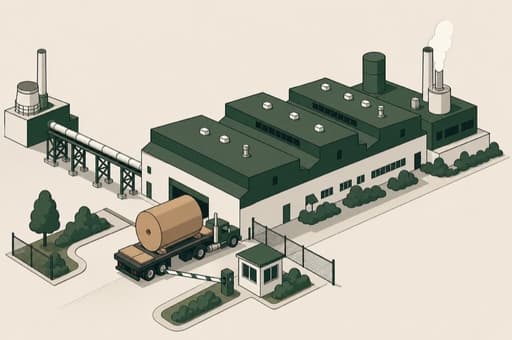
A Longview, Washington mill bought for $360M in June 2026 — three machines, about a million tons of board a year, roughly 500 people. It mostly replaces board IP had been buying from rivals out west, so it saves cost more than it adds sales.
Competes with West Coast containerboard supply (Packaging Corporation of America) · West Coast containerboard supply (Georgia-Pacific) · Recycled lightweight containerboard (Cascades)
In plain English
Bought, not built. IP's western box plants were short of board and had been buying it from other people's mills, with freight on top. So IP bought a mill out there instead, for $360M in June 2026.
Its three machines make roughly a million tons of containerboard and other grades a year with about 500 staff, and most of that now goes into IP's own box plants — which means the gain shows up as a cost IP stops paying rather than a new line of sales. One catch: the steam that runs the place arrives by pipe from the neighbouring Nippon plant, and when that neighbour had an incident in May 2026 output sagged until the steam came back in July.
Riverdale lightweight board conversion
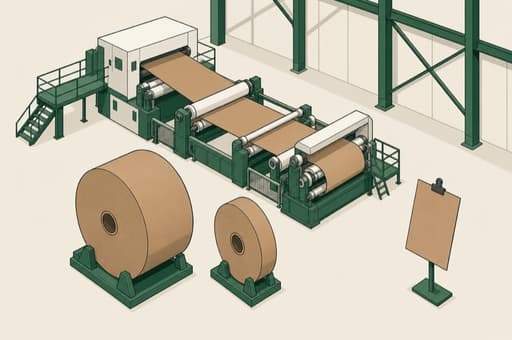
A mill machine rebuilt to make lighter-weight board, finished on time in mid-2026 and expected at full speed in early 2027. Customers have to test and approve the lighter board before they switch orders, and that sets the pace.
Competes with Recycled lightweight containerboard (Cascades) · Recycled lightweight containerboard (Pratt Industries)
In plain English
A paper machine is a building-length run of rollers that presses wet fibre into one continuous sheet. At Riverdale, IP rebuilt one of these to turn out lighter-weight containerboard — the brown paper that becomes the walls of a box.
The work finished in the middle of 2026, on schedule, and IP expects the machine running flat out in early 2027. Customers set that pace, not the machine: a buyer has to test the lighter board and approve it before moving orders across. Closing the Savannah mill helped pay for the rebuild and spared IP a $300M spend.
Corrugated Packaging — EMEA
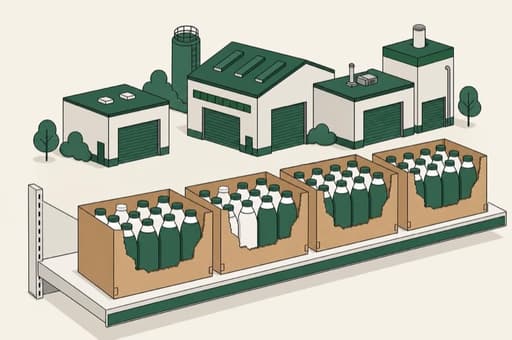
The former DS Smith network — 159 plants across Europe, North Africa and Latin America boxing food, wine, produce and online orders. It ran at a loss in 2025 and IP wrote $2.47B off its value, then announced cuts across 31 sites while preparing to list it separately.
Competes with Corrugated packaging (Smurfit Westrock) · Corrugated packaging (Mondi)
In plain English
IP bought DS Smith, a British packaging company, at the start of 2025, and that deal is largely this business: box plants across Europe plus North Africa and Latin America, wrapping wine, fruit and vegetables, groceries and online orders.
It earns the way the American side does — contracts with food and consumer brands, priced off the cost of paper. The trouble is it has been losing money, so IP is shutting and merging sites, more than three thousand jobs' worth, while getting the whole thing ready to stand alone as a separately listed company. Whether the clean-up lands before the split is the thing to watch.
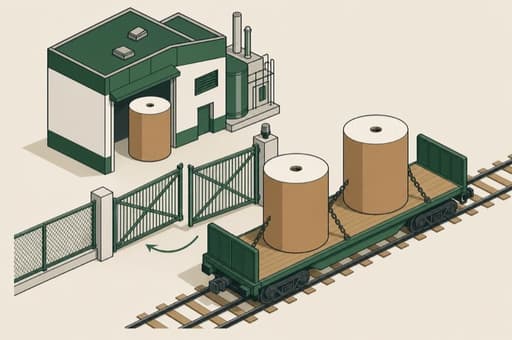
Containerboard and Export Rollstock — North America
The tons IP's American mills make but its own box plants don't use: reels of brown and white-topped board sold to independent box makers and shipped abroad. IP is deliberately shrinking it, and closed Savannah to get out of the low-value export trade.
Competes with Containerboard rollstock (Packaging Corporation of America) · Containerboard (Georgia-Pacific) · Export linerboard (Brazilian and Asian producers)
In plain English
About nine out of ten tons from IP's American mills go straight into IP's own box plants. This line is the remainder — big reels of board sold to box makers who own no mill, plus reels loaded out to buyers overseas.
It works as the safety valve: when American box orders soften, surplus tons leave through this door. It is also the thinnest-margin door, which is why IP has been narrowing it, shutting the Savannah mill specifically to stop feeding cheap export sales. What is left of export runs at around six or seven percent of North American output. Prices here track a published industry index, which added a net $100 a ton over the first half of 2026.
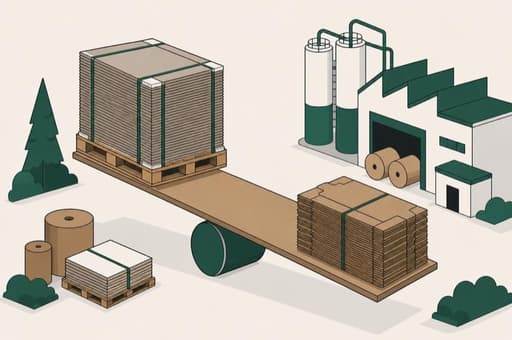
Containerboard and External Paper — EMEA
Board from IP's 14 European mills sold to outside box makers instead of used in house. IP never says exactly how big it is, but it explains why Europe behaves differently: when paper prices rise this line gains while IP's own box margins get squeezed.
Competes with Containerboard (Mondi) · Recycled containerboard (Saica Group)
In plain English
Europe is stitched together more loosely than North America. Fewer of the tons IP's European mills produce end up in IP's own box plants, so a bigger slice leaves as plain board bought by companies that make boxes but own no mill.
That cuts both ways. When paper gets dearer these outside sales earn more — and in the same moment IP's own European box plants are paying more for their raw material, on box contracts that only catch up later. In the second quarter of 2026 the squeeze won: what Europe sold and what it charged cost it $12M against the quarter before.
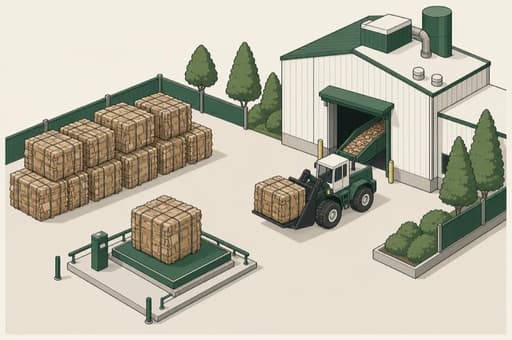
Recycling and Recovered Fibre Operations
Thirty-five recycling plants across the US, Europe, North Africa and Latin America, baling used cardboard back into IP's own recycled board machines. It sells little; its job is to blunt the swing in what used cardboard costs.
Competes with Recycling networks (Smurfit Westrock) · Recycling networks (Cascades)
In plain English
Old cardboard is a raw material. Shops, warehouses and depots flatten the boxes they receive, and IP's recycling plants collect, sort and press them into bales that go back into its mills to become new board.
This is less a business that sells things than a way of steering a cost. Used cardboard is the jumpiest input in box-making, and when its price climbs while board prices sit still, the gap lands on IP. That is what happened in North America in 2026. In Europe it went the other way — cheaper used cardboard is counted as roughly $20M of help in the second half of the year.


 Corrugated Packaging — North AmericaShipping cases, retail trays and protective packs from 159 US plants — the biggest single thing IP sells. Daily box volumes grew 1.7% in the second quarter of 2026, while contract prices follow the published board index months behind.
Shipping cases, retail trays and protective packs from 159 US plants — the biggest single thing IP sells. Daily box volumes grew 1.7% in the second quarter of 2026, while contract prices follow the published board index months behind.
In plain English
Almost everything you buy sat in a brown corrugated box first. IP makes those — plain shipping cases, the trays that slide straight onto a supermarket shelf, padded packs that hold car parts steady, and the formats online sellers post things in.
Buyers are food, drink, household-goods and industrial companies. Much of the work moves on contracts rather than a box at a time, with local and one-off orders alongside. Those contracts are tied to a published board price and reset months after that price moves, so an increase reaches IP's bank account well after it is announced. No one buyer carries this business.
Competes with Corrugated packaging (Smurfit Westrock) · Corrugated products (Packaging Corporation of America)
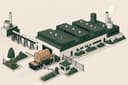 NORPAC, Longview, WashingtonA Longview, Washington mill bought for $360M in June 2026 — three machines, about a million tons of board a year, roughly 500 people. It mostly replaces board IP had been buying from rivals out west, so it saves cost more than it adds sales.
A Longview, Washington mill bought for $360M in June 2026 — three machines, about a million tons of board a year, roughly 500 people. It mostly replaces board IP had been buying from rivals out west, so it saves cost more than it adds sales.
In plain English
Bought, not built. IP's western box plants were short of board and had been buying it from other people's mills, with freight on top. So IP bought a mill out there instead, for $360M in June 2026.
Its three machines make roughly a million tons of containerboard and other grades a year with about 500 staff, and most of that now goes into IP's own box plants — which means the gain shows up as a cost IP stops paying rather than a new line of sales. One catch: the steam that runs the place arrives by pipe from the neighbouring Nippon plant, and when that neighbour had an incident in May 2026 output sagged until the steam came back in July.
Competes with West Coast containerboard supply (Packaging Corporation of America) · West Coast containerboard supply (Georgia-Pacific) · Recycled lightweight containerboard (Cascades)
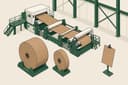 Riverdale lightweight board conversionA mill machine rebuilt to make lighter-weight board, finished on time in mid-2026 and expected at full speed in early 2027. Customers have to test and approve the lighter board before they switch orders, and that sets the pace.
A mill machine rebuilt to make lighter-weight board, finished on time in mid-2026 and expected at full speed in early 2027. Customers have to test and approve the lighter board before they switch orders, and that sets the pace.
In plain English
A paper machine is a building-length run of rollers that presses wet fibre into one continuous sheet. At Riverdale, IP rebuilt one of these to turn out lighter-weight containerboard — the brown paper that becomes the walls of a box.
The work finished in the middle of 2026, on schedule, and IP expects the machine running flat out in early 2027. Customers set that pace, not the machine: a buyer has to test the lighter board and approve it before moving orders across. Closing the Savannah mill helped pay for the rebuild and spared IP a $300M spend.
Competes with Recycled lightweight containerboard (Cascades) · Recycled lightweight containerboard (Pratt Industries)
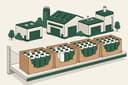 Corrugated Packaging — EMEAThe former DS Smith network — 159 plants across Europe, North Africa and Latin America boxing food, wine, produce and online orders. It ran at a loss in 2025 and IP wrote $2.47B off its value, then announced cuts across 31 sites while preparing to list it separately.
The former DS Smith network — 159 plants across Europe, North Africa and Latin America boxing food, wine, produce and online orders. It ran at a loss in 2025 and IP wrote $2.47B off its value, then announced cuts across 31 sites while preparing to list it separately.
In plain English
IP bought DS Smith, a British packaging company, at the start of 2025, and that deal is largely this business: box plants across Europe plus North Africa and Latin America, wrapping wine, fruit and vegetables, groceries and online orders.
It earns the way the American side does — contracts with food and consumer brands, priced off the cost of paper. The trouble is it has been losing money, so IP is shutting and merging sites, more than three thousand jobs' worth, while getting the whole thing ready to stand alone as a separately listed company. Whether the clean-up lands before the split is the thing to watch.
Competes with Corrugated packaging (Smurfit Westrock) · Corrugated packaging (Mondi)
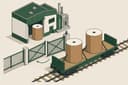 Containerboard and Export Rollstock — North AmericaThe tons IP's American mills make but its own box plants don't use: reels of brown and white-topped board sold to independent box makers and shipped abroad. IP is deliberately shrinking it, and closed Savannah to get out of the low-value export trade.
The tons IP's American mills make but its own box plants don't use: reels of brown and white-topped board sold to independent box makers and shipped abroad. IP is deliberately shrinking it, and closed Savannah to get out of the low-value export trade.
In plain English
About nine out of ten tons from IP's American mills go straight into IP's own box plants. This line is the remainder — big reels of board sold to box makers who own no mill, plus reels loaded out to buyers overseas.
It works as the safety valve: when American box orders soften, surplus tons leave through this door. It is also the thinnest-margin door, which is why IP has been narrowing it, shutting the Savannah mill specifically to stop feeding cheap export sales. What is left of export runs at around six or seven percent of North American output. Prices here track a published industry index, which added a net $100 a ton over the first half of 2026.
Competes with Containerboard rollstock (Packaging Corporation of America) · Containerboard (Georgia-Pacific) · Export linerboard (Brazilian and Asian producers)
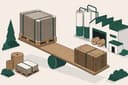 Containerboard and External Paper — EMEABoard from IP's 14 European mills sold to outside box makers instead of used in house. IP never says exactly how big it is, but it explains why Europe behaves differently: when paper prices rise this line gains while IP's own box margins get squeezed.
Board from IP's 14 European mills sold to outside box makers instead of used in house. IP never says exactly how big it is, but it explains why Europe behaves differently: when paper prices rise this line gains while IP's own box margins get squeezed.
In plain English
Europe is stitched together more loosely than North America. Fewer of the tons IP's European mills produce end up in IP's own box plants, so a bigger slice leaves as plain board bought by companies that make boxes but own no mill.
That cuts both ways. When paper gets dearer these outside sales earn more — and in the same moment IP's own European box plants are paying more for their raw material, on box contracts that only catch up later. In the second quarter of 2026 the squeeze won: what Europe sold and what it charged cost it $12M against the quarter before.
Competes with Containerboard (Mondi) · Recycled containerboard (Saica Group)
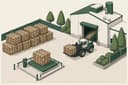 Recycling and Recovered Fibre OperationsThirty-five recycling plants across the US, Europe, North Africa and Latin America, baling used cardboard back into IP's own recycled board machines. It sells little; its job is to blunt the swing in what used cardboard costs.
Thirty-five recycling plants across the US, Europe, North Africa and Latin America, baling used cardboard back into IP's own recycled board machines. It sells little; its job is to blunt the swing in what used cardboard costs.
In plain English
Old cardboard is a raw material. Shops, warehouses and depots flatten the boxes they receive, and IP's recycling plants collect, sort and press them into bales that go back into its mills to become new board.
This is less a business that sells things than a way of steering a cost. Used cardboard is the jumpiest input in box-making, and when its price climbs while board prices sit still, the gap lands on IP. That is what happened in North America in 2026. In Europe it went the other way — cheaper used cardboard is counted as roughly $20M of help in the second half of the year.
Competes with Recycling networks (Smurfit Westrock) · Recycling networks (Cascades)
Named in filings, launches and programs
- Safe SenderProductAn e-commerce corrugated box built so tampering shows — if someone has been into it on the way, the packaging says so.
- BriteTop linerboardBrandIP's name for its white-topped liner, the smoother outer grade marketed to export customers.
- Trays, retail-ready, automotive and wine packagingProduct lineShaped formats rather than plain cases: shelf-ready trays, multi-packs, protective packs for car parts and wine shippers, all cut from corrugated board.
- Aurora Commercial Performance and Innovation CenterServiceA centre in Aurora, Illinois where customers design packs alongside IP — separate from the Aurora sheet plant being closed.
- Lighthouse operating modelEcosystemIP's standard way of running a site, rolled out plant by plant across North American box plants and mills and now starting in Europe.
- 80/20 programmeEcosystemThe sorting method behind the exits — concentrate on accounts and products that pay. Original North American targets were ~$1.2B of cost savings.
- Waterloo converting facilityProduct line · AnnouncedA new box plant due to start up in late 2026 and be fully operational by the middle of 2027.
- Dover converting facilityBrandA box plant IP acquired, bringing an established customer base with it.
- Lucca recycled board machineProduct · RampingA replacement machine at Lucca, Italy making lightweight recycled board, coming online in the third quarter of 2026.
- Romania expansionProduct line · AnnouncedAdded capacity in Eastern Europe, the region management calls its fastest-growing at roughly 4% a year.
- Retained stake in the European companyCustomer program · AnnouncedIP expects to keep about a fifth of the European company for twelve to eighteen months after the split; it would list in London and New York.
- Pine Hill, Alabama millProduct lineSuspended in July 2026 for roof repairs; IP put the hit at $70–100M across the second half of the year before insurance.
Safe SenderProduct
An e-commerce corrugated box built so tampering shows — if someone has been into it on the way, the packaging says so.
BriteTop linerboardBrand
IP's name for its white-topped liner, the smoother outer grade marketed to export customers.
Trays, retail-ready, automotive and wine packagingProduct line
Shaped formats rather than plain cases: shelf-ready trays, multi-packs, protective packs for car parts and wine shippers, all cut from corrugated board.
Aurora Commercial Performance and Innovation CenterService
A centre in Aurora, Illinois where customers design packs alongside IP — separate from the Aurora sheet plant being closed.
Lighthouse operating modelEcosystem
IP's standard way of running a site, rolled out plant by plant across North American box plants and mills and now starting in Europe.
80/20 programmeEcosystem
The sorting method behind the exits — concentrate on accounts and products that pay. Original North American targets were ~$1.2B of cost savings.
Waterloo converting facilityProduct line · Announced
A new box plant due to start up in late 2026 and be fully operational by the middle of 2027.
Dover converting facilityBrand
A box plant IP acquired, bringing an established customer base with it.
Lucca recycled board machineProduct · Ramping
A replacement machine at Lucca, Italy making lightweight recycled board, coming online in the third quarter of 2026.
Romania expansionProduct line · Announced
Added capacity in Eastern Europe, the region management calls its fastest-growing at roughly 4% a year.
Retained stake in the European companyCustomer program · Announced
IP expects to keep about a fifth of the European company for twelve to eighteen months after the split; it would list in London and New York.
Pine Hill, Alabama millProduct line
Suspended in July 2026 for roof repairs; IP put the hit at $70–100M across the second half of the year before insurance.