
KeyCorp (KEY)
Runs KeyBank's consumer franchise and national commercial and capital-markets businesses.
Something off on this page? Send us feedback.
KeyCorp is the Cleveland company behind KeyBank. Its branches take in far more deposits than they lend out, and the surplus funds loans to mid-sized businesses, which pay a much better rate. Management is letting low-yielding consumer loans run off while hiring into three fee businesses: deal advice, wealth management and business payments. The deposits are the quiet engine; the fees are the bet.
Item facts: FY2025 · year ended Dec 31, 2025, from filings, earnings calls and company pages.
Judgment weights, not filed revenue
The band summarizes business focus and direction. ~ marks estimates.
7 in detail · 9 more below
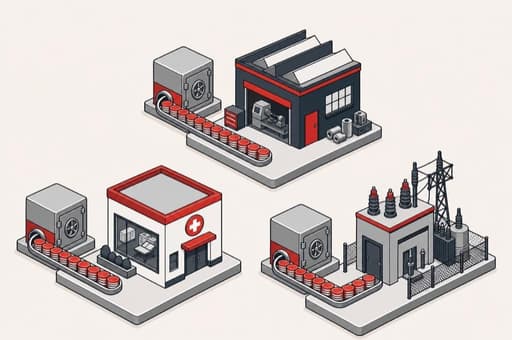
Commercial Bank
Loans to mid-sized companies across seven industries — the best-paying money Key lends. Average commercial loans of $74.5B earned 5.94% in 2025 against 3.34% on home loans, which is why the balance sheet keeps tilting this way.
Competes with Huntington Commercial Banking (Huntington Bancshares) · Fifth Third Commercial Banking (Fifth Third Bancorp)
In plain English
Think of the companies too big for a branch manager and too small for Wall Street — a regional manufacturer, a hospital group, a power developer. Key assigns each one a banker and lends it money: revolving credit lines, property loans, equipment leases.
The earnings come from the gap. Key pays its depositors relatively little and charged commercial borrowers about six percent on average last year, and it keeps the difference. Relationships matter more than rate sheets here: the same banker who arranges the loan sells the payments service, and when the owner decides to sell the company, Key's deal team is already in the room.

Specialty finance lending
Key lends to other lenders: property debt funds, insurance companies, finance firms. Roughly $10.9B was outstanding in March 2026, nearly all of it in the ratings agencies' safe tier. Watch the rulebook — regulators are still refining what counts.
Competes with Lending to funds and finance companies (Huntington Bancshares) · Lending to funds and finance companies (Fifth Third Bancorp) · Lending to funds and finance companies (Citizens Financial Group)
In plain English
Private credit funds — investment firms that lend directly to companies instead of leaving it to a bank — need money of their own to lend out. Key supplies some of it, and lends to insurers and finance companies on similar terms.
Why bother? These borrowers are large and well rated, and they have caused Key almost no bad loans so far, so a modest margin on big balances adds up. The awkward part is that those same funds chase the very companies Key wants as borrowers. Regulators are still settling what belongs in this category, so the reported size can jump without a single new loan being made.
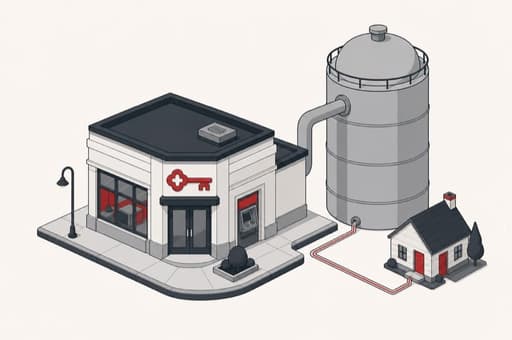
Consumer Bank
Roughly 940 branches and a thousand-odd cash machines gather $87.6B of deposits while lending only $34.8B back out — the surplus funds the business bank. Balances are flat, so the number that matters is the price Key pays to keep them.
Competes with Consumer and regional banking (Huntington Bancshares) · Consumer and small business banking (Fifth Third Bancorp)
In plain English
The unglamorous half that pays for everything else. Households and small businesses leave their paychecks in checking and savings accounts at a branch, and Key pays them a little for the privilege. No single depositor is big enough to matter.
That money does not sit still. The branch network takes in about two and a half times what it lends back to those same households, and the extra flows internally to the side of the bank that lends to companies at higher rates. So the branches' real product is cheap, patient money. Key defends it with a checking account that pays a $100 bonus for steady direct deposits — about $7M handed out so far.
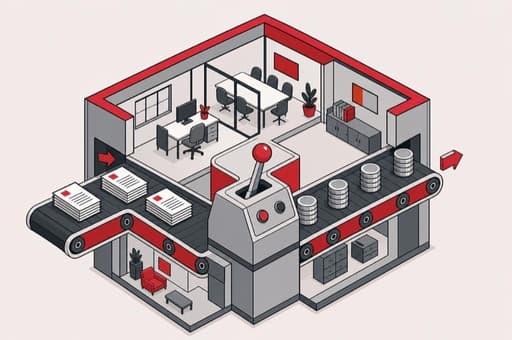
Enterprise Commercial Payments
Collections, payables, cards and currency for business clients, run through KeyNavigator, Key's online business banking screen. Roughly $926M of fees in 2025 across three lines, growing at a low-double-digit pace — and the bankers who lend also sell it.
Competes with Newline embedded payments (Fifth Third Bancorp) · Embedded banking on the FIS platform (M&T Bank)
In plain English
Every company has a daily money chore: paying suppliers, collecting from customers, shifting cash between accounts, sometimes in another currency. Key sells the machinery that does it — one screen where a finance team can see and move all of it.
Key gets paid twice over. There are fees for the service, and there is the cash companies leave sitting in their accounts between payments, which Key can lend on. It is one of three businesses Key is deliberately hiring into, and gross payment fees grew 12% year over year in the second quarter of 2026. The catch that comes with volume is fraud, which is where Key's newest business product is aimed.

KeyBanc Capital Markets
Key's deal shop: advice on selling a company, plus arranging the bonds and loans that pay for it. $780M of fees in 2025, and lumpy — first-half 2026 rose only 4% even as pipelines hit a record, because mid-sized takeovers have not come back.
Competes with Huntington Capital Markets / Capstone Partners (Huntington Bancshares) · Citizens Capital Markets / Citizens JMP (Citizens Financial Group)
In plain English
When the owner of a mid-sized company decides to sell, or a business needs to borrow more than any one bank wants to hold, somebody has to run the process: find the buyers, set the price, line up the lenders. That is this business, and it takes a slice of the deal.
Nobody can schedule deals, though. The fees arrive when owners are ready to sell and markets are open to new borrowing; when they hesitate, the bankers cost exactly the same. Key has been buying its way to more of them, adding Clearwater, a British mid-market advisory firm, in August 2026.

Key Wealth
Looking after money for wealthier households — trusts, portfolios, planning. $591M of fees in 2025 on a record $74B of client assets. The growth comes from selling to Key's own customers, less than a tenth of whom have bought it.
Competes with Fifth Third Private Bank (Fifth Third Bancorp) · Citizens Private Bank (Citizens Financial Group)
In plain English
Families with real money to look after hand it to someone who invests it, handles the taxes and paperwork, and writes down what happens to it later. Key charges a small yearly percentage of whatever it minds, so the revenue rises and falls with markets — the second quarter of 2026 grew mainly because share prices were higher.
The cheap way to grow this is to walk down the hall. Key already banks roughly a million people it calls emerging affluent, and a push started in 2023 has signed up 59,000 households and close to $8B of their savings, all from inside Key's own customer base.
KeyBank Real Estate Capital
Key collects the payments on commercial property mortgages other people own — about $735B of loans named to it by mid-2026, including the ones that go bad. Fees were $287M in 2025 but are sliding: $70M a quarter, then $49M a year later.
Competes with Commercial and multifamily loan servicing (Trimont) · PNC Real Estate / Midland Loan Services (PNC Financial Services)
In plain English
Somebody owns the mortgage on a shopping centre; somebody else has to do the chores on it — take the monthly payment, hold the tax and insurance money, chase the borrower who stops paying. Key does those chores for the investors who own such loans, for a fee.
The odd feature is that trouble pays: Key is appointed to handle a large share of the loans that sour, and earns more when more of them do. The fee line is shrinking anyway, and partly on purpose — clients now leave about $1B of escrow money with Key instead of paying fees, moving roughly $40M a year out of fees and into interest earnings.


 Commercial BankLoans to mid-sized companies across seven industries — the best-paying money Key lends. Average commercial loans of $74.5B earned 5.94% in 2025 against 3.34% on home loans, which is why the balance sheet keeps tilting this way.
Loans to mid-sized companies across seven industries — the best-paying money Key lends. Average commercial loans of $74.5B earned 5.94% in 2025 against 3.34% on home loans, which is why the balance sheet keeps tilting this way.
In plain English
Think of the companies too big for a branch manager and too small for Wall Street — a regional manufacturer, a hospital group, a power developer. Key assigns each one a banker and lends it money: revolving credit lines, property loans, equipment leases.
The earnings come from the gap. Key pays its depositors relatively little and charged commercial borrowers about six percent on average last year, and it keeps the difference. Relationships matter more than rate sheets here: the same banker who arranges the loan sells the payments service, and when the owner decides to sell the company, Key's deal team is already in the room.
Competes with Huntington Commercial Banking (Huntington Bancshares) · Fifth Third Commercial Banking (Fifth Third Bancorp)
 Specialty finance lendingKey lends to other lenders: property debt funds, insurance companies, finance firms. Roughly $10.9B was outstanding in March 2026, nearly all of it in the ratings agencies' safe tier. Watch the rulebook — regulators are still refining what counts.
Key lends to other lenders: property debt funds, insurance companies, finance firms. Roughly $10.9B was outstanding in March 2026, nearly all of it in the ratings agencies' safe tier. Watch the rulebook — regulators are still refining what counts.
In plain English
Private credit funds — investment firms that lend directly to companies instead of leaving it to a bank — need money of their own to lend out. Key supplies some of it, and lends to insurers and finance companies on similar terms.
Why bother? These borrowers are large and well rated, and they have caused Key almost no bad loans so far, so a modest margin on big balances adds up. The awkward part is that those same funds chase the very companies Key wants as borrowers. Regulators are still settling what belongs in this category, so the reported size can jump without a single new loan being made.
Competes with Lending to funds and finance companies (Huntington Bancshares) · Lending to funds and finance companies (Fifth Third Bancorp) · Lending to funds and finance companies (Citizens Financial Group)
 Consumer BankRoughly 940 branches and a thousand-odd cash machines gather $87.6B of deposits while lending only $34.8B back out — the surplus funds the business bank. Balances are flat, so the number that matters is the price Key pays to keep them.
Roughly 940 branches and a thousand-odd cash machines gather $87.6B of deposits while lending only $34.8B back out — the surplus funds the business bank. Balances are flat, so the number that matters is the price Key pays to keep them.
In plain English
The unglamorous half that pays for everything else. Households and small businesses leave their paychecks in checking and savings accounts at a branch, and Key pays them a little for the privilege. No single depositor is big enough to matter.
That money does not sit still. The branch network takes in about two and a half times what it lends back to those same households, and the extra flows internally to the side of the bank that lends to companies at higher rates. So the branches' real product is cheap, patient money. Key defends it with a checking account that pays a $100 bonus for steady direct deposits — about $7M handed out so far.
Competes with Consumer and regional banking (Huntington Bancshares) · Consumer and small business banking (Fifth Third Bancorp)
 Enterprise Commercial PaymentsCollections, payables, cards and currency for business clients, run through KeyNavigator, Key's online business banking screen. Roughly $926M of fees in 2025 across three lines, growing at a low-double-digit pace — and the bankers who lend also sell it.
Collections, payables, cards and currency for business clients, run through KeyNavigator, Key's online business banking screen. Roughly $926M of fees in 2025 across three lines, growing at a low-double-digit pace — and the bankers who lend also sell it.
In plain English
Every company has a daily money chore: paying suppliers, collecting from customers, shifting cash between accounts, sometimes in another currency. Key sells the machinery that does it — one screen where a finance team can see and move all of it.
Key gets paid twice over. There are fees for the service, and there is the cash companies leave sitting in their accounts between payments, which Key can lend on. It is one of three businesses Key is deliberately hiring into, and gross payment fees grew 12% year over year in the second quarter of 2026. The catch that comes with volume is fraud, which is where Key's newest business product is aimed.
Competes with Newline embedded payments (Fifth Third Bancorp) · Embedded banking on the FIS platform (M&T Bank)
 KeyBanc Capital MarketsKey's deal shop: advice on selling a company, plus arranging the bonds and loans that pay for it. $780M of fees in 2025, and lumpy — first-half 2026 rose only 4% even as pipelines hit a record, because mid-sized takeovers have not come back.
Key's deal shop: advice on selling a company, plus arranging the bonds and loans that pay for it. $780M of fees in 2025, and lumpy — first-half 2026 rose only 4% even as pipelines hit a record, because mid-sized takeovers have not come back.
In plain English
When the owner of a mid-sized company decides to sell, or a business needs to borrow more than any one bank wants to hold, somebody has to run the process: find the buyers, set the price, line up the lenders. That is this business, and it takes a slice of the deal.
Nobody can schedule deals, though. The fees arrive when owners are ready to sell and markets are open to new borrowing; when they hesitate, the bankers cost exactly the same. Key has been buying its way to more of them, adding Clearwater, a British mid-market advisory firm, in August 2026.
Competes with Huntington Capital Markets / Capstone Partners (Huntington Bancshares) · Citizens Capital Markets / Citizens JMP (Citizens Financial Group)
 Key WealthLooking after money for wealthier households — trusts, portfolios, planning. $591M of fees in 2025 on a record $74B of client assets. The growth comes from selling to Key's own customers, less than a tenth of whom have bought it.
Looking after money for wealthier households — trusts, portfolios, planning. $591M of fees in 2025 on a record $74B of client assets. The growth comes from selling to Key's own customers, less than a tenth of whom have bought it.
In plain English
Families with real money to look after hand it to someone who invests it, handles the taxes and paperwork, and writes down what happens to it later. Key charges a small yearly percentage of whatever it minds, so the revenue rises and falls with markets — the second quarter of 2026 grew mainly because share prices were higher.
The cheap way to grow this is to walk down the hall. Key already banks roughly a million people it calls emerging affluent, and a push started in 2023 has signed up 59,000 households and close to $8B of their savings, all from inside Key's own customer base.
Competes with Fifth Third Private Bank (Fifth Third Bancorp) · Citizens Private Bank (Citizens Financial Group)
 KeyBank Real Estate CapitalKey collects the payments on commercial property mortgages other people own — about $735B of loans named to it by mid-2026, including the ones that go bad. Fees were $287M in 2025 but are sliding: $70M a quarter, then $49M a year later.
Key collects the payments on commercial property mortgages other people own — about $735B of loans named to it by mid-2026, including the ones that go bad. Fees were $287M in 2025 but are sliding: $70M a quarter, then $49M a year later.
In plain English
Somebody owns the mortgage on a shopping centre; somebody else has to do the chores on it — take the monthly payment, hold the tax and insurance money, chase the borrower who stops paying. Key does those chores for the investors who own such loans, for a fee.
The odd feature is that trouble pays: Key is appointed to handle a large share of the loans that sour, and earns more when more of them do. The fee line is shrinking anyway, and partly on purpose — clients now leave about $1B of escrow money with Key instead of paying fees, moving roughly $40M a year out of fees and into interest earnings.
Competes with Commercial and multifamily loan servicing (Trimont) · PNC Real Estate / Midland Loan Services (PNC Financial Services)
Named in filings, launches and programs
- Clearwater Corporate FinanceBrandBritish mid-market advisory firm bought in August 2026, with four English offices — Key's deal business outside the United States.
- KeyNavigatorPlatformThe online screen commercial clients use to move money and watch their accounts; the front door to the payments business.
- Key Select CheckingProductRelationship checking launched in 2023, paying a $100 bonus for steady direct deposits — nearly $7M handed out by August 2026.
- Key Student Loan RefinanceProduct lineStudent-debt refinancing bought as Laurel Road, folded under the KeyBank name in March 2026; its customers skew professional and medical.
- Mass affluent strategyCustomer programA 2023 push to sell investing and planning to Key's own middle-income households; 59,000 signed up through mid-2026.
- Check Control for BusinessProductCheck-fraud protection for business accounts, launched July 2026 — a small product aimed at a risk that grows with payment volume.
- Corporate-owned life insurance incomeService$140M in 2025 from insurance Key holds itself — steady earnings that arrive whatever clients do.
- Operating lease incomeProduct line$43M in 2025 on $2.5B of average lease balances — equipment Key owns and rents rather than lends against.
- Key Wealth InstituteServiceThe in-house research and planning group that supplies the material Key's wealth advisers use with clients.
Clearwater Corporate FinanceBrand
British mid-market advisory firm bought in August 2026, with four English offices — Key's deal business outside the United States.
KeyNavigatorPlatform
The online screen commercial clients use to move money and watch their accounts; the front door to the payments business.
Key Select CheckingProduct
Relationship checking launched in 2023, paying a $100 bonus for steady direct deposits — nearly $7M handed out by August 2026.
Key Student Loan RefinanceProduct line
Student-debt refinancing bought as Laurel Road, folded under the KeyBank name in March 2026; its customers skew professional and medical.
Mass affluent strategyCustomer program
A 2023 push to sell investing and planning to Key's own middle-income households; 59,000 signed up through mid-2026.
Check Control for BusinessProduct
Check-fraud protection for business accounts, launched July 2026 — a small product aimed at a risk that grows with payment volume.
Corporate-owned life insurance incomeService
$140M in 2025 from insurance Key holds itself — steady earnings that arrive whatever clients do.
Operating lease incomeProduct line
$43M in 2025 on $2.5B of average lease balances — equipment Key owns and rents rather than lends against.
Key Wealth InstituteService
The in-house research and planning group that supplies the material Key's wealth advisers use with clients.