
Kinder Morgan (KMI)
Transports natural gas and fuels through pipelines, storage, terminals, and tankers.
Something off on this page? Send us feedback.
Kinder Morgan owns the pipes, storage sites, terminals, and tankers that move and hold fuel across the United States. Natural gas is the center of gravity, with the other businesses adding smaller streams of cash. It is now spending heavily to enlarge the gas network for power plants, export facilities, and data centers, while keeping newer landfill-gas projects small.
Item facts: FY2025 · year ended Dec 31, 2025, from filings, earnings calls and company pages.
Judgment weights, not filed revenue
The band summarizes business focus and direction. ~ marks estimates.
6 in detail · 11 more below

Natural Gas Pipelines
The main engine moves, stores, gathers, and prepares natural gas. Customers largely reserve space for years and pay even when they use less; crowded major lines make well-contracted additions the growth lever.
Competes with Transco (Williams) · ANR Pipeline (TC Energy)
In plain English
Picture a nationwide plumbing network, except the customers are power plants, gas utilities, export facilities, factories, and producers. Kinder Morgan moves gas through long-distance pipes, stores it underground, and prepares raw gas for sale.
Much of the money arrives through reservations: a customer promises to pay for space whether it uses every bit or not. Other fees come from gathering gas near wells and getting it ready for the main network. Contracts on gas transport have about seven years left on average, helping turn enormous fixed assets into recurring cash.
Natural Gas Project Backlog
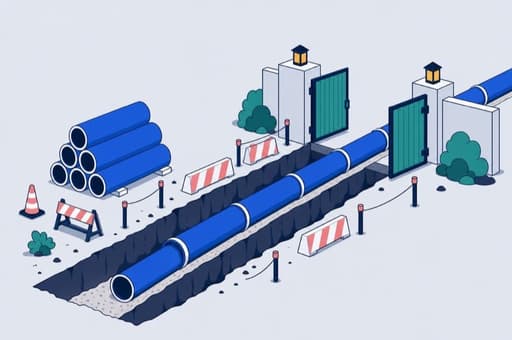
By July twenty twenty-six, a customer-backed construction wave was aimed mostly at power plants and gas-export facilities. The biggest projects are due mainly in the late twenty-twenties, so permits, building costs, and start dates matter more than near-term sales.
Competes with Southeast Supply Enhancement (Williams / Transco) · Blackcomb Pipeline (Blackcomb Pipeline joint venture)
In plain English
This is the next set of lanes being added to Kinder Morgan's gas highway. Customers commit before construction, giving the company confidence that a new pipe or added pumping power will have paying users when it opens.
Nearly all of the planned spending is for natural gas, and the largest projects already have buyers for more than nine-tenths of their space under contracts averaging over twenty years. Most of the payoff waits until around early twenty twenty-eight, after permits, rights to cross land, construction, and testing.
Products Pipelines
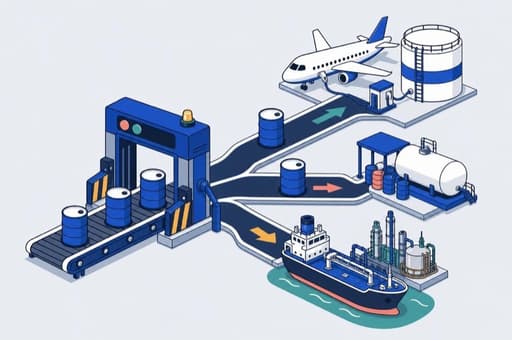
These lines carry gasoline, diesel, jet fuel, crude oil, and renewable diesel. Refiners, airlines, and distributors pay by the barrel or promise minimum volumes; fuel demand and allowed transport rates set the pace.
Competes with Refined Products system (ONEOK) · Colonial Pipeline (Colonial Pipeline)
In plain English
After a refinery makes fuel, it still has to reach airports, fuel depots, and local distributors. Kinder Morgan provides roughly nine thousand miles of dedicated routes for those finished fuels and related liquids.
Each barrel passing a checkpoint earns a regulated transport charge, much like a toll. Some customers also promise a minimum amount, softening the effect when traffic dips. The network moved about two million barrels a day in fiscal twenty twenty-five; future cash depends on refinery output, travel and driving demand, and the rates regulators allow.
Terminals
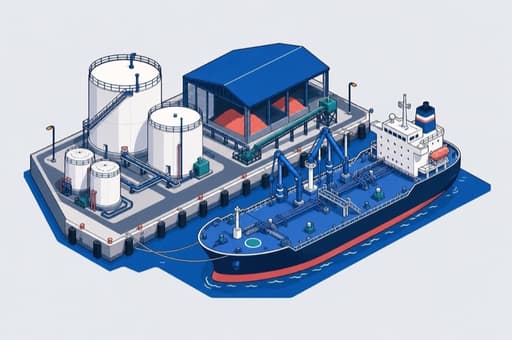
Customers rent liquid tanks, pay to move bulk goods through sites, or hire coastal tankers. In early twenty twenty-six, tank space was about ninety-four percent leased; likely extensions would keep the ships booked through year-end.
Competes with U.S. terminals (Vopak) · North American terminals (IMTT) · Domestic coastwise tanker fleet (Fairwater)
In plain English
The unglamorous waiting room between one journey and the next. Oils and chemicals sit in tanks, bulk materials pass through docks and warehouses, and sixteen tankers carry liquids between American ports.
Customers pay rent for tank space, handling fees when material moves, or a fixed daily amount to hire a ship. Many storage deals still require payment when the customer uses less than planned. High tank occupancy and booked ships make this a steady business, though a nearby refinery closing can leave a terminal with less work.
CO2 Oil Recovery & Transport
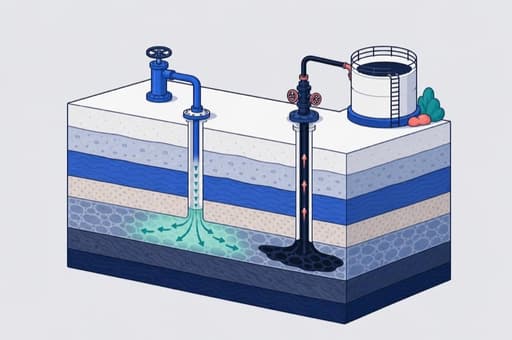
Kinder Morgan pipes carbon dioxide into aging oil fields to push out more oil, while also selling some oil and related liquids. Minimum transport payments help, but oil prices and field performance still move results.
Competes with Denbury CO2 network and oil recovery (ExxonMobil) · Permian CO2 oil recovery (Occidental)
In plain English
Old oil fields often leave plenty behind because the remaining oil no longer flows easily. Injecting carbon dioxide acts like pressure behind a stuck liquid, helping drive more of it toward producing wells.
Kinder Morgan earns minimum payments from other field owners that use its carbon-dioxide pipes, and it also owns stakes in fields where it sells the recovered oil and natural-gas liquids. That second stream makes this business more exposed to commodity prices than the main pipeline network. Available carbon dioxide and each field's response determine how much can be recovered.
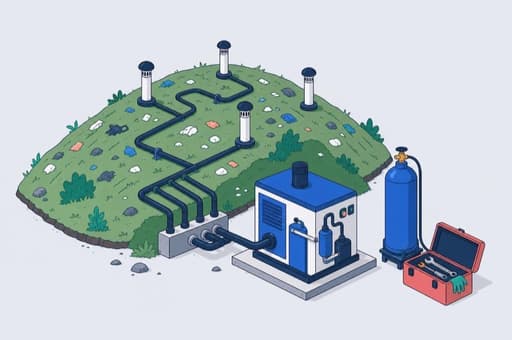
Energy Transition Ventures
Seven landfill sites capture waste gas and sell cleaned pipeline gas plus environmental credits. Output improved recently after operating trouble, but this remains a very small business whose value hinges on reliable plants and credit rules.
Competes with Archaea Energy landfill gas (bp) · Renewable natural gas projects (OPAL Fuels)
In plain English
Trash keeps making methane after it is buried. At seven landfills, Kinder Morgan captures that gas, cleans it until it can enter ordinary pipelines, and sells it instead of letting the fuel go unused.
Buyers pay for the gas and for government-created credits that reward lower-impact transport fuel. This is still a tiny part of Kinder Morgan, and recent output has run below the plants' full capacity because of reliability problems. Keeping the equipment running, maintaining gas quality, and preserving the credit system matter more here than building a vast network.


 Natural Gas PipelinesThe main engine moves, stores, gathers, and prepares natural gas. Customers largely reserve space for years and pay even when they use less; crowded major lines make well-contracted additions the growth lever.
The main engine moves, stores, gathers, and prepares natural gas. Customers largely reserve space for years and pay even when they use less; crowded major lines make well-contracted additions the growth lever.
In plain English
Picture a nationwide plumbing network, except the customers are power plants, gas utilities, export facilities, factories, and producers. Kinder Morgan moves gas through long-distance pipes, stores it underground, and prepares raw gas for sale.
Much of the money arrives through reservations: a customer promises to pay for space whether it uses every bit or not. Other fees come from gathering gas near wells and getting it ready for the main network. Contracts on gas transport have about seven years left on average, helping turn enormous fixed assets into recurring cash.
Competes with Transco (Williams) · ANR Pipeline (TC Energy)
 Natural Gas Project BacklogBy July twenty twenty-six, a customer-backed construction wave was aimed mostly at power plants and gas-export facilities. The biggest projects are due mainly in the late twenty-twenties, so permits, building costs, and start dates matter more than near-term sales.
By July twenty twenty-six, a customer-backed construction wave was aimed mostly at power plants and gas-export facilities. The biggest projects are due mainly in the late twenty-twenties, so permits, building costs, and start dates matter more than near-term sales.
In plain English
This is the next set of lanes being added to Kinder Morgan's gas highway. Customers commit before construction, giving the company confidence that a new pipe or added pumping power will have paying users when it opens.
Nearly all of the planned spending is for natural gas, and the largest projects already have buyers for more than nine-tenths of their space under contracts averaging over twenty years. Most of the payoff waits until around early twenty twenty-eight, after permits, rights to cross land, construction, and testing.
Competes with Southeast Supply Enhancement (Williams / Transco) · Blackcomb Pipeline (Blackcomb Pipeline joint venture)
 Products PipelinesThese lines carry gasoline, diesel, jet fuel, crude oil, and renewable diesel. Refiners, airlines, and distributors pay by the barrel or promise minimum volumes; fuel demand and allowed transport rates set the pace.
These lines carry gasoline, diesel, jet fuel, crude oil, and renewable diesel. Refiners, airlines, and distributors pay by the barrel or promise minimum volumes; fuel demand and allowed transport rates set the pace.
In plain English
After a refinery makes fuel, it still has to reach airports, fuel depots, and local distributors. Kinder Morgan provides roughly nine thousand miles of dedicated routes for those finished fuels and related liquids.
Each barrel passing a checkpoint earns a regulated transport charge, much like a toll. Some customers also promise a minimum amount, softening the effect when traffic dips. The network moved about two million barrels a day in fiscal twenty twenty-five; future cash depends on refinery output, travel and driving demand, and the rates regulators allow.
Competes with Refined Products system (ONEOK) · Colonial Pipeline (Colonial Pipeline)
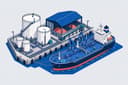 TerminalsCustomers rent liquid tanks, pay to move bulk goods through sites, or hire coastal tankers. In early twenty twenty-six, tank space was about ninety-four percent leased; likely extensions would keep the ships booked through year-end.
Customers rent liquid tanks, pay to move bulk goods through sites, or hire coastal tankers. In early twenty twenty-six, tank space was about ninety-four percent leased; likely extensions would keep the ships booked through year-end.
In plain English
The unglamorous waiting room between one journey and the next. Oils and chemicals sit in tanks, bulk materials pass through docks and warehouses, and sixteen tankers carry liquids between American ports.
Customers pay rent for tank space, handling fees when material moves, or a fixed daily amount to hire a ship. Many storage deals still require payment when the customer uses less than planned. High tank occupancy and booked ships make this a steady business, though a nearby refinery closing can leave a terminal with less work.
Competes with U.S. terminals (Vopak) · North American terminals (IMTT) · Domestic coastwise tanker fleet (Fairwater)
 CO2 Oil Recovery & TransportKinder Morgan pipes carbon dioxide into aging oil fields to push out more oil, while also selling some oil and related liquids. Minimum transport payments help, but oil prices and field performance still move results.
Kinder Morgan pipes carbon dioxide into aging oil fields to push out more oil, while also selling some oil and related liquids. Minimum transport payments help, but oil prices and field performance still move results.
In plain English
Old oil fields often leave plenty behind because the remaining oil no longer flows easily. Injecting carbon dioxide acts like pressure behind a stuck liquid, helping drive more of it toward producing wells.
Kinder Morgan earns minimum payments from other field owners that use its carbon-dioxide pipes, and it also owns stakes in fields where it sells the recovered oil and natural-gas liquids. That second stream makes this business more exposed to commodity prices than the main pipeline network. Available carbon dioxide and each field's response determine how much can be recovered.
Competes with Denbury CO2 network and oil recovery (ExxonMobil) · Permian CO2 oil recovery (Occidental)
 Energy Transition VenturesSeven landfill sites capture waste gas and sell cleaned pipeline gas plus environmental credits. Output improved recently after operating trouble, but this remains a very small business whose value hinges on reliable plants and credit rules.
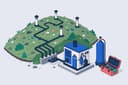
Seven landfill sites capture waste gas and sell cleaned pipeline gas plus environmental credits. Output improved recently after operating trouble, but this remains a very small business whose value hinges on reliable plants and credit rules.
In plain English
Trash keeps making methane after it is buried. At seven landfills, Kinder Morgan captures that gas, cleans it until it can enter ordinary pipelines, and sells it instead of letting the fuel go unused.
Buyers pay for the gas and for government-created credits that reward lower-impact transport fuel. This is still a tiny part of Kinder Morgan, and recent output has run below the plants' full capacity because of reliability problems. Keeping the equipment running, maintaining gas quality, and preserving the credit system matter more here than building a vast network.
Competes with Archaea Energy landfill gas (bp) · Renewable natural gas projects (OPAL Fuels)
Named in filings, launches and programs
- South System Expansion 4 (SSE4)Customer program · RampingA large Southeast gas expansion planned in two stages for late twenty twenty-eight and late twenty twenty-nine; its customers remain unnamed.
- Trident Intrastate PipelineCustomer program · RampingA new Texas gas route from Katy to Port Arthur, backed by long contracts and planned to open in stages during twenty twenty-seven and twenty twenty-eight.
- Mississippi Crossing (MSX)Customer program · RampingA contracted Mississippi-to-Alabama gas line targeted for the second quarter of twenty twenty-eight; its customers have not been named.
- Western Gateway PipelineCustomer program · AnnouncedA jointly owned fuel route toward Arizona and California, mostly backed by ten-year customer commitments and targeted for twenty twenty-nine.
- Outrigger Energy II assetsBrandBakken gas-gathering and processing assets bought in February twenty twenty-five and joined with Kinder Morgan's Hiland system.
- Monument PipelineEcosystemA Houston-area fuel transport and storage system bought in twenty twenty-six, with customers committed to pay for roughly nine more years on average.
- Evangeline PassCustomer programA completed gas expansion serving Venture Global's Plaquemines export facility; its second stage opened in July twenty twenty-five.
- Cumberland ProjectCustomer programA gas connection built for power supplier TVA that entered service in May twenty twenty-six.
- Amarillo ExpansionCustomer program · AnnouncedA fully reserved gas expansion for an unnamed data-center customer, targeted for the third quarter of twenty twenty-eight.
- Three data-center agreementsCustomer program · AnnouncedThree unnamed customers agreed to new gas projects in early twenty twenty-six; Kinder Morgan has not disclosed who they are.
- Houston Ship Channel terminal projectsCustomer program · RampingNew storage and handling work for an unnamed national oil company and an unnamed international trader, planned for twenty twenty-seven.
South System Expansion 4 (SSE4)Customer program · Ramping
A large Southeast gas expansion planned in two stages for late twenty twenty-eight and late twenty twenty-nine; its customers remain unnamed.
Trident Intrastate PipelineCustomer program · Ramping
A new Texas gas route from Katy to Port Arthur, backed by long contracts and planned to open in stages during twenty twenty-seven and twenty twenty-eight.
Mississippi Crossing (MSX)Customer program · Ramping
A contracted Mississippi-to-Alabama gas line targeted for the second quarter of twenty twenty-eight; its customers have not been named.
Western Gateway PipelineCustomer program · Announced
A jointly owned fuel route toward Arizona and California, mostly backed by ten-year customer commitments and targeted for twenty twenty-nine.
Outrigger Energy II assetsBrand
Bakken gas-gathering and processing assets bought in February twenty twenty-five and joined with Kinder Morgan's Hiland system.
Monument PipelineEcosystem
A Houston-area fuel transport and storage system bought in twenty twenty-six, with customers committed to pay for roughly nine more years on average.
Evangeline PassCustomer program
A completed gas expansion serving Venture Global's Plaquemines export facility; its second stage opened in July twenty twenty-five.
Cumberland ProjectCustomer program
A gas connection built for power supplier TVA that entered service in May twenty twenty-six.
Amarillo ExpansionCustomer program · Announced
A fully reserved gas expansion for an unnamed data-center customer, targeted for the third quarter of twenty twenty-eight.
Three data-center agreementsCustomer program · Announced
Three unnamed customers agreed to new gas projects in early twenty twenty-six; Kinder Morgan has not disclosed who they are.
Houston Ship Channel terminal projectsCustomer program · Ramping
New storage and handling work for an unnamed national oil company and an unnamed international trader, planned for twenty twenty-seven.