
Lockheed Martin (LMT)
Builds military aircraft, missiles, helicopters, naval combat systems and space hardware.
Something off on this page? Send us feedback.
Lockheed Martin is mostly a builder and caretaker of military aircraft, missiles, defense systems and spacecraft for governments. The fighter-jet franchise still dominates, while missiles and air defense are becoming the faster-growing engine. Its scale rests on years-long public contracts, but agreeing to a fixed price means a program that runs late or over budget can turn a huge order into a costly problem.
Item facts: FY2025 · year ended Dec 31, 2025, from filings, earnings calls and company pages.
Judgment weights, not filed revenue
The band summarizes business focus and direction. ~ marks estimates.
9 in detail · 14 more below
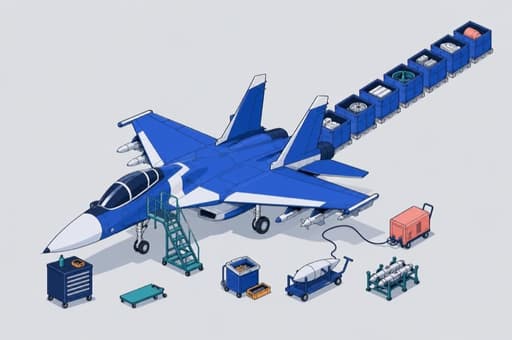
F-35 Lightning II
The fighter program is Lockheed Martin's single biggest money source, spanning new aircraft, upgrades, spare parts and upkeep. Its size makes fleet readiness and support costs matter as much as how many jets leave the factory.
Competes with Rafale (Dassault Aviation) · Gripen E (Saab)
In plain English
Think of the F-35 less as a jet sold once and more as a fleet Lockheed Martin helps keep useful for decades. It builds new fighters, updates aircraft already flying, supplies replacement parts and handles ongoing upkeep for U.S. military branches and allied governments.
Those customers pay as aircraft are built and as agreed work is completed. They return for software improvements, repairs and spare parts because a fighter fleet cannot simply switch to a different model overnight. That long relationship brings repeat work, but readiness problems or costly support can slow acceptance and squeeze what Lockheed Martin earns.
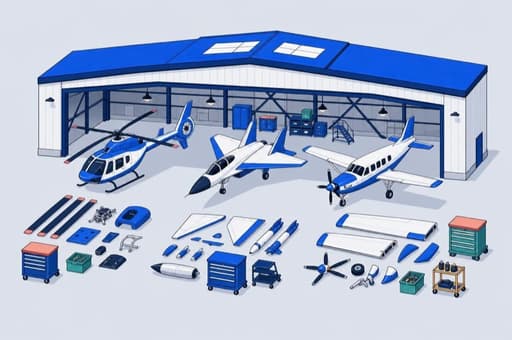
F-16, C-130J and F-22
The F-16 and C-130J each supplied 4% of company sales, with F-22 work added on top. New-aircraft counts understate the business because upgrades and fleet support keep earning after delivery.
Competes with Gripen E (Saab) · A400M (Airbus)
In plain English
Three established aircraft families fill different jobs: the F-16 is a fighter, the C-130J moves people and cargo, and Lockheed Martin continues to improve and support the F-22. Foreign buyers still order the first two, while fleets already in service need parts and updates.
A small number of finished aircraft can therefore sit beside billions of dollars of annual work. Customers pay not only for each new airframe but also for improvements and help keeping older aircraft ready. Export approvals, supplier timing and public funding decide when that work moves forward.
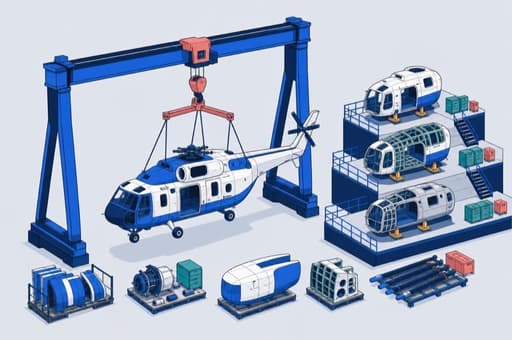
Sikorsky
Sikorsky sells military helicopters and the work that keeps them flying. A September 2025 agreement covers as many as 99 CH-53Ks for $10.855B; supplier recovery and factory learning will determine the payoff.
Competes with H-47 Chinook (Boeing) · H225M (Airbus Helicopters)
In plain English
Sikorsky makes Black Hawk, CH-53K and other helicopters for military transport and special jobs, then supports them after delivery. The U.S. Army and Marine Corps are the anchor buyers, while other governments purchase through U.S.-run foreign sales and local support partners.
The first sale begins a long service relationship: helicopters need replacement parts, repairs and trained support throughout their lives. Customers pay as production and upkeep work advances. Large orders give years of visibility, but these complicated machines pass through hundreds of suppliers, so late parts or slower factory learning can make a fixed-price promise expensive.
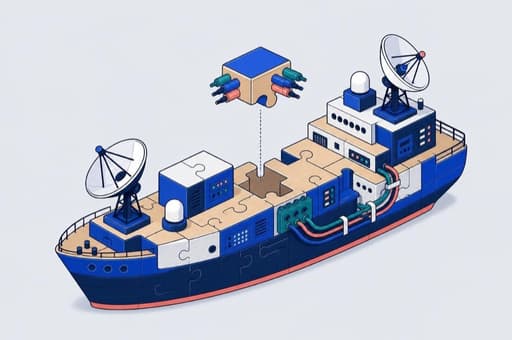
Mission Integrated Command & Control
This is the equipment and software that help warships and military teams see threats and coordinate a response. In the June 2026 quarter, sales rose by about $115M, mainly from integrated warfare systems.
Competes with 9LV Combat Management System (Saab) · TACTICOS (Thales)
In plain English
A radar can spot something, but a crew still needs one system that combines the clues and helps decide what to do. Lockheed Martin's Aegis naval system and related work connect sensors, computers, weapons and people so a ship or military unit can act as one.
Navies pay for hardware, software, installation, testing and years of upgrades. Shipbuilders place the pieces into new or rebuilt vessels, making the work dependent on their schedules too. After installation, customers keep paying for improvements and support throughout the ship's life.
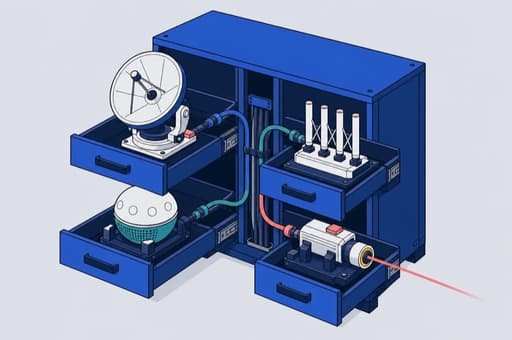
Sensors, Effectors & Mission Systems
A broad toolbox of radar, undersea detection, signal-disrupting equipment, lasers and other military systems. The surrounding division was flat in the first half of 2026, so new radar and undersea work must still turn into overall growth.
Competes with LTAMDS (Raytheon, RTX) · Sea Giraffe 4A (Saab)
In plain English
Here sit the parts that let a larger weapon or vehicle sense its surroundings and affect what happens next. Lockheed Martin supplies radar, equipment that finds submarines, tools that disrupt enemy signals and other systems, then helps connect them to ships or air-defense networks.
Military customers pay for the equipment, the work of fitting it together, the software and later support. Shipbuilders and other system makers help install it. Demand follows modernization projects, but delivery waits on the host ship or weapon, approval to use radio frequencies, computer-security checks and permission to sell abroad.
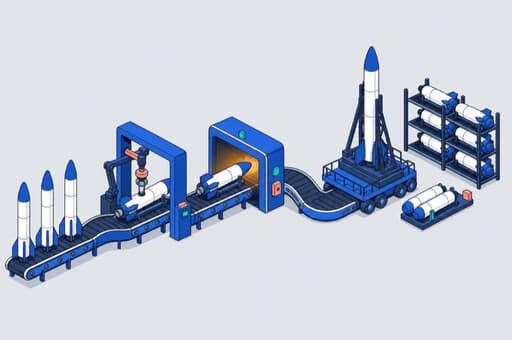
Tactical and Strike Missiles
Rockets, truck-mounted launchers, air-launched strike weapons and anti-tank missiles make this the largest missile line. Potential GMLRS awards reached $4.8B as capacity expanded; motors, materials and testing remain the production gates.
Competes with Naval Strike Missile (Kongsberg Defence & Aerospace) · Tomahawk (Raytheon, RTX)
In plain English
This shelf ranges from rockets fired by HIMARS truck launchers to long-range weapons carried by aircraft and missiles aimed at armored vehicles. Governments buy launchers, rounds, spare parts and design changes, often returning to refill stocks or extend how far and accurately the weapons can reach.
Money arrives as factories build and test the agreed equipment. Demand is rising faster here than in Lockheed Martin's other main businesses, and European production partnerships can add local supply. The limiting step is practical: rocket motors, special materials, test capacity and yearly government funding must all arrive before output can rise.
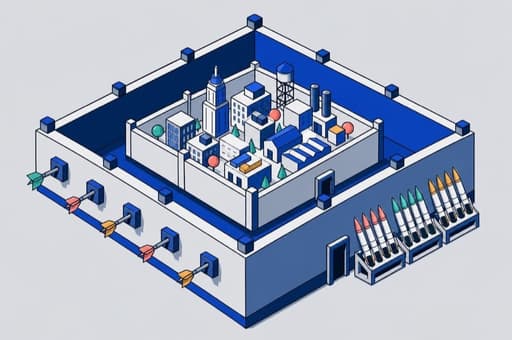
Integrated Air and Missile Defense
PAC-3 and THAAD helped drive Lockheed Martin's pile of signed work sharply higher by June 2026. Factory capacity, annual funding and successful tests decide how much of that work becomes profitable sales.
Competes with SAMP/T NG with Aster interceptors (Eurosam/MBDA) · Arrow 3 (Israel Aerospace Industries)
In plain English
PAC-3 and THAAD are systems built to detect and destroy incoming aircraft or missiles. Lockheed Martin supplies the defensive missiles, equipment for launching them, the work needed to connect the pieces and later support. The U.S. Army, the Missile Defense Agency and allied governments are the main buyers.
Orders wait their turn much like reservations at a full workshop: a signed promise gives visibility, but it does not build the product. Customers keep buying to add defenses and refill stocks. Rocket motors, testing and yearly public budgets set the pace, while a large contract sets a maximum rather than guaranteeing every dollar.
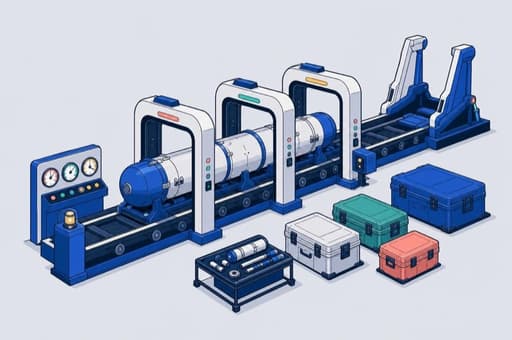
Strategic and Missile Defense
Long-range deterrent missiles and the new Next Generation Interceptor make up most of Lockheed Martin's space business. In the June 2026 quarter, added work on these programs contributed about $190M of sales growth.
Competes with Ground-based Midcourse Defense (Northrop Grumman) · Sentinel (Northrop Grumman)
In plain English
The slow, exacting work here covers Fleet Ballistic Missile and Trident programs, plus the Next Generation Interceptor intended to modernize U.S. homeland missile defense. The U.S. Navy and Missile Defense Agency pay for design, production, testing and improvements over many years.
Progress works like passing a series of locked gates: design reviews and flight tests must succeed before the next stage opens and more work can be completed. That creates a durable stream of engineering and manufacturing, but a failed test or delayed approval can move both sales and profit into a later period. Initial placement of the new interceptor is targeted for 2028.
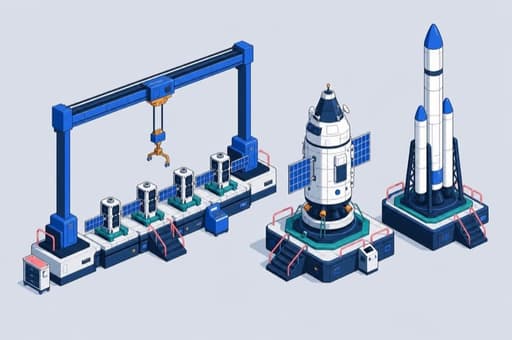
National Security Space
Lockheed Martin builds spacecraft for missile warning, communications and navigation. A December 2025 order topped $1B for 18 missile-tracking vehicles, showing the shift toward groups of smaller satellites as well as large platforms.
Competes with Starshield (SpaceX) · Next-Generation OPIR Polar (Northrop Grumman)
In plain English
These are satellites and related ground systems that warn about missiles, carry secure communications or help with navigation. Some are large, specialized spacecraft; others work as a group of smaller vehicles circling Earth. Terran Orbital adds standard spacecraft bodies that Lockheed Martin can build different missions around.
The Space Force, Space Development Agency and secretive government offices pay as designs, spacecraft and tests are completed. Launch providers then carry the hardware into orbit. Each mission depends on its sensors, rocket, ground equipment and final acceptance lining up, so one delayed piece can hold back the whole job.


 F-35 Lightning IIThe fighter program is Lockheed Martin's single biggest money source, spanning new aircraft, upgrades, spare parts and upkeep. Its size makes fleet readiness and support costs matter as much as how many jets leave the factory.
The fighter program is Lockheed Martin's single biggest money source, spanning new aircraft, upgrades, spare parts and upkeep. Its size makes fleet readiness and support costs matter as much as how many jets leave the factory.
In plain English
Think of the F-35 less as a jet sold once and more as a fleet Lockheed Martin helps keep useful for decades. It builds new fighters, updates aircraft already flying, supplies replacement parts and handles ongoing upkeep for U.S. military branches and allied governments.
Those customers pay as aircraft are built and as agreed work is completed. They return for software improvements, repairs and spare parts because a fighter fleet cannot simply switch to a different model overnight. That long relationship brings repeat work, but readiness problems or costly support can slow acceptance and squeeze what Lockheed Martin earns.
Competes with Rafale (Dassault Aviation) · Gripen E (Saab)
 F-16, C-130J and F-22The F-16 and C-130J each supplied 4% of company sales, with F-22 work added on top. New-aircraft counts understate the business because upgrades and fleet support keep earning after delivery.
The F-16 and C-130J each supplied 4% of company sales, with F-22 work added on top. New-aircraft counts understate the business because upgrades and fleet support keep earning after delivery.
In plain English
Three established aircraft families fill different jobs: the F-16 is a fighter, the C-130J moves people and cargo, and Lockheed Martin continues to improve and support the F-22. Foreign buyers still order the first two, while fleets already in service need parts and updates.
A small number of finished aircraft can therefore sit beside billions of dollars of annual work. Customers pay not only for each new airframe but also for improvements and help keeping older aircraft ready. Export approvals, supplier timing and public funding decide when that work moves forward.
Competes with Gripen E (Saab) · A400M (Airbus)
 SikorskySikorsky sells military helicopters and the work that keeps them flying. A September 2025 agreement covers as many as 99 CH-53Ks for $10.855B; supplier recovery and factory learning will determine the payoff.
Sikorsky sells military helicopters and the work that keeps them flying. A September 2025 agreement covers as many as 99 CH-53Ks for $10.855B; supplier recovery and factory learning will determine the payoff.
In plain English
Sikorsky makes Black Hawk, CH-53K and other helicopters for military transport and special jobs, then supports them after delivery. The U.S. Army and Marine Corps are the anchor buyers, while other governments purchase through U.S.-run foreign sales and local support partners.
The first sale begins a long service relationship: helicopters need replacement parts, repairs and trained support throughout their lives. Customers pay as production and upkeep work advances. Large orders give years of visibility, but these complicated machines pass through hundreds of suppliers, so late parts or slower factory learning can make a fixed-price promise expensive.
Competes with H-47 Chinook (Boeing) · H225M (Airbus Helicopters)
 Mission Integrated Command & ControlThis is the equipment and software that help warships and military teams see threats and coordinate a response. In the June 2026 quarter, sales rose by about $115M, mainly from integrated warfare systems.
This is the equipment and software that help warships and military teams see threats and coordinate a response. In the June 2026 quarter, sales rose by about $115M, mainly from integrated warfare systems.
In plain English
A radar can spot something, but a crew still needs one system that combines the clues and helps decide what to do. Lockheed Martin's Aegis naval system and related work connect sensors, computers, weapons and people so a ship or military unit can act as one.
Navies pay for hardware, software, installation, testing and years of upgrades. Shipbuilders place the pieces into new or rebuilt vessels, making the work dependent on their schedules too. After installation, customers keep paying for improvements and support throughout the ship's life.
Competes with 9LV Combat Management System (Saab) · TACTICOS (Thales)
 Sensors, Effectors & Mission SystemsA broad toolbox of radar, undersea detection, signal-disrupting equipment, lasers and other military systems. The surrounding division was flat in the first half of 2026, so new radar and undersea work must still turn into overall growth.
A broad toolbox of radar, undersea detection, signal-disrupting equipment, lasers and other military systems. The surrounding division was flat in the first half of 2026, so new radar and undersea work must still turn into overall growth.
In plain English
Here sit the parts that let a larger weapon or vehicle sense its surroundings and affect what happens next. Lockheed Martin supplies radar, equipment that finds submarines, tools that disrupt enemy signals and other systems, then helps connect them to ships or air-defense networks.
Military customers pay for the equipment, the work of fitting it together, the software and later support. Shipbuilders and other system makers help install it. Demand follows modernization projects, but delivery waits on the host ship or weapon, approval to use radio frequencies, computer-security checks and permission to sell abroad.
Competes with LTAMDS (Raytheon, RTX) · Sea Giraffe 4A (Saab)
 Tactical and Strike MissilesRockets, truck-mounted launchers, air-launched strike weapons and anti-tank missiles make this the largest missile line. Potential GMLRS awards reached $4.8B as capacity expanded; motors, materials and testing remain the production gates.
Rockets, truck-mounted launchers, air-launched strike weapons and anti-tank missiles make this the largest missile line. Potential GMLRS awards reached $4.8B as capacity expanded; motors, materials and testing remain the production gates.
In plain English
This shelf ranges from rockets fired by HIMARS truck launchers to long-range weapons carried by aircraft and missiles aimed at armored vehicles. Governments buy launchers, rounds, spare parts and design changes, often returning to refill stocks or extend how far and accurately the weapons can reach.
Money arrives as factories build and test the agreed equipment. Demand is rising faster here than in Lockheed Martin's other main businesses, and European production partnerships can add local supply. The limiting step is practical: rocket motors, special materials, test capacity and yearly government funding must all arrive before output can rise.
Competes with Naval Strike Missile (Kongsberg Defence & Aerospace) · Tomahawk (Raytheon, RTX)
 Integrated Air and Missile DefensePAC-3 and THAAD helped drive Lockheed Martin's pile of signed work sharply higher by June 2026. Factory capacity, annual funding and successful tests decide how much of that work becomes profitable sales.
PAC-3 and THAAD helped drive Lockheed Martin's pile of signed work sharply higher by June 2026. Factory capacity, annual funding and successful tests decide how much of that work becomes profitable sales.
In plain English
PAC-3 and THAAD are systems built to detect and destroy incoming aircraft or missiles. Lockheed Martin supplies the defensive missiles, equipment for launching them, the work needed to connect the pieces and later support. The U.S. Army, the Missile Defense Agency and allied governments are the main buyers.
Orders wait their turn much like reservations at a full workshop: a signed promise gives visibility, but it does not build the product. Customers keep buying to add defenses and refill stocks. Rocket motors, testing and yearly public budgets set the pace, while a large contract sets a maximum rather than guaranteeing every dollar.
Competes with SAMP/T NG with Aster interceptors (Eurosam/MBDA) · Arrow 3 (Israel Aerospace Industries)
 Strategic and Missile DefenseLong-range deterrent missiles and the new Next Generation Interceptor make up most of Lockheed Martin's space business. In the June 2026 quarter, added work on these programs contributed about $190M of sales growth.
Long-range deterrent missiles and the new Next Generation Interceptor make up most of Lockheed Martin's space business. In the June 2026 quarter, added work on these programs contributed about $190M of sales growth.
In plain English
The slow, exacting work here covers Fleet Ballistic Missile and Trident programs, plus the Next Generation Interceptor intended to modernize U.S. homeland missile defense. The U.S. Navy and Missile Defense Agency pay for design, production, testing and improvements over many years.
Progress works like passing a series of locked gates: design reviews and flight tests must succeed before the next stage opens and more work can be completed. That creates a durable stream of engineering and manufacturing, but a failed test or delayed approval can move both sales and profit into a later period. Initial placement of the new interceptor is targeted for 2028.
Competes with Ground-based Midcourse Defense (Northrop Grumman) · Sentinel (Northrop Grumman)
 National Security SpaceLockheed Martin builds spacecraft for missile warning, communications and navigation. A December 2025 order topped $1B for 18 missile-tracking vehicles, showing the shift toward groups of smaller satellites as well as large platforms.
Lockheed Martin builds spacecraft for missile warning, communications and navigation. A December 2025 order topped $1B for 18 missile-tracking vehicles, showing the shift toward groups of smaller satellites as well as large platforms.
In plain English
These are satellites and related ground systems that warn about missiles, carry secure communications or help with navigation. Some are large, specialized spacecraft; others work as a group of smaller vehicles circling Earth. Terran Orbital adds standard spacecraft bodies that Lockheed Martin can build different missions around.
The Space Force, Space Development Agency and secretive government offices pay as designs, spacecraft and tests are completed. Launch providers then carry the hardware into orbit. Each mission depends on its sensors, rocket, ground equipment and final acceptance lining up, so one delayed piece can hold back the whole job.
Competes with Starshield (SpaceX) · Next-Generation OPIR Polar (Northrop Grumman)
Named in filings, launches and programs
- U.S. Government customersCustomer programThe U.S. Government supplied 72% of FY2025 revenue; allied purchases often run through its Foreign Military Sales system.
- Skunk Works & ClassifiedProduct lineAdvanced and secret aircraft development contributed roughly 4.4% of FY2025 company revenue.
- Commercial Civil Space / OtherProduct lineOrion and other civil or commercial space work contributed roughly 2.6% of FY2025 revenue.
- Sensors & Global SustainmentProduct lineMissile-division sensors, targeting equipment and logistics work contributed roughly 2.3% of FY2025 revenue.
- Training & Logistics SolutionsServiceSimulation, training and ongoing equipment support contributed roughly 1.6% of FY2025 revenue.
- Energy / OtherProduct lineThe remaining small missile-division line contributed roughly 0.4% of FY2025 revenue.
- United Launch AllianceEcosystemA half-owned Boeing venture that launches spacecraft; its FY2025 profit contribution was insignificant, while Lockheed Martin still backed some borrowing.
- Terran Orbital and Tyvak InternationalBrandAcquired small-satellite builders that supply spacecraft bodies and mission operations, including to customers beyond Lockheed Martin.
- Rapid SolutionsBrandA $360M acquisition that adds tools for finding and mapping radio signals and activity on Earth.
- Ultra MaritimeBrand · AnnouncedA planned $3.45B purchase meant to deepen undersea-warfare work; it was not yet owned on the composition date.
- PAC-3 ACEProduct · AnnouncedA lower-cost member of the PAC-3 defensive-missile family, announced in July 2026 with no separate sales disclosed.
- SanctumPlatform · Pre-revenueA demonstrated system for coordinating defenses against uncrewed aircraft; no separate sales have been disclosed.
- StrigoProduct line · AnnouncedA missile-technology product center and family announced in August 2026, with no separate sales disclosed.
- Golden Dome for AmericaCustomer program · AnnouncedA multi-company U.S. homeland-defense effort where Lockheed Martin seeks sensor, defensive-missile and coordination-system roles; no isolated sales are disclosed.
U.S. Government customersCustomer program
The U.S. Government supplied 72% of FY2025 revenue; allied purchases often run through its Foreign Military Sales system.
Skunk Works & ClassifiedProduct line
Advanced and secret aircraft development contributed roughly 4.4% of FY2025 company revenue.
Commercial Civil Space / OtherProduct line
Orion and other civil or commercial space work contributed roughly 2.6% of FY2025 revenue.
Sensors & Global SustainmentProduct line
Missile-division sensors, targeting equipment and logistics work contributed roughly 2.3% of FY2025 revenue.
Training & Logistics SolutionsService
Simulation, training and ongoing equipment support contributed roughly 1.6% of FY2025 revenue.
Energy / OtherProduct line
The remaining small missile-division line contributed roughly 0.4% of FY2025 revenue.
United Launch AllianceEcosystem
A half-owned Boeing venture that launches spacecraft; its FY2025 profit contribution was insignificant, while Lockheed Martin still backed some borrowing.
Terran Orbital and Tyvak InternationalBrand
Acquired small-satellite builders that supply spacecraft bodies and mission operations, including to customers beyond Lockheed Martin.
Rapid SolutionsBrand
A $360M acquisition that adds tools for finding and mapping radio signals and activity on Earth.
Ultra MaritimeBrand · Announced
A planned $3.45B purchase meant to deepen undersea-warfare work; it was not yet owned on the composition date.
PAC-3 ACEProduct · Announced
A lower-cost member of the PAC-3 defensive-missile family, announced in July 2026 with no separate sales disclosed.
SanctumPlatform · Pre-revenue
A demonstrated system for coordinating defenses against uncrewed aircraft; no separate sales have been disclosed.
StrigoProduct line · Announced
A missile-technology product center and family announced in August 2026, with no separate sales disclosed.
Golden Dome for AmericaCustomer program · Announced
A multi-company U.S. homeland-defense effort where Lockheed Martin seeks sensor, defensive-missile and coordination-system roles; no isolated sales are disclosed.