
Marriott International (MAR)
Franchisor and operator of global hotel brands linked by Marriott Bonvoy.
Something off on this page? Send us feedback.
Marriott is less a hotel owner than the brand, booking desk, and manager behind a vast network of hotels funded by other people. Most reported sales are simply owners repaying hotel and shared-program costs; the real earnings engine is fees for brands, bookings, management, cards, and loyalty. It is widening that network into cheaper hotel formats, residences, rentals, and digital tools while carrying very little property itself.
Item facts: FY2025 · year ended Dec 31, 2025, from filings, earnings calls and company pages.
Judgment weights, not filed revenue
The band summarizes business focus and direction. ~ marks estimates.
9 in detail · 16 more below

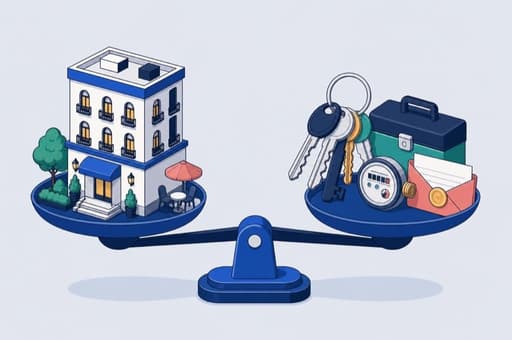
Cost Reimbursements
Hotel owners repay Marriott for staff and shared services, making this enormous sales line almost profitless by design. In FY2025, costs ran $299 million above collections; watch whether billing keeps pace with spending.
Competes with Cost Reimbursement Revenues (Hilton) · System Fund (IHG)
In plain English
Picture Marriott holding the shopping list for thousands of hotels. It pays managed-hotel wages and runs shared loyalty, booking, marketing, and support services, then sends the bill back to hotel owners. The owners are funding the work; Marriott is moving their money through its accounts.
That is why this is nearly three quarters of sales but not the main source of profit. Its intended job is to cover costs, though the timing is imperfect: Marriott can pay workers or suppliers before it collects from owners, temporarily leaving a gain or loss.
Owned, Leased, and Other
This is the small corner where Marriott bears building-level risks, alongside other activity. It produced $218 million after direct costs in FY2025; watch labor, leases, renovations, and property setbacks.
Competes with Ownership segment (Hilton) · Owned and Leased Hotels (Hyatt)
In plain English
Here Marriott sometimes plays the traditional hotelier. Guests pay for rooms, meals, and events, while Marriott itself pays the staff, rent, utilities, and upkeep. Unlike a franchised hotel, a slow week lands directly on Marriott's own results.
Only a sliver of the network is owned or leased, and this sales line also includes contract-ending payments and other activity. That makes it broader than a simple count of room nights. The attraction is full control of the guest experience; the cost is exposure to wages, repairs, lawsuits, and empty rooms.

Franchise Fees
Owners pay to put Marriott names and booking reach on hotels they fund and run. The line brought in $3.325 billion in FY2025; watch signed conversions become open, well-kept hotels.
Competes with Management and Franchise segment (Hilton) · Hotel Franchising business (Wyndham)
In plain English
An owner supplies the land, building, staff, and loans; Marriott supplies a familiar hotel name, booking channels, operating rules, and access to its loyalty members. It works like renting a proven playbook and a busy storefront sign without Marriott buying the store.
The owner pays an opening fee and usually sends Marriott four to seven cents of every room-sales dollar for ten to twenty-five years. Marriott also collects licensing money from credit cards, residences, timeshares, and other uses of its names. More open rooms and stronger room sales mean more fees, with little building cost for Marriott.

Marriott Bonvoy
Members supplied 68% of global room nights in FY2025, steering guests toward Marriott's own channels. Card income is growing quickly; watch Marriott keep rewards attractive without pushing too much cost onto hotel owners.
Competes with Hilton Honors (Hilton) · World of Hyatt (Hyatt)
In plain English
Bonvoy is the connective tissue between travelers, hotels, and Marriott-branded credit cards. A member books a room or spends on a card, earns points, and later trades those points for another stay. A bigger hotel network makes the points more useful, while the points give travelers a reason to return.
Hotels fund much of the program, and banks Chase and American Express pay Marriott for using its names on cards. Marriott earns fees and sends more bookings directly to participating hotels. Owners keep paying only if those bookings and repeat guests are worth the charges, which is why their pushback matters.

Luxury
Luxury was 9.5% of Marriott's rooms in June 2026 but can command much higher room rates and richer event spending. Watch destination safety and international travel, especially around Middle East disruptions.
Competes with Waldorf Astoria, Conrad, and LXR (Hilton) · Park Hyatt, Alila, and Andaz (Hyatt)
In plain English
At the top of Marriott's ladder sit names such as The Ritz-Carlton, St. Regis, W, and EDITION. These hotels sell more than a bed: resorts, restaurants, meetings, and branded homes all raise what a property can earn from one guest.
Developers pay for the buildings and use Marriott's names, booking reach, and management know-how to attract affluent travelers. Marriott then earns franchise or management fees tied to hotel sales and profit. High room rates make each hotel unusually valuable to the fee network, but luxury demand depends heavily on flights, safe destinations, and big-ticket travel holding up.
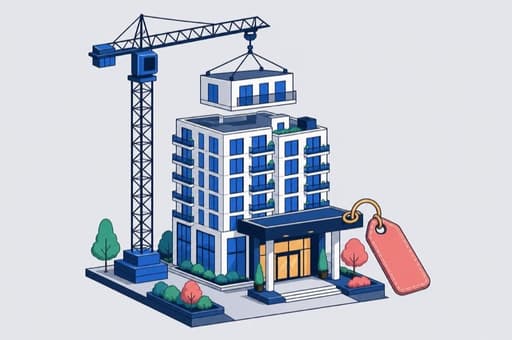
Branded Residences
Developers pay Marriott to put its hotel names and services on homes they finance and sell. Fees fell 10% in FY2025; watch the uneven timing of finished projects and home closings.
Competes with Four Seasons Private Residences (Four Seasons) · Waldorf Astoria Residences (Hilton)
In plain English
This is a Marriott name attached to an apartment or villa someone can own. A developer pays for construction, sells the homes, and may connect them to a nearby hotel for services. Buyers are paying for both the property and the promise of a familiar standard.
Marriott usually does not fund the development. It collects fees when homes sell and may keep earning license or association fees afterward. That lets Marriott stretch a hotel name into real estate without paying for most construction, but the money arrives unevenly: permits, building work, buyer demand, and the developer's finances can all delay a closing.
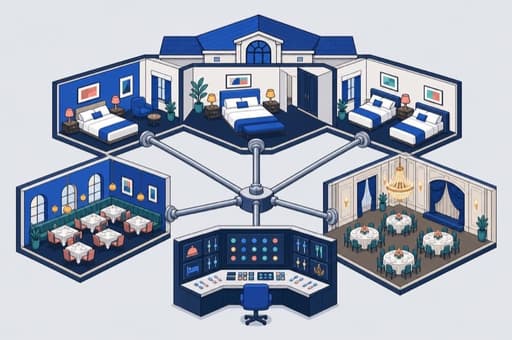
Base and Incentive Management Fees
Marriott runs hotels that other people own, collecting fees tied first to hotel sales and then to profit. The business produced $2.113 billion in FY2025; watch room demand and agreed owner profit targets.
Competes with Hotel management contracts (Hilton) · Management and Hotel Services (Hyatt)
In plain English
Some owners want more than a name and rulebook: they hire Marriott to direct the hotel. Owner-employed teams handle guests, rooms, restaurants, and meetings, while Marriott supplies direction, systems, and operating standards. The owner still pays the bills and funds the building.
Marriott receives a basic fee that rises with hotel sales, plus an extra fee when profit clears an agreed bar. That second layer rewards better operations but disappears faster when wages rise, rooms sit empty, or restaurants and ballrooms underperform. Contracts usually last twenty to thirty years, making a well-run hotel a long stream of fees.
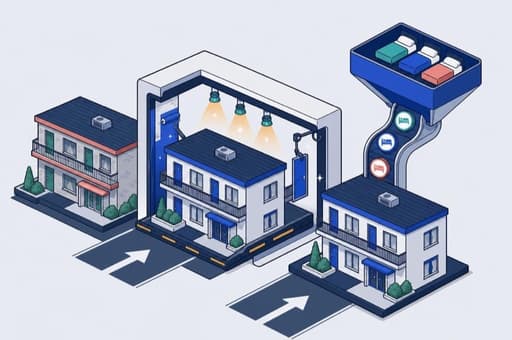
Midscale
Midscale was only 1.9% of rooms in June 2026, so rapid growth starts from a small base. Watch whether inexpensive conversions and simpler new hotels open quickly enough to build real scale.
Competes with Garner hotels (IHG) · Spark by Hilton (Hilton) · Hyatt Studios (Hyatt)
In plain English
The new lower-priced end includes City Express, Four Points Flex, Series, and StudioRes. It is meant for travelers who want a dependable room without luxury extras, and for owners who need a hotel that is cheaper to build or easier to convert from another name.
Owners finance the property and pay Marriott fees for a brand, bookings, and Bonvoy access. Conversions matter because an existing hotel can switch brands faster than a new one can rise from bare ground. Marriott gets another path to room growth; owners get wider distribution, provided the required renovations stay affordable.
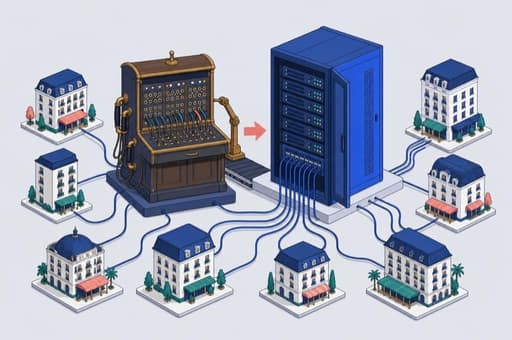
Digital and Technology Transformation
By August 2026, Marriott was replacing the machinery behind reservations, hotel work, and loyalty across thousands of hotels. Roughly a quarter of planned investment spending supports this program and company systems; watch each switch stay reliable.
Competes with Property Engagement Platform (Hilton) · Concerto and conversational search (IHG)
In plain English
Behind every booking is a chain of software that finds a room, sets availability, records the guest, and tells the hotel what to expect. Marriott is replacing that aging chain while thousands of properties keep taking reservations. Amadeus supplies the new central booking system, and hotels are also moving to a shared working environment.
Owners use the tools and repay much of the qualifying cost. Marriott benefits when one cleaner system makes direct booking, loyalty, and hotel work easier across the network. The risk is changing the engine while the car is moving: outages, weak data security, or awkward tools can quickly reach guests and hotel teams.


 Cost ReimbursementsHotel owners repay Marriott for staff and shared services, making this enormous sales line almost profitless by design. In FY2025, costs ran $299 million above collections; watch whether billing keeps pace with spending.
Hotel owners repay Marriott for staff and shared services, making this enormous sales line almost profitless by design. In FY2025, costs ran $299 million above collections; watch whether billing keeps pace with spending.
In plain English
Picture Marriott holding the shopping list for thousands of hotels. It pays managed-hotel wages and runs shared loyalty, booking, marketing, and support services, then sends the bill back to hotel owners. The owners are funding the work; Marriott is moving their money through its accounts.
That is why this is nearly three quarters of sales but not the main source of profit. Its intended job is to cover costs, though the timing is imperfect: Marriott can pay workers or suppliers before it collects from owners, temporarily leaving a gain or loss.
Competes with Cost Reimbursement Revenues (Hilton) · System Fund (IHG)
 Owned, Leased, and OtherThis is the small corner where Marriott bears building-level risks, alongside other activity. It produced $218 million after direct costs in FY2025; watch labor, leases, renovations, and property setbacks.
This is the small corner where Marriott bears building-level risks, alongside other activity. It produced $218 million after direct costs in FY2025; watch labor, leases, renovations, and property setbacks.
In plain English
Here Marriott sometimes plays the traditional hotelier. Guests pay for rooms, meals, and events, while Marriott itself pays the staff, rent, utilities, and upkeep. Unlike a franchised hotel, a slow week lands directly on Marriott's own results.
Only a sliver of the network is owned or leased, and this sales line also includes contract-ending payments and other activity. That makes it broader than a simple count of room nights. The attraction is full control of the guest experience; the cost is exposure to wages, repairs, lawsuits, and empty rooms.
Competes with Ownership segment (Hilton) · Owned and Leased Hotels (Hyatt)
 Franchise FeesOwners pay to put Marriott names and booking reach on hotels they fund and run. The line brought in $3.325 billion in FY2025; watch signed conversions become open, well-kept hotels.
Owners pay to put Marriott names and booking reach on hotels they fund and run. The line brought in $3.325 billion in FY2025; watch signed conversions become open, well-kept hotels.
In plain English
An owner supplies the land, building, staff, and loans; Marriott supplies a familiar hotel name, booking channels, operating rules, and access to its loyalty members. It works like renting a proven playbook and a busy storefront sign without Marriott buying the store.
The owner pays an opening fee and usually sends Marriott four to seven cents of every room-sales dollar for ten to twenty-five years. Marriott also collects licensing money from credit cards, residences, timeshares, and other uses of its names. More open rooms and stronger room sales mean more fees, with little building cost for Marriott.
Competes with Management and Franchise segment (Hilton) · Hotel Franchising business (Wyndham)
 Marriott BonvoyMembers supplied 68% of global room nights in FY2025, steering guests toward Marriott's own channels. Card income is growing quickly; watch Marriott keep rewards attractive without pushing too much cost onto hotel owners.
Members supplied 68% of global room nights in FY2025, steering guests toward Marriott's own channels. Card income is growing quickly; watch Marriott keep rewards attractive without pushing too much cost onto hotel owners.
In plain English
Bonvoy is the connective tissue between travelers, hotels, and Marriott-branded credit cards. A member books a room or spends on a card, earns points, and later trades those points for another stay. A bigger hotel network makes the points more useful, while the points give travelers a reason to return.
Hotels fund much of the program, and banks Chase and American Express pay Marriott for using its names on cards. Marriott earns fees and sends more bookings directly to participating hotels. Owners keep paying only if those bookings and repeat guests are worth the charges, which is why their pushback matters.
Competes with Hilton Honors (Hilton) · World of Hyatt (Hyatt)
 LuxuryLuxury was 9.5% of Marriott's rooms in June 2026 but can command much higher room rates and richer event spending. Watch destination safety and international travel, especially around Middle East disruptions.
Luxury was 9.5% of Marriott's rooms in June 2026 but can command much higher room rates and richer event spending. Watch destination safety and international travel, especially around Middle East disruptions.
In plain English
At the top of Marriott's ladder sit names such as The Ritz-Carlton, St. Regis, W, and EDITION. These hotels sell more than a bed: resorts, restaurants, meetings, and branded homes all raise what a property can earn from one guest.
Developers pay for the buildings and use Marriott's names, booking reach, and management know-how to attract affluent travelers. Marriott then earns franchise or management fees tied to hotel sales and profit. High room rates make each hotel unusually valuable to the fee network, but luxury demand depends heavily on flights, safe destinations, and big-ticket travel holding up.
Competes with Waldorf Astoria, Conrad, and LXR (Hilton) · Park Hyatt, Alila, and Andaz (Hyatt)
 Branded ResidencesDevelopers pay Marriott to put its hotel names and services on homes they finance and sell. Fees fell 10% in FY2025; watch the uneven timing of finished projects and home closings.
Developers pay Marriott to put its hotel names and services on homes they finance and sell. Fees fell 10% in FY2025; watch the uneven timing of finished projects and home closings.
In plain English
This is a Marriott name attached to an apartment or villa someone can own. A developer pays for construction, sells the homes, and may connect them to a nearby hotel for services. Buyers are paying for both the property and the promise of a familiar standard.
Marriott usually does not fund the development. It collects fees when homes sell and may keep earning license or association fees afterward. That lets Marriott stretch a hotel name into real estate without paying for most construction, but the money arrives unevenly: permits, building work, buyer demand, and the developer's finances can all delay a closing.
Competes with Four Seasons Private Residences (Four Seasons) · Waldorf Astoria Residences (Hilton)
 Base and Incentive Management FeesMarriott runs hotels that other people own, collecting fees tied first to hotel sales and then to profit. The business produced $2.113 billion in FY2025; watch room demand and agreed owner profit targets.
Marriott runs hotels that other people own, collecting fees tied first to hotel sales and then to profit. The business produced $2.113 billion in FY2025; watch room demand and agreed owner profit targets.
In plain English
Some owners want more than a name and rulebook: they hire Marriott to direct the hotel. Owner-employed teams handle guests, rooms, restaurants, and meetings, while Marriott supplies direction, systems, and operating standards. The owner still pays the bills and funds the building.
Marriott receives a basic fee that rises with hotel sales, plus an extra fee when profit clears an agreed bar. That second layer rewards better operations but disappears faster when wages rise, rooms sit empty, or restaurants and ballrooms underperform. Contracts usually last twenty to thirty years, making a well-run hotel a long stream of fees.
Competes with Hotel management contracts (Hilton) · Management and Hotel Services (Hyatt)
 MidscaleMidscale was only 1.9% of rooms in June 2026, so rapid growth starts from a small base. Watch whether inexpensive conversions and simpler new hotels open quickly enough to build real scale.
Midscale was only 1.9% of rooms in June 2026, so rapid growth starts from a small base. Watch whether inexpensive conversions and simpler new hotels open quickly enough to build real scale.
In plain English
The new lower-priced end includes City Express, Four Points Flex, Series, and StudioRes. It is meant for travelers who want a dependable room without luxury extras, and for owners who need a hotel that is cheaper to build or easier to convert from another name.
Owners finance the property and pay Marriott fees for a brand, bookings, and Bonvoy access. Conversions matter because an existing hotel can switch brands faster than a new one can rise from bare ground. Marriott gets another path to room growth; owners get wider distribution, provided the required renovations stay affordable.
Competes with Garner hotels (IHG) · Spark by Hilton (Hilton) · Hyatt Studios (Hyatt)
 Digital and Technology TransformationBy August 2026, Marriott was replacing the machinery behind reservations, hotel work, and loyalty across thousands of hotels. Roughly a quarter of planned investment spending supports this program and company systems; watch each switch stay reliable.
By August 2026, Marriott was replacing the machinery behind reservations, hotel work, and loyalty across thousands of hotels. Roughly a quarter of planned investment spending supports this program and company systems; watch each switch stay reliable.
In plain English
Behind every booking is a chain of software that finds a room, sets availability, records the guest, and tells the hotel what to expect. Marriott is replacing that aging chain while thousands of properties keep taking reservations. Amadeus supplies the new central booking system, and hotels are also moving to a shared working environment.
Owners use the tools and repay much of the qualifying cost. Marriott benefits when one cleaner system makes direct booking, loyalty, and hotel work easier across the network. The risk is changing the engine while the car is moving: outages, weak data security, or awkward tools can quickly reach guests and hotel teams.
Competes with Property Engagement Platform (Hilton) · Concerto and conversational search (IHG)
Named in filings, launches and programs
- PremiumProduct lineThe middle of Marriott's price ladder, spanning more than seven hundred thousand rooms across the world.
- SelectProduct lineMarriott's largest tier by property count, built around simpler hotels and more than six thousand locations.
- Longer StayProduct lineHotel rooms for longer stays across several price tiers, gathered under one portfolio of six named lodging lines.
- citizenMBrandHotel brand acquired in 2025 for $355 million, adding a few dozen open properties to Marriott's network.
- Series by MarriottBrand · RampingA conversion collection for regional hotel groups, with anchor deals supplying growth in India and Greater China.
- Outdoor Collection by Marriott BonvoyBrand · RampingCabins and outdoor stays assembled from acquired Postcard Cabins and a long-term Trailborn agreement.
- Homes & Villas by Marriott BonvoyPlatformProfessionally managed whole-home rentals that extend Bonvoy beyond hotels and compete with Airbnb and Vrbo.
- Apartments by Marriott BonvoyBrand · RampingA very small but growing set of apartment-style stays inside the wider longer-stay portfolio.
- MGM Collection with Marriott BonvoyCustomer programA long-term licensing relationship connecting a dozen large MGM properties to Marriott's booking and loyalty network.
- Design HotelsEcosystemAn affiliated collection linking a few hundred properties to Marriott's wider hotel system.
- The Ritz-Carlton Yacht CollectionBrandA licensed luxury cruise extension whose three vessels are counted inside Marriott's room network.
- TimeshareServiceLicensed vacation-ownership properties expected to produce $110 million to $115 million of fees in FY2026.
- LefayBrand · RampingA luxury-wellness joint venture with the Leali family, starting from two operating Italian properties.
- Ask BonvoyPlatform · RampingA conversational hotel-search tool in phased U.S. English testing, using Marriott property information to answer trip questions.
- Marriott Media NetworkPlatform · RampingAn advertising initiative whose expected FY2026 contribution was cut because the rollout moved more slowly than planned.
- LG guest-room technology platformPlatform · AnnouncedRemotely run room entertainment and controls announced with LG, beginning with a roughly forty-hotel U.S. and Canada pilot.
PremiumProduct line
The middle of Marriott's price ladder, spanning more than seven hundred thousand rooms across the world.
SelectProduct line
Marriott's largest tier by property count, built around simpler hotels and more than six thousand locations.
Longer StayProduct line
Hotel rooms for longer stays across several price tiers, gathered under one portfolio of six named lodging lines.
citizenMBrand
Hotel brand acquired in 2025 for $355 million, adding a few dozen open properties to Marriott's network.
Series by MarriottBrand · Ramping
A conversion collection for regional hotel groups, with anchor deals supplying growth in India and Greater China.
Outdoor Collection by Marriott BonvoyBrand · Ramping
Cabins and outdoor stays assembled from acquired Postcard Cabins and a long-term Trailborn agreement.
Homes & Villas by Marriott BonvoyPlatform
Professionally managed whole-home rentals that extend Bonvoy beyond hotels and compete with Airbnb and Vrbo.
Apartments by Marriott BonvoyBrand · Ramping
A very small but growing set of apartment-style stays inside the wider longer-stay portfolio.
MGM Collection with Marriott BonvoyCustomer program
A long-term licensing relationship connecting a dozen large MGM properties to Marriott's booking and loyalty network.
Design HotelsEcosystem
An affiliated collection linking a few hundred properties to Marriott's wider hotel system.
The Ritz-Carlton Yacht CollectionBrand
A licensed luxury cruise extension whose three vessels are counted inside Marriott's room network.
TimeshareService
Licensed vacation-ownership properties expected to produce $110 million to $115 million of fees in FY2026.
LefayBrand · Ramping
A luxury-wellness joint venture with the Leali family, starting from two operating Italian properties.
Ask BonvoyPlatform · Ramping
A conversational hotel-search tool in phased U.S. English testing, using Marriott property information to answer trip questions.
Marriott Media NetworkPlatform · Ramping
An advertising initiative whose expected FY2026 contribution was cut because the rollout moved more slowly than planned.
LG guest-room technology platformPlatform · Announced
Remotely run room entertainment and controls announced with LG, beginning with a roughly forty-hotel U.S. and Canada pilot.