
Medline (MDLN)
Integrates medical-surgical products, third-party distribution, logistics, and clinical implementation support.
Something off on this page? Send us feedback.
Medline moves medical supplies into hospitals — gloves, surgical kits, dressings, everything a ward runs through in a day — and makes a growing share of them under its own name. Delivering other companies' products wins the customer; its own brands are where the profit sits, so the years after a contract are spent swapping one for the other. Right now the delivery half is growing faster, and regulators are pressing on the manufacturing side.
Item facts: FY2025 · year ended Dec 31, 2025, from filings, earnings calls and company pages.
Judgment weights, not filed revenue
The band summarizes business focus and direction. ~ marks estimates.
7 in detail · 13 more below
Supply Chain Solutions
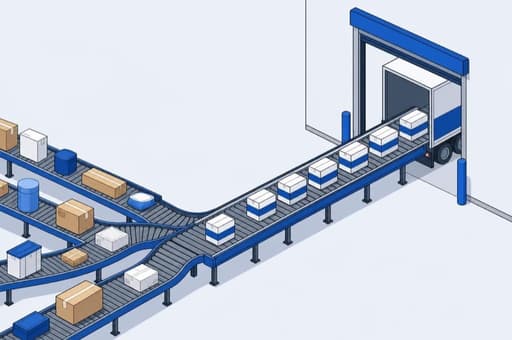
The warehouse-and-truck half of Medline, carrying roughly 145,000 products other companies make: $14.7B of last year's $28.4B. It grew 16% in the first half of 2026 against the own-brand half's 6% — more sales, thinner profit on each one.
Competes with Medical-Surgical Solutions (Wellverse) (McKesson) · Global Medical Products and Distribution (Cardinal Health) · Products & Healthcare Services (Owens & Minor)
In plain English
A hospital needs about a hundred and fifty thousand different things it has no interest in making — syringes, monitors, tubing, cleaning carts — from more than a thousand manufacturers. Medline buys the lot, holds it in its own warehouses and delivers it, reaching most customers by the next day.
The hospital pays for the goods; Medline keeps a thin slice of each delivery, roughly a nickel on the dollar. Thin is the point. Being the truck that turns up every week is how Medline wins the relationship, and from there it can start swapping in products it makes itself, which earn several times as much.

Prime Vendor agreements
The five-year deal in which a health system promises Medline the vast majority of its medical-supply buying. New signings reached $2.4B in 2025 and about two-thirds of that starts shipping this year; renewals run above 98%.
Competes with Prime-vendor and distribution agreements (McKesson) · Distribution agreements inside GMPD (Cardinal Health)
In plain English
Health systems have been narrowing their buying onto fewer suppliers. So one signs a single contract, usually five years, promising Medline the vast majority of its medical supplies, and Medline promises to keep the shelves full.
Nothing is sold on the day it is signed — the contract just sets up years of ordering. Almost all of what ships in year one is other companies' product; after that Medline works through the list item by item, persuading the hospital onto its own versions. Management counts up new signings the way a builder counts a year's contracts, and is aiming past a billion dollars this year. No customer is reported at even a tenth of sales.
MedTrans fleet and distribution network
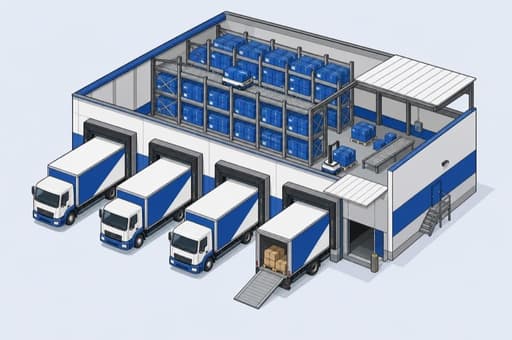
The 70 warehouses and 2,100-plus trucks Medline owns rather than rents. It is why a June fire at the Tracy, California site cost $336M without denting the sales outlook — and why capital spending is climbing to $500–600M this year.
Competes with Products & Healthcare Services (Owens & Minor) · Global Medical Products and Distribution (Cardinal Health)
In plain English
Most distributors hand their boxes to a shipping company. Medline drives its own: a fleet of trucks working out of seventy warehouses, forty-five of them in the United States, placed close enough to reach almost every customer by the next day.
Nobody pays for this directly — it is the cost of doing the job, and it is also the edge. Owning the trucks and the shelf space means Medline can route around its own accidents, which is what it did when fire destroyed a California warehouse in June: stock came from elsewhere, replacement space was leased within weeks, and a new site was announced the following month.
Mpower
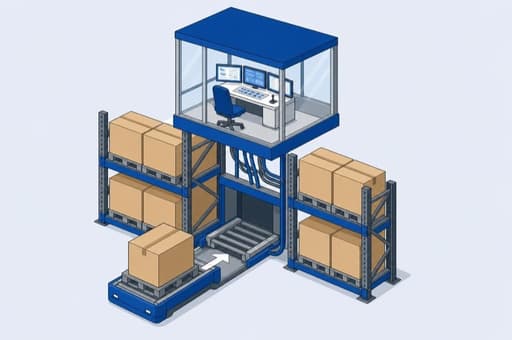
A cloud service built with Microsoft that warns a hospital when a supply is about to run short and proposes a stand-in. Launched May 2026 after pilots at Northwestern Medicine and Providence — and not mentioned once on the August earnings call.
Competes with Logistics and biomedical maintenance services (McKesson) · Distribution and optimization services (Cardinal Health)
In plain English
Picture the screen in a hospital's supply office showing what is on the shelf, what is on order and what is about to go missing. Mpower is that screen, built with Microsoft: it flags an item running short, suggests another that does the same job and pushes the swap through for approval.
No price for it has been made public. Its job is to make the contract harder to leave, and it only works because Medline can see the inventory sitting behind it in its own warehouses. In the test group, handling those swaps got more than fifty percent more efficient, and slightly more of each order arrived complete.
Front Line Care
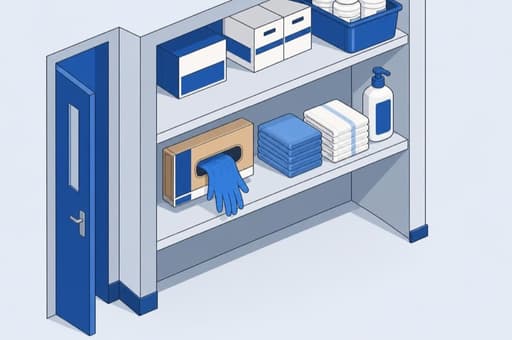
Medline's own everyday supplies — exam gloves, dressings, skin and incontinence care, cleaning products — at $6.5B last year, up 7%. Growth slowed to 5% in the first half as store-shelf sales softened and tariff costs bit.
Competes with Cardinal Health Brand med-surg products (Cardinal Health) · Biatain advanced wound dressings (Coloplast)
In plain English
Open any supply closet on a hospital floor and this is what is in it: exam gloves by the box, gauze and dressings, wipes, lotions, adult briefs, towels and mop heads. Medline sells these under its own name and makes about a third of its branded goods in its own plants.
They get used once and reordered forever, so the money arrives as a standing refill rather than a big sale. Owning the product rather than reselling someone else's is the whole point — the same dollar earns roughly four times as much. The catch is what they are made of: gloves need rubber, the rest needs plastic, and imported goods carry tariffs.
Surgical Solutions
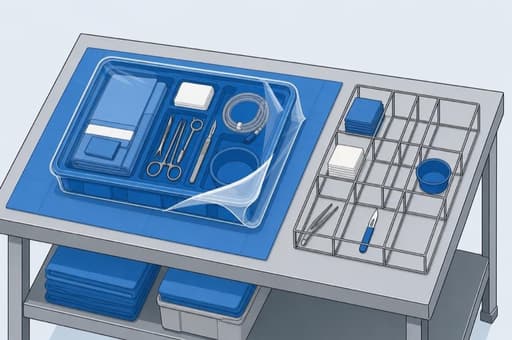
Procedure kits, drapes, gowns and sterile wraps for the operating room: $6.2B last year, and at nearly 13% growth the quickest-rising of Medline's own-brand lines. The kit is also the sales pitch for everything inside it.
Competes with Cardinal Health Brand surgical and OR products (Cardinal Health) · Infection prevention and instrument reprocessing (Ecolab)
In plain English
Every operation needs a tray of sterile things laid out in order — drapes, gowns, gauze, blades, tubing. Instead of a hospital gathering each item off a shelf, Medline packs them into one sealed kit built around that hospital's own routine, so the nurse opens a single package.
Kits are made in Medline's own plants, including one in Mexico that is being expanded, and won one hospital at a time. They are also the way in: to build the kit, Medline has to learn exactly what the surgeon uses, which becomes a conversation about switching each of those items to a Medline-made one. The same plants carry the risk — two of three unresolved FDA warning letters touch manufacturing sites.
Laboratory & Diagnostics
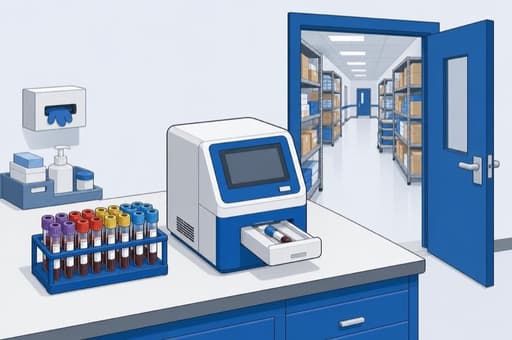
The smallest own-brand line: bedside tests, analyzers and lab consumables, at $248M in the latest quarter and up 12%. Small money, useful door — winning a hospital's lab often opens the rest of its buying.
Competes with Medical-Surgical Solutions, lab and office supply (McKesson) · Lab and physician-office distribution (Henry Schein) · Lab and physician-office distribution (Patterson Companies)
In plain English
Blood draws, swabs, strep tests, the benchtop machines that read them and the endless plastic tubes and tips they eat through. Medline supplies that corner of the building, partly with instruments other companies build and partly under its own name.
Labs order to a rhythm set by illness, so a mild sick season makes a soft quarter — which is what happened early this year before testing picked back up. Medline pushes this line harder than its size suggests for one reason: a hospital that has never bought from it will often let it supply the lab first, and the lab is a foot in the door to everything else. NYU Langone added lab supplies to its Medline contract in August.


 Supply Chain SolutionsThe warehouse-and-truck half of Medline, carrying roughly 145,000 products other companies make: $14.7B of last year's $28.4B. It grew 16% in the first half of 2026 against the own-brand half's 6% — more sales, thinner profit on each one.
The warehouse-and-truck half of Medline, carrying roughly 145,000 products other companies make: $14.7B of last year's $28.4B. It grew 16% in the first half of 2026 against the own-brand half's 6% — more sales, thinner profit on each one.
In plain English
A hospital needs about a hundred and fifty thousand different things it has no interest in making — syringes, monitors, tubing, cleaning carts — from more than a thousand manufacturers. Medline buys the lot, holds it in its own warehouses and delivers it, reaching most customers by the next day.
The hospital pays for the goods; Medline keeps a thin slice of each delivery, roughly a nickel on the dollar. Thin is the point. Being the truck that turns up every week is how Medline wins the relationship, and from there it can start swapping in products it makes itself, which earn several times as much.
Competes with Medical-Surgical Solutions (Wellverse) (McKesson) · Global Medical Products and Distribution (Cardinal Health) · Products & Healthcare Services (Owens & Minor)
 Prime Vendor agreementsThe five-year deal in which a health system promises Medline the vast majority of its medical-supply buying. New signings reached $2.4B in 2025 and about two-thirds of that starts shipping this year; renewals run above 98%.
The five-year deal in which a health system promises Medline the vast majority of its medical-supply buying. New signings reached $2.4B in 2025 and about two-thirds of that starts shipping this year; renewals run above 98%.
In plain English
Health systems have been narrowing their buying onto fewer suppliers. So one signs a single contract, usually five years, promising Medline the vast majority of its medical supplies, and Medline promises to keep the shelves full.
Nothing is sold on the day it is signed — the contract just sets up years of ordering. Almost all of what ships in year one is other companies' product; after that Medline works through the list item by item, persuading the hospital onto its own versions. Management counts up new signings the way a builder counts a year's contracts, and is aiming past a billion dollars this year. No customer is reported at even a tenth of sales.
Competes with Prime-vendor and distribution agreements (McKesson) · Distribution agreements inside GMPD (Cardinal Health)
 MedTrans fleet and distribution networkThe 70 warehouses and 2,100-plus trucks Medline owns rather than rents. It is why a June fire at the Tracy, California site cost $336M without denting the sales outlook — and why capital spending is climbing to $500–600M this year.
The 70 warehouses and 2,100-plus trucks Medline owns rather than rents. It is why a June fire at the Tracy, California site cost $336M without denting the sales outlook — and why capital spending is climbing to $500–600M this year.
In plain English
Most distributors hand their boxes to a shipping company. Medline drives its own: a fleet of trucks working out of seventy warehouses, forty-five of them in the United States, placed close enough to reach almost every customer by the next day.
Nobody pays for this directly — it is the cost of doing the job, and it is also the edge. Owning the trucks and the shelf space means Medline can route around its own accidents, which is what it did when fire destroyed a California warehouse in June: stock came from elsewhere, replacement space was leased within weeks, and a new site was announced the following month.
Competes with Products & Healthcare Services (Owens & Minor) · Global Medical Products and Distribution (Cardinal Health)
 MpowerA cloud service built with Microsoft that warns a hospital when a supply is about to run short and proposes a stand-in. Launched May 2026 after pilots at Northwestern Medicine and Providence — and not mentioned once on the August earnings call.
A cloud service built with Microsoft that warns a hospital when a supply is about to run short and proposes a stand-in. Launched May 2026 after pilots at Northwestern Medicine and Providence — and not mentioned once on the August earnings call.
In plain English
Picture the screen in a hospital's supply office showing what is on the shelf, what is on order and what is about to go missing. Mpower is that screen, built with Microsoft: it flags an item running short, suggests another that does the same job and pushes the swap through for approval.
No price for it has been made public. Its job is to make the contract harder to leave, and it only works because Medline can see the inventory sitting behind it in its own warehouses. In the test group, handling those swaps got more than fifty percent more efficient, and slightly more of each order arrived complete.
Competes with Logistics and biomedical maintenance services (McKesson) · Distribution and optimization services (Cardinal Health)
 Front Line CareMedline's own everyday supplies — exam gloves, dressings, skin and incontinence care, cleaning products — at $6.5B last year, up 7%. Growth slowed to 5% in the first half as store-shelf sales softened and tariff costs bit.
Medline's own everyday supplies — exam gloves, dressings, skin and incontinence care, cleaning products — at $6.5B last year, up 7%. Growth slowed to 5% in the first half as store-shelf sales softened and tariff costs bit.
In plain English
Open any supply closet on a hospital floor and this is what is in it: exam gloves by the box, gauze and dressings, wipes, lotions, adult briefs, towels and mop heads. Medline sells these under its own name and makes about a third of its branded goods in its own plants.
They get used once and reordered forever, so the money arrives as a standing refill rather than a big sale. Owning the product rather than reselling someone else's is the whole point — the same dollar earns roughly four times as much. The catch is what they are made of: gloves need rubber, the rest needs plastic, and imported goods carry tariffs.
Competes with Cardinal Health Brand med-surg products (Cardinal Health) · Biatain advanced wound dressings (Coloplast)
 Surgical SolutionsProcedure kits, drapes, gowns and sterile wraps for the operating room: $6.2B last year, and at nearly 13% growth the quickest-rising of Medline's own-brand lines. The kit is also the sales pitch for everything inside it.
Procedure kits, drapes, gowns and sterile wraps for the operating room: $6.2B last year, and at nearly 13% growth the quickest-rising of Medline's own-brand lines. The kit is also the sales pitch for everything inside it.
In plain English
Every operation needs a tray of sterile things laid out in order — drapes, gowns, gauze, blades, tubing. Instead of a hospital gathering each item off a shelf, Medline packs them into one sealed kit built around that hospital's own routine, so the nurse opens a single package.
Kits are made in Medline's own plants, including one in Mexico that is being expanded, and won one hospital at a time. They are also the way in: to build the kit, Medline has to learn exactly what the surgeon uses, which becomes a conversation about switching each of those items to a Medline-made one. The same plants carry the risk — two of three unresolved FDA warning letters touch manufacturing sites.
Competes with Cardinal Health Brand surgical and OR products (Cardinal Health) · Infection prevention and instrument reprocessing (Ecolab)
 Laboratory & DiagnosticsThe smallest own-brand line: bedside tests, analyzers and lab consumables, at $248M in the latest quarter and up 12%. Small money, useful door — winning a hospital's lab often opens the rest of its buying.
The smallest own-brand line: bedside tests, analyzers and lab consumables, at $248M in the latest quarter and up 12%. Small money, useful door — winning a hospital's lab often opens the rest of its buying.
In plain English
Blood draws, swabs, strep tests, the benchtop machines that read them and the endless plastic tubes and tips they eat through. Medline supplies that corner of the building, partly with instruments other companies build and partly under its own name.
Labs order to a rhythm set by illness, so a mild sick season makes a soft quarter — which is what happened early this year before testing picked back up. Medline pushes this line harder than its size suggests for one reason: a hospital that has never bought from it will often let it supply the lab first, and the lab is a foot in the door to everything else. NYU Langone added lab supplies to its Medline contract in August.
Competes with Medical-Surgical Solutions, lab and office supply (McKesson) · Lab and physician-office distribution (Henry Schein) · Lab and physician-office distribution (Patterson Companies)
Named in filings, launches and programs
- MicrotekBrandThe surgical brand that came with Ecolab's surgical business in 2024; operating-room product now sells under this name.
- Medline RemedyProduct lineSkin and wound care; it absorbed Coloplast's Sween 24, Critic-Aid and Atrac-Tain creams, made at North Mankato, Minnesota.
- CuradBrandThe consumer bandage and first-aid name Medline ships through major retailers — the slice of sales that never sees a hospital.
- Retail channelCustomer programUnder 2% of sales and the sore point of 2026: part of one sizable retail customer was lost, and the call kept returning to it.
- InternationalSegmentRoughly $1.9B of 2025 sales outside the United States, about 7%; up 10% in the first half of 2026 on Canadian and European volume.
- Veterans Affairs Prime Vendor contractCustomer programThe Department of Veterans Affairs named Medline a prime vendor in February 2025, on a contract running through 2030.
- CommonSpirit Health Prime Vendor agreementCustomer programThe 2025 signing the chief executive called the year's home run; its value has not been disclosed.
- Allina Health Prime Vendor agreementCustomer program · RampingSigned July 2026 and running within weeks, covering twelve hospitals and more than ninety clinics.
- NYU Langone Health lab agreementCustomer programAn existing customer that added lab products to its Medline contract in August 2026 — the pattern Medline wants to repeat.
- ReNewalServiceMedical devices meant to be thrown out after a single use are put through a cleaning process and sent back into service instead.
- AutoSubServiceAutomatic stand-ins: when an ordered item is unavailable, the nearest equivalent ships instead. Paired with Mpower, more orders arrive complete.
- Medline Home DirectServiceShips supplies straight to a patient's home for home-health and hospice customers rather than to a facility.
- HydroMID and HydroPICC cathetersProduct line · RampingCobranded with Access Vascular, announced June 2026; the catheters' FDA labelling says they resist clotting.
MicrotekBrand
The surgical brand that came with Ecolab's surgical business in 2024; operating-room product now sells under this name.
Medline RemedyProduct line
Skin and wound care; it absorbed Coloplast's Sween 24, Critic-Aid and Atrac-Tain creams, made at North Mankato, Minnesota.
CuradBrand
The consumer bandage and first-aid name Medline ships through major retailers — the slice of sales that never sees a hospital.
Retail channelCustomer program
Under 2% of sales and the sore point of 2026: part of one sizable retail customer was lost, and the call kept returning to it.
InternationalSegment
Roughly $1.9B of 2025 sales outside the United States, about 7%; up 10% in the first half of 2026 on Canadian and European volume.
Veterans Affairs Prime Vendor contractCustomer program
The Department of Veterans Affairs named Medline a prime vendor in February 2025, on a contract running through 2030.
CommonSpirit Health Prime Vendor agreementCustomer program
The 2025 signing the chief executive called the year's home run; its value has not been disclosed.
Allina Health Prime Vendor agreementCustomer program · Ramping
Signed July 2026 and running within weeks, covering twelve hospitals and more than ninety clinics.
NYU Langone Health lab agreementCustomer program
An existing customer that added lab products to its Medline contract in August 2026 — the pattern Medline wants to repeat.
ReNewalService
Medical devices meant to be thrown out after a single use are put through a cleaning process and sent back into service instead.
AutoSubService
Automatic stand-ins: when an ordered item is unavailable, the nearest equivalent ships instead. Paired with Mpower, more orders arrive complete.
Medline Home DirectService
Ships supplies straight to a patient's home for home-health and hospice customers rather than to a facility.
HydroMID and HydroPICC cathetersProduct line · Ramping
Cobranded with Access Vascular, announced June 2026; the catheters' FDA labelling says they resist clotting.