
Strategy (MSTR)
Sells enterprise business-intelligence software while holding more bitcoin than any other public company.
Something off on this page? Send us feedback.
Strategy sells business-analytics software and has done for decades. Then it turned itself into something else: a company that issues shares and IOUs in order to buy bitcoin, and now holds a mountain of the stuff. The software brings in every dollar of sales but is a sliver of what the company owns. Lately the work has been less about buying more coins than about paying the income promised to the people who funded them.
Item facts: FY2025 · year ended Dec 31, 2025, from filings, earnings calls and company pages.
Judgment weights, not filed revenue
The band summarizes business focus and direction. ~ marks estimates.
7 in detail · 10 more below
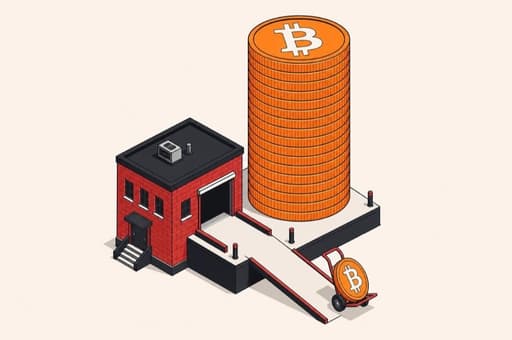
Bitcoin Treasury
Nearly everything Strategy owns, and not a cent of what it sells: roughly 845,000 coins bought for about $64 billion as of mid-September 2026. Watch whether steady buying resumes after the first sales in the company's history.
Competes with iShares Bitcoin Trust (IBIT) (BlackRock) · XXI bitcoin treasury (Twenty One Capital) · Corporate bitcoin holdings (Metaplanet)
In plain English
Strategy's savings account is a pile of coins. Instead of parking spare cash in a bank, it has put almost everything it owns into bitcoin — roughly eight hundred and forty-five thousand of them, bought for about sixty-four billion dollars, an average near seventy-five thousand a coin.
The pile earns nothing. No rent, no interest, no customers. Its job is to be worth more per share than it was a year ago. It also works as security for everything the company has sold: management publishes how many dollars of coin sit behind each dollar of shares and IOUs, and treats that as its credit score. In the first half of 2026 it sold coins for the first time — 1,395 of them, after five years of never selling.

STRC (Stretch)
The flagship income share: a $100 slip paying a rate Strategy resets, lifted to 12% from mid-September 2026. It reached $10.5B by the end of June, then slipped under $100, so the company started buying it back.
Competes with Floating-rate preferred stock (Strive) · STRF, the senior in-house series (Strategy)
In plain English
Think of a savings certificate sold by a company instead of a bank. You hand over a hundred dollars, and twice a month a payment arrives at a rate Strategy sets and keeps raising — 11.25% in February 2026, 11.50% in June, 12% from mid-September.
The cash raised buys bitcoin and helps cover the dividend and interest bill, sized at roughly $2.25 billion a year. The catch is the price of the certificate itself. Strategy has promised not to sell new ones below a hundred dollars, so when the price sagged to the high eighties last summer the tap closed and it began buying its own certificates back instead — $139.3M worth by mid-September.
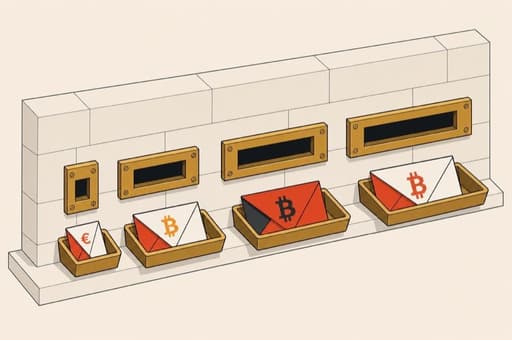
STRK, STRF, STRD and STRE
Four earlier income shares, each cut for a different buyer — one convertible, one first in the payment queue, one plain high-yield, one sold in euros. About $5.0B at the end of June and roughly flat, as new money rotated into STRC.
Competes with Bitcoin-backed preferred stock (Twenty One Capital) · Bitcoin-backed preferred stock (Strive) · STRC, the in-house variable-rate series (Strategy)
In plain English
Four flavours of the same promise. Each is a hundred-unit slip paying a fixed yearly rate, eight to ten percent on the dollar versions: STRK can turn into common stock, STRF sits first in the queue if a payment is ever missed and piles on penalties when one is, STRD simply pays a high rate with no catching up later, and STRE is priced in euros.
Why four? Different savers want different things, and the pitch to all of them is the bitcoin standing behind the promise — around five dollars of coin for every dollar of these shares, more than seven for the most senior one. New selling has mostly paused; management says it will sell more only at prices it considers fair.

MSTR Class A common stock
The biggest funding tap: Strategy dribbles new shares into the market week after week and spends the proceeds on coins, dividends and buybacks. $9.5B raised this way by late July — and 20% more shares in six months.
Competes with Common equity issuance (Strive) · Equity issuance programme (Metaplanet) · Spot bitcoin ETF shares (BlackRock)
In plain English
Most companies sell new shares in one big announced batch. Strategy sells a trickle of them into the open market almost every week, then files a note saying what it did with the money — one recent week: $369.7M into bitcoin, $151.8M buying back its own income shares, the rest on dividends and cash.
The loop only works while investors will pay more for a share than the bitcoin behind it is worth. Sell high, buy coins, and each existing share ends up backed by slightly more coin. When that gap thins it reverses, and management has said that below a certain point it is better off selling coins than shares. In the spring of 2026 the share count grew faster than the pile did.

Strategy One cloud subscriptions
The growing half of the software business — the analytics platform rented by the month rather than installed. $175.7M in 2025, and $62.9M in the June 2026 quarter, though growth has cooled from about 65% to roughly 54%.
Competes with Power BI (Microsoft) · Tableau Cloud (Salesforce) · Looker (Google)
In plain English
Big organisations keep their numbers — sales, stock on hand, claims paid — scattered across a dozen systems that do not talk to each other. Strategy's software pulls them together into reports and screens that ordinary staff can read without asking a programmer for help.
Renting it is the version that is growing. Contracts usually run three years, support is included, and the bill keeps arriving whether anyone logs in or not. Much of the growth is not new names but old customers moving across: the version they installed on their own servers loses its support at the end of 2026. Germany alone brought in more than a tenth of company sales early in 2026.
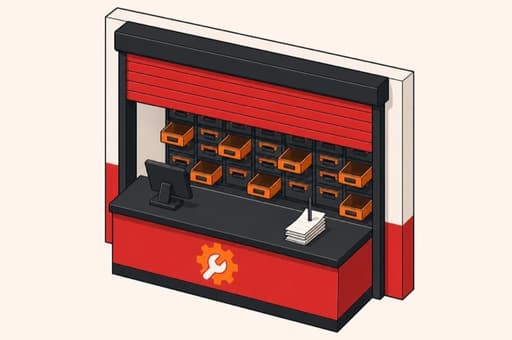
Support for installed software
Still the single largest revenue line at $204.2M, and shrinking on purpose: yearly fees from customers running the software on their own servers. Full support for those versions ends 31 December 2026.
Competes with Power BI support plans (Microsoft) · Tableau maintenance (Salesforce)
In plain English
The unglamorous line that paid for everything else. Thousands of companies installed Strategy's analytics software on their own machines years ago and have paid a fee every year since for fixes, updates and someone to call when a report stops working.
That arrangement is being wound up deliberately. The end-of-support clock started in January 2025 and the last of it stops on 31 December 2026, so each quarter roughly twelve million dollars of this money goes away — while the rented version picks up rather more than that. Whether those customers re-sign in the cloud or wander off to a rival is the whole game for the software side.

Strategy Mosaic
The newest piece: one agreed dictionary of a company's numbers, so every tool and AI assistant answers a question the same way. On sale since June 2026; its revenue is not broken out separately.
Competes with dbt Semantic Layer (dbt Labs) · AtScale semantic layer (AtScale) · Metric views (Databricks)
In plain English
Ask four departments how many customers the company has and you will get four answers, because each counts differently. Mosaic is the agreed dictionary that settles it: define each term once, along with who is allowed to see it, and every report, app and AI assistant reads from that one definition.
It is sold inside the cloud subscription, so no separate figure exists for it. The sales pitch has a second half: because the dictionary sits on top of the big rented data warehouses, it can cut how much computing a customer buys from them — Strategy claims four hundred million dollars saved across its customers, which makes those warehouse firms both its foundation and its target.


 Bitcoin TreasuryNearly everything Strategy owns, and not a cent of what it sells: roughly 845,000 coins bought for about $64 billion as of mid-September 2026. Watch whether steady buying resumes after the first sales in the company's history.
Nearly everything Strategy owns, and not a cent of what it sells: roughly 845,000 coins bought for about $64 billion as of mid-September 2026. Watch whether steady buying resumes after the first sales in the company's history.
In plain English
Strategy's savings account is a pile of coins. Instead of parking spare cash in a bank, it has put almost everything it owns into bitcoin — roughly eight hundred and forty-five thousand of them, bought for about sixty-four billion dollars, an average near seventy-five thousand a coin.
The pile earns nothing. No rent, no interest, no customers. Its job is to be worth more per share than it was a year ago. It also works as security for everything the company has sold: management publishes how many dollars of coin sit behind each dollar of shares and IOUs, and treats that as its credit score. In the first half of 2026 it sold coins for the first time — 1,395 of them, after five years of never selling.
Competes with iShares Bitcoin Trust (IBIT) (BlackRock) · XXI bitcoin treasury (Twenty One Capital) · Corporate bitcoin holdings (Metaplanet)
 STRC (Stretch)The flagship income share: a $100 slip paying a rate Strategy resets, lifted to 12% from mid-September 2026. It reached $10.5B by the end of June, then slipped under $100, so the company started buying it back.
The flagship income share: a $100 slip paying a rate Strategy resets, lifted to 12% from mid-September 2026. It reached $10.5B by the end of June, then slipped under $100, so the company started buying it back.
In plain English
Think of a savings certificate sold by a company instead of a bank. You hand over a hundred dollars, and twice a month a payment arrives at a rate Strategy sets and keeps raising — 11.25% in February 2026, 11.50% in June, 12% from mid-September.
The cash raised buys bitcoin and helps cover the dividend and interest bill, sized at roughly $2.25 billion a year. The catch is the price of the certificate itself. Strategy has promised not to sell new ones below a hundred dollars, so when the price sagged to the high eighties last summer the tap closed and it began buying its own certificates back instead — $139.3M worth by mid-September.
Competes with Floating-rate preferred stock (Strive) · STRF, the senior in-house series (Strategy)
 STRK, STRF, STRD and STREFour earlier income shares, each cut for a different buyer — one convertible, one first in the payment queue, one plain high-yield, one sold in euros. About $5.0B at the end of June and roughly flat, as new money rotated into STRC.
Four earlier income shares, each cut for a different buyer — one convertible, one first in the payment queue, one plain high-yield, one sold in euros. About $5.0B at the end of June and roughly flat, as new money rotated into STRC.
In plain English
Four flavours of the same promise. Each is a hundred-unit slip paying a fixed yearly rate, eight to ten percent on the dollar versions: STRK can turn into common stock, STRF sits first in the queue if a payment is ever missed and piles on penalties when one is, STRD simply pays a high rate with no catching up later, and STRE is priced in euros.
Why four? Different savers want different things, and the pitch to all of them is the bitcoin standing behind the promise — around five dollars of coin for every dollar of these shares, more than seven for the most senior one. New selling has mostly paused; management says it will sell more only at prices it considers fair.
Competes with Bitcoin-backed preferred stock (Twenty One Capital) · Bitcoin-backed preferred stock (Strive) · STRC, the in-house variable-rate series (Strategy)
 MSTR Class A common stockThe biggest funding tap: Strategy dribbles new shares into the market week after week and spends the proceeds on coins, dividends and buybacks. $9.5B raised this way by late July — and 20% more shares in six months.
The biggest funding tap: Strategy dribbles new shares into the market week after week and spends the proceeds on coins, dividends and buybacks. $9.5B raised this way by late July — and 20% more shares in six months.
In plain English
Most companies sell new shares in one big announced batch. Strategy sells a trickle of them into the open market almost every week, then files a note saying what it did with the money — one recent week: $369.7M into bitcoin, $151.8M buying back its own income shares, the rest on dividends and cash.
The loop only works while investors will pay more for a share than the bitcoin behind it is worth. Sell high, buy coins, and each existing share ends up backed by slightly more coin. When that gap thins it reverses, and management has said that below a certain point it is better off selling coins than shares. In the spring of 2026 the share count grew faster than the pile did.
Competes with Common equity issuance (Strive) · Equity issuance programme (Metaplanet) · Spot bitcoin ETF shares (BlackRock)
 Strategy One cloud subscriptionsThe growing half of the software business — the analytics platform rented by the month rather than installed. $175.7M in 2025, and $62.9M in the June 2026 quarter, though growth has cooled from about 65% to roughly 54%.
The growing half of the software business — the analytics platform rented by the month rather than installed. $175.7M in 2025, and $62.9M in the June 2026 quarter, though growth has cooled from about 65% to roughly 54%.
In plain English
Big organisations keep their numbers — sales, stock on hand, claims paid — scattered across a dozen systems that do not talk to each other. Strategy's software pulls them together into reports and screens that ordinary staff can read without asking a programmer for help.
Renting it is the version that is growing. Contracts usually run three years, support is included, and the bill keeps arriving whether anyone logs in or not. Much of the growth is not new names but old customers moving across: the version they installed on their own servers loses its support at the end of 2026. Germany alone brought in more than a tenth of company sales early in 2026.
Competes with Power BI (Microsoft) · Tableau Cloud (Salesforce) · Looker (Google)
 Support for installed softwareStill the single largest revenue line at $204.2M, and shrinking on purpose: yearly fees from customers running the software on their own servers. Full support for those versions ends 31 December 2026.
Still the single largest revenue line at $204.2M, and shrinking on purpose: yearly fees from customers running the software on their own servers. Full support for those versions ends 31 December 2026.
In plain English
The unglamorous line that paid for everything else. Thousands of companies installed Strategy's analytics software on their own machines years ago and have paid a fee every year since for fixes, updates and someone to call when a report stops working.
That arrangement is being wound up deliberately. The end-of-support clock started in January 2025 and the last of it stops on 31 December 2026, so each quarter roughly twelve million dollars of this money goes away — while the rented version picks up rather more than that. Whether those customers re-sign in the cloud or wander off to a rival is the whole game for the software side.
Competes with Power BI support plans (Microsoft) · Tableau maintenance (Salesforce)
 Strategy MosaicThe newest piece: one agreed dictionary of a company's numbers, so every tool and AI assistant answers a question the same way. On sale since June 2026; its revenue is not broken out separately.
The newest piece: one agreed dictionary of a company's numbers, so every tool and AI assistant answers a question the same way. On sale since June 2026; its revenue is not broken out separately.
In plain English
Ask four departments how many customers the company has and you will get four answers, because each counts differently. Mosaic is the agreed dictionary that settles it: define each term once, along with who is allowed to see it, and every report, app and AI assistant reads from that one definition.
It is sold inside the cloud subscription, so no separate figure exists for it. The sales pitch has a second half: because the dictionary sits on top of the big rented data warehouses, it can cut how much computing a customer buys from them — Strategy claims four hundred million dollars saved across its customers, which makes those warehouse firms both its foundation and its target.
Competes with dbt Semantic Layer (dbt Labs) · AtScale semantic layer (AtScale) · Metric views (Databricks)
Named in filings, launches and programs
- Product licensesProduct lineSoftware bought outright for a customer's own servers: $39.7M in 2025, down to $3.7M by the June 2026 quarter — closed on purpose, not lost.
- Other servicesServiceSetup help and training, about $57.6M in 2025 and steady near $15M a quarter — the one software line neither growing nor rolling over.
- Convertible notes 2028–2032Product$6.7B of borrowed money that can turn into shares; management intends to convert it over time and talks about ending up debt-free.
- USD ReserveCustomer programAbout $5.1B held in reserve plus $1.3B of cash in September 2026, against a floor management set at $2.25B; part is earmarked for buybacks.
- Digital Credit Securities Repurchase ProgramCustomer programPermission to buy back its own income shares, $1.05B still unused; a separate $1.0B permission to buy back common stock is untouched.
- Strategy OnePlatformThe brand the analytics platform is sold under, covering both the rented version and the older installed one.
- Mosaic Studio and Mosaic SentinelProduct · RampingAnnounced March 2026: a point-and-click way to build the shared dictionary, and a tool for controlling who may see which numbers.
- Auto AI Suite / Auto 2.0Product · RampingAI assistants built on Mosaic; Lotte Department Store is the first customer running them in production.
- Strategy Partner ProgramEcosystemResellers and integrators that carry the software, including Carahsoft for US government buyers and HCLTech for large Mosaic rollouts.
- Strategy World / Bitcoin for CorporationsEcosystemTwo February conferences: one for software customers, the other, in its sixth year, for companies weighing a bitcoin treasury of their own.
Product licensesProduct line
Software bought outright for a customer's own servers: $39.7M in 2025, down to $3.7M by the June 2026 quarter — closed on purpose, not lost.
Other servicesService
Setup help and training, about $57.6M in 2025 and steady near $15M a quarter — the one software line neither growing nor rolling over.
Convertible notes 2028–2032Product
$6.7B of borrowed money that can turn into shares; management intends to convert it over time and talks about ending up debt-free.
USD ReserveCustomer program
About $5.1B held in reserve plus $1.3B of cash in September 2026, against a floor management set at $2.25B; part is earmarked for buybacks.
Digital Credit Securities Repurchase ProgramCustomer program
Permission to buy back its own income shares, $1.05B still unused; a separate $1.0B permission to buy back common stock is untouched.
Strategy OnePlatform
The brand the analytics platform is sold under, covering both the rented version and the older installed one.
Mosaic Studio and Mosaic SentinelProduct · Ramping
Announced March 2026: a point-and-click way to build the shared dictionary, and a tool for controlling who may see which numbers.
Auto AI Suite / Auto 2.0Product · Ramping
AI assistants built on Mosaic; Lotte Department Store is the first customer running them in production.
Strategy Partner ProgramEcosystem
Resellers and integrators that carry the software, including Carahsoft for US government buyers and HCLTech for large Mosaic rollouts.
Strategy World / Bitcoin for CorporationsEcosystem
Two February conferences: one for software customers, the other, in its sixth year, for companies weighing a bitcoin treasury of their own.