
Nebius (NBIS)
Builds full-stack AI cloud infrastructure alongside autonomy and technology-career reskilling businesses.
Something off on this page? Send us feedback.
Nebius buys computer chips and electricity, wraps them in its own software, and rents the result to companies building artificial intelligence. It is what was left of Yandex after the Russian businesses were sold, rebuilt into a landlord for AI computing. Two customers, Microsoft and Meta, account for most of the work it has already signed, and most of that capacity is still under construction.
Item facts: FY2025 20-F + H1 2026 filings, from filings, earnings calls and company pages.
Judgment weights, not filed revenue
The band summarizes business focus and direction. ~ marks estimates.
8 in detail · 13 more below
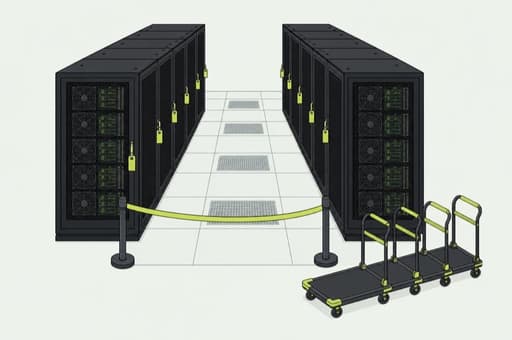
Nebius AI Cloud
The rent-it-by-the-hour side: racks of chips, storage and the software to drive them, sold to hundreds of customers including Shopify, Revolut and Cursor. Close to half of revenue, sold out every quarter — and prices have gone up twice in three months.
Competes with CoreWeave Cloud Platform (CoreWeave) · Lambda On-Demand (Lambda) · AI chip rental on AWS (Amazon)
In plain English
Training an AI model takes a great many specialised chips running together, plus the electricity and cooling to keep them alive. Almost nobody wants to buy and house all that themselves, any more than a bakery wants its own wheat farm.
So Nebius buys the chips, puts them in buildings it powers and cools, adds software that lets a customer grab a slab of the machines without owning any of it, and charges for the time used. Four contracts signed in one recent quarter averaged more than a billion dollars each; behind them sit hundreds of smaller users, some booked for years, some for a few months.
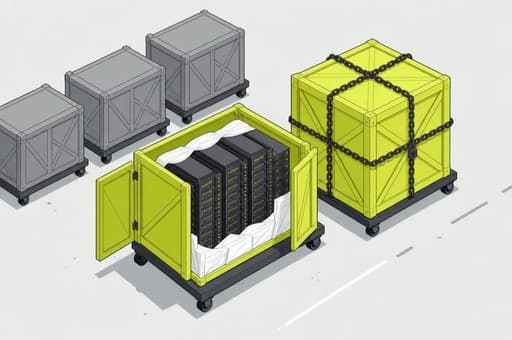
Microsoft and Meta capacity agreements
Two customers, most of the order book. Microsoft's five-year deal is worth $17.4B but arrives in batches, reaching full size in 2027; Meta's second, up to about $27B, mostly starts in 2027 too. Roughly $40B of promised work rests on two names.
Competes with Microsoft capacity contracts (CoreWeave) · Microsoft supply agreements (Nscale) · Meta's own datacenter program (Meta)
In plain English
Two of the largest buyers of AI computing chose to rent some of it rather than build all of it themselves. Microsoft signed for $17.4 billion of machines reserved for it alone over five years, handed over in batches from a new site in Vineland, New Jersey. Meta did a modest deal first, fully delivered by early 2026, then a second worth up to about $27 billion that mainly begins arriving in 2027.
These contracts do two jobs. They are revenue, and a signed promise from a payer that size is also something lenders will take as security — one $775 million loan was raised against a single agreement.
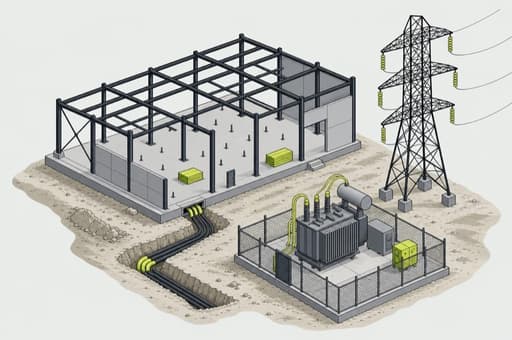
Data centers and power
The land, buildings and electricity everything else runs on — sites across the United States, Europe and Israel, plus a Pennsylvania campus that builds out to 2030. Far more power is signed for than can be plugged in: only a fraction goes live this year.
Competes with Data center fleet (CoreWeave) · Sweetwater campus (IREN) · Site pipeline (Nscale)
In plain English
Power is the bottleneck here, not chips. A hall full of machines earns nothing until a utility agrees to feed it and the connection is actually built, and those approvals take time — which is why Nebius signs for electricity long before it has anywhere to put it.
Nothing on this list is sold on its own; it is the factory floor. Roughly twenty billion dollars a year of land, power connections, buildings and the machines that fill them turns into rentable capacity later. Most of that capacity is owned outright rather than leased from others, and where speed matters the company has used on-site generators to start earning before the grid catches up.
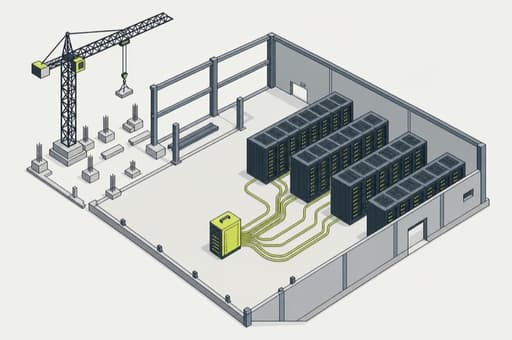
Partner-owned data centers
Someone else buys the building and the machines; Nebius supplies the software and brings the customers. Introduced in July 2026 and already showing up in results — the catch is that a partner could one day keep the tenants for itself.
Competes with Partner-run AI capacity (Fluidstack) · Partner site deals (Nscale)
In plain English
Think of a hotel chain that stops owning hotels. An investor owns the building, the chain runs the front desk and fills the rooms, and the two split what comes in.
That is the arrangement Nebius introduced in mid-2026: a partner finances, owns and operates the data center, Nebius installs its software on top and brings the customers who want the machines. It does not pay for the building, and management says money earned this way ties up very little of its own capital — which matters a lot when how fast you can grow depends on how much money you can raise.
Nebius Token Factory
Rather than rent machines, you send a question and get an answer back, paying for the work done. Sixty-odd ready-made AI models are kept running behind it. Under a twentieth of revenue, but management calls it the main product for running models.
Competes with Together inference platform (Together AI) · Fireworks model serving (Fireworks AI) · Bedrock (Amazon)
In plain English
A different way to buy the same thing. Instead of renting bare machines and loading your own software, you hand over a job — summarise this, answer that customer, check this transaction — and get the answer back, paying for the work done.
Nebius keeps sixty-odd freely available AI models, ones with names like DeepSeek, Qwen and Llama, standing ready to answer. Revolut uses it for financial-crime checks; monday.com is another named customer. Nebius bought one small company and hired another's core team specifically to make each answer cheaper to produce, because how cheaply it can answer decides whether this makes money.
TripleTen
An online school that retrains adults into tech and AI jobs. It brought in $54M in 2025 — a tenth of revenue then, nearer a fiftieth now that the cloud has raced past it — and the junior tech roles it feeds people into are the ones AI is squeezing.
Competes with Springboard (SlideRule Labs) · Online coding bootcamps (Nucamp) · Online course catalog (Coursera)
In plain English
Pay a fee, study online for months alongside a mentor, come out able to apply for an entry-level job in software or data. That is the whole product, sold straight to people changing careers, mostly in America.
It sits oddly inside an AI landlord, and it is shrinking in importance rather than closing: revenue grew by nearly nine-tenths in 2025, but the cloud business grew several times faster, so the school went from a tenth of the group to a rounding error. It also loses money, which is part of why the group as a whole earns less on each dollar than the cloud alone does.
Avride
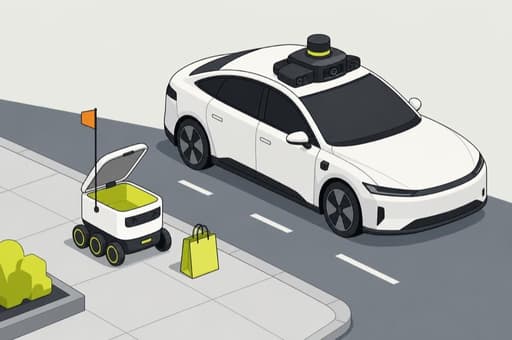
Self-driving cars and sidewalk delivery robots, carried over from the Yandex days. Deliveries run on Uber Eats in Jersey City, Austin and Dallas, robotaxis in Dallas; Uber and Nebius backed it with up to $375M. Waymo is an order of magnitude ahead.
Competes with Waymo robotaxi service (Alphabet) · Zoox robotaxi service (Amazon) · Autonomous delivery vehicles (Nuro)
In plain English
Nobody is driving. One product is a car that carries passengers, the other a robot on wheels that trundles along the pavement with someone's dinner inside it, and both come from the engineering group the company kept when it split from Yandex.
Revenue is barely there — a little over a million dollars last year. What it has instead is a way to reach customers: Uber puts the robots in front of its diners and helped fund the business. Uber also funds several rivals for the same slot, and the leaders in driverless cars are running vastly more paid trips than this.
ClickHouse stake
More than a quarter of ClickHouse, a database company valued at roughly $15B in a private funding round early in 2026. It pays Nebius nothing, but it is a few billion dollars of stored value, and its rising mark is what turned one recent quarter's bottom line positive.
Competes with Snowflake data platform (Snowflake) · Databricks platform (Databricks) · BigQuery (Google)
In plain English
Kept from earlier days: more than a quarter of a database business. ClickHouse sells software that answers questions across enormous piles of records in moments — the sort of thing a company uses to see what is happening inside its own systems minute by minute.
It is not something Nebius sells, and not a dollar of revenue. It is closer to a savings account: a private holding marked at a few billion dollars, which management keeps pointing to as a source of cash it could tap if the build-out ever needs one.


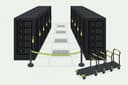 Nebius AI CloudThe rent-it-by-the-hour side: racks of chips, storage and the software to drive them, sold to hundreds of customers including Shopify, Revolut and Cursor. Close to half of revenue, sold out every quarter — and prices have gone up twice in three months.
The rent-it-by-the-hour side: racks of chips, storage and the software to drive them, sold to hundreds of customers including Shopify, Revolut and Cursor. Close to half of revenue, sold out every quarter — and prices have gone up twice in three months.
In plain English
Training an AI model takes a great many specialised chips running together, plus the electricity and cooling to keep them alive. Almost nobody wants to buy and house all that themselves, any more than a bakery wants its own wheat farm.
So Nebius buys the chips, puts them in buildings it powers and cools, adds software that lets a customer grab a slab of the machines without owning any of it, and charges for the time used. Four contracts signed in one recent quarter averaged more than a billion dollars each; behind them sit hundreds of smaller users, some booked for years, some for a few months.
Competes with CoreWeave Cloud Platform (CoreWeave) · Lambda On-Demand (Lambda) · AI chip rental on AWS (Amazon)
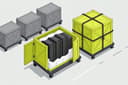 Microsoft and Meta capacity agreementsTwo customers, most of the order book. Microsoft's five-year deal is worth $17.4B but arrives in batches, reaching full size in 2027; Meta's second, up to about $27B, mostly starts in 2027 too. Roughly $40B of promised work rests on two names.
Two customers, most of the order book. Microsoft's five-year deal is worth $17.4B but arrives in batches, reaching full size in 2027; Meta's second, up to about $27B, mostly starts in 2027 too. Roughly $40B of promised work rests on two names.
In plain English
Two of the largest buyers of AI computing chose to rent some of it rather than build all of it themselves. Microsoft signed for $17.4 billion of machines reserved for it alone over five years, handed over in batches from a new site in Vineland, New Jersey. Meta did a modest deal first, fully delivered by early 2026, then a second worth up to about $27 billion that mainly begins arriving in 2027.
These contracts do two jobs. They are revenue, and a signed promise from a payer that size is also something lenders will take as security — one $775 million loan was raised against a single agreement.
Competes with Microsoft capacity contracts (CoreWeave) · Microsoft supply agreements (Nscale) · Meta's own datacenter program (Meta)
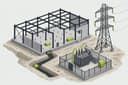 Data centers and powerThe land, buildings and electricity everything else runs on — sites across the United States, Europe and Israel, plus a Pennsylvania campus that builds out to 2030. Far more power is signed for than can be plugged in: only a fraction goes live this year.
The land, buildings and electricity everything else runs on — sites across the United States, Europe and Israel, plus a Pennsylvania campus that builds out to 2030. Far more power is signed for than can be plugged in: only a fraction goes live this year.
In plain English
Power is the bottleneck here, not chips. A hall full of machines earns nothing until a utility agrees to feed it and the connection is actually built, and those approvals take time — which is why Nebius signs for electricity long before it has anywhere to put it.
Nothing on this list is sold on its own; it is the factory floor. Roughly twenty billion dollars a year of land, power connections, buildings and the machines that fill them turns into rentable capacity later. Most of that capacity is owned outright rather than leased from others, and where speed matters the company has used on-site generators to start earning before the grid catches up.
Competes with Data center fleet (CoreWeave) · Sweetwater campus (IREN) · Site pipeline (Nscale)
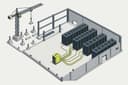 Partner-owned data centersSomeone else buys the building and the machines; Nebius supplies the software and brings the customers. Introduced in July 2026 and already showing up in results — the catch is that a partner could one day keep the tenants for itself.
Someone else buys the building and the machines; Nebius supplies the software and brings the customers. Introduced in July 2026 and already showing up in results — the catch is that a partner could one day keep the tenants for itself.
In plain English
Think of a hotel chain that stops owning hotels. An investor owns the building, the chain runs the front desk and fills the rooms, and the two split what comes in.
That is the arrangement Nebius introduced in mid-2026: a partner finances, owns and operates the data center, Nebius installs its software on top and brings the customers who want the machines. It does not pay for the building, and management says money earned this way ties up very little of its own capital — which matters a lot when how fast you can grow depends on how much money you can raise.
Competes with Partner-run AI capacity (Fluidstack) · Partner site deals (Nscale)
 Nebius Token FactoryRather than rent machines, you send a question and get an answer back, paying for the work done. Sixty-odd ready-made AI models are kept running behind it. Under a twentieth of revenue, but management calls it the main product for running models.
Rather than rent machines, you send a question and get an answer back, paying for the work done. Sixty-odd ready-made AI models are kept running behind it. Under a twentieth of revenue, but management calls it the main product for running models.
In plain English
A different way to buy the same thing. Instead of renting bare machines and loading your own software, you hand over a job — summarise this, answer that customer, check this transaction — and get the answer back, paying for the work done.
Nebius keeps sixty-odd freely available AI models, ones with names like DeepSeek, Qwen and Llama, standing ready to answer. Revolut uses it for financial-crime checks; monday.com is another named customer. Nebius bought one small company and hired another's core team specifically to make each answer cheaper to produce, because how cheaply it can answer decides whether this makes money.
Competes with Together inference platform (Together AI) · Fireworks model serving (Fireworks AI) · Bedrock (Amazon)
 TripleTenAn online school that retrains adults into tech and AI jobs. It brought in $54M in 2025 — a tenth of revenue then, nearer a fiftieth now that the cloud has raced past it — and the junior tech roles it feeds people into are the ones AI is squeezing.
An online school that retrains adults into tech and AI jobs. It brought in $54M in 2025 — a tenth of revenue then, nearer a fiftieth now that the cloud has raced past it — and the junior tech roles it feeds people into are the ones AI is squeezing.
In plain English
Pay a fee, study online for months alongside a mentor, come out able to apply for an entry-level job in software or data. That is the whole product, sold straight to people changing careers, mostly in America.
It sits oddly inside an AI landlord, and it is shrinking in importance rather than closing: revenue grew by nearly nine-tenths in 2025, but the cloud business grew several times faster, so the school went from a tenth of the group to a rounding error. It also loses money, which is part of why the group as a whole earns less on each dollar than the cloud alone does.
Competes with Springboard (SlideRule Labs) · Online coding bootcamps (Nucamp) · Online course catalog (Coursera)
 AvrideSelf-driving cars and sidewalk delivery robots, carried over from the Yandex days. Deliveries run on Uber Eats in Jersey City, Austin and Dallas, robotaxis in Dallas; Uber and Nebius backed it with up to $375M. Waymo is an order of magnitude ahead.
Self-driving cars and sidewalk delivery robots, carried over from the Yandex days. Deliveries run on Uber Eats in Jersey City, Austin and Dallas, robotaxis in Dallas; Uber and Nebius backed it with up to $375M. Waymo is an order of magnitude ahead.
In plain English
Nobody is driving. One product is a car that carries passengers, the other a robot on wheels that trundles along the pavement with someone's dinner inside it, and both come from the engineering group the company kept when it split from Yandex.
Revenue is barely there — a little over a million dollars last year. What it has instead is a way to reach customers: Uber puts the robots in front of its diners and helped fund the business. Uber also funds several rivals for the same slot, and the leaders in driverless cars are running vastly more paid trips than this.
Competes with Waymo robotaxi service (Alphabet) · Zoox robotaxi service (Amazon) · Autonomous delivery vehicles (Nuro)
 ClickHouse stakeMore than a quarter of ClickHouse, a database company valued at roughly $15B in a private funding round early in 2026. It pays Nebius nothing, but it is a few billion dollars of stored value, and its rising mark is what turned one recent quarter's bottom line positive.
More than a quarter of ClickHouse, a database company valued at roughly $15B in a private funding round early in 2026. It pays Nebius nothing, but it is a few billion dollars of stored value, and its rising mark is what turned one recent quarter's bottom line positive.
In plain English
Kept from earlier days: more than a quarter of a database business. ClickHouse sells software that answers questions across enormous piles of records in moments — the sort of thing a company uses to see what is happening inside its own systems minute by minute.
It is not something Nebius sells, and not a dollar of revenue. It is closer to a savings account: a private holding marked at a few billion dollars, which management keeps pointing to as a source of cash it could tap if the build-out ever needs one.
Competes with Snowflake data platform (Snowflake) · Databricks platform (Databricks) · BigQuery (Google)
Named in filings, launches and programs
- Reflection AI capacity dealCustomer programAn AI lab committed more than $1B of capacity running through 2029 — one of four billion-dollar contracts signed in a single quarter.
- Two unnamed landmark contractsCustomer programA large US AI lab and a US quant trading firm signed deals averaging over $1B in spring 2026; neither counterparty is named.
- Short-duration capacity dealsService · RampingMachines rented for six months or less, at roughly twice the per-year rate of the multi-year contracts — pricier, but far less certain.
- Long-term investment-grade contractsServiceMulti-year deals with the safest-paying customers, signed largely because lenders will advance money against them.
- Capacity auctionServiceNebius began auctioning capacity in 2026; the first sale cleared 15% above its previous top price.
- Nebius MarketplaceEcosystemA catalog of partner software — Kubeflow, JupyterHub, Weights & Biases, Saturn Cloud — customers can switch on inside the machines they rent.
- TavilyProductA search tool built for AI programs to use, agreed in February 2026 and carried at $189.4M; folded into Token Factory.
- Eigen AIProductBought in June 2026 at a preliminary $331.4M for technology that makes each AI answer cheaper to produce.
- Clarifai core team and licenceProductNot a purchase: the team was hired and the answering technology licensed in May 2026, with founder Matthew Zeiler leading Nebius research.
- Nebius EchoProduct · AnnouncedAn assistant you talk to in plain language to run your cloud setup, announced inside the AI Cloud 3.6 release.
- Palantir sovereign AI partnershipCustomer program · Pre-revenuePalantir named Nebius its preferred partner for AI kept inside a customer's own walls, September 2026. Nothing earned from it yet.
- Vantage Newport deploymentCustomer program · AnnouncedFirst capacity inside Vantage's Newport, Wales site, announced August 2026 — an early case of running on someone else's building.
- Startup program, grants and fellowshipsEcosystemCredits and grants aimed at startups, researchers and fellows: a funnel for future demand, with no revenue of its own.
Reflection AI capacity dealCustomer program
An AI lab committed more than $1B of capacity running through 2029 — one of four billion-dollar contracts signed in a single quarter.
Two unnamed landmark contractsCustomer program
A large US AI lab and a US quant trading firm signed deals averaging over $1B in spring 2026; neither counterparty is named.
Short-duration capacity dealsService · Ramping
Machines rented for six months or less, at roughly twice the per-year rate of the multi-year contracts — pricier, but far less certain.
Long-term investment-grade contractsService
Multi-year deals with the safest-paying customers, signed largely because lenders will advance money against them.
Capacity auctionService
Nebius began auctioning capacity in 2026; the first sale cleared 15% above its previous top price.
Nebius MarketplaceEcosystem
A catalog of partner software — Kubeflow, JupyterHub, Weights & Biases, Saturn Cloud — customers can switch on inside the machines they rent.
TavilyProduct
A search tool built for AI programs to use, agreed in February 2026 and carried at $189.4M; folded into Token Factory.
Eigen AIProduct
Bought in June 2026 at a preliminary $331.4M for technology that makes each AI answer cheaper to produce.
Clarifai core team and licenceProduct
Not a purchase: the team was hired and the answering technology licensed in May 2026, with founder Matthew Zeiler leading Nebius research.
Nebius EchoProduct · Announced
An assistant you talk to in plain language to run your cloud setup, announced inside the AI Cloud 3.6 release.
Palantir sovereign AI partnershipCustomer program · Pre-revenue
Palantir named Nebius its preferred partner for AI kept inside a customer's own walls, September 2026. Nothing earned from it yet.
Vantage Newport deploymentCustomer program · Announced
First capacity inside Vantage's Newport, Wales site, announced August 2026 — an early case of running on someone else's building.
Startup program, grants and fellowshipsEcosystem
Credits and grants aimed at startups, researchers and fellows: a funnel for future demand, with no revenue of its own.