
Nvidia (NVDA)
Designs GPU, networking and software platforms for data centers and edge computing.
Something off on this page? Send us feedback.
NVIDIA has become the supplier of the computing engines and connecting gear behind the AI build-out, while its former center of gravity in gaming is now a small side business. It increasingly sells whole systems and the software that makes them useful, then helps customers secure the sites and financing needed to buy more. The boom depends on a few large buyers, outside manufacturers, enough electricity, and permission to ship around the world.
Item facts: FY2026 · year ended Jan 25, 2026, from filings, earnings calls and company pages.
Judgment weights, not filed revenue
The band summarizes business focus and direction. ~ marks estimates.
8 in detail · 11 more below
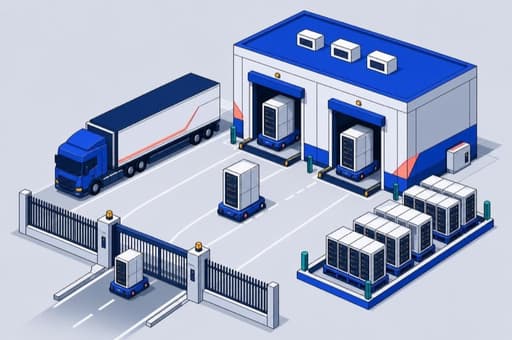
NVIDIA Data Center compute platform
Special processors and complete systems for building and running AI produced $162.4B in FY2026. Two unnamed direct buyers made up 36% of company revenue; their identities are not disclosed, and supply, power, or export permission can slow shipments.
Competes with Helios with Instinct MI455X (AMD) · Ironwood TPU (Google Cloud)
In plain English
Picture a warehouse-sized computer assembled from cabinet after cabinet. Its specialized processors do many calculations at once, letting customers teach an AI system and then use that system to answer questions or create things. NVIDIA sells the processors, circuit boards, ready-made cabinets, and designs that tie the pieces together.
Cloud companies, research laboratories, and ordinary businesses pay when they take delivery. Buying the full setup saves them from making hundreds of parts cooperate on their own, so the system sale is worth far more than a single chip. NVIDIA relies on outside factories and memory makers, while customers still need enough electricity and government permission to receive the equipment.
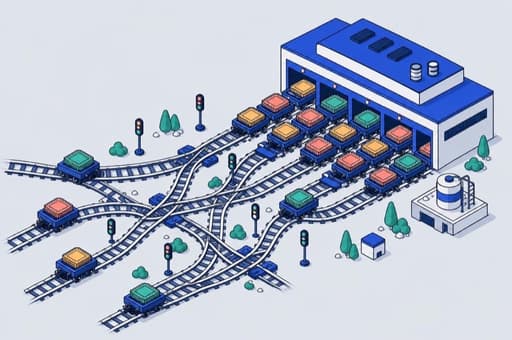
NVIDIA Data Center networking
The links that keep thousands of processors working as one generated $31.4B in FY2026. Sales more than doubled, but buyers can choose open Ethernet-based alternatives that industry researchers expect to gain ground against NVIDIA's own connections.
Competes with Tomahawk 6 (Broadcom) · Silicon One G300 (Cisco)
In plain English
Between thousands of processors sits a traffic problem: each one must pass results to the next without waiting. NVIDIA sells the switches, connection cards, cables, and control software that move this flood of information within a cabinet and across an entire computer hall.
It works like a private road system built for one enormous warehouse. Cloud companies and firms that rent AI computing by the hour pay for more connections as they add processors, while server makers install the pieces. NVIDIA benefits whether the processors are its own or selected custom designs, but customers can also build around Ethernet, the familiar networking standard used across ordinary computer networks, and rival suppliers sell those routes.
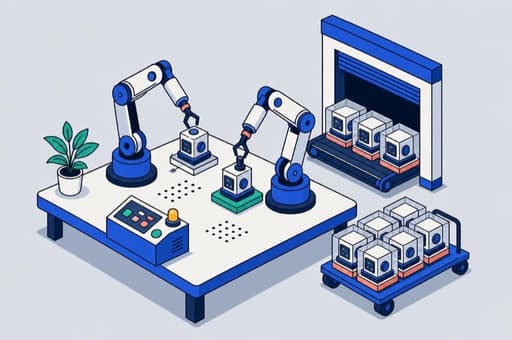
NVIDIA Physical AI
Hardware and software for robots and other machines topped $6B in FY2026, though that money already sits inside several existing businesses. The test is whether factory experiments become dependable, economical machines used every day.
Competes with Kria SOMs and Kria AI Solutions (AMD) · Robotics RB3 Platform (Qualcomm)
In plain English
Robots need both a school and a small computer of their own. NVIDIA supplies the school through software that lets developers rehearse jobs in a digital factory, then sells compact computer modules and tools that help the finished machine see, decide, and move.
Robot makers, manufacturers, and developers buy those modules or rent larger computers to teach their machines. Much of the software comes bundled or makes the hardware more useful, so this is not a separate cash register: its sales already appear across data-center computing, cars, and graphics. Safety checks, good sensor data, and the cost of each deployment decide whether a promising trial becomes a large order.
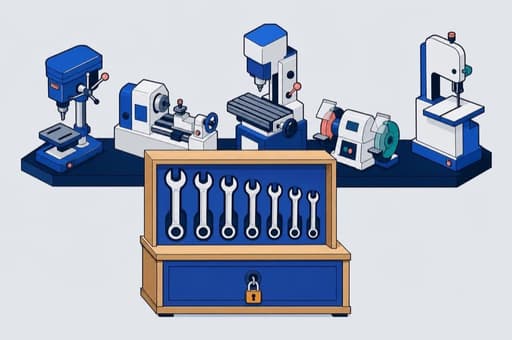
NVIDIA AI Enterprise and CUDA-X
The code layer used by more than seven million developers keeps software tied to NVIDIA hardware. Paid support is only part of the payoff; compatibility, security, and useful ready-made tools determine whether companies keep choosing the hardware.
Competes with ROCm (AMD) · oneAPI (Intel)
In plain English
A developer writing for NVIDIA does not begin from scratch. CUDA is the common set of instructions for telling NVIDIA processors what to do, while CUDA-X is a shelf of ready-made code for jobs such as science and AI. NVIDIA AI Enterprise packages more tools with help for companies that need them to work reliably.
Much of CUDA is free, much like giving builders a familiar set of fittings that match your machinery. Companies can pay for software subscriptions and support, but the larger effect is habit: code already built around these tools makes the next NVIDIA machine easier to choose. Cloud stores and consulting firms help put the paid packages into customers' hands.
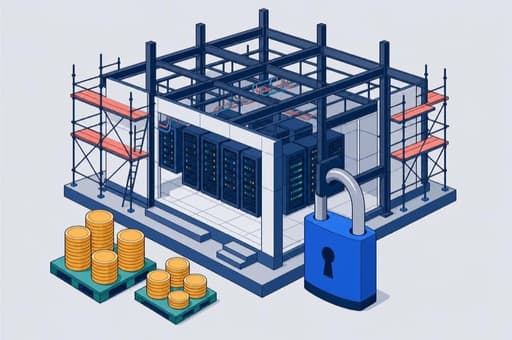
AI cloud agreements and site guarantees
NVIDIA helps computing renters secure sites, power, and financing that can lead to hardware orders, but those promises are not sales. Promises to cover others' bills reached $108.5B in July 2026; empty sites or weak customers could turn support into cash payments.
Competes with OpenAI 6 GW Instinct MI450 program (AMD) · Anthropic 5 GW Trainium program (AWS)
In plain English
This is NVIDIA helping build the customers that buy its machines. A computing renter may have demand for AI service but lack the money, electrical connection, or building needed to install thousands of processors. NVIDIA can sign long service deals, promise landlords or lenders that bills will be covered, or invest alongside the project.
Think of a toolmaker helping a new workshop obtain its building because the workshop will then buy many tools. The program can unlock hardware orders and sometimes service payments, yet a guarantee is not revenue: if a supported site stays empty or its operator cannot pay, NVIDIA may have to provide cash instead.
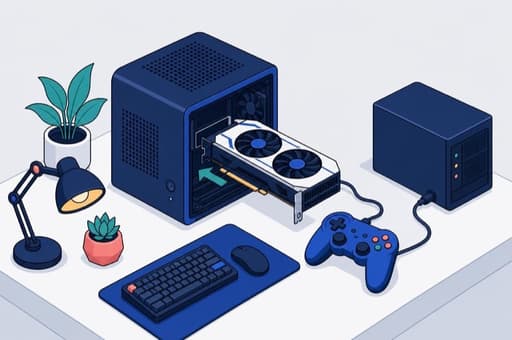
GeForce RTX and GeForce NOW
Graphics cards and streamed game access remain NVIDIA's main consumer business, contributing roughly 6–7% of FY2026 revenue. PC upgrade cycles, memory supply, developer support, and the games available to stream determine how steady it stays.
Competes with Radeon RX 9000 Series (AMD) · Arc B580 and B570 (Intel)
In plain English
For many PC gamers, GeForce is the part that draws each scene and now also performs AI-assisted graphics work. NVIDIA sells these specialized processors inside desktop cards and laptops; GeForce NOW instead runs a game on a distant computer and sends the picture over the internet.
Gamers pay when they upgrade a card or buy a notebook, while computer makers and board builders buy components to package into finished products. Streaming members pay repeatedly for access, but its sales are not disclosed. Game publishers matter because their titles must work well on the hardware and be available in the streaming catalog. The wider Gaming business also includes console work shown separately on this map.
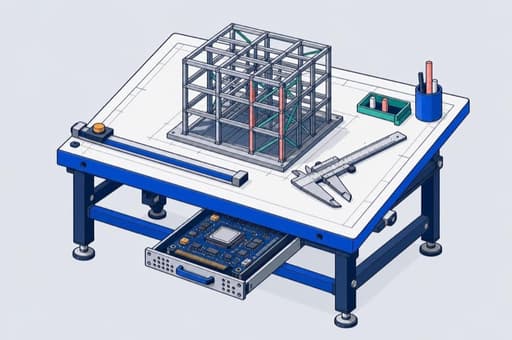
NVIDIA RTX PRO
Graphics systems for designers, engineers, scientists, and company-run AI brought in $3.2B in FY2026, up 40%. Their value depends on professional programs staying certified to work and on customers replacing costly machines.
Competes with Radeon PRO W7000 Series (AMD) · Arc Pro B-Series (Intel)
In plain English
The quiet workhorse behind a designer's screen, RTX PRO turns detailed plans, video, scientific pictures, and smaller AI jobs into something a professional can use quickly. NVIDIA sells the processors in plug-in computer cards, laptops, and complete company systems.
An architect or engineer does not want a pretty picture that might be wrong; the exact program must be tested to work with the machine. Computer makers package the processors into approved professional computers, and employers pay for dependable performance rather than entertainment. That testing creates staying power, but purchases still arrive in waves when firms replace laptops and deskside machines or adopt new local AI tools.
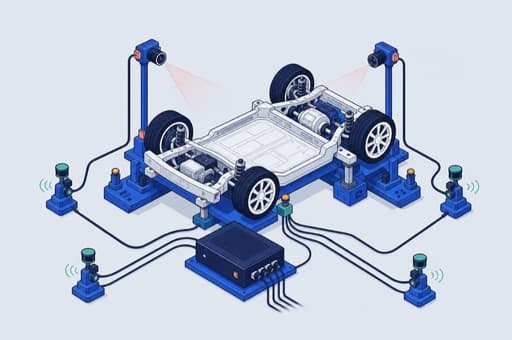
NVIDIA DRIVE Hyperion
The computer, software, sensors, and ready design for assisted and automated driving generated $2.35B in FY2026. Vehicle approvals and launch schedules take years, so announced design choices matter only when cars and fleets reach production.
Competes with Snapdragon Ride Elite and Ride Flex (Qualcomm) · EyeQ6 and Chauffeur (Mobileye)
In plain English
A car program moves slowly from drawing board to road. DRIVE Hyperion gives automakers a ready pattern: a central computer, the software that runs it, connections to cameras and other sensors, and a tested arrangement for putting everything in a vehicle.
Automakers, truck builders, self-driving taxi developers, and their parts suppliers choose the platform years before a model reaches buyers. NVIDIA earns as computers and related technology enter production vehicles; suppliers do much of the final fitting. Safety approval, local rules, and responsibility when something goes wrong make this a long-cycle business, so a project win today may not produce meaningful sales until much later.


 NVIDIA Data Center compute platformSpecial processors and complete systems for building and running AI produced $162.4B in FY2026. Two unnamed direct buyers made up 36% of company revenue; their identities are not disclosed, and supply, power, or export permission can slow shipments.
Special processors and complete systems for building and running AI produced $162.4B in FY2026. Two unnamed direct buyers made up 36% of company revenue; their identities are not disclosed, and supply, power, or export permission can slow shipments.
In plain English
Picture a warehouse-sized computer assembled from cabinet after cabinet. Its specialized processors do many calculations at once, letting customers teach an AI system and then use that system to answer questions or create things. NVIDIA sells the processors, circuit boards, ready-made cabinets, and designs that tie the pieces together.
Cloud companies, research laboratories, and ordinary businesses pay when they take delivery. Buying the full setup saves them from making hundreds of parts cooperate on their own, so the system sale is worth far more than a single chip. NVIDIA relies on outside factories and memory makers, while customers still need enough electricity and government permission to receive the equipment.
Competes with Helios with Instinct MI455X (AMD) · Ironwood TPU (Google Cloud)
 NVIDIA Data Center networkingThe links that keep thousands of processors working as one generated $31.4B in FY2026. Sales more than doubled, but buyers can choose open Ethernet-based alternatives that industry researchers expect to gain ground against NVIDIA's own connections.
The links that keep thousands of processors working as one generated $31.4B in FY2026. Sales more than doubled, but buyers can choose open Ethernet-based alternatives that industry researchers expect to gain ground against NVIDIA's own connections.
In plain English
Between thousands of processors sits a traffic problem: each one must pass results to the next without waiting. NVIDIA sells the switches, connection cards, cables, and control software that move this flood of information within a cabinet and across an entire computer hall.
It works like a private road system built for one enormous warehouse. Cloud companies and firms that rent AI computing by the hour pay for more connections as they add processors, while server makers install the pieces. NVIDIA benefits whether the processors are its own or selected custom designs, but customers can also build around Ethernet, the familiar networking standard used across ordinary computer networks, and rival suppliers sell those routes.
Competes with Tomahawk 6 (Broadcom) · Silicon One G300 (Cisco)
 NVIDIA Physical AIHardware and software for robots and other machines topped $6B in FY2026, though that money already sits inside several existing businesses. The test is whether factory experiments become dependable, economical machines used every day.
Hardware and software for robots and other machines topped $6B in FY2026, though that money already sits inside several existing businesses. The test is whether factory experiments become dependable, economical machines used every day.
In plain English
Robots need both a school and a small computer of their own. NVIDIA supplies the school through software that lets developers rehearse jobs in a digital factory, then sells compact computer modules and tools that help the finished machine see, decide, and move.
Robot makers, manufacturers, and developers buy those modules or rent larger computers to teach their machines. Much of the software comes bundled or makes the hardware more useful, so this is not a separate cash register: its sales already appear across data-center computing, cars, and graphics. Safety checks, good sensor data, and the cost of each deployment decide whether a promising trial becomes a large order.
Competes with Kria SOMs and Kria AI Solutions (AMD) · Robotics RB3 Platform (Qualcomm)
 NVIDIA AI Enterprise and CUDA-XThe code layer used by more than seven million developers keeps software tied to NVIDIA hardware. Paid support is only part of the payoff; compatibility, security, and useful ready-made tools determine whether companies keep choosing the hardware.
The code layer used by more than seven million developers keeps software tied to NVIDIA hardware. Paid support is only part of the payoff; compatibility, security, and useful ready-made tools determine whether companies keep choosing the hardware.
In plain English
A developer writing for NVIDIA does not begin from scratch. CUDA is the common set of instructions for telling NVIDIA processors what to do, while CUDA-X is a shelf of ready-made code for jobs such as science and AI. NVIDIA AI Enterprise packages more tools with help for companies that need them to work reliably.
Much of CUDA is free, much like giving builders a familiar set of fittings that match your machinery. Companies can pay for software subscriptions and support, but the larger effect is habit: code already built around these tools makes the next NVIDIA machine easier to choose. Cloud stores and consulting firms help put the paid packages into customers' hands.
Competes with ROCm (AMD) · oneAPI (Intel)
 AI cloud agreements and site guaranteesNVIDIA helps computing renters secure sites, power, and financing that can lead to hardware orders, but those promises are not sales. Promises to cover others' bills reached $108.5B in July 2026; empty sites or weak customers could turn support into cash payments.
NVIDIA helps computing renters secure sites, power, and financing that can lead to hardware orders, but those promises are not sales. Promises to cover others' bills reached $108.5B in July 2026; empty sites or weak customers could turn support into cash payments.
In plain English
This is NVIDIA helping build the customers that buy its machines. A computing renter may have demand for AI service but lack the money, electrical connection, or building needed to install thousands of processors. NVIDIA can sign long service deals, promise landlords or lenders that bills will be covered, or invest alongside the project.
Think of a toolmaker helping a new workshop obtain its building because the workshop will then buy many tools. The program can unlock hardware orders and sometimes service payments, yet a guarantee is not revenue: if a supported site stays empty or its operator cannot pay, NVIDIA may have to provide cash instead.
Competes with OpenAI 6 GW Instinct MI450 program (AMD) · Anthropic 5 GW Trainium program (AWS)
 GeForce RTX and GeForce NOWGraphics cards and streamed game access remain NVIDIA's main consumer business, contributing roughly 6–7% of FY2026 revenue. PC upgrade cycles, memory supply, developer support, and the games available to stream determine how steady it stays.
Graphics cards and streamed game access remain NVIDIA's main consumer business, contributing roughly 6–7% of FY2026 revenue. PC upgrade cycles, memory supply, developer support, and the games available to stream determine how steady it stays.
In plain English
For many PC gamers, GeForce is the part that draws each scene and now also performs AI-assisted graphics work. NVIDIA sells these specialized processors inside desktop cards and laptops; GeForce NOW instead runs a game on a distant computer and sends the picture over the internet.
Gamers pay when they upgrade a card or buy a notebook, while computer makers and board builders buy components to package into finished products. Streaming members pay repeatedly for access, but its sales are not disclosed. Game publishers matter because their titles must work well on the hardware and be available in the streaming catalog. The wider Gaming business also includes console work shown separately on this map.
Competes with Radeon RX 9000 Series (AMD) · Arc B580 and B570 (Intel)
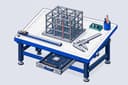 NVIDIA RTX PROGraphics systems for designers, engineers, scientists, and company-run AI brought in $3.2B in FY2026, up 40%. Their value depends on professional programs staying certified to work and on customers replacing costly machines.
Graphics systems for designers, engineers, scientists, and company-run AI brought in $3.2B in FY2026, up 40%. Their value depends on professional programs staying certified to work and on customers replacing costly machines.
In plain English
The quiet workhorse behind a designer's screen, RTX PRO turns detailed plans, video, scientific pictures, and smaller AI jobs into something a professional can use quickly. NVIDIA sells the processors in plug-in computer cards, laptops, and complete company systems.
An architect or engineer does not want a pretty picture that might be wrong; the exact program must be tested to work with the machine. Computer makers package the processors into approved professional computers, and employers pay for dependable performance rather than entertainment. That testing creates staying power, but purchases still arrive in waves when firms replace laptops and deskside machines or adopt new local AI tools.
Competes with Radeon PRO W7000 Series (AMD) · Arc Pro B-Series (Intel)
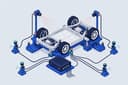 NVIDIA DRIVE HyperionThe computer, software, sensors, and ready design for assisted and automated driving generated $2.35B in FY2026. Vehicle approvals and launch schedules take years, so announced design choices matter only when cars and fleets reach production.
The computer, software, sensors, and ready design for assisted and automated driving generated $2.35B in FY2026. Vehicle approvals and launch schedules take years, so announced design choices matter only when cars and fleets reach production.
In plain English
A car program moves slowly from drawing board to road. DRIVE Hyperion gives automakers a ready pattern: a central computer, the software that runs it, connections to cameras and other sensors, and a tested arrangement for putting everything in a vehicle.
Automakers, truck builders, self-driving taxi developers, and their parts suppliers choose the platform years before a model reaches buyers. NVIDIA earns as computers and related technology enter production vehicles; suppliers do much of the final fitting. Safety approval, local rules, and responsibility when something goes wrong make this a long-cycle business, so a project win today may not produce meaningful sales until much later.
Competes with Snapdragon Ride Elite and Ride Flex (Qualcomm) · EyeQ6 and Chauffeur (Mobileye)
Named in filings, launches and programs
- NVIDIA Blackwell and Blackwell UltraProduct lineThe current processor and cabinet-system design underpinning both data-center computing and GeForce products.
- NVIDIA Vera RubinPlatform · RampingThe next system design began shipping in August 2026 and was expected to supply about one-fifth of the following quarter's Data Center sales.
- NVIDIA Hopper and H200Product lineOlder AI processors still sold, while U.S. export rules have largely closed China to NVIDIA's data-center computing products.
- NVIDIA Grace and Vera CPUsProduct line · RampingGeneral-purpose processors paired with NVIDIA's specialized processors; Grace produced more than $5B over the year through August 2026.
- NVIDIA DGX and HGXProduct lineReady-made NVIDIA systems and building blocks that computer makers use for company and cloud AI installations.
- NVLink FusionEcosystem · RampingA connection program letting partners attach their own general-purpose or specialized processors to NVIDIA's cabinet-scale systems.
- Groq 3 LPX and licensed LPU technologyProduct line · RampingFast AI-response technology licensed from Groq alongside staff hiring; NVIDIA did not buy Groq or its customer contracts.
- NVIDIA Inception and Deep Learning InstituteEcosystemStartup support and developer education that help more people build products around NVIDIA technology.
- Game-console SoCs and development servicesProduct lineCustom console processors and related engineering work included in Gaming sales but excluded from the GeForce estimate.
- OEM and OtherSegmentA small tail of sales worth $619M, or 0.3% of FY2026 revenue.
- MediaTek strategic collaborationEcosystem · AnnouncedPlanned work from devices to internet data centers, paired with a $3.5B investment through debt that can become MediaTek shares.
NVIDIA Blackwell and Blackwell UltraProduct line
The current processor and cabinet-system design underpinning both data-center computing and GeForce products.
NVIDIA Vera RubinPlatform · Ramping
The next system design began shipping in August 2026 and was expected to supply about one-fifth of the following quarter's Data Center sales.
NVIDIA Hopper and H200Product line
Older AI processors still sold, while U.S. export rules have largely closed China to NVIDIA's data-center computing products.
NVIDIA Grace and Vera CPUsProduct line · Ramping
General-purpose processors paired with NVIDIA's specialized processors; Grace produced more than $5B over the year through August 2026.
NVIDIA DGX and HGXProduct line
Ready-made NVIDIA systems and building blocks that computer makers use for company and cloud AI installations.
NVLink FusionEcosystem · Ramping
A connection program letting partners attach their own general-purpose or specialized processors to NVIDIA's cabinet-scale systems.
Groq 3 LPX and licensed LPU technologyProduct line · Ramping
Fast AI-response technology licensed from Groq alongside staff hiring; NVIDIA did not buy Groq or its customer contracts.
NVIDIA Inception and Deep Learning InstituteEcosystem
Startup support and developer education that help more people build products around NVIDIA technology.
Game-console SoCs and development servicesProduct line
Custom console processors and related engineering work included in Gaming sales but excluded from the GeForce estimate.
OEM and OtherSegment
A small tail of sales worth $619M, or 0.3% of FY2026 revenue.
MediaTek strategic collaborationEcosystem · Announced
Planned work from devices to internet data centers, paired with a $3.5B investment through debt that can become MediaTek shares.