
Okta (OKTA)
Secures workforce access and customer logins through the Okta and Auth0 cloud platforms.
Something off on this page? Send us feedback.
Okta sells sign-in. Its software decides who may enter which app — a company's own staff on one side, and on the other, the users of businesses that build their own apps. Two subscription platforms bring in nearly all the money, on contracts that run for years. The newer idea is handing the same kind of pass to AI assistants, work the company says is still too small to see in its revenue.
Item facts: FY2026 · year ended January 31, 2026, from filings, earnings calls and company pages.
Judgment weights, not filed revenue
The band summarizes business focus and direction. ~ marks estimates.
7 in detail · 15 more below
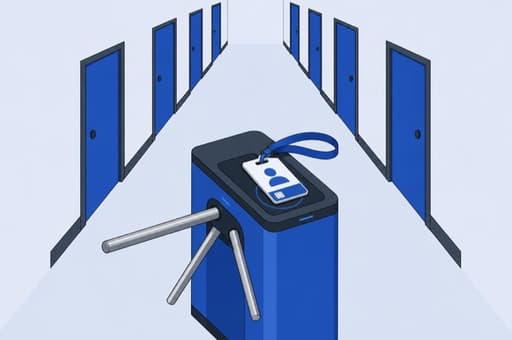
Okta Platform
The employee half of Okta, and the seat count every add-on attaches to. Across the whole company, customers have already signed close to $5 billion of subscription Okta has yet to deliver. Watch whether existing customers keep adding seats.
Competes with Entra ID (Microsoft) · Ping Identity/ForgeRock platform (Ping Identity)
In plain English
Every company runs on dozens of separate apps, and each one wants a password. Okta puts one locked gate in front of all of them: staff prove who they are once — a password plus a tap on a phone — and the gate decides which apps open, then keeps a record of every entry.
Companies pay by the head, by the month; published plans run from about $6 to $17 per employee. More than 20,000 organisations pay for it. The pitch Okta leans on is that it sells nothing else — no email suite, no laptops — so it is perfectly happy to unlock a rival's software.
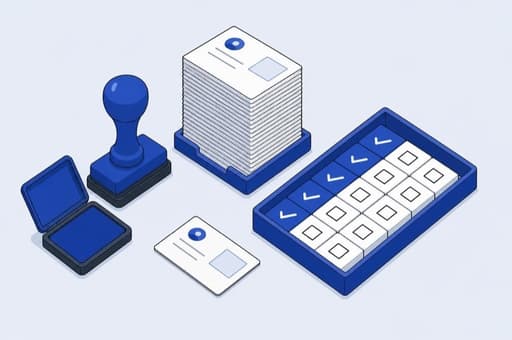
Okta Identity Governance
Access requests, approvals and periodic reviews, sold on top of the employee platform. The largest of the add-ons management counts on for growth, and since 2026 it wins deals on its own rather than only riding along.
Competes with Identity Security Cloud (SailPoint) · Entra ID Governance (Microsoft)
In plain English
Giving someone access is easy; taking it back is the part companies forget. A worker moves from finance to sales, keeps the old approvals, and three years later can still open the payroll system. This is the paperwork that catches that: requests, approvals, and a regular review where a manager confirms each person still needs what they hold.
It sells as an extra line on a contract the customer already has. Add-ons like this made up roughly 30% of recent new orders, and attaching one lifts the average deal size by about 40% — which is why management talks about it on every call.
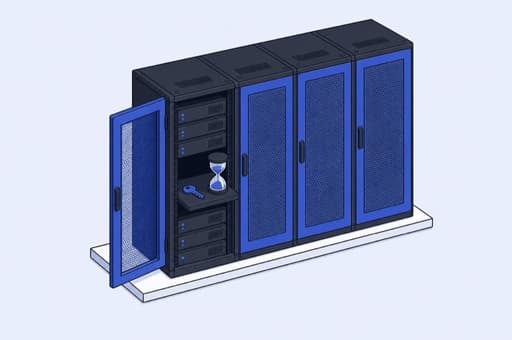
Okta Privileged Access
Guards the administrator accounts that reach servers and databases. Younger and smaller than governance, and its biggest independent rival was absorbed by Palo Alto Networks in early 2026. Watch whether large customers keep buying it alongside governance.
Competes with Privileged Access Manager (Palo Alto Networks) · Entra Privileged Identity Management (Microsoft)
In plain English
Ordinary staff log in to apps. Administrators log in to the machines the apps run on — the servers and databases where one stolen password does real damage. This product handles those accounts: it hands out access for the job at hand and takes it back when the job is done, so nobody walks around holding permanent keys.
Okta charges by how much infrastructure is covered rather than by headcount. It arrived late and is still small. The biggest independent seller of this, CyberArk, was bought by Palo Alto Networks in February 2026 — the incumbent is now part of a larger security bundle.
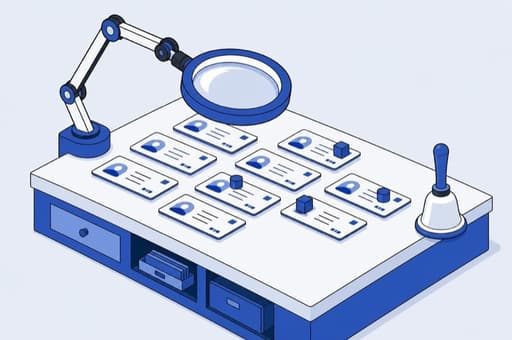
Identity Threat Protection + Identity Security Posture Management
Watches what happens after someone is already logged in, and cleans up over-generous access. Okta paid roughly $200 million for Permiso to widen its catalogue of warning signs. Sold to customers it already has, so it grows contracts rather than adding logos.
Competes with Falcon Identity Threat Protection (CrowdStrike) · Entra ID Protection (Microsoft)
In plain English
A stolen sign-in is not caught at the sign-in. Someone walks in with a real password, or takes over a session that is already open, and everything afterwards looks ordinary. These two products are the watchman inside the building: one keeps checking sessions after log-in and cuts them off when behaviour turns odd, the other hunts for sloppy settings and people holding access nobody meant to give them.
They are offered to companies already paying Okta rather than used to win new ones. Buying Permiso, a detection startup, for roughly $200 million in 2026 took the library of warning signs from about ninety to around four hundred.
U.S. Public Sector
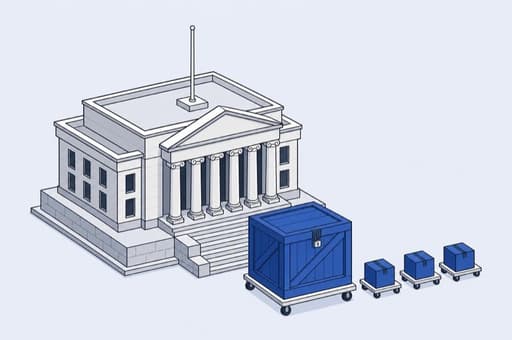
Government and defense buyers: under a tenth of revenue, but repeatedly the source of the quarter's largest single deal. Now cleared to the Defense Department's Impact Level 5. Watch whether a 2027 zero-trust deadline keeps the orders coming.
Competes with Entra ID in GCC High (Microsoft) · Legacy on-premises federal log-in stacks (Government in-house systems)
In plain English
Selling sign-in software to the U.S. government is less about the product than about paperwork that takes years to clear. Agencies may only buy cloud services that have passed a federal security review, and the Defense Department insists on a stricter grade again — Okta reached that grade in August 2026.
Once cleared, the deals are unusually large: in recent quarters four or five of Okta's ten biggest contracts came from government, one of them replacing an old military log-on system. These contracts often run a single year rather than three. The vertical stays under a tenth of the company, so it lifts the quarters it lands in.
Auth0 Platform
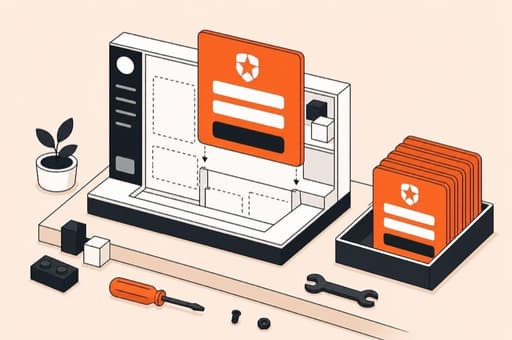
Log-in machinery that other companies build into their own apps, and the reason Okta carries about $5.5 billion of goodwill from the 2021 purchase. Watch whether developer trials keep turning into paid enterprise contracts.
Competes with Amazon Cognito (Amazon) · Entra External ID (Microsoft)
In plain English
Think of the last app you joined that let you use a Google account instead of inventing another password. Somebody had to build that, and most companies would rather not: doing log-in properly means passwords, resets, fraud attempts, and rules about who inside a client company may see what.
Auth0 is that machinery sold as a part to drop into an app you are building. Developers start on a trial, ship something, and graduate to paid plans — the enterprise base plan lists at $3,000 a month. Okta bought it in 2021 for about $5.7 billion, and it now sells through its own dedicated sales team.
Okta for AI Agents
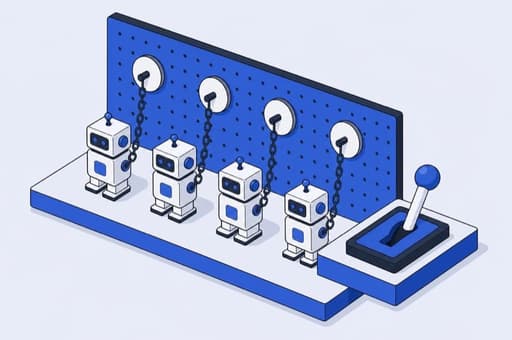
Identity for software assistants: register them, limit what they touch, switch them off. On sale since April 2026, with dozens of deals last quarter. Management thinks it could become one of the largest categories in security; the numbers do not say so yet.
Competes with Entra Agent ID (Microsoft) · CyberArk machine and agent identity (Palo Alto Networks)
In plain English
Companies are turning software assistants loose on their own systems — programs that fetch, file and book things on a worker's behalf. Each one needs an account, and many are running today on borrowed passwords with nobody's name attached.
Okta's answer registers every assistant under a human owner, decides which systems it may reach, watches what it does, and shuts it off when it misbehaves. It went on sale in April 2026 and works with assistants from many makers rather than one. Last quarter brought dozens of deals, several worth more than a million dollars — real, but the chief executive calls it too small to show up in the numbers.


 Okta PlatformThe employee half of Okta, and the seat count every add-on attaches to. Across the whole company, customers have already signed close to $5 billion of subscription Okta has yet to deliver. Watch whether existing customers keep adding seats.
The employee half of Okta, and the seat count every add-on attaches to. Across the whole company, customers have already signed close to $5 billion of subscription Okta has yet to deliver. Watch whether existing customers keep adding seats.
In plain English
Every company runs on dozens of separate apps, and each one wants a password. Okta puts one locked gate in front of all of them: staff prove who they are once — a password plus a tap on a phone — and the gate decides which apps open, then keeps a record of every entry.
Companies pay by the head, by the month; published plans run from about $6 to $17 per employee. More than 20,000 organisations pay for it. The pitch Okta leans on is that it sells nothing else — no email suite, no laptops — so it is perfectly happy to unlock a rival's software.
Competes with Entra ID (Microsoft) · Ping Identity/ForgeRock platform (Ping Identity)
 Okta Identity GovernanceAccess requests, approvals and periodic reviews, sold on top of the employee platform. The largest of the add-ons management counts on for growth, and since 2026 it wins deals on its own rather than only riding along.
Access requests, approvals and periodic reviews, sold on top of the employee platform. The largest of the add-ons management counts on for growth, and since 2026 it wins deals on its own rather than only riding along.
In plain English
Giving someone access is easy; taking it back is the part companies forget. A worker moves from finance to sales, keeps the old approvals, and three years later can still open the payroll system. This is the paperwork that catches that: requests, approvals, and a regular review where a manager confirms each person still needs what they hold.
It sells as an extra line on a contract the customer already has. Add-ons like this made up roughly 30% of recent new orders, and attaching one lifts the average deal size by about 40% — which is why management talks about it on every call.
Competes with Identity Security Cloud (SailPoint) · Entra ID Governance (Microsoft)
 Okta Privileged AccessGuards the administrator accounts that reach servers and databases. Younger and smaller than governance, and its biggest independent rival was absorbed by Palo Alto Networks in early 2026. Watch whether large customers keep buying it alongside governance.
Guards the administrator accounts that reach servers and databases. Younger and smaller than governance, and its biggest independent rival was absorbed by Palo Alto Networks in early 2026. Watch whether large customers keep buying it alongside governance.
In plain English
Ordinary staff log in to apps. Administrators log in to the machines the apps run on — the servers and databases where one stolen password does real damage. This product handles those accounts: it hands out access for the job at hand and takes it back when the job is done, so nobody walks around holding permanent keys.
Okta charges by how much infrastructure is covered rather than by headcount. It arrived late and is still small. The biggest independent seller of this, CyberArk, was bought by Palo Alto Networks in February 2026 — the incumbent is now part of a larger security bundle.
Competes with Privileged Access Manager (Palo Alto Networks) · Entra Privileged Identity Management (Microsoft)
 Identity Threat Protection + Identity Security Posture ManagementWatches what happens after someone is already logged in, and cleans up over-generous access. Okta paid roughly $200 million for Permiso to widen its catalogue of warning signs. Sold to customers it already has, so it grows contracts rather than adding logos.
Watches what happens after someone is already logged in, and cleans up over-generous access. Okta paid roughly $200 million for Permiso to widen its catalogue of warning signs. Sold to customers it already has, so it grows contracts rather than adding logos.
In plain English
A stolen sign-in is not caught at the sign-in. Someone walks in with a real password, or takes over a session that is already open, and everything afterwards looks ordinary. These two products are the watchman inside the building: one keeps checking sessions after log-in and cuts them off when behaviour turns odd, the other hunts for sloppy settings and people holding access nobody meant to give them.
They are offered to companies already paying Okta rather than used to win new ones. Buying Permiso, a detection startup, for roughly $200 million in 2026 took the library of warning signs from about ninety to around four hundred.
Competes with Falcon Identity Threat Protection (CrowdStrike) · Entra ID Protection (Microsoft)
 U.S. Public SectorGovernment and defense buyers: under a tenth of revenue, but repeatedly the source of the quarter's largest single deal. Now cleared to the Defense Department's Impact Level 5. Watch whether a 2027 zero-trust deadline keeps the orders coming.
Government and defense buyers: under a tenth of revenue, but repeatedly the source of the quarter's largest single deal. Now cleared to the Defense Department's Impact Level 5. Watch whether a 2027 zero-trust deadline keeps the orders coming.
In plain English
Selling sign-in software to the U.S. government is less about the product than about paperwork that takes years to clear. Agencies may only buy cloud services that have passed a federal security review, and the Defense Department insists on a stricter grade again — Okta reached that grade in August 2026.
Once cleared, the deals are unusually large: in recent quarters four or five of Okta's ten biggest contracts came from government, one of them replacing an old military log-on system. These contracts often run a single year rather than three. The vertical stays under a tenth of the company, so it lifts the quarters it lands in.
Competes with Entra ID in GCC High (Microsoft) · Legacy on-premises federal log-in stacks (Government in-house systems)
 Auth0 PlatformLog-in machinery that other companies build into their own apps, and the reason Okta carries about $5.5 billion of goodwill from the 2021 purchase. Watch whether developer trials keep turning into paid enterprise contracts.
Log-in machinery that other companies build into their own apps, and the reason Okta carries about $5.5 billion of goodwill from the 2021 purchase. Watch whether developer trials keep turning into paid enterprise contracts.
In plain English
Think of the last app you joined that let you use a Google account instead of inventing another password. Somebody had to build that, and most companies would rather not: doing log-in properly means passwords, resets, fraud attempts, and rules about who inside a client company may see what.
Auth0 is that machinery sold as a part to drop into an app you are building. Developers start on a trial, ship something, and graduate to paid plans — the enterprise base plan lists at $3,000 a month. Okta bought it in 2021 for about $5.7 billion, and it now sells through its own dedicated sales team.
Competes with Amazon Cognito (Amazon) · Entra External ID (Microsoft)
 Okta for AI AgentsIdentity for software assistants: register them, limit what they touch, switch them off. On sale since April 2026, with dozens of deals last quarter. Management thinks it could become one of the largest categories in security; the numbers do not say so yet.
Identity for software assistants: register them, limit what they touch, switch them off. On sale since April 2026, with dozens of deals last quarter. Management thinks it could become one of the largest categories in security; the numbers do not say so yet.
In plain English
Companies are turning software assistants loose on their own systems — programs that fetch, file and book things on a worker's behalf. Each one needs an account, and many are running today on borrowed passwords with nobody's name attached.
Okta's answer registers every assistant under a human owner, decides which systems it may reach, watches what it does, and shuts it off when it misbehaves. It went on sale in April 2026 and works with assistants from many makers rather than one. Last quarter brought dozens of deals, several worth more than a million dollars — real, but the chief executive calls it too small to show up in the numbers.
Competes with Entra Agent ID (Microsoft) · CyberArk machine and agent identity (Palo Alto Networks)
Named in filings, launches and programs
- Auth0 for AI AgentsProduct · RampingThe developer-side twin: identity for the assistants companies embed in their own apps. Credited with building early pipeline, not yet with revenue.
- Cross App Access / Agent SSOEcosystemAn open standard Okta wrote for letting assistants reach apps; folded into core sign-on plans at no extra charge, with 26 software vendors supporting it.
- Okta Integration NetworkEcosystemReady-made connections to other companies' software — over 8,000 by management's August 2026 count. The reason leaving Okta is a chore.
- Okta WorkflowsProductAutomation of identity chores without writing code; counted inside the governance-related business management sized above $400 million in early 2025.
- Lifecycle ManagementProductTurns new hires, transfers and departures into account changes automatically — the other large piece of that same governance-related business.
- Universal DirectoryProductThe list of who everyone is: staff, devices, and now registered AI assistants. The record the rest of the platform reads from.
- Single Sign-onProductSign in once, reach everything — the original product, still the core of the workforce plans priced from about $6 per person per month.
- Adaptive MFAProductThe second proof of identity — a tap on a phone or a hardware key — asked for alongside the password on the workforce plans.
- Okta Device AccessProductExtends the same log-in to the laptop itself, not only to the apps running on it.
- Fine Grained AuthorizationProductOn the Auth0 side: permission rules that depend on how a user is related to the thing they are trying to open.
- Secure Partner AccessProductAn add-on for signing in outside partners and other companies' staff, rather than a customer's own employees.
- Access GatewayProductBridges older software still running in a company's own building into the cloud platform, so both sit behind one log-in.
- Advanced Server AccessProductLog-in for servers and infrastructure, sitting next door to the privileged access product.
- Auth0 Private Cloud, Organizations and Enterprise ConnectionsProduct lineEnterprise options on the Auth0 side: a dedicated deployment, separate spaces for each business client, and hooks into a client's own sign-in system.
- Okta Secure Identity CommitmentProductA security-hardening programme started around February 2024, which Okta pitches to buyers as a reason to trust it with the keys.
Auth0 for AI AgentsProduct · Ramping
The developer-side twin: identity for the assistants companies embed in their own apps. Credited with building early pipeline, not yet with revenue.
Cross App Access / Agent SSOEcosystem
An open standard Okta wrote for letting assistants reach apps; folded into core sign-on plans at no extra charge, with 26 software vendors supporting it.
Okta Integration NetworkEcosystem
Ready-made connections to other companies' software — over 8,000 by management's August 2026 count. The reason leaving Okta is a chore.
Okta WorkflowsProduct
Automation of identity chores without writing code; counted inside the governance-related business management sized above $400 million in early 2025.
Lifecycle ManagementProduct
Turns new hires, transfers and departures into account changes automatically — the other large piece of that same governance-related business.
Universal DirectoryProduct
The list of who everyone is: staff, devices, and now registered AI assistants. The record the rest of the platform reads from.
Single Sign-onProduct
Sign in once, reach everything — the original product, still the core of the workforce plans priced from about $6 per person per month.
Adaptive MFAProduct
The second proof of identity — a tap on a phone or a hardware key — asked for alongside the password on the workforce plans.
Okta Device AccessProduct
Extends the same log-in to the laptop itself, not only to the apps running on it.
Fine Grained AuthorizationProduct
On the Auth0 side: permission rules that depend on how a user is related to the thing they are trying to open.
Secure Partner AccessProduct
An add-on for signing in outside partners and other companies' staff, rather than a customer's own employees.
Access GatewayProduct
Bridges older software still running in a company's own building into the cloud platform, so both sit behind one log-in.
Advanced Server AccessProduct
Log-in for servers and infrastructure, sitting next door to the privileged access product.
Auth0 Private Cloud, Organizations and Enterprise ConnectionsProduct line
Enterprise options on the Auth0 side: a dedicated deployment, separate spaces for each business client, and hooks into a client's own sign-in system.
Okta Secure Identity CommitmentProduct
A security-hardening programme started around February 2024, which Okta pitches to buyers as a reason to trust it with the keys.