
Plains All American Pipeline (PAA)
Handles crude oil through gathering, pipelines, terminals, storage, and merchant operations across North America.
Something off on this page? Send us feedback.
Plains All American moves other people's crude oil. It gathers barrels from wells in West Texas, the Rockies and Western Canada, ships them down long pipelines to Gulf Coast refineries and export docks, rents tank space at the hubs where oil is priced, and buys and resells crude along the way. Having sold its Canadian gas-liquids arm, it is now an oil-only company leaning hard on Permian pipe.
Item facts: FY2025 + H1 2026 filings · FY2026 profit guide, from filings, earnings calls and company pages.
Judgment weights, not filed revenue
The band summarizes business focus and direction. ~ marks estimates.
7 in detail · 9 more below
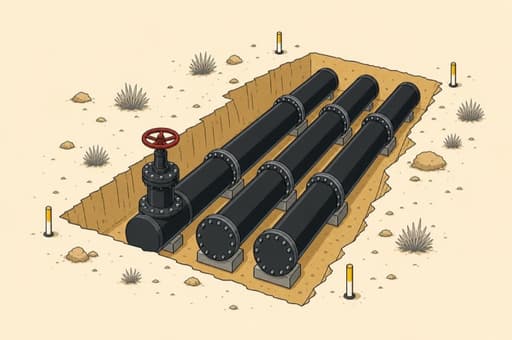
Permian long-haul pipelines
The big pipes that carry Permian oil out of the basin — Cactus I and II, Basin, a 40% share of BridgeTex, an interest in Wink to Webster — about 3,060 miles moving up to 2.8 million barrels a day. Watch renewals: spare pipe means expiring contracts reprice down.
Competes with Midland-to-ECHO 1 and 2 (Enterprise Products) · Permian Express (Energy Transfer) · Gray Oak (Enbridge)
In plain English
Once crude is collected in the oilfield it still has hundreds of miles to travel before it reaches a refinery or a ship. Plains owns a set of wide lines that do exactly that, running from West Texas to Corpus Christi, Houston and the Cushing hub in Oklahoma.
Shippers pay a published toll on every barrel, much like a turnpike, and the tolls step up each year with a regulator's inflation formula. The trouble is that the region has more pipe than barrels, so when a long contract runs out the replacement is usually signed cheaper — Plains has raised that squeeze on six of its last eight quarterly calls.
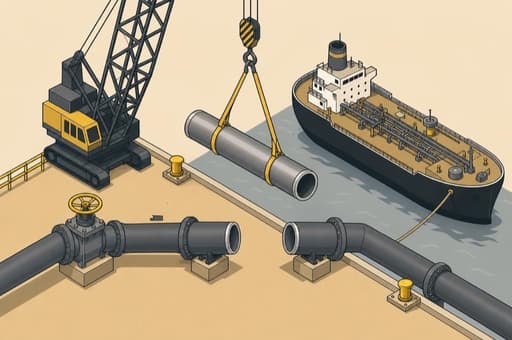
Cactus III
The former EPIC Crude line, bought in two steps for more than $2.9 billion and renamed — eight hundred miles from the Permian to Corpus Christi, widened to 725,000 barrels a day at the end of August 2026. Watch how much of it is contracted.
Competes with Gray Oak (Enbridge) · Permian Express (Energy Transfer)
In plain English
The newest big pipe in the group, and the priciest thing Plains has bought in years. It was called EPIC Crude until late 2025, when Plains took it over in two steps for more than $2.9 billion and gave it the Cactus name two of its other Permian lines already carry.
Roughly eight hundred miles of it run from the Permian oilfield down to Corpus Christi, where tankers load. It earns the same way the older lines do — a fee on every barrel carried — and Plains is widening it so more barrels fit, while its own trading desk takes up space outside shippers have not booked.
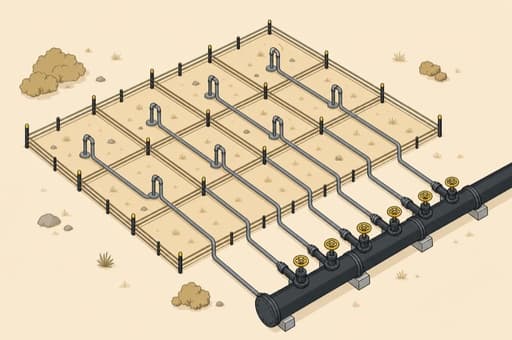
Plains Oryx Permian Basin JV
The 65%-owned gathering joint venture: 5,600 miles of collection pipe and about 5.1 million acres of producer commitments. The clearest growth number Plains discloses is acres signed, not barrels — so watch the acre count rather than basin production.
Competes with Permian crude gathering JV (Energy Transfer) · Delaware Basin crude gathering (Kinetik)
In plain English
Start at the wellhead. Every barrel a driller lifts in the Permian has to get from the pad to a big pipeline, and that first short hop runs through small collection pipe. Plains owns most of a joint venture that has about 5,600 miles of it spread across the basin.
The money is a fee per barrel, and it is locked in by a land deal: producers promise that the oil from a patch of ground — roughly 5.1 million acres of it so far — will travel on Plains' pipe. Those signatures matter more than how fast the basin grows; management says an extra 100,000 barrels a day of Permian output moves its earnings by only ten to fifteen million dollars.
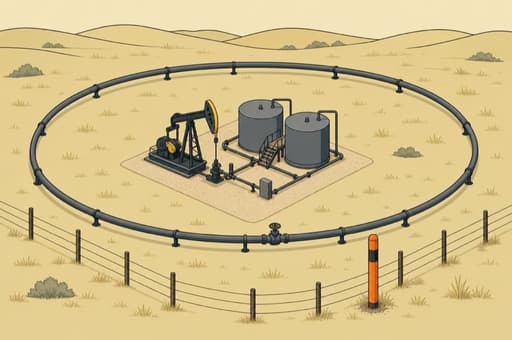
Rocky Mountain and Powder River systems
3,360 miles of Rockies pipe feeding Guernsey, Wyoming, plus the agreed $585 million Silver Creek purchase in the Powder River — 600 more miles running about a third full. Expected to close in the fourth quarter of 2026.
Competes with Powder River Gateway and Iron Horse (Tallgrass) · Rockies-to-Cushing pipeline capacity (Enbridge) · Rockies-to-Cushing pipeline capacity (ONEOK)
In plain English
Rocky Mountain crude has its own plumbing, and Plains owns a good stretch of it — about 3,360 miles of pipe feeding the junction at Guernsey, Wyoming and running on toward Cushing.
In September 2026 it agreed to pay around $585 million for Silver Creek's Powder River Basin system: some 600 miles of pipe, a stake in a neighbouring joint venture, and producers who have committed 915,000 acres for an average of more than eight years. Those lines can move over 350,000 barrels a day and currently carry about 125,000, so the payoff depends on drillers filling pipe that is already in the ground.
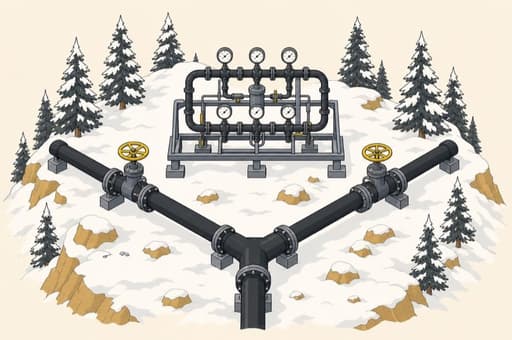
Rangeland and Rainbow systems
About 2,300 miles of Western Canadian crude gathering — all that is left in Canada after the gas-liquids sale. Growth is contract-led: new hook-ups in the Clearwater and Duvernay areas, backed by producer commitments, funded from the 2026 budget.
Competes with Mainline export system (Enbridge) · Trans Mountain pipeline capacity (Trans Mountain) · Canadian midstream gathering (Keyera)
In plain English
What is left of Plains in Canada after the gas-liquids sale: roughly 2,300 miles of crude gathering line in Western Canada, feeding barrels either north toward Edmonton or south into the United States.
It earns the same way the American lines do, a fee for each barrel moved, and it grows one connection at a time rather than in one big project. Part of the 2026 expansion budget goes here, to hook up producers working two rock layers called the Clearwater and the Duvernay, who have signed up for the space in advance. Canada is a much smaller slice of the company than it was a few years ago.
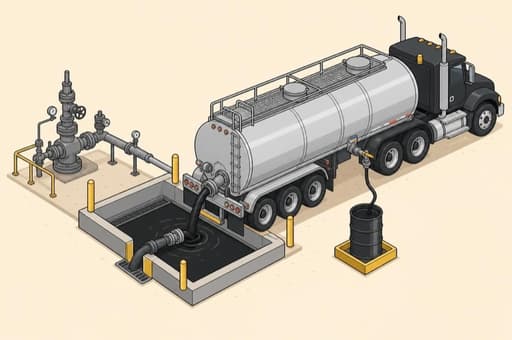
Plains Marketing crude merchant arm
Plains buys and resells crude, so the full price of the oil lands in sales — $44.3 billion in 2025, against about $2.9 billion of profits management guides to for 2026. ExxonMobil alone was roughly 31% of those 2025 sales, mostly here.
Competes with Crude marketing (Energy Transfer) · Crude oil marketing (Enterprise Products) · In-house crude purchasing desk (ExxonMobil)
In plain English
Here is the part that makes the sales figure look enormous. Plains does not only carry other people's oil; it buys barrels outright at the wellhead, at the points where oil enters a pipeline and at the Canadian border, moves them on its own system, and sells them where the price is better — a different place, a different grade, a different month.
Because Plains owns the oil for a while, the entire sale price lands in revenue, which is why the company books tens of billions in sales and keeps only a sliver. That sliver is real, though, and the desk does a second job: it is the anchor customer on Plains' own pipes and tanks, booking space that outside shippers have not taken.
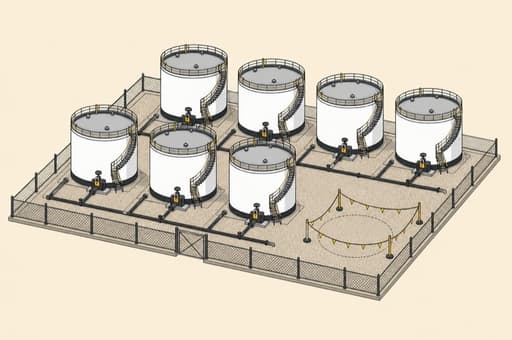
Terminalling and storage
76 million barrels of crude tankage, 27 million of it at Cushing — roughly a quarter to a third of that hub. Rent is charged monthly, and demand follows the gap between today's and next month's oil price rather than volumes.
Competes with Cushing tankage (Enbridge) · Cushing storage (ONEOK) · Cushing tanks (Enterprise Products)
In plain English
Think of a parking garage for oil. Crude does not always get used the day it arrives, so refiners and traders rent steel tanks to park it in. Plains has about seventy-six million barrels of tank room, the largest block at Cushing, Oklahoma — the town where the benchmark American oil price is settled.
Customers pay a monthly charge for the space, plus smaller fees for pushing oil through and for blending grades together. The business runs hottest when oil costs less today than it will next month, because then someone will pay to hold a barrel. Plains says its Cushing tanks are fully booked, which is why it bought another terminal there in January 2026.


 Permian long-haul pipelinesThe big pipes that carry Permian oil out of the basin — Cactus I and II, Basin, a 40% share of BridgeTex, an interest in Wink to Webster — about 3,060 miles moving up to 2.8 million barrels a day. Watch renewals: spare pipe means expiring contracts reprice down.
The big pipes that carry Permian oil out of the basin — Cactus I and II, Basin, a 40% share of BridgeTex, an interest in Wink to Webster — about 3,060 miles moving up to 2.8 million barrels a day. Watch renewals: spare pipe means expiring contracts reprice down.
In plain English
Once crude is collected in the oilfield it still has hundreds of miles to travel before it reaches a refinery or a ship. Plains owns a set of wide lines that do exactly that, running from West Texas to Corpus Christi, Houston and the Cushing hub in Oklahoma.
Shippers pay a published toll on every barrel, much like a turnpike, and the tolls step up each year with a regulator's inflation formula. The trouble is that the region has more pipe than barrels, so when a long contract runs out the replacement is usually signed cheaper — Plains has raised that squeeze on six of its last eight quarterly calls.
Competes with Midland-to-ECHO 1 and 2 (Enterprise Products) · Permian Express (Energy Transfer) · Gray Oak (Enbridge)
 Cactus IIIThe former EPIC Crude line, bought in two steps for more than $2.9 billion and renamed — eight hundred miles from the Permian to Corpus Christi, widened to 725,000 barrels a day at the end of August 2026. Watch how much of it is contracted.
The former EPIC Crude line, bought in two steps for more than $2.9 billion and renamed — eight hundred miles from the Permian to Corpus Christi, widened to 725,000 barrels a day at the end of August 2026. Watch how much of it is contracted.
In plain English
The newest big pipe in the group, and the priciest thing Plains has bought in years. It was called EPIC Crude until late 2025, when Plains took it over in two steps for more than $2.9 billion and gave it the Cactus name two of its other Permian lines already carry.
Roughly eight hundred miles of it run from the Permian oilfield down to Corpus Christi, where tankers load. It earns the same way the older lines do — a fee on every barrel carried — and Plains is widening it so more barrels fit, while its own trading desk takes up space outside shippers have not booked.
Competes with Gray Oak (Enbridge) · Permian Express (Energy Transfer)
 Plains Oryx Permian Basin JVThe 65%-owned gathering joint venture: 5,600 miles of collection pipe and about 5.1 million acres of producer commitments. The clearest growth number Plains discloses is acres signed, not barrels — so watch the acre count rather than basin production.
The 65%-owned gathering joint venture: 5,600 miles of collection pipe and about 5.1 million acres of producer commitments. The clearest growth number Plains discloses is acres signed, not barrels — so watch the acre count rather than basin production.
In plain English
Start at the wellhead. Every barrel a driller lifts in the Permian has to get from the pad to a big pipeline, and that first short hop runs through small collection pipe. Plains owns most of a joint venture that has about 5,600 miles of it spread across the basin.
The money is a fee per barrel, and it is locked in by a land deal: producers promise that the oil from a patch of ground — roughly 5.1 million acres of it so far — will travel on Plains' pipe. Those signatures matter more than how fast the basin grows; management says an extra 100,000 barrels a day of Permian output moves its earnings by only ten to fifteen million dollars.
Competes with Permian crude gathering JV (Energy Transfer) · Delaware Basin crude gathering (Kinetik)
 Rocky Mountain and Powder River systems3,360 miles of Rockies pipe feeding Guernsey, Wyoming, plus the agreed $585 million Silver Creek purchase in the Powder River — 600 more miles running about a third full. Expected to close in the fourth quarter of 2026.
3,360 miles of Rockies pipe feeding Guernsey, Wyoming, plus the agreed $585 million Silver Creek purchase in the Powder River — 600 more miles running about a third full. Expected to close in the fourth quarter of 2026.
In plain English
Rocky Mountain crude has its own plumbing, and Plains owns a good stretch of it — about 3,360 miles of pipe feeding the junction at Guernsey, Wyoming and running on toward Cushing.
In September 2026 it agreed to pay around $585 million for Silver Creek's Powder River Basin system: some 600 miles of pipe, a stake in a neighbouring joint venture, and producers who have committed 915,000 acres for an average of more than eight years. Those lines can move over 350,000 barrels a day and currently carry about 125,000, so the payoff depends on drillers filling pipe that is already in the ground.
Competes with Powder River Gateway and Iron Horse (Tallgrass) · Rockies-to-Cushing pipeline capacity (Enbridge) · Rockies-to-Cushing pipeline capacity (ONEOK)
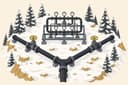 Rangeland and Rainbow systemsAbout 2,300 miles of Western Canadian crude gathering — all that is left in Canada after the gas-liquids sale. Growth is contract-led: new hook-ups in the Clearwater and Duvernay areas, backed by producer commitments, funded from the 2026 budget.
About 2,300 miles of Western Canadian crude gathering — all that is left in Canada after the gas-liquids sale. Growth is contract-led: new hook-ups in the Clearwater and Duvernay areas, backed by producer commitments, funded from the 2026 budget.
In plain English
What is left of Plains in Canada after the gas-liquids sale: roughly 2,300 miles of crude gathering line in Western Canada, feeding barrels either north toward Edmonton or south into the United States.
It earns the same way the American lines do, a fee for each barrel moved, and it grows one connection at a time rather than in one big project. Part of the 2026 expansion budget goes here, to hook up producers working two rock layers called the Clearwater and the Duvernay, who have signed up for the space in advance. Canada is a much smaller slice of the company than it was a few years ago.
Competes with Mainline export system (Enbridge) · Trans Mountain pipeline capacity (Trans Mountain) · Canadian midstream gathering (Keyera)
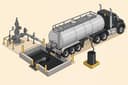 Plains Marketing crude merchant armPlains buys and resells crude, so the full price of the oil lands in sales — $44.3 billion in 2025, against about $2.9 billion of profits management guides to for 2026. ExxonMobil alone was roughly 31% of those 2025 sales, mostly here.
Plains buys and resells crude, so the full price of the oil lands in sales — $44.3 billion in 2025, against about $2.9 billion of profits management guides to for 2026. ExxonMobil alone was roughly 31% of those 2025 sales, mostly here.
In plain English
Here is the part that makes the sales figure look enormous. Plains does not only carry other people's oil; it buys barrels outright at the wellhead, at the points where oil enters a pipeline and at the Canadian border, moves them on its own system, and sells them where the price is better — a different place, a different grade, a different month.
Because Plains owns the oil for a while, the entire sale price lands in revenue, which is why the company books tens of billions in sales and keeps only a sliver. That sliver is real, though, and the desk does a second job: it is the anchor customer on Plains' own pipes and tanks, booking space that outside shippers have not taken.
Competes with Crude marketing (Energy Transfer) · Crude oil marketing (Enterprise Products) · In-house crude purchasing desk (ExxonMobil)
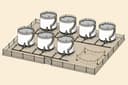 Terminalling and storage76 million barrels of crude tankage, 27 million of it at Cushing — roughly a quarter to a third of that hub. Rent is charged monthly, and demand follows the gap between today's and next month's oil price rather than volumes.
76 million barrels of crude tankage, 27 million of it at Cushing — roughly a quarter to a third of that hub. Rent is charged monthly, and demand follows the gap between today's and next month's oil price rather than volumes.
In plain English
Think of a parking garage for oil. Crude does not always get used the day it arrives, so refiners and traders rent steel tanks to park it in. Plains has about seventy-six million barrels of tank room, the largest block at Cushing, Oklahoma — the town where the benchmark American oil price is settled.
Customers pay a monthly charge for the space, plus smaller fees for pushing oil through and for blending grades together. The business runs hottest when oil costs less today than it will next month, because then someone will pay to hold a barrel. Plains says its Cushing tanks are fully booked, which is why it bought another terminal there in January 2026.
Competes with Cushing tankage (Enbridge) · Cushing storage (ONEOK) · Cushing tanks (Enterprise Products)
Named in filings, launches and programs
- South Texas / Eagle Ford systemEcosystem1,290 miles of pipe in South Texas, extended by the Ironwood Gathering and Midway Pipeline additions.
- Mid-Continent systemEcosystem2,475 miles feeding the Cushing hub, including a project to take in the waxy crude that comes out of the Uinta Basin.
- Capline and LibertyEcosystem1,100 miles running from Patoka down to the Gulf Coast; management describes a lot of the capacity as still spare.
- Western region (California)Ecosystem390 miles of California pipe. The 2015 Line 901 spill liabilities were resolved with a $120 million charge.
- Saddlehorn and White CliffsBrandPart-ownership of two pipelines carrying Rockies crude from Guernsey to Cushing, reached through the Cheyenne Pipeline Plains bought out in 2025.
- Wild Horse Terminal, CushingProduct lineAbout 4 million barrels of extra Cushing tank space bought from Keyera in January 2026 for roughly $10 million net.
- Black Knight MidstreamBrandMidland Basin gathering system picked up for about $55 million in May 2025 — one of that year's small Permian bolt-ons.
- Fivestones Permian gathering systemBrandA Permian gathering system acquired from Rattler Midstream.
- Pipeline loss allowanceProduct lineBarrels Plains retains on its own systems and then sells; about 70% of the 2026 volume is price-locked near $62 a barrel.
South Texas / Eagle Ford systemEcosystem
1,290 miles of pipe in South Texas, extended by the Ironwood Gathering and Midway Pipeline additions.
Mid-Continent systemEcosystem
2,475 miles feeding the Cushing hub, including a project to take in the waxy crude that comes out of the Uinta Basin.
Capline and LibertyEcosystem
1,100 miles running from Patoka down to the Gulf Coast; management describes a lot of the capacity as still spare.
Western region (California)Ecosystem
390 miles of California pipe. The 2015 Line 901 spill liabilities were resolved with a $120 million charge.
Saddlehorn and White CliffsBrand
Part-ownership of two pipelines carrying Rockies crude from Guernsey to Cushing, reached through the Cheyenne Pipeline Plains bought out in 2025.
Wild Horse Terminal, CushingProduct line
About 4 million barrels of extra Cushing tank space bought from Keyera in January 2026 for roughly $10 million net.
Black Knight MidstreamBrand
Midland Basin gathering system picked up for about $55 million in May 2025 — one of that year's small Permian bolt-ons.
Fivestones Permian gathering systemBrand
A Permian gathering system acquired from Rattler Midstream.
Pipeline loss allowanceProduct line
Barrels Plains retains on its own systems and then sells; about 70% of the 2026 volume is price-locked near $62 a barrel.