
PulteGroup (PHM)
Builds U.S. homes for first-time, move-up, and active-adult buyers through specialized consumer brands.
Something off on this page? Send us feedback.
PulteGroup builds houses and sells them one family at a time, under five brands aimed at first-time buyers, people trading up, and buyers over fifty-five. No single customer matters; what matters is what a monthly payment costs and how many neighbourhoods are open. With borrowing expensive, the company is paying to lower buyers' mortgage rates to hold volume, building more homes only after someone orders them, and leaning harder on its retirement communities.
Item facts: FY2025 · year ended Dec 31, 2025, from filings, earnings calls and company pages.
Judgment weights, not filed revenue
The band summarizes business focus and direction. ~ marks estimates.
6 in detail · 10 more below
Pulte Homes
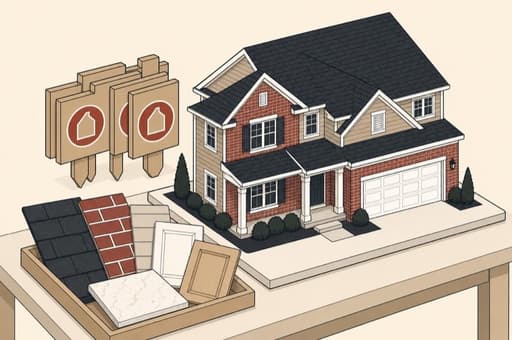
The flagship brand, carrying the move-up buyer — the group that took 40% of 2025's 29,572 closings, at prices above the company's $566,000 average. Watch whether people keep paying for the upgrades while mortgage rates sit near 7%.
Competes with D.R. Horton core brand (D.R. Horton) · Ryan Homes and NVHomes (NVR) · Taylor Morrison brands (Berkshire Hathaway)
In plain English
The house for people on their second or third move — a bigger kitchen, a better lot, a garage that fits more than the car. Buyers pick a plan, then choose the finishes, the way you would order a new car with the options you want instead of taking whatever sits on the dealer's lot.
The money arrives all at once, at closing. Upgrades and better lots added about $107,000 to the average home sold last year, near a fifth of the price, which is why the company keeps pushing buyers to order a house rather than buy one already standing. Across all its brands, 10,966 signed contracts worth $6.8 billion were waiting to close at mid-2026.
Centex
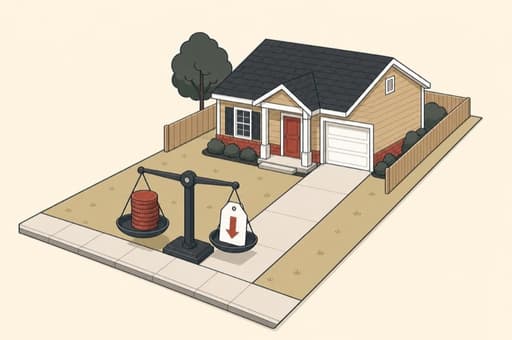
The entry-level brand, roughly $320,000 to $480,000 a house. First-time buyers were 38% of 2025 closings and their orders still grew 5% in the second quarter of 2026 — but this is the group that needs the discounts.
Competes with Express Homes (D.R. Horton) · LGI move-in-ready homes (LGI Homes) · Century Complete (Century Communities)
In plain English
A first house, stripped to what matters: fewer choices, a smaller lot, a price a starter budget can actually reach.
These buyers shop the monthly payment, not the sticker. So the company gives part of the price back to shrink that payment — paying a lender up front so the loan starts at a lower interest rate, or covering the costs of closing. Company-wide, that giveaway reached 10.4% of price in the second quarter of 2026, and it comes straight out of the profit on each house: gross profit on homes has slipped from about 29 cents on the dollar in 2024 to about 25 cents.
Del Webb
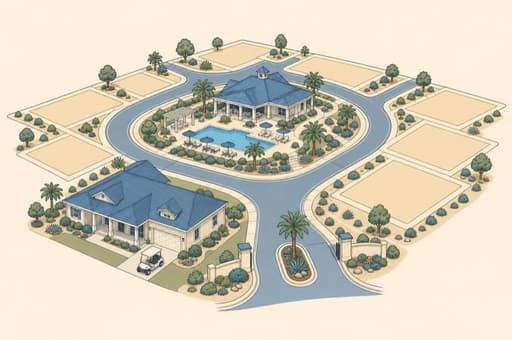
Neighbourhoods for buyers 55 and over — 22% of 2025 closings, and management says they carry the highest margins. Orders here grew 12% in the second quarter of 2026 while the company's total closings fell 8%. The goal is a quarter of all homes.
Competes with Trilogy resort communities (Shea Homes) · Four Seasons 55+ communities (K. Hovnanian) · Toll Brothers active adult (Toll Brothers)
In plain English
Retirement without the retirement home. Del Webb builds entire neighbourhoods for people over fifty-five, laid out around shared amenities, and sells the houses inside them; company materials call it the pioneer of the format.
These buyers usually have a house to sell and equity to spend, so an expensive mortgage bruises them less than it bruises a young family — a good share of them never borrow from the company's own lender at all. That is why this corner grew while the rest of the business shrank. The cost is patience: the shared amenities go up before the first house closes, so years of spending come before the first dollar back.
Explore by Del Webb
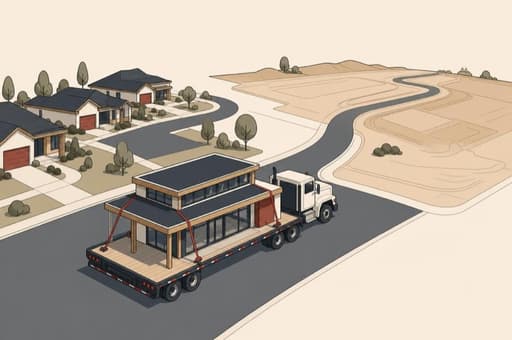
Del Webb's newer, amenity-forward line and the reason the 55-and-over business is growing: openings in Tampa and Columbus drove order growth in the second quarter of 2026. Verona, announced in June 2026 in Pasco County, Florida, carries 843 homesites.
Competes with Trilogy resort communities (Shea Homes) · Esplanade 55+ communities (Taylor Morrison)
In plain English
Same buyers, newer communities. The formula does not change — a neighbourhood built around its shared amenities for people over fifty-five — but these are the fresh ones, opened lately in Tampa and Columbus.
Each is a long runway off a single piece of ground: Verona, announced in June 2026, holds 843 homesites, which is years of selling from one land deal. The houses earn the way all the others do, full price at closing less whatever was handed back to win the sale, and growth shows up as more neighbourhoods open for business rather than as higher prices.
Land pipeline and lot options
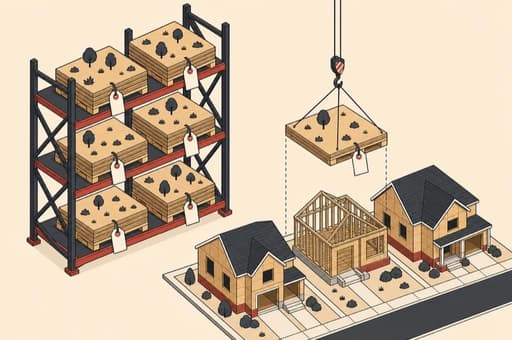
The ground everything else stands on: 228,000 lots at mid-2026, 55% of them reserved with a deposit rather than owned outright. Land spending runs about $5.4 billion this year against roughly $1 billion of cash the business expects to throw off.
Competes with Asset-light homesite model (Lennar) · Forestar lot pipeline (Forestar Group) · Lot Purchase Agreements (NVR)
In plain English
Before a house, a field. PulteGroup ties up raw land years ahead, puts in the roads and the pipes, and cuts it into lots — every home it sells stands on one, bought long before the buyer appeared.
It owns some of that ground outright. On 55% it instead pays a deposit for the right to buy later, which keeps cash free but leaves part of the gain with whoever holds the land meanwhile. Rivals lean harder on that arrangement: Lennar controls 98% of its lots this way and owns almost none. How many neighbourhoods are open for sale is what sets the pace — 960 at the end of 2024, 1,074 at mid-2026.
Pulte Mortgage
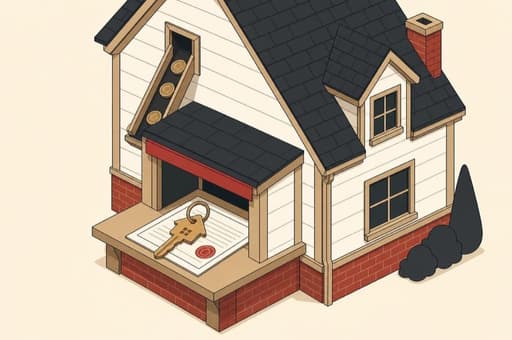
The in-house lender: it financed 64% of 2025's closings and wins 84–85% of the buyers who borrow. Tiny on revenue, central to the sale — it is how the payment discounts actually get delivered. Its profit swings with volume.
Competes with Lennar Financial Services (Lennar) · DHI Mortgage (D.R. Horton) · NVR Mortgage Banking (NVR)
In plain English
Every builder's quiet second business. When a PulteGroup buyer needs a loan, the company would rather write it than hand the customer to a bank — it financed roughly two-thirds of the homes it sold last year.
What it earns on those loans is small change next to the houses. The real job is delivering the discount: to shrink a buyer's monthly payment, somebody has to pay a lender up front to accept a lower interest rate, and owning the lender makes that easy to arrange and easy to promise. Its own profit rides on how many homes close — $12.6 million in the first quarter of 2026, $37.4 million in the second.


 Pulte HomesThe flagship brand, carrying the move-up buyer — the group that took 40% of 2025's 29,572 closings, at prices above the company's $566,000 average. Watch whether people keep paying for the upgrades while mortgage rates sit near 7%.
The flagship brand, carrying the move-up buyer — the group that took 40% of 2025's 29,572 closings, at prices above the company's $566,000 average. Watch whether people keep paying for the upgrades while mortgage rates sit near 7%.
In plain English
The house for people on their second or third move — a bigger kitchen, a better lot, a garage that fits more than the car. Buyers pick a plan, then choose the finishes, the way you would order a new car with the options you want instead of taking whatever sits on the dealer's lot.
The money arrives all at once, at closing. Upgrades and better lots added about $107,000 to the average home sold last year, near a fifth of the price, which is why the company keeps pushing buyers to order a house rather than buy one already standing. Across all its brands, 10,966 signed contracts worth $6.8 billion were waiting to close at mid-2026.
Competes with D.R. Horton core brand (D.R. Horton) · Ryan Homes and NVHomes (NVR) · Taylor Morrison brands (Berkshire Hathaway)
 CentexThe entry-level brand, roughly $320,000 to $480,000 a house. First-time buyers were 38% of 2025 closings and their orders still grew 5% in the second quarter of 2026 — but this is the group that needs the discounts.
The entry-level brand, roughly $320,000 to $480,000 a house. First-time buyers were 38% of 2025 closings and their orders still grew 5% in the second quarter of 2026 — but this is the group that needs the discounts.
In plain English
A first house, stripped to what matters: fewer choices, a smaller lot, a price a starter budget can actually reach.
These buyers shop the monthly payment, not the sticker. So the company gives part of the price back to shrink that payment — paying a lender up front so the loan starts at a lower interest rate, or covering the costs of closing. Company-wide, that giveaway reached 10.4% of price in the second quarter of 2026, and it comes straight out of the profit on each house: gross profit on homes has slipped from about 29 cents on the dollar in 2024 to about 25 cents.
Competes with Express Homes (D.R. Horton) · LGI move-in-ready homes (LGI Homes) · Century Complete (Century Communities)
 Del WebbNeighbourhoods for buyers 55 and over — 22% of 2025 closings, and management says they carry the highest margins. Orders here grew 12% in the second quarter of 2026 while the company's total closings fell 8%. The goal is a quarter of all homes.
Neighbourhoods for buyers 55 and over — 22% of 2025 closings, and management says they carry the highest margins. Orders here grew 12% in the second quarter of 2026 while the company's total closings fell 8%. The goal is a quarter of all homes.
In plain English
Retirement without the retirement home. Del Webb builds entire neighbourhoods for people over fifty-five, laid out around shared amenities, and sells the houses inside them; company materials call it the pioneer of the format.
These buyers usually have a house to sell and equity to spend, so an expensive mortgage bruises them less than it bruises a young family — a good share of them never borrow from the company's own lender at all. That is why this corner grew while the rest of the business shrank. The cost is patience: the shared amenities go up before the first house closes, so years of spending come before the first dollar back.
Competes with Trilogy resort communities (Shea Homes) · Four Seasons 55+ communities (K. Hovnanian) · Toll Brothers active adult (Toll Brothers)
 Explore by Del WebbDel Webb's newer, amenity-forward line and the reason the 55-and-over business is growing: openings in Tampa and Columbus drove order growth in the second quarter of 2026. Verona, announced in June 2026 in Pasco County, Florida, carries 843 homesites.
Del Webb's newer, amenity-forward line and the reason the 55-and-over business is growing: openings in Tampa and Columbus drove order growth in the second quarter of 2026. Verona, announced in June 2026 in Pasco County, Florida, carries 843 homesites.
In plain English
Same buyers, newer communities. The formula does not change — a neighbourhood built around its shared amenities for people over fifty-five — but these are the fresh ones, opened lately in Tampa and Columbus.
Each is a long runway off a single piece of ground: Verona, announced in June 2026, holds 843 homesites, which is years of selling from one land deal. The houses earn the way all the others do, full price at closing less whatever was handed back to win the sale, and growth shows up as more neighbourhoods open for business rather than as higher prices.
Competes with Trilogy resort communities (Shea Homes) · Esplanade 55+ communities (Taylor Morrison)
 Land pipeline and lot optionsThe ground everything else stands on: 228,000 lots at mid-2026, 55% of them reserved with a deposit rather than owned outright. Land spending runs about $5.4 billion this year against roughly $1 billion of cash the business expects to throw off.
The ground everything else stands on: 228,000 lots at mid-2026, 55% of them reserved with a deposit rather than owned outright. Land spending runs about $5.4 billion this year against roughly $1 billion of cash the business expects to throw off.
In plain English
Before a house, a field. PulteGroup ties up raw land years ahead, puts in the roads and the pipes, and cuts it into lots — every home it sells stands on one, bought long before the buyer appeared.
It owns some of that ground outright. On 55% it instead pays a deposit for the right to buy later, which keeps cash free but leaves part of the gain with whoever holds the land meanwhile. Rivals lean harder on that arrangement: Lennar controls 98% of its lots this way and owns almost none. How many neighbourhoods are open for sale is what sets the pace — 960 at the end of 2024, 1,074 at mid-2026.
Competes with Asset-light homesite model (Lennar) · Forestar lot pipeline (Forestar Group) · Lot Purchase Agreements (NVR)
 Pulte MortgageThe in-house lender: it financed 64% of 2025's closings and wins 84–85% of the buyers who borrow. Tiny on revenue, central to the sale — it is how the payment discounts actually get delivered. Its profit swings with volume.
The in-house lender: it financed 64% of 2025's closings and wins 84–85% of the buyers who borrow. Tiny on revenue, central to the sale — it is how the payment discounts actually get delivered. Its profit swings with volume.
In plain English
Every builder's quiet second business. When a PulteGroup buyer needs a loan, the company would rather write it than hand the customer to a bank — it financed roughly two-thirds of the homes it sold last year.
What it earns on those loans is small change next to the houses. The real job is delivering the discount: to shrink a buyer's monthly payment, somebody has to pay a lender up front to accept a lower interest rate, and owning the lender makes that easy to arrange and easy to promise. Its own profit rides on how many homes close — $12.6 million in the first quarter of 2026, $37.4 million in the second.
Competes with Lennar Financial Services (Lennar) · DHI Mortgage (D.R. Horton) · NVR Mortgage Banking (NVR)
Named in filings, launches and programs
- DiVosta HomesBrandFlorida move-up and luxury brand, and one of the names slated for the new Panhandle communities.
- John Wieland Homes and NeighborhoodsBrandSoutheast move-up and luxury brand; it arrived as a small acquisition that came with a land pipeline attached.
- Build-to-order homesProduct line · RampingHouses started only once a buyer signs: 45% of orders against a 60% goal, with build times down to 100 working days.
- Options and lot premiumsProduct lineUpgrades and better lots added about $107,000 to the average home sold — near a fifth of the price, and the commercial reason to build to order.
- PGP TitleServiceThe title operation inside Pulte Financial Services, attaching at closing; the three finance units together employ more than 1,100 people.
- Pulte Insurance AgencyServiceInsurance brokerage sold alongside the house; with title and the lender it makes a finance arm worth 2.2% of 2025 revenue.
- Land salesProduct lineLeftover parcels sold on rather than built: roughly $185 million in 2025, about 1% of revenue.
- Florida Panhandle DivisionSegment · AnnouncedA new market opened in August 2026 on a deal for 1,326 homesites, with options on as many again; first phase anticipated 2027.
- American WestBrandA Las Vegas builder bought last decade; management still names it, though it is absent from the current five-brand list.
- Dominion HomesBrandA Midwest tuck-in management cites as an example of buying land by buying a builder; no separate brand presence today.
DiVosta HomesBrand
Florida move-up and luxury brand, and one of the names slated for the new Panhandle communities.
John Wieland Homes and NeighborhoodsBrand
Southeast move-up and luxury brand; it arrived as a small acquisition that came with a land pipeline attached.
Build-to-order homesProduct line · Ramping
Houses started only once a buyer signs: 45% of orders against a 60% goal, with build times down to 100 working days.
Options and lot premiumsProduct line
Upgrades and better lots added about $107,000 to the average home sold — near a fifth of the price, and the commercial reason to build to order.
PGP TitleService
The title operation inside Pulte Financial Services, attaching at closing; the three finance units together employ more than 1,100 people.
Pulte Insurance AgencyService
Insurance brokerage sold alongside the house; with title and the lender it makes a finance arm worth 2.2% of 2025 revenue.
Land salesProduct line
Leftover parcels sold on rather than built: roughly $185 million in 2025, about 1% of revenue.
Florida Panhandle DivisionSegment · Announced
A new market opened in August 2026 on a deal for 1,326 homesites, with options on as many again; first phase anticipated 2027.
American WestBrand
A Las Vegas builder bought last decade; management still names it, though it is absent from the current five-brand list.
Dominion HomesBrand
A Midwest tuck-in management cites as an example of buying land by buying a builder; no separate brand presence today.