
Permian Resources (PR)
Develops oil and liquids-rich gas assets concentrated in the Delaware Basin.
Something off on this page? Send us feedback.
Permian Resources pumps crude oil out of one patch of Texas and New Mexico and sells it at the edge of the field for whatever the market pays that month. Almost all the money is oil; the natural gas that rises alongside it has lately been closer to a cost than a product. Growth comes less from new ideas than from a steady habit of buying the land next door.
Item facts: FY2025 · year ended Dec 31, 2025, from filings, earnings calls and company pages.
Judgment weights, not filed revenue
The band summarizes business focus and direction. ~ marks estimates.
7 in detail · 12 more below
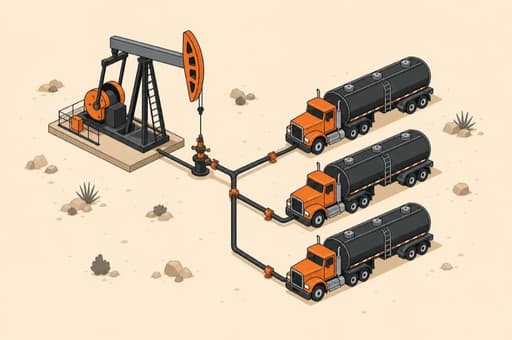
Oil sales
The crude itself, and the whole economic story: $4.25B of $5.07B in 2025. Sold month to month at whatever oil fetches, with volumes guided higher again in 2026 — the price is nobody here's to set.
Competes with Delaware Basin oil production (Matador Resources) · Delaware oil production (EOG Resources) · Delaware oil production (Devon Energy)
In plain English
Drill down, turn the well sideways, and run it a couple of miles through the rock — Permian Resources does that a few hundred times a year in one corner of the oil patch, then hands the barrels over at the edge of the field. No refining, no branding, no filling stations.
Three trading companies buy most of it: Enterprise Crude Oil, Shell Trading and BP America together paid for about three-quarters of everything sold in 2025. The price is a formula tied to the going US oil price, settled month by month, with no long-term orders behind it — when oil falls, the revenue falls that same month.
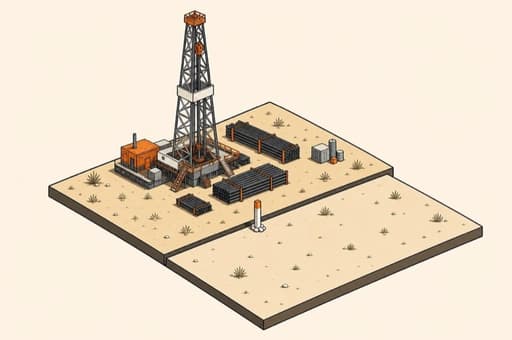
New Mexico acreage (Eddy and Lea Counties)
The northern half of the land, holding a third of the acreage but taking roughly two of every three new wells this year. The Parkway blocks in Eddy County are the prize addition; government permitting sets the pace.
Competes with Northern Delaware acreage (Mewbourne Oil) · New Mexico Delaware position (Devon Energy) · New Mexico Delaware position (APA Corp)
In plain English
Picture the company's land as two halves with a state line between them. The northern half sits in New Mexico, and it is where the rigs actually spend their time: about two-thirds of this year's new wells on about a third of the acreage.
It earns nothing by itself — its barrels are counted in oil sales. What makes it the favourite is the terms. The Parkway blocks in Eddy County keep roughly four-fifths of the value of whatever they produce once landowners take their cut, and the wells run long. Some of the acreage is bought at federal auctions, so a government office's permitting pace is part of the drilling pace.
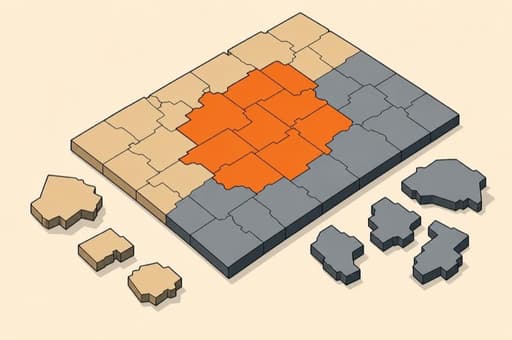
Texas acreage (Reeves, Ward and neighbouring counties)
The southern half: two-thirds of the acreage but under a third of this year's drilling, because it arrived in scattered pieces. A ~$520M Ward County purchase and an August swap are the fix.
Competes with Texas Delaware acreage (Occidental) · Delaware Basin drilling (ExxonMobil) · Delaware Basin drilling (Chevron)
In plain English
Land down here came in patches — a few hundred acres from one seller, a sliver from the next — and patchy land drills badly, because you cannot run a two-mile well through someone else's square. So the southern half holds most of the acreage and gets the smaller share of the rigs.
The work is buying and trading until the pieces line up. A Ward County package closed in July; a swap signed in August, still to close, hands a neighbour scattered slivers in return for solid blocks. On that traded ground the company goes from running about a third of the wells to nearly all of them, and the average well gets about two thousand feet longer.
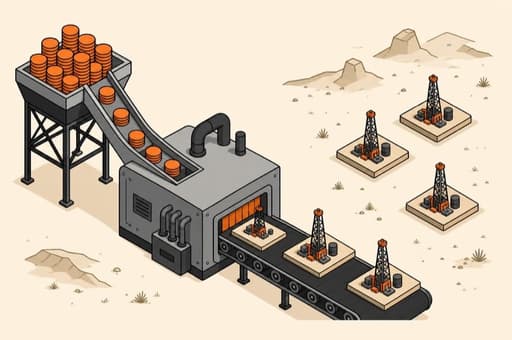
Ground game and bolt-on acquisitions
The machine that keeps the drilling list stocked: roughly 190 deals so far in 2026, about 54,000 net acres and 20,000 royalty acres for ~$1.05B. It is also why 2026 oil guidance rose — not extra rigs.
Competes with Permian acreage acquisitions (Diamondback Energy) · Permian acreage acquisitions (Vital Energy) · Corporate-scale mergers (Devon Energy)
In plain English
Every barrel pumped is a barrel gone, so an oil company that stops buying land eventually runs out of places to drill. Permian Resources treats that as a daily errand rather than an occasional big deal: its land team knocks, a neighbour sells a few hundred acres or a slice of a well already drilled, and it closes. Around 190 such trades this year, most never shopped to anyone else.
It spends rather than earns — roughly a billion dollars so far in 2026, paid out of the cash the wells throw off and a credit line. The payback arrives later, as barrels from ground the company now controls.
Minerals and royalties
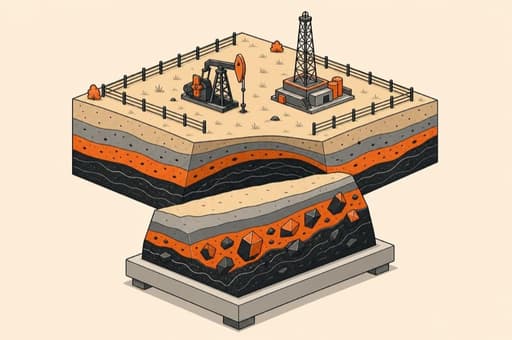
Ground the company owns under, not just leases: about 125,000 royalty acres that pay a cut of whatever is produced with no drilling bill attached. It never shows up as its own sales line.
Competes with Permian mineral and royalty acres (Viper Energy) · Permian land and royalties (Texas Pacific Land) · Permian royalty interests (Kimbell Royalty Partners)
In plain English
Owning a mineral acre is like owning the rights under a field instead of the field itself — whoever drills there owes you a slice of everything the well makes, and you pay none of the cost of making it. Permian Resources has been collecting those slices: about 125,000 acres' worth, the roughly 20,000 added this year costing around $8,000 apiece.
Most of them sit under land the company intends to drill itself, so the money never arrives as a separate cheque. It arrives quietly, as a bigger share of each barrel from wells that were going to be drilled anyway.
NGL sales
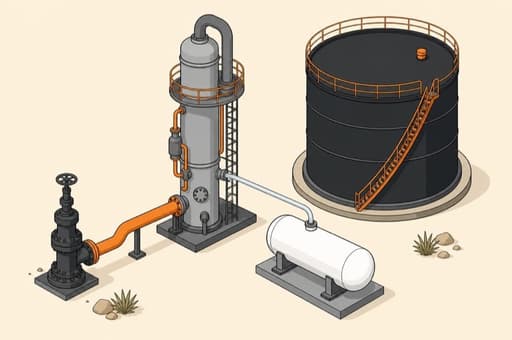
The liquid fuels separated out of the gas that rises with the oil: $658.5M in 2025, priced at about a quarter of the oil price. Shut a gassy well and these barrels stop too.
Competes with Delaware NGL output (Matador Resources) · Delaware NGL output (Occidental) · Delaware NGL output (ConocoPhillips)
In plain English
Oil does not come up alone. The gas rising with it carries heavier stuff that a processing plant can pull out as liquid — the kind of product that goes on to feed chemical plants and export docks. An outside plant does the separating and hands the liquids back for the company to sell.
Nobody here sets the price: the contracts pay a fixed fraction of whatever crude fetches, so these barrels are a smaller echo of the oil business rather than a business of their own. They also share the wells' fate — shut one in to escape a bad gas price, as happened in spring 2026, and the liquids stop with it.
Natural gas sales and pipeline space
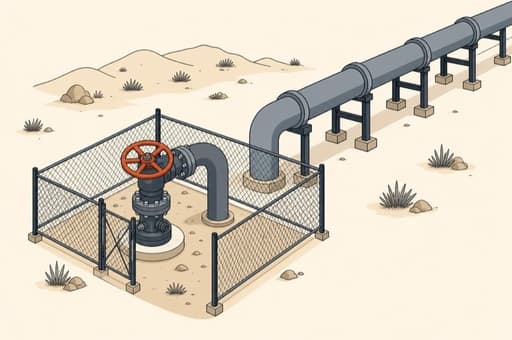
The gas that comes up with the oil — $131.7M in 2025, but a bill rather than a sale in spring 2026, when local prices sat below zero. Booked room on new pipelines is the 2027 repair.
Competes with Permian residue gas (Matador Resources) · Blackcomb pipeline capacity (WhiteWater Midstream) · Hugh Brinson pipeline capacity (Energy Transfer)
In plain English
Gas rises up the same hole as the oil whether anyone wants it or not, and there is more of it around here than there are pipelines to carry it away. Through most of the first half of 2026 the local price sat below zero — sellers paying to hand their gas over.
So the company has been buying guaranteed room on new lines heading out of the area: about 400 million cubic feet a day this year, more than 700 million next year, which management expects to turn its gas price from a discount into a premium. Until then it simply shuts some of the gassiest wells, which costs it oil and liquid barrels too.


 Oil salesThe crude itself, and the whole economic story: $4.25B of $5.07B in 2025. Sold month to month at whatever oil fetches, with volumes guided higher again in 2026 — the price is nobody here's to set.
The crude itself, and the whole economic story: $4.25B of $5.07B in 2025. Sold month to month at whatever oil fetches, with volumes guided higher again in 2026 — the price is nobody here's to set.
In plain English
Drill down, turn the well sideways, and run it a couple of miles through the rock — Permian Resources does that a few hundred times a year in one corner of the oil patch, then hands the barrels over at the edge of the field. No refining, no branding, no filling stations.
Three trading companies buy most of it: Enterprise Crude Oil, Shell Trading and BP America together paid for about three-quarters of everything sold in 2025. The price is a formula tied to the going US oil price, settled month by month, with no long-term orders behind it — when oil falls, the revenue falls that same month.
Competes with Delaware Basin oil production (Matador Resources) · Delaware oil production (EOG Resources) · Delaware oil production (Devon Energy)
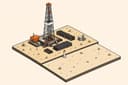 New Mexico acreage (Eddy and Lea Counties)The northern half of the land, holding a third of the acreage but taking roughly two of every three new wells this year. The Parkway blocks in Eddy County are the prize addition; government permitting sets the pace.
The northern half of the land, holding a third of the acreage but taking roughly two of every three new wells this year. The Parkway blocks in Eddy County are the prize addition; government permitting sets the pace.
In plain English
Picture the company's land as two halves with a state line between them. The northern half sits in New Mexico, and it is where the rigs actually spend their time: about two-thirds of this year's new wells on about a third of the acreage.
It earns nothing by itself — its barrels are counted in oil sales. What makes it the favourite is the terms. The Parkway blocks in Eddy County keep roughly four-fifths of the value of whatever they produce once landowners take their cut, and the wells run long. Some of the acreage is bought at federal auctions, so a government office's permitting pace is part of the drilling pace.
Competes with Northern Delaware acreage (Mewbourne Oil) · New Mexico Delaware position (Devon Energy) · New Mexico Delaware position (APA Corp)
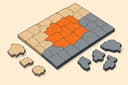 Texas acreage (Reeves, Ward and neighbouring counties)The southern half: two-thirds of the acreage but under a third of this year's drilling, because it arrived in scattered pieces. A ~$520M Ward County purchase and an August swap are the fix.
The southern half: two-thirds of the acreage but under a third of this year's drilling, because it arrived in scattered pieces. A ~$520M Ward County purchase and an August swap are the fix.
In plain English
Land down here came in patches — a few hundred acres from one seller, a sliver from the next — and patchy land drills badly, because you cannot run a two-mile well through someone else's square. So the southern half holds most of the acreage and gets the smaller share of the rigs.
The work is buying and trading until the pieces line up. A Ward County package closed in July; a swap signed in August, still to close, hands a neighbour scattered slivers in return for solid blocks. On that traded ground the company goes from running about a third of the wells to nearly all of them, and the average well gets about two thousand feet longer.
Competes with Texas Delaware acreage (Occidental) · Delaware Basin drilling (ExxonMobil) · Delaware Basin drilling (Chevron)
 Ground game and bolt-on acquisitionsThe machine that keeps the drilling list stocked: roughly 190 deals so far in 2026, about 54,000 net acres and 20,000 royalty acres for ~$1.05B. It is also why 2026 oil guidance rose — not extra rigs.
The machine that keeps the drilling list stocked: roughly 190 deals so far in 2026, about 54,000 net acres and 20,000 royalty acres for ~$1.05B. It is also why 2026 oil guidance rose — not extra rigs.
In plain English
Every barrel pumped is a barrel gone, so an oil company that stops buying land eventually runs out of places to drill. Permian Resources treats that as a daily errand rather than an occasional big deal: its land team knocks, a neighbour sells a few hundred acres or a slice of a well already drilled, and it closes. Around 190 such trades this year, most never shopped to anyone else.
It spends rather than earns — roughly a billion dollars so far in 2026, paid out of the cash the wells throw off and a credit line. The payback arrives later, as barrels from ground the company now controls.
Competes with Permian acreage acquisitions (Diamondback Energy) · Permian acreage acquisitions (Vital Energy) · Corporate-scale mergers (Devon Energy)
 Minerals and royaltiesGround the company owns under, not just leases: about 125,000 royalty acres that pay a cut of whatever is produced with no drilling bill attached. It never shows up as its own sales line.
Ground the company owns under, not just leases: about 125,000 royalty acres that pay a cut of whatever is produced with no drilling bill attached. It never shows up as its own sales line.
In plain English
Owning a mineral acre is like owning the rights under a field instead of the field itself — whoever drills there owes you a slice of everything the well makes, and you pay none of the cost of making it. Permian Resources has been collecting those slices: about 125,000 acres' worth, the roughly 20,000 added this year costing around $8,000 apiece.
Most of them sit under land the company intends to drill itself, so the money never arrives as a separate cheque. It arrives quietly, as a bigger share of each barrel from wells that were going to be drilled anyway.
Competes with Permian mineral and royalty acres (Viper Energy) · Permian land and royalties (Texas Pacific Land) · Permian royalty interests (Kimbell Royalty Partners)
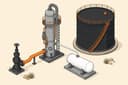 NGL salesThe liquid fuels separated out of the gas that rises with the oil: $658.5M in 2025, priced at about a quarter of the oil price. Shut a gassy well and these barrels stop too.
The liquid fuels separated out of the gas that rises with the oil: $658.5M in 2025, priced at about a quarter of the oil price. Shut a gassy well and these barrels stop too.
In plain English
Oil does not come up alone. The gas rising with it carries heavier stuff that a processing plant can pull out as liquid — the kind of product that goes on to feed chemical plants and export docks. An outside plant does the separating and hands the liquids back for the company to sell.
Nobody here sets the price: the contracts pay a fixed fraction of whatever crude fetches, so these barrels are a smaller echo of the oil business rather than a business of their own. They also share the wells' fate — shut one in to escape a bad gas price, as happened in spring 2026, and the liquids stop with it.
Competes with Delaware NGL output (Matador Resources) · Delaware NGL output (Occidental) · Delaware NGL output (ConocoPhillips)
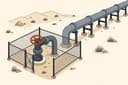 Natural gas sales and pipeline spaceThe gas that comes up with the oil — $131.7M in 2025, but a bill rather than a sale in spring 2026, when local prices sat below zero. Booked room on new pipelines is the 2027 repair.
The gas that comes up with the oil — $131.7M in 2025, but a bill rather than a sale in spring 2026, when local prices sat below zero. Booked room on new pipelines is the 2027 repair.
In plain English
Gas rises up the same hole as the oil whether anyone wants it or not, and there is more of it around here than there are pipelines to carry it away. Through most of the first half of 2026 the local price sat below zero — sellers paying to hand their gas over.
So the company has been buying guaranteed room on new lines heading out of the area: about 400 million cubic feet a day this year, more than 700 million next year, which management expects to turn its gas price from a discount into a premium. Until then it simply shuts some of the gassiest wells, which costs it oil and liquid barrels too.
Competes with Permian residue gas (Matador Resources) · Blackcomb pipeline capacity (WhiteWater Midstream) · Hugh Brinson pipeline capacity (Energy Transfer)
Named in filings, launches and programs
- Ward County bolt-onCustomer programThe year's biggest single purchase: about $520M closed in July 2026 for roughly 20,500 net acres in Ward County, plus a slice of producing wells.
- Texas acreage tradeCustomer program · AnnouncedSigned August 2026, closing expected that quarter: about 8,300 scattered acres run by others swapped away for about 11,100 joined-up acres the company runs itself.
- Parkway bolt-onsProduct lineAbout 15,200 net acres in Eddy County assembled since late 2025 — long wells, and roughly four-fifths of production value kept after landowners' royalties.
- Barilla Draw packageCustomer programBought from Occidental in July 2024 for $817.5M: about 29,500 net acres and 9,900 royalty acres in Reeves County, Texas.
- APA Delaware bolt-onCustomer programA $608M purchase closed May 2025 — about 13,320 net acres and roughly 12,000 barrels a day of oil-and-gas production, from APA Corp.
- Federal lease salesCustomer programGovernment auctions supply New Mexico ground directly: about 9,600 net acres taken at a January 2026 sale and 6,400 more at one in May.
- Tascosa Energy PartnersCustomer programThe local operator that brought the Parkway blocks and granted an option over 5,600 more net acres, taken up in August 2026.
- Commodity hedge bookServicePrice insurance: 70,000 barrels a day locked at $67.89 through the rest of 2026, but only 10,000 a day covered in 2027.
- Water recycling programServiceAbout 70% of the water used was recycled in early 2026, a company record; getting rid of water is the biggest single field cost.
- Purchased gas salesServiceGas bought from others and resold alongside the company's own pipeline space — $23.8M in 2025, small change next to the wells.
- Midland Basin positionSegmentA leftover foothold in the neighbouring Midland Basin, held to under about a tenth of spending and described by management as non-core.
- Permian Resources OperatingBrandThe operating company underneath, and the borrower on the $3.0B unsecured credit line agreed in April 2026.
Ward County bolt-onCustomer program
The year's biggest single purchase: about $520M closed in July 2026 for roughly 20,500 net acres in Ward County, plus a slice of producing wells.
Texas acreage tradeCustomer program · Announced
Signed August 2026, closing expected that quarter: about 8,300 scattered acres run by others swapped away for about 11,100 joined-up acres the company runs itself.
Parkway bolt-onsProduct line
About 15,200 net acres in Eddy County assembled since late 2025 — long wells, and roughly four-fifths of production value kept after landowners' royalties.
Barilla Draw packageCustomer program
Bought from Occidental in July 2024 for $817.5M: about 29,500 net acres and 9,900 royalty acres in Reeves County, Texas.
APA Delaware bolt-onCustomer program
A $608M purchase closed May 2025 — about 13,320 net acres and roughly 12,000 barrels a day of oil-and-gas production, from APA Corp.
Federal lease salesCustomer program
Government auctions supply New Mexico ground directly: about 9,600 net acres taken at a January 2026 sale and 6,400 more at one in May.
Tascosa Energy PartnersCustomer program
The local operator that brought the Parkway blocks and granted an option over 5,600 more net acres, taken up in August 2026.
Commodity hedge bookService
Price insurance: 70,000 barrels a day locked at $67.89 through the rest of 2026, but only 10,000 a day covered in 2027.
Water recycling programService
About 70% of the water used was recycled in early 2026, a company record; getting rid of water is the biggest single field cost.
Purchased gas salesService
Gas bought from others and resold alongside the company's own pipeline space — $23.8M in 2025, small change next to the wells.
Midland Basin positionSegment
A leftover foothold in the neighbouring Midland Basin, held to under about a tenth of spending and described by management as non-core.
Permian Resources OperatingBrand
The operating company underneath, and the borrower on the $3.0B unsecured credit line agreed in April 2026.