
PayPal (PYPL)
Connects digital wallets to checkout, merchant processing, transfers, payouts, and credit.
Something off on this page? Send us feedback.
The familiar PayPal button still pays most of the bills, while behind-the-scenes processing handles enormous flows for big merchants. Venmo and checkout lending are the faster-moving smaller pieces. Shopping by software assistants is still a bet rather than a business.
Item facts: FY2025 · year ended Dec 31, 2025, from filings, earnings calls and company pages.
Judgment weights, not filed revenue
The band summarizes business focus and direction. ~ marks estimates.
8 in detail · 16 more below
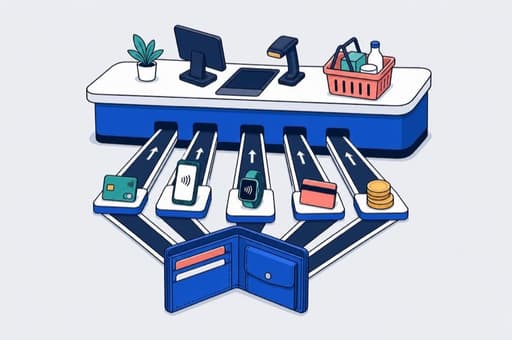
PayPal Branded Checkout
The PayPal button remains the main earner, but the value of payments using it grew only about 1% in late 2025. Watch whether easier checkout can restore momentum without giving away the economics.
Competes with Apple Pay (Apple) · Shop Pay (Shopify)
In plain English
A shopper clicks the PayPal button, chooses a saved card, bank account or PayPal balance, and finishes without typing everything again. The merchant is buying a shorter, safer path from shopping cart to paid order.
PayPal takes a fee from the merchant, usually a percentage plus a fixed amount. It can earn more when money crosses borders or currencies change. The loop works only if shoppers trust the button and merchants believe it turns more visits into sales; lately, this mature engine has been growing slowly.
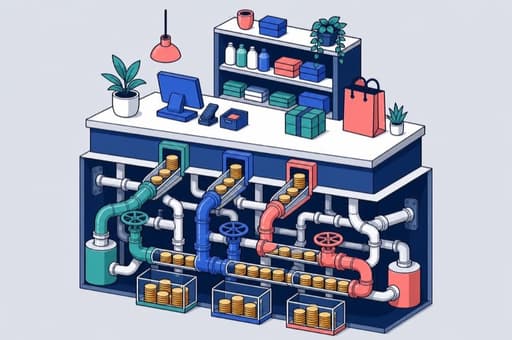
Braintree (PayPal Enterprise Payments)
Braintree powers large merchants' own checkout screens. Payment value grew in the mid-teens in the second quarter of 2026 after pricing changes; the test is turning that scale into worthwhile profit.
Competes with Stripe Payments (Stripe) · Adyen Payments (Adyen)
In plain English
The machinery shoppers never see. A large store keeps its own checkout design, while Braintree quietly asks the bank for approval, connects the right payment networks, stores payment details safely and screens for fraud.
The merchant pays PayPal a thin fee on a very large stream of purchases. Big customers negotiate lower prices than users of the PayPal button, so more money passing through does not automatically mean much more profit. Reliability, approval rates and disciplined pricing decide whether this giant flow is valuable.
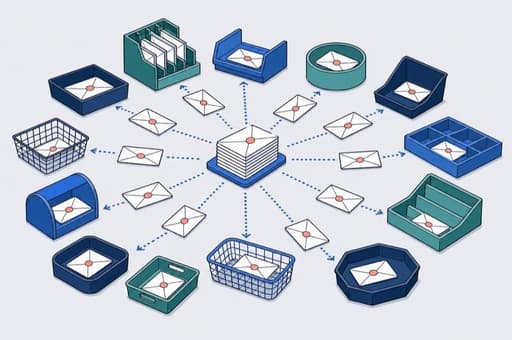
Hyperwallet and PayPal Payouts
This small platform sends organizations' money to sellers, contractors, creators and athletes. It contributes roughly one revenue dollar in a hundred; wider use by large platforms is what matters next.
Competes with Stripe Connect / Global Payouts (Stripe) · Adyen Payouts (Adyen)
In plain English
Picture a company that must pay thousands of people, each wanting the money in a different place. Hyperwallet and PayPal Payouts give that company one control desk, then route each payment to a bank, card or other available destination.
The organization sending the money buys the service; recipients choose how to receive it. PayPal earns fees for handling the many routes, identity checks and records. Google uses these products, and college-sports programs use Hyperwallet for athlete distributions, but PayPal does not reveal the platform's exact sales.
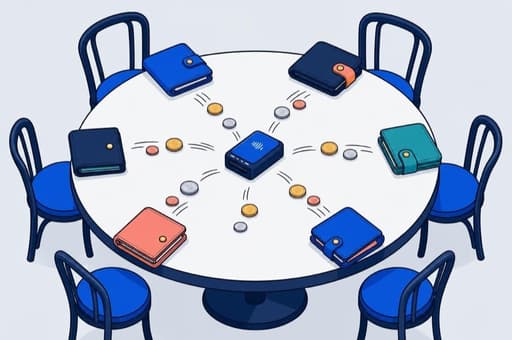
Venmo
Venmo brought in about $1.7 billion before interest in 2025 and grew quickly. The next step is getting more everyday transfers to lead into paid merchant purchases, instant withdrawals and card use.
Competes with Cash App (Block) · Zelle (Early Warning Services)
In plain English
Venmo starts with a simple habit: friends send one another money. Ordinary bank transfers can be free, which keeps people returning even when that activity itself produces little revenue.
Money appears when a user pays a merchant with Venmo, moves funds instantly, uses a Venmo card or runs a business profile. Merchants and users pay for those conveniences. More than one hundred million accounts make the audience large; the business challenge is persuading those people to do more than pass money between friends.

PayPal and Xoom P2P Payment Solutions
PayPal and Xoom money transfers are estimated at about four revenue dollars in every hundred. Fees depend on speed, funding method, currency exchange and destination reach, all under heavy price competition.
Competes with Remitly money transfer (Remitly Global) · Wise international transfer (Wise)
In plain English
Sending money to family can be as easy as moving it between PayPal wallets, or as complicated as getting it across a border to a bank or cash pickup point. Xoom handles the harder international journeys.
A standard wallet transfer may be free because it keeps people inside PayPal. Faster delivery, card funding, changing currencies and Xoom transfers can carry fees. Senders pay for speed and for reaching the recipient in the form they need; banks, card networks and local payout agents take part of the money along the way.
Interest on Customer Balances
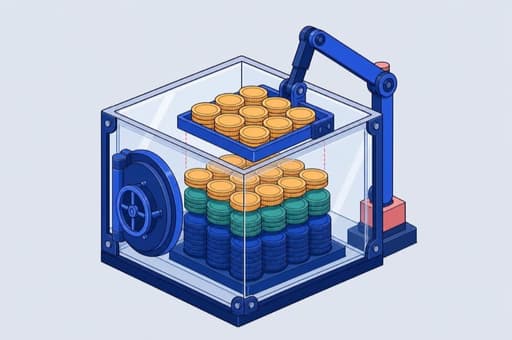
Money customers leave in PayPal and Venmo generated $1.23 billion in 2025. Its job is to earn quietly, but lower interest rates or smaller stored balances can shrink it without any change in checkout use.
Competes with Cash App Balance (Block) · Wise Account (Wise)
In plain English
The quiet earning stream. Customers sometimes leave money sitting in PayPal or Venmo instead of moving it straight to a bank. PayPal keeps eligible funds in safe, easy-to-sell assets and generally does not pay users interest.
The interest those assets produce becomes PayPal revenue. No merchant needs to make a sale for it to arrive, so this income behaves differently from a checkout fee. Its size depends on how much money users leave behind, what PayPal may invest it in and the interest rates available.
PayPal Credit and PayPal Buy Now, Pay Later
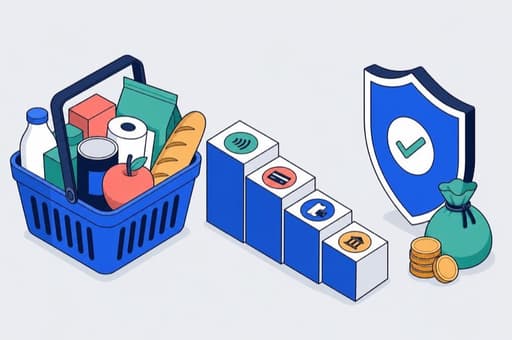
PayPal financed more than $40 billion of pay-over-time purchases in 2025. Merchant fees and longer-loan interest lift checkout sales, while funding costs and borrowers who cannot repay can take the benefit back.
Competes with Pay in 4 / Pay Over Time (Affirm) · Pay in 4 / Pay over time (Klarna)
In plain English
A purchase can be easier to say yes to when the bill is split into four payments or stretched over months. Pay in 4, Pay Monthly and PayPal Credit put that choice directly beside the normal checkout options.
Merchants pay because financing can turn hesitation into a completed sale, while borrowers may pay interest on longer loans. PayPal decides who qualifies and continues to manage repayment even when KKR or Blue Owl funds buy eligible loans. That keeps money available for new lending, but PayPal still carries the skill and risk of choosing borrowers well.
PayPal Agentic Commerce
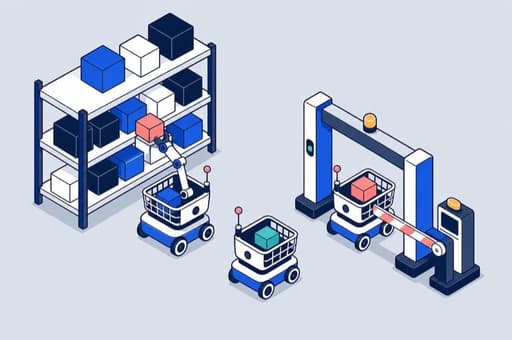
Software-led shopping contributed no meaningful revenue in 2026. PayPal had two live integrations and more planned; watch whether automated product discovery actually ends in paid orders through its checkout.
Competes with Agentic Commerce Suite (Stripe) · Agentic Storefronts (Shopify)
In plain English
Here, agentic commerce means software that can search for a product and help complete the purchase for you. PayPal is joining the shopper's identity, merchants' product lists, payment approval and checkout so those software helpers can move from suggestion to order.
Microsoft Copilot and Perplexity integrations were already live, while OpenAI planned PayPal checkout and merchant catalogs inside ChatGPT. PayPal would earn when these new shopping paths produce the same kinds of paid checkout and processing activity it already handles. For now, management says the contribution is too small to matter.


 PayPal Branded CheckoutThe PayPal button remains the main earner, but the value of payments using it grew only about 1% in late 2025. Watch whether easier checkout can restore momentum without giving away the economics.
The PayPal button remains the main earner, but the value of payments using it grew only about 1% in late 2025. Watch whether easier checkout can restore momentum without giving away the economics.
In plain English
A shopper clicks the PayPal button, chooses a saved card, bank account or PayPal balance, and finishes without typing everything again. The merchant is buying a shorter, safer path from shopping cart to paid order.
PayPal takes a fee from the merchant, usually a percentage plus a fixed amount. It can earn more when money crosses borders or currencies change. The loop works only if shoppers trust the button and merchants believe it turns more visits into sales; lately, this mature engine has been growing slowly.
Competes with Apple Pay (Apple) · Shop Pay (Shopify)
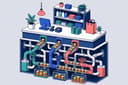 Braintree (PayPal Enterprise Payments)Braintree powers large merchants' own checkout screens. Payment value grew in the mid-teens in the second quarter of 2026 after pricing changes; the test is turning that scale into worthwhile profit.
Braintree powers large merchants' own checkout screens. Payment value grew in the mid-teens in the second quarter of 2026 after pricing changes; the test is turning that scale into worthwhile profit.
In plain English
The machinery shoppers never see. A large store keeps its own checkout design, while Braintree quietly asks the bank for approval, connects the right payment networks, stores payment details safely and screens for fraud.
The merchant pays PayPal a thin fee on a very large stream of purchases. Big customers negotiate lower prices than users of the PayPal button, so more money passing through does not automatically mean much more profit. Reliability, approval rates and disciplined pricing decide whether this giant flow is valuable.
Competes with Stripe Payments (Stripe) · Adyen Payments (Adyen)
 Hyperwallet and PayPal PayoutsThis small platform sends organizations' money to sellers, contractors, creators and athletes. It contributes roughly one revenue dollar in a hundred; wider use by large platforms is what matters next.
This small platform sends organizations' money to sellers, contractors, creators and athletes. It contributes roughly one revenue dollar in a hundred; wider use by large platforms is what matters next.
In plain English
Picture a company that must pay thousands of people, each wanting the money in a different place. Hyperwallet and PayPal Payouts give that company one control desk, then route each payment to a bank, card or other available destination.
The organization sending the money buys the service; recipients choose how to receive it. PayPal earns fees for handling the many routes, identity checks and records. Google uses these products, and college-sports programs use Hyperwallet for athlete distributions, but PayPal does not reveal the platform's exact sales.
Competes with Stripe Connect / Global Payouts (Stripe) · Adyen Payouts (Adyen)
 VenmoVenmo brought in about $1.7 billion before interest in 2025 and grew quickly. The next step is getting more everyday transfers to lead into paid merchant purchases, instant withdrawals and card use.
Venmo brought in about $1.7 billion before interest in 2025 and grew quickly. The next step is getting more everyday transfers to lead into paid merchant purchases, instant withdrawals and card use.
In plain English
Venmo starts with a simple habit: friends send one another money. Ordinary bank transfers can be free, which keeps people returning even when that activity itself produces little revenue.
Money appears when a user pays a merchant with Venmo, moves funds instantly, uses a Venmo card or runs a business profile. Merchants and users pay for those conveniences. More than one hundred million accounts make the audience large; the business challenge is persuading those people to do more than pass money between friends.
Competes with Cash App (Block) · Zelle (Early Warning Services)
 PayPal and Xoom P2P Payment SolutionsPayPal and Xoom money transfers are estimated at about four revenue dollars in every hundred. Fees depend on speed, funding method, currency exchange and destination reach, all under heavy price competition.
PayPal and Xoom money transfers are estimated at about four revenue dollars in every hundred. Fees depend on speed, funding method, currency exchange and destination reach, all under heavy price competition.
In plain English
Sending money to family can be as easy as moving it between PayPal wallets, or as complicated as getting it across a border to a bank or cash pickup point. Xoom handles the harder international journeys.
A standard wallet transfer may be free because it keeps people inside PayPal. Faster delivery, card funding, changing currencies and Xoom transfers can carry fees. Senders pay for speed and for reaching the recipient in the form they need; banks, card networks and local payout agents take part of the money along the way.
Competes with Remitly money transfer (Remitly Global) · Wise international transfer (Wise)
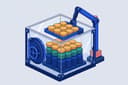 Interest on Customer BalancesMoney customers leave in PayPal and Venmo generated $1.23 billion in 2025. Its job is to earn quietly, but lower interest rates or smaller stored balances can shrink it without any change in checkout use.
Money customers leave in PayPal and Venmo generated $1.23 billion in 2025. Its job is to earn quietly, but lower interest rates or smaller stored balances can shrink it without any change in checkout use.
In plain English
The quiet earning stream. Customers sometimes leave money sitting in PayPal or Venmo instead of moving it straight to a bank. PayPal keeps eligible funds in safe, easy-to-sell assets and generally does not pay users interest.
The interest those assets produce becomes PayPal revenue. No merchant needs to make a sale for it to arrive, so this income behaves differently from a checkout fee. Its size depends on how much money users leave behind, what PayPal may invest it in and the interest rates available.
Competes with Cash App Balance (Block) · Wise Account (Wise)
 PayPal Credit and PayPal Buy Now, Pay LaterPayPal financed more than $40 billion of pay-over-time purchases in 2025. Merchant fees and longer-loan interest lift checkout sales, while funding costs and borrowers who cannot repay can take the benefit back.
PayPal financed more than $40 billion of pay-over-time purchases in 2025. Merchant fees and longer-loan interest lift checkout sales, while funding costs and borrowers who cannot repay can take the benefit back.
In plain English
A purchase can be easier to say yes to when the bill is split into four payments or stretched over months. Pay in 4, Pay Monthly and PayPal Credit put that choice directly beside the normal checkout options.
Merchants pay because financing can turn hesitation into a completed sale, while borrowers may pay interest on longer loans. PayPal decides who qualifies and continues to manage repayment even when KKR or Blue Owl funds buy eligible loans. That keeps money available for new lending, but PayPal still carries the skill and risk of choosing borrowers well.
Competes with Pay in 4 / Pay Over Time (Affirm) · Pay in 4 / Pay over time (Klarna)
 PayPal Agentic CommerceSoftware-led shopping contributed no meaningful revenue in 2026. PayPal had two live integrations and more planned; watch whether automated product discovery actually ends in paid orders through its checkout.
Software-led shopping contributed no meaningful revenue in 2026. PayPal had two live integrations and more planned; watch whether automated product discovery actually ends in paid orders through its checkout.
In plain English
Here, agentic commerce means software that can search for a product and help complete the purchase for you. PayPal is joining the shopper's identity, merchants' product lists, payment approval and checkout so those software helpers can move from suggestion to order.
Microsoft Copilot and Perplexity integrations were already live, while OpenAI planned PayPal checkout and merchant catalogs inside ChatGPT. PayPal would earn when these new shopping paths produce the same kinds of paid checkout and processing activity it already handles. For now, management says the contribution is too small to matter.
Competes with Agentic Commerce Suite (Stripe) · Agentic Storefronts (Shopify)
Named in filings, launches and programs
- FastlanePlatform · RampingRecognizes returning guest shoppers for faster checkout; once prominent, it went unmentioned in the latest four earnings calls.
- PayPal Complete Payments / PayPal OpenPlatformA merchant and developer toolkit combining PayPal checkout, cards and other ways to pay.
- PayPal Debit and Tap to PayProduct line · RampingExtends the wallet into stores through debit-card purchases and contactless payments.
- PayPal PlusCustomer program · RampingA rewards and subscription offer launched in the United Kingdom, with a United States launch planned for 2026.
- PayPal WorldEcosystem · RampingA planned bridge among Mercado Pago, Tenpay Global and India's UPI so their users can pay across connected wallets.
- PayPal USD (PYUSD) and CryptoEcosystemA digital dollar designed to hold its value, plus tools for buying and transferring other digital currencies.
- PayPal Ads and HoneyBrand · RampingUses shopping information for merchant advertising while Honey helps shoppers find offers; Honey revenue declined in 2025.
- PayPal Point of Sale / ZettleProduct lineCheckout hardware and software that lets merchants accept payments in person.
- PaidyBrandPayPal's Japan-focused brand for purchases paid in installments.
- PayPal Working Capital and PayPal Business LoanProduct lineMerchant financing repaid either on a fixed schedule or in step with the merchant's PayPal sales.
- KKR European BNPL Receivables ProgramCustomer programKKR funds can buy up to €65 billion of eligible European pay-over-time loans through March 2028.
- Blue Owl U.S. Pay in 4 Receivables ProgramCustomer programBlue Owl funds can buy about $7 billion of eligible United States loans while PayPal keeps borrower selection and repayment management.
- Big Ten / Big 12 Venmo and Hyperwallet ProgramCustomer programCampus marketing and fan payments for Venmo, plus Hyperwallet distributions to college athletes.
- Amazon Germany/Austria Consumer Lending PartnershipCustomer program · AnnouncedA planned way for Amazon shoppers in Germany and Austria to choose PayPal financing during checkout.
- Undisclosed BNPL Merchant ProgramsCustomer programA large fashion retailer and a global marketplace expanded pay-over-time use, but PayPal did not name either partner.
- PayPal BankBrand · AnnouncedA proposed Utah lending company; applications were filed, but approval and launch were not assured.
FastlanePlatform · Ramping
Recognizes returning guest shoppers for faster checkout; once prominent, it went unmentioned in the latest four earnings calls.
PayPal Complete Payments / PayPal OpenPlatform
A merchant and developer toolkit combining PayPal checkout, cards and other ways to pay.
PayPal Debit and Tap to PayProduct line · Ramping
Extends the wallet into stores through debit-card purchases and contactless payments.
PayPal PlusCustomer program · Ramping
A rewards and subscription offer launched in the United Kingdom, with a United States launch planned for 2026.
PayPal WorldEcosystem · Ramping
A planned bridge among Mercado Pago, Tenpay Global and India's UPI so their users can pay across connected wallets.
PayPal USD (PYUSD) and CryptoEcosystem
A digital dollar designed to hold its value, plus tools for buying and transferring other digital currencies.
PayPal Ads and HoneyBrand · Ramping
Uses shopping information for merchant advertising while Honey helps shoppers find offers; Honey revenue declined in 2025.
PayPal Point of Sale / ZettleProduct line
Checkout hardware and software that lets merchants accept payments in person.
PaidyBrand
PayPal's Japan-focused brand for purchases paid in installments.
PayPal Working Capital and PayPal Business LoanProduct line
Merchant financing repaid either on a fixed schedule or in step with the merchant's PayPal sales.
KKR European BNPL Receivables ProgramCustomer program
KKR funds can buy up to €65 billion of eligible European pay-over-time loans through March 2028.
Blue Owl U.S. Pay in 4 Receivables ProgramCustomer program
Blue Owl funds can buy about $7 billion of eligible United States loans while PayPal keeps borrower selection and repayment management.
Big Ten / Big 12 Venmo and Hyperwallet ProgramCustomer program
Campus marketing and fan payments for Venmo, plus Hyperwallet distributions to college athletes.
Amazon Germany/Austria Consumer Lending PartnershipCustomer program · Announced
A planned way for Amazon shoppers in Germany and Austria to choose PayPal financing during checkout.
Undisclosed BNPL Merchant ProgramsCustomer program
A large fashion retailer and a global marketplace expanded pay-over-time use, but PayPal did not name either partner.
PayPal BankBrand · Announced
A proposed Utah lending company; applications were filed, but approval and launch were not assured.