
Restaurant Brands International (QSR)
Owns and franchises Burger King, Tim Hortons, Popeyes and Firehouse Subs across global markets.
Something off on this page? Send us feedback.
Restaurant Brands owns four fast-food names — Tim Hortons, Burger King, Popeyes and Firehouse Subs — but mostly does not run restaurants. Local operators do, paying a slice of every sale for the right to use the name. The odd twist: its single biggest business is trucking coffee and food to the Canadian shops that sell it. It also bought a pile of struggling restaurants to fix up, and is now selling them back.
Item facts: FY2025 · year ended Dec 31, 2025, from filings, earnings calls and company pages.
Judgment weights, not filed revenue
The band summarizes business focus and direction. ~ marks estimates.
8 in detail · 9 more below
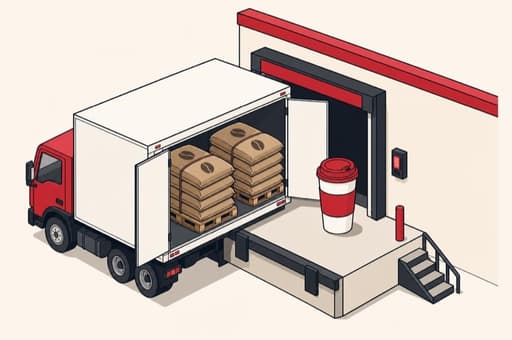
Tim Hortons Supply Chain
Roasting coffee and trucking food to Tim Hortons shops across Canada — $2.91B in 2025, the company's single largest revenue line. Thin margins, and it only grows as fast as Tim Hortons restaurant sales, which rose 3.0% last year.
Competes with Martin Brower distribution for McDonald's Canada (HAVI) · Broadline restaurant distribution (Sysco Canada) · Coffee roasting and store delivery network (Starbucks)
In plain English
Think of the roasting lines and the nine Canadian warehouses standing behind every Tim Hortons. Beans arrive green, get roasted, and go back out on trucks with the buns, the soup and everything else a shop needs for the week.
The shops themselves belong to franchisees — local operators who paid for the right to run a Tims. Their contracts oblige them to buy supplies through the system, so a shop owner's grocery bill lands as company revenue. It is a warehouse-and-delivery business bolted onto a coffee brand: enormous in dollars, slim in profit per dollar.
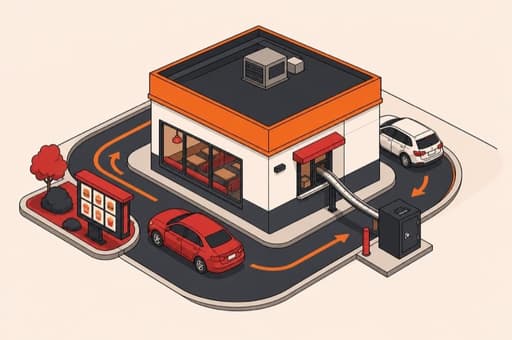
Burger King U.S. & Canada
Royalties, rent and ad money from 7,025 Burger Kings in the US and Canada, on $11.58B of guest spending in 2025. Sales per restaurant are climbing again, though the restaurant count still shrinks as weak locations close.
Competes with McDonald's US restaurants (McDonald's) · Wendy's burger restaurants (Wendy's) · Chick-fil-A restaurants (Chick-fil-A)
In plain English
Every Burger King you drive past is most likely owned by someone else — a local operator who bought the right to hang the sign. What the company sells them is the name, the recipes, the advertising and, in many cases, the building.
So the money arrives as a slice of the till: roughly three to six cents of every dollar a guest spends, another four and a half cents into the shared advertising pot, plus rent where the company owns or holds the lease. It also temporarily runs about a thousand of these restaurants itself, fixing them up to sell back to operators — that money is counted separately.
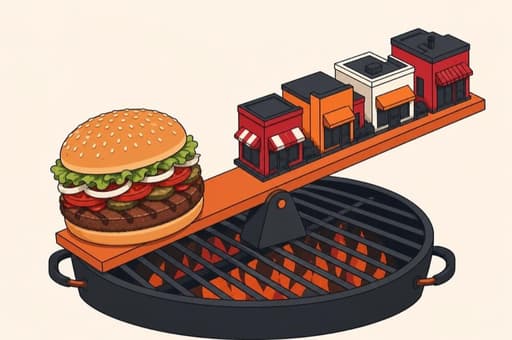
The Whopper
The reworked flagship burger behind Burger King's American revival: sales at the same US restaurants ran 8.5% ahead in the second quarter of 2026 — in a market where American chain-restaurant spending grew only about 3% last year.
Competes with Big Mac (McDonald's) · Wendy's burgers (Wendy's)
In plain English
One sandwich, carrying an enormous amount of weight. Burger King reworked its signature flame-grilled burger and threw its advertising money behind it, and American customers came back.
Nobody at head office earns a cent directly when you buy one — the operator takes the cash at the counter. What changes is the size of the pile the company takes its slice from. A busier lunch rush quietly lifts the payment from every restaurant in the system at the same time, which is why one recipe gets so much airtime whenever management talks to investors.
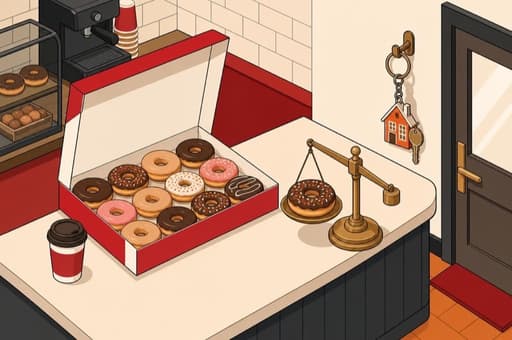
Tim Hortons
The royalty, rent and ad-fund stream from 6,232 Tim Hortons restaurants, on $7.57B of guest spending. With the delivery business alongside it, Tim Hortons is about 45% of revenue and roughly two in every five dollars of profit.
Competes with McCafé coffee and breakfast (McDonald's Canada) · Starbucks coffeehouses (Starbucks) · Dunkin' coffee and doughnut shops (Dunkin')
In plain English
Coffee and a doughnut on the way to work, multiplied by a few million mornings. Tim Hortons is Canada's everyday coffee stop, and nearly every location is run by a local owner-operator rather than by the company.
Those owners hand over a share of each day's sales for the brand, plus rent when the company holds the lease, plus a contribution to the national advertising fund. It is the most profitable thing in the group and also the most finished: with roughly half of what Canadians spend in coffee shops already going through its doors, growth now has to come from selling each visitor a little more. Canadian sales per shop were up 2.8% in 2025 and near flat by mid-2026.
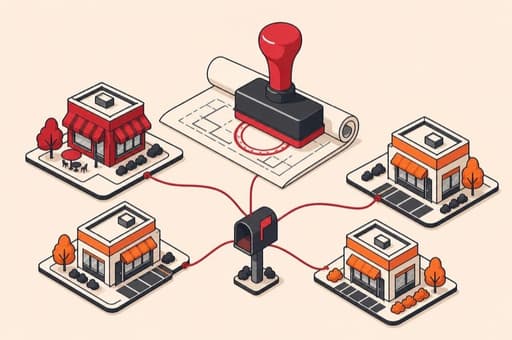
International
Licence fees from 16,403 restaurants outside the US and Canada, on $20.20B of guest spending, up 10.7% in 2025. Almost pure profit — $690M of it on $998M of revenue — because local partners pay to build everything.
Competes with Developmental Licensed markets (McDonald's) · KFC restaurants outside the US (Yum! Brands) · Popeyes Spain build-out (RB Iberia)
In plain English
Outside North America the company mostly sells permission. A local firm in France, Spain, Turkey or India takes on a whole country, builds the Burger Kings or Popeyes itself, pays for every oven and every lease, and sends back a small percentage of sales.
Because nothing is shipped and nothing is built at head office, almost every dollar that arrives is profit — a tenth of revenue turning into roughly three in ten dollars of the company's profit. The catch is that all the growth sits in someone else's hands: the plan through 2028 leans on partners opening roughly a thousand new restaurants a year abroad.
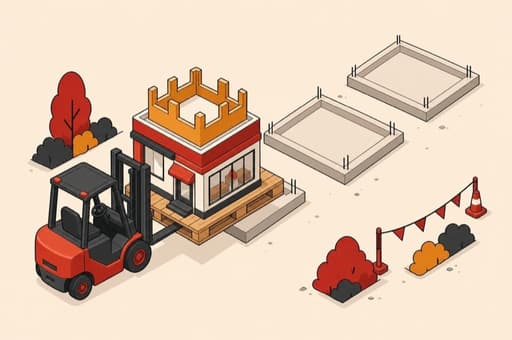
Burger King China
Roughly 1,250 Burger Kings in China, now run by CPE, which put in $350M for about 83% while RBI kept 17%, a board seat and a twenty-year deal. The fee was $32M in 2024 and resumed in 2026 at a slightly lower rate.
Competes with McDonald's restaurants in China (Golden Arches China) · KFC restaurants in China (Yum China)
In plain English
China went badly, and then got handed to someone else. RBI fell out with the partner licensed to run Burger King there, bought the business outright for about $151M, and a year later sold most of it to CPE, a new investment partner that put in fresh money and took control of the restaurants.
What is left is the arrangement the company likes best: a minority stake, a seat at the table, and the right to collect a fee on sales for the next twenty years while somebody else pays for every new opening. The stated ambition is more than four thousand restaurants by 2035.
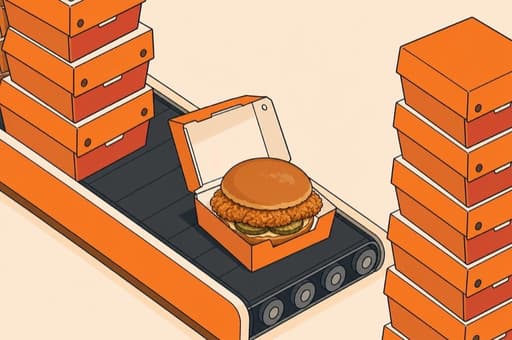
Popeyes Louisiana Kitchen
Fried-chicken royalties from 3,578 US and Canadian restaurants on $6.08B of guest spending. The problem child: US sales at the same restaurants fell 2.9% in 2025 and 5.2% in the second quarter of 2026, while Brazil runs more than 20% ahead.
Competes with Chick-fil-A restaurants (Chick-fil-A) · KFC US restaurants (Yum! Brands) · Raising Cane's chicken fingers (Raising Cane's) · Wingstop wings (Wingstop)
In plain English
Louisiana-style fried chicken, sold through about three and a half thousand restaurants that other people own. The arrangement is the usual one — the operator buys the chicken, hires the staff and keeps the till, while the company takes a cut of sales and runs the advertising.
That cut only grows when the restaurants get busier, and in America they have been getting quieter for two years, in a corner of the market where Chick-fil-A sells roughly four times as much. A new operating chief for the US and Canada arrived in March 2026 with a three-item repair list: execution, the core menu, value. Abroad, the brand is still winning.
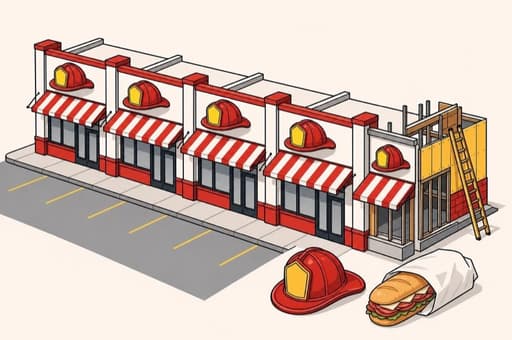
Firehouse Subs
The smallest of the four brands and the fastest-growing by shop count: 1,496 sub shops, $1.34B of guest spending, up 8.6%, with the shop count up 7.7% in 2025. Sales per shop are the weak spot.
Competes with Jersey Mike's sub shops (Jersey Mike's) · Subway sandwich shops (Subway)
In plain English
Hot sub sandwiches, sold from small shops that cost comparatively little to open — a new one pays its owner back in under four years, which is why operators keep signing up for more, now including Australia.
The company's role is the familiar one: hand over the name and the recipes, collect a slice of sales. The business is tiny inside the group, about a fortieth of revenue, and its problem is footfall rather than expansion — a Firehouse shop rings up around $960,000 a year against roughly $1.36M at a Jersey Mike's, and sales at existing shops were close to flat last year.


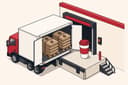 Tim Hortons Supply ChainRoasting coffee and trucking food to Tim Hortons shops across Canada — $2.91B in 2025, the company's single largest revenue line. Thin margins, and it only grows as fast as Tim Hortons restaurant sales, which rose 3.0% last year.
Roasting coffee and trucking food to Tim Hortons shops across Canada — $2.91B in 2025, the company's single largest revenue line. Thin margins, and it only grows as fast as Tim Hortons restaurant sales, which rose 3.0% last year.
In plain English
Think of the roasting lines and the nine Canadian warehouses standing behind every Tim Hortons. Beans arrive green, get roasted, and go back out on trucks with the buns, the soup and everything else a shop needs for the week.
The shops themselves belong to franchisees — local operators who paid for the right to run a Tims. Their contracts oblige them to buy supplies through the system, so a shop owner's grocery bill lands as company revenue. It is a warehouse-and-delivery business bolted onto a coffee brand: enormous in dollars, slim in profit per dollar.
Competes with Martin Brower distribution for McDonald's Canada (HAVI) · Broadline restaurant distribution (Sysco Canada) · Coffee roasting and store delivery network (Starbucks)
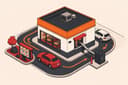 Burger King U.S. & CanadaRoyalties, rent and ad money from 7,025 Burger Kings in the US and Canada, on $11.58B of guest spending in 2025. Sales per restaurant are climbing again, though the restaurant count still shrinks as weak locations close.
Royalties, rent and ad money from 7,025 Burger Kings in the US and Canada, on $11.58B of guest spending in 2025. Sales per restaurant are climbing again, though the restaurant count still shrinks as weak locations close.
In plain English
Every Burger King you drive past is most likely owned by someone else — a local operator who bought the right to hang the sign. What the company sells them is the name, the recipes, the advertising and, in many cases, the building.
So the money arrives as a slice of the till: roughly three to six cents of every dollar a guest spends, another four and a half cents into the shared advertising pot, plus rent where the company owns or holds the lease. It also temporarily runs about a thousand of these restaurants itself, fixing them up to sell back to operators — that money is counted separately.
Competes with McDonald's US restaurants (McDonald's) · Wendy's burger restaurants (Wendy's) · Chick-fil-A restaurants (Chick-fil-A)
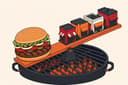 The WhopperThe reworked flagship burger behind Burger King's American revival: sales at the same US restaurants ran 8.5% ahead in the second quarter of 2026 — in a market where American chain-restaurant spending grew only about 3% last year.
The reworked flagship burger behind Burger King's American revival: sales at the same US restaurants ran 8.5% ahead in the second quarter of 2026 — in a market where American chain-restaurant spending grew only about 3% last year.
In plain English
One sandwich, carrying an enormous amount of weight. Burger King reworked its signature flame-grilled burger and threw its advertising money behind it, and American customers came back.
Nobody at head office earns a cent directly when you buy one — the operator takes the cash at the counter. What changes is the size of the pile the company takes its slice from. A busier lunch rush quietly lifts the payment from every restaurant in the system at the same time, which is why one recipe gets so much airtime whenever management talks to investors.
Competes with Big Mac (McDonald's) · Wendy's burgers (Wendy's)
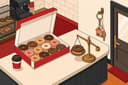 Tim HortonsThe royalty, rent and ad-fund stream from 6,232 Tim Hortons restaurants, on $7.57B of guest spending. With the delivery business alongside it, Tim Hortons is about 45% of revenue and roughly two in every five dollars of profit.
The royalty, rent and ad-fund stream from 6,232 Tim Hortons restaurants, on $7.57B of guest spending. With the delivery business alongside it, Tim Hortons is about 45% of revenue and roughly two in every five dollars of profit.
In plain English
Coffee and a doughnut on the way to work, multiplied by a few million mornings. Tim Hortons is Canada's everyday coffee stop, and nearly every location is run by a local owner-operator rather than by the company.
Those owners hand over a share of each day's sales for the brand, plus rent when the company holds the lease, plus a contribution to the national advertising fund. It is the most profitable thing in the group and also the most finished: with roughly half of what Canadians spend in coffee shops already going through its doors, growth now has to come from selling each visitor a little more. Canadian sales per shop were up 2.8% in 2025 and near flat by mid-2026.
Competes with McCafé coffee and breakfast (McDonald's Canada) · Starbucks coffeehouses (Starbucks) · Dunkin' coffee and doughnut shops (Dunkin')
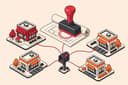 InternationalLicence fees from 16,403 restaurants outside the US and Canada, on $20.20B of guest spending, up 10.7% in 2025. Almost pure profit — $690M of it on $998M of revenue — because local partners pay to build everything.
Licence fees from 16,403 restaurants outside the US and Canada, on $20.20B of guest spending, up 10.7% in 2025. Almost pure profit — $690M of it on $998M of revenue — because local partners pay to build everything.
In plain English
Outside North America the company mostly sells permission. A local firm in France, Spain, Turkey or India takes on a whole country, builds the Burger Kings or Popeyes itself, pays for every oven and every lease, and sends back a small percentage of sales.
Because nothing is shipped and nothing is built at head office, almost every dollar that arrives is profit — a tenth of revenue turning into roughly three in ten dollars of the company's profit. The catch is that all the growth sits in someone else's hands: the plan through 2028 leans on partners opening roughly a thousand new restaurants a year abroad.
Competes with Developmental Licensed markets (McDonald's) · KFC restaurants outside the US (Yum! Brands) · Popeyes Spain build-out (RB Iberia)
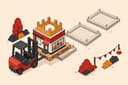 Burger King ChinaRoughly 1,250 Burger Kings in China, now run by CPE, which put in $350M for about 83% while RBI kept 17%, a board seat and a twenty-year deal. The fee was $32M in 2024 and resumed in 2026 at a slightly lower rate.
Roughly 1,250 Burger Kings in China, now run by CPE, which put in $350M for about 83% while RBI kept 17%, a board seat and a twenty-year deal. The fee was $32M in 2024 and resumed in 2026 at a slightly lower rate.
In plain English
China went badly, and then got handed to someone else. RBI fell out with the partner licensed to run Burger King there, bought the business outright for about $151M, and a year later sold most of it to CPE, a new investment partner that put in fresh money and took control of the restaurants.
What is left is the arrangement the company likes best: a minority stake, a seat at the table, and the right to collect a fee on sales for the next twenty years while somebody else pays for every new opening. The stated ambition is more than four thousand restaurants by 2035.
Competes with McDonald's restaurants in China (Golden Arches China) · KFC restaurants in China (Yum China)
 Popeyes Louisiana KitchenFried-chicken royalties from 3,578 US and Canadian restaurants on $6.08B of guest spending. The problem child: US sales at the same restaurants fell 2.9% in 2025 and 5.2% in the second quarter of 2026, while Brazil runs more than 20% ahead.
Fried-chicken royalties from 3,578 US and Canadian restaurants on $6.08B of guest spending. The problem child: US sales at the same restaurants fell 2.9% in 2025 and 5.2% in the second quarter of 2026, while Brazil runs more than 20% ahead.
In plain English
Louisiana-style fried chicken, sold through about three and a half thousand restaurants that other people own. The arrangement is the usual one — the operator buys the chicken, hires the staff and keeps the till, while the company takes a cut of sales and runs the advertising.
That cut only grows when the restaurants get busier, and in America they have been getting quieter for two years, in a corner of the market where Chick-fil-A sells roughly four times as much. A new operating chief for the US and Canada arrived in March 2026 with a three-item repair list: execution, the core menu, value. Abroad, the brand is still winning.
Competes with Chick-fil-A restaurants (Chick-fil-A) · KFC US restaurants (Yum! Brands) · Raising Cane's chicken fingers (Raising Cane's) · Wingstop wings (Wingstop)
 Firehouse SubsThe smallest of the four brands and the fastest-growing by shop count: 1,496 sub shops, $1.34B of guest spending, up 8.6%, with the shop count up 7.7% in 2025. Sales per shop are the weak spot.
The smallest of the four brands and the fastest-growing by shop count: 1,496 sub shops, $1.34B of guest spending, up 8.6%, with the shop count up 7.7% in 2025. Sales per shop are the weak spot.
In plain English
Hot sub sandwiches, sold from small shops that cost comparatively little to open — a new one pays its owner back in under four years, which is why operators keep signing up for more, now including Australia.
The company's role is the familiar one: hand over the name and the recipes, collect a slice of sales. The business is tiny inside the group, about a fortieth of revenue, and its problem is footfall rather than expansion — a Firehouse shop rings up around $960,000 a year against roughly $1.36M at a Jersey Mike's, and sales at existing shops were close to flat last year.
Competes with Jersey Mike's sub shops (Jersey Mike's) · Subway sandwich shops (Subway)
Named in filings, launches and programs
- Advertising funds and technology feesServiceOperators pay 2–5% of sales into shared advertising pots plus technology fees — $1.22B in 2025, which flows back out again as marketing.
- Reclaim the FlameCustomer programBurger King's American repair fund: up to $700M through 2028 for advertising and remodels, with about 400 restaurants redone in 2025.
- Property and real estate portfolioServiceThe company owns or leases many franchise sites and subleases them to operators, which is why rent rides alongside the royalty on the same restaurants.
- Master franchise and development agreementsEcosystemThe contracts behind growth abroad — Popeyes Italy, Tim Hortons Indonesia, Burger King Greece, Popeyes UAE — each handing a whole country to a local partner.
- Tims Rewards × Canadian Tire Triangle RewardsCustomer program · AnnouncedAn announced link letting Tim Hortons loyalty members earn Canadian Tire money on their coffee run, linking two Canadian loyalty schemes.
- Tims ChinaBrandThe separately listed operator of Tim Hortons in China; RBI put money in alongside Cartesian Capital in July 2024.
- Popeyes ChinaBrand · RampingBought in 2024 and opening fast — 55 net new restaurants in the last quarter of 2025 — with ownership due to pass to a local partner.
- Firehouse Subs BrazilBrand · RampingA start-up sub business in Brazil, still a drag on profit while RBI owns it, waiting to be handed to a local operator.
- Class B exchangeable partnership unitsEcosystemThe partnership units through which 3G Capital holds its stake; about 2.8 million of them were exchanged for cash in August 2026.
Advertising funds and technology feesService
Operators pay 2–5% of sales into shared advertising pots plus technology fees — $1.22B in 2025, which flows back out again as marketing.
Reclaim the FlameCustomer program
Burger King's American repair fund: up to $700M through 2028 for advertising and remodels, with about 400 restaurants redone in 2025.
Property and real estate portfolioService
The company owns or leases many franchise sites and subleases them to operators, which is why rent rides alongside the royalty on the same restaurants.
Master franchise and development agreementsEcosystem
The contracts behind growth abroad — Popeyes Italy, Tim Hortons Indonesia, Burger King Greece, Popeyes UAE — each handing a whole country to a local partner.
Tims Rewards × Canadian Tire Triangle RewardsCustomer program · Announced
An announced link letting Tim Hortons loyalty members earn Canadian Tire money on their coffee run, linking two Canadian loyalty schemes.
Tims ChinaBrand
The separately listed operator of Tim Hortons in China; RBI put money in alongside Cartesian Capital in July 2024.
Popeyes ChinaBrand · Ramping
Bought in 2024 and opening fast — 55 net new restaurants in the last quarter of 2025 — with ownership due to pass to a local partner.
Firehouse Subs BrazilBrand · Ramping
A start-up sub business in Brazil, still a drag on profit while RBI owns it, waiting to be handed to a local operator.
Class B exchangeable partnership unitsEcosystem
The partnership units through which 3G Capital holds its stake; about 2.8 million of them were exchanged for cash in August 2026.