
Rocket Lab (RKLB)
Builds and launches small rockets, spacecraft, components, and mission systems.
Something off on this page? Send us feedback.
Rocket Lab is no longer mainly a rocket launcher: most sales now come from building satellites and the parts inside them, especially for the U.S. government. Electron is the proven launch business, while a larger rocket and a pending communications-network acquisition are bets on letting Rocket Lab build, launch and operate whole space networks. That expansion still depends on delivering agreed-price projects without overruns and funding a costly build-out.
Item facts: FY2025 · year ended Dec 31, 2025, from filings, earnings calls and company pages.
Judgment weights, not filed revenue
The band summarizes business focus and direction. ~ marks estimates.
8 in detail · 11 more below
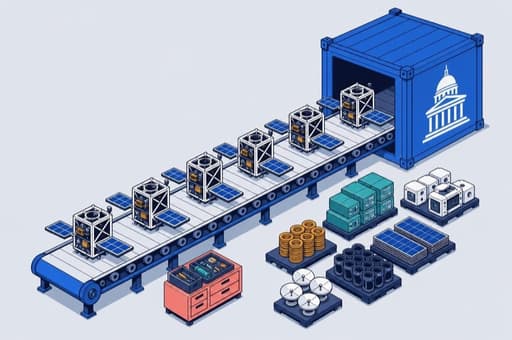
SDA Transport and Tracking Layers
Two military satellite programs are the center of Rocket Lab's $2.36 billion companywide backlog. The watchpoint is whether it can reach agreed production checkpoints without absorbing cost overruns.
Competes with SDA spacecraft using Terran Orbital buses (Lockheed Martin) · SDA spacecraft (Northrop Grumman)
In plain English
Picture a factory line turning out matching satellites instead of cars. The U.S. Space Development Agency hired Rocket Lab to build and operate two groups of eighteen satellites that will relay information and track threats.
Rocket Lab gets paid as the work reaches agreed milestones, not only when a satellite reaches space. The price is largely fixed, so delays or extra work come out of Rocket Lab's pocket. One unnamed government customer supplied twenty-eight percent of company revenue in fiscal twenty twenty-five; SDA may be that buyer, but Rocket Lab has not confirmed it.
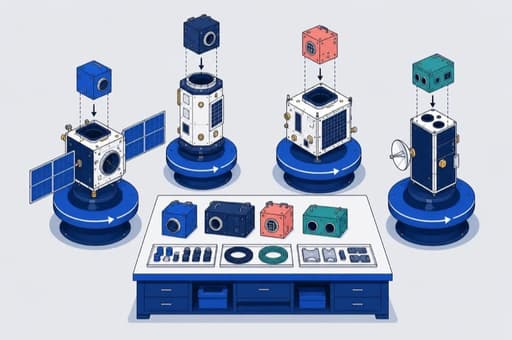
Explorer, Lightning, Pioneer and Photon
Four reusable spacecraft designs cover deep-space trips, long-lived fleets, customer equipment and Electron-linked missions. Seventeen Lightning-derived spacecraft for MDA and Globalstar show the repeat-production opportunity; delivery timing remains the watchpoint.
Competes with S-Class and LX-Class spacecraft (York Space Systems) · Saturn spacecraft (Blue Canyon Technologies / RTX)
In plain English
These are the basic bodies of satellites: the structure, power, steering and computers that carry somebody else's instruments. Explorer goes far from Earth, Lightning stays up for long-running fleets, Pioneer carries hosted or returning cargo, and Photon grew out of Electron missions.
Customers such as MDA, which is building satellites for Globalstar's communications fleet, Varda, which uses Pioneer to return cargo, and NASA pay Rocket Lab to adapt a proven body, assemble it and pass acceptance tests. Payments arrive as the build advances. Reusing a design can make each follow-on order easier, but a late customer instrument can still hold up the spacecraft and its payment.
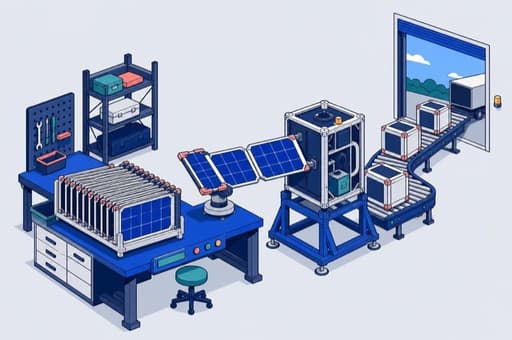
Space Solar
Solar cells and folding panels supply power in orbit. Most production capacity served outside buyers when last disclosed, but a legacy contract near $100 million produced almost no profit.
Competes with Roll-Out Solar Arrays (Redwire) · Spacecraft power systems (Blue Canyon Technologies / RTX)
In plain English
Satellites need their own power plants. Rocket Lab makes the light-catching cells, protects and connects them, then builds folding STARRAY panels that open after launch.
Most of the factory's capacity served other spacecraft makers when Rocket Lab last gave the split, while a smaller portion fed its own satellites. Outside customers pay for qualified cells or complete panels tied to their production schedules. The catch is that flawless deployment matters more than cheap volume, and one inherited large contract showed that plenty of sales can still leave almost no profit.
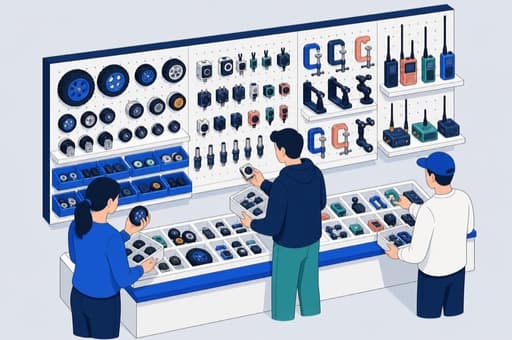
Satellite Components and Space Software
A catalogue of steering wheels, direction sensors, release hardware, radios and control software sells into many spacecraft designs. Thousands of small satellites now launch each year, but many builders make parts in-house.
Competes with XACT units, reaction wheels and star trackers (Blue Canyon Technologies / RTX) · Payload Adapter Systems (Beyond Gravity) · Space components (Redwire)
In plain English
Think of the shelves behind a satellite repair bench. Rocket Lab sells wheels that turn a spacecraft, sensors that tell it where it is pointing, clamps that release it from a rocket, radios that talk to Earth, and software that coordinates the craft and its ground team.
Manufacturers can buy these modules one by one or Rocket Lab can install them in its own spacecraft. When an outside maker chooses a part, a whole fleet can bring repeat orders. Before money arrives, however, each part must survive demanding tests and clear export rules; a customer choosing its own in-house part closes that slot.

Electron
A small rocket sold for dedicated missions, shared rides and related launch work. Average revenue was $8.5 million per vehicle launched in fiscal twenty twenty-five; steady cadence and reliability matter most.
Competes with Alpha (Firefly Aerospace) · Smallsat Rideshare (SpaceX)
In plain English
Electron is the small delivery truck of orbit. A customer with a compact satellite can buy the whole trip and choose its schedule and destination, or share space when that is enough.
Rocket Lab earns from the launch itself and sometimes from engineering or work at the launch site. The vehicle cost about $4.8 million to manufacture on average in fiscal twenty twenty-five, before launch-site, research and companywide costs. Flying more often spreads the standing costs across more missions, but a delayed satellite, unavailable launch area or reliability problem can postpone the payday.
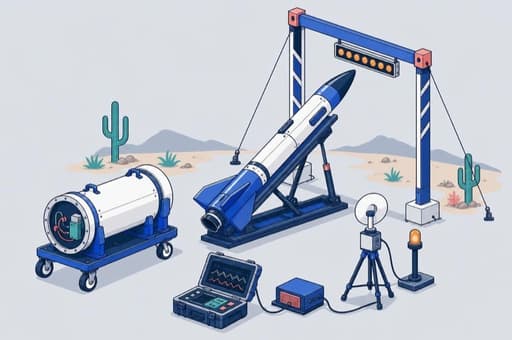
HASTE
A modified Electron carries very-high-speed U.S. defense experiments without circling Earth. Two agreements reach up to $456 million, though options and launch-site work mean that total is not all launch sales.
Competes with Talon-A (Stratolaunch) · Alpha (Firefly Aerospace)
In plain English
Not every rocket is trying to reach orbit. HASTE shoots a test object along a very fast, high arc so U.S. defense teams can study how it behaves and how sensors respond.
The vehicle shares Electron's production base, which lets Rocket Lab sell specialized tests without starting from scratch. The Space Force and Kratos, working through a military test program, pay for missions, preparation and some launch-site work. Revenue can arrive as work progresses before flight. Demand is rising, but payload readiness, range dates, government funding and unexercised options decide how much becomes real business.
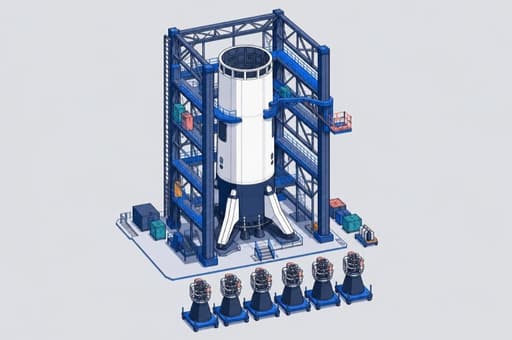
Neutron
Rocket Lab's reusable larger rocket is meant for satellite fleets, government missions and its own spacecraft. First flight remains aimed at late twenty twenty-six but depends on passing required tests after several schedule moves.
Competes with Falcon 9 (SpaceX) · Eclipse (Firefly Aerospace / Northrop Grumman)
In plain English
The bigger rocket is still a construction project. Neutron is designed to carry groups of satellites at once and bring its main stage back for reuse, opening missions that are too large for Electron.
Kepler, a satellite communications operator, is the first named customer for a dedicated flight, while other reservations remain unnamed. Rocket Lab would be paid per launch, with repeat flights intended to spread the cost of engines, the Virginia launch pad and recovery equipment. Before any of that becomes revenue, the rocket, engines, pad, licenses and return system all have to pass their required tests and approvals together.

Iridium Satellite Communications Network
The pending acquisition would add a global voice-and-data subscription network producing about $870 million in annual revenue. Until approvals and financing are complete, none of that is Rocket Lab revenue.
Competes with Globalstar network (Globalstar) · Starlink Direct to Cell (SpaceX)
In plain English
A phone network where the towers orbit Earth. Iridium's dozens of satellites carry voice, messages, tracking and safety signals for people, aircraft, ships and connected equipment far beyond ordinary cell towers.
More than two million users pay subscriptions or usage charges, which would add repeat service income beside Rocket Lab's project and launch sales. The attraction is also practical: future replacement satellites and launches could use Rocket Lab's own factories and rockets. For now the network is still somebody else's business; the deal needs shareholder and government approval, financing and control of the radio frequencies it relies on.


 SDA Transport and Tracking LayersTwo military satellite programs are the center of Rocket Lab's $2.36 billion companywide backlog. The watchpoint is whether it can reach agreed production checkpoints without absorbing cost overruns.
Two military satellite programs are the center of Rocket Lab's $2.36 billion companywide backlog. The watchpoint is whether it can reach agreed production checkpoints without absorbing cost overruns.
In plain English
Picture a factory line turning out matching satellites instead of cars. The U.S. Space Development Agency hired Rocket Lab to build and operate two groups of eighteen satellites that will relay information and track threats.
Rocket Lab gets paid as the work reaches agreed milestones, not only when a satellite reaches space. The price is largely fixed, so delays or extra work come out of Rocket Lab's pocket. One unnamed government customer supplied twenty-eight percent of company revenue in fiscal twenty twenty-five; SDA may be that buyer, but Rocket Lab has not confirmed it.
Competes with SDA spacecraft using Terran Orbital buses (Lockheed Martin) · SDA spacecraft (Northrop Grumman)
 Explorer, Lightning, Pioneer and PhotonFour reusable spacecraft designs cover deep-space trips, long-lived fleets, customer equipment and Electron-linked missions. Seventeen Lightning-derived spacecraft for MDA and Globalstar show the repeat-production opportunity; delivery timing remains the watchpoint.
Four reusable spacecraft designs cover deep-space trips, long-lived fleets, customer equipment and Electron-linked missions. Seventeen Lightning-derived spacecraft for MDA and Globalstar show the repeat-production opportunity; delivery timing remains the watchpoint.
In plain English
These are the basic bodies of satellites: the structure, power, steering and computers that carry somebody else's instruments. Explorer goes far from Earth, Lightning stays up for long-running fleets, Pioneer carries hosted or returning cargo, and Photon grew out of Electron missions.
Customers such as MDA, which is building satellites for Globalstar's communications fleet, Varda, which uses Pioneer to return cargo, and NASA pay Rocket Lab to adapt a proven body, assemble it and pass acceptance tests. Payments arrive as the build advances. Reusing a design can make each follow-on order easier, but a late customer instrument can still hold up the spacecraft and its payment.
Competes with S-Class and LX-Class spacecraft (York Space Systems) · Saturn spacecraft (Blue Canyon Technologies / RTX)
 Space SolarSolar cells and folding panels supply power in orbit. Most production capacity served outside buyers when last disclosed, but a legacy contract near $100 million produced almost no profit.
Solar cells and folding panels supply power in orbit. Most production capacity served outside buyers when last disclosed, but a legacy contract near $100 million produced almost no profit.
In plain English
Satellites need their own power plants. Rocket Lab makes the light-catching cells, protects and connects them, then builds folding STARRAY panels that open after launch.
Most of the factory's capacity served other spacecraft makers when Rocket Lab last gave the split, while a smaller portion fed its own satellites. Outside customers pay for qualified cells or complete panels tied to their production schedules. The catch is that flawless deployment matters more than cheap volume, and one inherited large contract showed that plenty of sales can still leave almost no profit.
Competes with Roll-Out Solar Arrays (Redwire) · Spacecraft power systems (Blue Canyon Technologies / RTX)
 Satellite Components and Space SoftwareA catalogue of steering wheels, direction sensors, release hardware, radios and control software sells into many spacecraft designs. Thousands of small satellites now launch each year, but many builders make parts in-house.
A catalogue of steering wheels, direction sensors, release hardware, radios and control software sells into many spacecraft designs. Thousands of small satellites now launch each year, but many builders make parts in-house.
In plain English
Think of the shelves behind a satellite repair bench. Rocket Lab sells wheels that turn a spacecraft, sensors that tell it where it is pointing, clamps that release it from a rocket, radios that talk to Earth, and software that coordinates the craft and its ground team.
Manufacturers can buy these modules one by one or Rocket Lab can install them in its own spacecraft. When an outside maker chooses a part, a whole fleet can bring repeat orders. Before money arrives, however, each part must survive demanding tests and clear export rules; a customer choosing its own in-house part closes that slot.
Competes with XACT units, reaction wheels and star trackers (Blue Canyon Technologies / RTX) · Payload Adapter Systems (Beyond Gravity) · Space components (Redwire)
 ElectronA small rocket sold for dedicated missions, shared rides and related launch work. Average revenue was $8.5 million per vehicle launched in fiscal twenty twenty-five; steady cadence and reliability matter most.
A small rocket sold for dedicated missions, shared rides and related launch work. Average revenue was $8.5 million per vehicle launched in fiscal twenty twenty-five; steady cadence and reliability matter most.
In plain English
Electron is the small delivery truck of orbit. A customer with a compact satellite can buy the whole trip and choose its schedule and destination, or share space when that is enough.
Rocket Lab earns from the launch itself and sometimes from engineering or work at the launch site. The vehicle cost about $4.8 million to manufacture on average in fiscal twenty twenty-five, before launch-site, research and companywide costs. Flying more often spreads the standing costs across more missions, but a delayed satellite, unavailable launch area or reliability problem can postpone the payday.
Competes with Alpha (Firefly Aerospace) · Smallsat Rideshare (SpaceX)
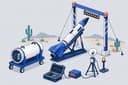 HASTEA modified Electron carries very-high-speed U.S. defense experiments without circling Earth. Two agreements reach up to $456 million, though options and launch-site work mean that total is not all launch sales.
A modified Electron carries very-high-speed U.S. defense experiments without circling Earth. Two agreements reach up to $456 million, though options and launch-site work mean that total is not all launch sales.
In plain English
Not every rocket is trying to reach orbit. HASTE shoots a test object along a very fast, high arc so U.S. defense teams can study how it behaves and how sensors respond.
The vehicle shares Electron's production base, which lets Rocket Lab sell specialized tests without starting from scratch. The Space Force and Kratos, working through a military test program, pay for missions, preparation and some launch-site work. Revenue can arrive as work progresses before flight. Demand is rising, but payload readiness, range dates, government funding and unexercised options decide how much becomes real business.
Competes with Talon-A (Stratolaunch) · Alpha (Firefly Aerospace)
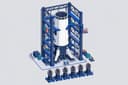 NeutronRocket Lab's reusable larger rocket is meant for satellite fleets, government missions and its own spacecraft. First flight remains aimed at late twenty twenty-six but depends on passing required tests after several schedule moves.
Rocket Lab's reusable larger rocket is meant for satellite fleets, government missions and its own spacecraft. First flight remains aimed at late twenty twenty-six but depends on passing required tests after several schedule moves.
In plain English
The bigger rocket is still a construction project. Neutron is designed to carry groups of satellites at once and bring its main stage back for reuse, opening missions that are too large for Electron.
Kepler, a satellite communications operator, is the first named customer for a dedicated flight, while other reservations remain unnamed. Rocket Lab would be paid per launch, with repeat flights intended to spread the cost of engines, the Virginia launch pad and recovery equipment. Before any of that becomes revenue, the rocket, engines, pad, licenses and return system all have to pass their required tests and approvals together.
Competes with Falcon 9 (SpaceX) · Eclipse (Firefly Aerospace / Northrop Grumman)
 Iridium Satellite Communications NetworkThe pending acquisition would add a global voice-and-data subscription network producing about $870 million in annual revenue. Until approvals and financing are complete, none of that is Rocket Lab revenue.
The pending acquisition would add a global voice-and-data subscription network producing about $870 million in annual revenue. Until approvals and financing are complete, none of that is Rocket Lab revenue.
In plain English
A phone network where the towers orbit Earth. Iridium's dozens of satellites carry voice, messages, tracking and safety signals for people, aircraft, ships and connected equipment far beyond ordinary cell towers.
More than two million users pay subscriptions or usage charges, which would add repeat service income beside Rocket Lab's project and launch sales. The attraction is also practical: future replacement satellites and launches could use Rocket Lab's own factories and rockets. For now the network is still somebody else's business; the deal needs shareholder and government approval, financing and control of the radio frequencies it relies on.
Competes with Globalstar network (Globalstar) · Starlink Direct to Cell (SpaceX)
Named in filings, launches and programs
- Flatellite / SB-AMTICustomer program · AnnouncedA $397 million option-inclusive Space Force prototype program combining flat-packed satellites, Neutron launches and operations; it produced no fiscal twenty twenty-five revenue.
- Rocket Lab Optical Systems (GEOST)BrandMakes satellite cameras and heat-sensing instruments; acquired in August twenty twenty-five and contributed $11.9 million that fiscal year.
- Rocket Lab Germany (Mynaric)Brand · RampingMakes laser terminals that move data between satellites and the ground; acquired in April twenty twenty-six.
- Motiv Space SystemsBrandBuilds robotic arms, motion controls and solar-panel turning gear; acquired in May twenty twenty-six and contributed $1.4 million in the second quarter.
- Precision Components LimitedBrandNew Zealand precision-manufacturing shop acquired in late twenty twenty-five to add production capacity.
- Rocket Lab National SecurityBrandThe U.S. unit cleared to lead sensitive government contracts, including the large SDA satellite programs.
- Frontier RadiosProduct lineSpacecraft radios sold to outside builders and installed in Rocket Lab's own satellite bodies.
- MAX Space Software suiteProduct lineSoftware for testing, flying and controlling individual spacecraft and whole satellite fleets from the ground.
- GHOST / Launch Complex 4Platform · AnnouncedA planned Alaska site for defense flight tests that do not circle Earth, funded inside the HASTE agreement and intended to debut in twenty twenty-seven.
- MDA / Globalstar constellationCustomer programA seventeen-spacecraft Lightning production run for MDA and Globalstar, now moving from factory work toward deployment.
- SSC / Heimdall GEO spacecraft programCustomer program · AnnouncedMore than $160 million to build three far-orbit communications spacecraft, including two for SSC and Heimdall.
Flatellite / SB-AMTICustomer program · Announced
A $397 million option-inclusive Space Force prototype program combining flat-packed satellites, Neutron launches and operations; it produced no fiscal twenty twenty-five revenue.
Rocket Lab Optical Systems (GEOST)Brand
Makes satellite cameras and heat-sensing instruments; acquired in August twenty twenty-five and contributed $11.9 million that fiscal year.
Rocket Lab Germany (Mynaric)Brand · Ramping
Makes laser terminals that move data between satellites and the ground; acquired in April twenty twenty-six.
Motiv Space SystemsBrand
Builds robotic arms, motion controls and solar-panel turning gear; acquired in May twenty twenty-six and contributed $1.4 million in the second quarter.
Precision Components LimitedBrand
New Zealand precision-manufacturing shop acquired in late twenty twenty-five to add production capacity.
Rocket Lab National SecurityBrand
The U.S. unit cleared to lead sensitive government contracts, including the large SDA satellite programs.
Frontier RadiosProduct line
Spacecraft radios sold to outside builders and installed in Rocket Lab's own satellite bodies.
MAX Space Software suiteProduct line
Software for testing, flying and controlling individual spacecraft and whole satellite fleets from the ground.
GHOST / Launch Complex 4Platform · Announced
A planned Alaska site for defense flight tests that do not circle Earth, funded inside the HASTE agreement and intended to debut in twenty twenty-seven.
MDA / Globalstar constellationCustomer program
A seventeen-spacecraft Lightning production run for MDA and Globalstar, now moving from factory work toward deployment.
SSC / Heimdall GEO spacecraft programCustomer program · Announced
More than $160 million to build three far-orbit communications spacecraft, including two for SSC and Heimdall.