
Rockwell Automation (ROK)
Builds Allen-Bradley controls, manufacturing software, and lifecycle services for industrial operations.
Something off on this page? Send us feedback.
Rockwell Automation builds the control layer of a factory: the boxes that start motors, the controllers that run machines, the software that tells them what to do. Most of it reaches customers through independent distributors, not its own salespeople. The catalogue hardware is snapping back after a slump, the software side now carries the growth and the margin, and the project-and-service arm waits on customers to spend again.
Item facts: FY2026 · nine months ended Jun 30, 2026, from filings, earnings calls and company pages.
Judgment weights, not filed revenue
The band summarizes business focus and direction. ~ marks estimates.
8 in detail · 11 more below
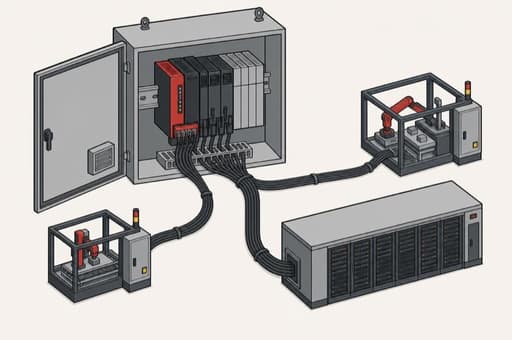
Logix control platform
The controller family everything else in the catalogue plugs into, growing at strong double digits through FY2026. A new kind of buyer showed up this year: data-center owners, using Logix where building-controls boxes normally sit. Watch whether that lane holds.
Competes with SIMATIC S7-1500 controllers (Siemens) · Modicon M580 controllers (Schneider Electric) · MELSEC iQ-R controllers (Mitsubishi Electric)
In plain English
Think of a factory as a body: motors are the muscles, and a controller is the nerve centre that tells each one when to move and how fast. Logix is that nerve centre — a rack of modules bolted inside a metal cabinet, programmed through Rockwell's Studio 5000 software.
Plants pay per controller, but the money that follows is the point. Once a site's machines, engineers and spare-parts shelf are all built around Logix, changing brands means redoing years of work, so the next expansion buys Logix again. The newest buyers are operators of large data centers, standardising on it for the utility plants that serve their server halls.
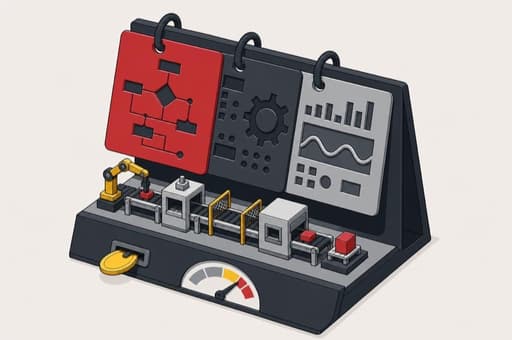
FactoryTalk software portfolio
The software layer that designs, runs and watches a Rockwell-controlled plant. Small in sales, outsized in strategy: it turns one-off hardware into subscriptions. Two new pieces shipped mid-2026. Watch whether the software half keeps outgrowing the services half.
Competes with WinCC and Xcelerator (Siemens) · System Platform and PI (AVEVA) · Ignition SCADA (Inductive Automation)
In plain English
Every machine on a plant floor speaks its own dialect. FactoryTalk is the set of programs that gets them talking — screens operators watch, tools engineers design with, and a practice model of a whole production line that can be tested before a single bolt is turned.
Customers buy it by subscription, renewed year after year, which is why it counts for more than its size suggests: a drive sold is money once, a licence renewed is money again every year. Most of it goes into plants Rockwell already controls, so this grows by following the hardware rather than by winning strangers.
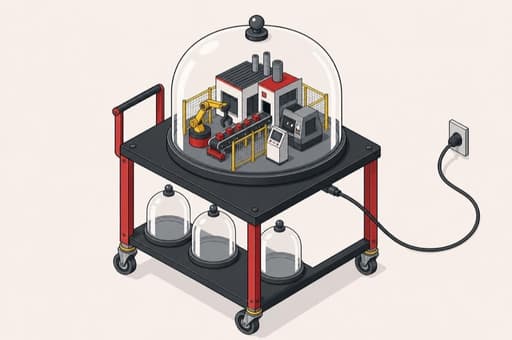
Plex Smart Manufacturing Platform
Cloud software that runs a factory's paperwork — orders, quality records, scheduling — rented monthly. Small today, growing at the quick end of Rockwell's software, and being pushed out of its car-parts customer base into everyday consumer goods.
Competes with Opcenter manufacturing software (Siemens) · Digital Manufacturing Cloud (SAP) · Frontline Operations (Tulip)
In plain English
The paperwork side of making things — which orders are running, what passed inspection, what parts to buy, when each job is scheduled — normally lives in its own software. Plex is that software, except the plant reaches it over the internet: no server room, no install disc.
Each site pays a fee to keep using it, the way a household pays for streaming, and keeps paying as long as the line runs. Rockwell's advantage here is less the software than the doorway: its salespeople and distributors are already inside the building, and Plex walks in with them. The customer base began in car parts; the push now is toward food and household goods.
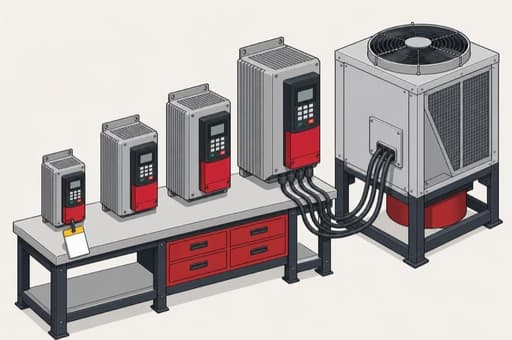
Drives and Motion (PowerFlex, Kinetix)
The boxes that decide how fast a motor spins, plus the precise motors inside packaging machines. Growth this year was broad across every hardware line Rockwell sells. Low-cost Chinese entrants are closing the gap, and chiller makers are a new kind of buyer.
Competes with ACS880 drives (ABB) · SINAMICS drives (Siemens) · AC drives and servo motors (Yaskawa Electric)
In plain English
Plug a motor straight into the wall and it does exactly one thing: full speed. A drive sits in between and lets you dial that speed up and down — the difference between a tap that is either off or blasting and one you can actually turn. Done right it saves electricity and treats the machine more gently.
PowerFlex covers the everyday version and the heavy medium-voltage ones that run big fans and pumps; Kinetix covers the fussy end, motors that must stop on an exact spot thousands of times an hour. Machine builders and panel shops order them by the crate, mostly through distributors, and reorder with every machine they build.
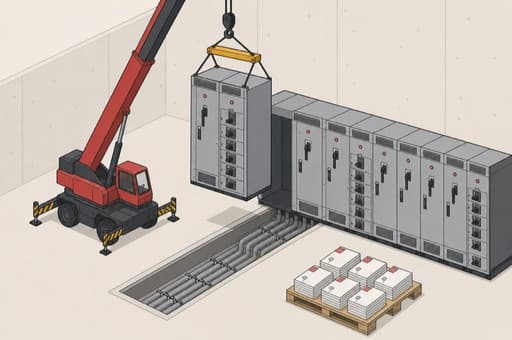
Power Control and Configured-to-Order (CENTERLINE, FLEXLINE, CUBIC)
Steel cabinet lineups that take incoming electricity and split it out to every motor in a building — drawn and built to order, long lead times. Rockwell's data-center power lane sits here: management calls it still small, growing at strong double digits.
Competes with Blokset switchboards and EcoStruxure Power (Schneider Electric) · Freedom and FlashGard motor control centers (Eaton) · MNS low-voltage switchgear (ABB)
In plain English
The grey metal lineups standing along a plant wall are where electricity arrives and gets divided: one heavy feed in, dozens of protected circuits out, each with its own switch and starter. CENTERLINE and FLEXLINE are those lineups; CUBIC, bought from a Danish maker in 2022, is the slimmer modular version.
None of it comes off a shelf. Each lineup is drawn for one specific building, then built, shipped and craned into place — which means long waits, and a rush of deliveries into Rockwell's fiscal year-end. The newest buyers are data centers, whose appetite for electricity, as management puts it, makes its own weather.
Lifecycle Services
Consulting, build-it-for-you plant projects, and the maintenance, monitoring and network-security contracts that follow. The one part shrinking: new orders came in just under shipments last quarter, and it earns the thinnest profit margin in the company.
Competes with Siemens customer services (Siemens) · Lifecycle Services (Emerson Electric) · ABB Service (ABB)
In plain English
Buying the parts is one thing; getting a plant to actually run is another. This is the arm that does the second job — people who design a production line, build it, install it, then stay on to keep it patched, watched and safe from intruders on the network.
Owners pay project by project, and that is the trouble: when food and drink makers and similar plants postpone building anything, the work simply is not there. Last quarter new orders landed slightly below what was shipped, the plainest sign of a thinning queue. The steadier half — maintenance and monitoring contracts — keeps billing, though customers have been slow-walking that spending too.
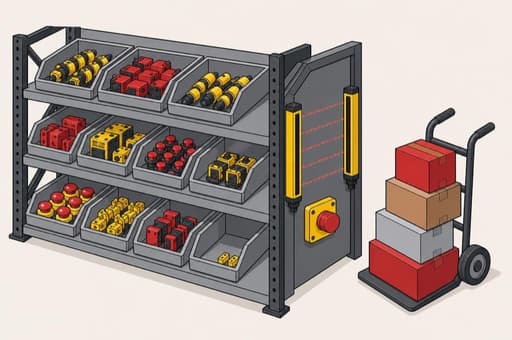
Safety, Sensing and Industrial Components
Light curtains, emergency stops, sensors and wiring blocks — the small parts a plant buys by the box. Roughly 65% of Rockwell's sales move through independent distributors, and this is the end most tied to them, so it turns first when plants stop restocking.
Competes with Safety sensors and light curtains (SICK AG) · PNOZ safety relays (Pilz) · SIRIUS safety components (Siemens)
In plain English
The unglamorous parts every guarded machine needs. A beam across an opening that halts the press when an arm crosses it. A red palm button by the door. Sensors that tell the controller a part has arrived, and the small blocks that wire all of it back in.
These leave by the carton, not by the contract. Distributors keep them in stock, plants and machine builders buy as they go, and reorders track how busy the floor is — which cuts both ways. When customers spent 2024 working down their own shelves, this was the first thing to stop selling; when they start building again, it is the first to move.
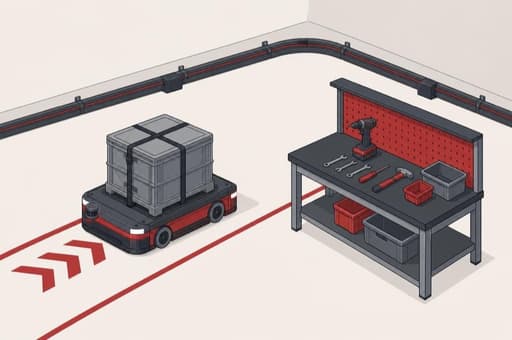
Production Logistics (OTTO robots, Independent Cart Technology)
Robot carts that ferry parts around a plant, plus magnetic tracks that carry products station to station without a conveyor belt. Small and growing, and it only sells when a customer approves new equipment money — management ties the demand to the shortage of workers.
Competes with MiR autonomous mobile robots (MiR) · Locus mobile robots (Locus Robotics) · XTS linear transport (Beckhoff) · ACOPOStrak linear transport (B&R)
In plain English
Two ways to shift a half-built product from one station to the next. One is a flat wheeled robot that drives itself across the floor — Rockwell's OTTO, which arrived with the 2023 purchase of Clearpath Robotics. The other is a magnetic track where every carrier is pulled along on its own, so items can bunch up, pause and dart off again instead of riding one belt at one speed.
Neither is a spare part. Both are equipment a customer has to budget for, so sales follow capital plans rather than daily output. What keeps the phone ringing is that plants cannot find enough people to do the carrying.


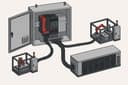 Logix control platformThe controller family everything else in the catalogue plugs into, growing at strong double digits through FY2026. A new kind of buyer showed up this year: data-center owners, using Logix where building-controls boxes normally sit. Watch whether that lane holds.
The controller family everything else in the catalogue plugs into, growing at strong double digits through FY2026. A new kind of buyer showed up this year: data-center owners, using Logix where building-controls boxes normally sit. Watch whether that lane holds.
In plain English
Think of a factory as a body: motors are the muscles, and a controller is the nerve centre that tells each one when to move and how fast. Logix is that nerve centre — a rack of modules bolted inside a metal cabinet, programmed through Rockwell's Studio 5000 software.
Plants pay per controller, but the money that follows is the point. Once a site's machines, engineers and spare-parts shelf are all built around Logix, changing brands means redoing years of work, so the next expansion buys Logix again. The newest buyers are operators of large data centers, standardising on it for the utility plants that serve their server halls.
Competes with SIMATIC S7-1500 controllers (Siemens) · Modicon M580 controllers (Schneider Electric) · MELSEC iQ-R controllers (Mitsubishi Electric)
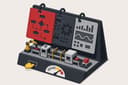 FactoryTalk software portfolioThe software layer that designs, runs and watches a Rockwell-controlled plant. Small in sales, outsized in strategy: it turns one-off hardware into subscriptions. Two new pieces shipped mid-2026. Watch whether the software half keeps outgrowing the services half.
The software layer that designs, runs and watches a Rockwell-controlled plant. Small in sales, outsized in strategy: it turns one-off hardware into subscriptions. Two new pieces shipped mid-2026. Watch whether the software half keeps outgrowing the services half.
In plain English
Every machine on a plant floor speaks its own dialect. FactoryTalk is the set of programs that gets them talking — screens operators watch, tools engineers design with, and a practice model of a whole production line that can be tested before a single bolt is turned.
Customers buy it by subscription, renewed year after year, which is why it counts for more than its size suggests: a drive sold is money once, a licence renewed is money again every year. Most of it goes into plants Rockwell already controls, so this grows by following the hardware rather than by winning strangers.
Competes with WinCC and Xcelerator (Siemens) · System Platform and PI (AVEVA) · Ignition SCADA (Inductive Automation)
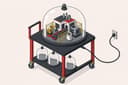 Plex Smart Manufacturing PlatformCloud software that runs a factory's paperwork — orders, quality records, scheduling — rented monthly. Small today, growing at the quick end of Rockwell's software, and being pushed out of its car-parts customer base into everyday consumer goods.
Cloud software that runs a factory's paperwork — orders, quality records, scheduling — rented monthly. Small today, growing at the quick end of Rockwell's software, and being pushed out of its car-parts customer base into everyday consumer goods.
In plain English
The paperwork side of making things — which orders are running, what passed inspection, what parts to buy, when each job is scheduled — normally lives in its own software. Plex is that software, except the plant reaches it over the internet: no server room, no install disc.
Each site pays a fee to keep using it, the way a household pays for streaming, and keeps paying as long as the line runs. Rockwell's advantage here is less the software than the doorway: its salespeople and distributors are already inside the building, and Plex walks in with them. The customer base began in car parts; the push now is toward food and household goods.
Competes with Opcenter manufacturing software (Siemens) · Digital Manufacturing Cloud (SAP) · Frontline Operations (Tulip)
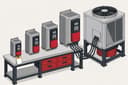 Drives and Motion (PowerFlex, Kinetix)The boxes that decide how fast a motor spins, plus the precise motors inside packaging machines. Growth this year was broad across every hardware line Rockwell sells. Low-cost Chinese entrants are closing the gap, and chiller makers are a new kind of buyer.
The boxes that decide how fast a motor spins, plus the precise motors inside packaging machines. Growth this year was broad across every hardware line Rockwell sells. Low-cost Chinese entrants are closing the gap, and chiller makers are a new kind of buyer.
In plain English
Plug a motor straight into the wall and it does exactly one thing: full speed. A drive sits in between and lets you dial that speed up and down — the difference between a tap that is either off or blasting and one you can actually turn. Done right it saves electricity and treats the machine more gently.
PowerFlex covers the everyday version and the heavy medium-voltage ones that run big fans and pumps; Kinetix covers the fussy end, motors that must stop on an exact spot thousands of times an hour. Machine builders and panel shops order them by the crate, mostly through distributors, and reorder with every machine they build.
Competes with ACS880 drives (ABB) · SINAMICS drives (Siemens) · AC drives and servo motors (Yaskawa Electric)
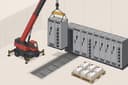 Power Control and Configured-to-Order (CENTERLINE, FLEXLINE, CUBIC)Steel cabinet lineups that take incoming electricity and split it out to every motor in a building — drawn and built to order, long lead times. Rockwell's data-center power lane sits here: management calls it still small, growing at strong double digits.
Steel cabinet lineups that take incoming electricity and split it out to every motor in a building — drawn and built to order, long lead times. Rockwell's data-center power lane sits here: management calls it still small, growing at strong double digits.
In plain English
The grey metal lineups standing along a plant wall are where electricity arrives and gets divided: one heavy feed in, dozens of protected circuits out, each with its own switch and starter. CENTERLINE and FLEXLINE are those lineups; CUBIC, bought from a Danish maker in 2022, is the slimmer modular version.
None of it comes off a shelf. Each lineup is drawn for one specific building, then built, shipped and craned into place — which means long waits, and a rush of deliveries into Rockwell's fiscal year-end. The newest buyers are data centers, whose appetite for electricity, as management puts it, makes its own weather.
Competes with Blokset switchboards and EcoStruxure Power (Schneider Electric) · Freedom and FlashGard motor control centers (Eaton) · MNS low-voltage switchgear (ABB)
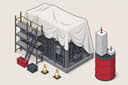 Lifecycle ServicesConsulting, build-it-for-you plant projects, and the maintenance, monitoring and network-security contracts that follow. The one part shrinking: new orders came in just under shipments last quarter, and it earns the thinnest profit margin in the company.
Consulting, build-it-for-you plant projects, and the maintenance, monitoring and network-security contracts that follow. The one part shrinking: new orders came in just under shipments last quarter, and it earns the thinnest profit margin in the company.
In plain English
Buying the parts is one thing; getting a plant to actually run is another. This is the arm that does the second job — people who design a production line, build it, install it, then stay on to keep it patched, watched and safe from intruders on the network.
Owners pay project by project, and that is the trouble: when food and drink makers and similar plants postpone building anything, the work simply is not there. Last quarter new orders landed slightly below what was shipped, the plainest sign of a thinning queue. The steadier half — maintenance and monitoring contracts — keeps billing, though customers have been slow-walking that spending too.
Competes with Siemens customer services (Siemens) · Lifecycle Services (Emerson Electric) · ABB Service (ABB)
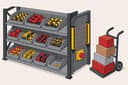 Safety, Sensing and Industrial ComponentsLight curtains, emergency stops, sensors and wiring blocks — the small parts a plant buys by the box. Roughly 65% of Rockwell's sales move through independent distributors, and this is the end most tied to them, so it turns first when plants stop restocking.
Light curtains, emergency stops, sensors and wiring blocks — the small parts a plant buys by the box. Roughly 65% of Rockwell's sales move through independent distributors, and this is the end most tied to them, so it turns first when plants stop restocking.
In plain English
The unglamorous parts every guarded machine needs. A beam across an opening that halts the press when an arm crosses it. A red palm button by the door. Sensors that tell the controller a part has arrived, and the small blocks that wire all of it back in.
These leave by the carton, not by the contract. Distributors keep them in stock, plants and machine builders buy as they go, and reorders track how busy the floor is — which cuts both ways. When customers spent 2024 working down their own shelves, this was the first thing to stop selling; when they start building again, it is the first to move.
Competes with Safety sensors and light curtains (SICK AG) · PNOZ safety relays (Pilz) · SIRIUS safety components (Siemens)
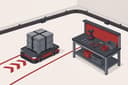 Production Logistics (OTTO robots, Independent Cart Technology)Robot carts that ferry parts around a plant, plus magnetic tracks that carry products station to station without a conveyor belt. Small and growing, and it only sells when a customer approves new equipment money — management ties the demand to the shortage of workers.
Robot carts that ferry parts around a plant, plus magnetic tracks that carry products station to station without a conveyor belt. Small and growing, and it only sells when a customer approves new equipment money — management ties the demand to the shortage of workers.
In plain English
Two ways to shift a half-built product from one station to the next. One is a flat wheeled robot that drives itself across the floor — Rockwell's OTTO, which arrived with the 2023 purchase of Clearpath Robotics. The other is a magnetic track where every carrier is pulled along on its own, so items can bunch up, pause and dart off again instead of riding one belt at one speed.
Neither is a spare part. Both are equipment a customer has to budget for, so sales follow capital plans rather than daily output. What keeps the phone ringing is that plants cannot find enough people to do the carrying.
Competes with MiR autonomous mobile robots (MiR) · Locus mobile robots (Locus Robotics) · XTS linear transport (Beckhoff) · ACOPOStrak linear transport (B&R)
Named in filings, launches and programs
- PlantPAxProduct lineLogix-based control system for plants that mix and process liquids; an integrator picked it for a lithium miner's expansion. Rivals Emerson, Honeywell and ABB.
- Stratix network and security infrastructureProduct lineHard-wearing network switches — the plumbing that carries data between controllers, screens and drives on a plant floor.
- PanelView visualization hardwareProduct lineThe operator terminals mounted on machines and cabinets, where the person running the line watches it and presses the buttons.
- Verve Industrial ProtectionPlatformFinds and tracks every device on a plant network and flags the vulnerable ones; GSK selected it across 33 sites over five years.
- FiixPlatformCloud maintenance scheduler for machines; Prometeon Tyre Group runs multiple sites on it, and a July 2026 partnership pairs it with Augury's reliability tools.
- Emulate3D / FactoryTalk Twin StudioProduct lineBuilds a working computer model of a production line so it can be tested and argued over before anything is built; ties into NVIDIA's Omniverse tools.
- FactoryTalk OrchestrationProductLaunched June 2026 to coordinate how material moves around a plant, OTTO robots included; it halved material-handling space at Rockwell's own Twinsburg, Ohio site.
- FactoryTalk ResilientEdgeProductLaunched June 2026: keeps the software on the plant floor running when the connection up to the cloud drops out.
- FactoryTalk Analytics VisionAIProductCamera-based inspection that judges whether a part passed; folded into Plex's quality records in August 2026.
- TechConnectIQ SupportServiceRemote support launched August 2026 for chasing down stoppages and pushing firmware updates without sending anyone to the site.
- Aalo Atomics Aalo-X control systemsCustomer program · AnnouncedPicked in July 2026 to supply control systems for a critical test reactor — small money, a foothold in advanced nuclear.
PlantPAxProduct line
Logix-based control system for plants that mix and process liquids; an integrator picked it for a lithium miner's expansion. Rivals Emerson, Honeywell and ABB.
Stratix network and security infrastructureProduct line
Hard-wearing network switches — the plumbing that carries data between controllers, screens and drives on a plant floor.
PanelView visualization hardwareProduct line
The operator terminals mounted on machines and cabinets, where the person running the line watches it and presses the buttons.
Verve Industrial ProtectionPlatform
Finds and tracks every device on a plant network and flags the vulnerable ones; GSK selected it across 33 sites over five years.
FiixPlatform
Cloud maintenance scheduler for machines; Prometeon Tyre Group runs multiple sites on it, and a July 2026 partnership pairs it with Augury's reliability tools.
Emulate3D / FactoryTalk Twin StudioProduct line
Builds a working computer model of a production line so it can be tested and argued over before anything is built; ties into NVIDIA's Omniverse tools.
FactoryTalk OrchestrationProduct
Launched June 2026 to coordinate how material moves around a plant, OTTO robots included; it halved material-handling space at Rockwell's own Twinsburg, Ohio site.
FactoryTalk ResilientEdgeProduct
Launched June 2026: keeps the software on the plant floor running when the connection up to the cloud drops out.
FactoryTalk Analytics VisionAIProduct
Camera-based inspection that judges whether a part passed; folded into Plex's quality records in August 2026.
TechConnectIQ SupportService
Remote support launched August 2026 for chasing down stoppages and pushing firmware updates without sending anyone to the site.
Aalo Atomics Aalo-X control systemsCustomer program · Announced
Picked in July 2026 to supply control systems for a critical test reactor — small money, a foothold in advanced nuclear.