
Sysco (SYY)
Distributes food and kitchen supplies across broadline, specialty, and chain-focused networks.
Something off on this page? Send us feedback.
Sysco is the supply line behind meals eaten away from home — it buys food by the truckload and drives it to restaurants, schools, hospitals and hotels. The money is made a case at a time, on a thin slice of each, so everything rides on volume. Now it has agreed to buy a chain of warehouse stores where restaurant owners shop in person and pay on the spot.
Item facts: FY2026 · year ended June 27, 2026, from filings, earnings calls and company pages.
Judgment weights, not filed revenue
The band summarizes business focus and direction. ~ marks estimates.
7 in detail · 14 more below
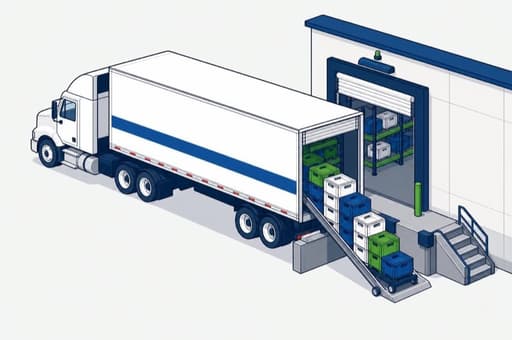
U.S. Broadline
Warehouses, trucks and a field sales force reaching roughly 730,000 customer locations, none of them a tenth of sales on its own. Close to six of every ten sales dollars sit here, but cases moved rose only 1.4% last year.
Competes with US Foods broadline (US Foods) · Performance Foodservice (Performance Food Group) · Broadline distribution (Gordon Food Service)
In plain English
Behind every restaurant you eat at there is a loading dock. Somebody has to bring the chicken, the cooking oil, the napkins and the takeaway boxes. That is this business.
Sysco buys those things from farms and factories by the truckload, holds them in its own warehouses, and sends its own drivers out on fixed routes. It earns the gap between what a case costs it and what the kitchen pays, and out of that gap come the warehouse, the fuel and the driver. What is left is thin, so the work is putting more cases on each truck and keeping the route short. Neighbourhood independents pay more per case than big chains do.
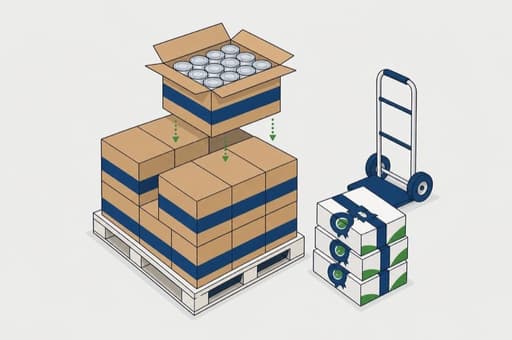
Sysco Brand
Sysco's own-label food — its version of a supermarket store brand. Roughly 46% of cases sold to neighbourhood restaurants carried one as of early 2025, and every point gained widens the margin on the same truckload.
Competes with Exclusive Brands (US Foods) · Foodservice brands (Tyson Foods) · Foodservice lines (Kraft Heinz)
In plain English
Every supermarket has a cheaper own label sitting beside the famous one. Sysco does the same with what it sells to kitchens: cooking oil, cheese, frozen vegetables and cured meats packed to Sysco's own recipe by outside factories, under family names like Block & Barrel, Portico and Butcher's Block.
The restaurant pays less than it would for the national brand, and Sysco keeps more of what it charges, because it is no longer splitting the price with a big food manufacturer. Extra margin on a case already riding the truck is the main way this business improves without selling one more case. If national brands cut their prices, the argument gets harder to make.
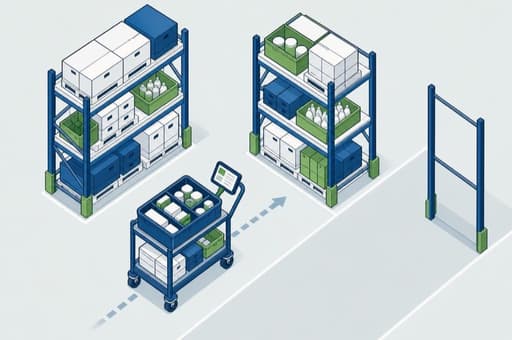
AI360 and the AI-Powered Efficiency Program
Software that tells a Sysco salesperson who to call and what to offer, plus a company-wide push to automate routing, picking and paperwork. The target is at least $500M of savings by FY2029, $100M of it in FY2027.
Competes with Digital ordering and technology tools (US Foods) · Ordering apps for independent restaurants (outside software makers) · Route-planning software (commercial software vendors)
In plain English
Two things share one name here. The first is an app in a sales colleague's hands that says, in effect: this customer buys your beef but never your cheese, go ask about cheese — and here is a cheaper swap that saves them money.
The second is plainer. Better routing software for the trucks, quicker picking in the warehouse, less paperwork in the back office. Neither sells a single extra case by itself. Both aim at the same sore spot: Sysco keeps under four cents of operating profit per dollar of sales, so a few hundred million dollars of cost removed matters more than it sounds. Management's own test is whether it shows up in profit.
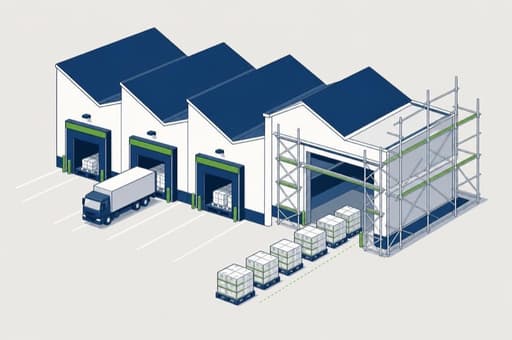
International Foodservice Operations
Delivered food in Canada, Britain, Ireland, France, Sweden and a few Caribbean and Central American markets. About a fifth of sales, up 7.6% last year with adjusted operating profit up 16.4% — the fastest-improving profit line.
Competes with Bidfood (Bidcorp) · Booker Wholesale (Tesco) · Gordon Food Service Canada (Gordon Food Service)
In plain English
Same trade, different countries. Sysco runs depots and delivery fleets in Canada, Britain, Ireland, France, Sweden and a handful of Caribbean and Central American markets, bringing food to restaurants and caterers the way it does at home. The British arm arrived with the purchase of Brakes, a long-established wholesaler there, a decade ago.
Why it is doing better than the rest: the simple levers still work here. Management credits added warehouse capacity, more salespeople and getting Sysco's own label onto the shelf — and profit grew in the mid-teens on sales that grew far less. British wholesale is a thin-margin trade, where the biggest names keep under two pence of every pound, so holding this pace is the thing to watch.
SYGMA
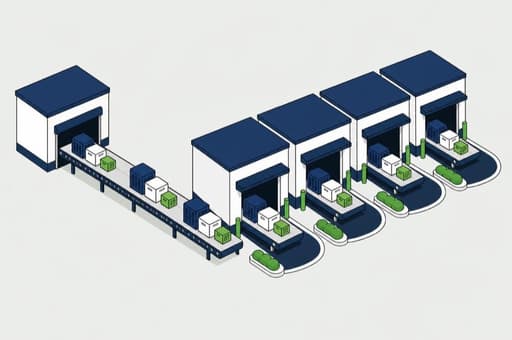
The arm that restocks fast-food chains from a menu head office chose. A tenth of sales for a sliver of profit — $94M on $8.6B — so Sysco has been dropping contracts that do not pay and repricing the rest.
Competes with PFG Customized (Performance Food Group) · McLane Foodservice (Berkshire Hathaway) · Single-chain distribution (Golden State Foods)
In plain English
Burger and taco chains do not let anyone choose what goes in the truck; head office does, down to the bun. A distributor built for that job carries a short list of approved items and restocks identical kitchens on a set schedule.
The chain pays close to a delivery fee for the work rather than a merchant's markup, which is why this part of Sysco carries about a tenth of its sales and keeps barely a penny of profit on each dollar. Sysco's answer has been margin over volume: walk away from contracts priced too low, reprice the rest, accept slower growth. The risk is blunt — lose one chain and a whole depot's volume leaves with it.
U.S. Specialty operations
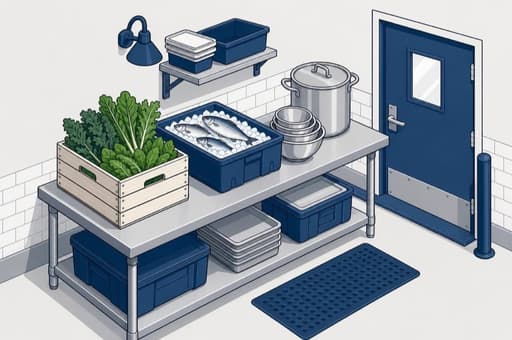
The niche arms: FreshPoint produce, Buckhead and Newport meat and seafood, Greco's Italian range, Edward Don's kitchen equipment. Close to a tenth of sales, sold into kitchens Sysco's trucks already visit.
Competes with TriMark equipment and supplies (TriMark USA) · Produce operations (US Foods) · Produce operations (Performance Food Group)
In plain English
A full-size delivery truck is good at cases of tinned tomatoes and bad at a crate of delicate lettuce or one specially cut steak. So Sysco keeps separate businesses for the fussy things: FreshPoint for produce, Buckhead and Newport for specialty meat and seafood, Greco for the Italian range, Edward Don for the pots, pans and dishwashers.
They sell to restaurants Sysco already delivers to, which is the point — one more line on an account you have costs far less to win than a new account. The catch is that fresh produce and protein are fragile trades: when a grower's supply gets cut off, this is the part that feels it first.
Jetro Restaurant Depot
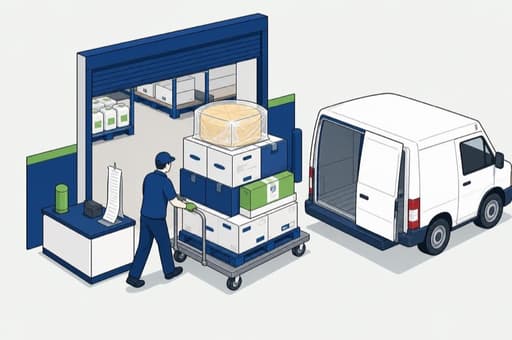
The agreed $29.1B purchase of a cash-and-carry chain — roughly 165 warehouse stores where about 725,000 small operators shop in person. Around $16B of sales in calendar 2025, with a close targeted for early 2027 once U.S. regulators finish looking at it.
Competes with CHEF'STORE (US Foods) · Gordon Food Service Store (Gordon Food Service) · Costco Business Center (Costco)
In plain English
Picture a no-frills warehouse where the shopper is a pizzeria owner with a van, not a family with a trolley. They drive in, load bulk packs onto a flat steel cart, pay at the register and drive back to the kitchen — no sales rep, no delivery run, no invoice to chase later.
Sysco does not own it yet. It agreed in March 2026 to buy the chain for about $29.1B, mostly with borrowed money, which would take what the company owes to roughly $34.4B. The draw is that these are the small independent operators Sysco makes the most money from, buying in a way its trucks cannot serve. Competition regulators have asked for more information first.


 U.S. BroadlineWarehouses, trucks and a field sales force reaching roughly 730,000 customer locations, none of them a tenth of sales on its own. Close to six of every ten sales dollars sit here, but cases moved rose only 1.4% last year.
Warehouses, trucks and a field sales force reaching roughly 730,000 customer locations, none of them a tenth of sales on its own. Close to six of every ten sales dollars sit here, but cases moved rose only 1.4% last year.
In plain English
Behind every restaurant you eat at there is a loading dock. Somebody has to bring the chicken, the cooking oil, the napkins and the takeaway boxes. That is this business.
Sysco buys those things from farms and factories by the truckload, holds them in its own warehouses, and sends its own drivers out on fixed routes. It earns the gap between what a case costs it and what the kitchen pays, and out of that gap come the warehouse, the fuel and the driver. What is left is thin, so the work is putting more cases on each truck and keeping the route short. Neighbourhood independents pay more per case than big chains do.
Competes with US Foods broadline (US Foods) · Performance Foodservice (Performance Food Group) · Broadline distribution (Gordon Food Service)
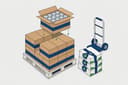 Sysco BrandSysco's own-label food — its version of a supermarket store brand. Roughly 46% of cases sold to neighbourhood restaurants carried one as of early 2025, and every point gained widens the margin on the same truckload.
Sysco's own-label food — its version of a supermarket store brand. Roughly 46% of cases sold to neighbourhood restaurants carried one as of early 2025, and every point gained widens the margin on the same truckload.
In plain English
Every supermarket has a cheaper own label sitting beside the famous one. Sysco does the same with what it sells to kitchens: cooking oil, cheese, frozen vegetables and cured meats packed to Sysco's own recipe by outside factories, under family names like Block & Barrel, Portico and Butcher's Block.
The restaurant pays less than it would for the national brand, and Sysco keeps more of what it charges, because it is no longer splitting the price with a big food manufacturer. Extra margin on a case already riding the truck is the main way this business improves without selling one more case. If national brands cut their prices, the argument gets harder to make.
Competes with Exclusive Brands (US Foods) · Foodservice brands (Tyson Foods) · Foodservice lines (Kraft Heinz)
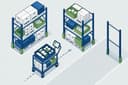 AI360 and the AI-Powered Efficiency ProgramSoftware that tells a Sysco salesperson who to call and what to offer, plus a company-wide push to automate routing, picking and paperwork. The target is at least $500M of savings by FY2029, $100M of it in FY2027.
Software that tells a Sysco salesperson who to call and what to offer, plus a company-wide push to automate routing, picking and paperwork. The target is at least $500M of savings by FY2029, $100M of it in FY2027.
In plain English
Two things share one name here. The first is an app in a sales colleague's hands that says, in effect: this customer buys your beef but never your cheese, go ask about cheese — and here is a cheaper swap that saves them money.
The second is plainer. Better routing software for the trucks, quicker picking in the warehouse, less paperwork in the back office. Neither sells a single extra case by itself. Both aim at the same sore spot: Sysco keeps under four cents of operating profit per dollar of sales, so a few hundred million dollars of cost removed matters more than it sounds. Management's own test is whether it shows up in profit.
Competes with Digital ordering and technology tools (US Foods) · Ordering apps for independent restaurants (outside software makers) · Route-planning software (commercial software vendors)
 International Foodservice OperationsDelivered food in Canada, Britain, Ireland, France, Sweden and a few Caribbean and Central American markets. About a fifth of sales, up 7.6% last year with adjusted operating profit up 16.4% — the fastest-improving profit line.
Delivered food in Canada, Britain, Ireland, France, Sweden and a few Caribbean and Central American markets. About a fifth of sales, up 7.6% last year with adjusted operating profit up 16.4% — the fastest-improving profit line.
In plain English
Same trade, different countries. Sysco runs depots and delivery fleets in Canada, Britain, Ireland, France, Sweden and a handful of Caribbean and Central American markets, bringing food to restaurants and caterers the way it does at home. The British arm arrived with the purchase of Brakes, a long-established wholesaler there, a decade ago.
Why it is doing better than the rest: the simple levers still work here. Management credits added warehouse capacity, more salespeople and getting Sysco's own label onto the shelf — and profit grew in the mid-teens on sales that grew far less. British wholesale is a thin-margin trade, where the biggest names keep under two pence of every pound, so holding this pace is the thing to watch.
Competes with Bidfood (Bidcorp) · Booker Wholesale (Tesco) · Gordon Food Service Canada (Gordon Food Service)
 SYGMAThe arm that restocks fast-food chains from a menu head office chose. A tenth of sales for a sliver of profit — $94M on $8.6B — so Sysco has been dropping contracts that do not pay and repricing the rest.
The arm that restocks fast-food chains from a menu head office chose. A tenth of sales for a sliver of profit — $94M on $8.6B — so Sysco has been dropping contracts that do not pay and repricing the rest.
In plain English
Burger and taco chains do not let anyone choose what goes in the truck; head office does, down to the bun. A distributor built for that job carries a short list of approved items and restocks identical kitchens on a set schedule.
The chain pays close to a delivery fee for the work rather than a merchant's markup, which is why this part of Sysco carries about a tenth of its sales and keeps barely a penny of profit on each dollar. Sysco's answer has been margin over volume: walk away from contracts priced too low, reprice the rest, accept slower growth. The risk is blunt — lose one chain and a whole depot's volume leaves with it.
Competes with PFG Customized (Performance Food Group) · McLane Foodservice (Berkshire Hathaway) · Single-chain distribution (Golden State Foods)
 U.S. Specialty operationsThe niche arms: FreshPoint produce, Buckhead and Newport meat and seafood, Greco's Italian range, Edward Don's kitchen equipment. Close to a tenth of sales, sold into kitchens Sysco's trucks already visit.
The niche arms: FreshPoint produce, Buckhead and Newport meat and seafood, Greco's Italian range, Edward Don's kitchen equipment. Close to a tenth of sales, sold into kitchens Sysco's trucks already visit.
In plain English
A full-size delivery truck is good at cases of tinned tomatoes and bad at a crate of delicate lettuce or one specially cut steak. So Sysco keeps separate businesses for the fussy things: FreshPoint for produce, Buckhead and Newport for specialty meat and seafood, Greco for the Italian range, Edward Don for the pots, pans and dishwashers.
They sell to restaurants Sysco already delivers to, which is the point — one more line on an account you have costs far less to win than a new account. The catch is that fresh produce and protein are fragile trades: when a grower's supply gets cut off, this is the part that feels it first.
Competes with TriMark equipment and supplies (TriMark USA) · Produce operations (US Foods) · Produce operations (Performance Food Group)
 Jetro Restaurant DepotThe agreed $29.1B purchase of a cash-and-carry chain — roughly 165 warehouse stores where about 725,000 small operators shop in person. Around $16B of sales in calendar 2025, with a close targeted for early 2027 once U.S. regulators finish looking at it.
The agreed $29.1B purchase of a cash-and-carry chain — roughly 165 warehouse stores where about 725,000 small operators shop in person. Around $16B of sales in calendar 2025, with a close targeted for early 2027 once U.S. regulators finish looking at it.
In plain English
Picture a no-frills warehouse where the shopper is a pizzeria owner with a van, not a family with a trolley. They drive in, load bulk packs onto a flat steel cart, pay at the register and drive back to the kitchen — no sales rep, no delivery run, no invoice to chase later.
Sysco does not own it yet. It agreed in March 2026 to buy the chain for about $29.1B, mostly with borrowed money, which would take what the company owes to roughly $34.4B. The draw is that these are the small independent operators Sysco makes the most money from, buying in a way its trucks cannot serve. Competition regulators have asked for more information first.
Competes with CHEF'STORE (US Foods) · Gordon Food Service Store (Gordon Food Service) · Costco Business Center (Costco)
Named in filings, launches and programs
- Guest Worldwide (Guest Supply)BrandHotel supply — amenities, linens, guest-room kit. $1,085M of FY2026 sales, slightly down; Asia-Pacific licensing deals signed with RODA and HAAN in mid-2026.
- Sysco GB (Brakes)BrandThe British business from the 2016 Brakes purchase; one 2026 UK wholesale study calls it the largest foodservice distributor in Britain.
- Sysco CanadaBrandThe Canadian network, Sysco's largest market outside the U.S., where it claims a leading share of delivered foodservice.
- FreshPointBrandThe produce arm, sourcing straight from growing regions for kitchens that want fresh rather than frozen.
- Edward Don & CompanyBrandRestaurant equipment and supplies, bought in 2023; an estimated $1.63B of 2025 sales against TriMark's $2.23B.
- Greco & SonsBrandThe anchor of Sysco's Italian specialty platform, one of the named companies inside the U.S. specialty group.
- Buckhead | Newport Meat & SeafoodBrandSpecialty meat and seafood houses, supplying the higher-touch cuts a full-line truck handles poorly.
- European Imports, Asian Foods and North Star SeafoodBrandThe remaining named U.S. specialty companies — imported goods, Asian ingredients and seafood, each sold into existing accounts.
- Supplies on the FlyPlatformOnline shop for kitchen equipment, Sysco-owned since 2009 and now run inside Edward Don.
- Sysco International Food GroupProduct lineThe export arm — Sysco product shipped to buyers abroad rather than delivered off its own routes.
- Sysco Your WayCustomer programLocal service model three years in market, clustering deliveries so neighbourhood routes sit closer together.
- Perks 2.0Customer program · RampingLoyalty program for the neighbourhood restaurants that order most often, introduced during FY2026.
- Total Team SellingCustomer programSelling model two years in market that brings specialists alongside the regular rep on the same account.
- Restaurant Depot new-store programCustomer program · AnnouncedPlan to add five or six warehouse stores a year after the deal closes, aiming past 125 geographies.
Guest Worldwide (Guest Supply)Brand
Hotel supply — amenities, linens, guest-room kit. $1,085M of FY2026 sales, slightly down; Asia-Pacific licensing deals signed with RODA and HAAN in mid-2026.
Sysco GB (Brakes)Brand
The British business from the 2016 Brakes purchase; one 2026 UK wholesale study calls it the largest foodservice distributor in Britain.
Sysco CanadaBrand
The Canadian network, Sysco's largest market outside the U.S., where it claims a leading share of delivered foodservice.
FreshPointBrand
The produce arm, sourcing straight from growing regions for kitchens that want fresh rather than frozen.
Edward Don & CompanyBrand
Restaurant equipment and supplies, bought in 2023; an estimated $1.63B of 2025 sales against TriMark's $2.23B.
Greco & SonsBrand
The anchor of Sysco's Italian specialty platform, one of the named companies inside the U.S. specialty group.
Buckhead | Newport Meat & SeafoodBrand
Specialty meat and seafood houses, supplying the higher-touch cuts a full-line truck handles poorly.
European Imports, Asian Foods and North Star SeafoodBrand
The remaining named U.S. specialty companies — imported goods, Asian ingredients and seafood, each sold into existing accounts.
Supplies on the FlyPlatform
Online shop for kitchen equipment, Sysco-owned since 2009 and now run inside Edward Don.
Sysco International Food GroupProduct line
The export arm — Sysco product shipped to buyers abroad rather than delivered off its own routes.
Sysco Your WayCustomer program
Local service model three years in market, clustering deliveries so neighbourhood routes sit closer together.
Perks 2.0Customer program · Ramping
Loyalty program for the neighbourhood restaurants that order most often, introduced during FY2026.
Total Team SellingCustomer program
Selling model two years in market that brings specialists alongside the regular rep on the same account.
Restaurant Depot new-store programCustomer program · Announced
Plan to add five or six warehouse stores a year after the deal closes, aiming past 125 geographies.