
Tempus AI (TEM)
Links clinical testing, multimodal data, and AI applications across precision medicine.
Something off on this page? Send us feedback.
Tempus runs large labs that read the genes in cancer patients' tumors and blood, and it sells those same records, with names removed, to drug companies studying medicines and building AI. The tests pay most of the bills and feed the data; the data side is growing faster, and government approvals could raise what the main tests earn. It still spends more than it brings in.
Item facts: FY2025 · year ended Dec 31, 2025, from filings, earnings calls and company pages.
Judgment weights, not filed revenue
The band summarizes business focus and direction. ~ marks estimates.
7 in detail · 15 more below
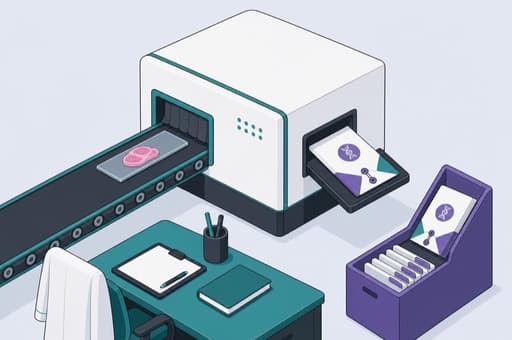
xT CDx and xT
Tempus's workhorse tumor-tissue gene test, reaching more than half of US cancer doctors. Watch the shift to the FDA-approved version: management values its Q2 2026 tumor-only approval at roughly $85M a year from 2027.
Competes with FoundationOne CDx (Foundation Medicine (Roche)) · Tissue tumor profiling (Caris Life Sciences) · Cancer gene testing (NeoGenomics)
In plain English
When someone has cancer, a surgeon often removes a sliver of the tumor. Tempus reads 648 genes in that sliver, hunting for the typo a particular drug is known to target, and hands the cancer doctor a list of treatments that might fit.
Insurers, Medicare, hospitals or patients pay per test. The FDA-approved version earns a higher, set Medicare price, so every test that moves onto it pays more. Until this year, a missing healthy-tissue sample bumped the order back to the ordinary, lower-paid version; a new approval lets it run on the tumor alone. Each patient tested also becomes a record Tempus can later license.
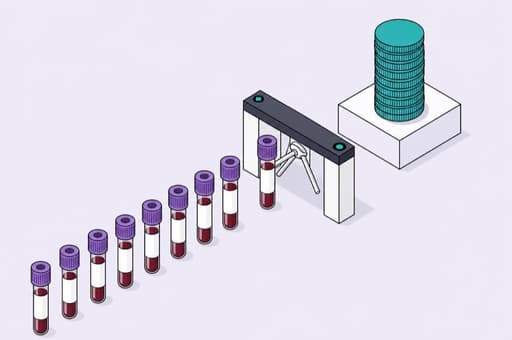
xF and xF+
Tempus's blood-based tumor gene test, growing slightly faster than the tissue test. It awaits FDA approval, expected in the second half of 2027; management puts the approved test at $250–300M a year.
Competes with Guardant360 CDx (Guardant Health) · FoundationOne Liquid CDx (Foundation Medicine (Roche))
In plain English
Not every patient has tumor tissue to spare. xF reads tumor genes from an ordinary blood sample instead — 105 genes in the basic version, 523 in xF+ — so a needle can stand in for a surgeon.
It is paid per test like the tissue version, but for now at a lower price. The prize is the FDA stamp: approved tests can earn a special, higher Medicare rate. Management assumes $7,500 a test, pointing to the roughly $8,400 that Guardant, a rival blood-test maker, already gets. Until approval arrives, this is the cheaper sidekick to the tissue test.
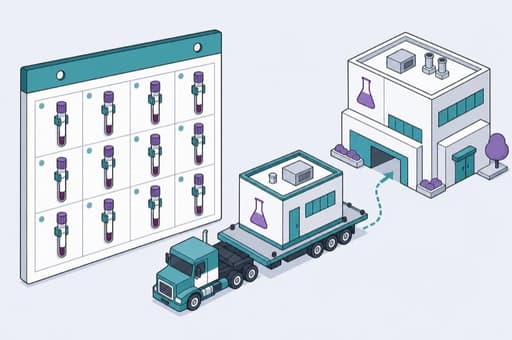
xM MRD (NeXT Personal Dx) and Personalis
Blood tests that check whether cancer is coming back, made by Personalis and sold by Tempus. Tests rose from 4,700 to 9,000 a quarter between Q4 2025 and Q2 2026; a pending ~$1.5B purchase of Personalis would bring the billing home.
Competes with Signatera (Natera) · RaDaR (NeoGenomics) · Oncodetect (Exact Sciences)
In plain English
The scariest question after cancer treatment is whether any is left. This test first maps the patient's own tumor, then searches later blood draws for that exact fingerprint. The lab work is done by Personalis, whose test Tempus's salespeople have sold since 2023.
Because Personalis sends the bills, very little of that money reaches Tempus today. That changes if the deal to buy Personalis closes, expected late 2026 or early 2027. The field already has a clear winner: Natera's Signatera held roughly three-quarters of this kind of testing in a 2023 court record.
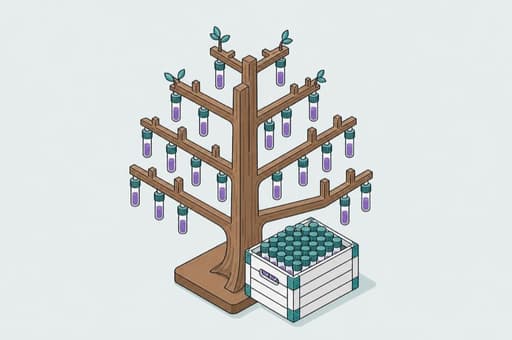
Ambry Genetics
Inherited-risk testing, bought for $600M in February 2025. Volume grew 29% in 2025, but Q2 2026 revenue rose just 5% to $107.4M; watch whether management's mid-teens growth target for late 2026 holds.
Competes with Hereditary-cancer panels (Myriad Genetics) · Whole-genome testing (GeneDx) · Hereditary testing (Quest Diagnostics)
In plain English
Some cancer risk runs in families, written into the genes a person is born with. Ambry tests people whose history puts them at risk — not just those already sick — to see if they carry one of those inherited risks. It also searches for the genetic cause of rare diseases.
Doctors order the tests; insurers or patients pay per test. Tempus's cancer sales team now offers Ambry's tests alongside its own. Management said it bought Ambry from Konica Minolta to widen its test menu, not for the data.
Insights
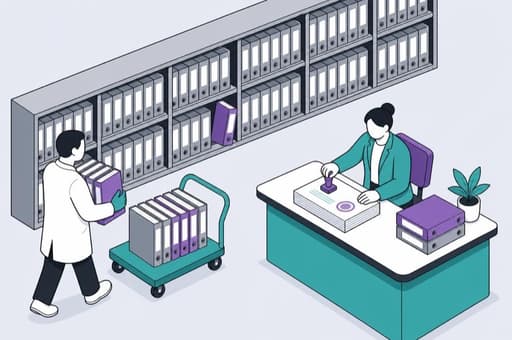
Licensing Tempus's patient records, names removed, to drugmakers, including 19 of the 20 largest. Revenue grew 36% in Q2 2026 and signed contracts topped $1.1B at end-2025, but three unnamed customers made up about a tenth of all Tempus revenue.
Competes with RWD360 and Patient360 (ConcertAI) · Claims data (IQVIA) · Patient-record data (Caris Life Sciences)
In plain English
Every test Tempus runs leaves a record behind: the tumor's genes, the treatment given, what happened next. Strip out the names, link millions of those records together, and drug companies will pay to study them as they develop medicines.
Some pay by the file; others sign deals lasting several years, and about half a dozen customers hold deals worth $100M or more each. More and more, they build AI models inside Tempus's own software, on its computers, instead of just taking the files. Existing clients spent about a quarter more last year than the year before.

AstraZeneca and Pathos foundation-model deals
Three-year deals signed in April 2025 to build a large cancer AI model from Tempus data; the first model passed its acceptance tests in Q2 2026. Watch for follow-on deals, and for the short-seller report and lawsuit that dispute them.
Competes with Oncology patient-record data (Flatiron Health) · Linked cancer patient data (ConcertAI)
In plain English
A commissioned build rather than a rental. AstraZeneca, the drugmaker that was Tempus's first strategic client, and Pathos, which licenses the result, are paying $200M in data and model fees to have one large, general-purpose AI model trained on Tempus's cancer records.
Tempus counts the money in roughly even slices across the three years, and the partners cover much of the computing bill. The first model has been delivered and accepted. In 2025 Spruce Point, a short-seller, attacked these deals and how they were booked, and a shareholder lawsuit followed.
Applications: Next, Algos, Paige and ECG
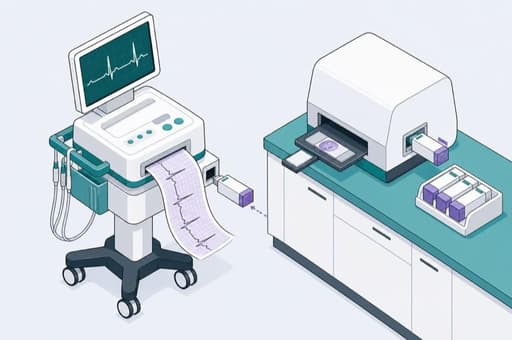
AI software for doctors: heart-trouble checks on routine ECGs, pathology-slide reading, flags for patients missing follow-up care. Revenue was $20.2M in 2025, up from $12.4M; the question is how much health systems will pay for AI software.
Competes with ECG-AI LEF (Anumana) · Ibex Prostate Detect (Ibex) · AI prostate therapy prediction (Artera)
In plain English
A routine ECG — the wavy heartbeat line printed at a checkup — can hide early signs of an irregular rhythm, a weak heart pump or high blood pressure in the lungs. Tempus sells FDA-cleared software that looks for them. Paige, bought in 2025, does similar work on pathology slides, the stained tissue a lab doctor studies under a microscope.
Health systems and drugmakers pay for these tools, and Tempus's test-add-on algorithms ride along with about 40% of its solid-tumor test orders. Management argues each extra use costs almost nothing once someone pays; for now it is a small line.


 xT CDx and xTTempus's workhorse tumor-tissue gene test, reaching more than half of US cancer doctors. Watch the shift to the FDA-approved version: management values its Q2 2026 tumor-only approval at roughly $85M a year from 2027.
Tempus's workhorse tumor-tissue gene test, reaching more than half of US cancer doctors. Watch the shift to the FDA-approved version: management values its Q2 2026 tumor-only approval at roughly $85M a year from 2027.
In plain English
When someone has cancer, a surgeon often removes a sliver of the tumor. Tempus reads 648 genes in that sliver, hunting for the typo a particular drug is known to target, and hands the cancer doctor a list of treatments that might fit.
Insurers, Medicare, hospitals or patients pay per test. The FDA-approved version earns a higher, set Medicare price, so every test that moves onto it pays more. Until this year, a missing healthy-tissue sample bumped the order back to the ordinary, lower-paid version; a new approval lets it run on the tumor alone. Each patient tested also becomes a record Tempus can later license.
Competes with FoundationOne CDx (Foundation Medicine (Roche)) · Tissue tumor profiling (Caris Life Sciences) · Cancer gene testing (NeoGenomics)
 xF and xF+Tempus's blood-based tumor gene test, growing slightly faster than the tissue test. It awaits FDA approval, expected in the second half of 2027; management puts the approved test at $250–300M a year.
Tempus's blood-based tumor gene test, growing slightly faster than the tissue test. It awaits FDA approval, expected in the second half of 2027; management puts the approved test at $250–300M a year.
In plain English
Not every patient has tumor tissue to spare. xF reads tumor genes from an ordinary blood sample instead — 105 genes in the basic version, 523 in xF+ — so a needle can stand in for a surgeon.
It is paid per test like the tissue version, but for now at a lower price. The prize is the FDA stamp: approved tests can earn a special, higher Medicare rate. Management assumes $7,500 a test, pointing to the roughly $8,400 that Guardant, a rival blood-test maker, already gets. Until approval arrives, this is the cheaper sidekick to the tissue test.
Competes with Guardant360 CDx (Guardant Health) · FoundationOne Liquid CDx (Foundation Medicine (Roche))
 xM MRD (NeXT Personal Dx) and PersonalisBlood tests that check whether cancer is coming back, made by Personalis and sold by Tempus. Tests rose from 4,700 to 9,000 a quarter between Q4 2025 and Q2 2026; a pending ~$1.5B purchase of Personalis would bring the billing home.
Blood tests that check whether cancer is coming back, made by Personalis and sold by Tempus. Tests rose from 4,700 to 9,000 a quarter between Q4 2025 and Q2 2026; a pending ~$1.5B purchase of Personalis would bring the billing home.
In plain English
The scariest question after cancer treatment is whether any is left. This test first maps the patient's own tumor, then searches later blood draws for that exact fingerprint. The lab work is done by Personalis, whose test Tempus's salespeople have sold since 2023.
Because Personalis sends the bills, very little of that money reaches Tempus today. That changes if the deal to buy Personalis closes, expected late 2026 or early 2027. The field already has a clear winner: Natera's Signatera held roughly three-quarters of this kind of testing in a 2023 court record.
Competes with Signatera (Natera) · RaDaR (NeoGenomics) · Oncodetect (Exact Sciences)
 Ambry GeneticsInherited-risk testing, bought for $600M in February 2025. Volume grew 29% in 2025, but Q2 2026 revenue rose just 5% to $107.4M; watch whether management's mid-teens growth target for late 2026 holds.
Inherited-risk testing, bought for $600M in February 2025. Volume grew 29% in 2025, but Q2 2026 revenue rose just 5% to $107.4M; watch whether management's mid-teens growth target for late 2026 holds.
In plain English
Some cancer risk runs in families, written into the genes a person is born with. Ambry tests people whose history puts them at risk — not just those already sick — to see if they carry one of those inherited risks. It also searches for the genetic cause of rare diseases.
Doctors order the tests; insurers or patients pay per test. Tempus's cancer sales team now offers Ambry's tests alongside its own. Management said it bought Ambry from Konica Minolta to widen its test menu, not for the data.
Competes with Hereditary-cancer panels (Myriad Genetics) · Whole-genome testing (GeneDx) · Hereditary testing (Quest Diagnostics)
 InsightsLicensing Tempus's patient records, names removed, to drugmakers, including 19 of the 20 largest. Revenue grew 36% in Q2 2026 and signed contracts topped $1.1B at end-2025, but three unnamed customers made up about a tenth of all Tempus revenue.
Licensing Tempus's patient records, names removed, to drugmakers, including 19 of the 20 largest. Revenue grew 36% in Q2 2026 and signed contracts topped $1.1B at end-2025, but three unnamed customers made up about a tenth of all Tempus revenue.
In plain English
Every test Tempus runs leaves a record behind: the tumor's genes, the treatment given, what happened next. Strip out the names, link millions of those records together, and drug companies will pay to study them as they develop medicines.
Some pay by the file; others sign deals lasting several years, and about half a dozen customers hold deals worth $100M or more each. More and more, they build AI models inside Tempus's own software, on its computers, instead of just taking the files. Existing clients spent about a quarter more last year than the year before.
Competes with RWD360 and Patient360 (ConcertAI) · Claims data (IQVIA) · Patient-record data (Caris Life Sciences)
 AstraZeneca and Pathos foundation-model dealsThree-year deals signed in April 2025 to build a large cancer AI model from Tempus data; the first model passed its acceptance tests in Q2 2026. Watch for follow-on deals, and for the short-seller report and lawsuit that dispute them.
Three-year deals signed in April 2025 to build a large cancer AI model from Tempus data; the first model passed its acceptance tests in Q2 2026. Watch for follow-on deals, and for the short-seller report and lawsuit that dispute them.
In plain English
A commissioned build rather than a rental. AstraZeneca, the drugmaker that was Tempus's first strategic client, and Pathos, which licenses the result, are paying $200M in data and model fees to have one large, general-purpose AI model trained on Tempus's cancer records.
Tempus counts the money in roughly even slices across the three years, and the partners cover much of the computing bill. The first model has been delivered and accepted. In 2025 Spruce Point, a short-seller, attacked these deals and how they were booked, and a shareholder lawsuit followed.
Competes with Oncology patient-record data (Flatiron Health) · Linked cancer patient data (ConcertAI)
 Applications: Next, Algos, Paige and ECGAI software for doctors: heart-trouble checks on routine ECGs, pathology-slide reading, flags for patients missing follow-up care. Revenue was $20.2M in 2025, up from $12.4M; the question is how much health systems will pay for AI software.
AI software for doctors: heart-trouble checks on routine ECGs, pathology-slide reading, flags for patients missing follow-up care. Revenue was $20.2M in 2025, up from $12.4M; the question is how much health systems will pay for AI software.
In plain English
A routine ECG — the wavy heartbeat line printed at a checkup — can hide early signs of an irregular rhythm, a weak heart pump or high blood pressure in the lungs. Tempus sells FDA-cleared software that looks for them. Paige, bought in 2025, does similar work on pathology slides, the stained tissue a lab doctor studies under a microscope.
Health systems and drugmakers pay for these tools, and Tempus's test-add-on algorithms ride along with about 40% of its solid-tumor test orders. Management argues each extra use costs almost nothing once someone pays; for now it is a small line.
Competes with ECG-AI LEF (Anumana) · Ibex Prostate Detect (Ibex) · AI prostate therapy prediction (Artera)
Named in filings, launches and programs
- xRProductReads the tumor's gene activity alongside xT; adding it matched 43.4% of patients to a therapy, versus 29.6% with DNA alone.
- xEProductWhole-exome cancer test that reads all of a tumor's protein-making genes rather than a set list.
- xHProduct · RampingTest for blood cancers that reads a patient's entire DNA, set to go live in 2026.
- xG / xG+ProductTempus's own 52- and 88-gene panels for inherited cancer risk.
- RAREProduct · RampingAmbry's rare-disease testing across a patient's full set of genes, about $3,000 a test, up against GeneDx.
- OneOmeBrand · RampingBought November 2025; tests how a person's genes shape their response to medicines. Launched nationally in July 2026.
- Tempus PreviewServiceA first look at key tumor traits in about 24 hours, launched in Q2 2026.
- Trials / TIME networkServiceMatches patients to drug trials and helps sign them up; a roughly $20M contract-research side business is being scaled back.
- LensPlatformThe workspace where drugmakers study Tempus data and build models; Gilead took company-wide access in 2026.
- HubProductThe app doctors use to order Tempus tests and read results.
- Deep 6 AIBrandBought in early 2025 to connect Tempus to more hospitals' patient-record systems.
- Merck collaborationCustomer programMulti-year data and modeling deal on tumor traits that guide treatment, begun in early 2026.
- Drugmaker data customersCustomer programGSK, BMS, Gilead, Takeda, BioNTech, Daiichi Sankyo, Incyte and others license Tempus data; Q2 2026 added about $200M of new licenses.
- Recursion agreementsCustomer programRecursion's data license extended to November 2029; Tempus in turn licenses Recursion's AI model of gene activity.
- 100,000-genome datasetProduct · AnnouncedEffort announced September 2026 to build a research dataset of 100,000 whole genomes tracked over time.
xRProduct
Reads the tumor's gene activity alongside xT; adding it matched 43.4% of patients to a therapy, versus 29.6% with DNA alone.
xEProduct
Whole-exome cancer test that reads all of a tumor's protein-making genes rather than a set list.
xHProduct · Ramping
Test for blood cancers that reads a patient's entire DNA, set to go live in 2026.
xG / xG+Product
Tempus's own 52- and 88-gene panels for inherited cancer risk.
RAREProduct · Ramping
Ambry's rare-disease testing across a patient's full set of genes, about $3,000 a test, up against GeneDx.
OneOmeBrand · Ramping
Bought November 2025; tests how a person's genes shape their response to medicines. Launched nationally in July 2026.
Tempus PreviewService
A first look at key tumor traits in about 24 hours, launched in Q2 2026.
Trials / TIME networkService
Matches patients to drug trials and helps sign them up; a roughly $20M contract-research side business is being scaled back.
LensPlatform
The workspace where drugmakers study Tempus data and build models; Gilead took company-wide access in 2026.
HubProduct
The app doctors use to order Tempus tests and read results.
Deep 6 AIBrand
Bought in early 2025 to connect Tempus to more hospitals' patient-record systems.
Merck collaborationCustomer program
Multi-year data and modeling deal on tumor traits that guide treatment, begun in early 2026.
Drugmaker data customersCustomer program
GSK, BMS, Gilead, Takeda, BioNTech, Daiichi Sankyo, Incyte and others license Tempus data; Q2 2026 added about $200M of new licenses.
Recursion agreementsCustomer program
Recursion's data license extended to November 2029; Tempus in turn licenses Recursion's AI model of gene activity.
100,000-genome datasetProduct · Announced
Effort announced September 2026 to build a research dataset of 100,000 whole genomes tracked over time.