
Tradeweb (TW)
Connects market participants across multi-asset electronic trading workflows.
Something off on this page? Send us feedback.
Tradeweb runs the screens where big investors, banks, wealth advisers and company treasurers buy and sell bonds, and it takes a sliver of a fee on every trade that crosses them. Government bonds and interest-rate deals still bring in more than everything else combined. Corporate bonds grow slowly and are the fight management says matters most, while the prices its own trading throws off are quietly sold as data.
Item facts: FY2025 · year ended Dec 31, 2025, from filings, earnings calls and company pages.
Judgment weights, not filed revenue
The band summarizes business focus and direction. ~ marks estimates.
8 in detail · 10 more below
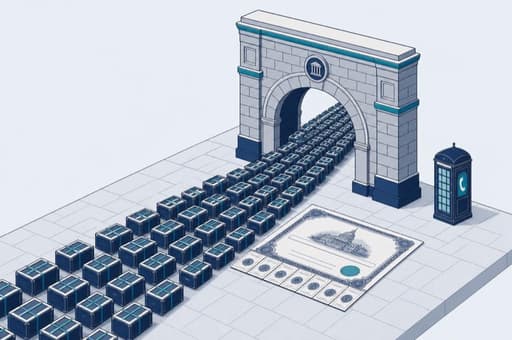
Rates
Government bonds, interest-rate swaps and mortgage bonds — 53.3% of revenue, up 20.8% last year. Tradeweb handled roughly a fifth of all U.S. Treasury trading last quarter; watch whether that share keeps creeping up.
Competes with Bond price requests on the terminal (Bloomberg) · BrokerTec Treasury trading venue (CME Group) · Trading bonds over the phone (Voice brokers)
In plain English
Governments borrow constantly, and the paper they hand out — Treasury bonds — changes hands every day among asset managers, hedge funds, banks and central banks. Tradeweb is the screen where that swapping happens: a buyer asks several banks for a price at once, picks one, and the trade is done on the screen. Sitting alongside are interest-rate swaps, private deals to exchange a fixed rate of interest for a floating one.
The money is mostly per trade rather than per month: a small fee scaled to the size of each deal, so what Tradeweb earns follows how much changes hands — and a lot of this business still moves over the telephone.

Dealerweb
The venue where banks and trading firms deal with each other instead of with customers. Its $400.8M last year is already counted inside the bond and cash figures beside it, and it grew 3.9% while the company grew 18.9%.
Competes with BrokerTec dealer-to-dealer Treasury venue (CME Group) · Open Trading, where clients face each other (MarketAxess) · Brokers arranging big block trades by phone (Inter-dealer brokers)
In plain English
Picture a wholesale market that opens before the shops do: the dealers who will later quote prices to investors first trade among themselves to get the right stock onto their books. Dealerweb is that early-morning market, for U.S. government bonds, mortgage bonds and short-term loans of cash against bonds.
Its customers are the banks and the fast electronic trading firms. They pay per trade, and because the amounts are enormous the fee on each million is thin. This is the mature end of the network — huge volume, small fee, and growth well behind the company as a whole.
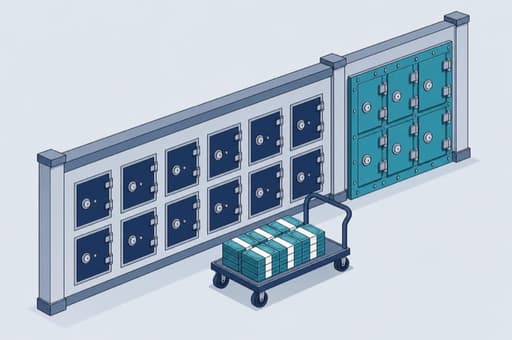
Money Markets & the ICD Portal
Overnight lending against bonds, plus ICD, the $785M portal where company treasurers park spare cash. The line jumped 50.9% in 2025 on that purchase, then slowed to 5.6% growth once the new business stopped being new.
Competes with Cachematrix corporate cash portal (BlackRock) · GLMX short-term lending venue (GLMX) · BrokerTec Quote short-term lending (CME Group)
In plain English
Two kinds of customer, one short-term-money business. Banks and funds borrow cash for a night or two and hand over bonds as security until they pay it back; Tradeweb runs the screen where those short loans get arranged.
The other half arrived by purchase. ICD is a portal a company's finance team logs into to park idle cash in money-market funds — the corporate version of an app that shops several savings accounts for you. It serves more than 500 organisations across over 45 countries, and Tradeweb earns when money moves through it. What sets the pace is how much spare cash companies are sitting on.
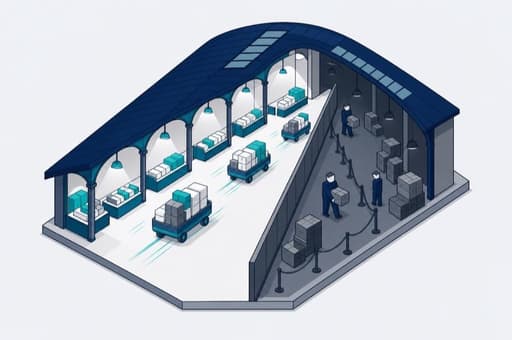
Credit
Corporate bonds, municipal bonds and contracts that pay out if a borrower defaults — a quarter of revenue but the slow one, up 6.3% in 2025 and 3.3% last quarter. Roughly half of U.S. top-rated corporate bond trading is still done by voice.
Competes with Open Trading, where clients face each other (MarketAxess) · Corporate bond price requests (Bloomberg) · BondPoint small-lot bond venue (Intercontinental Exchange)
In plain English
When a company borrows, it issues bonds, and those are far more awkward to trade than government debt: thousands of different ones, most sitting untouched for weeks. So the screen offers several ways in — ask a handful of dealers for a price, hand a whole list of bonds to one dealer at a single price, or put an order in front of everyone at once and see who bites.
Every completed trade pays a fee. Growth here is not about the market getting bigger; it is about prising trades off the telephone. And MarketAxess, the rival that let investors trade straight with each other, is being bought by the exchange group ICE.
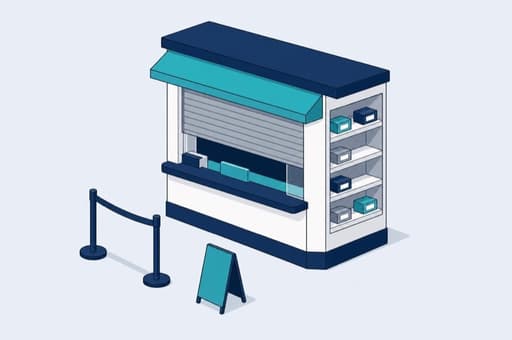
Tradeweb Direct
The channel for financial advisers buying small parcels of bonds for individual clients. It is the one line going backwards — down about 12% last quarter as savers found better rates elsewhere — and its revenue sits inside the bond figures beside it.
Competes with BondPoint and BondX small-lot bonds (Intercontinental Exchange) · Adviser-facing bond screens (Bloomberg)
In plain English
Your adviser wants twenty thousand dollars of a municipal bond for you. That is a crumb by Wall Street standards, too small for the big desks to bother with, and Tradeweb Direct is the counter where such small parcels change hands — municipal bonds, corporate bonds, bank savings certificates and Treasuries.
Wealth platforms and advisers pay per trade; dealers supply the small inventory. The catch is that ordinary savers compare. When bank deposits and cash funds pay well, advisers stop buying bonds for clients, and this line has now shrunk for two quarters in a row.
Equities
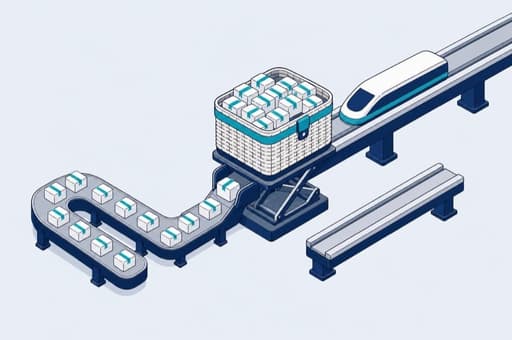
Trading ready-made baskets of investments — mostly exchange-traded funds — plus side bets on share prices and bonds that can turn into shares. Small at 6.2% of revenue but quick, up 21.9% in 2025. Bloomberg's screen is still slightly bigger in European fund trading.
Competes with ETF price requests on the terminal (Bloomberg) · RFQ-hub ETF quoting venue (MarketAxess) · Exchange ETF quote books (Deutsche Börse)
In plain English
An exchange-traded fund is a ready-made basket: buy one share of it and you own a sliver of hundreds of bonds or shares at once. Moving a big block of that basket on an exchange is clumsy, so an institution asks a few specialist quoting firms to price the whole block in one go — and Tradeweb is where the asking happens.
Each block traded pays a fee, and for the size involved it is a richer fee than government bonds earn. Two things shape this corner: a rival's screen is slightly larger in Europe, and an ETF trade tends to drag the underlying bond trades along behind it.
Market Data
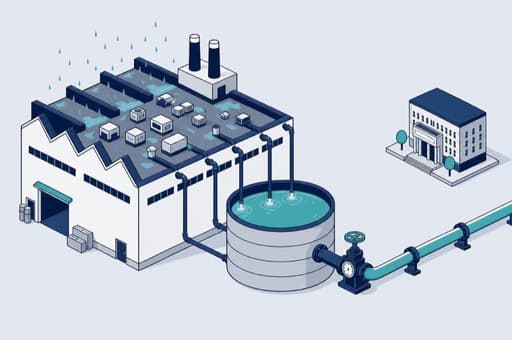
Selling the prices and flow its own venues generate: 6.5% of revenue, up 22.6% last quarter. Most of it is a single licence to LSEG, which at about 4.5% of revenue is the largest customer Tradeweb names — and is also its controlling owner.
Competes with ICE Data Services bond pricing (Intercontinental Exchange) · BVAL bond valuations (Bloomberg) · CP+ composite bond prices (MarketAxess)
In plain English
Every trade crossing these screens leaves a trail — what changed hands, at what price, at what moment. That record is worth money to anyone who has to put a value on a bond that has not traded in weeks, and most bonds have not. So Tradeweb packages it and sells it, and has built a pricing engine, Ai-Price, that estimates what a rarely traded bond is worth.
The bulk arrives as a single licence fee from LSEG, the London Stock Exchange group, which distributes the data and also happens to control the company. That deal was renewed for three years from late 2025 with its value rising 9% a year.
Canton Network & digital-asset ventures
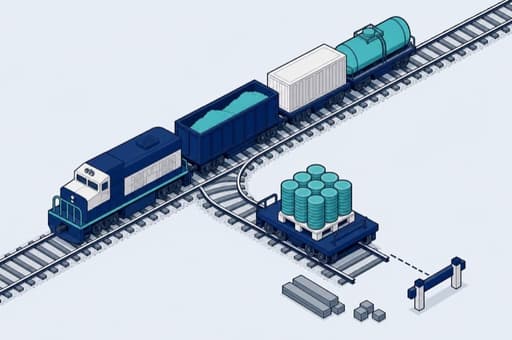
Tradeweb helps operate Canton, a shared record-keeping network for trades, and is paid in the network's own coins — $5.4M worth in the first half of 2026 inside a 1.8% slice of revenue that grew 47.7% last year. Small, lumpy, tied to a coin price.
Competes with Rival Canton network operators (DRW) · Digital Asset Platform (Goldman Sachs) · Digital versions of funds on a network (Securitize)
In plain English
A shared digital record book that a group of financial firms keeps together rather than each keeping its own — a U.S. Treasuries trade ran across it in mid-2026 with Tradeweb's help. Tradeweb is one of the firms that helps run that record book, and the network pays its operators in its own coins; Tradeweb holds about six and a half billion of them, valued near $230M at the last telling.
Option value rather than a business, so far. The growth rates look spectacular because the starting point is almost nothing, and the value swings with the coin price and the number of firms sharing the rewards, neither of which Tradeweb controls.


 RatesGovernment bonds, interest-rate swaps and mortgage bonds — 53.3% of revenue, up 20.8% last year. Tradeweb handled roughly a fifth of all U.S. Treasury trading last quarter; watch whether that share keeps creeping up.
Government bonds, interest-rate swaps and mortgage bonds — 53.3% of revenue, up 20.8% last year. Tradeweb handled roughly a fifth of all U.S. Treasury trading last quarter; watch whether that share keeps creeping up.
In plain English
Governments borrow constantly, and the paper they hand out — Treasury bonds — changes hands every day among asset managers, hedge funds, banks and central banks. Tradeweb is the screen where that swapping happens: a buyer asks several banks for a price at once, picks one, and the trade is done on the screen. Sitting alongside are interest-rate swaps, private deals to exchange a fixed rate of interest for a floating one.
The money is mostly per trade rather than per month: a small fee scaled to the size of each deal, so what Tradeweb earns follows how much changes hands — and a lot of this business still moves over the telephone.
Competes with Bond price requests on the terminal (Bloomberg) · BrokerTec Treasury trading venue (CME Group) · Trading bonds over the phone (Voice brokers)
 DealerwebThe venue where banks and trading firms deal with each other instead of with customers. Its $400.8M last year is already counted inside the bond and cash figures beside it, and it grew 3.9% while the company grew 18.9%.
The venue where banks and trading firms deal with each other instead of with customers. Its $400.8M last year is already counted inside the bond and cash figures beside it, and it grew 3.9% while the company grew 18.9%.
In plain English
Picture a wholesale market that opens before the shops do: the dealers who will later quote prices to investors first trade among themselves to get the right stock onto their books. Dealerweb is that early-morning market, for U.S. government bonds, mortgage bonds and short-term loans of cash against bonds.
Its customers are the banks and the fast electronic trading firms. They pay per trade, and because the amounts are enormous the fee on each million is thin. This is the mature end of the network — huge volume, small fee, and growth well behind the company as a whole.
Competes with BrokerTec dealer-to-dealer Treasury venue (CME Group) · Open Trading, where clients face each other (MarketAxess) · Brokers arranging big block trades by phone (Inter-dealer brokers)
 Money Markets & the ICD PortalOvernight lending against bonds, plus ICD, the $785M portal where company treasurers park spare cash. The line jumped 50.9% in 2025 on that purchase, then slowed to 5.6% growth once the new business stopped being new.
Overnight lending against bonds, plus ICD, the $785M portal where company treasurers park spare cash. The line jumped 50.9% in 2025 on that purchase, then slowed to 5.6% growth once the new business stopped being new.
In plain English
Two kinds of customer, one short-term-money business. Banks and funds borrow cash for a night or two and hand over bonds as security until they pay it back; Tradeweb runs the screen where those short loans get arranged.
The other half arrived by purchase. ICD is a portal a company's finance team logs into to park idle cash in money-market funds — the corporate version of an app that shops several savings accounts for you. It serves more than 500 organisations across over 45 countries, and Tradeweb earns when money moves through it. What sets the pace is how much spare cash companies are sitting on.
Competes with Cachematrix corporate cash portal (BlackRock) · GLMX short-term lending venue (GLMX) · BrokerTec Quote short-term lending (CME Group)
 CreditCorporate bonds, municipal bonds and contracts that pay out if a borrower defaults — a quarter of revenue but the slow one, up 6.3% in 2025 and 3.3% last quarter. Roughly half of U.S. top-rated corporate bond trading is still done by voice.
Corporate bonds, municipal bonds and contracts that pay out if a borrower defaults — a quarter of revenue but the slow one, up 6.3% in 2025 and 3.3% last quarter. Roughly half of U.S. top-rated corporate bond trading is still done by voice.
In plain English
When a company borrows, it issues bonds, and those are far more awkward to trade than government debt: thousands of different ones, most sitting untouched for weeks. So the screen offers several ways in — ask a handful of dealers for a price, hand a whole list of bonds to one dealer at a single price, or put an order in front of everyone at once and see who bites.
Every completed trade pays a fee. Growth here is not about the market getting bigger; it is about prising trades off the telephone. And MarketAxess, the rival that let investors trade straight with each other, is being bought by the exchange group ICE.
Competes with Open Trading, where clients face each other (MarketAxess) · Corporate bond price requests (Bloomberg) · BondPoint small-lot bond venue (Intercontinental Exchange)
 Tradeweb DirectThe channel for financial advisers buying small parcels of bonds for individual clients. It is the one line going backwards — down about 12% last quarter as savers found better rates elsewhere — and its revenue sits inside the bond figures beside it.
The channel for financial advisers buying small parcels of bonds for individual clients. It is the one line going backwards — down about 12% last quarter as savers found better rates elsewhere — and its revenue sits inside the bond figures beside it.
In plain English
Your adviser wants twenty thousand dollars of a municipal bond for you. That is a crumb by Wall Street standards, too small for the big desks to bother with, and Tradeweb Direct is the counter where such small parcels change hands — municipal bonds, corporate bonds, bank savings certificates and Treasuries.
Wealth platforms and advisers pay per trade; dealers supply the small inventory. The catch is that ordinary savers compare. When bank deposits and cash funds pay well, advisers stop buying bonds for clients, and this line has now shrunk for two quarters in a row.
Competes with BondPoint and BondX small-lot bonds (Intercontinental Exchange) · Adviser-facing bond screens (Bloomberg)
 EquitiesTrading ready-made baskets of investments — mostly exchange-traded funds — plus side bets on share prices and bonds that can turn into shares. Small at 6.2% of revenue but quick, up 21.9% in 2025. Bloomberg's screen is still slightly bigger in European fund trading.
Trading ready-made baskets of investments — mostly exchange-traded funds — plus side bets on share prices and bonds that can turn into shares. Small at 6.2% of revenue but quick, up 21.9% in 2025. Bloomberg's screen is still slightly bigger in European fund trading.
In plain English
An exchange-traded fund is a ready-made basket: buy one share of it and you own a sliver of hundreds of bonds or shares at once. Moving a big block of that basket on an exchange is clumsy, so an institution asks a few specialist quoting firms to price the whole block in one go — and Tradeweb is where the asking happens.
Each block traded pays a fee, and for the size involved it is a richer fee than government bonds earn. Two things shape this corner: a rival's screen is slightly larger in Europe, and an ETF trade tends to drag the underlying bond trades along behind it.
Competes with ETF price requests on the terminal (Bloomberg) · RFQ-hub ETF quoting venue (MarketAxess) · Exchange ETF quote books (Deutsche Börse)
 Market DataSelling the prices and flow its own venues generate: 6.5% of revenue, up 22.6% last quarter. Most of it is a single licence to LSEG, which at about 4.5% of revenue is the largest customer Tradeweb names — and is also its controlling owner.
Selling the prices and flow its own venues generate: 6.5% of revenue, up 22.6% last quarter. Most of it is a single licence to LSEG, which at about 4.5% of revenue is the largest customer Tradeweb names — and is also its controlling owner.
In plain English
Every trade crossing these screens leaves a trail — what changed hands, at what price, at what moment. That record is worth money to anyone who has to put a value on a bond that has not traded in weeks, and most bonds have not. So Tradeweb packages it and sells it, and has built a pricing engine, Ai-Price, that estimates what a rarely traded bond is worth.
The bulk arrives as a single licence fee from LSEG, the London Stock Exchange group, which distributes the data and also happens to control the company. That deal was renewed for three years from late 2025 with its value rising 9% a year.
Competes with ICE Data Services bond pricing (Intercontinental Exchange) · BVAL bond valuations (Bloomberg) · CP+ composite bond prices (MarketAxess)
 Canton Network & digital-asset venturesTradeweb helps operate Canton, a shared record-keeping network for trades, and is paid in the network's own coins — $5.4M worth in the first half of 2026 inside a 1.8% slice of revenue that grew 47.7% last year. Small, lumpy, tied to a coin price.
Tradeweb helps operate Canton, a shared record-keeping network for trades, and is paid in the network's own coins — $5.4M worth in the first half of 2026 inside a 1.8% slice of revenue that grew 47.7% last year. Small, lumpy, tied to a coin price.
In plain English
A shared digital record book that a group of financial firms keeps together rather than each keeping its own — a U.S. Treasuries trade ran across it in mid-2026 with Tradeweb's help. Tradeweb is one of the firms that helps run that record book, and the network pays its operators in its own coins; Tradeweb holds about six and a half billion of them, valued near $230M at the last telling.
Option value rather than a business, so far. The growth rates look spectacular because the starting point is almost nothing, and the value swings with the coin price and the number of firms sharing the rewards, neither of which Tradeweb controls.
Competes with Rival Canton network operators (DRW) · Digital Asset Platform (Goldman Sachs) · Digital versions of funds on a network (Securitize)
Named in filings, launches and programs
- Tradeweb AllTradeEcosystemThe credit marketplace where any client can trade directly with any other; over $225bn changed hands in the second quarter of 2026, its second-best quarter yet.
- Portfolio TradingEcosystemHand a whole list of bonds to one dealer at a single agreed price; extended to European corporate bonds in June 2026.
- AiEXEcosystemClients set the rules and qualifying trades fire themselves — used across government bonds, corporate bonds and emerging markets.
- TARAProduct · RampingAI research assistant launched June 2026 into a U.S. corporate-bond trial, with wider credit and government bonds stated for 2026.
- Ai-PriceProductIn-house engine that estimates what a rarely traded bond is worth; it feeds both TARA and the data business.
- ICD PortalBrandCorporate cash portal bought for $785M in August 2024; 500+ organisations in 45+ countries, now being sold U.S. Treasury bills too.
- Kalshi partnershipCustomer program · Pre-revenueMinority stake and tie-up with prediction-market venue Kalshi announced February 2026; its pricing page went live that June. Amount undisclosed.
- Crossover MarketsProduct · Pre-revenueTradeweb led a $31M funding round at a $200M valuation in March 2026, stepping into crypto trading for institutions.
- r8finBrandAutomated execution and futures technology bought for $125M in January 2024; absorbed into the platform and no longer run apart.
- YieldbrokerBrandAustralian government bond and rates platform bought for A$125M in 2023; absorbed, still trading inside Tradeweb.
Tradeweb AllTradeEcosystem
The credit marketplace where any client can trade directly with any other; over $225bn changed hands in the second quarter of 2026, its second-best quarter yet.
Portfolio TradingEcosystem
Hand a whole list of bonds to one dealer at a single agreed price; extended to European corporate bonds in June 2026.
AiEXEcosystem
Clients set the rules and qualifying trades fire themselves — used across government bonds, corporate bonds and emerging markets.
TARAProduct · Ramping
AI research assistant launched June 2026 into a U.S. corporate-bond trial, with wider credit and government bonds stated for 2026.
Ai-PriceProduct
In-house engine that estimates what a rarely traded bond is worth; it feeds both TARA and the data business.
ICD PortalBrand
Corporate cash portal bought for $785M in August 2024; 500+ organisations in 45+ countries, now being sold U.S. Treasury bills too.
Kalshi partnershipCustomer program · Pre-revenue
Minority stake and tie-up with prediction-market venue Kalshi announced February 2026; its pricing page went live that June. Amount undisclosed.
Crossover MarketsProduct · Pre-revenue
Tradeweb led a $31M funding round at a $200M valuation in March 2026, stepping into crypto trading for institutions.
r8finBrand
Automated execution and futures technology bought for $125M in January 2024; absorbed into the platform and no longer run apart.
YieldbrokerBrand
Australian government bond and rates platform bought for A$125M in 2023; absorbed, still trading inside Tradeweb.