
Unity Software (U)
Builds a cross-platform game engine and mobile advertising stack.
Something off on this page? Send us feedback.
Unity makes the software studios use to build video games, and the advertising machine that finds players for those games. The tools are what made it famous; the ads are where almost all the growth is, driven by a new bidding system that went from nothing to the company's largest business in about a year and a half. The older ad businesses it inherited from a merger are being closed or sold.
Item facts: FY2025 · year ended Dec 31, 2025, from filings, earnings calls and company pages.
Judgment weights, not filed revenue
The band summarizes business focus and direction. ~ marks estimates.
6 in detail · 10 more below
Unity Vector
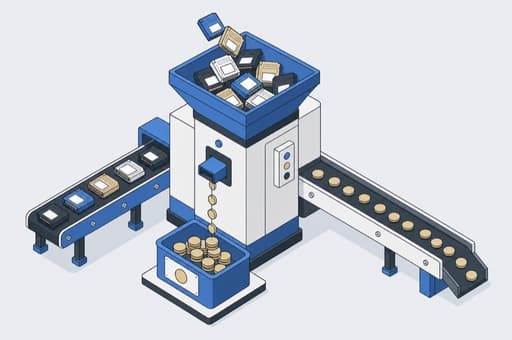
Unity's AI ad-buying system, and now the company's centre of gravity: from nothing to over a billion dollars a year of sales in six quarters, roughly half of all revenue at the spring 2026 pace. Watch whether that pace holds as the base grows.
Competes with AXON bidding engine (AppLovin) · Moloco Ads (Moloco) · Advantage+ app campaigns (Meta)
In plain English
Game makers live or die on how cheaply they can find new players. They hand their money to whoever can put the game in front of someone likely to install it and keep spending inside it.
Vector is Unity's machine for that. Built on what Unity's own game software sees as people play, it guesses which advert is worth showing to which player and bids for the slot in the split second before a screen loads. Unity buys those slots and resells them, keeping the difference. An outside tally of iPhone game advertising still puts AppLovin's slice at roughly three times Unity's.
Unity Engine and Editor subscriptions
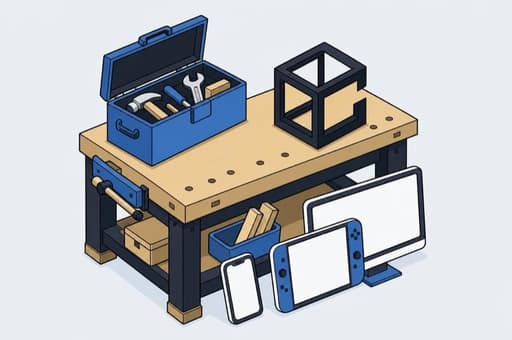
The software studios actually build games in, rented by the year — a bit over half a billion dollars annually and close to flat, with growth coming from price rises rather than many more users. A 2026 developer survey put Unreal ahead of Unity as studios' main engine.
Competes with Unreal Engine (Epic Games) · Godot engine (Godot Foundation) · Cocos Creator (Cocos)
In plain English
The part that made Unity famous. Studios rent the workshop they build a game in — the place where the world, the characters and the rules are assembled, then sent out to phones, consoles and computers without redoing the work for each one.
Payment is a yearly subscription per person working in it, from a free version for hobbyists up to custom deals for big companies. The money barely moves quarter to quarter, and most of what growth there is has come from raising prices. Its quieter job is keeping developers inside Unity's world, because every game built here also feeds the ad side.
Unity AI
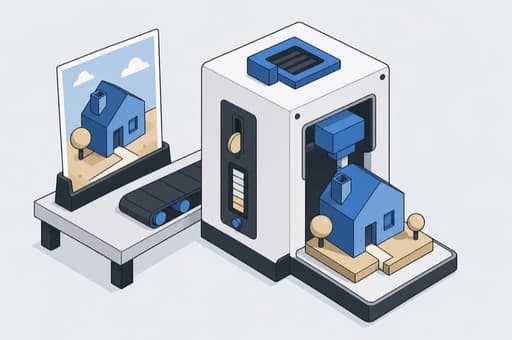
An assistant built into the game-making software that already knows the project it sits in; open testing since May 2026. It carries no separate price — an allowance of use rides on each subscription tier. Watch whether it lifts subscription prices faster than it runs up computing bills.
Competes with General-purpose coding assistants (Anthropic) · General-purpose coding assistants (OpenAI) · In-editor AI tooling (Epic Games)
In plain English
Picture a helper sitting inside the workshop who has already read every object and every surface in your project. Point it at a photograph and it hands back a rough three-dimensional shape you can drop straight into the scene.
That is Unity AI, in open testing since May 2026. There is no separate price tag: each subscription level comes with an allowance of use, and Unity has started charging by how many of these helpers are connected as well as by how many people are working. Behind it sit outside AI model providers, who bill Unity for every request — so the maths turns on whether the allowance covers the thinking.
Netflix Games engine partnership
A multiyear deal, made public in July 2026, to support Netflix's television games with Unity's engine. No value or term has been disclosed. It matters as a sign that Unity's tools follow games off the phone even where its mobile ad machine cannot.
Competes with Unreal Engine (Epic Games) · In-house and browser game engines (studios building their own)
In plain English
Netflix has been putting games on the television — the kind you start from the menu with nothing to download, register for or buy. For a studio, building for a screen like that is a different job than building for a phone.
In 2026 Unity agreed to support that world properly, so outside studios can ship into it using the engine they already know. Neither side has said what the arrangement is worth, and it may never appear as money of its own. Its value is where it points: as games drift away from the phone stores, Unity's tools travel with them.
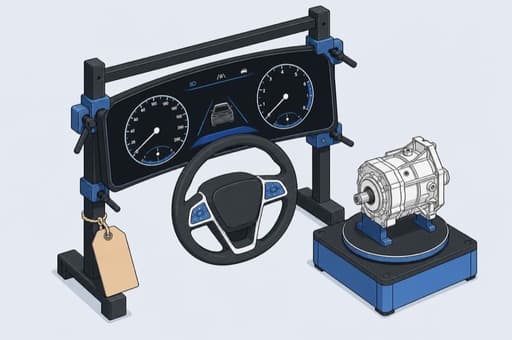
Unity Industry and Unity Studio
Unity's non-gaming plan: moving three-dimensional pictures for industrial customers, Toyota and Raytheon among the named ones. Roughly a twentieth of revenue, priced deal by deal. Unity said this work grew about 50% year over year back in the fourth quarter of 2024; no dollar figure since.
Competes with Unreal Engine and Twinmotion (Epic Games) · Godot engine (Godot Foundation)
In plain English
Cars and factories need moving three-dimensional pictures too — a dashboard screen that draws the road ahead, a machine you can turn around on a screen before anyone builds it. The software that draws a game world draws these just as well.
So Unity sells it as its own plan, priced case by case rather than off a list, alongside a simpler browser tool, still in testing, that someone who cannot program can use. The buyers are industrial companies; Toyota and Raytheon are the ones Unity names. It is a small slice of the money, and Unity has never put a dollar figure on it.

Unity IAP and commerce
Tools that let a game sell coins and outfits on the web instead of through the phone stores. Free to developers, so it brings in little directly — the payoff is purchase data that sharpens Unity's ad targeting, plus a reason to stay subscribed.
Competes with Xsolla web shop and payments (Xsolla) · AppCharge web shop builder (AppCharge) · App Store billing (Apple)
In plain English
When someone buys coins or a costume inside a phone game, the app store keeps a high fee. Unity now ships the plumbing for selling the same things on the open web instead: a payment window inside the game, and a drag-and-drop shop page a studio can put up without writing code.
Unity charges game makers nothing for it. They pay a payments firm such as Stripe or Coda to move the money, and Unity keeps only a small negotiated fee. The real return is what it learns — every purchase tells the ad system what a player is genuinely worth. Management points at a pool of over a hundred billion dollars a year of in-game buying.


 Unity VectorUnity's AI ad-buying system, and now the company's centre of gravity: from nothing to over a billion dollars a year of sales in six quarters, roughly half of all revenue at the spring 2026 pace. Watch whether that pace holds as the base grows.
Unity's AI ad-buying system, and now the company's centre of gravity: from nothing to over a billion dollars a year of sales in six quarters, roughly half of all revenue at the spring 2026 pace. Watch whether that pace holds as the base grows.
In plain English
Game makers live or die on how cheaply they can find new players. They hand their money to whoever can put the game in front of someone likely to install it and keep spending inside it.
Vector is Unity's machine for that. Built on what Unity's own game software sees as people play, it guesses which advert is worth showing to which player and bids for the slot in the split second before a screen loads. Unity buys those slots and resells them, keeping the difference. An outside tally of iPhone game advertising still puts AppLovin's slice at roughly three times Unity's.
Competes with AXON bidding engine (AppLovin) · Moloco Ads (Moloco) · Advantage+ app campaigns (Meta)
 Unity Engine and Editor subscriptionsThe software studios actually build games in, rented by the year — a bit over half a billion dollars annually and close to flat, with growth coming from price rises rather than many more users. A 2026 developer survey put Unreal ahead of Unity as studios' main engine.
The software studios actually build games in, rented by the year — a bit over half a billion dollars annually and close to flat, with growth coming from price rises rather than many more users. A 2026 developer survey put Unreal ahead of Unity as studios' main engine.
In plain English
The part that made Unity famous. Studios rent the workshop they build a game in — the place where the world, the characters and the rules are assembled, then sent out to phones, consoles and computers without redoing the work for each one.
Payment is a yearly subscription per person working in it, from a free version for hobbyists up to custom deals for big companies. The money barely moves quarter to quarter, and most of what growth there is has come from raising prices. Its quieter job is keeping developers inside Unity's world, because every game built here also feeds the ad side.
Competes with Unreal Engine (Epic Games) · Godot engine (Godot Foundation) · Cocos Creator (Cocos)
 Unity AIAn assistant built into the game-making software that already knows the project it sits in; open testing since May 2026. It carries no separate price — an allowance of use rides on each subscription tier. Watch whether it lifts subscription prices faster than it runs up computing bills.
An assistant built into the game-making software that already knows the project it sits in; open testing since May 2026. It carries no separate price — an allowance of use rides on each subscription tier. Watch whether it lifts subscription prices faster than it runs up computing bills.
In plain English
Picture a helper sitting inside the workshop who has already read every object and every surface in your project. Point it at a photograph and it hands back a rough three-dimensional shape you can drop straight into the scene.
That is Unity AI, in open testing since May 2026. There is no separate price tag: each subscription level comes with an allowance of use, and Unity has started charging by how many of these helpers are connected as well as by how many people are working. Behind it sit outside AI model providers, who bill Unity for every request — so the maths turns on whether the allowance covers the thinking.
Competes with General-purpose coding assistants (Anthropic) · General-purpose coding assistants (OpenAI) · In-editor AI tooling (Epic Games)
 Netflix Games engine partnershipA multiyear deal, made public in July 2026, to support Netflix's television games with Unity's engine. No value or term has been disclosed. It matters as a sign that Unity's tools follow games off the phone even where its mobile ad machine cannot.
A multiyear deal, made public in July 2026, to support Netflix's television games with Unity's engine. No value or term has been disclosed. It matters as a sign that Unity's tools follow games off the phone even where its mobile ad machine cannot.
In plain English
Netflix has been putting games on the television — the kind you start from the menu with nothing to download, register for or buy. For a studio, building for a screen like that is a different job than building for a phone.
In 2026 Unity agreed to support that world properly, so outside studios can ship into it using the engine they already know. Neither side has said what the arrangement is worth, and it may never appear as money of its own. Its value is where it points: as games drift away from the phone stores, Unity's tools travel with them.
Competes with Unreal Engine (Epic Games) · In-house and browser game engines (studios building their own)
 Unity Industry and Unity StudioUnity's non-gaming plan: moving three-dimensional pictures for industrial customers, Toyota and Raytheon among the named ones. Roughly a twentieth of revenue, priced deal by deal. Unity said this work grew about 50% year over year back in the fourth quarter of 2024; no dollar figure since.
Unity's non-gaming plan: moving three-dimensional pictures for industrial customers, Toyota and Raytheon among the named ones. Roughly a twentieth of revenue, priced deal by deal. Unity said this work grew about 50% year over year back in the fourth quarter of 2024; no dollar figure since.
In plain English
Cars and factories need moving three-dimensional pictures too — a dashboard screen that draws the road ahead, a machine you can turn around on a screen before anyone builds it. The software that draws a game world draws these just as well.
So Unity sells it as its own plan, priced case by case rather than off a list, alongside a simpler browser tool, still in testing, that someone who cannot program can use. The buyers are industrial companies; Toyota and Raytheon are the ones Unity names. It is a small slice of the money, and Unity has never put a dollar figure on it.
Competes with Unreal Engine and Twinmotion (Epic Games) · Godot engine (Godot Foundation)
 Unity IAP and commerceTools that let a game sell coins and outfits on the web instead of through the phone stores. Free to developers, so it brings in little directly — the payoff is purchase data that sharpens Unity's ad targeting, plus a reason to stay subscribed.
Tools that let a game sell coins and outfits on the web instead of through the phone stores. Free to developers, so it brings in little directly — the payoff is purchase data that sharpens Unity's ad targeting, plus a reason to stay subscribed.
In plain English
When someone buys coins or a costume inside a phone game, the app store keeps a high fee. Unity now ships the plumbing for selling the same things on the open web instead: a payment window inside the game, and a drag-and-drop shop page a studio can put up without writing code.
Unity charges game makers nothing for it. They pay a payments firm such as Stripe or Coda to move the money, and Unity keeps only a small negotiated fee. The real return is what it learns — every purchase tells the ad system what a player is genuinely worth. Management points at a pool of over a hundred billion dollars a year of in-game buying.
Competes with Xsolla web shop and payments (Xsolla) · AppCharge web shop builder (AppCharge) · App Store billing (Apple)
Named in filings, launches and programs
- Unity 7Product · AnnouncedThe next version of the game-making software, shown in July 2026: far faster graphics builds, a public interface for outside tools, open testing December 2026, release early 2027.
- Unity AdsProduct lineThe publisher-facing side of the ad business, where game makers sell space inside their own titles; Vector now does the buying and matching behind it.
- Day 28 ROASProduct · RampingA Vector campaign type that chases what a player is worth a month after installing; spend on it roughly tripled in a quarter after its early-2026 release.
- Unity LevelPlayServiceSoftware from the ironSource deal that auctions one ad slot across competing networks; management said in February 2026 it is too small to matter to Unity's results.
- Developer Data FrameworkProductThe opt-in layer inside the engine that sends gameplay signals back to Unity; over 90% of new Unity 6.2 projects use it, and it feeds Vector.
- Unity CloudPlatformHosted services for running a game once it is live: keeping versions straight, storing artwork, and handling day-to-day operations.
- Unity Inference EngineProductRuns small trained AI models inside the game itself, on the player's own device; it used to be called Unity Sentis.
- Asset StoreEcosystemWhere outside publishers sell ready-made add-ons to Unity developers; their sales ride on engine adoption, and Unity never breaks the store out on its own.
- Unity PersonalProductThe free version of the editor for hobbyists and small studios; paid Pro and Enterprise plans sit above it.
- AppsFlyer stakeBrandA small minority stake taken in mid-2026 in ad-measurement firm AppsFlyer, alongside Meta, Google and Moloco; Unity's amount was not disclosed.
Unity 7Product · Announced
The next version of the game-making software, shown in July 2026: far faster graphics builds, a public interface for outside tools, open testing December 2026, release early 2027.
Unity AdsProduct line
The publisher-facing side of the ad business, where game makers sell space inside their own titles; Vector now does the buying and matching behind it.
Day 28 ROASProduct · Ramping
A Vector campaign type that chases what a player is worth a month after installing; spend on it roughly tripled in a quarter after its early-2026 release.
Unity LevelPlayService
Software from the ironSource deal that auctions one ad slot across competing networks; management said in February 2026 it is too small to matter to Unity's results.
Developer Data FrameworkProduct
The opt-in layer inside the engine that sends gameplay signals back to Unity; over 90% of new Unity 6.2 projects use it, and it feeds Vector.
Unity CloudPlatform
Hosted services for running a game once it is live: keeping versions straight, storing artwork, and handling day-to-day operations.
Unity Inference EngineProduct
Runs small trained AI models inside the game itself, on the player's own device; it used to be called Unity Sentis.
Asset StoreEcosystem
Where outside publishers sell ready-made add-ons to Unity developers; their sales ride on engine adoption, and Unity never breaks the store out on its own.
Unity PersonalProduct
The free version of the editor for hobbyists and small studios; paid Pro and Enterprise plans sit above it.
AppsFlyer stakeBrand
A small minority stake taken in mid-2026 in ad-measurement firm AppsFlyer, alongside Meta, Google and Moloco; Unity's amount was not disclosed.