
Ubiquiti (UI)
Builds UniFi networking ecosystems and wireless infrastructure for enterprises, service providers, and consumers.
Something off on this page? Send us feedback.
Ubiquiti makes the boxes that carry a building's internet — the white discs on office ceilings, the switches in the wiring closet, the cameras over the door — and then gives away the software that runs them, charging nothing for licences or cloud accounts. It sells through distributors, with no sales force of its own. The old business selling radios to small internet providers is fading; office and campus gear is where it now grows.
Item facts: FY2026 · year ended June 30, 2026, from filings, earnings calls and company pages.
Judgment weights, not filed revenue
The band summarizes business focus and direction. ~ marks estimates.
7 in detail · 13 more below
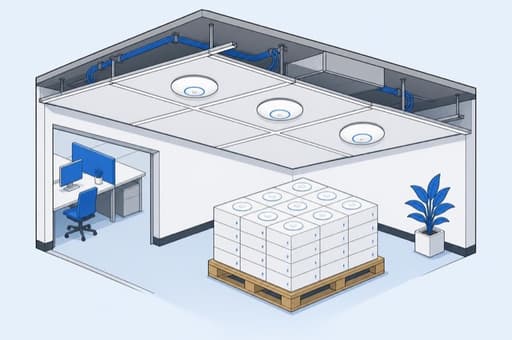
UniFi WiFi access points
The ceiling-mounted discs that give a building its WiFi — the largest line, roughly four of every ten dollars. The research firm IDC ranks Ubiquiti third in business WiFi behind Cisco and HPE, growing about twice as fast as that market.
Competes with Catalyst and Meraki MR access points (Cisco) · Aruba and Instant On access points (HPE) · Omada EAP access points (TP-Link)
In plain English
Look up in a hotel corridor or a school hallway and you will see them: flat white discs the size of a saucer, bolted to the ceiling. Each one is a WiFi transmitter, and a building needs a lot of them.
A café buys two, a university buys thousands, and Ubiquiti gets paid once, when the box leaves the warehouse. There is no yearly fee afterwards — the big rivals charge one per device, and Ubiquiti's whole pitch is that it does not. The trade is that growth depends on people replacing old gear: the current wave is WiFi 7, the newest standard, and it is spreading fast.
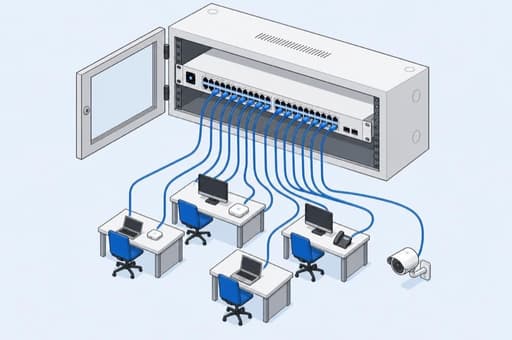
UniFi Switching
The wiring-closet boxes everything else plugs into, and the piece that turns a WiFi order into a whole-building order — roughly a sixth of revenue. New 100-gigabit campus models reach jobs Ubiquiti could not bid for before.
Competes with Catalyst 9000 campus switches (Cisco) · Aruba CX campus switches (HPE) · Omada managed switches (TP-Link)
In plain English
Desk phones, printers, cameras, the discs on the ceiling — everything wired in a building runs back to a switch, the box in the wiring closet that joins them all and, down the same cable, feeds them power.
That makes it the natural second purchase. A company that put in Ubiquiti WiFi is already halfway to buying Ubiquiti switches, and the bigger the site, the more sockets it needs. The 2026 models stretch up to full campuses. Prices across the industry have been climbing, and switch chips sit squarely among the parts Ubiquiti has warned it may not always be able to get.
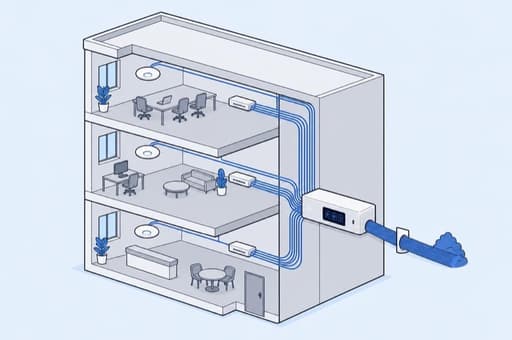
UniFi Cloud Gateways
The console where a site meets the internet: it screens the traffic and runs the free software. Roughly an eighth of sales, and the reason giving the software away works — no site runs without one of these.
Competes with Meraki MX security appliances (Cisco) · FortiGate entry and mid-range firewalls (Fortinet) · Omada gateways (TP-Link)
In plain English
Think of it as the gatehouse where a building's network meets the outside world. Everything going in or out passes through this one box, which also inspects it for anything nasty and keeps the inside network walled off from the open internet.
It is also the piece that makes the whole model work. Ubiquiti charges nothing for its management software, so it needs something every customer must buy, and this is it. Small consoles run a few hundred dollars; a 2026 model aimed at big campuses handles a hundred gigabits a second. Even the outside IT firms that host the software on their own servers still buy the box.
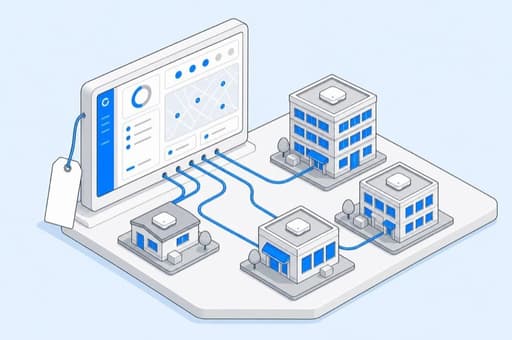
UniFi OS, Site Manager and Fabrics
The free control panel behind every product — one screen for every site, no licence, no cloud bill. It earns nothing directly. Ubiquiti's research spending, over $200M last year, is paid for out of what the hardware makes.
Competes with Meraki Dashboard (Cisco) · Aruba Central and Instant On cloud (HPE) · Omada Controller (TP-Link)
In plain English
Every Ubiquiti device is run from the same dashboard: all your sites on one screen, a new site added without anyone driving to it, and each site still manageable on its own if the link to the cloud drops.
Here is the unusual part — it costs nothing, and there are no cloud fees either. The rival version, Cisco's Meraki dashboard, is a subscription: stop paying and the hardware stops being managed. Ubiquiti's founder-chief executive said again in April that there will be no licence fees, ever. The software's cost is buried in the price of the box instead.
UniFi Protect
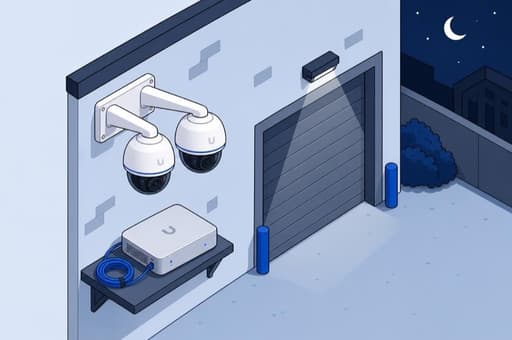
Security cameras plus the recorder that keeps the footage on-site — roughly a tenth of revenue, climbing off a small base. No per-camera fee, where the cloud-camera rivals charge one. No tracker measures Ubiquiti here, so the size is a judgment.
Competes with Verkada cameras and Command (Verkada) · Meraki MV cameras (Cisco) · Axis network cameras (Axis Communications)
In plain English
Cameras over the door, in the warehouse, above the till — and a box on a shelf that stores what they see, on the premises rather than in somebody else's cloud. The newer cameras do the recognising work inside the camera itself.
The money comes from selling to people who already bought the WiFi and the switches: same installer, same app, no separate bill per camera. Verkada, a cloud-camera firm running at about a billion dollars of annual bookings, charges a yearly licence for each one. Ubiquiti's founder said back in 2018 that he wanted a far bigger share of video security; this is that attempt, still small.
UniFi Access
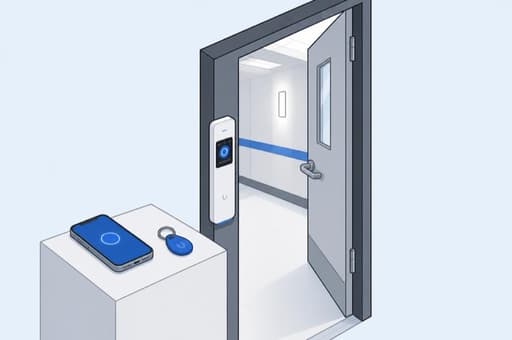
Door readers, intercoms and phone-based keys, sold into buildings already running Ubiquiti's network and cameras. A few percent of revenue at most — one of the newer places the company is pushing.
Competes with Verkada Access Control (Verkada) · Avigilon Alta Access (Motorola Solutions) · Genetec Synergis (Genetec)
In plain English
Unlock a door with your phone instead of a plastic fob, then see who came through on the same screen that shows the cameras. That is the idea: a reader on the door frame, an intercom for visitors, even a hub for the lift.
It sells almost entirely to existing customers — an office already running Ubiquiti WiFi and Ubiquiti cameras finds the door hardware waiting in the same app, with no licence to buy. It stays small for now: this is a big market full of long-established names, and Ubiquiti holds a sliver of it.
Service Provider Technology
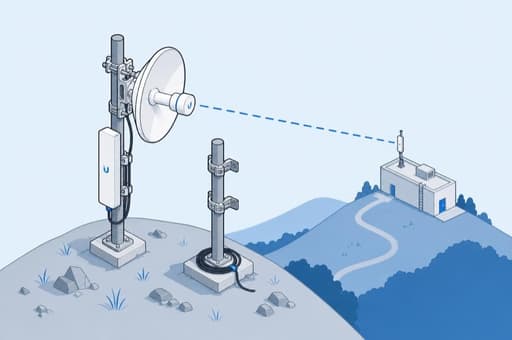
The original business: mast-mounted radios that beam internet to places wires do not reach. Now 9.2% of revenue at $301.9M and shrinking, the final quarter down 12.7% on a year earlier. The closest rival in it has just collapsed.
Competes with ePMP and PMP fixed-wireless radios (Cambium Networks) · G1 fixed-wireless radios (Tarana Wireless) · MikroTik wireless and routing gear (MikroTik)
In plain English
Before the office gear, Ubiquiti sold radios to small internet companies — the kind that fix a dish to a mast, aim it at a village rooftop, and deliver broadband where wired lines do not reach. Some of the range is fibre equipment too.
Those customers still buy, but the line has been sliding since the winter. One direct rival, Cambium, was delisted from the stock market and its UK arm has fallen into administration; another, Tarana, whose radios work where the view is blocked, has taken the top-performance tier. This is also the family named in a 2026 lawsuit by Ukrainian civilians alleging the radios reached Russian forces — allegations, with nothing decided.


 UniFi WiFi access pointsThe ceiling-mounted discs that give a building its WiFi — the largest line, roughly four of every ten dollars. The research firm IDC ranks Ubiquiti third in business WiFi behind Cisco and HPE, growing about twice as fast as that market.
The ceiling-mounted discs that give a building its WiFi — the largest line, roughly four of every ten dollars. The research firm IDC ranks Ubiquiti third in business WiFi behind Cisco and HPE, growing about twice as fast as that market.
In plain English
Look up in a hotel corridor or a school hallway and you will see them: flat white discs the size of a saucer, bolted to the ceiling. Each one is a WiFi transmitter, and a building needs a lot of them.
A café buys two, a university buys thousands, and Ubiquiti gets paid once, when the box leaves the warehouse. There is no yearly fee afterwards — the big rivals charge one per device, and Ubiquiti's whole pitch is that it does not. The trade is that growth depends on people replacing old gear: the current wave is WiFi 7, the newest standard, and it is spreading fast.
Competes with Catalyst and Meraki MR access points (Cisco) · Aruba and Instant On access points (HPE) · Omada EAP access points (TP-Link)
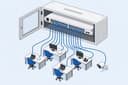 UniFi SwitchingThe wiring-closet boxes everything else plugs into, and the piece that turns a WiFi order into a whole-building order — roughly a sixth of revenue. New 100-gigabit campus models reach jobs Ubiquiti could not bid for before.
The wiring-closet boxes everything else plugs into, and the piece that turns a WiFi order into a whole-building order — roughly a sixth of revenue. New 100-gigabit campus models reach jobs Ubiquiti could not bid for before.
In plain English
Desk phones, printers, cameras, the discs on the ceiling — everything wired in a building runs back to a switch, the box in the wiring closet that joins them all and, down the same cable, feeds them power.
That makes it the natural second purchase. A company that put in Ubiquiti WiFi is already halfway to buying Ubiquiti switches, and the bigger the site, the more sockets it needs. The 2026 models stretch up to full campuses. Prices across the industry have been climbing, and switch chips sit squarely among the parts Ubiquiti has warned it may not always be able to get.
Competes with Catalyst 9000 campus switches (Cisco) · Aruba CX campus switches (HPE) · Omada managed switches (TP-Link)
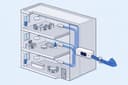 UniFi Cloud GatewaysThe console where a site meets the internet: it screens the traffic and runs the free software. Roughly an eighth of sales, and the reason giving the software away works — no site runs without one of these.
The console where a site meets the internet: it screens the traffic and runs the free software. Roughly an eighth of sales, and the reason giving the software away works — no site runs without one of these.
In plain English
Think of it as the gatehouse where a building's network meets the outside world. Everything going in or out passes through this one box, which also inspects it for anything nasty and keeps the inside network walled off from the open internet.
It is also the piece that makes the whole model work. Ubiquiti charges nothing for its management software, so it needs something every customer must buy, and this is it. Small consoles run a few hundred dollars; a 2026 model aimed at big campuses handles a hundred gigabits a second. Even the outside IT firms that host the software on their own servers still buy the box.
Competes with Meraki MX security appliances (Cisco) · FortiGate entry and mid-range firewalls (Fortinet) · Omada gateways (TP-Link)
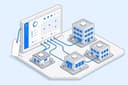 UniFi OS, Site Manager and FabricsThe free control panel behind every product — one screen for every site, no licence, no cloud bill. It earns nothing directly. Ubiquiti's research spending, over $200M last year, is paid for out of what the hardware makes.
The free control panel behind every product — one screen for every site, no licence, no cloud bill. It earns nothing directly. Ubiquiti's research spending, over $200M last year, is paid for out of what the hardware makes.
In plain English
Every Ubiquiti device is run from the same dashboard: all your sites on one screen, a new site added without anyone driving to it, and each site still manageable on its own if the link to the cloud drops.
Here is the unusual part — it costs nothing, and there are no cloud fees either. The rival version, Cisco's Meraki dashboard, is a subscription: stop paying and the hardware stops being managed. Ubiquiti's founder-chief executive said again in April that there will be no licence fees, ever. The software's cost is buried in the price of the box instead.
Competes with Meraki Dashboard (Cisco) · Aruba Central and Instant On cloud (HPE) · Omada Controller (TP-Link)
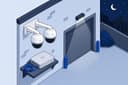 UniFi ProtectSecurity cameras plus the recorder that keeps the footage on-site — roughly a tenth of revenue, climbing off a small base. No per-camera fee, where the cloud-camera rivals charge one. No tracker measures Ubiquiti here, so the size is a judgment.
Security cameras plus the recorder that keeps the footage on-site — roughly a tenth of revenue, climbing off a small base. No per-camera fee, where the cloud-camera rivals charge one. No tracker measures Ubiquiti here, so the size is a judgment.
In plain English
Cameras over the door, in the warehouse, above the till — and a box on a shelf that stores what they see, on the premises rather than in somebody else's cloud. The newer cameras do the recognising work inside the camera itself.
The money comes from selling to people who already bought the WiFi and the switches: same installer, same app, no separate bill per camera. Verkada, a cloud-camera firm running at about a billion dollars of annual bookings, charges a yearly licence for each one. Ubiquiti's founder said back in 2018 that he wanted a far bigger share of video security; this is that attempt, still small.
Competes with Verkada cameras and Command (Verkada) · Meraki MV cameras (Cisco) · Axis network cameras (Axis Communications)
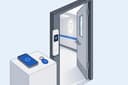 UniFi AccessDoor readers, intercoms and phone-based keys, sold into buildings already running Ubiquiti's network and cameras. A few percent of revenue at most — one of the newer places the company is pushing.
Door readers, intercoms and phone-based keys, sold into buildings already running Ubiquiti's network and cameras. A few percent of revenue at most — one of the newer places the company is pushing.
In plain English
Unlock a door with your phone instead of a plastic fob, then see who came through on the same screen that shows the cameras. That is the idea: a reader on the door frame, an intercom for visitors, even a hub for the lift.
It sells almost entirely to existing customers — an office already running Ubiquiti WiFi and Ubiquiti cameras finds the door hardware waiting in the same app, with no licence to buy. It stays small for now: this is a big market full of long-established names, and Ubiquiti holds a sliver of it.
Competes with Verkada Access Control (Verkada) · Avigilon Alta Access (Motorola Solutions) · Genetec Synergis (Genetec)
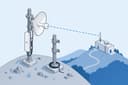 Service Provider TechnologyThe original business: mast-mounted radios that beam internet to places wires do not reach. Now 9.2% of revenue at $301.9M and shrinking, the final quarter down 12.7% on a year earlier. The closest rival in it has just collapsed.
The original business: mast-mounted radios that beam internet to places wires do not reach. Now 9.2% of revenue at $301.9M and shrinking, the final quarter down 12.7% on a year earlier. The closest rival in it has just collapsed.
In plain English
Before the office gear, Ubiquiti sold radios to small internet companies — the kind that fix a dish to a mast, aim it at a village rooftop, and deliver broadband where wired lines do not reach. Some of the range is fibre equipment too.
Those customers still buy, but the line has been sliding since the winter. One direct rival, Cambium, was delisted from the stock market and its UK arm has fallen into administration; another, Tarana, whose radios work where the view is blocked, has taken the top-performance tier. This is also the family named in a 2026 lawsuit by Ukrainian civilians alleging the radios reached Russian forces — allegations, with nothing decided.
Competes with ePMP and PMP fixed-wireless radios (Cambium Networks) · G1 fixed-wireless radios (Tarana Wireless) · MikroTik wireless and routing gear (MikroTik)
Named in filings, launches and programs
- UniFi Channel Partner Program and Ubiquiti StoreCustomer programEssentially all sales run through 100+ distributors in 75+ countries, online retailers and Ubiquiti's own webstores. No single customer reached a tenth of revenue.
- UniFi TalkServiceOffice phone system billed as a subscription — one of the few places Ubiquiti charges a repeating fee, and the amount is never disclosed.
- UniFi IdentityPlatformControls which people and devices are allowed onto the network; a free plan plus a paid business plan billed monthly or yearly.
- UniFi ConnectPlatformOne app for a building's other equipment: professional audio and video, lighting, and electric-car chargers.
- UniFi DriveProduct lineStorage that sits on the network; a 16-bay rack model was announced in June 2026.
- UniFi InnerSpacePlatformReports on a building's surroundings and its radio signals, run on servers the customer hosts itself.
- Site Magic SD-WANServiceStitches a company's separate offices into one network across their gateways, with no licence to buy.
- UniFi IndustrialProduct line · AnnouncedFanless, hardened versions of the gear for rough settings, launched alongside an industrial gateway.
- UI CareServiceA paid five-year warranty with fast replacement — one of the rare times a buyer pays Ubiquiti after the sale.
- SuperLink sensor platformProduct line · AnnouncedAlarm and connectivity sensors shown at the April 2026 partner conference in London; not yet a revenue line.
- UniFi 5G BackupProductA mobile-network antenna that keeps a site connected when its main internet line goes down.
- UniFi Travel Router Long-RangeProductA portable router announced in August 2026 — the small end of the range.
- Ubiquiti AcademyEcosystemTraining and certification for installers, feeding the partner network that does the actual selling and fitting.
UniFi Channel Partner Program and Ubiquiti StoreCustomer program
Essentially all sales run through 100+ distributors in 75+ countries, online retailers and Ubiquiti's own webstores. No single customer reached a tenth of revenue.
UniFi TalkService
Office phone system billed as a subscription — one of the few places Ubiquiti charges a repeating fee, and the amount is never disclosed.
UniFi IdentityPlatform
Controls which people and devices are allowed onto the network; a free plan plus a paid business plan billed monthly or yearly.
UniFi ConnectPlatform
One app for a building's other equipment: professional audio and video, lighting, and electric-car chargers.
UniFi DriveProduct line
Storage that sits on the network; a 16-bay rack model was announced in June 2026.
UniFi InnerSpacePlatform
Reports on a building's surroundings and its radio signals, run on servers the customer hosts itself.
Site Magic SD-WANService
Stitches a company's separate offices into one network across their gateways, with no licence to buy.
UniFi IndustrialProduct line · Announced
Fanless, hardened versions of the gear for rough settings, launched alongside an industrial gateway.
UI CareService
A paid five-year warranty with fast replacement — one of the rare times a buyer pays Ubiquiti after the sale.
SuperLink sensor platformProduct line · Announced
Alarm and connectivity sensors shown at the April 2026 partner conference in London; not yet a revenue line.
UniFi 5G BackupProduct
A mobile-network antenna that keeps a site connected when its main internet line goes down.
UniFi Travel Router Long-RangeProduct
A portable router announced in August 2026 — the small end of the range.
Ubiquiti AcademyEcosystem
Training and certification for installers, feeding the partner network that does the actual selling and fitting.