
USA Rare Earth (USAR)
Builds a rare-earth chain from mined feedstock to metals, alloys, and permanent magnets.
Something off on this page? Send us feedback.
USA Rare Earth is building, outside China, the whole chain that turns rare earth ore into the powerful magnets inside motors: mine, separate, make metal, make magnets. Until this autumn its only sales came from a small British metal maker. Now a newly bought Brazilian mine, whose output a U.S. government-backed buyer takes in full, is set to become the main source of money, while its American magnet plants are only starting up.
Item facts: FY2025 + H1 2026 filings · 2026 weights estimated, from filings, earnings calls and company pages.
Judgment weights, not filed revenue
The band summarizes business focus and direction. ~ marks estimates.
7 in detail · 14 more below
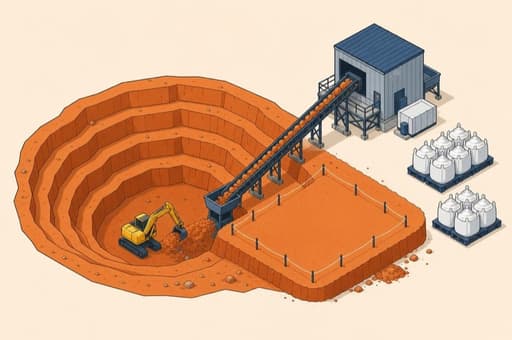
Pela Ema (Serra Verde)
A working clay mine in Brazil, bought in September 2026 for about $2.8B in cash and shares — its former owners now hold roughly a third of USA Rare Earth. Watch whether output reaches about 4,000 tonnes a year by end-2026.
Competes with Carina ionic-clay project (Aclara Resources) · Caldeira ionic-clay project (Meteoric Resources) · Heavy Rare Earths Facility (Lynas)
In plain English
A clay mine in Goiás, Brazil, with a plant beside it. The clay holds rare earths, a family of metals that go into the strongest magnets, including dysprosium and terbium, the 'heavy' kinds Western buyers are short of. The plant turns them into a powder of several rare earths still mixed together, which other plants later sort into pure ingredients.
The money is simple: tonnes shipped times price, with agreed minimum prices underneath. The mine has been producing since early 2024; the job now is volume, lifting output toward roughly 4,000 tonnes of rare earth content a year by the end of 2026, then higher. Its loans come with strict conditions attached.
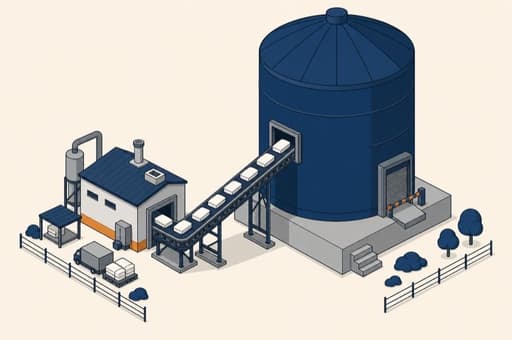
Serra Verde Offtake Agreement (U.S. government-backed SPV)
One buyer, set up with U.S. Department of War money, takes 100% of Pela Ema's first-phase output for 15 years at guaranteed minimum prices — so from late 2026 a single customer should bring in most of the company's revenue. The floor levels are not public.
Competes with NdPr price-floor deal with the Department of War (MP Materials) · $1.4B government-backed magnet supply chain (Vulcan Elements)
In plain English
Picture a farmer who signs away the whole harvest to one buyer for fifteen years, with a promise that the price never drops below an agreed level. That is this contract. The buyer is a separate company outside USA Rare Earth, stocked with $1.55B: $750M from the U.S. Department of War, a credit line of up to $500M, and a government pledge to buy at least $300M of material over five years.
For a new mine it answers two big questions — who will buy, and what happens if prices crash — including for dysprosium and terbium. The catch is plain: one customer, whose appetite rests on U.S. defense priorities.
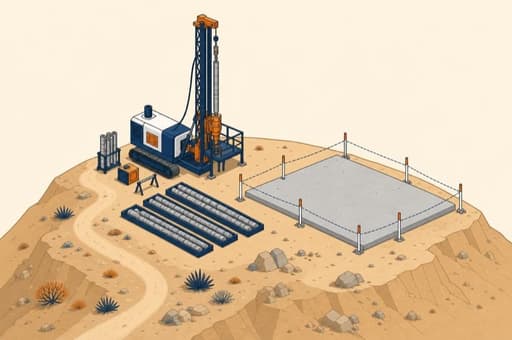
Round Top Project
A heavy rare earth deposit in Texas, fully owned since August 2026, with production pulled forward two years to late 2028. Everything hangs on the detailed engineering study due at the end of 2026.
Competes with Mountain Pass mine (MP Materials) · Tanbreez project, Greenland (Critical Metals)
In plain English
Still a hill in the Texas desert, for now. Round Top, near Sierra Blanca, holds rock where the heavy rare earths make up more than 70% of the rare earth content, plus gallium, hafnium and zirconium that could be sold too. The plan is to feed about 40,000 tonnes of material a day into a plant and start selling in late 2028.
Nothing is sold yet. USA Rare Earth bought out the last partner in August 2026 for about $74M in shares, so it now owns all of it. Management says more than 30 possible buyers have been approached for the rare earths that do not go into magnets.
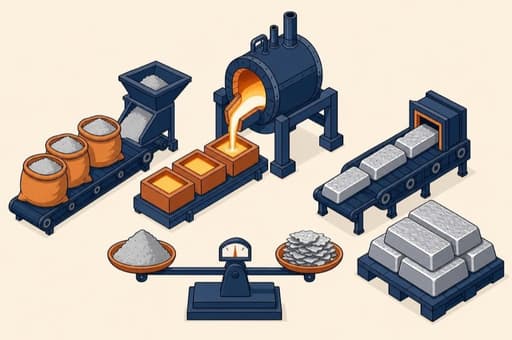
Less Common Metals (LCM)
The UK metal maker that produced all of the company's revenue through June 2026 — $11.5M in the first half, flat at under $6M a quarter as raw material ran short. Watch whether price rises bring its margin back above zero.
Competes with Korean Metals Plant (ASM / Energy Fuels) · NdFeB and samarium-cobalt alloys (Santoku) · In-house metal and alloy flake at Independence (MP Materials)
In plain English
The part that already pays, though not much yet. Less Common Metals, in Cheshire, England, buys rare earth powders — the metals still bound up with oxygen — and turns them into solid metal and alloys, including thin magnet-ready flakes. Its buyers are magnet makers and defense contractors in Europe, Japan and North America, the U.S. government, and USA Rare Earth's own magnet plant.
Think of a baker paid for baking: the cost of the flour is passed on, and LCM keeps a fee for the work. In the second quarter of 2026 that fee went negative as the scarcer heavy rare earths got pricier, and the first half closed at a $1.5M loss on sales. Management says it has already raised prices.
Wheat Ridge Hydrometallurgical Facility
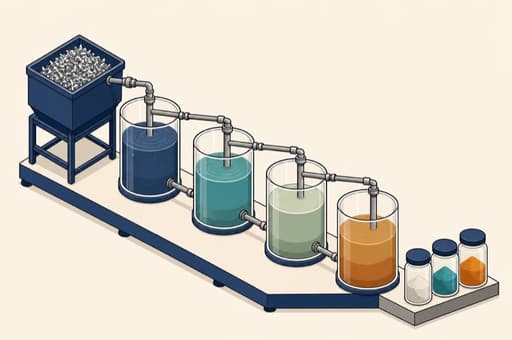
The company's test site for separating mixed rare earths — the step where China holds about 82% of the world's capacity. It has made sale-quality samples from magnet scraps; watch whether it grows from demonstration into a full plant.
Competes with Heavy Rare Earths Facility (Lynas) · White Mesa Mill (Energy Fuels)
In plain English
A pilot kitchen for the chain's hardest step. Rare earths come out of the ground mixed together, and before anyone can make metal they have to be pulled apart into pure powders — done here with a series of liquid baths that draw out one element at a time. The site in Colorado runs three small test lines: Round Top's rock, mixed powder bought from other miners, and scraps left over from cutting magnets.
In July 2026 it turned those scraps into sale-quality dysprosium and neodymium-praseodymium powder, now headed to LCM for testing. No money yet; the goal is a full plant handling 8,000 tonnes a year of outside material, not yet sited.
Stillwater Magnet Manufacturing Facility
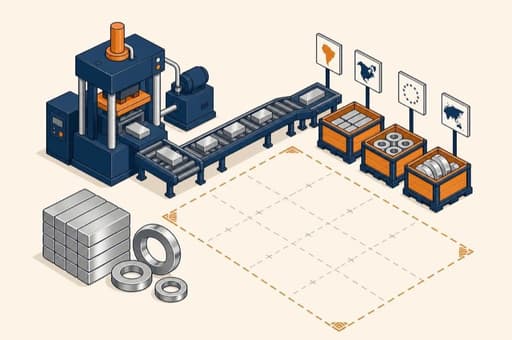
The first magnet factory, running since March 2026, holding some production orders plus letters of intent for 2,500 tonnes a year. First sales have slipped to year-end; watch the ramp to 600 tonnes by end-2026.
Competes with Independence magnet plant, Fort Worth (MP Materials) · Benson, NC magnet plant (Vulcan Elements) · Narva magnet plant, Estonia (Neo Performance Materials)
In plain English
Finally, the thing in the company's name. In Stillwater, Oklahoma, a 310,000-square-foot factory makes sintered neodymium magnets: alloy ground to powder, pressed into shape and baked solid. These are the small, very strong magnets inside motors in factory machines, cars and aircraft.
The first line started in March 2026, with production orders from factory-motion and aerospace-and-defense customers, though sales promised for the second half have become 'by the end of the year'. Prices are planned as cost plus a markup, sold in batches to many buyers. In June 2026 China put the company on its export blacklist, closing off Chinese inputs.
Blacksburg Metal and Magnet Facility
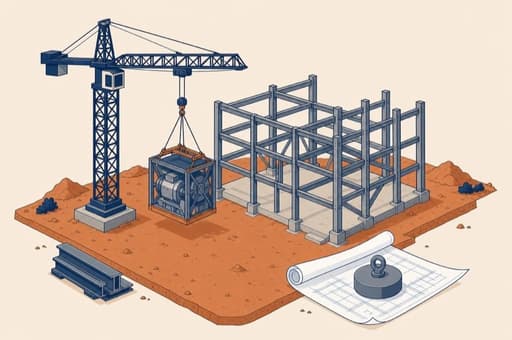
A second, much larger magnet and alloy plant in South Carolina, with ground broken in September 2026. U.S. plans announced by MP Materials, Vulcan Elements and USA Rare Earth together add up to about 30,000 tonnes a year — watch whether buyers appear for all of it.
Competes with 10X magnet facility (MP Materials) · Benson, NC magnet plant (Vulcan Elements)
In plain English
A construction site today. In Blacksburg, South Carolina, the company has started a plant meant to make 6,400 tonnes of magnets and 5,000 tonnes of magnet alloy a year, with about 490 jobs. Machines that take longest to build are already on order; the building shell should be done at the end of 2027, start-up is targeted for 2028 and full speed by end-2029.
It leans on Washington: the Commerce Department has agreed to repay building costs, partly as direct funding and partly as loans, but only as milestones are met. Together with Stillwater it carries the goal of 10,000 tonnes of U.S. magnets a year by 2029.


 Pela Ema (Serra Verde)A working clay mine in Brazil, bought in September 2026 for about $2.8B in cash and shares — its former owners now hold roughly a third of USA Rare Earth. Watch whether output reaches about 4,000 tonnes a year by end-2026.
A working clay mine in Brazil, bought in September 2026 for about $2.8B in cash and shares — its former owners now hold roughly a third of USA Rare Earth. Watch whether output reaches about 4,000 tonnes a year by end-2026.
In plain English
A clay mine in Goiás, Brazil, with a plant beside it. The clay holds rare earths, a family of metals that go into the strongest magnets, including dysprosium and terbium, the 'heavy' kinds Western buyers are short of. The plant turns them into a powder of several rare earths still mixed together, which other plants later sort into pure ingredients.
The money is simple: tonnes shipped times price, with agreed minimum prices underneath. The mine has been producing since early 2024; the job now is volume, lifting output toward roughly 4,000 tonnes of rare earth content a year by the end of 2026, then higher. Its loans come with strict conditions attached.
Competes with Carina ionic-clay project (Aclara Resources) · Caldeira ionic-clay project (Meteoric Resources) · Heavy Rare Earths Facility (Lynas)
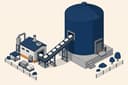 Serra Verde Offtake Agreement (U.S. government-backed SPV)One buyer, set up with U.S. Department of War money, takes 100% of Pela Ema's first-phase output for 15 years at guaranteed minimum prices — so from late 2026 a single customer should bring in most of the company's revenue. The floor levels are not public.
One buyer, set up with U.S. Department of War money, takes 100% of Pela Ema's first-phase output for 15 years at guaranteed minimum prices — so from late 2026 a single customer should bring in most of the company's revenue. The floor levels are not public.
In plain English
Picture a farmer who signs away the whole harvest to one buyer for fifteen years, with a promise that the price never drops below an agreed level. That is this contract. The buyer is a separate company outside USA Rare Earth, stocked with $1.55B: $750M from the U.S. Department of War, a credit line of up to $500M, and a government pledge to buy at least $300M of material over five years.
For a new mine it answers two big questions — who will buy, and what happens if prices crash — including for dysprosium and terbium. The catch is plain: one customer, whose appetite rests on U.S. defense priorities.
Competes with NdPr price-floor deal with the Department of War (MP Materials) · $1.4B government-backed magnet supply chain (Vulcan Elements)
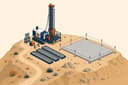 Round Top ProjectA heavy rare earth deposit in Texas, fully owned since August 2026, with production pulled forward two years to late 2028. Everything hangs on the detailed engineering study due at the end of 2026.
A heavy rare earth deposit in Texas, fully owned since August 2026, with production pulled forward two years to late 2028. Everything hangs on the detailed engineering study due at the end of 2026.
In plain English
Still a hill in the Texas desert, for now. Round Top, near Sierra Blanca, holds rock where the heavy rare earths make up more than 70% of the rare earth content, plus gallium, hafnium and zirconium that could be sold too. The plan is to feed about 40,000 tonnes of material a day into a plant and start selling in late 2028.
Nothing is sold yet. USA Rare Earth bought out the last partner in August 2026 for about $74M in shares, so it now owns all of it. Management says more than 30 possible buyers have been approached for the rare earths that do not go into magnets.
Competes with Mountain Pass mine (MP Materials) · Tanbreez project, Greenland (Critical Metals)
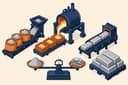 Less Common Metals (LCM)The UK metal maker that produced all of the company's revenue through June 2026 — $11.5M in the first half, flat at under $6M a quarter as raw material ran short. Watch whether price rises bring its margin back above zero.
The UK metal maker that produced all of the company's revenue through June 2026 — $11.5M in the first half, flat at under $6M a quarter as raw material ran short. Watch whether price rises bring its margin back above zero.
In plain English
The part that already pays, though not much yet. Less Common Metals, in Cheshire, England, buys rare earth powders — the metals still bound up with oxygen — and turns them into solid metal and alloys, including thin magnet-ready flakes. Its buyers are magnet makers and defense contractors in Europe, Japan and North America, the U.S. government, and USA Rare Earth's own magnet plant.
Think of a baker paid for baking: the cost of the flour is passed on, and LCM keeps a fee for the work. In the second quarter of 2026 that fee went negative as the scarcer heavy rare earths got pricier, and the first half closed at a $1.5M loss on sales. Management says it has already raised prices.
Competes with Korean Metals Plant (ASM / Energy Fuels) · NdFeB and samarium-cobalt alloys (Santoku) · In-house metal and alloy flake at Independence (MP Materials)
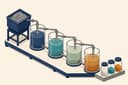 Wheat Ridge Hydrometallurgical FacilityThe company's test site for separating mixed rare earths — the step where China holds about 82% of the world's capacity. It has made sale-quality samples from magnet scraps; watch whether it grows from demonstration into a full plant.
The company's test site for separating mixed rare earths — the step where China holds about 82% of the world's capacity. It has made sale-quality samples from magnet scraps; watch whether it grows from demonstration into a full plant.
In plain English
A pilot kitchen for the chain's hardest step. Rare earths come out of the ground mixed together, and before anyone can make metal they have to be pulled apart into pure powders — done here with a series of liquid baths that draw out one element at a time. The site in Colorado runs three small test lines: Round Top's rock, mixed powder bought from other miners, and scraps left over from cutting magnets.
In July 2026 it turned those scraps into sale-quality dysprosium and neodymium-praseodymium powder, now headed to LCM for testing. No money yet; the goal is a full plant handling 8,000 tonnes a year of outside material, not yet sited.
Competes with Heavy Rare Earths Facility (Lynas) · White Mesa Mill (Energy Fuels)
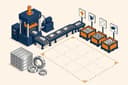 Stillwater Magnet Manufacturing FacilityThe first magnet factory, running since March 2026, holding some production orders plus letters of intent for 2,500 tonnes a year. First sales have slipped to year-end; watch the ramp to 600 tonnes by end-2026.
The first magnet factory, running since March 2026, holding some production orders plus letters of intent for 2,500 tonnes a year. First sales have slipped to year-end; watch the ramp to 600 tonnes by end-2026.
In plain English
Finally, the thing in the company's name. In Stillwater, Oklahoma, a 310,000-square-foot factory makes sintered neodymium magnets: alloy ground to powder, pressed into shape and baked solid. These are the small, very strong magnets inside motors in factory machines, cars and aircraft.
The first line started in March 2026, with production orders from factory-motion and aerospace-and-defense customers, though sales promised for the second half have become 'by the end of the year'. Prices are planned as cost plus a markup, sold in batches to many buyers. In June 2026 China put the company on its export blacklist, closing off Chinese inputs.
Competes with Independence magnet plant, Fort Worth (MP Materials) · Benson, NC magnet plant (Vulcan Elements) · Narva magnet plant, Estonia (Neo Performance Materials)
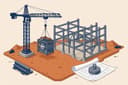 Blacksburg Metal and Magnet FacilityA second, much larger magnet and alloy plant in South Carolina, with ground broken in September 2026. U.S. plans announced by MP Materials, Vulcan Elements and USA Rare Earth together add up to about 30,000 tonnes a year — watch whether buyers appear for all of it.
A second, much larger magnet and alloy plant in South Carolina, with ground broken in September 2026. U.S. plans announced by MP Materials, Vulcan Elements and USA Rare Earth together add up to about 30,000 tonnes a year — watch whether buyers appear for all of it.
In plain English
A construction site today. In Blacksburg, South Carolina, the company has started a plant meant to make 6,400 tonnes of magnets and 5,000 tonnes of magnet alloy a year, with about 490 jobs. Machines that take longest to build are already on order; the building shell should be done at the end of 2027, start-up is targeted for 2028 and full speed by end-2029.
It leans on Washington: the Commerce Department has agreed to repay building costs, partly as direct funding and partly as loans, but only as milestones are met. Together with Stillwater it carries the goal of 10,000 tonnes of U.S. magnets a year by 2029.
Competes with 10X magnet facility (MP Materials) · Benson, NC magnet plant (Vulcan Elements)
Named in filings, launches and programs
- Pela Ema Phase 2Product · AnnouncedA possible next stage at the Brazilian mine with 'potential to double' the amount of ore it digs.
- Round Top oxide offtake talksCustomer program · Pre-revenueTalks with more than 30 possible buyers for Round Top's rare earths that do not go into magnets.
- Gallium, hafnium and zirconiumProduct line · Pre-revenueOther metals in Round Top's rock that could be sold alongside the rare earths once the mine runs.
- Carester / Caremag, LacqEcosystem · AnnouncedA ~13.6% stake in Carester, whose Caremag plant in Lacq, France, targets separated rare earth powders from late 2026; a magnet-scrap recycling agreement comes with it.
- LCM Europe metal and alloy plant, LacqBrand · AnnouncedA planned second LCM plant for metal and alloys at Lacq, sized at 3,750 tonnes a year.
- NdFeB strip-cast alloyProduct lineLCM's thin magnet-ready alloy flakes, sold to outside magnet makers and fed to the company's own Stillwater line.
- Samarium and samarium-cobalt alloysProduct lineLCM alloys for a different magnet recipe, supplied to buyers including the U.S. government.
- Yttrium metalProductLCM's first commercial yttrium pour came in April 2026; management says Western yttrium powder costs over 200 times China's price.
- Third-party separation lineService · Pre-revenueA planned service sorting other miners' mixed rare earth powder into pure ingredients, covered by the Commerce Department funding deal.
- Magnet production purchase ordersCustomer programProduction orders at Stillwater from factory-motion and aerospace-and-defense customers; names and values undisclosed.
- Magnet letters of intentCustomer program · Pre-revenueEarly agreements covering 2,500 tonnes a year; more than 20 of over 100 prospects are in talks to qualify the magnets.
- New magnet gradesProduct · Pre-revenueGrades without heavy rare earths plus a method called grain boundary diffusion; MP Materials sued over it in May 2026, which USA Rare Earth calls meritless.
- Pasqal / Riven Systems partnershipProduct · AnnouncedA September 2026 tie-up with two technology firms to develop new ways of separating rare earths.
- Colorado School of Mines, DOE and Texas grant workProductUniversity and Department of Energy research at Wheat Ridge, plus a Texas Semiconductor Innovation Fund grant.
Pela Ema Phase 2Product · Announced
A possible next stage at the Brazilian mine with 'potential to double' the amount of ore it digs.
Round Top oxide offtake talksCustomer program · Pre-revenue
Talks with more than 30 possible buyers for Round Top's rare earths that do not go into magnets.
Gallium, hafnium and zirconiumProduct line · Pre-revenue
Other metals in Round Top's rock that could be sold alongside the rare earths once the mine runs.
Carester / Caremag, LacqEcosystem · Announced
A ~13.6% stake in Carester, whose Caremag plant in Lacq, France, targets separated rare earth powders from late 2026; a magnet-scrap recycling agreement comes with it.
LCM Europe metal and alloy plant, LacqBrand · Announced
A planned second LCM plant for metal and alloys at Lacq, sized at 3,750 tonnes a year.
NdFeB strip-cast alloyProduct line
LCM's thin magnet-ready alloy flakes, sold to outside magnet makers and fed to the company's own Stillwater line.
Samarium and samarium-cobalt alloysProduct line
LCM alloys for a different magnet recipe, supplied to buyers including the U.S. government.
Yttrium metalProduct
LCM's first commercial yttrium pour came in April 2026; management says Western yttrium powder costs over 200 times China's price.
Third-party separation lineService · Pre-revenue
A planned service sorting other miners' mixed rare earth powder into pure ingredients, covered by the Commerce Department funding deal.
Magnet production purchase ordersCustomer program
Production orders at Stillwater from factory-motion and aerospace-and-defense customers; names and values undisclosed.
Magnet letters of intentCustomer program · Pre-revenue
Early agreements covering 2,500 tonnes a year; more than 20 of over 100 prospects are in talks to qualify the magnets.
New magnet gradesProduct · Pre-revenue
Grades without heavy rare earths plus a method called grain boundary diffusion; MP Materials sued over it in May 2026, which USA Rare Earth calls meritless.
Pasqal / Riven Systems partnershipProduct · Announced
A September 2026 tie-up with two technology firms to develop new ways of separating rare earths.
Colorado School of Mines, DOE and Texas grant workProduct
University and Department of Energy research at Wheat Ridge, plus a Texas Semiconductor Innovation Fund grant.