
Valero Energy (VLO)
Refiner and fuel marketer with renewable diesel and ethanol operations.
Something off on this page? Send us feedback.
Valero is overwhelmingly a giant fuel-making business: diesel, jet fuel and gasoline pay the bills. Smaller operations turn corn and discarded fats and oils into lower-carbon fuels and animal feed, but they remain side businesses. The direction is cautious—more output from existing ethanol plants, while renewable diesel expansion pauses and aviation fuel must prove buyers will pay for it.
Item facts: FY2025 · year ended Dec 31, 2025, from filings, earnings calls and company pages.
Judgment weights, not filed revenue
The band summarizes business focus and direction. ~ marks estimates.
7 in detail · 12 more below
Distillates
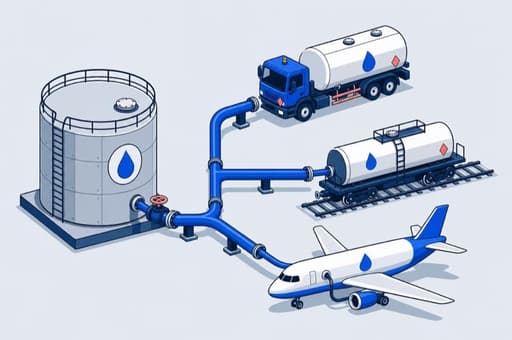
Diesel, jet fuel and heating oil are Valero's biggest sales line at $55.077 billion. Demand is broad, but earnings still swing with selling prices, crude costs and refinery uptime.
Competes with Marathon diesel (Marathon Petroleum) · Phillips 66 diesel and aviation fuels (Phillips 66)
In plain English
This is the fuel that moves trucks, trains and planes, plus heating oil for buildings. Valero buys crude oil, runs it through large refineries and separates out the heavier fuels customers need for transport and industry.
Distributors, airlines, railroads, utilities and traders buy tanker-sized quantities, then move the fuel through pipelines, ships, barges and railcars. No single buyer accounted for a tenth of Valero's sales. The company makes money when the selling price stays comfortably above the cost of crude, energy and keeping the plants running. That gap can widen or shrink quickly, so a huge sales line does not guarantee a huge profit.
Gasolines and blendstocks
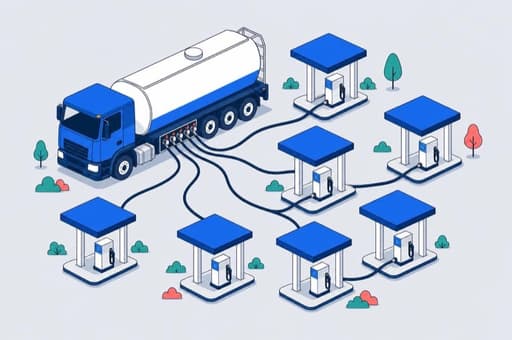
Finished gasoline and the ingredients mixed into it brought in $50.917 billion. Driving demand is slowly softening, so seasonal sales, plant performance and export buyers matter.
Competes with Marathon gasoline (Marathon Petroleum) · Phillips 66 gasoline (Phillips 66)
In plain English
At the pump, gasoline looks like one simple product. Behind it are several recipes made for different places, seasons and engine needs; Valero sells both the finished fuel and ingredients that other sellers mix into it.
Most buyers are wholesalers, distributors and retailers rather than drivers themselves. Fuel leaves Valero through loading terminals and pipelines, while roughly seven thousand independently owned stations sell under Valero-family names through supply agreements. It is like a bakery supplying both finished loaves and flour blends to neighborhood shops: volume is enormous, but what Valero keeps depends on crude costs and local fuel prices.
Other product revenues
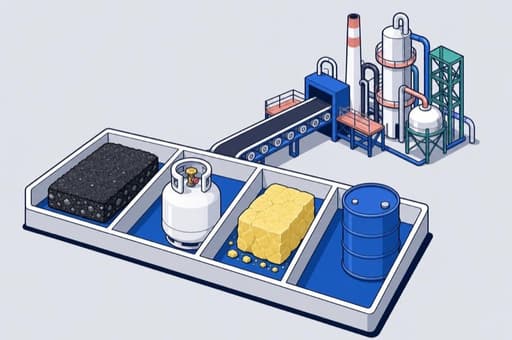
Refining also produced a $10.164 billion mix of asphalt, propane, solvents, sulfur, coke and chemical ingredients. The mix changes with construction, factory demand and the value of each co-product.
Competes with Asphalt and petrochemicals (Marathon Petroleum) · Solvents, feedstocks and coke (Phillips 66)
In plain English
A barrel of crude does not become only road fuel. Refining also leaves useful materials for paving roads, roofing buildings, making chemicals and plastics, blending fuels and running industrial equipment. Valero sells that changing collection instead of treating it as waste.
Picture a butcher selling every usable cut: the main products drive the business, but the smaller pieces still add meaningful value. Pavers, chemical makers and fuel blenders pay for different outputs, delivered by truck, rail, pipeline or ship. Because Valero does not publish the sales of each piece, the clearest view is the collection as a whole.
Ethanol
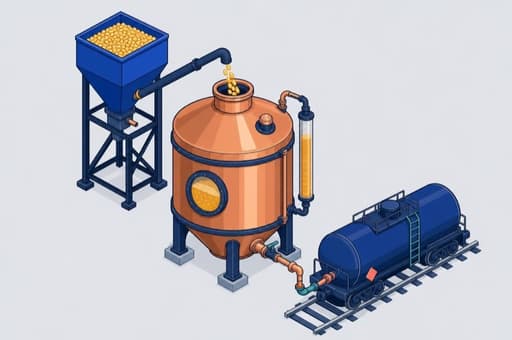
Twelve corn mills produced fuel alcohol sold to gasoline blenders, generating $3.174 billion. Valero is targeting another one hundred to two hundred million gallons from existing plants rather than a new build-out.
Competes with POET Bioethanol (POET) · Ethanol Production (Green Plains)
In plain English
Corn goes in; fuel alcohol comes out. Valero's twelve Midwestern plants grind and ferment corn much as a brewer ferments grain, then sell the alcohol to companies that mix it into gasoline for cars in the United States and abroad.
The plants can make about one point seven billion gallons a year. Their earnings depend on a moving equation: the price of corn and natural gas on one side, and gasoline, export demand and government fuel rules on the other. Valero now plans to remove bottlenecks inside these plants, aiming for more gallons without constructing a new fleet of mills.
Distillers grains
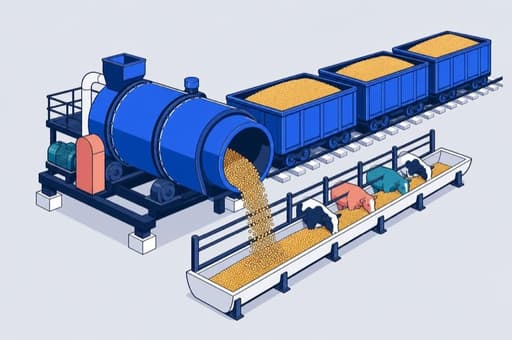
The solids left after corn fermentation become livestock feed, adding $847 million of sales. Its value follows ethanol output, feed alternatives, herd demand and exports.
Competes with POET distillers grains (POET) · Distillers grains and Ultra-High Protein (Green Plains)
In plain English
The useful leftovers have their own customers. After an ethanol plant ferments corn, protein- and energy-rich solids remain; Valero dries or modifies them and sells them as feed for livestock and poultry.
That turns more of each corn kernel into cash and helps the ethanol plants pay their way. Farms and feed companies in the United States, Mexico and Asia buy the product, moved by rail, truck and ship. Prices rise and fall with competing feeds such as soybean meal, while the available supply depends on how hard the ethanol plants are running.
Renewable diesel
Fuel made from animal fats and used oils delivered $2.073 billion, yet lost $156 million in the year. The strong second quarter of 2026 showed how sharply raw-material costs, fuel prices and government incentives can reverse the result.
Competes with Neste MY Renewable Diesel (Neste) · Dickinson and Martinez Renewables (Marathon/Neste)
In plain English
Used cooking oil, inedible corn oil and animal fats can be cleaned and rearranged into diesel that works in ordinary engines. Two Diamond Green Diesel plants do this for Valero and its equal partner, Darling Ingredients, then sell the fuel mainly where cleaner-fuel rules give it extra value.
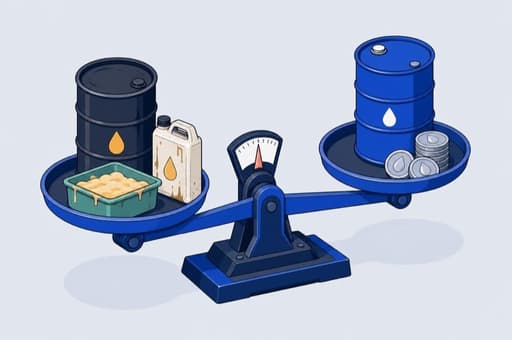
The business resembles a balance scale. On one side sit the cost and origin of the waste oils; on the other sit the diesel selling price and government incentives. A small movement can turn profit into loss or back again. Valero includes all plant sales in its numbers, although only half of the venture's economic result belongs to it.
Neat SAF
Unblended lower-carbon jet fuel produced $297 million in its first full year—a tiny base. Airline interest has lagged early hopes, and sales fell in the second quarter of 2026 even as named customer programs appeared.
Competes with Neste MY SAF (Neste) · Paramount SAF (World Energy)
In plain English
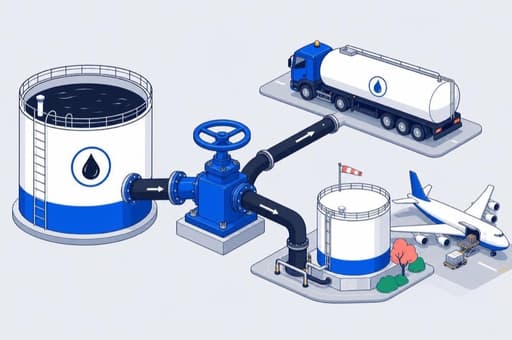
Here is the newest outlet for the same waste oils: jet fuel. Port Arthur makes an unblended fuel that airports can mix with ordinary jet fuel, letting airlines and cargo customers lower the pollution counted against selected flights or shipments.
The equipment can redirect up to two hundred thirty-five million gallons of annual renewable-diesel capacity toward this aviation fuel, so Valero can follow whichever outlet pays better. American Airlines and Google anchor one three-year program, but early airline interest fell short of Valero's expectations. The question is whether customer agreements grow fast enough to justify moving more production away from road diesel.


 DistillatesDiesel, jet fuel and heating oil are Valero's biggest sales line at $55.077 billion. Demand is broad, but earnings still swing with selling prices, crude costs and refinery uptime.
Diesel, jet fuel and heating oil are Valero's biggest sales line at $55.077 billion. Demand is broad, but earnings still swing with selling prices, crude costs and refinery uptime.
In plain English
This is the fuel that moves trucks, trains and planes, plus heating oil for buildings. Valero buys crude oil, runs it through large refineries and separates out the heavier fuels customers need for transport and industry.
Distributors, airlines, railroads, utilities and traders buy tanker-sized quantities, then move the fuel through pipelines, ships, barges and railcars. No single buyer accounted for a tenth of Valero's sales. The company makes money when the selling price stays comfortably above the cost of crude, energy and keeping the plants running. That gap can widen or shrink quickly, so a huge sales line does not guarantee a huge profit.
Competes with Marathon diesel (Marathon Petroleum) · Phillips 66 diesel and aviation fuels (Phillips 66)
 Gasolines and blendstocksFinished gasoline and the ingredients mixed into it brought in $50.917 billion. Driving demand is slowly softening, so seasonal sales, plant performance and export buyers matter.
Finished gasoline and the ingredients mixed into it brought in $50.917 billion. Driving demand is slowly softening, so seasonal sales, plant performance and export buyers matter.
In plain English
At the pump, gasoline looks like one simple product. Behind it are several recipes made for different places, seasons and engine needs; Valero sells both the finished fuel and ingredients that other sellers mix into it.
Most buyers are wholesalers, distributors and retailers rather than drivers themselves. Fuel leaves Valero through loading terminals and pipelines, while roughly seven thousand independently owned stations sell under Valero-family names through supply agreements. It is like a bakery supplying both finished loaves and flour blends to neighborhood shops: volume is enormous, but what Valero keeps depends on crude costs and local fuel prices.
Competes with Marathon gasoline (Marathon Petroleum) · Phillips 66 gasoline (Phillips 66)
 Other product revenuesRefining also produced a $10.164 billion mix of asphalt, propane, solvents, sulfur, coke and chemical ingredients. The mix changes with construction, factory demand and the value of each co-product.
Refining also produced a $10.164 billion mix of asphalt, propane, solvents, sulfur, coke and chemical ingredients. The mix changes with construction, factory demand and the value of each co-product.
In plain English
A barrel of crude does not become only road fuel. Refining also leaves useful materials for paving roads, roofing buildings, making chemicals and plastics, blending fuels and running industrial equipment. Valero sells that changing collection instead of treating it as waste.
Picture a butcher selling every usable cut: the main products drive the business, but the smaller pieces still add meaningful value. Pavers, chemical makers and fuel blenders pay for different outputs, delivered by truck, rail, pipeline or ship. Because Valero does not publish the sales of each piece, the clearest view is the collection as a whole.
Competes with Asphalt and petrochemicals (Marathon Petroleum) · Solvents, feedstocks and coke (Phillips 66)
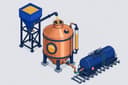 EthanolTwelve corn mills produced fuel alcohol sold to gasoline blenders, generating $3.174 billion. Valero is targeting another one hundred to two hundred million gallons from existing plants rather than a new build-out.
Twelve corn mills produced fuel alcohol sold to gasoline blenders, generating $3.174 billion. Valero is targeting another one hundred to two hundred million gallons from existing plants rather than a new build-out.
In plain English
Corn goes in; fuel alcohol comes out. Valero's twelve Midwestern plants grind and ferment corn much as a brewer ferments grain, then sell the alcohol to companies that mix it into gasoline for cars in the United States and abroad.
The plants can make about one point seven billion gallons a year. Their earnings depend on a moving equation: the price of corn and natural gas on one side, and gasoline, export demand and government fuel rules on the other. Valero now plans to remove bottlenecks inside these plants, aiming for more gallons without constructing a new fleet of mills.
Competes with POET Bioethanol (POET) · Ethanol Production (Green Plains)
 Distillers grainsThe solids left after corn fermentation become livestock feed, adding $847 million of sales. Its value follows ethanol output, feed alternatives, herd demand and exports.
The solids left after corn fermentation become livestock feed, adding $847 million of sales. Its value follows ethanol output, feed alternatives, herd demand and exports.
In plain English
The useful leftovers have their own customers. After an ethanol plant ferments corn, protein- and energy-rich solids remain; Valero dries or modifies them and sells them as feed for livestock and poultry.
That turns more of each corn kernel into cash and helps the ethanol plants pay their way. Farms and feed companies in the United States, Mexico and Asia buy the product, moved by rail, truck and ship. Prices rise and fall with competing feeds such as soybean meal, while the available supply depends on how hard the ethanol plants are running.
Competes with POET distillers grains (POET) · Distillers grains and Ultra-High Protein (Green Plains)
 Renewable dieselFuel made from animal fats and used oils delivered $2.073 billion, yet lost $156 million in the year. The strong second quarter of 2026 showed how sharply raw-material costs, fuel prices and government incentives can reverse the result.
Fuel made from animal fats and used oils delivered $2.073 billion, yet lost $156 million in the year. The strong second quarter of 2026 showed how sharply raw-material costs, fuel prices and government incentives can reverse the result.
In plain English
Used cooking oil, inedible corn oil and animal fats can be cleaned and rearranged into diesel that works in ordinary engines. Two Diamond Green Diesel plants do this for Valero and its equal partner, Darling Ingredients, then sell the fuel mainly where cleaner-fuel rules give it extra value.
The business resembles a balance scale. On one side sit the cost and origin of the waste oils; on the other sit the diesel selling price and government incentives. A small movement can turn profit into loss or back again. Valero includes all plant sales in its numbers, although only half of the venture's economic result belongs to it.
Competes with Neste MY Renewable Diesel (Neste) · Dickinson and Martinez Renewables (Marathon/Neste)
 Neat SAFUnblended lower-carbon jet fuel produced $297 million in its first full year—a tiny base. Airline interest has lagged early hopes, and sales fell in the second quarter of 2026 even as named customer programs appeared.
Unblended lower-carbon jet fuel produced $297 million in its first full year—a tiny base. Airline interest has lagged early hopes, and sales fell in the second quarter of 2026 even as named customer programs appeared.
In plain English
Here is the newest outlet for the same waste oils: jet fuel. Port Arthur makes an unblended fuel that airports can mix with ordinary jet fuel, letting airlines and cargo customers lower the pollution counted against selected flights or shipments.
The equipment can redirect up to two hundred thirty-five million gallons of annual renewable-diesel capacity toward this aviation fuel, so Valero can follow whichever outlet pays better. American Airlines and Google anchor one three-year program, but early airline interest fell short of Valero's expectations. The question is whether customer agreements grow fast enough to justify moving more production away from road diesel.
Competes with Neste MY SAF (Neste) · Paramount SAF (World Energy)
Named in filings, launches and programs
- Renewable naphthaProductA gasoline and chemical ingredient from Diamond Green Diesel; $138 million of sales, with about fifty million gallons of annual capacity.
- Diamond Green DieselBrandValero's equal partnership with Darling Ingredients runs the St. Charles and Port Arthur renewable-fuel plants.
- Valero Branded Stations and Unbranded FuelsEcosystemWholesale distribution led by unbranded fuel, plus supply agreements with roughly seven thousand independently owned stations using Valero-family names.
- Fiber cellulosic ethanolProductEnzymes turn leftover corn fiber into lower-carbon ethanol; Valero does not disclose its plant scale or sales.
- Fuel- and feed-grade corn oilProductAn ethanol by-product sold for renewable diesel and animal feed, with sales included inside larger lines.
- Renewable propane and low-carbon hydrogenProduct lineA Diamond Green Diesel by-product and a fuel processed for internal use; neither has separately disclosed sales.
- CornNowPlatformAn app connecting corn growers with Valero's buying channel; user and transaction counts are not disclosed.
- St. Charles FCC Unit Optimization projectProduct · AnnouncedA $230 million refinery upgrade meant to increase higher-value output, with startup expected in the third quarter of 2026.
- American Airlines–Google SAF programCustomer programA three-year, thirty-five-million-gallon program: American receives fuel in Chicago while Google gets certificates recording the claimed pollution reduction.
- Southwest Airlines Midway SAF programCustomer programA two-year supply agreement for at least 3.6 million unblended gallons, with options that could raise the total to roughly 25 million.
- DHL Express–World Fuel Services Miami SAF programCustomer programA two-year Miami program for about sixty million blended gallons, containing roughly eighteen million gallons of Valero's unblended fuel.
- Cargolux–AIT–Microsoft SAF programCustomer programA Houston freight program running from 2025 through 2027, using Valero fuel for Microsoft server-rack shipments.
Renewable naphthaProduct
A gasoline and chemical ingredient from Diamond Green Diesel; $138 million of sales, with about fifty million gallons of annual capacity.
Diamond Green DieselBrand
Valero's equal partnership with Darling Ingredients runs the St. Charles and Port Arthur renewable-fuel plants.
Valero Branded Stations and Unbranded FuelsEcosystem
Wholesale distribution led by unbranded fuel, plus supply agreements with roughly seven thousand independently owned stations using Valero-family names.
Fiber cellulosic ethanolProduct
Enzymes turn leftover corn fiber into lower-carbon ethanol; Valero does not disclose its plant scale or sales.
Fuel- and feed-grade corn oilProduct
An ethanol by-product sold for renewable diesel and animal feed, with sales included inside larger lines.
Renewable propane and low-carbon hydrogenProduct line
A Diamond Green Diesel by-product and a fuel processed for internal use; neither has separately disclosed sales.
CornNowPlatform
An app connecting corn growers with Valero's buying channel; user and transaction counts are not disclosed.
St. Charles FCC Unit Optimization projectProduct · Announced
A $230 million refinery upgrade meant to increase higher-value output, with startup expected in the third quarter of 2026.
American Airlines–Google SAF programCustomer program
A three-year, thirty-five-million-gallon program: American receives fuel in Chicago while Google gets certificates recording the claimed pollution reduction.
Southwest Airlines Midway SAF programCustomer program
A two-year supply agreement for at least 3.6 million unblended gallons, with options that could raise the total to roughly 25 million.
DHL Express–World Fuel Services Miami SAF programCustomer program
A two-year Miami program for about sixty million blended gallons, containing roughly eighteen million gallons of Valero's unblended fuel.
Cargolux–AIT–Microsoft SAF programCustomer program
A Houston freight program running from 2025 through 2027, using Valero fuel for Microsoft server-rack shipments.