
Verisk Analytics (VRSK)
Insurance data and workflow software for underwriting, catastrophe risk, claims, and repair estimating.
Something off on this page? Send us feedback.
Insurance companies hand Verisk their policy and claim records. Verisk cleans that pile into the shared rulebooks, price guides and disaster models much of the American property insurance industry runs on, then rents it all back to the same companies by annual subscription. It sold off everything that was not insurance, borrowed heavily to buy back its own shares, and is now fighting in court over an acquisition it tried to walk away from.
Item facts: FY2025 · year ended Dec 31, 2025, from filings, earnings calls and company pages.
Judgment weights, not filed revenue
The band summarizes business focus and direction. ~ marks estimates.
8 in detail · 9 more below
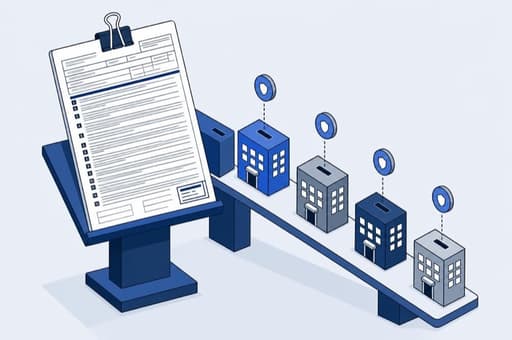
Forms, Rules & Loss Costs
The original franchise: standard policy wording and suggested price levels, filed with state regulators and rented back to insurers. Growth comes from charging more each renewal as the material improves, not from selling more seats.
Competes with Personal auto and commercial programs (AAIS) · Workers-compensation loss costs (NCCI) · In-house actuarial teams (Insurers themselves)
In plain English
Writing an insurance policy from scratch is like drafting your own building code — slow, costly, and unrecognisable to everyone else. So insurers send Verisk their policy and loss records; Verisk turns the pile into standard policy wording, rating rules and suggested price levels, files them with insurance regulators, and licenses the result back.
The buyers are the same companies that supplied the raw material, which is why the input costs Verisk almost nothing. They pay a subscription that renews yearly at a slightly higher price, justified by whatever was added since last time. Every one of the hundred largest U.S. insurers of homes, cars and businesses is a Verisk client, and more than 95% of clients renew.
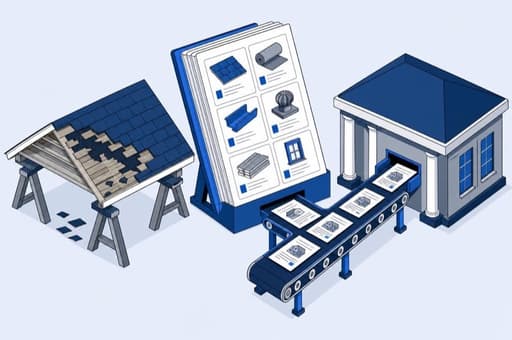
Property Estimating & Restoration Solutions
Xactimate is the priced catalogue used to cost a repair — Verisk says it helps prepare more than four million estimates a year in North America. The most weather-exposed line it owns, and 2025 was a quiet storm year.
Competes with Claims Estimate / Symbility (Cotality) · CCC estimating (CCC Intelligent Solutions)
In plain English
A hailstorm cracks a roof. Someone has to decide what the fix is worth — every sheet of plywood, every hour of labour, in that town, this month. Xactimate is the priced catalogue that settles the argument, and XactAnalysis is the pipe that carries the finished estimate between the insurer, the adjuster and the contractor.
Verisk keeps the cost database current and charges insurers and contractors for access, with fees that move with the number of estimates. That makes this the weather-driven part of the company: busy storm seasons mean more repairs and more money, and a calm year like 2025 shows up as a drag.
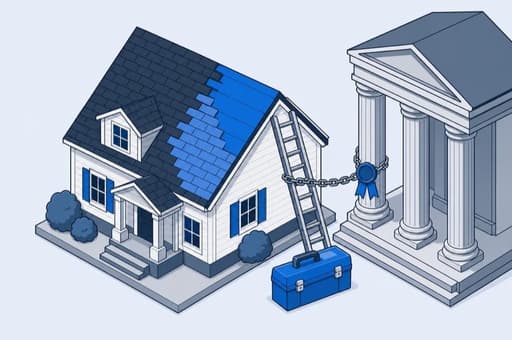
AccuLynx
Software for roofing and restoration contractors, bought for $2.35B in 2025 — then un-bought. Verisk walked away as the antitrust review dragged, a Delaware judge ordered it to close anyway, and Verisk is appealing.
Competes with JobNimbus roofing workflow (JobNimbus) · Roofr contractor platform (Roofr) · Contractor-facing claims tools (Cotality)
In plain English
The contractor's side of a claim. When a roof gets replaced, the crew doing the work is running a small business — quotes, schedules, materials, invoices — and AccuLynx is the subscription software that keeps that business straight for roofing and restoration firms.
Verisk agreed to buy it in 2025 for $2.35 billion, which would put it on both ends of the same repair: its price catalogue on the insurer's side, the contractor's workflow on the other. Then the U.S. competition regulator kept extending its review, Verisk terminated the deal, AccuLynx sued, and a Delaware court ordered Verisk to go through with it. The appeal is live; none of this earns Verisk anything yet.
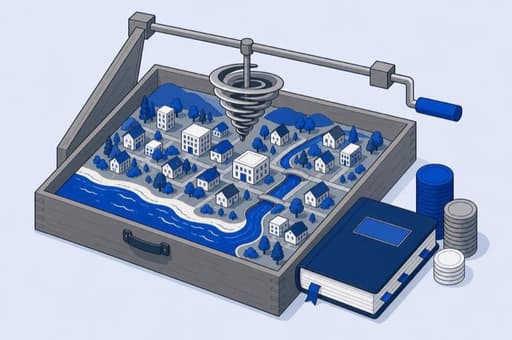
Catastrophe and Risk Solutions
Simulations of hurricanes, earthquakes, wildfire and flood, rented to insurers, reinsurers and disaster-bond investors. Verisk expects global insured catastrophe losses to average about $171 billion a year. The suite just moved to a new home, Synergy Studio, with no upgrade fee.
Competes with RMS catastrophe models (Moody's) · KCC open models (Karen Clark & Company) · Physical-risk analytics (Jupiter Intelligence)
In plain English
Nobody can say whether a hurricane will hit a given coast next year. But you can run that coastline through thousands of simulated storm seasons and count how often the damage lands above some number — that is what these models do, for hurricanes, earthquakes, wildfire and flood.
Insurers, the firms that insure insurers, and the investors who fund disaster bonds all need that answer before they can price a risk or decide how much of one coastline they dare carry. They license the models by subscription. In June 2026 Verisk moved the whole global suite onto a new system, Synergy Studio, and pointedly did not charge extra for the move.
Anti-Fraud Solutions
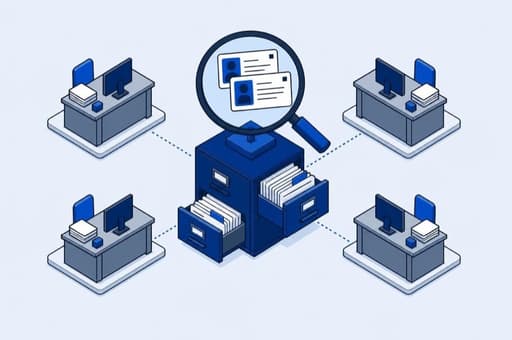
ClaimSearch is the shared claims file U.S. insurers post into — Verisk says 95% of them do — screened for duplicate and staged claims. It helped lead claims growth in mid-2026, and a rival is assembling a competing network.
Competes with Claims Fraud Detection (Shift Technology) · FRISS fraud detection (FRISS) · Claims data and fraud analytics (LexisNexis Risk Solutions)
In plain English
A crook who files the same wrecked car with four insurers only gets caught if the four compare notes. ClaimSearch is where they compare notes: insurers post their claims into one shared file — Verisk says 95% of them do — and every new claim is checked against it for duplicates, staged accidents and organised rings.
They pay a subscription that scales with how much they push through it. The catch is that the value is the network itself, so a rival that signs up its own contributors chips away at it — Shift Technology is doing exactly that, with four of the five biggest U.S. insurers feeding its own sharing network.
Specialty Business Solutions
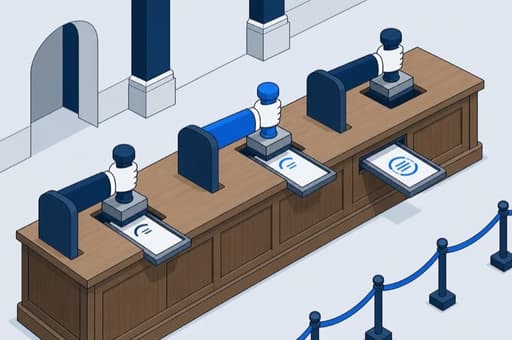
Whitespace is the screen where London brokers and underwriters agree a risk — one of only two platforms Lloyd's fully approves — and Sequel is the back office behind it. Whitespace carried roughly 170,000 pieces of business in 2024, about triple 2022.
Competes with PPL ePlacement platform (Placing Platform Limited) · Specialty policy administration (Duck Creek Technologies) · Specialty underwriting systems (Sapiens)
In plain English
Risks an ordinary insurer will not write go to the Lloyd's market in London, where a broker takes one risk round to specialist insurers and each signs for a slice of it. Whitespace is that round as a screen: the broker posts the risk, the specialists take their shares, the deal is agreed.
Sequel is the machinery behind it — the system a specialty insurer uses to track what it has taken on and what it owes. Both sell as software subscriptions to Lloyd's syndicates, London brokers and the agencies in between. Lloyd's approval is the gate to get in, and the older screen, PPL, still carries most of the market.

Life, Health & Travel Solutions
Verisk FAST replaces the ageing computer systems life insurers keep policies on, sold alongside agent-licensing tools. Money arrives in long projects rather than steady data fees, and travel volumes fell in mid-2026 on Middle Eastern travel disruption.
Competes with CoreSuite for life (Sapiens) · Policy administration (Duck Creek Technologies) · Life policy systems (Equisoft)
In plain English
Life insurance policies outlive the computers that record them. Plenty of carriers still keep them on systems written decades ago, and replacing one is surgery on the company's filing cabinet while it keeps working. Verisk FAST is the modern replacement — ready-made parts a carrier assembles into its own policy system with little custom programming.
Carriers pay for the platform and for the long projects that install it, which makes the money here lumpier than a subscription to a database. Two smaller pieces ride along: SuranceBay, which tracks which agents are licensed to sell where, and a travel line that rises and falls with people actually taking trips.

Underwriting Data & Analytics Solutions
The facts that fill a quote: what a building is made of, what it would cost to rebuild, what the applicant's record shows. Roughly a tenth of revenue, and the one line management keeps naming as under pressure.
Competes with Commercial Data Prefill (LexisNexis Risk Solutions) · TruVision insurance risk (TransUnion) · Property data and valuation (Cotality)
In plain English
In the moment before an insurance quote appears on screen, something has to fill in the blanks: how old the roof is, what the walls are made of, what rebuilding would cost, what the applicant's record says. Verisk sells those facts — ProMetrix for commercial buildings, 360Value for rebuild cost, LightSpeed to pre-fill an application — fed straight into the insurer's quoting system.
So the money follows people shopping for cover, not policies already on the books. It is also the soft spot on the map: management has pointed to competitive pressure on the auto data and to lower volumes in commercial property.


 Forms, Rules & Loss CostsThe original franchise: standard policy wording and suggested price levels, filed with state regulators and rented back to insurers. Growth comes from charging more each renewal as the material improves, not from selling more seats.
The original franchise: standard policy wording and suggested price levels, filed with state regulators and rented back to insurers. Growth comes from charging more each renewal as the material improves, not from selling more seats.
In plain English
Writing an insurance policy from scratch is like drafting your own building code — slow, costly, and unrecognisable to everyone else. So insurers send Verisk their policy and loss records; Verisk turns the pile into standard policy wording, rating rules and suggested price levels, files them with insurance regulators, and licenses the result back.
The buyers are the same companies that supplied the raw material, which is why the input costs Verisk almost nothing. They pay a subscription that renews yearly at a slightly higher price, justified by whatever was added since last time. Every one of the hundred largest U.S. insurers of homes, cars and businesses is a Verisk client, and more than 95% of clients renew.
Competes with Personal auto and commercial programs (AAIS) · Workers-compensation loss costs (NCCI) · In-house actuarial teams (Insurers themselves)
 Property Estimating & Restoration SolutionsXactimate is the priced catalogue used to cost a repair — Verisk says it helps prepare more than four million estimates a year in North America. The most weather-exposed line it owns, and 2025 was a quiet storm year.
Xactimate is the priced catalogue used to cost a repair — Verisk says it helps prepare more than four million estimates a year in North America. The most weather-exposed line it owns, and 2025 was a quiet storm year.
In plain English
A hailstorm cracks a roof. Someone has to decide what the fix is worth — every sheet of plywood, every hour of labour, in that town, this month. Xactimate is the priced catalogue that settles the argument, and XactAnalysis is the pipe that carries the finished estimate between the insurer, the adjuster and the contractor.
Verisk keeps the cost database current and charges insurers and contractors for access, with fees that move with the number of estimates. That makes this the weather-driven part of the company: busy storm seasons mean more repairs and more money, and a calm year like 2025 shows up as a drag.
Competes with Claims Estimate / Symbility (Cotality) · CCC estimating (CCC Intelligent Solutions)
 AccuLynxSoftware for roofing and restoration contractors, bought for $2.35B in 2025 — then un-bought. Verisk walked away as the antitrust review dragged, a Delaware judge ordered it to close anyway, and Verisk is appealing.
Software for roofing and restoration contractors, bought for $2.35B in 2025 — then un-bought. Verisk walked away as the antitrust review dragged, a Delaware judge ordered it to close anyway, and Verisk is appealing.
In plain English
The contractor's side of a claim. When a roof gets replaced, the crew doing the work is running a small business — quotes, schedules, materials, invoices — and AccuLynx is the subscription software that keeps that business straight for roofing and restoration firms.
Verisk agreed to buy it in 2025 for $2.35 billion, which would put it on both ends of the same repair: its price catalogue on the insurer's side, the contractor's workflow on the other. Then the U.S. competition regulator kept extending its review, Verisk terminated the deal, AccuLynx sued, and a Delaware court ordered Verisk to go through with it. The appeal is live; none of this earns Verisk anything yet.
Competes with JobNimbus roofing workflow (JobNimbus) · Roofr contractor platform (Roofr) · Contractor-facing claims tools (Cotality)
 Catastrophe and Risk SolutionsSimulations of hurricanes, earthquakes, wildfire and flood, rented to insurers, reinsurers and disaster-bond investors. Verisk expects global insured catastrophe losses to average about $171 billion a year. The suite just moved to a new home, Synergy Studio, with no upgrade fee.
Simulations of hurricanes, earthquakes, wildfire and flood, rented to insurers, reinsurers and disaster-bond investors. Verisk expects global insured catastrophe losses to average about $171 billion a year. The suite just moved to a new home, Synergy Studio, with no upgrade fee.
In plain English
Nobody can say whether a hurricane will hit a given coast next year. But you can run that coastline through thousands of simulated storm seasons and count how often the damage lands above some number — that is what these models do, for hurricanes, earthquakes, wildfire and flood.
Insurers, the firms that insure insurers, and the investors who fund disaster bonds all need that answer before they can price a risk or decide how much of one coastline they dare carry. They license the models by subscription. In June 2026 Verisk moved the whole global suite onto a new system, Synergy Studio, and pointedly did not charge extra for the move.
Competes with RMS catastrophe models (Moody's) · KCC open models (Karen Clark & Company) · Physical-risk analytics (Jupiter Intelligence)
 Anti-Fraud SolutionsClaimSearch is the shared claims file U.S. insurers post into — Verisk says 95% of them do — screened for duplicate and staged claims. It helped lead claims growth in mid-2026, and a rival is assembling a competing network.
ClaimSearch is the shared claims file U.S. insurers post into — Verisk says 95% of them do — screened for duplicate and staged claims. It helped lead claims growth in mid-2026, and a rival is assembling a competing network.
In plain English
A crook who files the same wrecked car with four insurers only gets caught if the four compare notes. ClaimSearch is where they compare notes: insurers post their claims into one shared file — Verisk says 95% of them do — and every new claim is checked against it for duplicates, staged accidents and organised rings.
They pay a subscription that scales with how much they push through it. The catch is that the value is the network itself, so a rival that signs up its own contributors chips away at it — Shift Technology is doing exactly that, with four of the five biggest U.S. insurers feeding its own sharing network.
Competes with Claims Fraud Detection (Shift Technology) · FRISS fraud detection (FRISS) · Claims data and fraud analytics (LexisNexis Risk Solutions)
 Specialty Business SolutionsWhitespace is the screen where London brokers and underwriters agree a risk — one of only two platforms Lloyd's fully approves — and Sequel is the back office behind it. Whitespace carried roughly 170,000 pieces of business in 2024, about triple 2022.
Whitespace is the screen where London brokers and underwriters agree a risk — one of only two platforms Lloyd's fully approves — and Sequel is the back office behind it. Whitespace carried roughly 170,000 pieces of business in 2024, about triple 2022.
In plain English
Risks an ordinary insurer will not write go to the Lloyd's market in London, where a broker takes one risk round to specialist insurers and each signs for a slice of it. Whitespace is that round as a screen: the broker posts the risk, the specialists take their shares, the deal is agreed.
Sequel is the machinery behind it — the system a specialty insurer uses to track what it has taken on and what it owes. Both sell as software subscriptions to Lloyd's syndicates, London brokers and the agencies in between. Lloyd's approval is the gate to get in, and the older screen, PPL, still carries most of the market.
Competes with PPL ePlacement platform (Placing Platform Limited) · Specialty policy administration (Duck Creek Technologies) · Specialty underwriting systems (Sapiens)
 Life, Health & Travel SolutionsVerisk FAST replaces the ageing computer systems life insurers keep policies on, sold alongside agent-licensing tools. Money arrives in long projects rather than steady data fees, and travel volumes fell in mid-2026 on Middle Eastern travel disruption.
Verisk FAST replaces the ageing computer systems life insurers keep policies on, sold alongside agent-licensing tools. Money arrives in long projects rather than steady data fees, and travel volumes fell in mid-2026 on Middle Eastern travel disruption.
In plain English
Life insurance policies outlive the computers that record them. Plenty of carriers still keep them on systems written decades ago, and replacing one is surgery on the company's filing cabinet while it keeps working. Verisk FAST is the modern replacement — ready-made parts a carrier assembles into its own policy system with little custom programming.
Carriers pay for the platform and for the long projects that install it, which makes the money here lumpier than a subscription to a database. Two smaller pieces ride along: SuranceBay, which tracks which agents are licensed to sell where, and a travel line that rises and falls with people actually taking trips.
Competes with CoreSuite for life (Sapiens) · Policy administration (Duck Creek Technologies) · Life policy systems (Equisoft)
 Underwriting Data & Analytics SolutionsThe facts that fill a quote: what a building is made of, what it would cost to rebuild, what the applicant's record shows. Roughly a tenth of revenue, and the one line management keeps naming as under pressure.
The facts that fill a quote: what a building is made of, what it would cost to rebuild, what the applicant's record shows. Roughly a tenth of revenue, and the one line management keeps naming as under pressure.
In plain English
In the moment before an insurance quote appears on screen, something has to fill in the blanks: how old the roof is, what the walls are made of, what rebuilding would cost, what the applicant's record says. Verisk sells those facts — ProMetrix for commercial buildings, 360Value for rebuild cost, LightSpeed to pre-fill an application — fed straight into the insurer's quoting system.
So the money follows people shopping for cover, not policies already on the books. It is also the soft spot on the map: management has pointed to competitive pressure on the auto data and to lower volumes in commercial property.
Competes with Commercial Data Prefill (LexisNexis Risk Solutions) · TruVision insurance risk (TransUnion) · Property data and valuation (Cotality)
Named in filings, launches and programs
- Casualty SolutionsProduct lineBodily-injury claim tools — medical-record review and the paperwork that keeps Medicare repaid — worth roughly four to five cents of every revenue dollar.
- International Claims SolutionsProduct lineClaims support for UK and European insurers; a few cents of every revenue dollar, and part of why the non-U.S. share keeps inching up.
- Core Lines ReimagineProduct lineThe rebuild of the rating rulebook: 7 customer-facing modules shipped in the second quarter of 2026, 25 planned for the year, supporting renewal pricing.
- Verisk Fraud DiscoveryPlatform · AnnouncedLaunched September 2026: one screen joining fraud analytics, network analysis, checks on claim photos and video, and case files. Early users include Hiscox, Allianz and Weightmans.
- U.S. Data Center Exposure DatabaseProduct · AnnouncedLaunched September 2026 — data on where AI datacenters cluster, so insurers can see how much risk is piling up in one place.
- McKenzie Intelligence ServicesBrandBought July 2026; reads imagery after a disaster and feeds the damage picture into the catastrophe models.
- SuranceBayBrandAcquired 2025; tracks which insurance agents are licensed to sell what and where — the compliance plumbing under life distribution.
- CargoNetServiceCargo-theft intelligence for freight operators and insurers; Verisk counted $304 million of cargo theft losses in the second quarter of 2026.
- Federal government contractCustomer programAn unnamed federal contract worth under one percent of revenue; its paused work resumed at the start of the third quarter of 2026 for a year.
Casualty SolutionsProduct line
Bodily-injury claim tools — medical-record review and the paperwork that keeps Medicare repaid — worth roughly four to five cents of every revenue dollar.
International Claims SolutionsProduct line
Claims support for UK and European insurers; a few cents of every revenue dollar, and part of why the non-U.S. share keeps inching up.
Core Lines ReimagineProduct line
The rebuild of the rating rulebook: 7 customer-facing modules shipped in the second quarter of 2026, 25 planned for the year, supporting renewal pricing.
Verisk Fraud DiscoveryPlatform · Announced
Launched September 2026: one screen joining fraud analytics, network analysis, checks on claim photos and video, and case files. Early users include Hiscox, Allianz and Weightmans.
U.S. Data Center Exposure DatabaseProduct · Announced
Launched September 2026 — data on where AI datacenters cluster, so insurers can see how much risk is piling up in one place.
McKenzie Intelligence ServicesBrand
Bought July 2026; reads imagery after a disaster and feeds the damage picture into the catastrophe models.
SuranceBayBrand
Acquired 2025; tracks which insurance agents are licensed to sell what and where — the compliance plumbing under life distribution.
CargoNetService
Cargo-theft intelligence for freight operators and insurers; Verisk counted $304 million of cargo theft losses in the second quarter of 2026.
Federal government contractCustomer program
An unnamed federal contract worth under one percent of revenue; its paused work resumed at the start of the third quarter of 2026 for a year.