
Verisign (VRSN)
Runs domain registries and critical DNS infrastructure behind internet navigation.
Something off on this page? Send us feedback.
Verisign keeps the master list of every web address ending in .com — the directory the internet checks before sending you anywhere. It sells nothing to the public: shops that rent out domain names pay it a fixed fee per name per year. Almost all its money comes from that single ending. After a decade of fighting, it has finally added a brand-new one, .web.
Item facts: FY2025 · year ended Dec 31, 2025, from filings, earnings calls and company pages.
Judgment weights, not filed revenue
The band summarizes business focus and direction. ~ marks estimates.
6 in detail · 8 more below
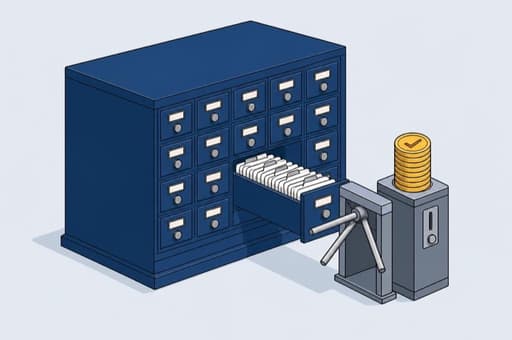
.com registry
The master list of every .com address. Sellers pay $10.26 per name per year, rising to $10.97 in November 2026 — the first increase since February 2024. The two contracts behind it both come up for renewal in 2030.
Competes with .cn (CNNIC) · .de (DENIC) · .xyz (XYZ.COM LLC)
In plain English
Every .com address on earth is a row in one database, and Verisign runs that database under contract. Type a .com and the internet asks Verisign's machines where that name actually lives.
It never sells to you. Around two thousand licensed sellers buy the right to hold a name for a year at a fixed wholesale price, then charge whatever they like on top. The money arrives before the year starts, so payments for time not yet served — worth roughly ten months of sales — sit on the books and are counted a month at a time. A price rise takes about two years to show up in full, because it only bites as each name comes up for renewal.

Registrar marketing and incentive programs
Verisign cannot sell to the public, so it pays the sellers to sell. Programs started in 2024 turned a shrinking name base into growth the company now expects at 5.2–6.0% this year; its biggest seller, named on a call as GoDaddy, was about 31% of 2025 revenue.
Competes with Registry-funded registrar promotions (Identity Digital) · Registrar promotions (Radix) · Channel programs (GoDaddy Registry)
In plain English
The unglamorous machinery behind the growth. Its government agreement forbids Verisign from retailing .com itself, so the only way to move volume is to make the shops push harder: shared marketing money, promotions and tools handed to the sellers who actually meet customers. Every seller has to be offered the same terms.
This shows up as cost rather than sales — running costs climbed to $138M in the June 2026 quarter from $121M a year earlier — and it is working: new names signed up that quarter rose 21% on the year before. The catch is that shops can swing back to raising their own retail prices instead of chasing volume, which is what shrank the base in 2024.
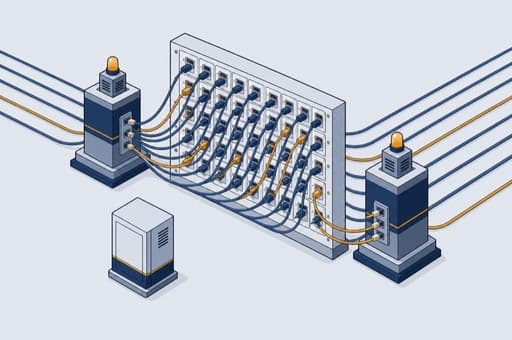
Shared Registration System and DNS network
The plumbing: one ordering system every seller plugs into, and the machines worldwide that answer where each address points. .com and .net have run 29 years without an outage. Equipment spending jumps to $55–65M this year from $22.8M.
Competes with Registry back-end platform (Identity Digital) · Registry back-end platform (Team Internet) · Registry back-end services (GoDaddy Registry)
In plain English
Railway signals and switches: the part nobody photographs, and the part everything else depends on. Sellers plug into a single ordering system to claim or renew a name, and a worldwide fleet of machines answers the question "where does this address point?" every time someone types one.
Nothing here is billed on its own. Its job is to make the toll defensible and to let 926 people run the entire company. The cost is normally tiny, but Verisign now expects to spend $55–65M on equipment in 2026 against $22.8M last year, pointing at the price of server memory and at competing with datacenter build-outs for the gear.
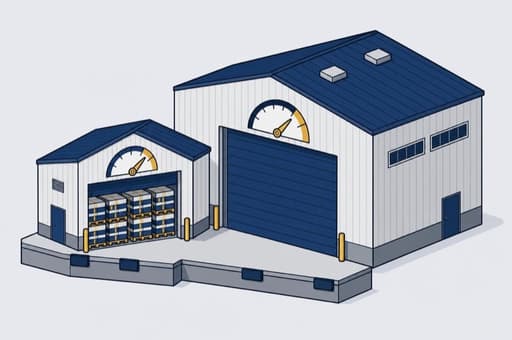
.net registry
The sibling ending — about 12.4 million names, the world's fourth largest, and barely growing while the wider market grew 8%. So the money comes from price: the fee rises to $12.00 in March 2027, the full 10% its contract allows.
Competes with .org (Public Interest Registry) · .io (Identity Digital) · .co (GoDaddy Registry)
In plain English
Same machine, different label. The .net ending began as the address space for the companies that ran the network itself; today it is a general-purpose alternative to .com. It sits on exactly the same systems and goes through exactly the same shops, so nearly every extra dollar it brings in drops straight through.
Its contract is the looser of the two: no government agreement, permission to lift the fee ten percent a year, and a renewal due in mid-2029. Verisign took the full ten percent in August 2026, which across roughly twelve million names is worth something like thirteen million dollars a year at wholesale.
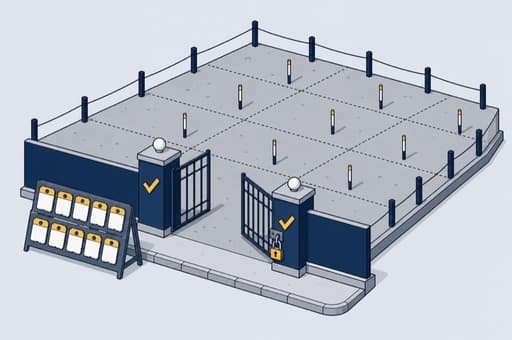
.web registry
The prize from a decade of fighting: a fresh ending, switched on in July 2026 after Verisign funded a record $135M auction bid in 2016. It can be priced freely, and this year's forecast assumes essentially nothing from it.
Competes with .xyz (XYZ.COM LLC) · .online (Radix) · .site (Identity Digital)
In plain English
Imagine being handed a street where not one house has been built. A new address ending is empty ground until people claim names on it, and Verisign bankrolled the winning bid for this one back in 2016, then spent ten years in disputes that were finally settled this year.
What makes it unlike .com is freedom: no cap on the price, the right to charge more for sought-after names, and fewer rules on how it may be promoted. First call goes to people who already hold the matching .com — well over a hundred million existing names. Selling starts after security testing and a window for trademark owners, late in 2026 or very early in 2027.

New security services
The first try at money from something other than domain names since the 2015 sell-offs. In test since early 2026 with no name, price or date — the launch waited on .web, and management says it will not become a sales organisation.
Competes with DNS security services (Cloudflare) · Edge and DNS security services (Akamai) · Certificate and PKI services (DigiCert)
In plain English
Verisign once sold trust for a living: the certificates that put the little padlock in your browser. It sold that business off around 2015, and is now circling back.
Management says it has strong candidates for services that cut down known and unknown weaknesses in systems, built on the always-on machinery and deliberate spare capacity it already runs. Nothing has been named, priced or dated, and none of it sits in this year's forecast. It would be sold through the same shops that sell the domain names, to new and existing customers. The argument for it is that AI services acting on their own will need security laid on far deeper than people ever did.


 .com registryThe master list of every .com address. Sellers pay $10.26 per name per year, rising to $10.97 in November 2026 — the first increase since February 2024. The two contracts behind it both come up for renewal in 2030.
The master list of every .com address. Sellers pay $10.26 per name per year, rising to $10.97 in November 2026 — the first increase since February 2024. The two contracts behind it both come up for renewal in 2030.
In plain English
Every .com address on earth is a row in one database, and Verisign runs that database under contract. Type a .com and the internet asks Verisign's machines where that name actually lives.
It never sells to you. Around two thousand licensed sellers buy the right to hold a name for a year at a fixed wholesale price, then charge whatever they like on top. The money arrives before the year starts, so payments for time not yet served — worth roughly ten months of sales — sit on the books and are counted a month at a time. A price rise takes about two years to show up in full, because it only bites as each name comes up for renewal.
Competes with .cn (CNNIC) · .de (DENIC) · .xyz (XYZ.COM LLC)
 Registrar marketing and incentive programsVerisign cannot sell to the public, so it pays the sellers to sell. Programs started in 2024 turned a shrinking name base into growth the company now expects at 5.2–6.0% this year; its biggest seller, named on a call as GoDaddy, was about 31% of 2025 revenue.
Verisign cannot sell to the public, so it pays the sellers to sell. Programs started in 2024 turned a shrinking name base into growth the company now expects at 5.2–6.0% this year; its biggest seller, named on a call as GoDaddy, was about 31% of 2025 revenue.
In plain English
The unglamorous machinery behind the growth. Its government agreement forbids Verisign from retailing .com itself, so the only way to move volume is to make the shops push harder: shared marketing money, promotions and tools handed to the sellers who actually meet customers. Every seller has to be offered the same terms.
This shows up as cost rather than sales — running costs climbed to $138M in the June 2026 quarter from $121M a year earlier — and it is working: new names signed up that quarter rose 21% on the year before. The catch is that shops can swing back to raising their own retail prices instead of chasing volume, which is what shrank the base in 2024.
Competes with Registry-funded registrar promotions (Identity Digital) · Registrar promotions (Radix) · Channel programs (GoDaddy Registry)
 Shared Registration System and DNS networkThe plumbing: one ordering system every seller plugs into, and the machines worldwide that answer where each address points. .com and .net have run 29 years without an outage. Equipment spending jumps to $55–65M this year from $22.8M.
The plumbing: one ordering system every seller plugs into, and the machines worldwide that answer where each address points. .com and .net have run 29 years without an outage. Equipment spending jumps to $55–65M this year from $22.8M.
In plain English
Railway signals and switches: the part nobody photographs, and the part everything else depends on. Sellers plug into a single ordering system to claim or renew a name, and a worldwide fleet of machines answers the question "where does this address point?" every time someone types one.
Nothing here is billed on its own. Its job is to make the toll defensible and to let 926 people run the entire company. The cost is normally tiny, but Verisign now expects to spend $55–65M on equipment in 2026 against $22.8M last year, pointing at the price of server memory and at competing with datacenter build-outs for the gear.
Competes with Registry back-end platform (Identity Digital) · Registry back-end platform (Team Internet) · Registry back-end services (GoDaddy Registry)
 .net registryThe sibling ending — about 12.4 million names, the world's fourth largest, and barely growing while the wider market grew 8%. So the money comes from price: the fee rises to $12.00 in March 2027, the full 10% its contract allows.
The sibling ending — about 12.4 million names, the world's fourth largest, and barely growing while the wider market grew 8%. So the money comes from price: the fee rises to $12.00 in March 2027, the full 10% its contract allows.
In plain English
Same machine, different label. The .net ending began as the address space for the companies that ran the network itself; today it is a general-purpose alternative to .com. It sits on exactly the same systems and goes through exactly the same shops, so nearly every extra dollar it brings in drops straight through.
Its contract is the looser of the two: no government agreement, permission to lift the fee ten percent a year, and a renewal due in mid-2029. Verisign took the full ten percent in August 2026, which across roughly twelve million names is worth something like thirteen million dollars a year at wholesale.
Competes with .org (Public Interest Registry) · .io (Identity Digital) · .co (GoDaddy Registry)
 .web registryThe prize from a decade of fighting: a fresh ending, switched on in July 2026 after Verisign funded a record $135M auction bid in 2016. It can be priced freely, and this year's forecast assumes essentially nothing from it.
The prize from a decade of fighting: a fresh ending, switched on in July 2026 after Verisign funded a record $135M auction bid in 2016. It can be priced freely, and this year's forecast assumes essentially nothing from it.
In plain English
Imagine being handed a street where not one house has been built. A new address ending is empty ground until people claim names on it, and Verisign bankrolled the winning bid for this one back in 2016, then spent ten years in disputes that were finally settled this year.
What makes it unlike .com is freedom: no cap on the price, the right to charge more for sought-after names, and fewer rules on how it may be promoted. First call goes to people who already hold the matching .com — well over a hundred million existing names. Selling starts after security testing and a window for trademark owners, late in 2026 or very early in 2027.
Competes with .xyz (XYZ.COM LLC) · .online (Radix) · .site (Identity Digital)
 New security servicesThe first try at money from something other than domain names since the 2015 sell-offs. In test since early 2026 with no name, price or date — the launch waited on .web, and management says it will not become a sales organisation.
The first try at money from something other than domain names since the 2015 sell-offs. In test since early 2026 with no name, price or date — the launch waited on .web, and management says it will not become a sales organisation.
In plain English
Verisign once sold trust for a living: the certificates that put the little padlock in your browser. It sold that business off around 2015, and is now circling back.
Management says it has strong candidates for services that cut down known and unknown weaknesses in systems, built on the always-on machinery and deliberate spare capacity it already runs. Nothing has been named, priced or dated, and none of it sits in this year's forecast. It would be sold through the same shops that sell the domain names, to new and existing customers. The argument for it is that AI services acting on their own will need security laid on far deeper than people ever did.
Competes with DNS security services (Cloudflare) · Edge and DNS security services (Akamai) · Certificate and PKI services (DigiCert)
Named in filings, launches and programs
- Root zone maintainer and the A and J root serversEcosystemVerisign keeps the internet's top-level directory and runs two of the thirteen machines the whole system starts from, charging nothing — the record behind its 2030 renewals.
- .edu back-end servicesServiceVerisign runs the machinery behind .edu for someone else, under an agreement separate from its own endings.
- .cc registryPlatformA country ending licensed from the Cocos (Keeling) Islands and sold worldwide as a general-purpose address; Verisign has never sized it.
- .name registryPlatformOne of the small endings Verisign runs alongside .com and .net, far too slight to move the company's numbers either way.
- Non-Latin .com and .netProduct lineVersions of .com and .net written in over a hundred languages and scripts, sold through the same shops; never counted out on their own.
- Unlaunched 2012-round endingsProduct line · Pre-revenueTwenty-two endings Verisign won years ago and never switched on; outside tallies put roughly twenty thousand names across all of them combined.
- ICANN's 2026 round of new endingsProduct line · AnnouncedApplications opened in 2026. Verisign says it is still weighing whether to take part, and expects nothing it applied for to launch before 2028.
- DNIB.com (Domain Name Industry Brief)BrandVerisign's quarterly count of the world's domain names — roughly 400 million at mid-2026 — which the industry treats as its reference figure.
Root zone maintainer and the A and J root serversEcosystem
Verisign keeps the internet's top-level directory and runs two of the thirteen machines the whole system starts from, charging nothing — the record behind its 2030 renewals.
.edu back-end servicesService
Verisign runs the machinery behind .edu for someone else, under an agreement separate from its own endings.
.cc registryPlatform
A country ending licensed from the Cocos (Keeling) Islands and sold worldwide as a general-purpose address; Verisign has never sized it.
.name registryPlatform
One of the small endings Verisign runs alongside .com and .net, far too slight to move the company's numbers either way.
Non-Latin .com and .netProduct line
Versions of .com and .net written in over a hundred languages and scripts, sold through the same shops; never counted out on their own.
Unlaunched 2012-round endingsProduct line · Pre-revenue
Twenty-two endings Verisign won years ago and never switched on; outside tallies put roughly twenty thousand names across all of them combined.
ICANN's 2026 round of new endingsProduct line · Announced
Applications opened in 2026. Verisign says it is still weighing whether to take part, and expects nothing it applied for to launch before 2028.
DNIB.com (Domain Name Industry Brief)Brand
Verisign's quarterly count of the world's domain names — roughly 400 million at mid-2026 — which the industry treats as its reference figure.