
WEC Energy Group (WEC)
Operator of regulated electric and gas utilities across four Midwestern states.
Something off on this page? Send us feedback.
WEC Energy Group sells electricity and natural gas to millions of homes and businesses across Wisconsin, Illinois, Michigan and Minnesota. It does not compete for those customers — state regulators set what it can charge and allow it a set return on the equipment it is permitted to build. So the only way it grows is by building. What it is building for now is data centers, and Chicago's old iron gas pipes.
Item facts: FY2025 · year ended Dec 31, 2025, from filings, earnings calls and company pages.
Judgment weights, not filed revenue
The band summarizes business focus and direction. ~ marks estimates.
7 in detail · 11 more below
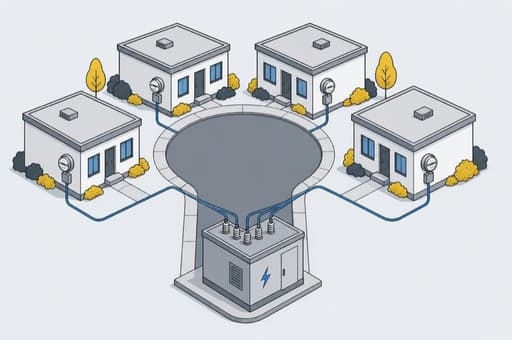
We Energies and Wisconsin Public Service
The engine: four regulated utilities carrying electricity and gas across Wisconsin and the Upper Peninsula, 74.4% of FY2025 revenue and $1,054.8M of profit. Watch the rate review filed in April 2026 — orders are due at the end of 2026.
Competes with Wisconsin Power and Light retail electric (Alliant Energy) · NSP-Wisconsin retail electric (Xcel Energy) · Madison electric and gas franchise (Madison Gas and Electric)
In plain English
Three quarters of this company is one place. Wisconsin Electric, Wisconsin Public Service, Wisconsin Gas and the Upper Michigan utility hold the group's only electric franchise, so the wires and the pipes running into a Wisconsin kitchen are theirs and nobody else's.
Nobody there can shop around, and in exchange the state decides the price. Regulators check what was spent on poles, plants and pipes, then set rates that cover those costs plus an agreed profit — lately a 9.8% return on the shareholder-funded slice of that equipment. The fuel itself is largely billed on at cost, so a cold winter swells the sales line far more than the earnings.
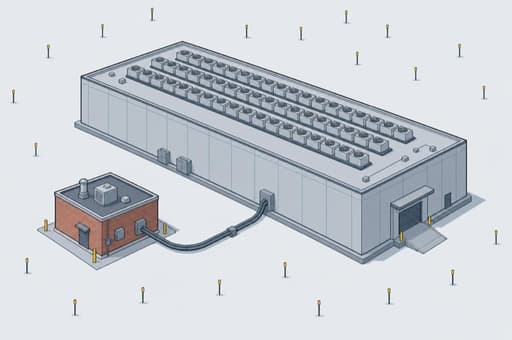
Very Large Customer tariff and data-center load
Wisconsin's rule for giant new customers: data centers pay the full cost of what gets built for them. Microsoft's Mount Pleasant campus is running and Vantage is building for Oracle and OpenAI at Port Washington. By 2030 roughly one dollar in seven of everything WEC owns is meant to be equipment for these customers.
Competes with Meta power contract at Beaver Dam (Alliant Energy) · Large-load power tariff (Xcel Energy) · Large-load power tariff (Ameren)
In plain English
Imagine one new customer on the street who wants as much electricity as a small city. That is a data center — a windowless hall of computers that runs all day and never takes a holiday. Wisconsin's regulator wrote a rule for exactly these arrivals: they pay the full allotted cost of the plants and lines built for them, so it does not land on everyone else's bill.
Two have signed. Microsoft's first building at Mount Pleasant is operating, and Vantage Data Centers, a company that builds these halls for others to use, is putting up a campus at Port Washington for Oracle and OpenAI. The rule also demands a strong credit rating, and Oracle has taken the regulator to court over that requirement.
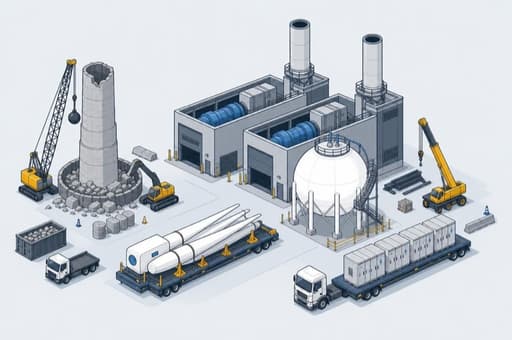
Wisconsin generation rebuild and LNG storage
Coal out, everything else in: gas turbines at Oak Creek, a seven-engine plant at Paris due late 2027, 6,500 MW of wind and solar, batteries and a chilled-gas tank. Roughly $20B of the $37.5B five-year plan.
Competes with Wisconsin gas and solar build (Alliant Energy) · Power plants selling into the regional grid (Independent power producers)
In plain English
Old coal units are closing while enormous new customers arrive, so WEC is building replacements — banks of gas-fired engines that can be called on when demand spikes, wind and solar farms, batteries that hold the afternoon's sunshine for the evening, and a tank that chills natural gas into a liquid, which packs far more of it into one place than a gas-filled tank would hold.
None of it is sold to anyone as a product. Every dollar the regulator approves joins the pile of equipment the state lets WEC earn a return on, which is why management talks about the size of the spending plan rather than about sales.
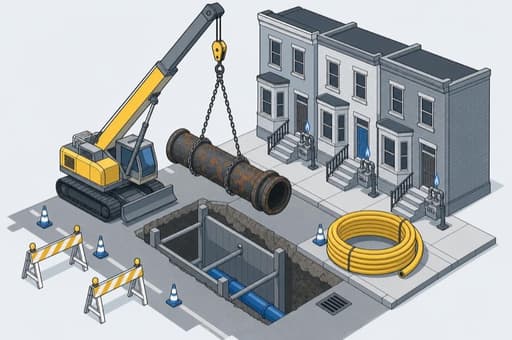
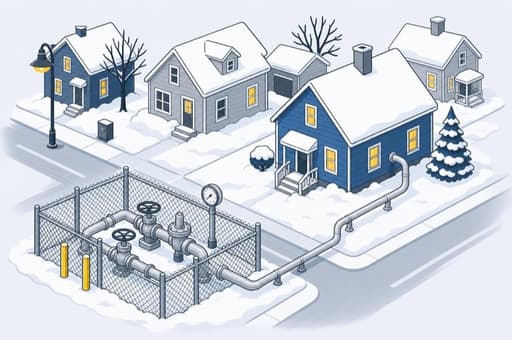
Peoples Gas and North Shore Gas
Chicago's gas distributor and its northern suburbs: 17.2% of FY2025 revenue but only $122.1M of profit after a $130.0M charge. Rate requests of $202M and $14.4M sit with the Illinois commission for 2027.
Competes with Nicor Gas distribution (Southern Company Gas) · Ameren Illinois gas distribution (Ameren)
In plain English
Under Chicago's streets runs a web of gas mains, some of them cast iron laid generations ago. Peoples Gas pushes gas through them to furnaces and stoves; North Shore Gas does the same job north of the city. Neither marks the gas up — the fuel is billed on at cost — so the money is the delivery charge on every bill.
This is the corner of WEC that keeps getting told no. Illinois regulators scrapped the old pipe-replacement program, then ordered every cast and ductile iron main under three feet across gone by 2035. A settlement with the state attorney general closed a dozen disputed billing cases and cost the segment $130.0M.
Minnesota Energy Resources and Michigan Gas Utilities
Gas delivery in Minnesota and lower Michigan — 5.4% of FY2025 revenue and $60.8M of profit, the smallest and steadiest utility piece. Its 2025 Michigan case settled at a 9.86% allowed return.
Competes with Minnesota gas distribution (CenterPoint Energy) · Minnesota gas distribution (Xcel Energy) · Michigan gas distribution (Consumers Energy)
In plain English
The quiet one. Two gas utilities, one in Minnesota and one in lower Michigan, deliver heat to towns outside the home state, and their year is shaped entirely by the calendar: revenue in the first quarter of 2025 was more than four times the third quarter's.
There is nothing clever here — pipes, meters, a bill each month. Households pay for the gas at cost plus a charge for bringing it to the door, and the regulator in each state sets that charge after going through the books. Its job is to be dull and dependable while the money and the attention go to Wisconsin.
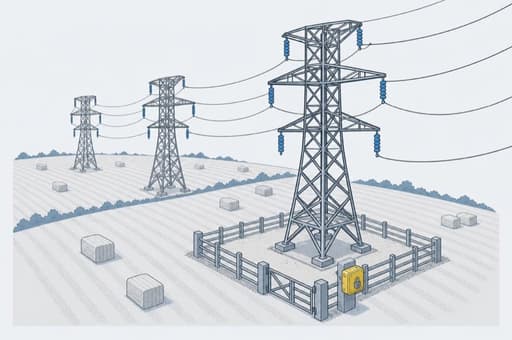
American Transmission Company
WEC owns about 60% of the company that runs high-voltage lines across four states. It adds nothing to revenue but sent $147.6M of profit in FY2025, and WEC's share of its spending runs to about $4.1B through 2030.
Competes with ITC Holdings transmission projects (Fortis) · Bids for the same regional line projects (Other incumbent grid owners)
In plain English
Before electricity reaches a local utility it travels a long way on high-voltage lines — the steel towers that stride across farmland. American Transmission Company owns those in Wisconsin, Illinois, Michigan and Minnesota, and WEC owns roughly sixty percent of it.
Because WEC does not run it outright, none of the line charges show up as WEC sales; what arrives is a share of the profit, $147.6M in FY2025. The lines are paid for by everyone who uses the grid, at rates federal regulators set. New work comes from the regional grid operator's long-range plan, whose latest round was expected to hand this company around $2B of projects.
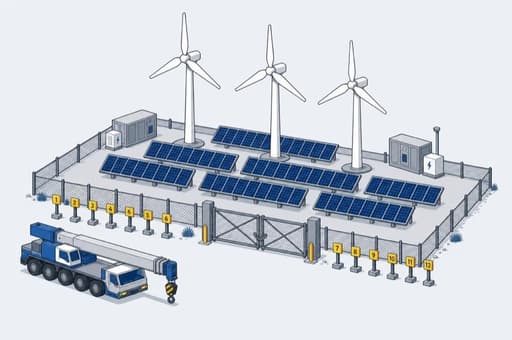
WEC Infrastructure wind and solar fleet
Twelve wind and solar farms from South Dakota to Texas, together able to make more than 2,600 megawatts, every one sold ahead to a big buyer. Management has closed it to new money.
Competes with Contracted wind and solar portfolio (NextEra Energy Resources) · Regulated Wisconsin wind and solar (WEC Energy Group)
In plain English
A side business, now fenced off. WEC owns most of twelve wind and solar farms scattered from South Dakota to Texas, and each sells its output years ahead at an agreed price to one large buyer — Microsoft, Google, Meta, AT&T, Honda and others are on the list. No households, no meters, no state commission: a contract and the weather.
It was meant to be a second engine and has been switched off as one. The money went instead into regulated wind and solar inside Wisconsin, where the state allows a return on it, and management says nothing further is planned for this fleet.


 We Energies and Wisconsin Public ServiceThe engine: four regulated utilities carrying electricity and gas across Wisconsin and the Upper Peninsula, 74.4% of FY2025 revenue and $1,054.8M of profit. Watch the rate review filed in April 2026 — orders are due at the end of 2026.
The engine: four regulated utilities carrying electricity and gas across Wisconsin and the Upper Peninsula, 74.4% of FY2025 revenue and $1,054.8M of profit. Watch the rate review filed in April 2026 — orders are due at the end of 2026.
In plain English
Three quarters of this company is one place. Wisconsin Electric, Wisconsin Public Service, Wisconsin Gas and the Upper Michigan utility hold the group's only electric franchise, so the wires and the pipes running into a Wisconsin kitchen are theirs and nobody else's.
Nobody there can shop around, and in exchange the state decides the price. Regulators check what was spent on poles, plants and pipes, then set rates that cover those costs plus an agreed profit — lately a 9.8% return on the shareholder-funded slice of that equipment. The fuel itself is largely billed on at cost, so a cold winter swells the sales line far more than the earnings.
Competes with Wisconsin Power and Light retail electric (Alliant Energy) · NSP-Wisconsin retail electric (Xcel Energy) · Madison electric and gas franchise (Madison Gas and Electric)
 Very Large Customer tariff and data-center loadWisconsin's rule for giant new customers: data centers pay the full cost of what gets built for them. Microsoft's Mount Pleasant campus is running and Vantage is building for Oracle and OpenAI at Port Washington. By 2030 roughly one dollar in seven of everything WEC owns is meant to be equipment for these customers.
Wisconsin's rule for giant new customers: data centers pay the full cost of what gets built for them. Microsoft's Mount Pleasant campus is running and Vantage is building for Oracle and OpenAI at Port Washington. By 2030 roughly one dollar in seven of everything WEC owns is meant to be equipment for these customers.
In plain English
Imagine one new customer on the street who wants as much electricity as a small city. That is a data center — a windowless hall of computers that runs all day and never takes a holiday. Wisconsin's regulator wrote a rule for exactly these arrivals: they pay the full allotted cost of the plants and lines built for them, so it does not land on everyone else's bill.
Two have signed. Microsoft's first building at Mount Pleasant is operating, and Vantage Data Centers, a company that builds these halls for others to use, is putting up a campus at Port Washington for Oracle and OpenAI. The rule also demands a strong credit rating, and Oracle has taken the regulator to court over that requirement.
Competes with Meta power contract at Beaver Dam (Alliant Energy) · Large-load power tariff (Xcel Energy) · Large-load power tariff (Ameren)
 Wisconsin generation rebuild and LNG storageCoal out, everything else in: gas turbines at Oak Creek, a seven-engine plant at Paris due late 2027, 6,500 MW of wind and solar, batteries and a chilled-gas tank. Roughly $20B of the $37.5B five-year plan.
Coal out, everything else in: gas turbines at Oak Creek, a seven-engine plant at Paris due late 2027, 6,500 MW of wind and solar, batteries and a chilled-gas tank. Roughly $20B of the $37.5B five-year plan.
In plain English
Old coal units are closing while enormous new customers arrive, so WEC is building replacements — banks of gas-fired engines that can be called on when demand spikes, wind and solar farms, batteries that hold the afternoon's sunshine for the evening, and a tank that chills natural gas into a liquid, which packs far more of it into one place than a gas-filled tank would hold.
None of it is sold to anyone as a product. Every dollar the regulator approves joins the pile of equipment the state lets WEC earn a return on, which is why management talks about the size of the spending plan rather than about sales.
Competes with Wisconsin gas and solar build (Alliant Energy) · Power plants selling into the regional grid (Independent power producers)
 Peoples Gas and North Shore GasChicago's gas distributor and its northern suburbs: 17.2% of FY2025 revenue but only $122.1M of profit after a $130.0M charge. Rate requests of $202M and $14.4M sit with the Illinois commission for 2027.
Chicago's gas distributor and its northern suburbs: 17.2% of FY2025 revenue but only $122.1M of profit after a $130.0M charge. Rate requests of $202M and $14.4M sit with the Illinois commission for 2027.
In plain English
Under Chicago's streets runs a web of gas mains, some of them cast iron laid generations ago. Peoples Gas pushes gas through them to furnaces and stoves; North Shore Gas does the same job north of the city. Neither marks the gas up — the fuel is billed on at cost — so the money is the delivery charge on every bill.
This is the corner of WEC that keeps getting told no. Illinois regulators scrapped the old pipe-replacement program, then ordered every cast and ductile iron main under three feet across gone by 2035. A settlement with the state attorney general closed a dozen disputed billing cases and cost the segment $130.0M.
Competes with Nicor Gas distribution (Southern Company Gas) · Ameren Illinois gas distribution (Ameren)
 Minnesota Energy Resources and Michigan Gas UtilitiesGas delivery in Minnesota and lower Michigan — 5.4% of FY2025 revenue and $60.8M of profit, the smallest and steadiest utility piece. Its 2025 Michigan case settled at a 9.86% allowed return.
Gas delivery in Minnesota and lower Michigan — 5.4% of FY2025 revenue and $60.8M of profit, the smallest and steadiest utility piece. Its 2025 Michigan case settled at a 9.86% allowed return.
In plain English
The quiet one. Two gas utilities, one in Minnesota and one in lower Michigan, deliver heat to towns outside the home state, and their year is shaped entirely by the calendar: revenue in the first quarter of 2025 was more than four times the third quarter's.
There is nothing clever here — pipes, meters, a bill each month. Households pay for the gas at cost plus a charge for bringing it to the door, and the regulator in each state sets that charge after going through the books. Its job is to be dull and dependable while the money and the attention go to Wisconsin.
Competes with Minnesota gas distribution (CenterPoint Energy) · Minnesota gas distribution (Xcel Energy) · Michigan gas distribution (Consumers Energy)
 American Transmission CompanyWEC owns about 60% of the company that runs high-voltage lines across four states. It adds nothing to revenue but sent $147.6M of profit in FY2025, and WEC's share of its spending runs to about $4.1B through 2030.
WEC owns about 60% of the company that runs high-voltage lines across four states. It adds nothing to revenue but sent $147.6M of profit in FY2025, and WEC's share of its spending runs to about $4.1B through 2030.
In plain English
Before electricity reaches a local utility it travels a long way on high-voltage lines — the steel towers that stride across farmland. American Transmission Company owns those in Wisconsin, Illinois, Michigan and Minnesota, and WEC owns roughly sixty percent of it.
Because WEC does not run it outright, none of the line charges show up as WEC sales; what arrives is a share of the profit, $147.6M in FY2025. The lines are paid for by everyone who uses the grid, at rates federal regulators set. New work comes from the regional grid operator's long-range plan, whose latest round was expected to hand this company around $2B of projects.
Competes with ITC Holdings transmission projects (Fortis) · Bids for the same regional line projects (Other incumbent grid owners)
 WEC Infrastructure wind and solar fleetTwelve wind and solar farms from South Dakota to Texas, together able to make more than 2,600 megawatts, every one sold ahead to a big buyer. Management has closed it to new money.
Twelve wind and solar farms from South Dakota to Texas, together able to make more than 2,600 megawatts, every one sold ahead to a big buyer. Management has closed it to new money.
In plain English
A side business, now fenced off. WEC owns most of twelve wind and solar farms scattered from South Dakota to Texas, and each sells its output years ahead at an agreed price to one large buyer — Microsoft, Google, Meta, AT&T, Honda and others are on the list. No households, no meters, no state commission: a contract and the weather.
It was meant to be a second engine and has been switched off as one. The money went instead into regulated wind and solar inside Wisconsin, where the state allows a return on it, and management says nothing further is planned for this fleet.
Competes with Contracted wind and solar portfolio (NextEra Energy Resources) · Regulated Wisconsin wind and solar (WEC Energy Group)
Named in filings, launches and programs
- We PowerBrandBuilds and owns generating plants, including Elm Road, and leases them to Wisconsin Electric — its only tenant, so the rent cancels out inside the group.
- Peoples Gas Pipe Retirement ProgramCustomer programThe ordered removal of roughly 1,000 remaining miles of iron pipe under Chicago by 2035 — the named driver of the higher gas spending plan.
- Microsoft at Mount PleasantCustomer programA 15-year service contract on a site above 2,200 acres; the first facility was fully operating as of July 2026.
- Vantage Data Centers at Port WashingtonCustomer program · RampingAbout 1,900 acres being built for Oracle and OpenAI, a $15B first phase targeted for 2028, and possibly 3.5 GW of demand over time.
- Wisconsin LNG storage facilityProduct line · AnnouncedA chilled-gas tank at Oak Creek, about $456M, targeted for late 2027 — gas held as a liquid so far more of it fits on site.
- Paris Solar Park and Darien Solar ParkProduct lineRegulated Wisconsin solar already earning: Paris, 180 MW at about $319M, in service end-2024; Darien, 225 MW, during 2025.
- Bluewater Gas StorageBrandUnderground storage in Michigan covering about a third of the Wisconsin gas utilities' storage needs; long-term deals cover nearly all its capacity.
- Upper Michigan Energy ResourcesBrandElectric and gas utility for the Upper Peninsula, reported inside the Wisconsin segment; its 2025 case settled at a 9.86% allowed return.
- Wisconsin Public ServiceBrandThe second big Wisconsin brand, delivering electricity and gas alongside We Energies inside the same segment.
- ATC HoldcoBrandA roughly 75%-owned vehicle set up in 2016 to invest in transmission beyond American Transmission Company's own territory.
- Corporate and OtherSegmentThe parent company's own borrowing and the costs pinned to no single utility — a net loss near $238M in FY2025.
We PowerBrand
Builds and owns generating plants, including Elm Road, and leases them to Wisconsin Electric — its only tenant, so the rent cancels out inside the group.
Peoples Gas Pipe Retirement ProgramCustomer program
The ordered removal of roughly 1,000 remaining miles of iron pipe under Chicago by 2035 — the named driver of the higher gas spending plan.
Microsoft at Mount PleasantCustomer program
A 15-year service contract on a site above 2,200 acres; the first facility was fully operating as of July 2026.
Vantage Data Centers at Port WashingtonCustomer program · Ramping
About 1,900 acres being built for Oracle and OpenAI, a $15B first phase targeted for 2028, and possibly 3.5 GW of demand over time.
Wisconsin LNG storage facilityProduct line · Announced
A chilled-gas tank at Oak Creek, about $456M, targeted for late 2027 — gas held as a liquid so far more of it fits on site.
Paris Solar Park and Darien Solar ParkProduct line
Regulated Wisconsin solar already earning: Paris, 180 MW at about $319M, in service end-2024; Darien, 225 MW, during 2025.
Bluewater Gas StorageBrand
Underground storage in Michigan covering about a third of the Wisconsin gas utilities' storage needs; long-term deals cover nearly all its capacity.
Upper Michigan Energy ResourcesBrand
Electric and gas utility for the Upper Peninsula, reported inside the Wisconsin segment; its 2025 case settled at a 9.86% allowed return.
Wisconsin Public ServiceBrand
The second big Wisconsin brand, delivering electricity and gas alongside We Energies inside the same segment.
ATC HoldcoBrand
A roughly 75%-owned vehicle set up in 2016 to invest in transmission beyond American Transmission Company's own territory.
Corporate and OtherSegment
The parent company's own borrowing and the costs pinned to no single utility — a net loss near $238M in FY2025.