
Western Midstream Partners (WES)
Moves and processes gas, liquids, crude oil, and produced water across major American basins.
Something off on this page? Send us feedback.
Western Midstream owns the pipes, plants and wells that handle what comes out of an oil well — natural gas, crude, and the salty water that rises with it. Producers pay a fee for every unit that crosses the system. Occidental owns a big slice of the partnership, controls it, and is also its largest customer. Recent purchases are tilting the business toward water, and toward customers other than Occidental.
Item facts: FY2025 + H1 2026 filings · 2026 outlook, from filings, earnings calls and company pages.
Judgment weights, not filed revenue
The band summarizes business focus and direction. ~ marks estimates.
7 in detail · 12 more below
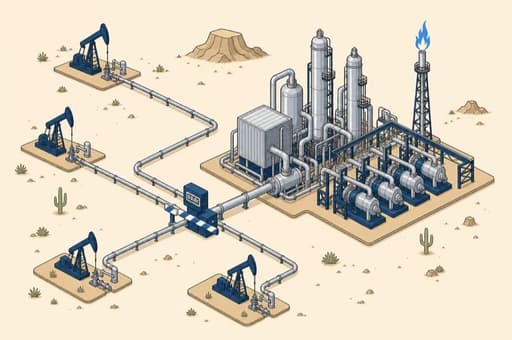
West Texas complex — Delaware Basin gas gathering & processing
The biggest engine: collecting and chilling the gas that comes up with West Texas oil, roughly a third of revenue. Occidental supplied 43% of what crossed it at the end of 2025. Watch the newly bought and newly built capacity fill.
Competes with Permian Delaware gathering & processing (Targa Resources) · San Mateo northern Delaware system (Matador Resources)
In plain English
Pump oil out of West Texas rock and gas comes up with it whether the producer wants it or not — and the oil has to stop if the gas has nowhere to go. Western Midstream's West Texas system is that somewhere: pipes collecting gas from wells, compressors pushing it along, and plants chilling it until the heavier liquids drop out.
Producers sign long agreements tying their acreage to the system and promising minimum volumes, then pay a fee on every thousand cubic feet that crosses. The rate management guides to this year is about $1.28.
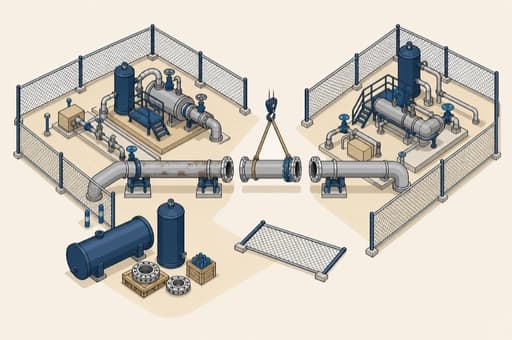
Brazos Delaware II
A neighbouring gathering business bought for $1.6B and closed in June 2026: over 900 miles of pipe and plant enough for 460 million cubic feet of gas a day, lifting West Texas dedicated acreage 49%. Guided to add roughly $100M of cash earnings this year.
Competes with Three new Permian Delaware plants (Targa Resources) · Cardinal Midstream purchase (San Mateo (Matador))
In plain English
Think of buying the plumbing next door and knocking through the wall. Brazos Delaware II gathered and processed gas on acreage right beside Western Midstream's own, so the two systems can be run as one.
It earns the same way everything here does — fees from producers whose land is tied to the pipes — and it brings more dedicated ground, spare processing room that ends paying rivals to handle overflow gas, and customers who are not Occidental. Note how it was paid for: about $800 million of cash plus roughly $852 million of newly issued partnership units, because nearly all the cash this business throws off already goes straight back out to unitholders.
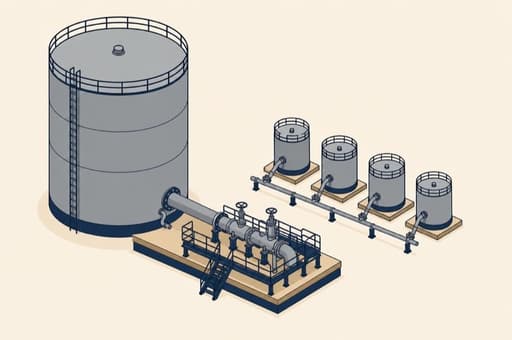
Occidental contract portfolio
Occidental is part-owner, controlling partner and biggest customer at once, touching gas, oil and water. About half of early-2026 revenue came from it, down from roughly three-fifths a year earlier. Watch whether that decline keeps going.
Competes with Self-build, self-operate midstream (Occidental) · Permian Delaware system (Targa Resources)
In plain English
An unusual arrangement: the largest customer also part-owns the business and controls the partnership that runs it. Occidental drills in West Texas and Colorado, and nearly all the crude Western Midstream handles comes from it, along with a large share of the gas and water.
So one relationship sets the terms. In January 2026 the two rewrote the West Texas gas contracts from cost-plus pricing into flat per-unit fees with minimum volumes running into the mid-to-late 2030s, and Occidental handed back units worth about $610 million rather than taking cash. Longer locked-in revenue for the partnership; a slightly smaller stake for Occidental.
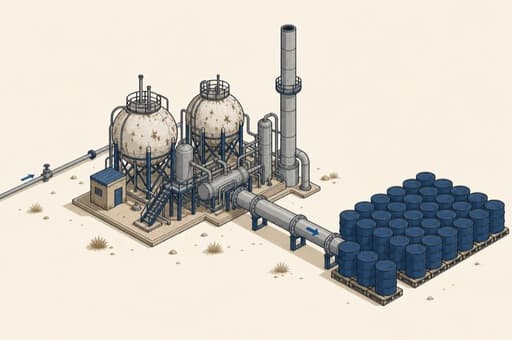
DJ Basin complex — natural-gas gathering & processing
Colorado gas gathering and processing, around a quarter of revenue and the steady cash source rather than the growth one. Volumes are guided to fall mid-single digits this year, and it takes only 5% of the capital budget.
Competes with DJ Basin gathering & processing (Phillips 66) · DJ South crude gathering (Elevation Midstream)
In plain English
A mature Colorado gas field, drilled long enough that the well count is falling. Western Midstream runs five plants there — Platte Valley, Fort Lupton, Wattenberg, Lancaster and Latham — cleaning the gas and stripping out the liquids before it goes to market.
Its job is not to grow; it is to throw off the cash that funds building elsewhere, which is why it gets about a twentieth of this year's construction money. The awkward part is the paperwork: producer agreements here average roughly four years, short for this business, and about three-quarters of the area's output now sits with three companies — Chevron, Civitas and Occidental.
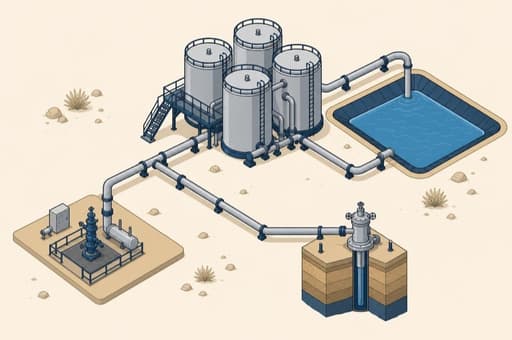
DBM Water Systems
Every barrel of West Texas oil brings up four to five barrels of salty water. Moving, cleaning and burying it is about a sixth of revenue and guided to grow roughly 85% this year, mostly because Aris was bought.
Competes with Water Infrastructure (Select Water Solutions) · Integrated produced-water network (WaterBridge)
In plain English
Most of what a West Texas well brings up is not oil at all. Across West Texas and New Mexico, four to five barrels of salty, undrinkable water surface with every barrel of oil, and all of it has to go somewhere. Western Midstream collects it in pipes, cleans part of it so producers can reuse it in new wells, and pumps the rest deep underground.
Customers pay by the barrel — about 91 cents this year — on agreements averaging more than nine years. Buying Aris Water Solutions, a rival water handler, in October 2025 roughly doubled the business and brought Chevron, ConocoPhillips and Mewbourne in as customers.
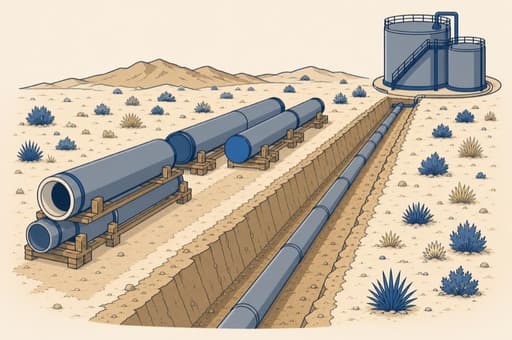
Pathfinder Pipeline
A 42-mile water line due to start in early 2027, carrying more than 800,000 barrels a day east to ground with space left underground. Occidental has already committed to most of the capacity, so the demand exists before the first barrel.
Competes with Northern Delaware water infrastructure (Select Water Solutions) · Long-haul produced-water route (WaterBridge)
In plain English
Where West Texas operators have pushed waste water underground the longest, the rock is running out of room and the state watches new permits closely. Pathfinder is the way around that: a 42-mile, 30-inch steel line, lined with plastic, carrying more than 800,000 barrels a day eastward to emptier ground.
Nothing is earned until it starts up in early 2027, and it costs $300–350 million to build. But Occidental has already signed for 280,000 barrels a day of moving and 220,000 of disposal, with minimum payments attached — the customer was found before the pipe was laid.
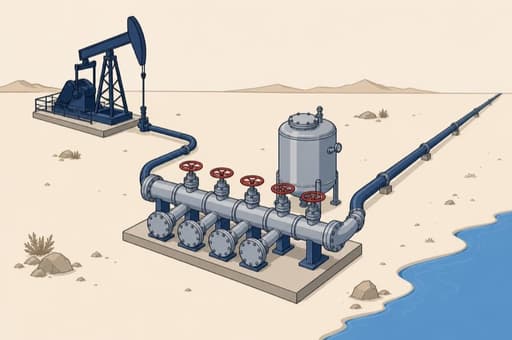
DBM Oil System — Delaware crude-oil & NGL gathering
West Texas crude and liquids gathering: under a tenth of revenue, on the longest agreements in the portfolio at over twelve years, and the most dependent on one name. Volumes are guided to dip slightly this year.
Competes with Permian Delaware crude gathering (Targa Resources) · San Mateo Midstream (Matador Resources)
In plain English
The plainest part of the business. Crude leaves a well mixed with gas and grit; Western Midstream's lines collect it, settle it into something a long-haul pipeline will accept, and hand it on. About 355,000 barrels a day of West Texas oil go through.
Every barrel is billed as a flat fee rather than a cut of the oil price, and the agreements run beyond twelve years — the sturdiest revenue on this map. The catch sits in a single name: 99 of every 100 barrels here come from Occidental, so the line rises and falls with one company's drilling plans.


 West Texas complex — Delaware Basin gas gathering & processingThe biggest engine: collecting and chilling the gas that comes up with West Texas oil, roughly a third of revenue. Occidental supplied 43% of what crossed it at the end of 2025. Watch the newly bought and newly built capacity fill.
The biggest engine: collecting and chilling the gas that comes up with West Texas oil, roughly a third of revenue. Occidental supplied 43% of what crossed it at the end of 2025. Watch the newly bought and newly built capacity fill.
In plain English
Pump oil out of West Texas rock and gas comes up with it whether the producer wants it or not — and the oil has to stop if the gas has nowhere to go. Western Midstream's West Texas system is that somewhere: pipes collecting gas from wells, compressors pushing it along, and plants chilling it until the heavier liquids drop out.
Producers sign long agreements tying their acreage to the system and promising minimum volumes, then pay a fee on every thousand cubic feet that crosses. The rate management guides to this year is about $1.28.
Competes with Permian Delaware gathering & processing (Targa Resources) · San Mateo northern Delaware system (Matador Resources)
 Brazos Delaware IIA neighbouring gathering business bought for $1.6B and closed in June 2026: over 900 miles of pipe and plant enough for 460 million cubic feet of gas a day, lifting West Texas dedicated acreage 49%. Guided to add roughly $100M of cash earnings this year.
A neighbouring gathering business bought for $1.6B and closed in June 2026: over 900 miles of pipe and plant enough for 460 million cubic feet of gas a day, lifting West Texas dedicated acreage 49%. Guided to add roughly $100M of cash earnings this year.
In plain English
Think of buying the plumbing next door and knocking through the wall. Brazos Delaware II gathered and processed gas on acreage right beside Western Midstream's own, so the two systems can be run as one.
It earns the same way everything here does — fees from producers whose land is tied to the pipes — and it brings more dedicated ground, spare processing room that ends paying rivals to handle overflow gas, and customers who are not Occidental. Note how it was paid for: about $800 million of cash plus roughly $852 million of newly issued partnership units, because nearly all the cash this business throws off already goes straight back out to unitholders.
Competes with Three new Permian Delaware plants (Targa Resources) · Cardinal Midstream purchase (San Mateo (Matador))
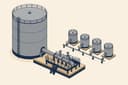 Occidental contract portfolioOccidental is part-owner, controlling partner and biggest customer at once, touching gas, oil and water. About half of early-2026 revenue came from it, down from roughly three-fifths a year earlier. Watch whether that decline keeps going.
Occidental is part-owner, controlling partner and biggest customer at once, touching gas, oil and water. About half of early-2026 revenue came from it, down from roughly three-fifths a year earlier. Watch whether that decline keeps going.
In plain English
An unusual arrangement: the largest customer also part-owns the business and controls the partnership that runs it. Occidental drills in West Texas and Colorado, and nearly all the crude Western Midstream handles comes from it, along with a large share of the gas and water.
So one relationship sets the terms. In January 2026 the two rewrote the West Texas gas contracts from cost-plus pricing into flat per-unit fees with minimum volumes running into the mid-to-late 2030s, and Occidental handed back units worth about $610 million rather than taking cash. Longer locked-in revenue for the partnership; a slightly smaller stake for Occidental.
Competes with Self-build, self-operate midstream (Occidental) · Permian Delaware system (Targa Resources)
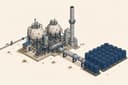 DJ Basin complex — natural-gas gathering & processingColorado gas gathering and processing, around a quarter of revenue and the steady cash source rather than the growth one. Volumes are guided to fall mid-single digits this year, and it takes only 5% of the capital budget.
Colorado gas gathering and processing, around a quarter of revenue and the steady cash source rather than the growth one. Volumes are guided to fall mid-single digits this year, and it takes only 5% of the capital budget.
In plain English
A mature Colorado gas field, drilled long enough that the well count is falling. Western Midstream runs five plants there — Platte Valley, Fort Lupton, Wattenberg, Lancaster and Latham — cleaning the gas and stripping out the liquids before it goes to market.
Its job is not to grow; it is to throw off the cash that funds building elsewhere, which is why it gets about a twentieth of this year's construction money. The awkward part is the paperwork: producer agreements here average roughly four years, short for this business, and about three-quarters of the area's output now sits with three companies — Chevron, Civitas and Occidental.
Competes with DJ Basin gathering & processing (Phillips 66) · DJ South crude gathering (Elevation Midstream)
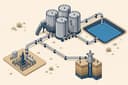 DBM Water SystemsEvery barrel of West Texas oil brings up four to five barrels of salty water. Moving, cleaning and burying it is about a sixth of revenue and guided to grow roughly 85% this year, mostly because Aris was bought.
Every barrel of West Texas oil brings up four to five barrels of salty water. Moving, cleaning and burying it is about a sixth of revenue and guided to grow roughly 85% this year, mostly because Aris was bought.
In plain English
Most of what a West Texas well brings up is not oil at all. Across West Texas and New Mexico, four to five barrels of salty, undrinkable water surface with every barrel of oil, and all of it has to go somewhere. Western Midstream collects it in pipes, cleans part of it so producers can reuse it in new wells, and pumps the rest deep underground.
Customers pay by the barrel — about 91 cents this year — on agreements averaging more than nine years. Buying Aris Water Solutions, a rival water handler, in October 2025 roughly doubled the business and brought Chevron, ConocoPhillips and Mewbourne in as customers.
Competes with Water Infrastructure (Select Water Solutions) · Integrated produced-water network (WaterBridge)
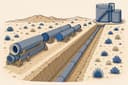 Pathfinder PipelineA 42-mile water line due to start in early 2027, carrying more than 800,000 barrels a day east to ground with space left underground. Occidental has already committed to most of the capacity, so the demand exists before the first barrel.
A 42-mile water line due to start in early 2027, carrying more than 800,000 barrels a day east to ground with space left underground. Occidental has already committed to most of the capacity, so the demand exists before the first barrel.
In plain English
Where West Texas operators have pushed waste water underground the longest, the rock is running out of room and the state watches new permits closely. Pathfinder is the way around that: a 42-mile, 30-inch steel line, lined with plastic, carrying more than 800,000 barrels a day eastward to emptier ground.
Nothing is earned until it starts up in early 2027, and it costs $300–350 million to build. But Occidental has already signed for 280,000 barrels a day of moving and 220,000 of disposal, with minimum payments attached — the customer was found before the pipe was laid.
Competes with Northern Delaware water infrastructure (Select Water Solutions) · Long-haul produced-water route (WaterBridge)
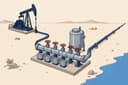 DBM Oil System — Delaware crude-oil & NGL gatheringWest Texas crude and liquids gathering: under a tenth of revenue, on the longest agreements in the portfolio at over twelve years, and the most dependent on one name. Volumes are guided to dip slightly this year.
West Texas crude and liquids gathering: under a tenth of revenue, on the longest agreements in the portfolio at over twelve years, and the most dependent on one name. Volumes are guided to dip slightly this year.
In plain English
The plainest part of the business. Crude leaves a well mixed with gas and grit; Western Midstream's lines collect it, settle it into something a long-haul pipeline will accept, and hand it on. About 355,000 barrels a day of West Texas oil go through.
Every barrel is billed as a flat fee rather than a cut of the oil price, and the agreements run beyond twelve years — the sturdiest revenue on this map. The catch sits in a single name: 99 of every 100 barrels here come from Occidental, so the line rises and falls with one company's drilling plans.
Competes with Permian Delaware crude gathering (Targa Resources) · San Mateo Midstream (Matador Resources)
Named in filings, launches and programs
- Powder River Basin complexService · RampingWyoming gathering and processing, which the partnership calls the basin's largest: 4% of this year's earnings but 11% of its construction budget, with ~270,000 acres newly dedicated.
- North Loving Train IIProduct line · Pre-revenueA second chilling unit for the West Texas plant, good for 300 million cubic feet a day, due early 2027; the first filled up within a month of starting.
- Solitude Pipeline SystemEcosystem · AnnouncedA 7.5% stake plus reserved space in two big lines carrying Permian gas to the Gulf Coast, starting late 2029 with more in 2030.
- Equity-investment portfolioEcosystemMinority stakes in partner pipelines and plants — Red Bluff Express, Front Range, Mi Vida, White Cliffs and others — together about 3% of this year's earnings.
- ChipetaBrandA Utah processing complex handling 790 million cubic feet of gas a day, which Western Midstream manages and owns three-quarters of.
- South Texas complexServiceThe Brasada plant, which passes its processed gas to Eagle Ford Midstream, plus a half-share of the Springfield system; source of a one-off billing catch-up in late 2025.
- Granger and Red Desert complexesServiceSouthwest Wyoming plants fed by the Moxa Arch, Jonah and Pinedale fields — part of the small leftover slice of earnings.
- Thunder Creek NGL PipelineEcosystemA 120-mile line moving 38,000 barrels a day of natural-gas liquids out of the Powder River Basin, under federal rate regulation.
- ConocoPhillips gas dedicationCustomer programFrom February 2026, ConocoPhillips tied existing West Texas gas volumes to the system at flat fees into the early 2030s — a large customer that is not Occidental.
- Water recycling into fresh waterProduct · Pre-revenueA pilot turning 2,000 barrels a day of oilfield water into roughly 1,000 barrels of clean water, aimed at industrial cooling, data centres and farming.
- Behind-the-meter power generationProduct · AnnouncedManagement is weighing generating its own electricity for West Texas plants, while saying it has never built a major power plant.
- CO2-related servicesProduct · AnnouncedEarly work on moving and compressing carbon dioxide, both for coaxing more oil out of shale and for storing it underground.
Powder River Basin complexService · Ramping
Wyoming gathering and processing, which the partnership calls the basin's largest: 4% of this year's earnings but 11% of its construction budget, with ~270,000 acres newly dedicated.
North Loving Train IIProduct line · Pre-revenue
A second chilling unit for the West Texas plant, good for 300 million cubic feet a day, due early 2027; the first filled up within a month of starting.
Solitude Pipeline SystemEcosystem · Announced
A 7.5% stake plus reserved space in two big lines carrying Permian gas to the Gulf Coast, starting late 2029 with more in 2030.
Equity-investment portfolioEcosystem
Minority stakes in partner pipelines and plants — Red Bluff Express, Front Range, Mi Vida, White Cliffs and others — together about 3% of this year's earnings.
ChipetaBrand
A Utah processing complex handling 790 million cubic feet of gas a day, which Western Midstream manages and owns three-quarters of.
South Texas complexService
The Brasada plant, which passes its processed gas to Eagle Ford Midstream, plus a half-share of the Springfield system; source of a one-off billing catch-up in late 2025.
Granger and Red Desert complexesService
Southwest Wyoming plants fed by the Moxa Arch, Jonah and Pinedale fields — part of the small leftover slice of earnings.
Thunder Creek NGL PipelineEcosystem
A 120-mile line moving 38,000 barrels a day of natural-gas liquids out of the Powder River Basin, under federal rate regulation.
ConocoPhillips gas dedicationCustomer program
From February 2026, ConocoPhillips tied existing West Texas gas volumes to the system at flat fees into the early 2030s — a large customer that is not Occidental.
Water recycling into fresh waterProduct · Pre-revenue
A pilot turning 2,000 barrels a day of oilfield water into roughly 1,000 barrels of clean water, aimed at industrial cooling, data centres and farming.
Behind-the-meter power generationProduct · Announced
Management is weighing generating its own electricity for West Texas plants, while saying it has never built a major power plant.
CO2-related servicesProduct · Announced
Early work on moving and compressing carbon dioxide, both for coaxing more oil out of shale and for storing it underground.